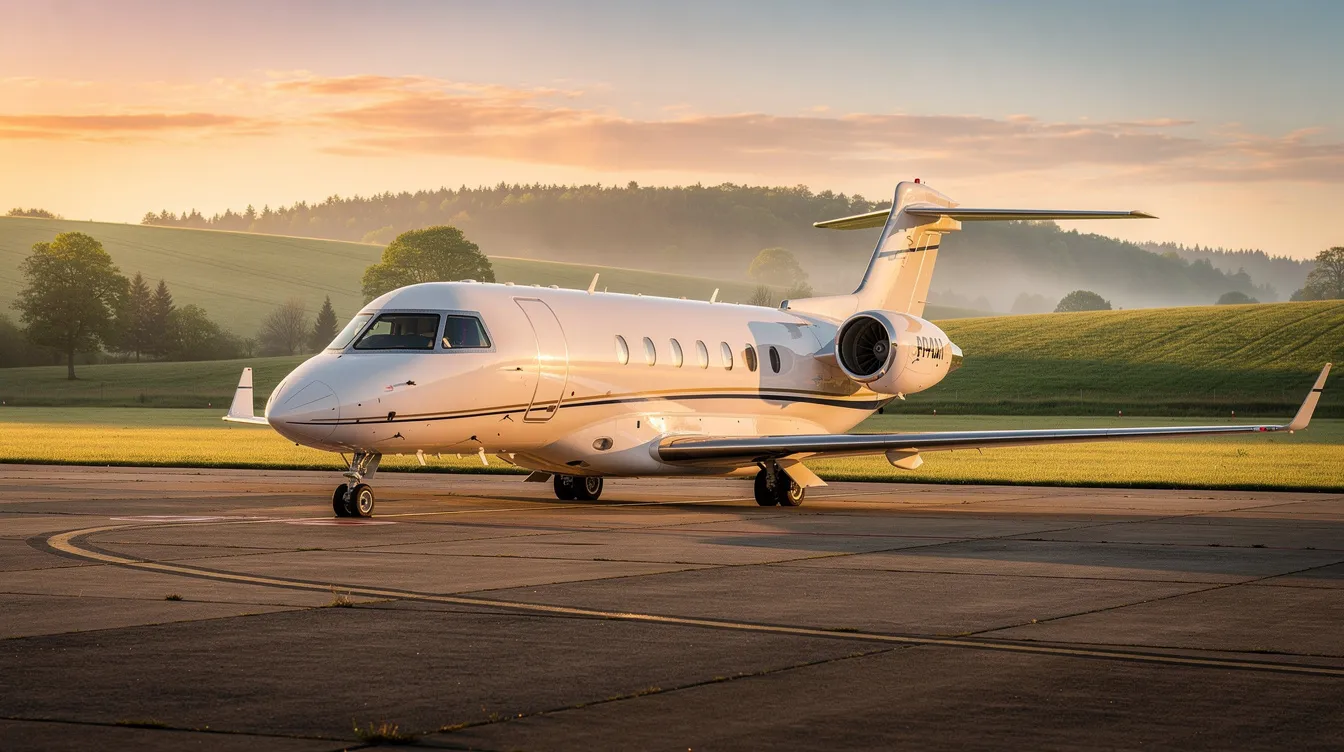
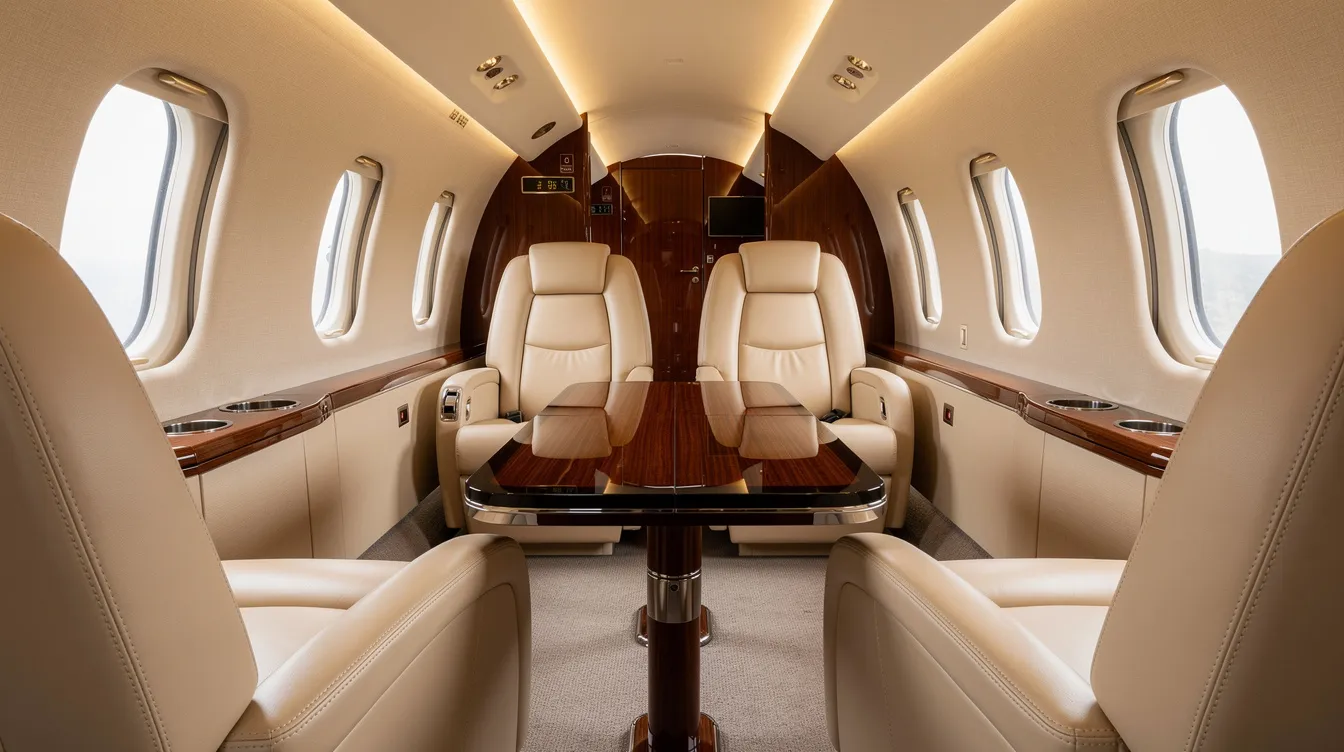
When searching for private jet tickets, it's important to understand that private aviation does not work like buying a seat on a commercial airline. There is no boarding pass, no fare class, and no row number. When someone refers to private jet tickets, they are really describing the process of chartering an entire aircraft for a specific mission, paying by the flight hour, and coordinating every detail from departure to arrival.
This guide is designed for business travelers, frequent flyers, and those new to private aviation who want to make informed decisions about private jet tickets. Understanding how private jet tickets work, what they cost, and which access model fits your travel patterns is crucial for avoiding overpayment on ad-hoc flights and for building a private aviation strategy that makes financial sense. Whether you’re a corporate executive seeking operational efficiency, a frequent flyer looking for predictable pricing, or a newcomer exploring the world of private jet travel, this article will help you navigate the options and choose the best approach for your needs.
Key takeaways
There is no traditional "ticket" in private aviation. You charter the entire aircraft, and pricing is driven by aircraft type, flight hours, and fees rather than a per-seat fare like a commercial airline.
Frequent flyers who exceed roughly 25 to 50 hours per year typically save more and gain operational consistency by shifting from ad hoc charter to a private jet membership with fixed hourly rates.
FLYT provides membership-based access with transparent pricing, fleet interchange across aircraft categories, and flexible scheduling, all without requiring aircraft ownership or large jet card prepayments. Learn more about FLYT's memberships.
Charter rates in 2025 to 2026 range from approximately $2,500 per hour for turboprops to $12,000 per hour or more for ultra-long-range jets, with total trip costs often running 25 to 40 percent higher than the base hourly calculation once positioning, taxes, and fees are factored in. See detailed pricing information.
This article compares four models head-to-head: single charter, jet card, fractional ownership, and membership. It includes concrete price ranges for light jet, midsize, and long-range flights on real routes.
What a "private jet ticket" really is in 2026
When you book a private flight, you are not purchasing a seat. You are purchasing access to an aircraft for a defined trip. That trip has an origin, a destination, a date, a passenger count, and a departure window. The confirmation you receive is not a ticket in the commercial sense. It is a charter agreement or membership trip confirmation that specifies the aircraft category, routing, departure FBO, cancellation terms, and any applicable surcharges for things like de-icing or crew overnights.
Private jet travel allows customized itineraries, unlike commercial airlines, which is precisely why the pricing model is different. Here is how the cost structure typically breaks down:
The base hourly aircraft rate covers the plane and crew for airborne time. In 2026, light jets run approximately $3,500 to $6,500 per hour, midsize jets $5,000 to $10,000 per hour, and long range jets $10,000 to $17,000 per hour or more, depending on the specific aircraft.
On top of the hourly rate, you may see landing and handling fees, federal excise tax (7.5 percent in the U.S.), fuel surcharges, repositioning charges, and crew expenses for overnight layovers.
The all-in cost of a flight often exceeds the hourly calculation by 25 to 40 percent once these extras are included.
Several types of providers interact with travelers differently. A charter operator owns or operates specific aircraft and sells full-mission charters. A broker matches supply to demand, sourcing aircraft from multiple operators. A membership platform like FLYT combines elements of both, locking in fixed hourly rates, sourcing aircraft from a floating global fleet, and reducing the middle-man markup that brokers often layer in.
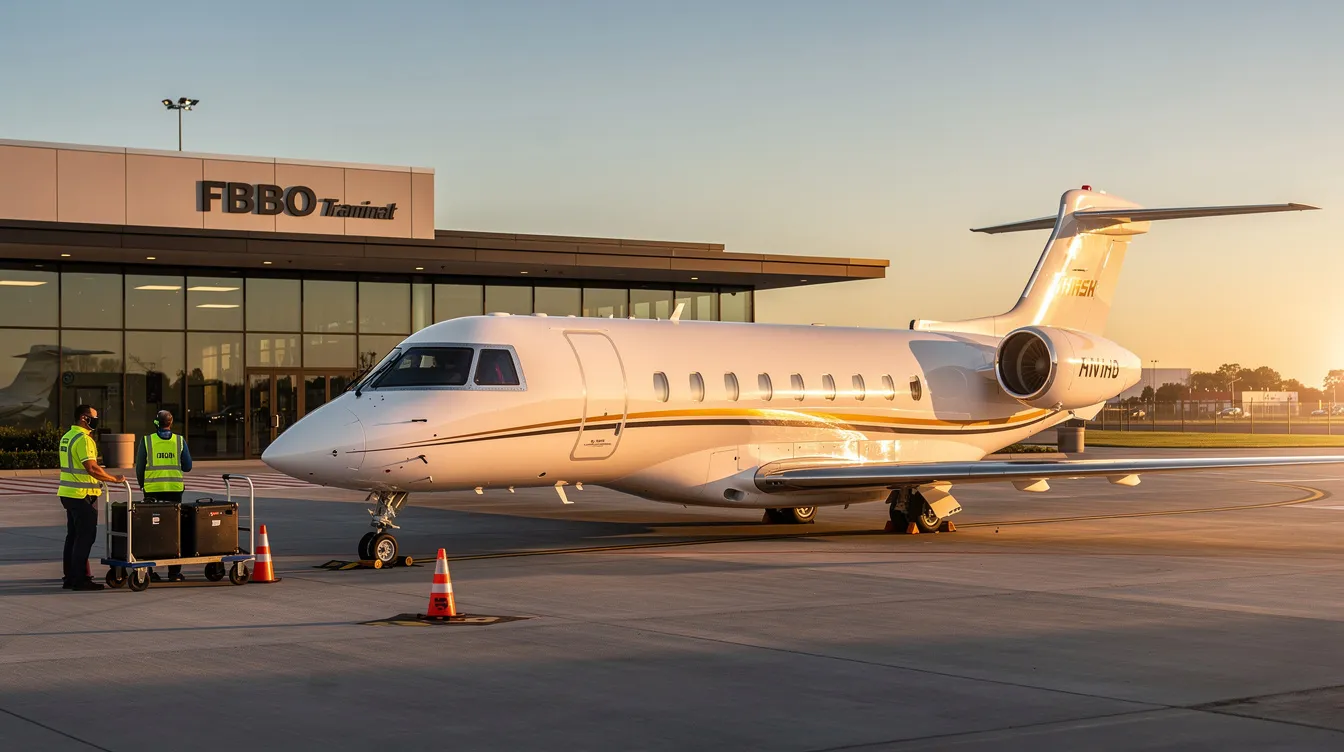
Once the trip is confirmed, your flight details include the aircraft type, the tail number once assigned, departure and arrival FBOs, routing, and all the terms around cancellation windows, wait-time policies, and additional charges. Private jet charter processes involve defining travel details and reviewing contracts before anything is finalized. Learn more about how it works.
Frequent flyers often reach a tipping point. Once they consistently exceed about 25 to 50 flight hours per year, the volatility of ad-hoc private jet charter starts to outweigh its flexibility. That is typically when they begin evaluating jet cards or membership models that offer rate protection and availability guarantees. Explore the advantages of membership.
How much do private jet tickets cost?
Private jet travel is expensive, with costs varying based on service type, distance, aircraft category, and time of year. Understanding the factors that influence private jet ticket pricing is essential for making informed travel decisions.
General cost factors
Aircraft type: Larger, longer-range jets cost more per hour than turboprops or light jets.
Flight hours: The total airborne time is multiplied by the hourly rate for the selected aircraft.
Additional fees: These may include landing and handling fees, federal excise tax, fuel surcharges, repositioning charges, and crew expenses for overnight layovers.
Peak travel days: High-demand periods can increase rates by 20 to 40 percent.
Repositioning legs: If the aircraft must fly empty to your departure city, this can add a high cost.
Airport and handling fees: Vary by airport and region.
International permits and customs: Required for cross-border flights and may add to the total.
What adjusts the "ticket" cost
Charter costs fluctuate based on peak travel days and aircraft type. Booking during high-demand windows such as New Year's in Aspen, the Monaco Grand Prix, Art Basel Miami, or Davos can push hourly rates up 20 to 40 percent above baseline. Other adjustments include overnight crew charges, de-icing in winter, landing fees at congested airports, and repositioning legs when the aircraft has to fly empty to your departure city. Private jets can access over 20,000 airports worldwide, but not all of those airports have the same cost structure.
Now, let's look at specific pricing by aircraft class and sample routes.
Light jets and turboprops
Charter rates for turboprops start around $2,500 per hour for aircraft like the King Air 350 or Pilatus PC-12. Light jets such as the Phenom 300 or Citation CJ3+ run approximately $4,500 to $6,500 per hour.
Sample routes at 2026 pricing:
Route | Aircraft type | Flight time | Estimated total one-way cost |
|---|
Los Angeles to Las Vegas | Light jet | ~1 hour | $6,000 to $10,000 |
New York to Miami | Light jet | 2 to 2.5 hrs | $14,000 to $18,000 |
London to Paris | Turboprop or VLJ | ~1 hour | $5,000 to $9,000 |
These are practical options for executive day trips, family weekends, or any regional mission where the priority is speed and airport convenience over cabin size.
Midsize and super midsize jets
Midsized jets typically cost around $7,000 per hour to charter, with super midsize aircraft like the Challenger 350 or Gulfstream G280 reaching $8,000 to $10,000 per hour.
Sample routes:
Chicago to Dallas (midsize, approximately 2 hours): $14,000 to $20,000 total one-way
Dallas to Miami (super midsize, approximately 2.5 hours): $18,000 to $25,000 total one-way
Geneva to Riyadh (super midsize, approximately 5 hours): $40,000 to $55,000 total one-way, depending on permits and fuel stops
The Citation Latitude sits in this category as a popular choice for corporate flights that need more cabin space and range than a light jet can provide.
Heavy and ultra-long-range jets
Ultra-long-range jets can cost $12,000 per hour or more. Aircraft like the Gulfstream G600, G650, or Bombardier Global 6500 are designed for nonstop intercontinental travel.
Sample routes:
New York to London (heavy or ultra long range, approximately 7 hours): $80,000 to $150,000 total one-way
Dubai to Singapore (ultra long range, approximately 7.5 hours): $90,000 to $130,000 total one-way
These aircraft accommodate 10 to 16 passengers with full-size cabins, so larger aircraft can actually reduce cost per seat when the cabin is shared among a group of business executives or family members.
Now that we've covered pricing, let's compare the main access models for private jet travel.
Charter flights vs private jet memberships vs jet cards
If you are currently buying ad-hoc charter flights and finding the pricing unpredictable, this is the comparison that matters. Each model trades off commitment against cost stability and access.
On-demand charter flights
With on-demand private charter, there is no upfront commitment. You request a quote, a charter operator or broker sources an aircraft, and you pay the full trip cost. The upside is flexibility. The downside is exposure to volatile pricing. Charter options during peak periods or from remote airports can spike sharply, and aircraft availability is never guaranteed. For travelers flying 10 to 15 hours per year, this is often the simplest approach because the fixed costs of other models may not be justified. Learn more about FLYT vs charter.
Jet card programs
Jet cards provide guaranteed availability with a prepaid flight time model. You purchase a block of hours, typically starting at $100,000 or more, and receive fixed or capped hourly rates for a specific aircraft class. For example, a provider like Sentient Jet offers 25-hour light jet cards around $157,000 inclusive of fuel surcharges and federal excise tax. The trade-off is that jet card hours are usually locked to one aircraft category, and peak-day surcharges or blackout dates may still apply. Compare FLYT vs jet cards for an operational and financial perspective.
Fractional ownership
Fractional ownership means buying a share of a specific aircraft, often a 1/16th or 1/8th share. Contracts typically run 3 to 5 years. You pay upfront capital for the share, monthly management fees, and an hourly rate when flying. This model can deliver lower per-hour costs if you fly 75 or more hours annually, but it comes with significant capital lock-up, depreciation risk on resale, and a long-term commitment that limits flexibility. Fractional ownership is essentially an ownership structure with all the associated financial exposure. See FLYT vs fractional ownership for a detailed comparison.
Membership models like FLYT
Definition: Private jet memberships offer flexible access to aircraft. Memberships provide predictable pricing without ownership costs, and private jet memberships typically require lower upfront costs than ownership. Membership models allow access to a global fleet of aircraft, and private jet memberships cater to frequent flyers and business executives.
Private jet memberships offer flexible access to aircraft without requiring ownership or the large prepayments typical of jet cards. FLYT's membership model provides fixed hourly rates across multiple aircraft categories, fleet interchange that lets you match the right aircraft to each mission, and an asset-light floating fleet structure. Memberships provide predictable pricing without ownership costs, and private jet memberships typically require lower upfront costs than ownership or fractional structures. Learn about the asset-light floating fleet and fleet interchange that enable this flexibility.
Which model fits your usage level
For 10 to 25 hours per year, ad hoc charter flights are usually the most straightforward. Between 25 and 75 hours per year, membership or jet card models begin to deliver better economics: fixed rates smooth out pricing volatility, and you gain access to priority scheduling. Above 75 hours per year, fractional ownership or custom program contracts may make sense on a per-hour basis, but the capital commitment, management overhead, and depreciation risk must be weighed carefully. FLYT's membership targets the 25 to 200-plus-hour range, where the balance between access, cost predictability, and capital efficiency is strongest.
With the main access models compared, let's dive deeper into how private jet pricing really works beyond the "ticket price."
How private jet pricing really works (beyond the "ticket price")
Sophisticated private jet travelers care about more than the hourly rate on a quote. They want to understand the inputs behind the number. Read more about private aviation pricing.
Key cost components
Flight hours (airborne time): Multiplied by the hourly aircraft rate to form the base cost.
Taxi time: The time between engine start and takeoff and between landing and engine shutdown, sometimes billed separately.
Repositioning or ferry legs: Occur when the aircraft must fly empty to reach your departure city, adding thousands to the trip cost.
Crew duty limits: Often a 14-hour duty day under U.S. FAR Part 135 regulations, meaning certain long itineraries may require an overnight for the crew, triggering hotel and per diem expenses.
Airport and handling fees, federal excise tax, international permits, customs and immigration charges, and catering requests: All layer on top.
The result: an all-in "ticket" price that can exceed the base hourly calculation by a meaningful margin.
Empty legs and back-to-back scheduling
Empty leg flights offer significant discounts on standard charter rates, sometimes 30 to 60 percent below the normal price. These occur when an aircraft needs to reposition without paying passengers. The catch is that empty legs are limited in availability and rigid on timing and routing. Brokers and platforms offer access to empty-leg inventories, but they are not a reliable foundation for regular travel planning.
Back-to-back scheduling, where an operator books flights in opposite directions to reduce deadhead legs, helps improve fleet utilization. Platforms with a diverse fleet and broad member base can do this more effectively because demand is aggregated across geography. Learn about FLYT's risk pool model and charter volatility protection.
Aircraft type impacts cost structure
Fuel burn per hour differs dramatically between a turboprop and a heavy jet. A light jet may burn 150 to 200 gallons per hour; an ultra-long-range aircraft can burn over 400. Maintenance cycles and crew requirements also scale with aircraft size. The efficiency trade-off is real: a light jet is cheaper per hour but may require fuel stops on longer routes, adding time. A long-range jet eliminates stops but at a much higher hourly cost.
The risk-pool and floating fleet model
FLYT uses a risk-pool model that aggregates demand across its membership base. Rather than each member absorbing the full cost of repositioning on every trip, those costs are distributed. The floating fleet approach means FLYT sources from a network of operated aircraft to match each trip to the most efficient option available. This stabilizes hourly rates and reduces the kind of pricing surprises that come with per-trip quoting from charter operators.
Explore the technology behind this approach in the AI fleet engine and the FLYT platform.
Now that you understand the cost structure, let's look at how to choose the right aircraft for your trip.
Choosing the right aircraft type for your trip
The most expensive mistake in private aviation is booking a larger aircraft than your trip requires. Matching aircraft size to mission profile is where cost discipline lives.
Turboprops and very light jets
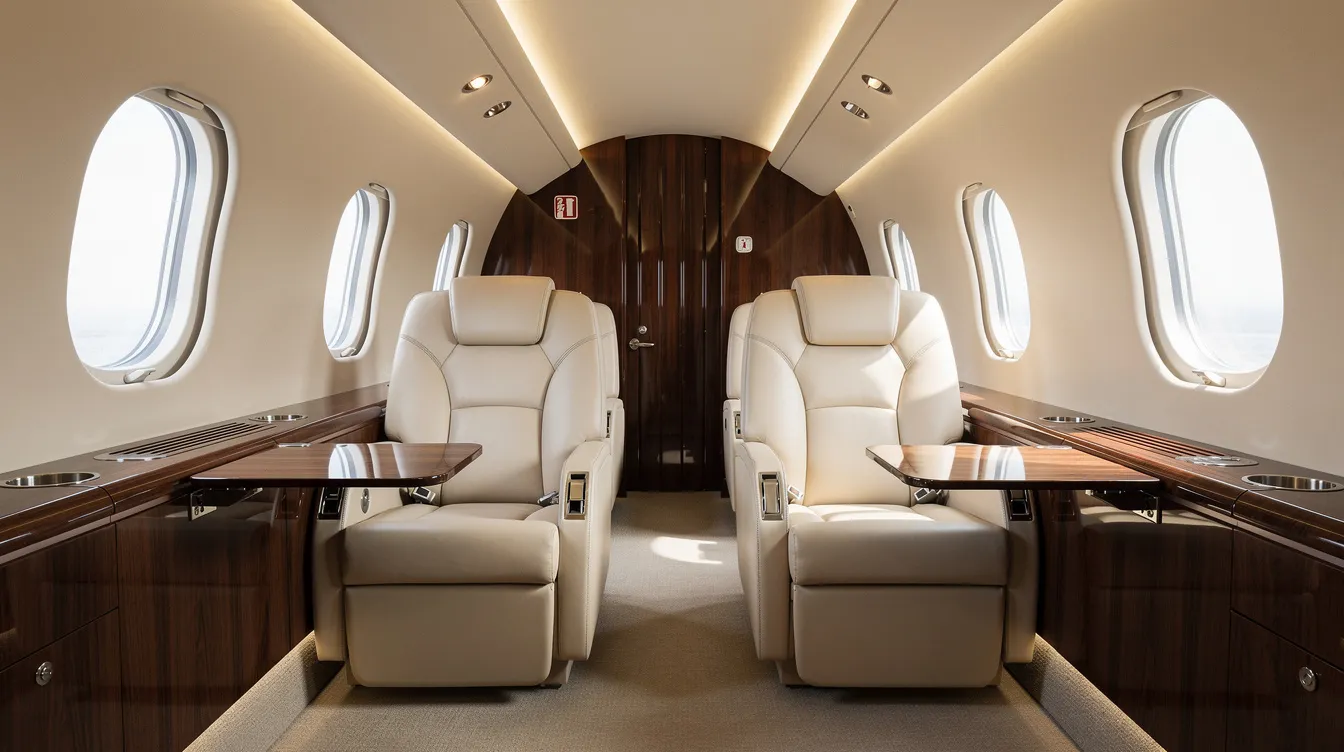
Ideal for regional hops under roughly 500 miles. A King Air B200 flying Boston to Teterboro or Milan to Nice operates at the lowest hourly cost in the private fleet. Interior configurations of private jets vary widely in seating and amenities, and turboprops tend to be simpler, but they get the job done efficiently on short legs.
Light jets
Best for 2 to 6 passengers on trips up to about 2.5 to 3 hours. The Phenom 300 and Citation CJ4 are workhorses in this category. Typical use cases include executive day trips, family weekends, and connecting mid-tier cities that commercial airlines serve poorly. A light jet offers speed and airport flexibility at a manageable hourly rate.
Midsize and super midsize jets
Suited to 6 to 9 passengers and missions like Los Angeles to Chicago or London to Marrakech. The Challenger 350 and Gulfstream G280 balance cabin comfort, range, and hourly rate well. These aircraft cover the sweet spot for most corporate flights, where you need range without paying heavy-jet prices.
Heavy and ultra-long-range jets
Required for nonstop coast-to-coast U.S. flights or transoceanic legs. A Gulfstream G600 flying New York to Rome carries 12 to 14 passengers in a full-size cabin. The hourly rate is steep, but if you are filling most of the seats, the cost per person can approach what you would pay for last-minute international business class on a commercial airline. VIP configured airliners exist in this space as well, serving as ultra-large-cabin options for diplomatic delegations or large executive groups.
Decision drivers
The best aircraft for your trip depends on passenger count, luggage requirements, nonstop range needed, and whether you prioritize speed, cost, or cabin space. Choosing the right aircraft for each mission, rather than defaulting to the largest available, is how experienced private jet travelers manage annual spend effectively.
With aircraft selection covered, let's see when private jet tickets make operational sense for business and corporate flights.
Business and corporate flights: when private jet tickets make operational sense
Corporate flights are often justified not by comfort but by the value of reclaimed executive hours and tighter control of multi-city schedules. Chartering a private jet allows control over schedule and passengers in a way that commercial flights simply cannot match.
A concrete scenario
Consider a two-day roadshow in May 2026 visiting New York, Toronto, and Chicago. On a commercial airline, the itinerary requires early morning departures with connections, layovers, and possibly an extra overnight. Total airport and transit time across three cities could consume 10 to 14 hours over two days.
With a private plane, the team departs New York at 7:00 AM, arrives in Toronto by 8:30 AM local time for morning meetings, then flies from Toronto to Chicago in the afternoon, arriving by 4:00 PM for an evening session. The return flight to New York departs that evening or the next morning as needed. Private jet travel enhances comfort and reduces travel time significantly, and private jets allow for direct flights without layovers or long waits. The delta in productive meeting hours across those two days can be substantial.
Flexible scheduling and multi-city stacking
Flexible scheduling lets teams stack meetings in multiple cities in a single day. Early departure, late return, and mid-day repositioning are all possible when you control the aircraft. Private jet travel offers flexibility over commercial flights in ways that compound when multiplied across a team of senior executives.
The CFO's perspective
Internally, finance teams often compare total trip cost against the blended cost of commercial tickets, hotels, ground transport, lost productivity, and deal impact. When a deal worth several million dollars depends on face-to-face meetings in two cities within 24 hours, the "premium" of private travel may be a rounding error in the overall transaction.
FLYT's membership with fixed hourly rates and fleet interchange supports this kind of planning. Business executives can set annual travel budgets with less volatility, matching the right aircraft to each mission without exposure to seasonal charter spikes. See FLYT vs brokers vs jet cards for more on operational efficiency.

If you're ready to move beyond one-off bookings, let's explore how membership with FLYT can streamline your private jet experience.
From one-off private jet tickets to membership with FLYT
If you currently book ad-hoc charter services and are evaluating whether to shift to a more structured access model, the membership path addresses several pain points at once.
Access without ownership
FLYT's membership-based model provides access to a global fleet of aircraft without the obligations of ownership. There is no depreciation risk, no hangar costs, no crew payroll, and no maintenance scheduling to manage. Private jet memberships cater to frequent flyers and business executives who want consistent access and predictable costs. Membership models allow access to a global fleet of aircraft, and FLYT operates across 190-plus countries with a network of more than 20,000 aircraft. Jettly, another digital platform in the space, similarly offers access to over 20,000 aircraft globally, illustrating the scale that modern platforms can achieve. But FLYT's model differentiates through fixed hourly rates and fleet interchange rather than per-trip market pricing. Learn more on the FLYT homepage.
Fleet interchange and the floating fleet
Fleet interchange means members are not locked into a single aircraft category. On Monday, you might fly a light jet from Dallas to Houston. On Thursday, you need a long-range aircraft for New York to London. A single membership covers both. This avoids the inefficiency of paying heavy-jet rates when a smaller aircraft will do, and ensures access to the right cabin when the mission demands it. The asset-light floating fleet model means FLYT does not own the aircraft. Instead, it sources from a curated network of operators, providing access to a diverse fleet without the capital exposure of ownership. Discover the asset-light floating fleet in detail.
Transparent pricing
FLYT publishes fixed hourly rates across all aircraft categories, with clear terms on surcharges, peak premiums, and priority access fees. This eliminates the opaque "market quote" experience where every trip generates a different number. Members can forecast annual spend based on anticipated hours and aircraft categories, which is a meaningful advantage for anyone managing a corporate travel budget. See FLYT pricing for examples.
Global reach and concierge support
FLYT's team operates 24/7, managing itineraries, last-minute changes, ground logistics, catering, permits, and any operational friction that arises. For travelers providing access to multiple stakeholders, such as executive assistants booking on behalf of principals, the concierge layer simplifies coordination. This is a smarter capital allocation choice than committing millions to a fractional share or absorbing the overhead of whole aircraft ownership, particularly for those who value flexibility and global reach. Contact FLYT support to learn more.
Ready to book your next private jet flight? Here’s how the process works step by step.
How to book a private jet "ticket" step by step
The booking process for a private flight is more straightforward than most people expect, especially when booking flights through modern platforms. Here is a quick, linear walkthrough.
Define your trip:
Establish your origin, destination, date (for example, July 18, 2026), passenger count, preferred departure window, and any special requirements such as pets, specific FBOs, or confidentiality needs. Private jets can be booked for last-minute trips with flexible scheduling, but having details ready upfront streamlines the process.
Receive your quote:
Based on your inputs, you receive options by aircraft type. A membership platform like FLYT will present light jet, midsize, and long-range options with fixed hourly rates, estimated flight time, and all-in pricing. Digital platforms simplify booking with instant pricing options, and users can compare aircraft options easily through digital platforms. On the charter side, brokers may present variable quotes that differ based on the day, the operator, and aircraft availability.
Confirm and pay:
Once you select an option, you sign a charter agreement or, for members, a trip confirmation. Payment methods include wire transfer, credit card, or membership account balance. Chartering can be arranged with little notice for urgent travel needs, and private jet charters can be booked within three hours of contract signing when aircraft are available. Digital booking platforms eliminate traditional airport hassles by handling all the details on the back end.
Pre-flight coordination:
Your concierge or account manager confirms the manifest, arranges ground transportation to and from the FBO, orders catering, and handles any security or confidentiality requests. All flights must be operated by FAA Part 135-certified providers, so the team also confirms operator credentials and handles international permits if applicable. All the details are managed before you arrive at the departure point.
Fly:
Arrive at the FBO, board, and depart. The easy booking experience and concierge layer that modern platforms provide make the entire process feel like a well-managed travel experience rather than a complex aviation transaction. Explore more about FLYT's platform.

Now, let's address some of the most frequently asked questions about private jet tickets.
Frequently asked questions about private jet tickets
Is there really such a thing as a "first-class ticket" on a private jet?
No. Private jets do not have cabin classes like economy, business, or first. When you book, you charter the entire aircraft through a charter operator or membership platform. Pricing covers the whole plane per flight hour, so the effective cost per seat depends on how many passengers share the cabin. For corporate flights with 6 to 8 travelers, the cost per person can be comparable to or slightly above last-minute international business-class fares in 2026. Shared jet services also allow booking individual seats on certain routes, making private travel more affordable for solo travelers on select legs. Shared jet services allow booking individual seats to make private travel affordable.
How far in advance should I book a private jet for the best pricing?
For non-peak dates, booking 7 to 14 days ahead usually yields solid aircraft availability and stable pricing on most routes. During peak periods like Christmas through New Year, major sporting events, Davos, Art Basel Miami, or the Monaco Grand Prix, limited aircraft availability and higher charter rates are common if you are booking within a week of departure. FLYT members benefit from fixed hourly rates, which reduce the need to time the market and protect budgets even when booking close to departure. The aviation industry has seen growing demand during these peak windows, making advance planning more important each year.
Can I change my itinerary after I've confirmed my private jet flight?
Same-day timing changes are usually possible in private aviation, subject to crew duty limits and subsequent aircraft commitments. Changes to routing, such as adding extra stops or switching to a different destination, may adjust cost because of added flight hours or repositioning needs. Membership models like FLYT are designed for flexible scheduling, with clear terms on change and cancellation windows. This flexibility is one of the core advantages private travel holds over commercial alternatives.
Do private jet tickets include everything, or will I see extra fees later?
Reputable providers quote an all-in price covering the aircraft, crew, standard catering, and routine handling. Extras that may appear include de-icing, wi-fi surcharges on some aircraft, out-of-hours airport fees, special catering, or international customs and immigration handling. The importance of working with a transparent charter service or membership platform that itemizes potential extras before you confirm cannot be overstated. FLYT focuses on transparent hourly pricing so members can forecast annual spend with far fewer surprises than ad-hoc charter quotes typically deliver.
Safety credentials and standards explained
Before booking, it's essential to understand and verify the safety credentials of private jet operators. Here’s what to look for:
Safety credentials of private jet operators should be verified for trust.
Reputable charter companies ensure aircraft safety and maintenance standards.
FAR Part 135 governs commercial charter operations in the U.S.
Operators must obtain an Air Carrier Certificate under FAR Part 135.
IS-BAO Stage 3 is a recognized safety designation for operators.
ARGUS Gold is a minimum safety benchmark for operators.
In the U.S., FAR Part 135 governs commercial charter operations, and operators must obtain an Air Carrier Certificate under FAR Part 135 to function as a direct air carrier. Look for operators with an IS-BAO Stage 3 designation, which is a recognized safety standard, or ARGUS Gold as a minimum safety benchmark. Any air carrier you fly with should meet these standards, and aviation experts recommend confirming certifications before booking. The business aviation community and the broader aviation industry have played a significant role in establishing these benchmarks over nearly two decades.
Is membership worth it if I only fly private a few times a year?
If you fly fewer than roughly 10 to 15 hours per year, on-demand charter flights may remain the most straightforward option. The cost of a membership or jet card may not be amortized at that level of usage. Once you regularly exceed 25 to 30 hours per year, fixed hourly rate membership models can improve both cost predictability and service consistency. The inflection point is real: below it, ad hoc works. Above it, membership delivers compounding advantages in rate stability, fleet access, and operational support.
If you are evaluating whether membership fits your travel plans, model your last 12 months of trips, including dates, routes, and aircraft types, against membership pricing from FLYT to see the break-even point based on real data. Private aviation solutions like FLYT exist precisely to serve the space between occasional charter and full ownership, providing access to a global leader in membership-based private jet access without the capital burden of owning or fractionally sharing a private plane.
Additional frequently asked questions
What safety standards should I look for when booking a private jet?
Before booking, it's important to understand the key safety credentials and standards in private aviation:
Safety credentials of private jet operators should be verified for trust.
Reputable charter companies ensure aircraft safety and maintenance standards.
FAR Part 135 governs commercial charter operations in the U.S.
Operators must obtain an Air Carrier Certificate under FAR Part 135.
IS-BAO Stage 3 is a recognized safety designation for operators.
ARGUS Gold is a minimum safety benchmark for operators.
In the U.S., every charter flight should be operated under FAR Part 135 by a certified air carrier. Public charters and private charter operations alike must meet these standards. Internationally, IS-BAO certification and ARGUS ratings provide additional layers of verification. A reputable charter operator or membership platform will confirm operator credentials proactively. The crew operating your flight should meet all regulatory requirements, and the aircraft should be maintained to the highest standards within the aviation industry.
How does FLYT's model differ from buying a jet card?
A jet card requires a substantial prepaid deposit, often $100,000 or more, locked into a specific aircraft category. FLYT's membership model offers fleet interchange, meaning you gain access to light, midsize, and long-range aircraft under a single membership rather than purchasing separate hour blocks for each category. The floating fleet structure means FLYT sources from a broad network of operated aircraft globally, rather than relying on a fixed set of owned jets. For clients who fly across different route profiles and need different aircraft types throughout the year, this flexibility is a meaningful operational advantage.
Can I fly internationally on a private jet membership?
Yes. Membership models like FLYT provide global reach across 190-plus countries. The world of private aviation is not limited to domestic routes. International flights involve additional coordination such as overflight permits, customs and immigration handling, and country-specific regulations, but a concierge-level service handles these details. For business travelers managing travel across continents, the ability to fly internationally with the same predictable pricing and operational support is one of the strongest arguments for membership over ad-hoc charter.
Explore how FLYT approaches flexible private aviation access with fixed hourly rates, transparent pricing, and a membership model designed around efficiency rather than ownership.
Conclusion: A smarter way to book private jet tickets
Navigating private jet tickets in 2026 requires understanding that private aviation is fundamentally different from commercial air travel. Rather than purchasing a seat, you charter an entire aircraft tailored to your itinerary, with pricing driven by aircraft type, flight hours, and associated fees. While ad-hoc charter flights offer flexibility for occasional flyers, frequent travelers benefit from membership models like FLYT that provide fixed hourly rates, fleet interchange, and global access without ownership burdens.
FLYT’s asset-light, floating fleet approach and transparent pricing make private jet travel more predictable and operationally efficient. Its concierge-level support ensures seamless coordination from booking to touchdown, including complex international logistics. For executives and business travelers seeking to optimize time, control costs, and reduce complexity, FLYT membership offers a strategic alternative to traditional ownership, jet cards, or fractional shares.
For those interested in renting a private plane without ownership hassles, exploring FLYT’s platform reveals how modern private aviation can be accessed with ease, flexibility, and transparency. Discover how renting a private plane through FLYT combines premium service with smarter capital allocation, enabling you to fly your way—anywhere, anytime.
Learn more about how to rent a private plane and experience the benefits of membership-based private aviation designed for today’s sophisticated travelers.