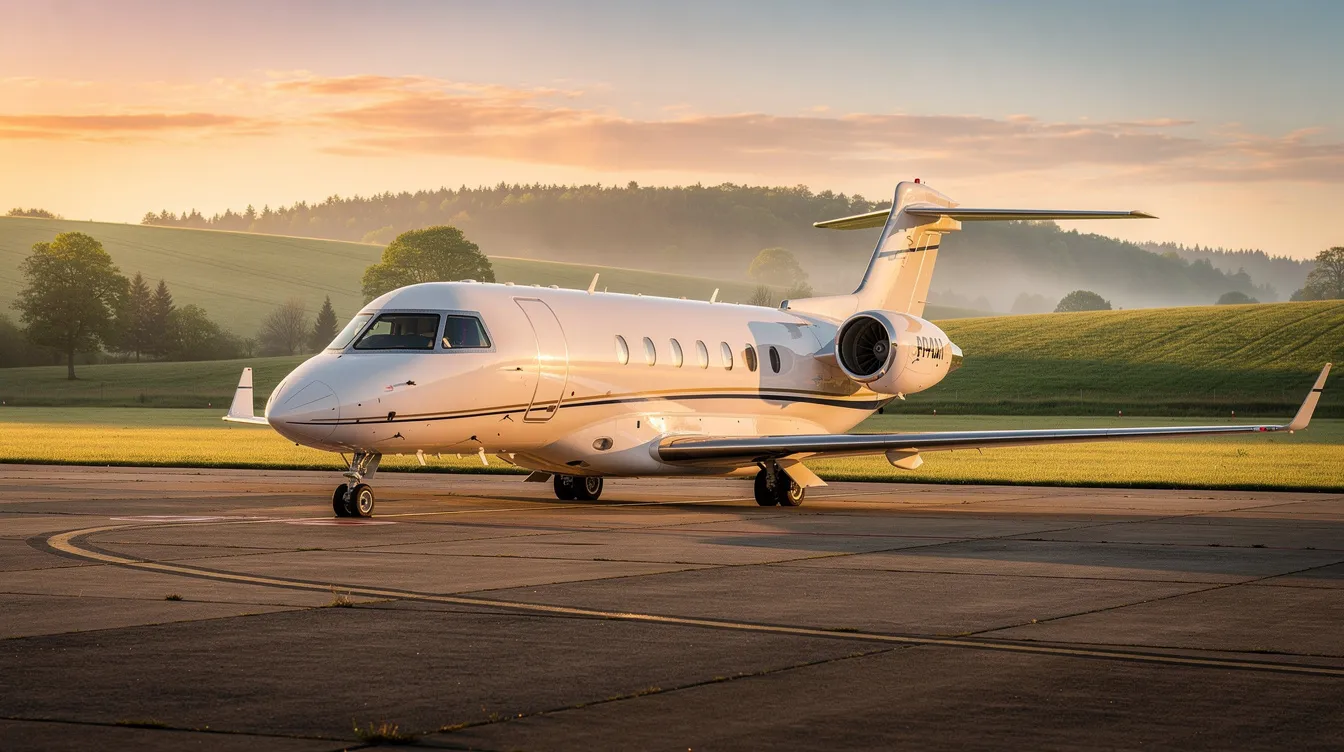
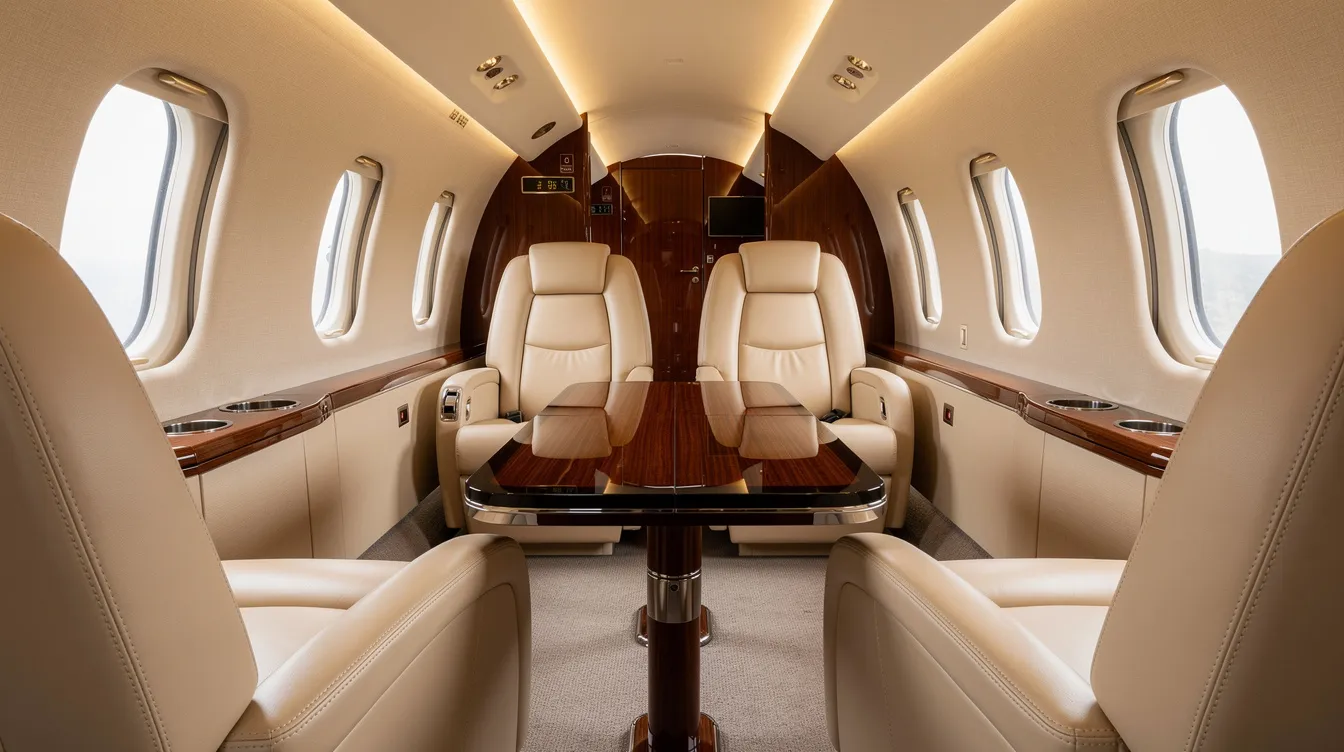
For executives, founders, investors, and high-frequency travelers, the decision to rent private plane access is rarely about luxury travel alone. It is usually a decision about time, control, privacy, and capital allocation. Private flights can cost significantly more than commercial routes but offer higher privacy, faster departures, and the ability to design travel around individual schedules rather than airline timetables.
In 2026, terms such as private jet rental, private jet charter, private jet charters, private jet charter services, private charter, and private jet rental all generally refer to the same basic concept: paying for access to an aircraft without owning it. You book the entire aircraft for a one-way trip, a return flight, a multi-city itinerary, or specialized charter flights, and the operator or membership provider manages the aviation infrastructure behind it.
Typical private jet rental prices now range roughly from $2,000 to $14,000 per hour across many common aircraft types, although ultra-long-range aircraft and VIP airliners can exceed that range. The value is not simply the cabin. Private aviation offers unmatched flexibility and time savings compared to commercial flights, especially for short regional trips, smaller airports, confidential meetings, or multiple stops in major cities on a compressed schedule.
Moreover, private jets can access over 5,000 airports globally, far surpassing commercial airline coverage. This extensive access enables travelers to land closer to their final destinations, saving time on ground travel and enhancing overall trip efficiency.
This guide explains how private jet pricing works, what drives charter costs, how to choose the best aircraft for a specific mission, and how FLYT’s membership model can make private travel more predictable through fixed hourly rates, fleet interchange, global network access, and an asset-light approach.
Key takeaways
To rent private plane access in 2026 usually means booking the entire aircraft for a trip without buying, leasing, or operating a jet yourself.
Private jet rental prices range from $2,000 to $14,000 per hour for many common aircraft categories, while hourly rates for large jets can exceed $12,000 on long-range missions.
The final cost depends on aircraft size, route length, landing fees, fuel surcharges, crew requirements, positioning, seasonality, and minimum billable flight hour rules.
Private jet membership offers access to over 20,000 aircraft, fixed hourly rates, flexible aircraft access, and the operational benefits of private aviation without ownership costs.
FLYT is designed for frequent flyers and executives who want predictable costs, a diverse fleet, global access, and concierge-level support without tying capital into a single aircraft.

How much does it cost to rent a private plane?
Private jet rental is typically billed by the flight hour for the entire aircraft, not by the seat. That distinction matters. Whether one passenger or eight passengers are onboard, the private jet flight cost is usually based on the aircraft, crew, route, fuel, airport fees, and operational requirements.
Typical hourly rates by aircraft category
As a broad 2026 guide, many travelers should expect the following ranges before complex extras:
Light jets: approximately $2,500–$4,500 per flight hour.
Midsize and super midsize jets: roughly $4,000–$7,000 per hour.
Heavy and ultra-long-range jets: often $7,000–$15,000+ per hour.
There are variations inside each category. Some charter rates for midsize jets range from $3,200 to $4,400 per hour on certain aircraft and routes, while newer aircraft with larger cabins, modern avionics, advanced avionics, stronger range, and premium in-flight amenities may command materially higher rates. For large jets, hourly rates can exceed $12,000, especially on long-distance travel or international flights.
Example routes and pricing considerations
A New York area departure from Teterboro to Miami is a useful example. A light jet may price in the mid-five figures depending on timing, positioning, and aircraft availability, while a super midsize or heavy jet will cost more but provide greater cabin space, baggage capacity, and range margin. For travelers continuing to Fort Lauderdale or Palm Beach, the most efficient routing may depend on airport slot availability, ground transportation, and local handling charges.
A London to Geneva flight in a light jet is a different profile. It is short, efficient, and often suited to a smaller aircraft. But even if the actual flying time is under two hours, the operator may apply a minimum billable flight hour rule. This is why very short-haul flights may feel expensive relative to the time in the air.
A Los Angeles to New York trip usually pushes travelers toward a super midsize, heavy jet, or ultra-long-range aircraft, depending on winds, passenger count, and luggage. On a coast-to-coast private jet flight, selecting too small an aircraft can introduce fuel stops or payload constraints. Selecting larger aircraft may increase the hourly rate, but it can protect schedule reliability and onboard productivity.
A London to Dubai route illustrates the same principle internationally. The estimated cost rises because long-haul international flights may involve more fuel, crew duty planning, international handling, permits, landing fees, and potential crew rest rules.
Additional fees and taxes
The important point is that a quoted hourly rate is not always the final cost. The U.S. Federal Excise Tax is 7.5% on private jet rentals, and total charter costs can also include fuel surcharges, catering, de-icing, handling charges, crew expenses, and repositioning. That is why a charter flight cost calculator can be useful for early planning, but it should never replace a written, all-in quote.
Memberships often include fixed hourly rates for flights. In FLYT’s model, fixed hourly rates and transparent pricing are designed to reduce the uncertainty that often comes with ad hoc private jet charter quotes.
Private jet rental cost overview by aircraft category
Aircraft Category | Typical Passengers | Typical Range (miles) | Hourly Rate Range (USD) | Common Use Cases |
|---|
Very Light Jets | 4-6 | 1,000 - 1,300 | $2,000 - $4,000 | Short regional trips, quick business hops |
Light Jets | 6-8 | 1,200 - 1,800 | $2,500 - $4,500 | Business day trips, family travel |
Midsize / Super Midsize | 7-9 | 2,000 - 3,000 | $4,000 - $7,000 | Longer domestic routes, coast-to-coast |
Heavy Jets | 10-16 | 3,500 - 6,000+ | $7,000 - $15,000+ | Intercontinental, large groups |
Ultra Long Range / VIP | 12+ | 6,000+ | $12,000+ | Global travel, heads of state, large charters |
The main factors that drive private jet rental prices
Understanding the main pricing variables helps travelers compare quotes more intelligently. Two private jet charter services may show different numbers for the same route, but the difference often comes down to aircraft size, positioning, fees, and what is or is not included.
Aircraft size and category
The first factor is aircraft size and category. Aircraft are categorized by size, including Very Light, Light, Midsize, and Heavy. A light aircraft or light jet may be efficient for a short business day trip, while a midsize jet or heavy jet may be more appropriate for a longer sector with more passengers. Ultra-long-range aircraft cost more because they carry more fuel, require more sophisticated systems, and support intercontinental missions.
Distance and duration
The second factor is distance and duration. A short hop may be billed at a minimum even if the actual flight is brief. Many operators apply 1.5–2.0-hour minimums per leg, which affects short regional flights most. A one-hour sector can still be billed closer to two hours once taxi time, minimums, and operational overhead are included.
Airport selection
The third factor is airport selection. Private jets utilize smaller regional airports not served by commercial airlines, which can save substantial time. Private jets allow direct access to more airports than commercial airlines, and charter flights can access more airports than commercial airlines. That can mean landing closer to a factory, resort, board meeting, or private residence. However, landing fees, ramp charges, hangar fees, and local handling costs vary widely by airport.
Timing and seasonality
Timing also matters. Peak days around major holidays, Art Basel Miami, Davos, Formula 1 weekends, and large sporting finals can tighten aircraft availability and increase prices. Fuel prices also affect private jet pricing because many operators either adjust base rates or pass through fuel surcharges when Jet A fuel moves materially.
Positioning and empty legs
Positioning is another major driver. If the aircraft is not already near your departure airport, it may need to fly empty to pick you up. Empty leg flights and empty leg opportunities can reduce cost in some cases, but they are less flexible because they depend on existing aircraft movement. One-way private jet charters allow flexible travel without return plans, but the quote may still reflect the aircraft’s repositioning economics.
Typical extra charges
Typical extra charges can include:
Crew overnight costs and per diems.
De-icing in winter conditions.
Catering beyond standard snacks and drinks.
Wi-Fi surcharges on certain aircraft.
International fees, customs, and handling charges.
Short-leg minimums and daily minimums.
Special requests, ground transportation, or security coordination.
De-icing costs can significantly impact total charter expenses, especially at northern airports where winter operations are unpredictable.
Safety and operator certification
Safety standards should also be part of the evaluation. In the U.S., charter operators should be certified as Part 135 operators for safety compliance. You can review the FAA’s overview of Part 135 operating requirements for more context. ARGUS and Wyvern evaluate operator safety and training standards in private aviation, and many corporate travel teams use those ratings as part of their duty-of-care process.
This complexity is one reason frequent flyers increasingly evaluate membership models. FLYT’s structure is built around predictable fixed hourly rates, helping reduce exposure to hidden fees and quote-by-quote variability. Learn more about FLYT’s advantage and how it works.

Aircraft types: choosing the right private jet for your trip
The most cost-effective way to fly privately is not always to choose the largest aircraft. It is to match the aircraft to the mission. Passenger count, luggage, distance, runway length, weather, cabin needs, and in-flight amenities all influence the right aircraft options.
Economical aircraft for short missions
Turboprops and very light jets are often the most economical aircraft choices for shorter missions. Economical aircraft choices exist for different distances and passenger capacities in private aviation, which is why a Pilatus PC-12, King Air 350, or Phenom 100 can make sense for 4–7 passengers on regional routes. These aircraft are useful for short regional flights under two or three hours and can access smaller airports with shorter runways.
Light jets for business day trips
Light jets usually seat about 6–8 passengers and work well for routes such as Los Angeles to San Francisco, Paris to Milan, or New York to Chicago. A light jet balances speed, operating cost, and comfort, though it has less cabin space and range than a midsize jet. This category is popular for business day trips, family vacations, and efficient weekend travel.
Midsize and super midsize jets for longer routes
Midsize and super midsize jets generally seat 7–9 passengers and are preferred for longer domestic sectors, coast-to-coast U.S. routes, or routes such as London to Moscow without refueling. Aircraft such as the Citation XLS+, Praetor 500, and Challenger 3500 provide more cabin space, better baggage capacity, and a more productive environment for executive teams. For business jet use, this category is often where comfort and operational efficiency meet.
Heavy jets and ultra-long-range aircraft
Heavy jets and ultra-long-range aircraft are designed for intercontinental travel. They often seat 10–16 passengers and may include full-height cabins, sleeping areas, larger galleys, and more robust connectivity. Aircraft such as the Gulfstream G600 and Global 6500 are built for routes like New York to London, Dubai to Singapore, or Los Angeles to Tokyo, with cabins that support rest, meetings, and confidential work.
VIP airliners and large group charters
VIP airliners and larger aircraft are a separate category. They are appropriate for heads of state, large delegations, entertainment tours, and group charters where the entire aircraft must support a larger passenger group. The cost is higher, but for certain group charter flights, a larger aircraft can become efficient on a per-person basis compared with arranging dozens of premium commercial seats.
Private jets enhance comfort and privacy during flights, but the right choice still depends on the mission. A larger cabin may improve productivity on a long sector, while a smaller aircraft may be smarter for a two-hour regional trip.
Flying private for different trip profiles
Private jet travel is most valuable when it solves a specific operational problem. The aircraft is only one part of the decision. The real benefit is complete control over routing and timing, and chartering a private jet allows for direct routing to destinations while supporting privacy and continuity.
Business roadshows and multi-city trips
For a business roadshow, a founder or investment team may need to visit three or four cities over two or three days. Commercial flights can force the schedule around airline departures, hub connections, and airport delays. Private aviation allows for direct flights based on individual schedules and itineraries, which can make a dense meeting schedule realistic. In this scenario, a super midsize jet with reliable Wi-Fi, range, and cabin space may be the best aircraft.
Family and lifestyle travel needs
For family and lifestyle travel, the requirements are different. A family of 5–7 flying from London to a Mediterranean destination in August may need luggage room, sporting equipment space, pet handling, and flexible departure timing. Private jets provide access to over 20,000 aircraft globally, which gives travelers more ways to match aircraft size and airport location to the trip. Light and midsize jets can be efficient for many European holiday routes, while personalized service may matter just as much as aircraft size for families or friends traveling together.
Corporate group charters and regional shuttles
For corporate travel, group charters and regional shuttles can be useful when moving teams to offsites, investor meetings, product launches, sports events, or remote work locations. Group charters may involve turboprops, regional aircraft, or larger aircraft depending on the number of passengers. In some cases, chartering a regional aircraft is more efficient than buying dozens of business-class seats and coordinating multiple commercial itineraries.
Time-sensitive and confidential travel
Time-sensitive or confidential travel is another common use case. Urgent board meetings, deal negotiations, site visits, medical-related travel, and security-sensitive movements may justify private flights even when the headline fare is higher. Chartering a private jet can save significant travel time, and private jet charters can save time compared to traditional flights.
Travelers can arrive just 15-30 minutes before departure with private jets, compared with the longer airport process required for commercial flights. This time advantage compounds when the itinerary includes several sectors in one day.
FLYT supports these different profiles through fleet interchange and global network access. Instead of forcing every trip into one owned aircraft, members can select from a diverse fleet that aligns aircraft size, range, and cabin capability with each mission.
Comparing private aviation models: on-demand charter, jet cards, ownership, and membership
Renting a private plane can mean several different access models. Each has a different balance of flexibility, predictability, capital commitment, and operational control.
On-demand private jet charters
On-demand private jet charters are booked trip by trip. They work well for occasional flyers who want flexibility without long-term commitments. An on-demand charter is best for occasional flyers under 25 hours yearly. The trade-off is that pricing changes with live market conditions, aircraft availability, peak-day demand, and positioning.
Jet cards
Jet cards are prepaid blocks of hours, usually with specific terms for aircraft category, service area, peak days, and booking windows. A jet card can create more structure than an ad hoc charter. Jet card programs are ideal for moderate flyers needing 25-100 hours yearly, but travelers should review blackout dates, surcharges, cancellation policies, and aircraft availability rules carefully.
Fractional ownership and full ownership
Fractional ownership and full ownership involve a deeper commitment. Fractional ownership suits frequent flyers over 100 hours annually, although full ownership usually requires even higher annual usage to justify the fixed overhead. Fractional ownership requires significant upfront investment of over $400,000, and full ownership adds acquisition cost, depreciation, crew, maintenance, hangar fees, insurance, regulatory obligations, and residual value risk. Many operators and advisors suggest full ownership begins to make economic sense only when usage approaches roughly 200–300 hours per year.
Leasing private jets
Leasing private jets allows for flexible aircraft access without ownership obligations, but leasing can still involve fixed commitments, contract complexity, and less flexibility than a floating fleet model. It may fit certain corporate travel programs, but it does not always solve the problem of matching aircraft size to varying trip profiles.
Private jet membership
Private jet membership sits between ad hoc charter and ownership. Membership programs provide flexibility without ownership costs. Private jet memberships typically require no long-term commitments, depending on the provider and plan structure. Private jet memberships cater to frequent flyers and executives who want consistent access, transparent pricing, and operational support without acquiring an aircraft.
FLYT’s private jet membership model is built around a floating, asset-light fleet (learn more), fixed hourly rates, and a risk pool model that spreads cost and availability risk across members (read about the risk pool and charter volatility protection). Private jet membership offers access to over 20,000 aircraft, and chartering private jets offers access to over 20,000 aircraft through global networks of qualified aircraft and operators. The result is providing access without requiring members to own, operate, or manage a specific tail number.
For frequent flyers who value predictability and flexible scheduling, membership-based access can be more efficient than booking every private jet charter from scratch or tying capital into one aircraft that may not fit every mission.
Explore how FLYT compares to charter, jet cards, fractional ownership (FLYT vs fractional), and brokers to find the right fit.
How FLYT makes renting a private plane more predictable
FLYT is a membership-based private aviation service designed for frequent private flyers, executives, families, and principals who want premium access with less operational friction. The model is built around transparent pricing, global reach, concierge support, and flexible aircraft access.
Fixed hourly rates are central to the approach. Members benefit from clear hourly pricing by aircraft category, which helps finance teams and family offices forecast travel budgets more accurately. This matters because private jet pricing can otherwise vary significantly between routes, operators, seasons, and last-minute aircraft availability.
FLYT’s structure is also designed to reduce exposure to hidden fees common in ad hoc private jet charters. While every aviation program has rules and operational realities, transparent pricing gives members a clearer view of the final cost before committing to a trip.
Fleet interchange is another practical advantage. A member may need a light jet for a short business trip, a midsize jet for a multi-city roadshow, and an ultra-long-range aircraft for international flights. Owning one aircraft creates a mismatch when the mission changes. FLYT’s diverse fleet approach allows members to choose the aircraft options that fit each route rather than defaulting to one aircraft size.
The asset-light floating fleet model is equally important. Instead of tying capital into a fixed set of owned aircraft, FLYT leverages a global network and risk pool model to improve aircraft availability across regions. This helps support members during busy periods and allows the program to adapt to changing travel patterns
Concierge-level support completes the model. Private aviation is not only private jet flights. It includes routing, crew coordination, airport selection, ground transportation, catering, schedule changes, documentation, and special requests. FLYT’s support is designed so private travel feels managed rather than transactional.
Learn more about FLYT’s platform and AI fleet engine technology that powers smarter flight matching.
Managing hidden fees and avoiding surprises when flying private
Many first-time charter clients are surprised that the first hourly quote is not always the final invoice. The aircraft rate may look clear, but the total cost can change once operational line items are included.
Repositioning is one common source of variance. If an aircraft must fly empty to reach your departure airport, the quote may include that movement. Empty leg flights can create savings when your schedule matches the aircraft’s existing route, but an empty leg is usually less flexible than a normal charter.
Weather-related costs can also be material. De-icing is a necessary safety procedure in winter conditions, and the price can vary based on aircraft size, airport, and weather severity. For cold-weather departures, travelers should ask how de-icing is handled in the quote.
Crew expenses are another factor. Overnight crew costs, per diems, duty time limits, and rest requirements may apply on multi-day trips or complex itineraries. For international flights, customs, immigration handling, permits, and local taxes can also affect the final cost.
Short-leg pricing deserves attention. A flight that takes 45 minutes may still trigger a minimum billable flight hour. If the operator has a two-hour minimum, the billable time may be substantially higher than the actual flight time.
Catering, Wi-Fi, premium beverages, pets, security, and special requests should also be clarified. Standard catering may be included, but specific meals, high-bandwidth connectivity, or additional services can add cost.
Before confirming any private jet rental, ask for:
An all-in quote.
A written explanation of what is included and what is excluded.
Clarity on fuel surcharges, landing fees, and handling.
The cancellation and change policy.
What happens if the departure time shifts?
Whether de-icing, catering, and Wi-Fi are included.
Cancellation policies are crucial when chartering a private aircraft due to schedule changes. This is especially true for executives whose meetings can move with little notice.
FLYT’s fixed hourly rate structure and transparent pricing are designed to reduce these uncertainties. The goal is to help businesses and families plan private jet flights without decoding complex invoices after each trip.
When does membership-based private jet access make sense?
Membership-based access is most relevant for travelers who fly privately often enough to care about predictability, but not so much that owning an aircraft is the obvious answer.
A typical member might be an executive flying 30–150 hours per year across domestic and international routes. Another might be a founder or investor with irregular but high-value travel spikes around funding rounds, acquisitions, board meetings, or major events. Families may also use membership to maintain consistent standards across school travel, holidays, relocation trips, and family vacations.
Membership can be more efficient than ad hoc chartering when price variance and inconsistent terms become a burden. It can be more flexible than traditional jet cards when travel patterns change across regions or aircraft types. It can also be more capital-efficient than fractional ownership when annual usage sits below heavy-usage thresholds.
Charter services offer flexibility without long-term commitments, but frequent travelers often need more than flexibility. They need predictable access, consistent standards, and clear terms. Private jet memberships typically require no long-term commitments, and memberships often include fixed hourly rates for flights, making budgeting more practical than quote-by-quote chartering.
FLYT’s strengths are aligned with these needs:
Predictable fixed hourly rates.
Access to multiple aircraft categories.
Fleet interchange across light, midsize, heavy, and ultra-long-range aircraft.
Concierge support for complex itineraries.
An asset-light approach that keeps capital available for business, investment, or family priorities.
A global network designed for frequent private jet travel.
For many discerning travelers, the question is not whether flying private is possible. It is the model that offers the right balance of access, predictability, flexibility, and capital efficiency.
Explore a membership model designed around efficiency, transparency, and flexible private aviation access.

FAQ: renting a private plane and FLYT membership
These questions address practical points that often arise when evaluating private flights, charter options, and membership-based access.
How far in advance should I book a private jet rental?
Same-day private jet flight arrangements are possible, but booking 3–7 days in advance typically provides better aircraft availability and pricing for most routes. For major holidays, the World Economic Forum in Davos, Art Basel Miami, Formula 1 weekends, or peak summer travel, planning several weeks ahead is advisable, especially for larger groups or ultra-long-range aircraft.
Is renting a private plane cost-effective for short flights under one hour?
Very short flights can feel expensive because most operators apply minimum billable flight hour thresholds, often around 1.0–2.0 hours, regardless of actual flying time. Short regional segments can still be worthwhile when they save several hours of ground travel, avoid commercial connections, or allow multiple meetings in different cities in a single day.
Can I work productively on board a private jet?
Yes. Most modern private jets used for corporate travel offer Wi-Fi, power outlets, quiet cabins, and seating layouts that support meetings or focused work. If confidential calls, presentations, or video meetings are important, specify those needs before booking so the selected aircraft supports the right connectivity and cabin configuration.
What happens if my schedule changes at the last minute?
On-demand private jet charters often allow changes, but fees or re-quoting may apply if the aircraft or crew has already been positioned. Membership frameworks like FLYT’s typically provide clearer change and cancellation terms upfront, giving frequent flyers more confidence when business schedules shift.
How do I know which aircraft type is right for my first private charter?
Share the number of passengers, route, luggage requirements, schedule constraints, and special needs with an experienced advisor. The right choice may range from light jets to ultra-long-range aircraft. FLYT’s team helps members select the most efficient option for each mission, balancing cost, comfort, range, and operational requirements rather than defaulting to the largest jet.
For additional details, visit FLYT’s FAQ or contact us for personalized assistance.
Conclusion: Smarter private flying with FLYT
Renting a private plane in 2026 is about more than just luxury—it is a strategic choice that prioritizes time efficiency, operational flexibility, and predictable costs. Whether for business roadshows, family travel, or confidential meetings, private aviation offers unparalleled control over schedules and access to thousands of airports worldwide.
FLYT’s membership model presents a modern alternative to traditional ownership and ad hoc chartering. By combining fixed hourly rates, a diverse fleet with aircraft interchange, global reach, and concierge-level support, FLYT delivers a premium private aviation experience without the complexity or capital commitment of owning an aircraft.
For executives, founders, and frequent flyers seeking transparency, operational efficiency, and flexible access, FLYT offers a smarter way to fly private. Learn how FLYT’s asset-light, floating fleet approach can transform your travel experience by visiting www.flyt.com.
Discover a membership model designed around your travel needs—where predictability meets flexibility and premium service supports your most important journeys.