Last minute private plane deals: how FLYT members use empty legs for smart, flexible travel
Jay Franco Serevilla
Jun 25, 2026
Share this post:
Private aviation generates a surprising amount of unused capacity. Roughly one-third of all charter flights fly empty on at least one leg, repositioning aircraft for their next passenger or returning to base. That structural inefficiency creates a steady stream of last-minute private plane deals, particularly through empty leg flights, that cost-conscious frequent flyers can use to access the same aircraft, crew, and safety standards at a fraction of standard charter rates. For FLYT members, these opportunities integrate directly into a membership model built around predictable pricing and global flexibility.
Key Takeaways
Last-minute private plane deals typically originate from empty-leg flights, where an aircraft repositions without passengers. These flights can save travelers 75–90% off standard rates, often costing under $5,000 even on transcontinental routes, making private air travel significantly more accessible for one-way and flexible itineraries.
Empty leg flights are ideal for one-way trips on common routes and can often be booked within 2–4 hours of departure, offering the same quality and service as regular private flights.
FLYT membership gives travelers access to last-minute flights globally at fixed hourly rates, without owning an aircraft or committing to a traditional jet card deposit.
On popular business and leisure routes in the U.S. and Europe, such as London–Nice or New York–Miami, last-minute flights are often available within two to six hours of request.
Utilization of on-demand charter marketplaces and online platforms allows for quick, affordable access to private flights and comparison of quotes from multiple floating-fleet operators.
Empty legs come with fixed routes and departure times, so flexibility in dates and airports is rewarded with the best pricing. Being flexible with travel plans can increase the chances of catching last-minute flight deals.
Safety, regulatory compliance, and concierge support remain identical to any planned private flight, even when booked at short notice. Private jets are subject to the same safety regulations as commercial flights.
Why Last-Minute Private Plane Deals Matter for Executives and Frequent Flyers
A commercial connection misses its slot at Heathrow. A board meeting in Zurich moves from Thursday to Wednesday afternoon. A founder's child has a medical appointment that reshuffles the week. These are not hypothetical scenarios. They are the routine disruptions that push executives and family offices toward private travel solutions that can respond in hours, not days.
Last-minute private flights eliminate the friction that makes commercial alternatives unreliable under pressure: long security queues, hub-and-spoke routing, and limited seat availability on short notice. Using regional airports closer to business districts, such as Teterboro instead of JFK or London Biggin Hill instead of Heathrow, can further reduce door-to-door journey time and help avoid expensive landing fees associated with major commercial hubs.
The financial case is straightforward. Compare the cost of one missed closing, one delayed investor meeting, or one forfeited board vote against the incremental cost of arranging a last-minute charter or empty leg. For decision-makers whose time is worth thousands per hour, the math resolves quickly.
FLYT operates as a membership-based private aviation service designed precisely for this kind of demand: flexible, global access at fixed hourly rates, without the capital commitment of fractional ownership or the unpredictable spot pricing of ad-hoc charter.
How Last-Minute Private Plane Deals Actually Work
Empty Leg Flights Explained
Most last-minute deals originate from unused capacity in the charter market. When a client books a one-way flight, the aircraft must reposition, either returning to its home base or flying to the next departure point. These repositioning movements, sometimes called dead legs or ferry flights, represent roughly 33% of all charter operations. Booking private jets on short notice through these openings is referred to as ad-hoc charter.
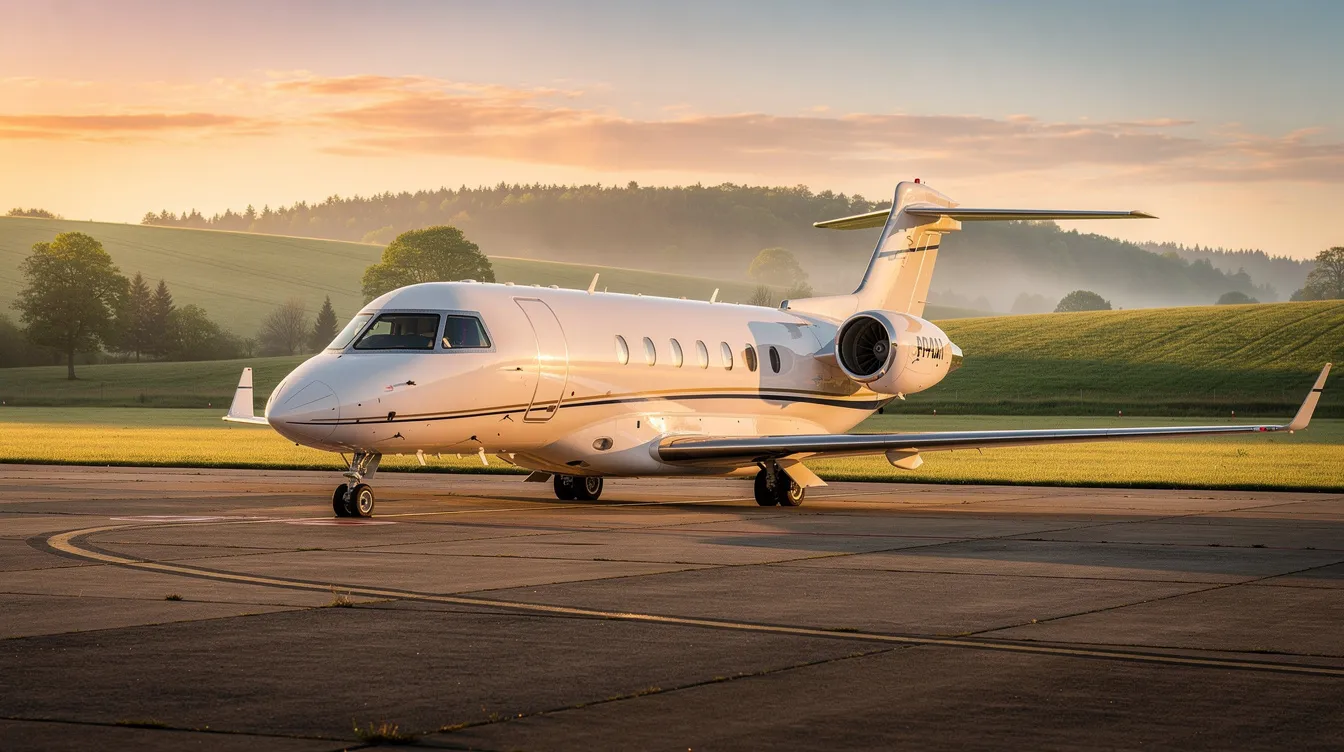
In a typical week in June 2026, aircraft reposition continuously across Europe and the U.S. A Challenger 350 finishes a charter in Nice and needs to return to London. A Phenom 300 drops passengers in Hamburg and must fly empty to Basel for its next trip. Each of these movements creates a potential empty leg opportunity for a traveler whose route and schedule align.
The distinction from a standard on-demand charter is important. In a traditional charter, you define the route, departure time, and aircraft type, and you pay the full market rate. With an empty leg, the route and departure time are already set by the operator's existing schedule. You step into a pre-planned movement at a discounted rate.
What is an Empty Leg Flight in Practice?
An empty leg is a one-way flight flown without passengers, typically to reposition an aircraft for its next paying client or return it to base, making it a practical option for last-minute travel. The aircraft, crew, and safety protocols are identical to a revenue flight. What differs is the pricing.
A light jet flying from Basel to Hamburg on 15 June 2026, for instance, might be listed as an empty leg after completing a prior charter. Similarly, a Nice to Genoa leg on 16 June 2026 could appear as an operator moves a midsize jet south for a weekend booking. In both cases, operators offer these legs at reduced prices because the alternative is flying the entire aircraft empty and absorbing the full cost on repositioning sectors, sometimes referred to in the industry as one-way transients.
Availability and Timing
Availability is dynamic. Routes can appear 24–48 hours before departure and sometimes only hours ahead. Empty leg flights can be booked within 2–4 hours of departure on many domestic routes, making them ideal for last-minute bookings when travel plans shift unexpectedly.
Empty Leg Routes, Timing, and Departure Times
Empty leg routes are fixed around the original client's itinerary. Travelers usually cannot fully customize origin, destination, or exact timing. A leg departing Berlin for Basel at 4:20 PM may allow a 30–60 minute adjustment if operationally feasible, but significant route changes are rarely possible.
Popular business city pairs like London–Zurich, New York–Chicago, and Los Angeles–San Francisco tend to generate more empty legs due to high charter volume. Leisure routes such as Cannes–Ibiza and Olbia–Nice also produce consistent repositioning inventory, especially during the summer months. Booking outside of major holidays helps avoid premium fees and increases the likelihood of finding favorable leg deals.
Last-minute flights often depart within a two-to-six-hour window from confirmation, provided crew duty limits and airport slots allow. The departure date and departure time are typically firm, so travelers who can adapt their schedule to match available legs capture the strongest savings.
Advantages of Last-Minute Private Plane and Empty-Leg Deals
Last-minute charters and empty legs blend flexibility, privacy, and cost efficiencies in ways that commercial alternatives cannot replicate. For groups and frequent travelers, the benefits compound: exclusive use of the aircraft, access to private terminals, and significantly reduced total travel arrangements compared with commercial business class.
When several additional passengers travel together, the per-seat cost drops further, sometimes approaching or beating last-minute business-class commercial fares. The following sections break down the specific advantages.
Privacy and Control
Even on discounted empty legs, travelers have exclusive use of the entire aircraft. There is no seat sharing, no crowded terminal, and no compromise on confidentiality.
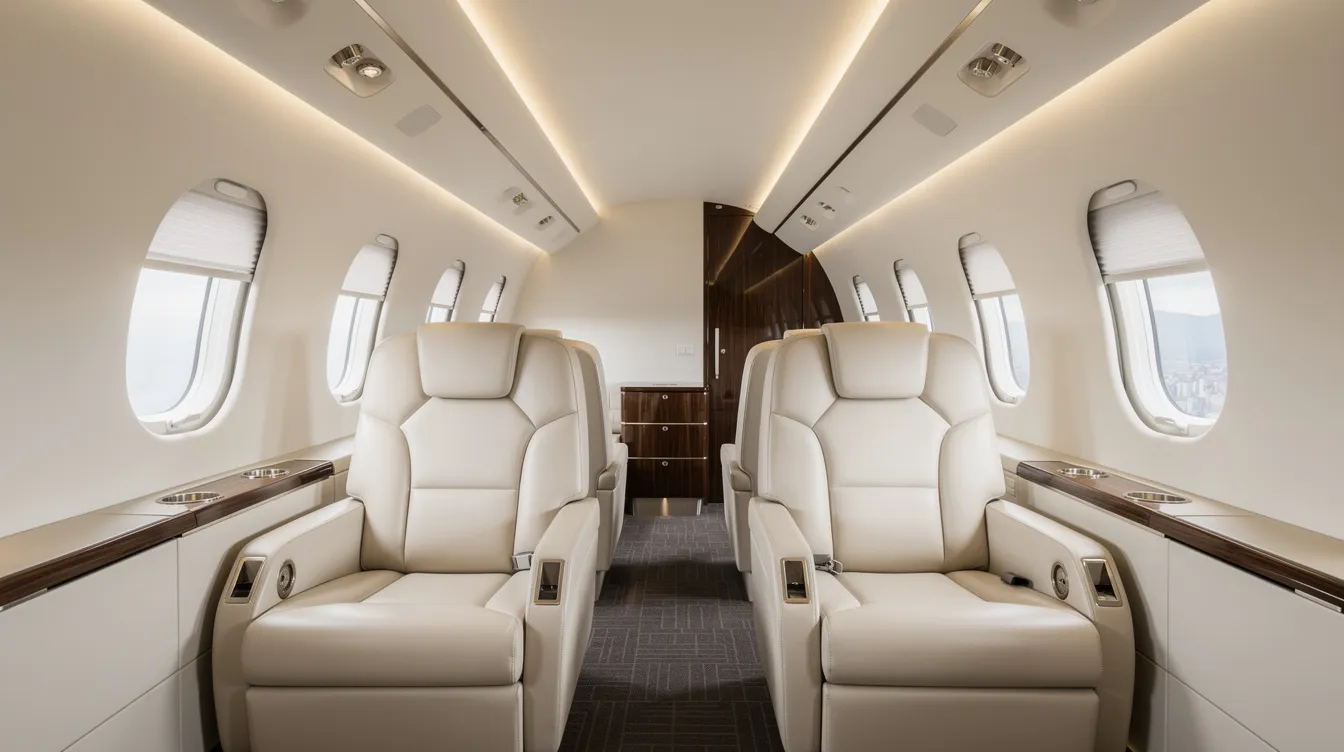
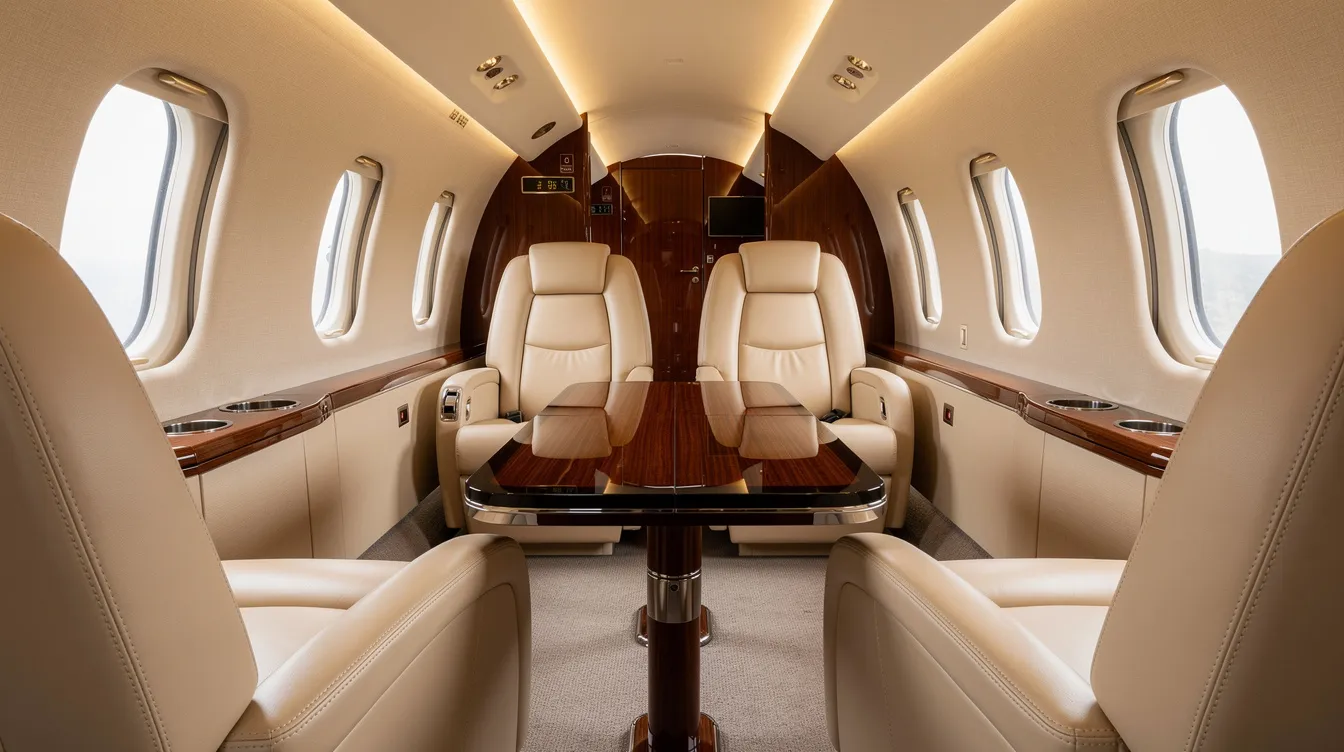
The onboard experience remains consistent: quiet cabin, business-friendly seating, and Wi-Fi on many aircraft types. For founders and family offices, the ability to hold confidential discussions, review sensitive documents, or simply decompress in private is often more valuable than any catering upgrade.
Using secondary airports like London Oxford, Basel, or Cannes Mandelieu can further enhance privacy and reduce ground time compared with major commercial hubs.
Safety Standards
Booking at the last minute does not change the regulatory framework. Private jets are subject to the same safety regulations as commercial flights. In the U.S., operations fall under FAA Part 135; in Europe, under EASA rules. Crew training, maintenance schedules, and pilot duty-time limits are enforced regardless of how late the flight is booked.
Empty leg charter flights offer the same quality as regular private flights. Reputable operators use audited aircraft and professionally trained crews. FLYT's membership platform partners only with vetted operators that meet high safety and operational standards.
What changes at the last minute are logistics: aircraft sourcing, permits, and slot times. The safety bar does not move.
Cost-effectiveness and Typical Pricing
Empty leg flights can save up to 75% off charter prices, and in some cases, the discount reaches 30–90% depending on route, aircraft type, and timing. A typical €10,500 charter from Basel to Hamburg, for example, might sell as an empty leg for around €1,400–€2,500 for the entire aircraft.
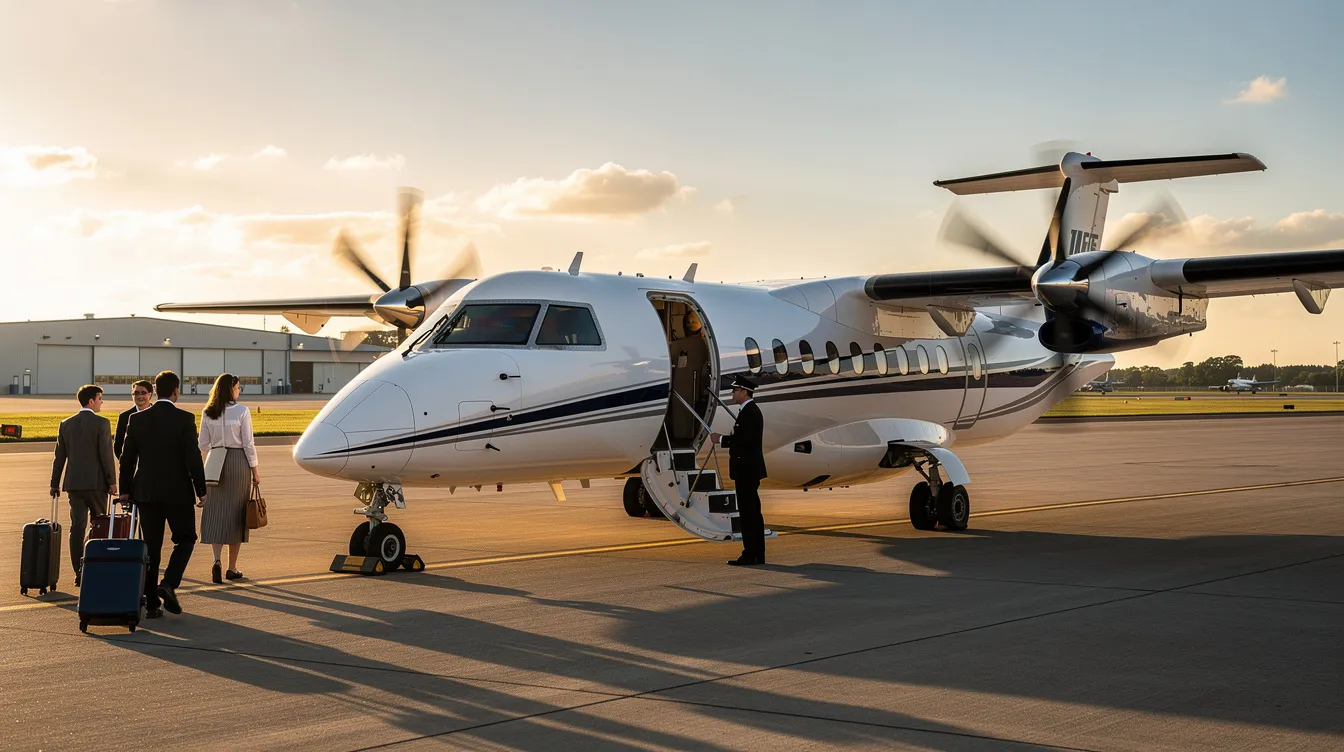
A transcontinental empty leg flight may cost under $5,000, and many domestic empty leg flights are often available for under $5,000 on light jets. Turboprops can be cost-effective alternatives to light jets for short flights, further expanding options for budget-conscious travelers on routes under 500 miles.
When four to eight passengers travel together, the per-seat cost becomes genuinely competitive. An eight-seat jet on a New York–Florida empty leg at roughly $8,920 divides to approximately $1,115 per person.
FLYT's fixed hourly rates help members understand their upper cost boundaries even when taking advantage of last-minute opportunities, removing the pricing volatility common in standard charter rates.
Flight type
Typical discount vs charter
Approximate cost (USD)
Ideal trip type
Notes
Domestic empty leg
75%
Under $5,000
One-way, short notice
Requires flexibility on timing
Transcontinental empty leg
75–90%
Under $5,000
One-way, long-distance
Limited availability, advance notice
Turboprop alternative
Varies
Lower than light jets
Short regional trips
Cost-effective for under 500 miles
Group travel (8 seats)
Cost per seat drops
~$1,100 per person
Multiple passengers
Splitting the cost improves the value of long-distance calls
Flexibility
Commercial last-minute flights typically spike in price and offer constrained seat availability. Private travelers face the opposite dynamic: last-minute private jet deals through empty legs often represent the lowest pricing available, precisely because operators want to recover cost on otherwise unproductive flights.
Booking a private jet last-minute offers flexibility in departure times and airport selection. A New York–Boston or Milan–Florence same-day round trip can save several hours door-to-door compared with commercial alternatives when you factor in security, connections, and ground transfers. Landing at London Biggin Hill instead of Heathrow for meetings in the City, for instance, can shave more than an hour off total trip time.
While empty legs have fixed routes, they still offer more control over schedule and flight time than waiting on standby for a commercial seat on a full flight.
How to Find Last-Minute Private Plane and Empty-Leg Deals
The challenge is not whether last-minute private jet flights exist, but how to access them efficiently. Spending hours calling brokers is not a viable strategy for executives whose calendars are already compressed.
Primary Access Paths
There are three primary access paths to last-minute private jet deals:
Direct relationships with operators
membership platforms like FLYT
Technology-driven alert systems
Serious frequent flyers often combine these: a membership as their primary tool, plus curated relationships with key operators in specific regions. Utilizing on-demand charter marketplaces can also help access private flights quickly and affordably by aggregating availability across multiple providers.
Using membership Platforms Like FLYT
FLYT offers a private jet membership model where members access a floating, asset-light fleet at fixed hourly rates, including for last-minute bookings when aircraft are available. membership-based private aviation services provide access without owning a jet, avoiding the capital drag of fractional programs.
Members can review options across available aircraft types and routing, including short-notice flights and suitable empty leg opportunities across North America and Europe. Online platforms allow for comparison of quotes from multiple floating-fleet operators, and FLYT's concierge team can proactively match members with last-minute flights that align with their origin, destination, and time window.
Unlike many jet cards, FLYT's model avoids large upfront buy-ins, which is attractive for travelers who value capital efficiency alongside all the benefits of private aviation.
Working with Trusted Charter Operators and Brokers
Experienced travelers often maintain relationships with one or two trusted operators who know their preferences, aircraft size needs, and preferred airports. These operators may alert clients to last-minute charters or empty-leg routes that match typical travel plans, such as London–Zurich every Monday or New York–Miami on winter weekends.
Operators can sometimes combine an urgent one-way request with an existing repositioning leg to create a more favorable price. This approach is complementary to membership: operators handle bespoke edge cases, while membership platforms provide predictable, day-to-day access.
Digital Tools, Alerts, and Empty Leg Monitoring
Technology has made it easier to monitor empty legs on key routes. Email alerts, mobile notifications, and online dashboards let travelers track availability on pairs like Zurich–Berlin or Cannes–London in real time.
Frequent travelers benefit from defining a watchlist of origin–destination pairs and time windows so they only see relevant last-minute options. FLYT's concierge and platform can flag when new last-minute flights align with a member's profile, reducing manual searching. Sharing likely travel patterns for the coming quarter with your provider increases the success rate for securing attractive deals.
The Booking Process for Last Minute Private Flights with FLYT
The booking process from initial request to wheels up is designed to be streamlined even under time pressure. While details vary by route and jurisdiction, the core steps are consistent: availability check, pricing confirmation, contract acceptance, and payment. Last-minute private jet flights can be booked within hours when the process is well-organized.
FLYT's concierge team coordinates aircraft selection, airport slots, and ground arrangements under tight timelines. For many routes, members can move from initial inquiry to confirmed flight in two to four hours, subject to crew and airport constraints.
Step-by-Step Booking Process
Define Your Last-Minute Flight Requirements Come prepared with key details: departure window, preferred airports (Basel vs. Zurich, Teterboro vs. JFK), number of passengers, baggage, and any special needs. Clarity on whether the trip is one-way or round-trip and whether return timing is flexible helps identify suitable empty legs or dynamic routings. For very time-sensitive itineraries, being open to multiple nearby airports can materially improve options. Concise, accurate requirements data speeds up the availability and pricing phase.
Matching with Aircraft and Empty Legs FLYT's team and systems scan the floating fleet and known empty leg routes to identify the most efficient match for the requested route and schedule. This may result in a dedicated charter at fixed hourly rates, an empty leg opportunity, or a hybrid solution leveraging a nearby repositioning flight. Factors such as aircraft category (light, midsize, heavy), runway length, and weather all influence which jets can operate the mission safely. For popular routes around major events, multiple aircraft types may be offered with different pricing and cabin configurations.
Confirmation, Payment, and Preflight Details Once an option is selected, FLYT provides a clear confirmation including aircraft type, estimated flight time, departure terminal (FBO), and any applicable surcharges. Contracts are handled electronically with secure digital signatures for speed. Payment must be finalized before the crew and ground handlers are fully released, which is why having a membership and payment method on file accelerates last-minute bookings. The concierge shares arrival instructions, recommended arrival time before departure (typically 20–30 minutes), and contact details for any last-minute questions.
Key Considerations and Trade-Offs with Last-Minute Bookings
Last-minute private travel is powerful but not frictionless. Understanding the constraints around route flexibility, schedule certainty, and return planning helps travelers decide when last-minute flights are the right tool. FLYT members often combine planned and last-minute flying in a portfolio approach, aligning each trip with its risk tolerance and time sensitivity.
One-Way Nature of Many Empty Legs
Most empty legs are one-way flights from one airport to another with no guaranteed return option on the same aircraft. Empty leg flights are ideal for one-way trips. Travelers should plan their return separately via a scheduled charter, another empty leg, or commercial business class.
For example, taking an empty leg from Rimini to Nice on 16 June 2026 and returning via a planned charter from Cannes the following day can still deliver strong value if the outbound leg captures most of the savings during a long weekend getaway.
Schedule Changes and Dependency on Primary Charters
Empty legs depend on the timing of the primary customer's flight. If that traveler delays or cancels, the empty leg may shift or disappear. When plans change on the primary booking, departure times and even dates sometimes adjust within 24 hours.
Travelers should avoid hard, immovable commitments if they are not comfortable with potential timing changes. FLYT's concierge can help build backup options, such as a standard charter or commercial ticket, for mission-critical events where you cannot expect any deviation.
International Routes, Permits, and Lead Times
For certain international routes into smaller airports in the Middle East, Africa, or parts of Asia, permits can take anywhere from a few hours to several days. Many European and U.S.–Caribbean routes process approvals within 12–24 hours, making them more compatible with last-minute bookings.
Travelers with very tight timelines should stick to airports and countries known for predictable permit processing. FLYT's team handles permit applications and keeps members informed about any permit-driven constraints on departure.
How FLYT Makes Last-Minute Private Flying More Predictable
FLYT's core proposition is membership-based access to a global, asset-light fleet with fixed hourly rates and concierge support, including for last-minute flights. The floating fleet and risk-pool model optimizes aircraft utilization, which is the same dynamic that creates many empty leg opportunities.
Members can move between aircraft categories through fleet interchange, using light jets for short hops and larger jets for longer, higher-capacity missions. Transparent pricing allows members to forecast annual flight spends more accurately than with ad-hoc charter, even when some trips are booked at the last minute.
membership vs Jet Cards and Fractional Ownership
Traditional jet cards require large upfront deposits. Fractional programs involve long-term equity commitments and high fixed costs, including acquisition shares that can run from $500,000 to over $1.2 million for midsize aircraft. For context, even entry-level programs like Vaunt's annual membership fee of $995 for private jet access demonstrate how the market is diversifying access points.
FLYT's membership gives members similar predictability to jet cards while keeping them out of complex ownership structures. For travelers who value capital efficiency and flexibility, a membership that doesn't require owning or co-owning an aircraft is often the more attractive path. Last-minute bookings under a membership are supported by the same pricing logic, avoiding peak-season surprises where possible.
Operational Support and Concierge-Led Logistics
FLYT's concierge team acts as an extension of an executive assistant or family office, coordinating last-minute aircraft, ground transfers, and special requests. During high-demand periods like Davos, Cannes Lions, Art Basel, or U.S. holiday weekends, the team advises when to rely on last-minute flights and when to pre-book capacity.
The same team monitors operational risks, including weather, slot limitations, and crew duty times, to provide realistic departure times rather than optimistic estimates. This human layer is especially valuable when decisions and changes happen within hours.
Frequently Asked Questions
The following questions cover practical points for executives and frequent private flyers considering last-minute bookings, with a focus on operational and financial clarity.
How far in advance do I realistically need to request a last-minute private flight?
While "last minute" can mean two to four hours before departure on simple domestic routes, a six-to-twelve-hour window is more realistic for optimal aircraft options and pricing. Airport slot availability, crew duty limits, and international permits can extend this timeline. Even if departure is tomorrow morning, contacting your provider as soon as plans are firm materially improves your options. Truly "wheels up in two hours" scenarios are possible, but usually carry more constraints on route, aircraft type, and pricing.
Can I bring pets or unusual baggage on a last-minute empty leg?
Pets are often allowed on many private aircraft, but must be declared in advance so the operator can confirm policies, cleaning requirements, and any documentation needed. Unusual baggage such as large instruments, sports equipment, or product samples may require specific aircraft types with larger holds. Last-minute constraints can limit the ability to swap aircraft if the initial option cannot safely accommodate baggage dimensions. Share pet and baggage details with FLYT's team at the very first request to avoid surprises at the airport.
Are last-minute flights and empty legs suitable for recurring business travel?
Empty legs are excellent for opportunistic one-way trips but inherently less predictable for strict recurring schedules like weekly board meetings. Many FLYT members use a mix: planned charters or fixed hourly flying for critical recurring trips, and last-minute empty legs for flexible travel and secondary journeys. Over a quarter of a year, this blended strategy balances predictability with cost efficiency. For recurring city pairs, historical patterns can indicate when empty legs are likely, but no operator can guarantee specific legs months in advance.
What happens if an empty leg associated with my booking is canceled?
If the underlying primary charter changes, the empty leg may need to be rescheduled or canceled, particularly on short notice. Reputable providers, including FLYT's partners, will work to offer an alternative aircraft or routing, potentially at a different price point. The exact commercial treatment regarding refunds, credits, or rebooking depends on the specific agreement and timing of the change. Discuss contingency preferences with your membership manager in advance so responses can be swift when disruptions occur.
How does FLYT fit with my existing jet card or fractional ownership program?
Many sophisticated travelers run a portfolio of aviation solutions, using FLYT membership to add flexible, asset-light capacity around existing jet card or fractional commitments. FLYT can be particularly useful for overflow demand, new routes outside current program coverage, or opportunistic last-minute flights where fixed hourly rates are attractive. This approach can reduce the need to upsize fractional shares or card balances solely to cover occasional peaks in flying. Map your annual flight profile and identify where a membership like FLYT can replace or supplement higher-cost or less flexible options.
Conclusion: making the most of last-minute private plane deals for efficient travel
Last-minute private plane deals, particularly through empty leg flights, offer executives and frequent travelers a flexible, efficient, and cost-transparent solution. FLYT’s membership model provides access to a global floating fleet at fixed hourly rates, eliminating the complexities and capital commitments of ownership while delivering concierge-level support and operational transparency. By combining last-minute options with planned travel, members gain greater control over their schedules, reduce idle capital, and maintain high safety and service standards.
Discover how FLYT’s approach streamlines private aviation by offering access without ownership burdens, optimizing capital allocation, and delivering premium service tailored to evolving travel needs. Learn more about FLYT’s membership benefits and how it transforms private jet access for modern travelers..
Looking to fly privately without owning?
Learn how FLYT gives you owner-level access with none of the ownership hassle.
In 2026, "private plane tickets" refer to flexible access models for private jet travel, including on-demand charters, membership hours, and discounted empty leg flights, rather than traditional seat purchases. FLYT offers a membership model that provides fixed hourly rates and access to a global fleet without the complexities of ownership, making it ideal for frequent travelers and executives. Understanding the various aircraft types and pricing factors can help travelers optimize costs and enhance their travel experience. Overall, modern private aviation prioritizes efficiency, flexibility, and transparency, allowing users to enjoy the benefits of private jet travel without the burdens of ownership.
In 2024, turboprop charter rates in the U.S. typically range from $1,200 to $3,000 per hour, making them a cost-effective choice for regional flights under 1,000 miles, often 30-50% cheaper than light jets. Factors influencing the final cost include aircraft type, market demand, and additional fees for positioning, handling, and crew expenses, which can increase total costs by 15-30%. FLYT offers a membership model with fixed hourly rates across various aircraft types, providing predictable pricing and flexibility for frequent flyers. This approach allows executives to optimize travel costs while accessing a range of aircraft suited to their specific needs without the complexities of traditional ownership or fluctuating charter quotes.