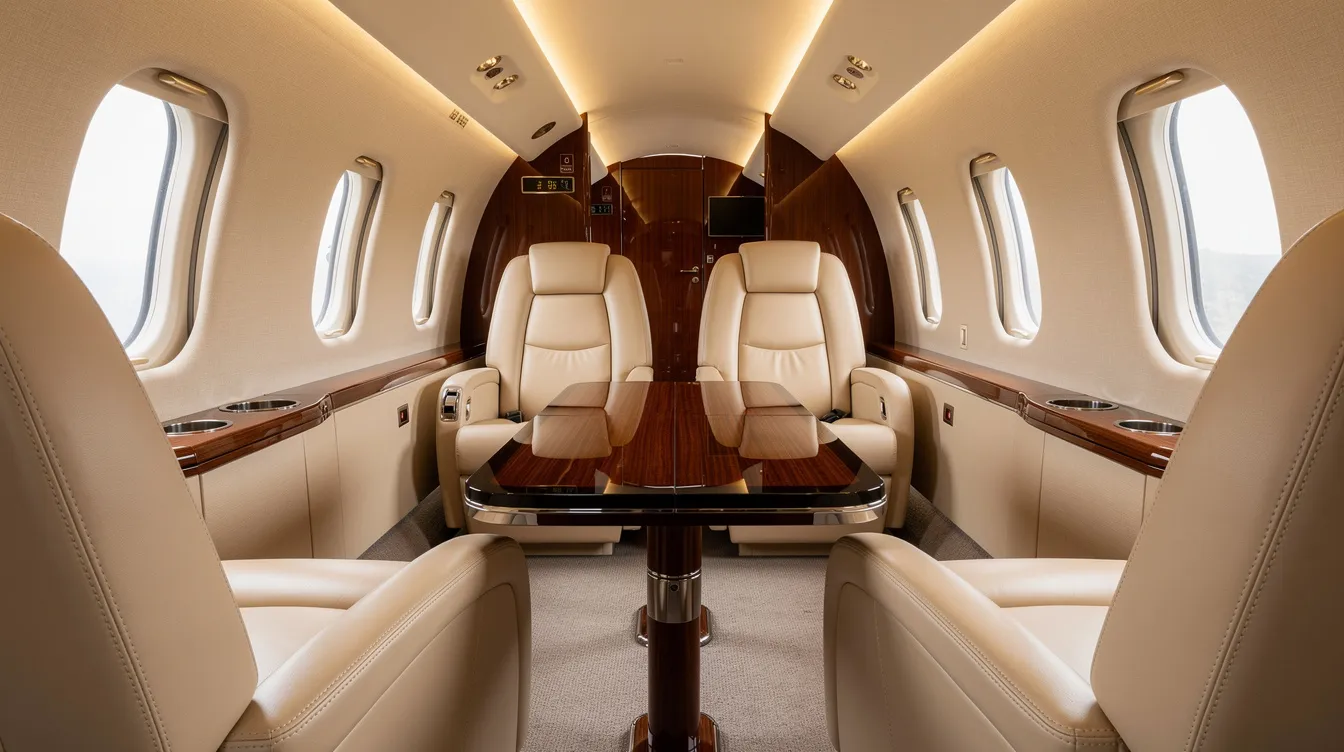
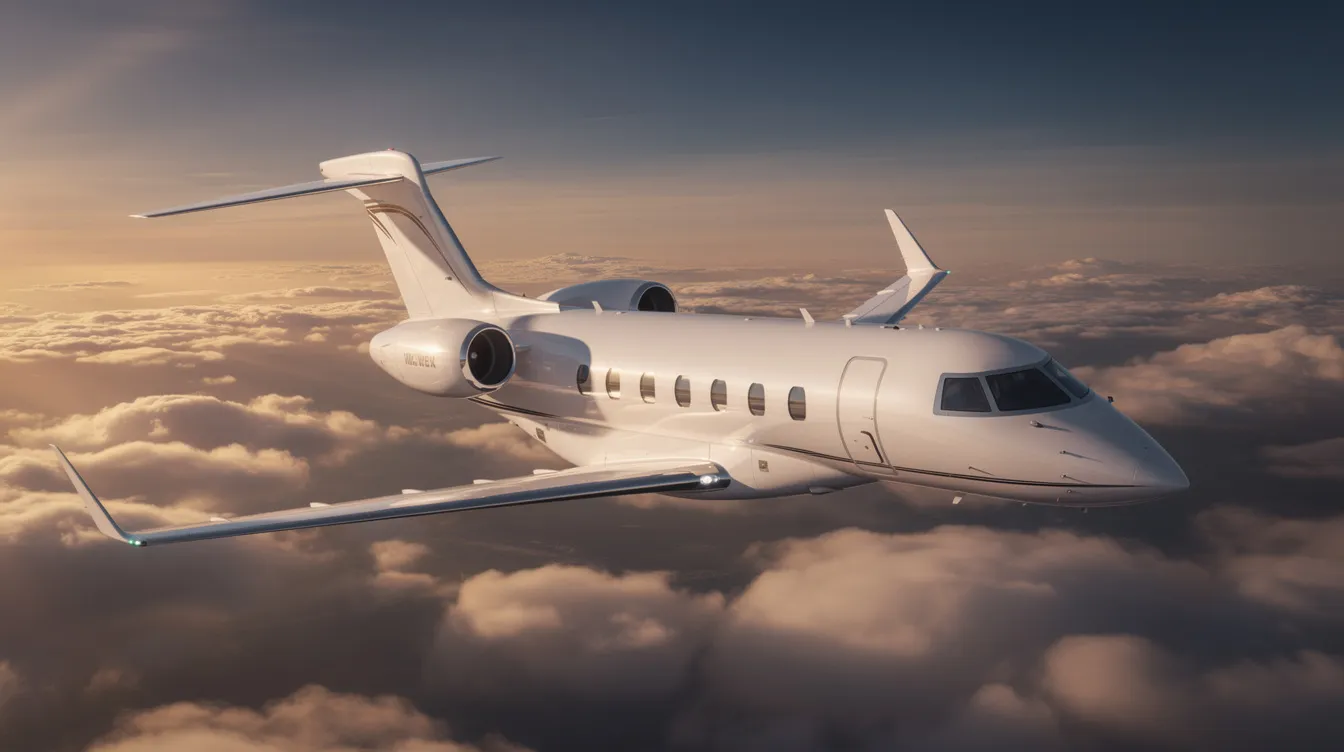
Most private flyers default to jets without running the numbers. For regional missions under 1,000 miles, turboprop aircraft consistently deliver the same point-to-point flexibility at a fraction of the cost. This article breaks down what turboprop charter rates actually look like in 2024–2025, what drives them, and how a membership model can turn volatile quotes into a predictable line item.
Key takeaways
Most turboprop charter rates in the U.S. fall between $1,200 and $3,000 per hour, with typical business-configured aircraft starting around $2,000 per hour. The final number depends on aircraft type, region, and market demand.
On regional routes under 800–1,000 miles, turboprop aircraft are often 30–50% more cost-efficient than comparable light jets, thanks to lower fuel consumption and reduced airport fees.
The per-hour rate is only the starting point. Positioning legs, airport handling charges, crew overnight expenses, and additional services can shift the total cost by 15–30% or more beyond the quoted hourly charter rate.
FLYT uses a membership model with fixed hourly rates across aircraft types—including turboprops, light jets, and midsize jets—giving frequent flyers predictable costs instead of fluctuating ad hoc charter quotes.
This article compares turboprops to light jets and midsize jets, walks through real-world example routes like New York–Nantucket and Dallas–Houston, and closes with a practical FAQ on charter cost, international fees, and membership flexibility.
What are turboprop charter rates right now?
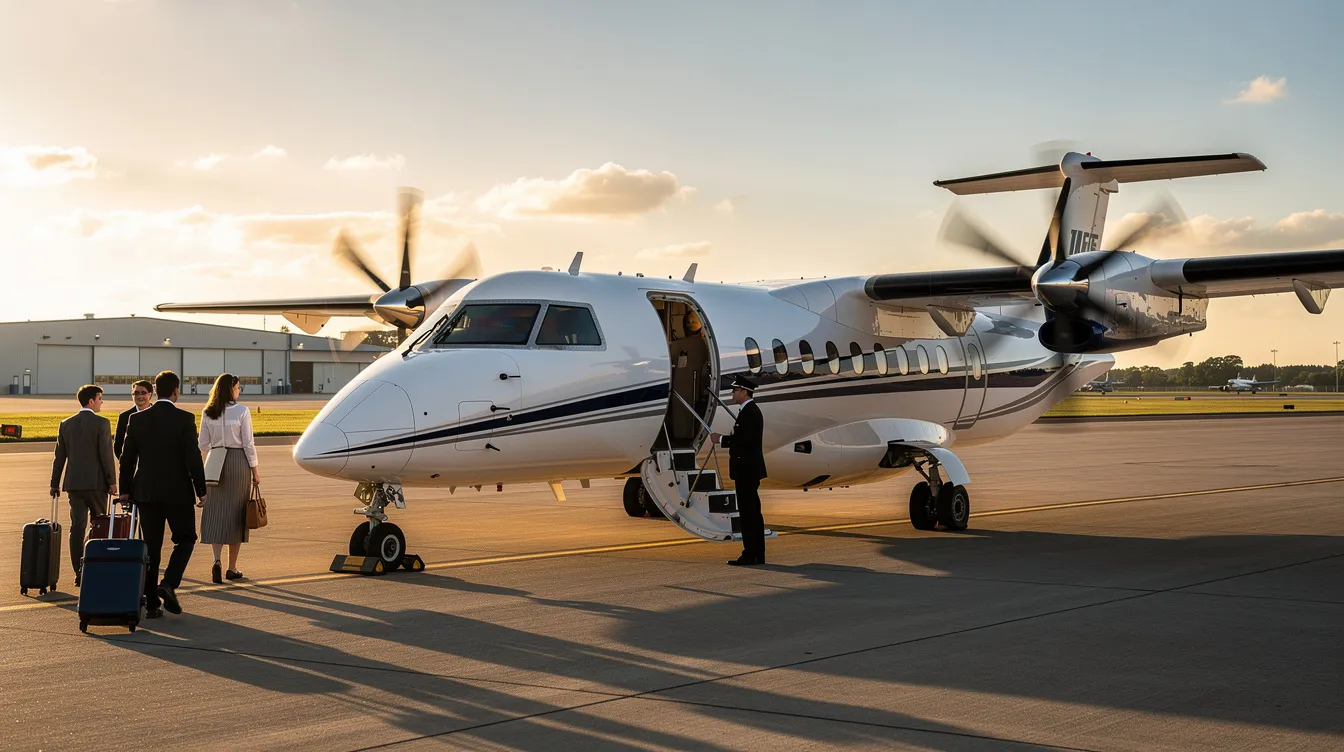
For 2024–2025, business-class turboprop charter rates across North America and Europe generally range from roughly $1,200 to $3,000 per flight hour, depending on aircraft type, configuration, and seasonal demand. Turboprop planes typically seat 5 to 9 passengers, and the quoted rate covers the full aircraft—whether two or eight people are on board.
Single-engine turboprops like the Pilatus PC-12 commonly fall in the $2,000–$2,800 per hour range, while twin-engine models such as the King Air 250 or King Air 350 tend to sit between $2,200 and $3,200 per hour. Premium turboprop models with upgraded cabins and avionics can reach rates up to $5,000 per hour in peak conditions. For context, light jets generally cost $2,500 to $3,500 per hour, and a midsize jet typically runs $4,000–$7,000 or more—making turboprops the most accessible entry to private flights for regional travel. FLYT publishes fixed hourly rates for turboprops and other private aircraft, so members who charter a private aircraft see a clear per-hour cost up front rather than navigating opaque, one-off quotes.
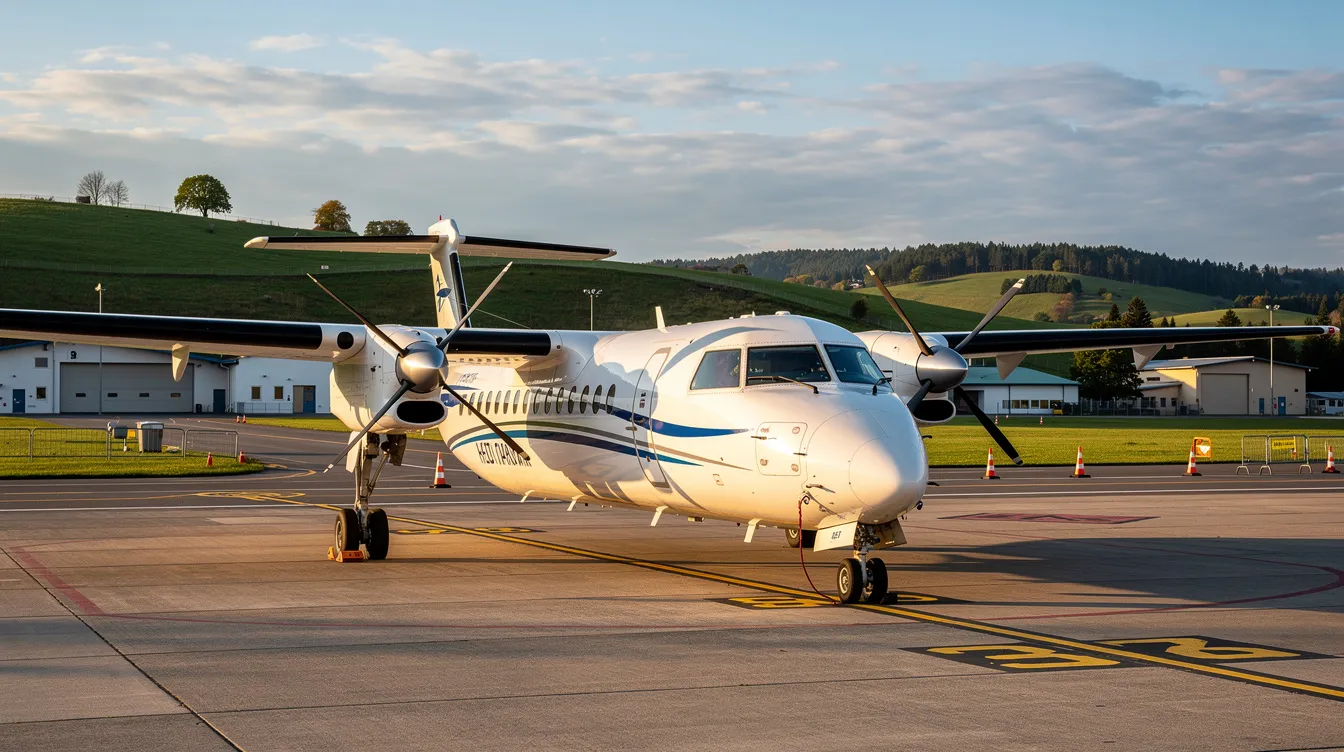
How turboprop charter pricing compares to private jets
Turboprop aircraft sit at the most cost-effective end of private charter, especially for flight distances under 1,000 miles. For frequent regional flyers who want to fly private without committing to heavy jet operational costs, turboprops are often the smartest entry point for both business and leisure travel.
In terms of hourly charter rates by aircraft type category, light jets run roughly $2,500–$4,000 per hour, midsize jets around $4,000–$7,000 per hour, and large-cabin or ultra-long-range private jets start near $8,000 and can exceed $18,000 per hour. Turboprop charter rates, by contrast, begin around $1,200 per hour for utility configurations and top out near $3,000–$3,500 for premium cabins. To make the difference tangible: a same-day round-trip from New York (TEB) to Nantucket (ACK) on a King Air 350 might cost $5,000–$7,000 in turboprop charter, while a Citation CJ3+ on the same route typically lands 40–60% higher. A one-hour sector from Dallas (DAL) to Houston (HOU) on a Pilatus PC-12 might run $1,800–$2,500, versus $3,000–$4,500 on a Phenom 300.
On short sectors, ramp fees, landing fees, and time-based crew costs magnify the value of a lower turboprop hourly rate—especially when flying multiple legs in a single day. FLYT's membership approach lets clients interchange between turboprops, light jets, and midsize jets at fixed hourly rates, matching each trip to the most efficient aircraft without penalty.
Typical hourly charter rates by aircraft type
Aircraft type | Typical hourly rate (USD) | Passenger capacity | Typical range (miles) | Notes |
|---|
Turboprop (Pilatus PC-12) | $2,000–$2,800 | 6–9 | 1,500–1,800 | Single engine, strong cargo capacity |
Turboprop (King Air 250/350) | $2,200–$3,200 | 7–9 | 1,300–2,600 | Twin engine, premium cabins available |
Light jet (Citation CJ3+) | $2,500–$3,500 | 5–7 | 1,300–1,600 | Higher speed, longer range |
Midsize jet | $4,000–$7,000 | 7–9 | 2,000–3,500 | Greater cabin space and range |
Large-cabin jet | $8,000+ | 10+ | 3,500+ | Ultra-long-range, luxury interiors |
Key factors that drive turboprop charter rates
While the hourly rate is the headline number, the true cost to charter a turboprop depends on several factors that sophisticated travelers should understand before committing capital to a private charter program.
The main cost drivers include aircraft type and configuration, routing and distance, fuel consumption and fuel prices, airport selection and airport fees, crew and overnight costs, and real-time market demand. Fuel surcharges and fees are additional costs that appear on most private jet charter invoices. FLYT's floating, asset-light model and risk pool approach are designed to smooth some of these variables for members—especially fuel volatility and repositioning fees—by optimizing fleet utilization across trips. The subsections below unpack each factor with specific examples.
Aircraft type: Pilatus vs King Air and other turboprops
Not all turboprop aircraft are priced the same, even when per-hour ranges appear close. Cabin space, performance envelope, seating capacity, and market popularity all influence the charter rate.
The Pilatus PC-12, a single-engine turboprop with roughly 6–9 seats and strong cargo capacity, carries a common U.S. hourly range of $2,000–$2,800. The Beechcraft King Air 200/250, a twin-engine platform seating 7–8, often runs $2,200–$3,000 per hour. The larger King Air 350/350i accommodates up to 9 passengers with more performance and may trend $2,600–$3,200 or higher on busy corridors. The King Air 90, a smaller twin, ranges from $1,800 to $2,400 per hour. Newer interiors, Wi-Fi, and upgraded avionics push toward the upper end of the rate band, while older airframes sometimes come cheaper but with trade-offs in comfort or dispatch reliability. FLYT curates turboprop aircraft through audited operators, so members see a consistent quality standard, removing the need to trade reliability for a slightly lower hourly quote.
Flight distance, routing, and per-hour economics
Turboprops are most cost-efficient on legs of roughly 150–800 miles, covering about 45–120 minutes of flight time—a range that maps to a large share of U.S. and European regional routes. Turboprops are ideal for regional flights under 1,500 miles, with speeds ranging from 201 to 461 mph depending on model and conditions. Longer trips incur higher fuel consumption and crew costs, narrowing the gap with light aircraft and light jets.
Charter quotes are typically based on block time—takeoff to landing plus taxi—multiplied by the hourly rate, with possible daily minimums of 1.5–2.0 hours charged per billable flight hour even for very short hops. A 300-mile turboprop flight from Palm Beach to Savannah at $2,000 per hour results in roughly 1.0–1.2 billable hours per leg, compared to a light jet at $3,000 per hour for similar block time. A 700-mile route like Los Angeles to Santa Fe is where the speed advantage of a light or midsize jet starts to narrow the total-cost gap, but turboprops can still win if airport choice favors smaller airports with lower operating costs.
Positioning legs—moving the private plane from where it sits to where the client departs—can add 0.5–2.0 hours of extra billed time. A floating fleet like FLYT's can often reduce that exposure by distributing aircraft across high-demand regions.
Fuel consumption, efficiency, and environmental impact
Fuel is one of the highest variable costs in private aviation. Turboprops consume 30–50% less fuel than comparable light jets on sub-1,000-mile regional routes, which directly reduces both charter cost and carbon footprint.
A modern turboprop like a King Air 250 burns roughly 100 gallons of fuel per hour, while a light jet such as a Citation CJ3+ may burn 170–180 gallons per hour on a similar distance. Most turboprops fly at a service ceiling of 25,000 to 30,000 feet, which contributes to their fuel efficiency on shorter segments. This difference in fuel consumption translates into lower turboprop charter rates per hour and a meaningfully smaller CO₂ footprint—increasingly relevant for corporate travelers with ESG or sustainability reporting requirements. FLYT's advisory team can recommend turboprops specifically when clients want to minimize both cost and environmental impact on high-frequency regional routes, treating fuel efficiency as a strategic lever rather than an afterthought.
Airport fees, handling costs, and operational choices
Where you land and depart can shift total turboprop trip cost by thousands of dollars, especially when comparing major hubs to smaller regional airports. Choosing smaller regional airports can reduce landing fees substantially—many non-hub fields charge flat fees between $10 and $200, versus weight-based rates at major hubs that scale with aircraft size.
Turboprops can access runways as short as 3,000 feet, opening airports like Aspen (ASE), Napa County (APC), or East Hampton (HTO) that most jets cannot use. These fields often carry lower landing and parking fees than nearby airline hubs, while also cutting ground transportation time. Versatile turboprops provide access to more airports than most jets, reducing the need for expensive FBO handling at congested primary airports. For example, choosing Oakland (OAK) or Napa (APC) over San Francisco (SFO) can save hundreds in airport handling charges and de-icing costs while keeping you closer to your destination. FLYT's operations team evaluates airport options for each mission, recommending field pairs that balance proximity with lower fee structures.
Aircraft availability and market demand
Turboprop charter rates, like all private aircraft pricing, are sensitive to market demand. Prices often fluctuate based on high-demand seasons—rates and minimums can spike around events like Art Basel Miami, CES in Las Vegas, or January travel windows around Davos, where both turboprops and larger jets see elevated demand.
In these windows, operators may increase hourly costs, impose higher daily minimums, or add premiums for last-minute bookings. Even short regional flights are not immune. FLYT's membership model mitigates some of this volatility by offering contracted fixed hourly rates year-round, giving executives predictable budget planning despite market swings. Booking early and remaining flexible on departure times can also preserve more favorable turboprop charter pricing. Empty leg flights—repositioning segments with no passengers—can significantly reduce charter costs for flexible travelers, though availability is unpredictable. Learn more about charter volatility protection.
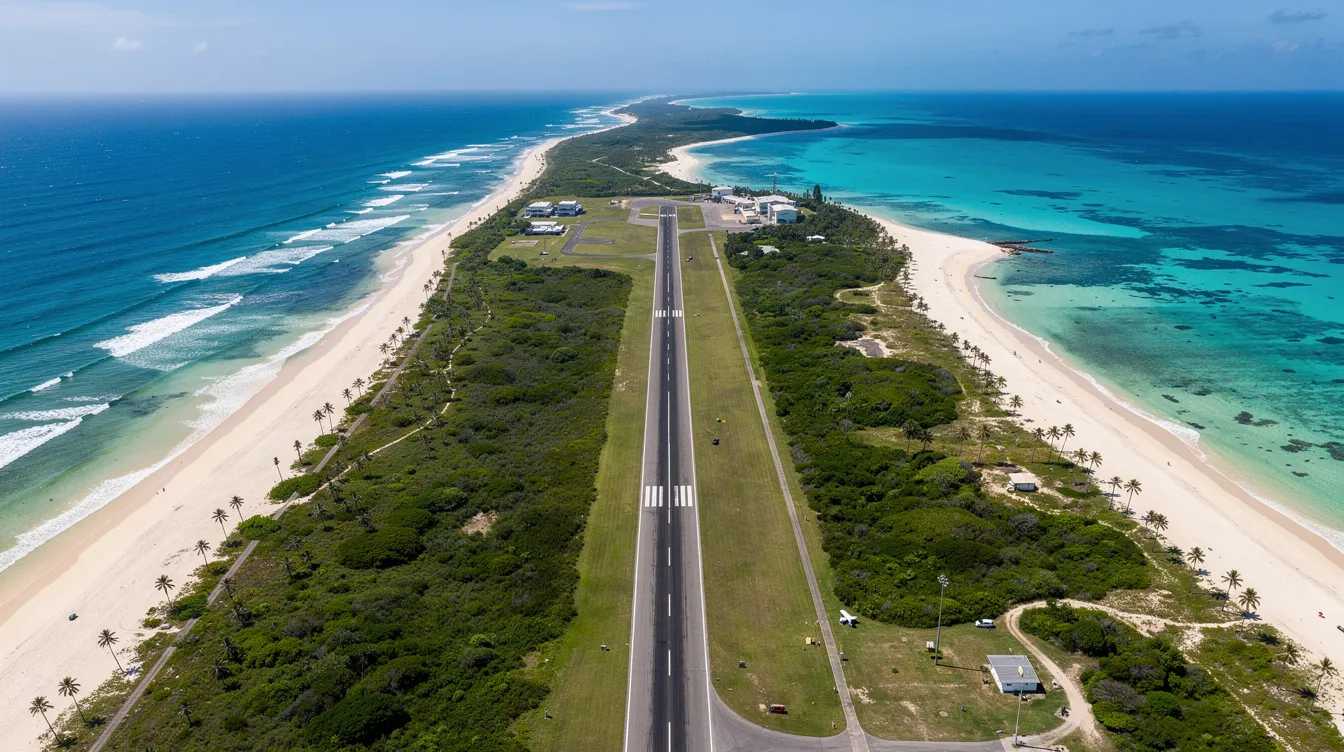
Typical turboprop charter use cases and example routes
Real-world trip profiles make the numbers more intuitive. Most FLYT members use turboprops for regional business, family weekends, and access to secondary or seasonal destinations. The scenarios below cover executive day trips between regional business hubs, weekend leisure travel to coastal or mountain destinations, and multi-stop regional tours where turboprops outperform private jets on cost and logistics. All dollar figures are approximate based on prevailing 2024–2025 U.S. market conditions.
Short regional business trips (under 500 miles)
Consider a same-day round trip from Chicago (MDW) to Indianapolis (IND): block time is roughly 45–60 minutes each way. A turboprop at $2,000–$2,400 per hour can complete a morning outbound and evening return for approximately 2.5–3.0 billable hours, yielding an all-in flight cost in the $5,000–$7,000 range before applicable taxes and minimal fees. A light jet at $3,000–$3,500 per hour on the same pattern naturally lands in the $8,000–$11,000 range. For 3–6 executives flying together, the per-person cost of a turboprop charter on these short sectors compares competitively to last-minute commercial business class while saving several hours door-to-door. FLYT for Business members can align turboprop aircraft with these high-frequency regional runs and step up to a light or midsize jet only when range or passenger count justifies it.
Weekend leisure trips to coastal and resort destinations
Routes like New York (TEB) to Nantucket (ACK), Los Angeles (VNY) to Napa (APC), or Miami (OPF) to Key West (EYW) are where turboprops excel—45–90-minute sectors to remote locations that commercial airlines serve poorly. A Friday outbound and Sunday return may involve either holding the aircraft locally, incurring crew hotel and parking costs, or repositioning it home between legs, depending on demand and cost modeling. A King Air 350 at $2,600 per hour with 1.2 hours per leg yields around 2.4 billable flight hours plus any positioning, often totaling $7,000–$10,000 for the weekend, versus $10,000–$14,000 or more on a light jet. Turboprops' ability to use remote airports close to resort towns reduces transfers, ground congestion, and FBO fees—particularly valued for family leisure travel with children or gear.
Multi-stop regional tours and roadshows
Executives or investment teams running 2–4 city roadshows across a compact region—say, the Texas Triangle of Dallas–Houston–Austin–San Antonio—benefit from a turboprop's lower per-hour rate and ability to operate from smaller aircraft-friendly regional fields. A 3-city loop with a total block time of roughly 3.5 hours might price around $7,000–$9,000 on a turboprop versus $11,000–$15,000 on a light jet, before applicable taxes and handling. FLYT's operations team can design these itineraries to minimize deadhead segments and align business meetings with runway capacity, ensuring the right aircraft serves as an extension of the boardroom rather than a bottleneck.
Membership vs on-demand: how FLYT approaches turboprop charter
Many travelers first experience turboprop charter through on-demand brokers, but frequent flyers benefit more from predictable pricing and guaranteed access. The typical on-demand model involves variable hourly rates, opaque repositioning charges, and seasonal surcharges. FLYT's fixed hourly rates and published terms for turboprops, light jets, and midsize jets eliminate that volatility.
FLYT's asset-light floating fleet and risk pool model allow members to interchange between aircraft types without losing pricing efficiency—turboprops for regional legs, larger jets for longer flights. Members see how hourly rates, estimated block time, and fees combine into a trip budget before committing, enabling reliable year-over-year travel cost planning. For readers who fly private at least 25–50 hours per year, it is worth exploring how FLYT's membership compares to fractional ownership or jet cards.
When does it make sense to choose a turboprop over a jet?
Range, passenger count, schedule, and budget all inform whether a turboprop, light jet, or midsize jet is the right aircraft for a given mission. Turboprop range varies from 800 to 3,000 miles depending on the model, so maximum range is rarely the constraint on regional routes.
Turboprops usually make the most sense when the route is under roughly 800–1,000 miles, the group size is 3–8 passengers, airport access to smaller fields is valuable, and cost efficiency and ESG metrics are high priorities. Jets become more appropriate for longer non-stop segments like New York–Dallas or London–Athens, tight schedules requiring higher cruise speeds, or situations requiring specific cabin layouts, spacious cabins, or sleeping configurations on long-haul flights.
FLYT advisors routinely run side-by-side analyses for members—turboprop versus light jet versus midsize jet—for routes like San Francisco–Seattle or Zurich–Nice, highlighting time difference, hourly cost, and total cost. The takeaway: choosing to fly private does not always mean choosing a jet. For many regional trips, versatile turboprops with turboprop engines are the strategically smarter choice from both a financial and an experience standpoint. Learn more about how FLYT works and the platform.

FAQ: turboprop charter rates and practical considerations
These FAQs address common questions around turboprop charter pricing, membership, and operational details that were not fully explored above.
Are turboprop charter rates negotiable, or are they fixed like airline tickets?
In the broader market, turboprop charter quotes can sometimes be negotiated—especially for empty legs, off-peak days, or multi-leg commitments. However, last-minute peak-period private jet charter costs tend to have less flexibility. Ad hoc negotiability often comes at the expense of predictability: you may secure one attractive rate but face higher private jet rental prices on the next trip due to market demand and aircraft availability. FLYT's model differs: members trade ad hoc negotiation for fixed hourly rates published in advance, eliminating uncertainty when budgeting for 50–200 or more hours of annual flying. Visit FLYT FAQ for details.
How far can I realistically fly on a turboprop before a jet becomes more efficient?
Most business-class turboprops have an effective nonstop extensive range of roughly 800–1,500 miles with reserves, covering routes like Los Angeles–Denver, Chicago–Dallas, or Paris–Barcelona. Past about 1,000 miles, the time savings of a light or midsize jet start to become meaningful—especially with tight schedules. For international flights needing to cross large bodies of water or navigate above most weather systems at higher altitudes, jet engines may offer more operational flexibility. FLYT advisors model both options once trip distance approaches the upper end of turboprop range, presenting side-by-side time and cost comparisons.
What extra costs should I expect on top of the turboprop hourly rate?
Beyond the quoted per-hour rate, budget for airport landing fees, airport handling charges, crew overnight expenses when applicable, de-icing in winter climates, and additional services such as in-flight catering or premium service ground transportation. These additional costs can add approximately 10–25% to the base flight cost on typical itineraries, with higher percentages on complex international missions or charter flight legs involving remote airports. Applicable taxes and segment fees vary by jurisdiction and are usually itemized separately. FLYT packages these elements into transparent trip estimates so surprise line items are minimized.
How does turboprop charter pricing work for international or cross-border flights?
Turboprops are most often used for short-haul international flights such as U.S.–Caribbean, U.S.–Canada, or intra-Europe routes where distances stay within range and customs facilities exist at the chosen airports. International turboprop charters add specific costs: overflight and landing permits, customs and immigration handling, and sometimes extra ground support—all on top of the standard per-hour rate. International fees and extra crew rest requirements can slightly increase the total trip cost versus a domestic leg of similar distance. FLYT's concierge team coordinates these details, ensuring members see a single consolidated quote that already reflects all international fees. Contact FLYT for personalized support.
Is a turboprop membership still valuable if I sometimes need midsize jets or larger aircraft?
Many frequent flyers start with turboprops for regional missions but still need access to light jets, a midsize jet, or occasionally a heavy jet for longer-range trips or larger groups. With FLYT, membership is not tied to one aircraft type—members can interchange between smaller aircraft like turboprops and larger jets at fixed hourly rates. This fleet interchange flexibility allows executives to allocate capital efficiently: using turboprops when they are the rational choice and stepping up only when the mission truly requires it. For travelers flying 25–150 hours per year across mixed trip profiles, a flexible membership spanning multiple aircraft categories often delivers better value than narrow solutions or outright ownership. Explore how FLYT compares to charter, jet cards, and fractional ownership.
Conclusion
Turboprop charter rates in 2024 offer a strategic balance of cost efficiency, operational flexibility, and regional accessibility for executives and frequent flyers. By choosing turboprops for trips under 1,000 miles, travelers benefit from significantly lower hourly rates compared to jets, reduced fuel consumption, and access to smaller airports with lower fees. Understanding the full cost picture—including positioning, crew, and airport charges—is essential for accurate budgeting.
FLYT’s membership model further enhances value by providing fixed hourly rates across a diverse fleet, enabling members to match aircraft to mission needs without ownership burdens or fluctuating charter quotes. This approach delivers predictable costs, global reach, and concierge-level support, making turboprop charters a smarter, more flexible alternative to traditional private aviation ownership or on-demand charters.
For executives prioritizing efficiency, transparency, and operational intelligence, turboprop charter membership through FLYT represents a modern solution that aligns capital allocation with travel needs. Discover how this membership model can transform your private aviation experience with less complexity and greater cost control. Learn more about FLYT’s membership benefits and explore how fleet interchange improves flexibility to optimize your travel strategy.