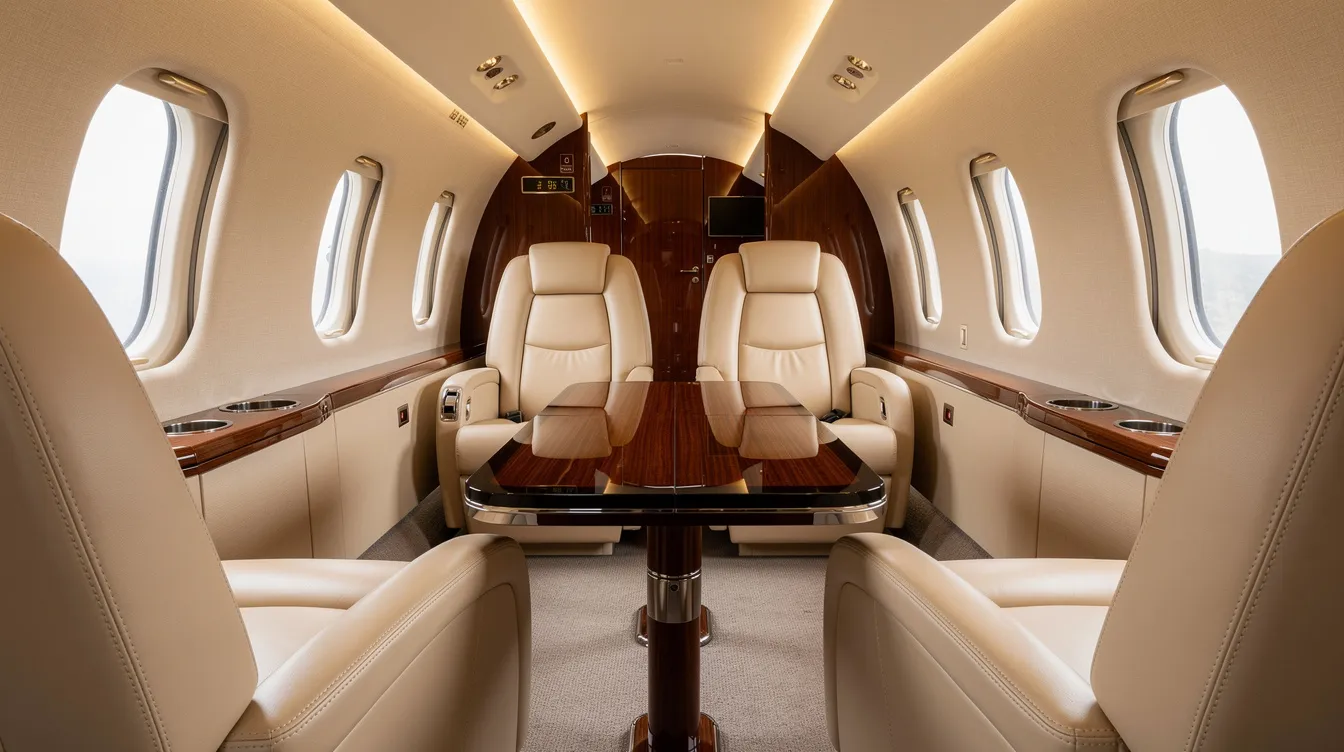
Private aviation crossed 3.5 million business jet departures globally in 2025, a 6.21% year-over-year increase. The fastest-growing segment wasn't North America—it was the rest of the world, up 26.7%. For executives, investors, and families operating across continents, the shift is clear: demand for worldwide jet charter is accelerating, and the models behind that access need to keep pace.
This article breaks down what worldwide jet charter actually involves in 2026, how FLYT's membership model delivers global private jet access without ownership, and why fixed hourly rates, fleet interchange, and an asset-light floating fleet create a fundamentally different approach to international private flying.
Key Takeaways
Worldwide jet charter matters more now than ever. With global private jet charter revenues reaching approximately USD 15.02 billion in 2025 and projected to hit USD 24.76 billion by 2032, the market is responding to real demand from executives, founders, and families who need schedule control, access to secondary airports, and the ability to cross continents efficiently.
FLYT offers global private jet access through a membership model, redefining private luxury charter by giving members the benefits of worldwide jet travel without aircraft ownership. Private jet membership offers flexible aircraft access, eliminates the obligations of ownership, and delivers cost efficiencies that full or fractional ownership cannot match.
Fixed hourly rates provide predictable pricing for private jet charters, removing surprise costs and simplifying budgeting for frequent global flyers. Combined with fleet interchange across jet sizes and an asset-light floating fleet, FLYT members can match the right aircraft to each mission.
FLYT supports international trips—New York–London, Los Angeles–Tokyo, Dubai–Geneva, and beyond—with 24/7 concierge logistics and transparent pricing that accounts for the complexity of cross-border private aviation.
For frequent worldwide flyers, FLYT positions itself as a strategic, modern alternative to fractional ownership, traditional jet cards, and ad hoc charter. The asset-light model reduces ownership costs significantly while preserving capital and offering unparalleled flexibility.

What "Worldwide Jet Charter" Really Means Today
Since 2020, the way business leaders use private aviation has changed structurally. Remote teams, distributed offices, and globally dispersed investor bases have made intercontinental travel less predictable and more frequent. The active global business aircraft fleet now includes approximately 21,979 aircraft, and the demand for on-demand access across borders continues to climb.
Worldwide jet charter refers to on-demand access to aircraft capable of intercontinental and long-range missions. These are flights that cross oceans, connect continents, and reach destinations that commercial airlines either underserve or skip entirely. Private jets can land at over 5,000 airports that major airlines cannot service, which is precisely why charter flights operate on the passenger's schedule and access more airports than any commercial itinerary allows.
Common Use Cases
Multi-city investor roadshows spanning San Francisco, London, Paris, and Frankfurt in a single week
Cross-border M&A meetings where teams must arrive on-demand in remote jurisdictions
European summer itineraries requiring access to regional airports across the Mediterranean
Family travels to remote resort destinations where commercial service is infrequent
Jet charter services offer personalized travel alternatives to commercial flights, and customized flight schedules enhance privacy and convenience for travelers who cannot afford schedule friction.
Typical flight profiles span a wide range:
New York to London runs approximately six to seven hours on a heavy jet.
London to Dubai takes roughly seven to eight hours.
Los Angeles to Tokyo stretches to ten to twelve hours, requiring ultra-long-range capability.
Singapore to Sydney, Miami to São Paulo—each route demands a different aircraft category, range envelope, and cabin configuration.
Matching the right aircraft to the mission is not optional on worldwide routes. It is essential.
Behind every global charter flight sits a layer of operational complexity most travelers never see:
Overflight approvals
Landing and departure slots
Fuel availability at remote airports
Customs and immigration logistics
Crew duty time compliance
Positioning legs when the aircraft is not already nearby
Regulatory considerations—visa requirements, sanctions, safety restrictions—vary by destination and can shift on short notice. All of this requires sophisticated 24/7 coordination and a global network of trusted partners. Private luxury charter at this level is not simply about the aircraft. It is about the entire operational infrastructure behind it.
How FLYT Enables Global Access Without Aircraft Ownership
Membership Model Overview
FLYT's membership-based model is built around a straightforward principle: deliver worldwide jet access without requiring members to buy, finance, or fractionally own an aircraft. Private jet membership eliminates the obligations of ownership while preserving the flexibility that global travelers need.
Cost Efficiencies
Members secure predictable access through fixed hourly rates across a curated network of vetted operators and a floating, asset-light fleet. The model provides cost efficiencies in private aviation by removing the capital-intensive elements—acquisition, depreciation, hangar fees, full-time crews, insurance—that make ownership financially heavy for all but the most frequent flyers.
Risk Pool Model
The risk pool model works in straightforward terms. Flight demand is spread across multiple aircraft and operators rather than concentrated on a single asset. If one aircraft is in maintenance or repositioning, another is available within the network. This reduces single-aircraft downtime risk and shifts operational variability away from the member. It allows flexible access to private jets without ownership, and asset-light models are popular among high-net-worth individuals precisely because they align aviation spending with actual usage rather than fixed overhead.
This model supports a floating fleet of aircraft that can be positioned where demand requires, rather than sitting idle at a single home base. For members who fly between New York and London one week, then Dubai and Geneva the next, a floating fleet means the air network adapts to them—not the reverse.
With one FLYT membership, members fly worldwide without juggling separate charter relationships in Europe, the Middle East, or Asia-Pacific. Capital is preserved:
No aircraft acquisition cost sits on the balance sheet
No depreciation erodes value year after year
No hangar fees accumulate during months of lighter travel
Membership provides cost efficiencies compared to owning a jet, and private jet membership is ideal for high-net-worth individuals who prefer to allocate capital toward their core business and investments rather than depreciating aviation assets.
Worldwide Jet Charter Versus Ownership, Fractional, and Jet Cards
Full Ownership
Acquiring a long-range jet—a Gulfstream G650, Bombardier Global series, or comparable—typically costs between USD 30 million and USD 70 million.
On top of acquisition, owners carry annual fixed costs for hangar space, insurance, full-time crew salaries, ongoing maintenance, regulatory compliance, and depreciation.
Even when the jet sits idle, these costs persist.
Most privately owned jets are underutilized relative to their total cost of operation, and owners are limited to the capabilities of a single aircraft type.
Employees dedicated to managing the aircraft add another layer of overhead.
Fractional Ownership
Fractional programs require a large upfront capital outlay—a 1/16th share in a light jet like a Phenom 300E costs approximately USD 360,000, plus monthly management fees in the range of USD 8,000 to USD 12,000.
Occupied hourly rates layer on top.
Multi-year contracts lock capital, shares carry depreciation exposure, and access constraints during peak days or for international repositioning are common.
Interchange models can reduce costs associated with aircraft ownership, but fractional holders remain tied to a specific fleet and contract structure.
Learn more about FLYT vs fractional ownership.
Traditional Jet Cards
Pre-purchased hour blocks—often 25 hours—offer fixed pricing and some predictability.
A fixed-price 25-hour light jet card runs around USD 157,000 all-in.
Many cards carry aircraft-type limitations, region restrictions, and potential surcharges for transoceanic or one-way international legs.
Peak-day availability is not always guaranteed.
See how FLYT compares to jet cards.
FLYT Membership
FLYT's approach removes the asset purchase entirely. Members select aircraft trip by trip based on mission requirements, access global coverage under one membership, and operate on transparent fixed hourly pricing for worldwide jet missions. Fixed hourly rates can reduce overall travel expenses for frequent flyers by eliminating the capital commitment and fixed overhead of ownership while still delivering consistent access. Fixed hourly rates simplify budgeting for private jet travel across a full year of varied routes and aircraft sizes. Explore FLYT vs charter and brokers for deeper insight.
A Practical Example
Consider an executive flying 150 to 200 hours per year globally, including five transatlantic crossings and three Asia-Pacific missions:
Fractional ownership ties significant capital to a single aircraft type.
A jet card may cover domestic legs but introduce surcharges or availability gaps for long-range international flights.
A FLYT membership allows this executive to use a super-midsize jet for domestic and regional legs, step up to a heavy or ultra-long-range aircraft for intercontinental sectors, and manage the entire annual flight budget through predictable hourly rates—without a balance sheet asset or depreciating share.
Fleet Access for Worldwide Jet Charter Missions
Fleet Interchange Explained
Effective worldwide jet charter depends on matching each trip with the right aircraft category. Relying on a single-owned jet—or even a single jet type—creates mismatches between mission profiles and aircraft capability.
FLYT's fleet interchange concept addresses this directly. Aircraft fleet interchange allows sharing of multiple aircraft types under one membership, so a member flying a two-hour domestic hop uses a different category than the same member crossing the Atlantic. Fleet interchange increases operational flexibility for private aviation, and private aviation companies often utilize fleet interchange for efficiency precisely because no single aircraft type optimizes for every route.
Fleet interchange can enhance the availability of aircraft for clients, particularly during peak periods when specific categories may be in higher demand. Rather than waiting for one assigned aircraft, members draw from a broader pool.
Aircraft Categories
Here is how aircraft categories map to worldwide jet missions:
Aircraft category | Example models | Range (nautical miles) | Typical mission profiles | Notes |
|---|
Light jets | Phenom 300, Citation CJ4 | 1,500 - 2,000 | Regional flights: NJ to FL, London to Geneva, Phoenix to AZ | Efficient for short regional trips |
Midsize & super-midsize jets | Citation Latitude, Challenger 350 | Up to 3,200 | Transcontinental and shorter intercontinental legs | Can handle NY to the West Coast or transatlantic with a fuel stop |
Heavy & ultra-long-range jets | Global 5500, Gulfstream G650/G700 | 5,500 - 7,500+ | Nonstop long-haul: LA to Tokyo, Dubai to NY | Required for nonstop transpacific/transatlantic |
FLYT operates an asset-light floating model, leveraging a vetted global operator network instead of tying members to one fixed base or single-fleet solution. This means aircraft are positioned where demand exists, reducing idle time and increasing access across geographies. Learn more about FLYT's asset-light floating fleet and the AI fleet engine optimizing aircraft positioning.
It is worth noting that the worldwide jet charter industry has a long history of fleet evolution. Worldwide Jet Charter, for instance, began operations in 2003 with a Hawker 700 and has since grown to 13 owned and leased jets, including a Gulfstream GIV purchased in late 2020. The company ranked number 4,972 on Inc.'s 2020 fastest-growing list. While FLYT takes a different structural approach—membership-based access rather than fleet ownership—the trajectory of the industry shows how demand for diverse fleet access has steadily increased year over year.
Typical Worldwide Jet Routes and Mission Profiles
To understand how worldwide jet charter works in practice, consider the routes FLYT's target members fly most often. Common examples include:
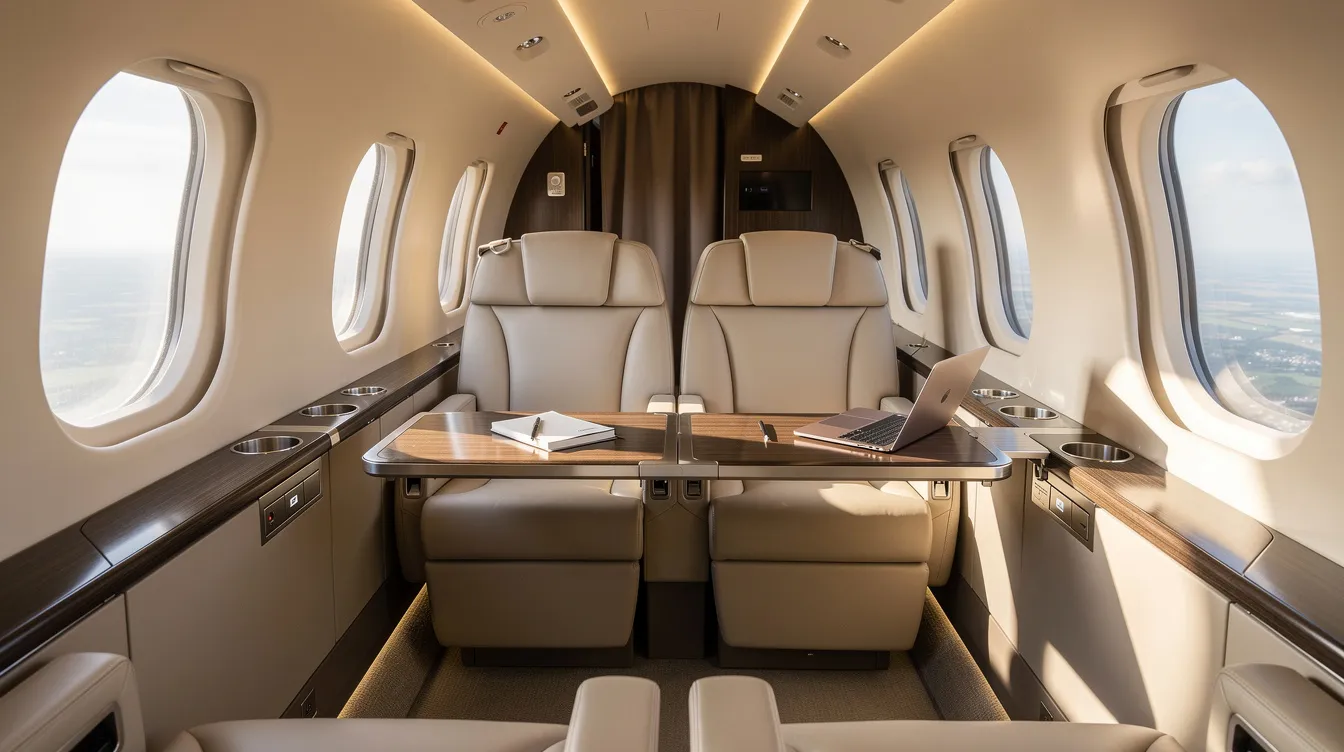
New York to London runs roughly six to seven hours on a heavy jet, crossing five time zones. London to Dubai takes seven to eight hours. Los Angeles to Tokyo stretches to ten to twelve hours, often requiring a tech stop in Honolulu or Anchorage, depending on aircraft range. Miami to São Paulo is seven to eight hours. Zurich to Riyadh covers approximately five to six hours. Each of these missions crosses significant time zones, making cabin comfort—lie-flat seating, sound insulation, work-friendly layouts—a practical necessity rather than a luxury preference. Private cabins provide secure environments suitable for working or meetings, which is critical when an executive lands and heads directly into negotiations.
Passengers often arrive only 20 minutes before departure at private terminals, a contrast that reshapes how multi-city international trips are structured. Customized services include tailored food and beverage selections and pet-friendly options, accommodating the real-world needs of families and executives on long legs.
FLYT's fleet flexibility allows members to use different aircraft sizes on different legs of a longer multi-stop journey. A trip from Los Angeles to Tokyo via Honolulu might use an ultra-long-range jet for the transpacific crossing and a super-midsize for the shorter hop, optimizing cost and comfort across each segment.
Membership, Pricing, and Fixed Hourly Rates for Global Flying
FLYT's membership structure is designed for frequent worldwide flyers—founders managing global investor relationships, a CEO overseeing operations in multiple regions, family offices with assets and residences across continents, and multinational executives whose schedules shift week to week.
Fixed Hourly Rates
Fixed hourly rates are agreed in advance and typically include the aircraft, crew, standard catering, and core operational costs. Many private jet services offer fixed hourly rates for convenience, but the value lies deeper than convenience alone: fixed hourly rates eliminate unexpected costs during flights, allowing members to commit to an itinerary knowing the financial parameters before wheels up.
International variables exist. De-icing in winter, certain handling or overnight fees at foreign airports, overflight permit costs, and customs coordination can introduce additional charges on global routes. FLYT handles these transparently—disclosed and itemized before departure rather than buried in opaque surcharges. Transparent pricing helps avoid hidden fees in private aviation, and clear pricing structures enhance customer trust in private aviation. Transparent pricing models can include fixed hourly rates as a foundation, with any variable international costs communicated upfront so the member's account reflects exactly what was quoted. See more on FLYT pricing.
Members can see and compare the hourly economics of different aircraft categories for international missions before committing. A transatlantic crossing on a heavy jet carries a different hourly rate than a domestic hop on a light jet—members choose based on the mission, not because they are locked into one aircraft type.
An Annual Worldwide Jet Flying Pattern in Practice
Consider a member flying 120 to 150 hours per year:
Several transatlantic trips
A handful of domestic legs between Van Nuys and the East Coast
Two or three trips to the Middle East or Asia
With fixed hourly rates across aircraft categories, the annual aviation budget becomes a predictable line item rather than a variable expense that fluctuates with fuel prices, repositioning fees, and ad-hoc charter markups. The member's financial team can plan and account for aviation spending with the same precision they apply to other operational costs.
Operational Support, Safety, and Global Concierge Service
Worldwide jet charter is as much about coordination and safety as it is about the aircraft. On global routes, the operational layer behind each flight determines whether the experience meets the height of what private aviation should deliver.
Safety as a Baseline
Safety certifications such as FAA Part 135 are essential for charter operations, and FLYT partners only with operators that meet or exceed these standards. Safety should be prioritized with ratings like ARGUS or Wyvern for jet operators, and FLYT's vetting process ensures that every aircraft in the network carries the appropriate certifications, modern avionics, and experienced international crews. A chief pilot with deep experience in transoceanic operations and complex international airspace adds measurable operational security to every mission. This commitment to excellence in safety is non-negotiable.
Concierge-Level Trip Support
Members enjoy concierge-level service for travel needs that extend well beyond the flight itself. Many charter services offer personalized catering and concierge support, and FLYT's 24/7 operations team handles multi-leg route planning, ground transport coordination, hotel and meeting timing aligned to arrivals, and real-time itinerary adjustments when plans shift.
Charter services can accommodate oversized luggage and special requests easily—whether that means ski equipment, musical instruments, or medical supplies. Passengers can skip long security lines by using private terminals, and immediate departure schedules ensure that planes wait for passengers if needed, not the other way around. Charter brokers and operators provide different booking options for jets, but FLYT's integrated membership approach means the member deals with one team, one account, and one consistent experience across every region. Learn more about FLYT's platform.
Border and Regulatory Support
For worldwide flights, FLYT provides guidance on passport and visa requirements, handles APIS submissions, coordinates customs and immigration processing, and works with local handling agents at each destination. This is where operational quality separates a reliable worldwide jet service from a transactional one.
A Real-World Scenario
An executive is mid-roadshow: New York to London to Berlin. The London meeting runs two hours longer than planned, pushing the Berlin departure. FLYT's operations team adjusts the departure slot, coordinates with the Berlin handling agent, notifies ground transport at both ends, and confirms the updated arrival time with the hotel and morning meeting counterpart. The member receives a message confirming the updated schedule and any pricing implications—before deciding. No scrambling. No uncertainty. This is what operational support looks like when it works.

Who Benefits Most from Worldwide Jet Access with FLYT
Not every private aviation user needs a worldwide jet charter membership. This section is guidance for readers evaluating whether this model aligns with their travel profile and capital strategy.
FLYT's offerings serve specific member profiles where the combination of global reach, flexible aircraft access, and predictable pricing creates measurable value:
Founders and investors with global bases—fundraising across continents, board meetings in multiple cities, and schedules that shift with deal flow
Executives and a CEO overseeing multiple regional offices who need to be in London, Dubai, or Singapore within days, not weeks
Family offices managing assets, properties, and relationships across continents, where luxury travel involves complex multi-stop itineraries to destinations with limited commercial service
Globally mobile families who live across time zones and prioritize privacy, comfort, and the ability to travel with children, pets, and flexible schedules
Common patterns among ideal members:
100 to 300 private flight hours per year
At least a few intercontinental trips annually
Frequent travel to secondary airports that commercial carriers do not serve
A clear preference against owning a depreciating asset
The qualitative benefits are significant:
Time saved at airports—often measured in hours per trip when avoiding commercial terminals, connections, and security delays
The ability to keep multi-city agendas on schedule
Privacy for sensitive business discussions in a secure cabin
Reduced cognitive load compared with managing an owned aircraft, its crew, its maintenance, and its regulatory compliance
FLYT membership is a disciplined, efficient way to create a structured approach to worldwide private aviation use over several years—matching aviation access to actual need, rather than forcing travel patterns around the limitations of a single owned or fractionally held aircraft. As an industry leader in membership-based private aviation, FLYT positions this access as capital-smart rather than capital-heavy. Learn more about the FLYT advantage.
How to Get Started with Worldwide Jet Charter Through FLYT
Getting started is straightforward and designed around the member's existing travel patterns, not around selling a predetermined product.
Step One: Discovery
FLYT assesses the prospective member's current annual flight hours, key routes, preferred regions, and any special requirements—whether that includes pets, enhanced security protocols, medical accommodations, or specific cabin preferences.
Step Two: Membership Configuration
Based on the discovery assessment, FLYT proposes a membership structure, recommends aircraft categories for typical missions, and presents a fixed hourly rate framework. This gives the prospective member clear visibility into annual aviation economics before committing. Learn more about how it works.
Step Three: First Flights
Initial trips are supported with dedicated trip planning, clear documentation of pricing before departure, and post-trip review if the member wants to refine future use. The goal is to calibrate the membership to real-world experience, not assumptions.
Step Four: Ongoing Optimization
As travel patterns evolve—new offices, new investment geographies, family needs—the membership adapts. Aircraft category selections shift, routes expand or contract, and hourly rate structures are reviewed to ensure they continue to align with the member's profile.
The world of private aviation should adapt to how you work and live—not require you to adapt to it.
Explore how FLYT can structure worldwide jet access around your specific travel profile. Discover a more flexible, transparent approach to global private jet travel—without ownership complexity. For questions, visit the FLYT FAQ or contact us.
FAQ
Can I use FLYT membership for both domestic and worldwide jet flights?
Yes. Members use the same membership for domestic hops—New York to Boston, London to Geneva, Van Nuys to Arizona destinations—and for long-range global flights. The fleet interchange model means aircraft size is optimized per mission: a light jet for a short regional leg, a heavy or ultra-long-range jet for an intercontinental crossing. Pricing remains structured around fixed hourly rates, with clear visibility into any additional international costs before each trip. There is no need for separate domestic and international memberships.
How far in advance do I need to book a worldwide jet charter flight?
For standard global routes, several days of lead time provide the best aircraft availability and operational planning window. Peak holiday periods, major conference weeks, or flights to highly congested airports benefit from longer advance notice. That said, FLYT can often support shorter-notice international trips—the 24/7 operations team works to source and position aircraft quickly. Members are encouraged to share tentative calendars early, even when dates are approximate, so the team can plan proactively for smoother execution.
Are there restrictions on where I can fly worldwide with FLYT?
FLYT supports travel to most major business and leisure destinations across North America, Europe, the Middle East, and key parts of Asia-Pacific. Certain countries or regions may be restricted due to regulatory constraints, safety considerations, or international sanctions. FLYT advises members on a case-by-case basis and provides updated guidance when geopolitical conditions affect specific airspace or destinations. The goal is always to find a safe, compliant routing that meets the member's objective.
Can I choose a specific aircraft type or cabin layout for a long-haul trip?
Members can express preferences around aircraft size, cabin configuration, seating layout, and connectivity requirements. FLYT matches these preferences with suitable options from the vetted operator network. For example, a member who needs lie-flat seating and a private workspace for a ten-hour transpacific crossing will be matched differently from a group of six heading to a weekend destination on a three-hour flight. The objective is to align aircraft selection with the mission profile, passenger count, and productivity or rest needs of the group.
What happens if my schedule changes during an international trip?
Schedule changes during international travel are common—meetings run long, deals close early, or new stops become necessary. FLYT's operations team can adjust departure times, reroute legs, or add intermediate stops while the trip is underway. Members are informed of any pricing implications before changes are confirmed, preserving the platform's commitment to transparency and control. The member always has the final word on whether to proceed with an adjusted itinerary, and the team handles the operational coordination—slot changes, ground transport, handling agents—behind the scenes.
Conclusion
Worldwide jet charter is evolving to meet the demands of modern global travelers who value flexibility, predictability, and operational efficiency without the burdens of ownership. FLYT’s membership model embodies this shift by offering fixed hourly rates, fleet interchange, and an asset-light floating fleet that adapts to members’ dynamic travel needs across continents. This approach delivers global private jet access with transparent pricing and concierge-level support, ensuring every trip is seamless and aligned with business and lifestyle priorities.
For executives, founders, and high-net-worth individuals seeking a smarter alternative to fractional ownership or traditional jet cards, FLYT provides a strategic solution that preserves capital while enhancing travel freedom. By leveraging a global network of vetted operators and tailored operational expertise, FLYT redefines worldwide jet charter as an accessible, efficient, and sophisticated service.
Discover how FLYT can transform your private aviation experience and provide flexible, transparent worldwide jet access without ownership complexity. Learn more at www.flyt.com.