In an era where convenience and immediacy define modern travel, the idea of an “Uber for private jets” promises a seamless, on-demand private aviation experience at your fingertips. Imagine booking a private jet with just a few taps on your phone—no lengthy negotiations, no hidden fees, no ownership headaches. For executives, entrepreneurs, and frequent flyers, this vision offers the allure of unmatched flexibility, efficiency, and control over their travel. Yet, the reality of private aviation is far more complex than hailing a ride.
This article explores why the true future of private jet access lies not in one-click rideshare apps, but in smarter, membership-based models that blend operational intelligence with global reach and predictable costs. Discover how modern private aviation is evolving to meet the needs of discerning travelers who value time, transparency, and tailored service above all else.
Key takeaways
The “uber for private jets” concept has been around since the early 2010s, but true one-tap, instant global booking does not map cleanly onto private aviation.
Private jets require certified operators, crew planning, maintenance checks, pilot qualifications, insurance, and regulatory approvals before every flight.
Uber does not operate an ongoing private jet service; it has only run limited promotional aviation campaigns with partners.
For frequent flyers, membership-based private aviation is the closest practical version of an Uber-like experience: digital access, fixed hourly rates, concierge support, and flexible aircraft selection.
FLYT’s model is designed around access without ownership, giving members a structured way to fly private globally without carrying an aircraft on the balance sheet. Learn more about FLYT's approach.
What people really mean by “uber for private jets.”
When people search for “Uber for private jets,” they usually mean something specific: open an app, view available aircraft, compare options, see transparent pricing, and book flights without the traditional back-and-forth of private charters.
The appeal is not simply luxury. For business executives, founders, investors, and frequent private jet travelers, the real value is time control, while also providing travelers with easier comparison and more booking control. Booking a private jet can save 2-3 hours compared to commercial flights, and private jet travelers save 2–3 hours per trip by avoiding congested terminals, rigid scheduled routes, and long security queues.
Private jet charters, seat sharing, empty leg flights, and membership programs are often grouped under the same “Uber-like” idea, even though they are different products. One traveler may want the entire aircraft for a confidential board trip. Another may want shared flights on popular routes. A third may want discounted empty-leg flights for flexible leisure travel.
In practical terms, users expect to see aircraft options on a phone, select an aircraft type, review charter rates, and be wheels-up within a few hours on routes such as New York–Miami or London–Nice. Searches for phrases such as “uber private jet price” and “private jet app like Uber” increased notably after multiple startups launched between 2013 and 2018, including early brands that marketed themselves directly around this concept.

Does Uber offer private jets?
Uber does not run an ongoing private jet service. It has occasionally used “UberJet” style promotions with aviation partners in specific cities and during specific events, but those were limited marketing activations rather than permanent private aviation services.
For example, Uber has promoted event-based private aviation experiences tied to destinations such as Cannes and Aspen. These campaigns generated attention because they extended the Uber brand into air travel, but they did not mean Uber had become a charter operator or private jet company. Uber itself has described such offers as limited promotions, not continuous flight operations.
Uber does not own aircraft, employ private aviation pilots, or hold the air operator certificates required to operate charter flights. Its core business connects travelers with ground transportation, not certified private jet operations.
If a traveler wants to fly private regularly, the realistic path is to work with certified private jet charters, a vetted charter operator, or membership-based private aviation platforms like FLYT memberships. The rest of this article explains what actually exists today for those who want a more efficient, app-enabled way to access private jets.
Why private jets aren’t as simple as ride‑hailing
You cannot copy and paste the ride-hailing model onto private aviation. A car can accept a trip and arrive within minutes because the regulatory, operational, and infrastructure requirements are relatively simple. A private jet flight is a regulated aviation mission.
Behind every request are constraints that technology can improve but cannot remove:
Limited aircraft availability in each market
Mandatory maintenance checks and aircraft records
Crew duty limits, rest requirements, and pilot qualifications
Flight planning, fuel planning, routing, and weather review
Airport slots, runway performance, and FBO coordination
Customs, immigration, and overflight permits for international trips
In the United States, on-demand private charter is governed by FAA Part 135, which sets standards for safety, operations, maintenance, insurance, and crew qualifications. Similar regulatory requirements exist globally. The FAA’s overview of Part 135 certification makes clear that charter operations are closer to airline-grade oversight than consumer rideshare.
Weather diversions, slot controls at busy airports, and runway length limitations at smaller airports can also affect what appears to be a simple request. Technology can improve the booking process, but private jet travel still depends on a complex operational network.
Private jet options behind the “Uber” idea
There are three main ways many travelers access private jets today: on-demand private charter, seat-based products, and membership or jet card-style programs.
On-demand private jet charter: You charter the entire aircraft for a specific trip. This gives maximum control over departure time, privacy, group size, and route, but pricing changes by market, aircraft, demand, and repositioning.
Shared flights and seat booking: Private jet rideshare allows booking individual seats on jets. Booking a seat on a rideshare flight can be done via an app, and rideshare flights often operate on popular routes like New York to Miami. Some rideshare services can offer flights starting at $50 per seat, but routes and schedules are limited.
Private jet membership: Membership-based private aviation services provide flexible aircraft access without ownership. For frequent flyers, this is often the closest practical version of an Uber for private jets because it combines digital access, known rates, and personalized support across many trips.
Private jet services often allow booking with no long-term commitments, which can be useful for infrequent flyers. On-demand services provide pay-as-you-go flexibility for infrequent flyers, while membership offers more structure for those flying private regularly.
Explore how FLYT’s platform integrates these options with operational intelligence.
How a modern “Uber for private jets” really works
A modern private aviation platform starts with a simple digital experience. The traveler enters the departure airport, destination, date, passenger count, baggage needs, and any preferences. The platform then displays curated aircraft options, available aircraft, expected flight duration, and pricing, while leading platforms also customize services around those preferences.
Private jet charters can be booked online with instant pricing on many platforms, but the best experience still includes human review. Traditional charters may involve more complex booking compared to on-demand services, especially for multi-leg travel plans, international routes, or last-minute requests.
Behind the interface, the platform connects travelers with certified operators, evaluates aircraft availability, confirms crew, checks maintenance status, and coordinates the FBO experience. Some marketplaces are very broad; for example, Jettly connects clients with over 20,000 unique aircraft worldwide, and private jet charters offer access to over 20,000 aircraft across global networks.
Payment, contracts, passenger manifests, passport details, and preferences can be managed digitally. For international private flights, expedited customs clearance and personalized service can materially reduce friction.
On the day of the flight, private flying allows departure 15-30 minutes before takeoff. Travelers usually arrive at the FBO shortly before departure, bypass commercial terminals, board directly, and continue working or relaxing onboard.
Why FLYT’s membership is a smarter version of “Uber for private jets.”
For frequent flyers, a private jet membership like FLYT is a more realistic solution than a pure one-click marketplace. It provides the parts people value from the Uber analogy-speed, access, convenience, and clarity-without pretending aviation is as simple as ground transportation.
FLYT members access private jets globally through a membership model built around fixed hourly rates, flexible aircraft access, and concierge support. Fixed hourly rates in traditional private jet charters provide consistent pricing, but membership makes that consistency easier to apply across repeated private flights and complex travel patterns. Learn more about FLYT pricing.
The point is not to own or co-own a specific aircraft. FLYT’s asset-light floating fleet approach is designed to provide access through a global network of vetted operator partners. This helps members avoid acquisition costs, residual value risk, crew administration, and the operating costs of full ownership.
Fleet interchange is central. Members can use light jets for short hops, super midsize aircraft for longer domestic missions, and long-range aircraft for international travel. The goal is to match the right aircraft to each mission instead of forcing every trip into one cabin category.
Concierge support enhances the user experience in membership-based private aviation. FLYT’s concierge team supports itinerary planning, FBO coordination, catering preferences, ground transportation, and service continuity, providing personalized service without making the traveler manage every operational detail.

Membership vs on‑demand apps: what executives should know
For business owners and corporate travel decision-makers, the difference between an app and a membership is not just the interface. It is predictable.
A pure on-demand app can be useful for a single flight. But private jet charter pricing can move materially based on date, demand, airport, repositioning, and aircraft supply. Private jet rental prices typically range from $2,000 to over $20,000 per hour. Renting a 12-seat private jet costs between $5,000 and $9,000 per hour.
A membership model makes the planning environment more stable:
Known or fixed hourly rates
Faster response for recurring routes
A single point of contact
Standardized premium service
Better visibility into aircraft options and cabin classes
Concierge private aviation support for changing schedules
For companies flying dozens of hours per year, cost control matters more than chasing occasional empty leg deals. Membership can turn private aviation from a series of one-off negotiations into a planned operating tool. See how FLYT compares to charter, jet cards, and fractional ownership.
Time, access, and routes: where “Uber for private jets” really delivers
The main value of flying private is not excess. It is time, proximity, and control.
Private jets provide access to thousands of airports, making private aviation valuable not only for time and control but also for providing access to more airports and more routing flexibility than commercial options. This allows travelers to land closer to factories, client sites, ski resorts, coastal homes, and regional offices. Private jets provide access to thousands of airports because they can use smaller airports that are not practical for commercial flights.
High-demand routes often include New York–Miami, Los Angeles–Las Vegas, London–Geneva, Dallas–Aspen, and New York–Nantucket. For executives, the advantage is often the ability to combine multiple cities into one day. A founder might fly New York–Boston–Washington without rebuilding the schedule around commercial airlines.
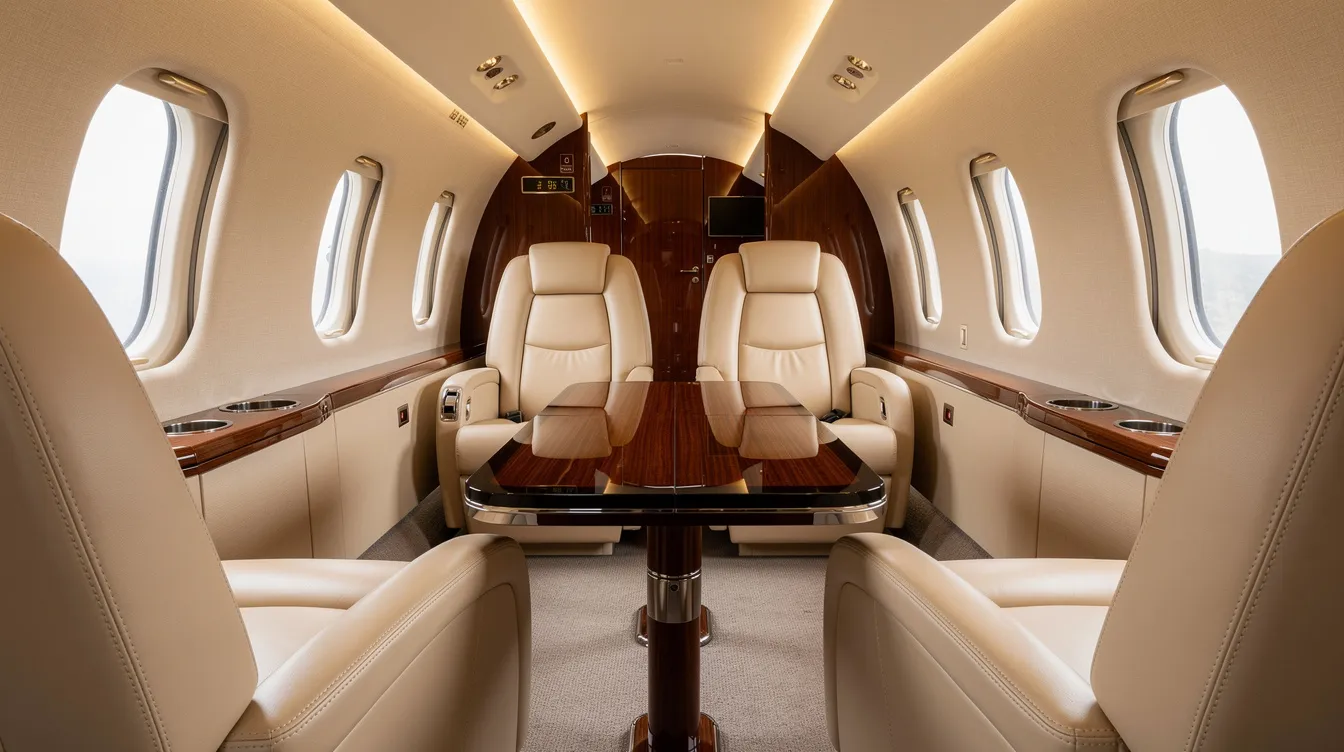
For leisure travelers, private flying can simplify family travel during peak periods, reduce missed connections, and allow more direct access to remote destinations. Private aviation enhances comfort with spacious seating and gourmet catering, but the operational benefit is often more important: flexible schedules and fewer wasted hours.
Aircraft options: from light jets to long‑range cabins
One advantage of a platform like FLYT is flexible aircraft selection. Members are not tied to one private jet, one aircraft type, or one ownership share.
Very light jets and light jets typically accommodate 4–6 passengers and work well for short regional trips. A light jet may be the right aircraft for a two- or three-passenger Boston–Toronto day trip.
Midsize jets are ideal for coast-to-coast trips, while super-midsize jets blend range and luxury for travelers who want more cabin comfort, baggage capacity, and nonstop capability. A super midsize jet may suit Los Angeles–Chicago or New York–Aspen.
Heavy jets and long-range jets can fly international routes non-stop, making them better suited for longer trips such as New York–London or London–Dubai. Long-range cabins are also useful when privacy, onboard work, and rest matter as much as speed.
Aircraft choice affects charter rates, cabin comfort, baggage, range, runway performance, and total cost. A diverse fleet gives members more flexibility than committing to a single aircraft. FLYT’s asset-light floating model is designed to provide these aircraft options without requiring members to purchase or fractionally own the aircraft.
Private jet charters offer access to over 20,000 aircraft worldwide, enabling platforms like FLYT to provide a broad range of aircraft options tailored to members’ travel needs and preferences.
Empty legs and dynamic deals: where they fit in
Empty legs are repositioning flights that would otherwise operate without passengers. Empty-leg flights can offer discounts of up to 75% off regular prices, and empty-leg flights can be up to 75% cheaper than regular prices when timing and routing align.
They can be attractive, but they are not a dependable strategy for mission-critical travel. Empty-leg flights can reduce per-seat costs by 40% to 70% compared to traditional charters, yet they usually require flexibility on departure time, destination, and date.
That makes empty legs useful as opportunistic upgrades. If your travel plans match the available leg flights, the value can be strong. If the meeting time is fixed or the route is unusual, standard private charter through a membership is usually more reliable.
A modern membership framework can still surface discounted empty leg flights and dynamic opportunities when they fit. Executives who value predictability generally use scheduled private flights as the foundation and empty leg deals only when timing coincidentally aligns.
Cost, ownership, and smarter capital allocation
Many travelers searching for “uber for private jets” are not looking for novelty. They are looking for access without the capital drain of ownership.
Private jet ownership can involve high costs year after year. Private jet ownership costs can exceed $1 million annually once crew, hangar, insurance, maintenance reserves, training, subscriptions, and management are included. Acquisition cost is only the beginning. Aircraft depreciation, downtime, and fixed annual operating costs can make ownership difficult to justify unless utilization is very high.
Fractional ownership reduces some complexity but still involves capital commitment, long contracts, management fees, and exposure to aircraft value. Jet cards provide structure but may involve large prepaid blocks, peak-day rules, fuel surcharges, and limits by cabin class.
FLYT’s membership model aims to provide access without ownership. Members can pay for the hours they actually fly at known rates, use the right aircraft for each trip, and avoid placing a depreciating aviation asset on the balance sheet.
The smarter question is not “Can I own a jet?” It is “What model gives better value for my time, capital, and route pattern?” For many travelers flying 25–100+ hours a year, membership is a more efficient answer. Learn about FLYT’s risk pool model and charter volatility protection.
Safety, regulation, and trust behind the app
For high-net-worth travelers and corporate risk managers, safety is not a feature. It is the foundation.
All credible private aviation platforms must work with certified air carriers that meet regulatory requirements such as FAA Part 135 in the U.S. or equivalent standards elsewhere. All aircraft in rideshare programs meet FAA safety standards when operated legally under the appropriate regulatory framework, but travelers should still evaluate the operator, oversight, and safety auditing process.
A responsible platform reviews operator credentials, maintenance tracking, crew experience, insurance, and dispatch procedures. The booking interface might feel simple, but the operational side is closer to airline discipline than consumer rideshare.
FLYT’s role is to simplify access while respecting the complexity behind every flight. That means working with rigorously vetted operators, maintaining transparent standards, and giving members confidence that private jet travel can function as a dependable business tool.
Who “Uber for private jets” is really for
The strongest fit is not the once-a-year traveler who wants a special trip. It is the frequent flyer whose calendar is expensive, unpredictable, and geographically demanding.
Common profiles include founders visiting multiple offices, investors managing cross-border portfolios, executives with regional teams, families coordinating leisure travel across peak seasons, and principals who need privacy between meetings.
Membership often becomes compelling around 25–100+ private jet hours per year. Occasional first-time flyers may still prefer ad hoc private jet charters or private charters with no commitment. But many travelers graduate to membership once time savings, planning stability, and cost visibility become more valuable than premium commercial cabins.
This is also where the “uber for private jets” phrase becomes more precise. The need is not instant access everywhere at the lowest possible price. The need is reliable access, flexible travel options, operational excellence, and less friction across repeated trips.
How FLYT approaches the future of private jet access
Private aviation is moving away from ownership-first thinking and toward flexible access models powered by advanced technology, floating fleets, and better data.
FLYT is built for that shift. Its asset-light membership model focuses on operational intelligence, risk pool efficiency, global access, and concierge-level execution rather than ownership of the most extensive fleets. In this model, the value comes from coordination, transparency, and aircraft flexibility.
The future will also be shaped by more efficient aircraft, sustainable aviation solutions, smarter route planning, and better management of repositioning. The best platforms will reduce complexity without hiding the realities of aviation.
For travelers comparing a marketplace, private jets inc search result, fractional plan, jet card, or membership, the key is to understand what kind of access you actually need. FLYT offers a structured, predictable alternative to ad hoc “Uber for private jets” experiments, designed for those who want global private jet travel without ownership complexity.
Explore a membership model designed around efficiency, transparency, and flexible private flying at FLYT's website.

Frequently asked questions
Is there a true “uber for private jets” app I can download today?
Several platforms offer app-based booking for private jet charters, shared flights, and empty legs, but none fully replicate Uber-style instant coverage everywhere. Aircraft supply, crew availability, maintenance, weather, and regulation make aviation more constrained than ride-hailing.
The closest practical experience for frequent flyers is a membership model with digital booking, predictable pricing, concierge support, and defined access standards. See FLYT FAQ for more details.
Can I book a private jet seat instead of the whole aircraft?
Yes. Some providers offer seat sharing or semi-private routes where travelers book one seat rather than the entire aircraft. This can lower the cost and may work well on busy corridors.
The trade-off is reduced privacy, fixed departure times, limited scheduled routes, and less control. FLYT focuses primarily on whole-aircraft access because members typically prioritize confidentiality, schedule control, and flexible aircraft access.
How far in advance should I book a private jet through a membership?
Several days to a week is usually best for the widest choice of available aircraft, especially during holidays, major events, and peak travel periods. Same-day or next-day trips may be possible, but aircraft availability depends on route, cabin class, crew, and local supply.
Frequent last-minute travelers should review lead times, blackout periods, guaranteed availability windows, and peak-day policies before choosing any membership.
Is flying private ever cheaper than commercial first class?
Per seat, private jet travel is usually more expensive than commercial first class. The equation changes when several passengers travel together, when the route is underserved, or when avoiding overnight stays creates measurable savings.
On short routes with a full cabin, the total cost of private flying can be closer to multiple last-minute premium tickets than many travelers expect. The bigger calculation is time saved, productivity gained, and schedule control.
How do I decide between buying a jet, fractional ownership, and membership?
Start with annual flight hours, common routes, group size, capital tolerance, and appetite for residual value risk. Full ownership can make sense at very high utilization. Fractional ownership can fit some users who want structure and accept long-term commitment.
Membership is often the more flexible option for frequent flyers who want access, transparent pricing, fleet interchange, and premium service without aircraft ownership risk. Compare options at FLYT advantage.
For inquiries or to explore membership options, visit FLYT or Contact Us.
Conclusion: The smarter path to private jet access
The vision of an “Uber for private jets” captures the desire for seamless, on-demand private aviation but overlooks the complexity and regulatory demands of the industry. True instant booking at scale remains elusive due to the operational realities of aircraft availability, crew scheduling, safety compliance, and international logistics.
For frequent flyers and business travelers who value predictability, flexibility, and efficient use of capital, membership-based private aviation offers a more strategic solution. Models like FLYT’s asset-light, floating fleet membership combine transparent fixed hourly rates, global aircraft access, and concierge-level support to deliver a premium experience without the burdens of ownership or fractional commitments.
Rather than chasing one-off rideshare-style flights, discerning travelers benefit from a structured approach that balances convenience with operational intelligence. This approach unlocks the full advantages of private flying—time savings, global reach, and tailored service—while minimizing complexity and financial risk.
Explore how modern private jet membership redefines access to private aviation, providing executives and entrepreneurs with a smarter, more efficient way to fly on their terms. Learn more about FLYT's membership model, fixed hourly rates, and fleet interchange to understand how these elements create a seamless private flying experience.