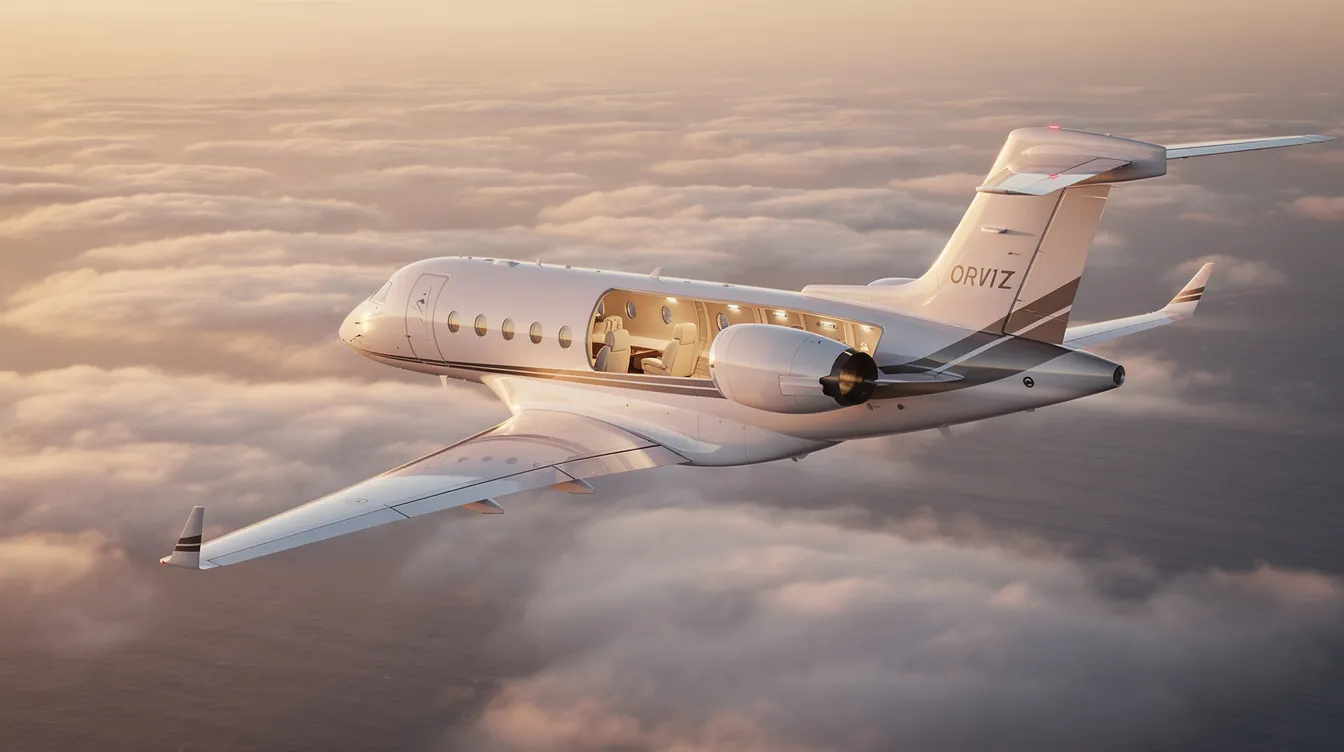
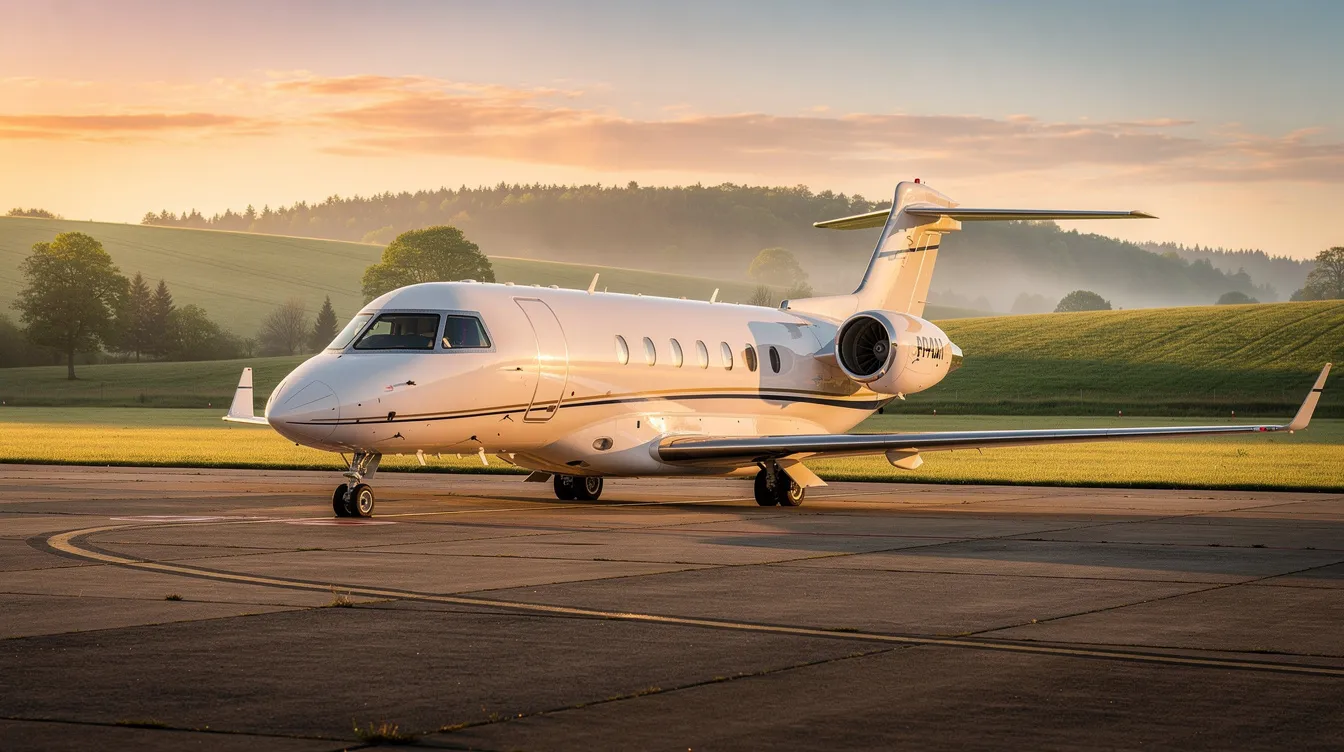
In today’s fast-paced business environment, travel in a private jet has evolved beyond mere luxury into a strategic asset for executives, entrepreneurs, and frequent travelers. The ability to access many private jets on demand, without the burdens of ownership, offers a comfortable option that prioritizes efficiency, flexibility, and transparency. This modern approach leverages a floating fleet model, enabling seamless aircraft interchange and predictable pricing. Whether for global business trips or personal travel, private jet membership programs and charter companies provide tailored solutions that simplify complex logistics and reduce operational friction.
This guide explores how private jet travel works in 2026, highlighting the financial and operational benefits that make it a smarter alternative to traditional ownership or commercial flights.
Key takeaways
Private jet travel in 2026 is shifting from ownership to flexible access models, where frequent flyers can preserve capital while still gaining control over time, routing, and schedule.
The strongest case for travel in a private jet is operational: fewer delays, shorter travel time, direct routing, privacy, and the ability to use smaller airports closer to final destinations.
Membership-based private aviation can offer fixed hourly rates, fleet interchange, transparent pricing rules, and concierge support without requiring full ownership or fractional commitments.
A private jet flight is straightforward when well managed: choose the route, match the aircraft, arrive at the FBO, meet the flight crew, board, and continue directly after landing.
FLYT is built around access, predictability, and flexibility, providing access to private jets globally through an asset-light floating fleet model.
Private aviation is no longer defined only by aircraft ownership. In 2025, global business jet departures reached roughly 3.52 million, according to VOLO Aviation, with North America accounting for most activity. That growth reflects a practical shift: executives, founders, investors, families, and private jet travelers are treating private air travel as a tool for time control and smarter capital allocation.
This guide is for business travelers, executives, families, and anyone considering private jet travel in 2026. Understanding the evolving landscape of private aviation helps travelers make smarter, more cost-effective decisions.
Why private jet travel really matters in 2026
Commercial air travel remains the cost-effective choice for most passengers, but frequent business travelers evaluate journeys beyond the ticket price. They consider missed meetings, overnight stays, airport waiting, schedule risk, and the cost of losing half a day to commercial flights.
Private jet travel offers unmatched time savings and flexibility. Passengers can arrive 15-30 minutes before departure, and private aviation reduces pre-flight wait times to as little as 15 minutes. Compared with commercial airlines, flying private reduces dependence on hub schedules, airline connection banks, and crowded terminals.
Private jets typically cruise at altitudes higher than commercial airliners, enabling them to avoid traffic and create more routing options for pilots and operators. This does not eliminate weather or air traffic constraints but provides operational advantages.
Private jet travel offers a high degree of privacy and customization. Whether for board meetings, confidential negotiations, family trips, or multi-city business plans, the value lies in deciding when to depart, who is on board, which destinations are served, and how much travel time can be recovered.
The main operational advantages are:
Less waiting before takeoff and after landing
Direct routes to smaller airports
A private cabin for work, calls, or rest
Flexible departure times when the schedule changes
Personalized service without the obligations of aircraft ownership
Learn more about how private jet travel works.
How private jet travel works from booking to landing
A typical private jet flight begins with an inquiry specifying route, date, preferred departure time, passenger count, luggage, pets, catering, and special requirements. A private jet charter provider or membership platform then matches the mission to a specific aircraft and qualified operators.
Private aviation scheduling allows booking flights with a few hours' notice when routes are simple and aircraft supply is available. Flights can be booked as late as 24 hours before departure domestically, with 48-72 hours or more recommended for international flights, major events, holidays, or complex permits.
Passengers receive an itinerary including Fixed-Base Operator (FBO) address, tail number, departure time, crew names, catering details, and ground transportation arrangements. FBOs provide terminal services distinct from commercial airline terminals.
Booking requires a government-issued ID and may include security verification aligned with regulatory requirements. Digital portals sometimes use security services to prevent malicious access.
A typical door-to-door journey includes:
Leaving home or office via car arranged through concierge services
Arriving at the FBO 15-30 minutes before departure
Completing the ID check and meeting the flight crew
Boarding directly with luggage handled by ramp staff
Departing once the aircraft, pilots, and crew are ready
Landing near the destination and transferring to the waiting ground transportation
Explore FLYT’s platform and contact us for personalized support.

Choosing the right aircraft for your private jet flight
Selecting the right aircraft balances comfort and financial considerations. Larger aircraft offer spacious cabins, longer range, and more amenities, but come with higher hourly costs. Smaller jets suit short trips, while heavy jets are better for long-range missions with more passengers.
Private jet hourly rates range from $2,000 to $15,000. Charter rates start in the mid-$2,000s per hour, increasing for larger aircraft, international flights, and peak periods.
Key categories include:
Aircraft category | Typical capacity | Range (nautical miles) | Ideal use case | Approximate charter hourly rate |
|---|
Turboprop | Up to 9 | ~1,800 | Regional hops, cost-efficient short trips | Starting mid-$2,000s |
Light jet | 4-6 | ~1,700 | Business routes, short to mid-range | $2,000 - $5,000 |
Midsize / Super midsize | 6-9 | 2,000 - 3,000 | Cross-country, more cabin comfort and amenities | $5,000 - $8,000 |
Heavy jet | 12-18 | 3,500+ | Transcontinental, international, larger groups | $8,000 - $15,000 |
Ultra-long-range jet | 8-18 | 6,000 - 7,000+ | Nonstop long-haul global travel | $10,000 - $15,000+ |
Private airliner | 20+ | Varies | Large groups, bespoke interiors | Varies widely |
Examples of ranges include the Cessna Citation Encore at approximately 1,700 nautical miles, the King Air 350 at 1,806 nautical miles, and the Gulfstream G650 capable of flying up to 7,000 nautical miles nonstop.
Heavy jets typically accommodate 12 to 18 passengers, while light jets like the Embraer Phenom 300E carry 6-8 passengers comfortably.
Fleet interchange enhances membership efficiency. FLYT members can select smaller jets for regional meetings, larger aircraft for family trips, and heavy jets for long-haul business travel. Learn more about aircraft interchange.
What it actually feels like to fly private
The experience begins at the FBO, featuring close parking, quiet terminals, and more direct security than commercial checkpoints. Pre-flight wait times have been reduced to about 15 minutes in many domestic cases, though weather, customs, and crew timing remain factors.
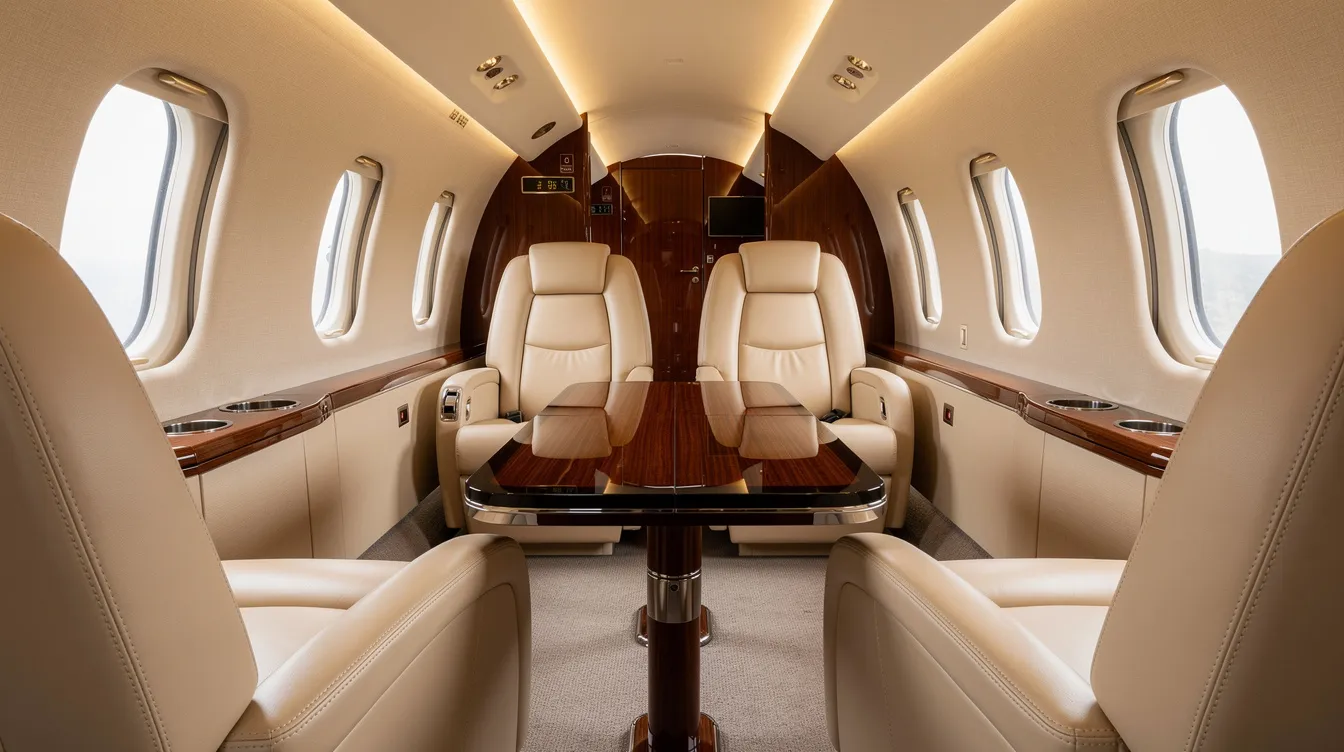
Cabins often feature spacious, luxurious seating with configurations like club-4 arrangements, divans, or work tables. The calm environment supports document review, meeting preparation, or family relaxation.
Private jet charters allow customized in-flight catering, including meals from preferred hotels, resorts, or local restaurants, with advance notice for dietary needs. Passengers can request specific meals to accommodate specific dietary preferences.
Flight crews brief passengers on route, weather, and timing, emphasizing professionalism and discretion to ensure safety and efficiency from boarding to landing.
Sensory details include the quiet FBO lounge, leather scents, short walks across ramps, engine sounds, direct luggage loading, and absence of baggage carousel waits.
Planning your first private jet trip: practical guidelines
A clear plan eases the first private charters. Share details early to match route, cabin, range, amenities, and operator requirements.
Arrival: 20-30 minutes before domestic departures; earlier for international flights to accommodate immigration and customs.
Documents: Government-issued ID for domestic travel; passport, visas, and entry documents for international trips.
Luggage: More flexible than commercial flights but subject to aircraft weight and hold limits; soft-sided bags suit light jets and turboprops.
Pets: Accommodated with prior notice; international travel may require vaccination records, microchips, health certificates, and destination permits.
Etiquette: Dress according to journey purpose; business trips may call for formal or executive casual attire; family trips can be relaxed. Keep devices respectful.
Security: TSA recommendations apply; FBO screening differs from commercial TSA lines but private jets adhere to FAA regulations.
See FLYT's FAQ for more details.
Membership vs on-demand charter vs ownership
Three main private jet access methods exist: ownership, fractional ownership or jet cards, and membership-based access.
Full ownership offers maximum control but involves acquisition costs, crew salaries, maintenance, hangar fees, insurance, positioning flights, and residual value risk. Pre-owned Gulfstream jets cost $5 million to $8 million; fractional ownership can exceed $1 million annually, depending on share size and usage. Fractional ownership suits frequent flyers traveling over 100 hours annually, providing guaranteed access to a specific aircraft type but requiring significant upfront investment and long-term commitment.
Jet cards allow pre-purchased flight time blocks, requiring minimum deposits of $50,000 to $150,000, suited for flyers seeking structure without ownership. Membership fees for private jet services can exceed $100,000 annually but offer fixed hourly rates, transparent pricing, concierge support, and access to a vetted global fleet without ownership burdens.
On-demand charter offers per-trip flexibility but variable pricing influenced by season, route, aircraft availability, empty legs, and operator conditions. Empty leg flights, which occur when jets reposition without passengers, can offer discounts of up to 75%, providing significant cost savings for flexible travelers.
Membership-based private aviation, like FLYT, reduces variability with fixed hourly rates, transparent pricing, concierge support, and access to a vetted global fleet. Its asset-light floating fleet and risk pool model avoid locking clients to a single tail number while matching aircraft categories to missions.
Compare FLYT with other models at FLYT vs charter, FLYT vs jet cards, and FLYT vs fractional ownership.
The cost side of flying private: what really drives pricing
Private aviation costs combine hourly rates with variable fees. Flight time often counts from engine start to shutdown, affecting quote comparisons.
Pricing factors include:
Aircraft type and cabin size
Flight time and route length
Landing, handling, and airport fees
Crew expenses, overnights, and duty limits
Positioning flights and empty legs
Peak-day demand and weather disruption
Landing fees depend on aircraft weight; heavier jets cost more to operate at the same airport. For example, Gulfstream G650 charter costs can exceed $150,000 one-way, reflecting its ultra-long-range capability and luxury. Empty leg flights offer significant discounts but rarely align perfectly with schedules.
A New York-Miami super midsize jet charter suits small executive teams, turning flight time into productive time. Variable charters may include positioning, handling, catering, and crew expenses. Membership models aim for predictable global planning.
Frequent flyers weigh annual spend: occasional trips may favor on-demand charter; frequent, short-notice travelers benefit from membership predictability.
Explore FLYT pricing and charter volatility protection for more.

Global reach and operational flexibility in private aviation
Private jets can land at nearly any airport, subject to runway length, local rules, aircraft performance, and weather. Over 5,000 airports globally accommodate private jets, with access to 60,000+ routes, enabling itineraries impractical for commercial airlines.
This research transforms travel planning:
Same-day out-and-back board meetings avoid forced overnights.
European roadshows connect secondary cities without returning to hubs.
Family trips use smaller airports near resorts, estates, or islands.
Examples include:
London-Riyadh direct business trips with fewer schedule constraints
Los Angeles-Honolulu nonstop flights prioritizing timing and privacy
Zurich-Mykonos seasonal private travel
Geneva-Ibiza family or investor retreats
Miami-Bahamas short regional flights with flexible timing
International operations add complexity: overflight permits, customs, airport slots, crew duty limits, and local handling require coordination. Concierge and operations teams manage schedule changes, ground transportation, catering, and operator communication to protect member time.
Discover FLYT’s global advantage.
How FLYT approaches modern private jet travel
FLYT is a membership-based private aviation service emphasizing access, predictability, and flexibility. It avoids aircraft ownership or single-asset purchases, focusing on intelligent private jet use aligned with mission needs.
FLYT membership offers fixed hourly rates, transparent pricing, and no need to purchase or co-own jets, enabling confident annual private aviation spend planning.
Its asset-light floating fleet coordinates global aircraft access without tying members to single tail numbers. The network adapts to member trips, not vice versa.
Fleet interchange is central: members may use light jets for regional meetings, midsize aircraft for family weekends, and heavy jets for long-haul business.
Concierge support integrates itinerary design, aircraft matching, dietary requests, catering, ground logistics, and digital updates. FLYT provides private aviation without ownership complexity, delivering flexible global access.
Explore a membership model designed around efficiency, transparency, and actual flying patterns.
Frequently asked questions about private jet travel
Is flying on a private jet as safe as flying commercial?
Operators follow strict safety standards. FAR Part 135 governs private jet safety in the U.S., requiring FAA maintenance and pilot training compliance. Operators must obtain an Air Carrier Certificate under FAA regulations to conduct commercial operations. Flight crews hold type ratings, undergo recurrent training, and undergo medical checks akin to airline pilots.
ARGUS ratings assess operator safety; many providers use independent audits covering operators, aircraft crew history, and discipline. FLYT partners with rigorously vetted operators and aircraft, prioritizing safety beyond procurement.
How far in advance do I need to book a private jet flight?
Domestic private flights can be arranged within 24-48 hours; simple routes may require only a few hours' notice. Peak dates, major events, weather, and international flights benefit from 3-7 days' advance planning, allowing time for airport slots, aircraft selection, catering, and permits.
Can I bring pets on a private jet?
Yes, with prior notice. Operators prepare cabins and confirm pet policies. International flights may require vaccination records, microchips, health certificates, and destination permits. FLYT concierge assists with pet travel coordination and aircraft suitability.
Can I work effectively during a private jet flight?
Yes. Many cabins include tables, power outlets, Wi-Fi, and seating for meetings or confidential discussions. Inform the concierge of specific work needs to match aircraft and onboard services accordingly.
Are there sustainable options for private jet travel?
Private jets emit more CO2 per passenger than commercial flights; sustainability is addressed through Sustainable Aviation Fuel (SAF) availability, carbon offset programs, efficient routing, and selecting the smallest suitable aircraft.
A floating fleet model reduces unnecessary repositioning. FLYT supports members in understanding and choosing mitigation options for each flight.
For more FAQs, visit FLYT FAQ.

Conclusion: Embrace smarter private jet travel with FLYT
Private jet travel in 2026 is no longer just about luxury—it is a strategic tool for executives, entrepreneurs, and discerning travelers who value time, flexibility, and operational efficiency. The shift away from ownership toward membership and asset-light models enables smarter capital allocation, predictable costs, and global access without the complexities of managing an aircraft.
FLYT exemplifies this modern approach by offering a membership-based private aviation service designed around transparency, fixed hourly rates, fleet interchange, and concierge support. With FLYT, members enjoy seamless access to a floating fleet of vetted private jets worldwide, tailored to their unique travel needs and schedules.
Explore how FLYT can transform your travel experience by delivering flexibility, efficiency, and a premium private jet journey without ownership burdens. Discover a smarter way to fly private at www.flyt.com.