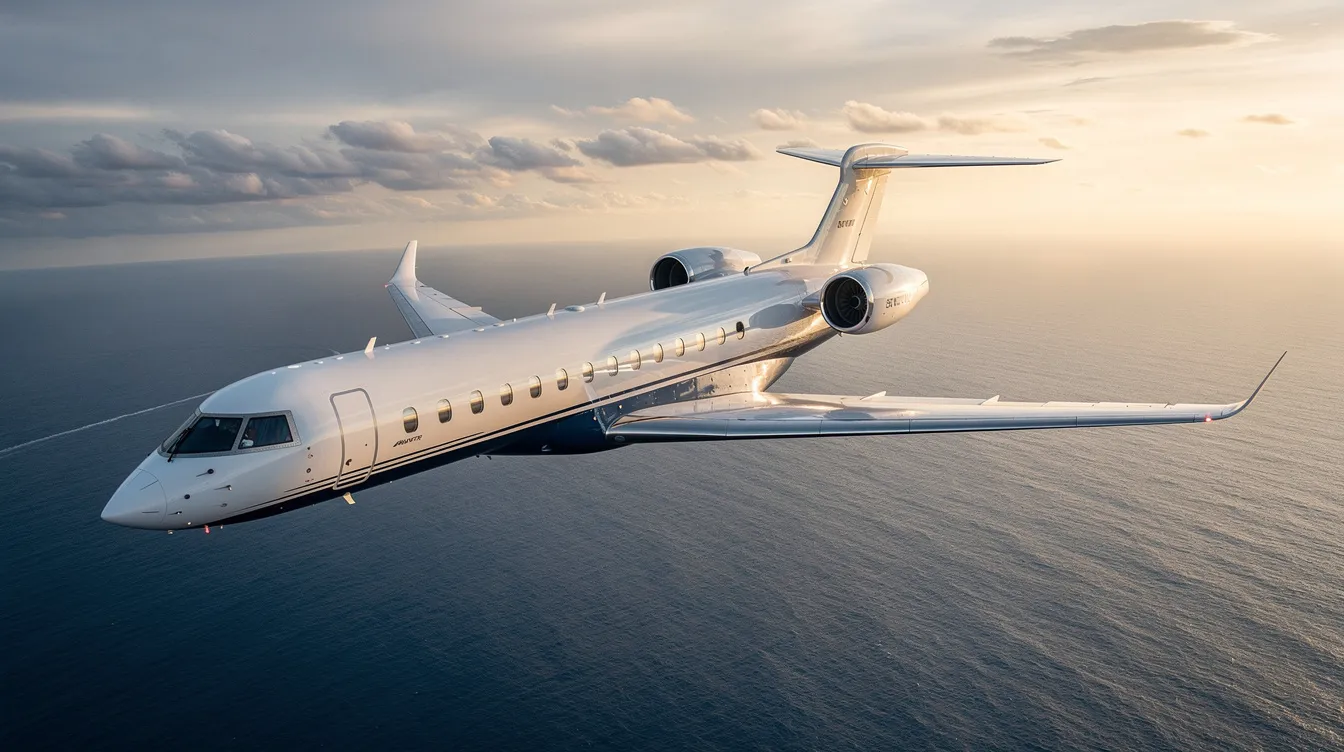
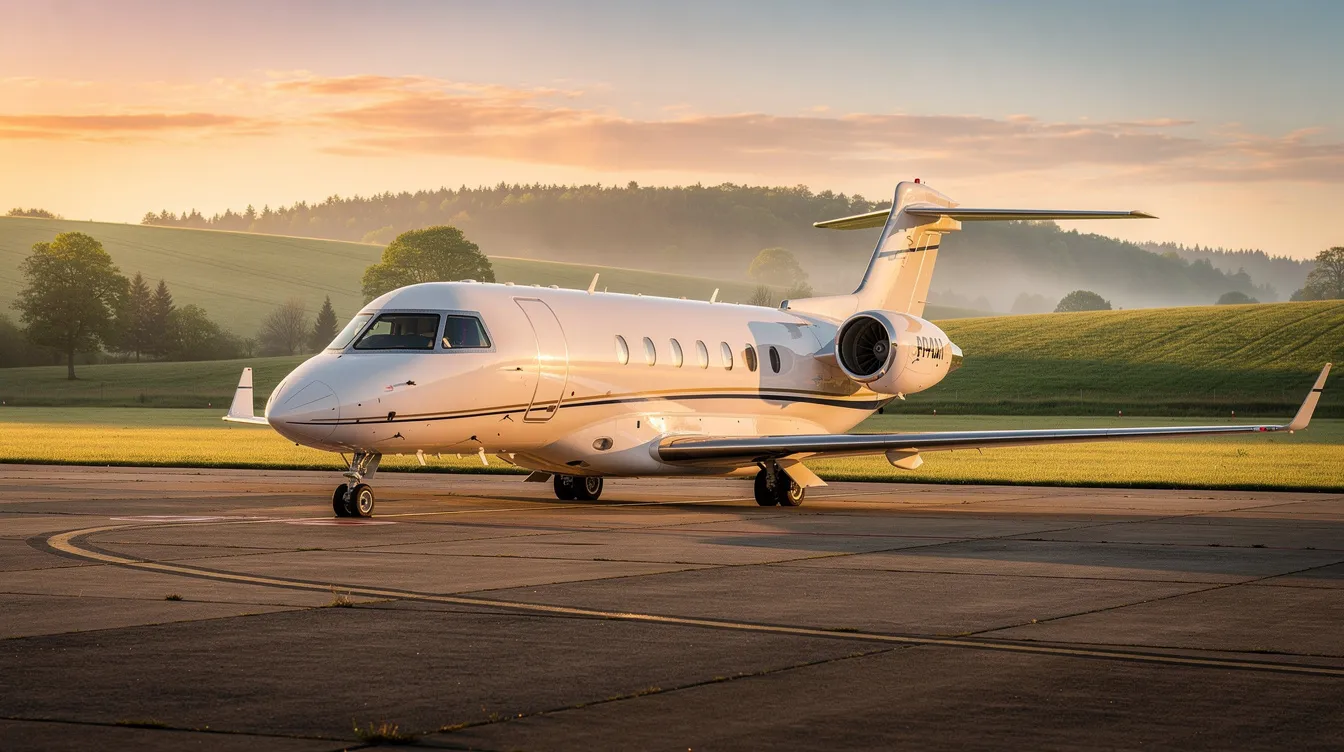
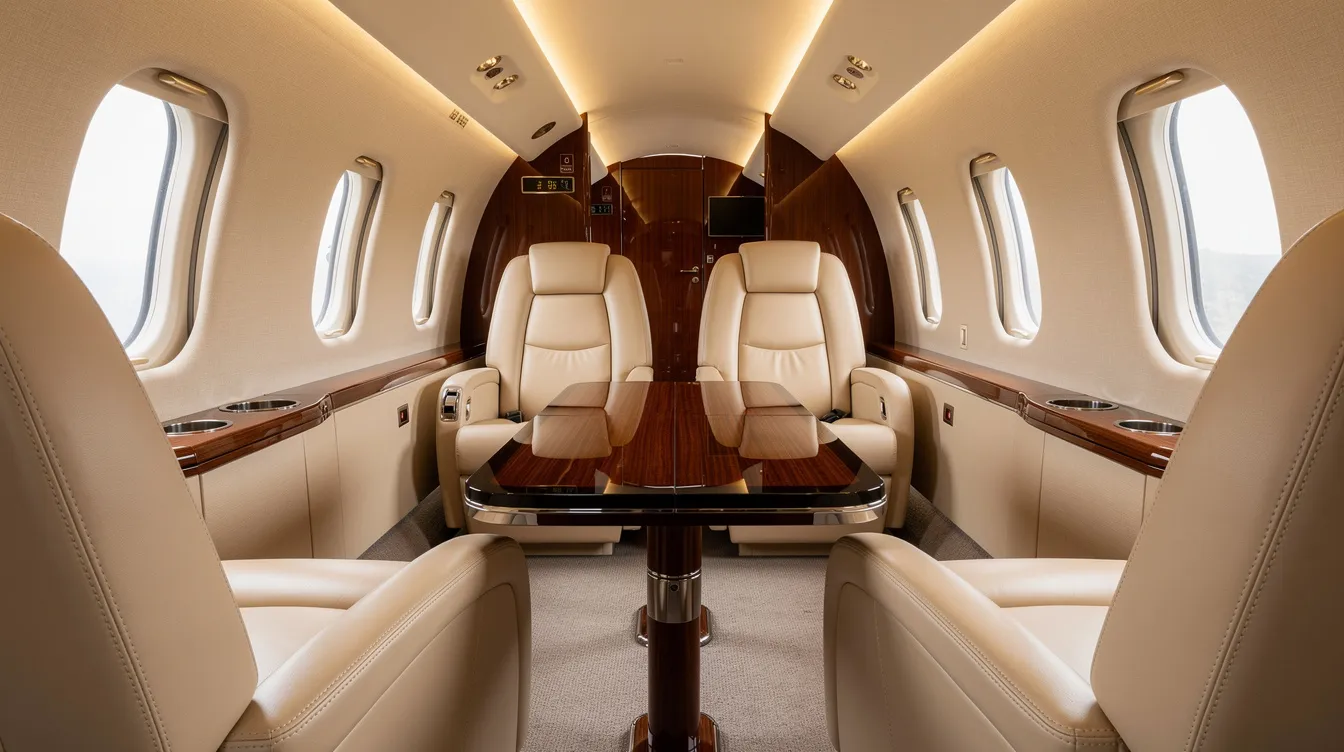
Crossing the Atlantic by private jet is no longer an occasional indulgence for aircraft owners. A transatlantic private jet refers to a long-range private aircraft capable of flying nonstop between North America and Europe, typically cruising at altitudes up to 45,000 feet. It has become a routine operational decision for executives, investors, and families who value time control over everything else. This guide breaks down the aircraft, routes, costs, and access models that shape transatlantic private jet travel in 2026 and explains how FLYT's membership-based approach brings predictability to frequent US–Europe flying.
Key takeaways
Most nonstop transatlantic private jet flights require heavy jets or ultra-long-range aircraft such as the Gulfstream G650ER, Bombardier Global Express, or Bombardier Global 7500, with ranges exceeding 6,000 nautical miles.
Flight time from New York to London is about 6–7 hours on long-range private jets; Los Angeles to Geneva takes approximately 10.5 hours on ultra-long-range aircraft.
Transatlantic private jet flights cost between $100,000 and $250,000 one-way, depending on aircraft type, routing, season, and access model.
Total trip cost is shaped by whether you book an ad hoc private jet charter, a jet card, or a membership like FLYT with fixed hourly rates and fleet interchange.
FLYT's membership-based, asset-light model offers a strategic alternative to ownership and fractional shares for frequent transatlantic flights, providing predictable pricing without capital tied up in a depreciating asset.
Why transatlantic private jet flights matter for modern executives
In 2023, private aviation globally logged roughly 4.3 million individual flights, with traffic between North America and Europe growing steadily as part of that total. Nonstop transatlantic journeys are now routine for global businesses, not exceptional.
Private jets turn a 6–10-hour transatlantic flight into a productive work block. Board meetings, confidential calls, contract reviews, and even sleep happen in a controlled environment. Unlike commercial first class, there are no seatmates, no boarding queues, and no schedule dictated by an airline. Private flights bypass commercial hubs, allowing for significant time savings that compound over dozens of trips per year. Private jets allow for customized travel schedules built around the executive's agenda rather than a carrier's timetable.
Common use cases go beyond the obvious: board meetings in London, investor roadshows linking New York, Paris, and Berlin, family travel to Mediterranean or Alpine retreats, and time-critical transactions where airline disruption is an unacceptable risk. For many business executives, the incremental cost is justified by what is preserved in opportunity cost.
Private aviation across the Atlantic is no longer reserved for aircraft owners. Membership-based access and floating fleets have lowered the operational threshold. FLYT's perspective is straightforward: readers here are frequent flyers looking to optimize time and capital, not chase status. Learn more about how FLYT works and explore our membership options.
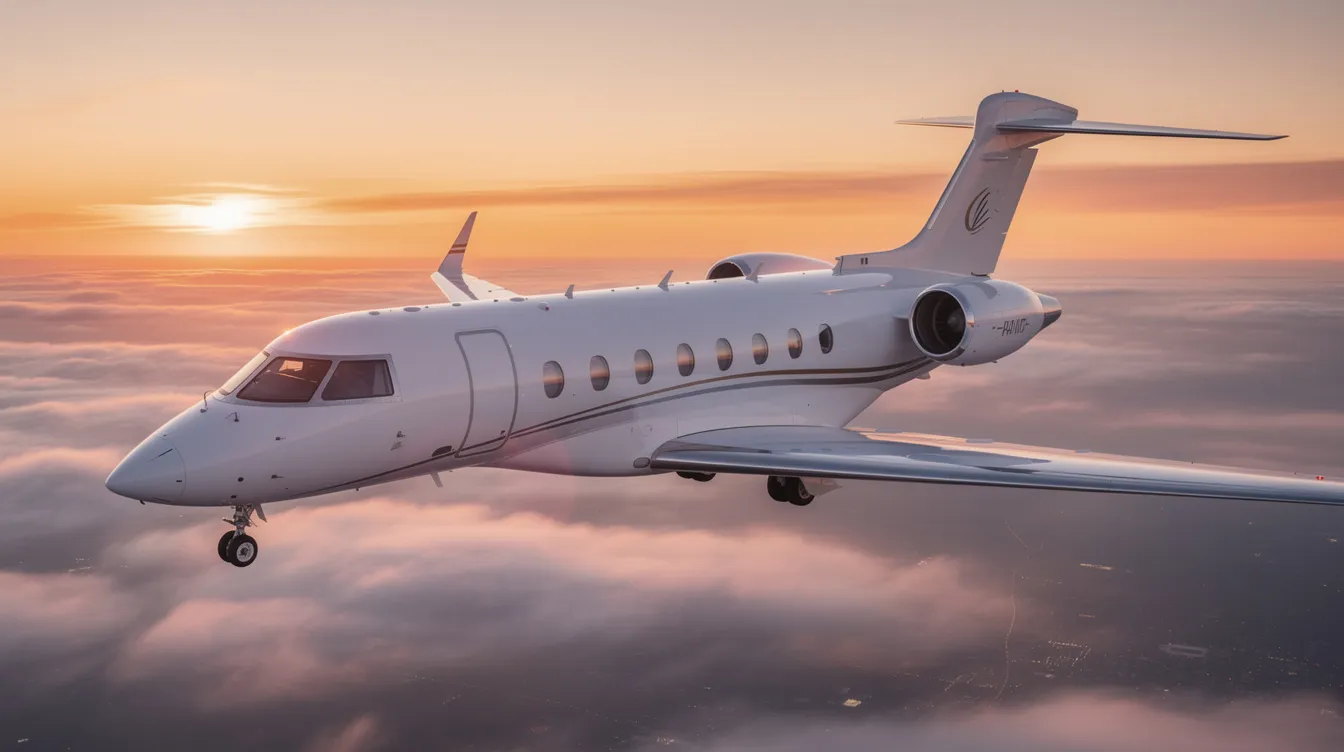
Aircraft types that can fly across the Atlantic
Range is the defining constraint for any transatlantic private flight. Transatlantic flights require a minimum range of roughly 3,500 to 4,500 miles to cover core pairings between North America and Western Europe with adequate fuel reserves. Transatlantic private jet services utilize long-range private aircraft that can cruise at altitudes up to 45,000 feet, above most weather and commercial traffic.
Very light jets and most light jets carry ranges typically under 2,000–2,500 nautical miles. Smaller private jets in these categories cannot complete a direct transatlantic flight and would need multiple fuel stops via Iceland, Greenland, or the Azores, which erodes efficiency and adds operational complexity.
Super-midsize and long-range jets occupy a middle ground. The Embraer Praetor 600 has a range exceeding 4,000 nautical miles and can handle selected transatlantic routes with one technical stop, depending on payload, weather, and wind direction. The Bombardier Challenger 650 sits in a similar bracket.
Heavy jets and ultra-long-range aircraft are the standard for nonstop transatlantic private jet flights:
Aircraft model | Range (nautical miles) | Passenger capacity | Typical use case |
|---|
Gulfstream G550 | 6,750 | Up to 14 | Core US East Coast to Europe nonstop flights |
Dassault Falcon 8X | 6,450 | Up to 14 | Efficient transatlantic with cabin comfort |
Gulfstream G650ER | 7,500+ | Up to 19 | Ultra-long range, nonstop, global reach |
Bombardier Global 7500 | 7,700 | Up to 15 | Industry-leading range, four-zone cabin |
Choosing the right private jet starts with matching the aircraft's range and passenger capacity to the specific route and headcount. Discover more about our asset-light floating fleet and aircraft interchange capabilities.
Ultra-long range vs heavy jets on transatlantic routes
The distinction between ultra-long-range jets and heavy jets matters most when route length or seasonal headwinds push mission requirements higher.
Ultra-long-range aircraft like the G650ER and Global 7500 can connect routes such as Los Angeles–London or New York–Dubai nonstop, providing maximum flexibility for transatlantic routes and beyond.
Heavy jets such as the Gulfstream G550 and Bombardier Global Express, with ranges of 6,000–6,700+ nautical miles, comfortably cover core US East Coast–Europe pairings like New York–London and Washington–Paris nonstop.
Fuel burn and hourly rates differ meaningfully: ultra-long-range jets consume more fuel and carry higher operating costs per flight hour, but eliminate the time and logistical cost of technical stops.
In winter, stronger headwinds across the Atlantic can reduce effective range for heavy jets on westbound legs, potentially forcing a fuel stop. Larger aircraft with greater fuel margin absorb this without schedule disruption.
FLYT's fleet-access model lets members right-size between heavy jets and ultra-long-range aircraft per mission, instead of being locked into a single owned jet type that may be oversized for some trips and undersized for others. Learn how our AI fleet engine optimizes these choices.
Typical flight times and major transatlantic private jet routes
Private jets save 3–4 hours on transatlantic journeys compared with commercial flights when you account for direct routing, use of private terminals, faster customs processing, and elimination of connection layovers.
Popular business routes and approximate nonstop flight times on larger aircraft:
New York–London: about 6–7 hours eastbound on a Global 6000 or G550. London to New York is a popular transatlantic route, with westbound times closer to 7.5–8.5 hours due to headwinds.
Washington, DC–Paris: about 7.5–8.5 hours
Boston–Geneva: about 7–8 hours
Popular routes for leisure and extended travel include Miami–Nice (9–9.5 hours), New York–Rome (8–9 hours), and Los Angeles–Barcelona (11–12 hours), using long-range jets. Miami to London is another frequently traveled route for transatlantic travel. Los Angeles to Geneva takes approximately 10.5 hours, and the Paris to Miami flight time is around 8.5 hours. Summer and major event periods drive higher demand and tighter aircraft availability on these routes.
Smaller jets attempting Atlantic crossings may route via Keflavik (Iceland), Narsarsuaq (Greenland), or the Azores, adding stops and complexity that most executives prefer to avoid.
Private jets can access over 984 airports in Europe and more than 5,000 regional and executive airports. FLYT's concierge team can propose secondary airports—Teterboro instead of JFK, Farnborough or Biggin Hill instead of Heathrow—to reduce ground time on popular transatlantic routes while bringing you closer to your final destination.
How weather and North Atlantic Tracks influence your schedule
The North Atlantic Organized Track System provides daily routing between continents, adjusted based on jet streams and prevailing weather. These tracks directly influence flight length, fuel management, and schedule reliability.
Westbound flights toward North America often face stronger headwinds in winter, adding 30–60 minutes to flight time and increasing fuel burn. Eastbound flights can benefit from strong tailwinds, sometimes reducing travel time noticeably.
Long-range jets and ultra-long-range aircraft with extra fuel margin provide better schedule resilience because they can accept more conservative routing or holding patterns without requiring diversions. Experienced operators and membership platforms like FLYT factor seasonal NAT patterns into flight planning so members receive realistic departure and arrival estimates rather than optimistic best-case times.

Cost structure of a transatlantic private jet flight
Transatlantic private jet flights cost between $100,000 and $250,000 one-way on a heavy or ultra-long-range aircraft, depending on route, season, and access model. A one-way flight from London to New York starts at approximately £62,000.
Key cost drivers include:
Flight time in hours and aircraft category: heavy jets cost approximately $8,000–$10,000 per flight hour, while ultra-long-range jets command higher rates
Crew expenses, including potential augmented crew on extended flights
Fuel surcharges, especially during volatile energy markets
Navigation and overflight fees, including Eurocontrol charges across European airspace
Landing fees, airport handling, and ground transportation coordination on both sides of the Atlantic Ocean
To illustrate: total trip costs from Los Angeles to Paris range from $120,000–$170,000 on an ultra-long-range aircraft. A New York–London private jet flight on a Bombardier Global Express or G550 might fall in the $110,000–$170,000 range, depending on configuration and season.
Repositioning flights can significantly inflate ad hoc private charter flight pricing. When a private aircraft must ferry empty to your departure airport or return empty afterward, those operational costs are typically passed to the client. Empty leg flights—one-way flights returning empty—can save up to 75% off standard rates, but booking an empty leg flight requires flexibility in scheduling. Empty leg flights are sometimes available for transatlantic journeys, though empty leg availability changes constantly and is unpredictable.
A membership model with fixed hourly rates restores cost predictability, contrasting sharply with fragmented, quote-based charter pricing where final invoices vary flight to flight. See how FLYT compares with traditional charter, jet cards, and fractional ownership.
Hidden and variable fees on transatlantic charter
Many first-time charter clients underestimate non-hourly charges on transatlantic private jet flights.
Common extras include:
De-icing at winter departure airports like Teterboro or Geneva
Out-of-hours airport charges and slot changes at congested hubs
Wi-Fi surcharges and catering upgrades beyond standard provisions
Last-minute airport or routing amendments
International flights incur mandatory international fees, including landing and overflight permits. Overflight permits are required for each country crossed. Airport slots must be secured for takeoff and landing at busy international airports. Handling at European business airports such as Paris Le Bourget or London Luton can add meaningfully to the final bill.
Transparent, itemized pricing matters. FLYT's risk pool and charter volatility protection frameworks are designed to reduce surprise line items for frequent transatlantic flyers, making the cost of each private flight more predictable from the outset.
Membership vs ownership, jet cards, and on-demand charter for Atlantic crossings
Frequent transatlantic flyers usually compare four models: full aircraft ownership, fractional ownership, traditional jet cards, and membership-based access like FLYT.
Full ownership of long-haul flights ties up significant capital in an asset that depreciates, carries fixed overhead regardless of utilization, and limits flexibility if the owned jet's flight range or size does not match every transatlantic route. Selling or exchanging an aircraft mid-cycle to adjust is costly.
Fractional ownership and jet cards reduce capital outlay but still involve fixed fleets, potential blackout dates during peak demand, and variable surcharges on high-demand transatlantic routes. Neither model easily accommodates switching between heavy jets and ultra-long-range aircraft depending on mission profile.
Membership-based access with a floating, asset-light fleet outsources aircraft risk, provides fleet interchange across long-range jets, and secures predictable hourly pricing without buying a share of a single private aircraft. This structure is especially attractive for executives making multiple US–Europe round trips per year who want consistency across aircraft and personalized service without adding aviation assets to their balance sheet. Learn more about FLYT's asset-light floating fleet and platform.
How FLYT's membership model supports transatlantic private jet flights
For readers already familiar with private aviation, here is how FLYT's approach works in practice.
Fixed hourly rates give members cost predictability for missions like New York–London, Miami–Paris, or Toronto–Zurich, even as fuel prices and seasonal demand fluctuate. Members know their approximate spend before confirming a transatlantic itinerary. Explore our transparent pricing details.
Fleet interchange means members can select heavy jets or ultra-long-range aircraft per flight, matching passenger count and route instead of flying an oversized or undersized preferred aircraft across the Atlantic. The asset-light, floating fleet and risk pool model aligns aircraft supply dynamically with member demand, improving availability on busy transatlantic routes without long-term capital commitments.
Concierge-level support rounds out the model: a team coordinating slots, landing permits, catering, and ground transportation on both continents so executives and families have direct access to a single point of contact for their entire transatlantic journey, ensuring a smooth and enjoyable journey from door to door. See the FLYT advantage.
Onboard experience and personalized service on long-range jets
Spending 6–12 hours in the air means the cabin needs to function as a mobile office, dining room, and bedroom—not just a seat with extra legroom. Private flights offer enhanced comfort with spacious cabins configured for real productivity and genuine rest.
Cabin layouts on heavy and ultra-long-range aircraft include separate zones for work and dining, lie-flat beds or convertible divans, and private or semi-private suites on aircraft like the Bombardier Global 7500 and G650ER. Private aviation provides custom amenities specific to passenger preferences, from tailored catering aligned with passenger schedules to preferred beverages and dietary requirements.
Connectivity and productivity tools matter on extended flights: high-speed Wi-Fi, secure VPN access, meeting-ready seating, and power outlets at every position so transatlantic private jet flights can host board meetings or confidential negotiations at 45,000 feet. Cabin management systems with fresh air circulation and advanced soundproofing keep the environment comfortable across the full flight length.
FLYT's concierge support coordinates preferences across repeat transatlantic routes so each flight feels familiar and streamlined rather than a one-off arrangement.
Mitigating jet lag and fatigue across the Atlantic
Jet lag is difficult to avoid completely when crossing multiple time zones, but cabin technology and scheduling choices significantly influence how rested passengers feel upon landing.
Jet lag can be mitigated by low cabin altitude systems in private jets, which maintain cabin pressure equivalent to a lower altitude than commercial aircraft. Sleeping on flatbeds helps reduce jet lag effects, particularly on overnight eastbound crossings. Getting into the destination's time zone before departure—adjusting sleep and meal timing a day ahead—further reduces disruption.
FLYT's team can help members build flight plans around critical meetings, advising on eastbound overnight versus daytime westbound transatlantic crossings to minimize fatigue and maximize performance on arrival.
Operational, safety, and regulatory considerations for transatlantic crossings
Long-haul private flights across the Atlantic follow stringent international operations standards, often exceeding requirements of shorter regional flights. ICAO standards govern international private jet operations, and compliance with FAA and EASA regulations is mandatory.
A private jet can safely fly over the ocean only with the required extended overwater certifications and communications equipment, including systems such as HF or satellite radios, along with full air traffic control compliance for oceanic operations. Crew qualifications include specific training in oceanic procedures, North Atlantic Track navigation, contingency planning, and fatigue management. Augmented crews of three pilots are standard on longer nonstop flights.
Flight planning requires 2–3 months for complex international itineraries, covering overflight and landing permits for each country, Eurocontrol filings, and slot coordination at busy European and US airports. Customs and immigration processing is expedited for private jets at dedicated terminals, though all documentation must be in order.
Professional operators and membership platforms like FLYT handle these complexities in the background, translating them into simple, confirmed itineraries for the end traveler. The result is that members fly private without managing the regulatory and logistical burden themselves.
Airport selection and ground-side efficiency
The choice of airport on each side of the Atlantic has a direct impact on the total trip time to your desired destinations.
Business aviation airports frequently used for transatlantic private jet flights include:
Teterboro (TEB) and White Plains (HPN) for New York
Van Nuys (VNY) for Los Angeles
London Farnborough (FAB) and London Biggin Hill (BQH) in the UK
Paris Le Bourget (LBG) in France
These smaller airports generally offer faster customs, shorter taxi times, and better access to city centers than major hubs. They accommodate heavy and ultra-long-range jets while avoiding the congestion and delays common at larger international airports.
FLYT's concierge team evaluates runway length, opening hours, ground transport options, and airport facilities to recommend the departure and arrival airport combination that best fits each member's transatlantic route and schedule. This ensures seamless connections and operational efficiency for long-range flights.
Environmental and sustainability aspects of long-range private aviation
Transatlantic private jet flights carry a higher per-passenger emissions profile than commercial airline seats, particularly when aircraft are lightly loaded. This is a reality the industry acknowledges.
Newer long-range jets like the Global 7500, Gulfstream G700 series, and Dassault Falcon 8X deliver improved fuel efficiency and noise performance compared with earlier generations. Route optimization and payload balancing to reduce fuel burn are practical measures available on every flight.
Sustainable aviation fuel (SAF) is available at a growing number of European and US airports, though it carries a cost premium. Verified carbon offset and contribution programs offer another layer for environmentally conscious travelers.
FLYT's asset-light, floating fleet approach encourages the use of efficient aircraft and higher fleet utilization, which can reduce unnecessary repositioning flights on transatlantic routes. Executives can incorporate aviation emissions into broader ESG reporting, with FLYT providing usage data and documentation that support corporate sustainability disclosures. A proven track record of transparency in this area builds trust with corporate travel departments and boards.

FAQ
Can smaller private jets complete a transatlantic flight safely?
Some smaller private aircraft can technically cross the Atlantic using routes via Iceland and Greenland, but multiple fuel stops, weather exposure, and limited payload make this a niche option rather than a mainstream executive solution. For most business and family travelers, heavy jets and ultra-long-range jets remain the recommended categories for safe, efficient transatlantic crossings with appropriate reserves and comfort. See more in our FAQ.
How far in advance should I plan a transatlantic private jet flight?
For straightforward routes like New York–London, 2–4 weeks is often sufficient. During peak summer or around major events, 1–2 months is preferable when slots and parking at European airports are constrained. Flight planning requires 2–3 months for more complex international itineraries involving multiple countries. Short-notice flights are possible but may limit aircraft choice or airport options. FLYT's membership structure helps members secure consistent access even under tighter timelines.
What documentation do I need when flying privately across the Atlantic?
Passengers require valid passports, visas where applicable, and any required health documentation, even when using private jets and dedicated terminals. Operators and concierge teams handle advance passenger information submissions and customs coordination, but responsibility for correct travel documents remains with travelers and their companies.
Can I bring my pet on a transatlantic private jet flight?
Many operators allow pets in the cabin on transatlantic flights, provided vaccination records, microchips, and country-specific veterinary certificates are in order. Travelers should coordinate with FLYT or their chosen provider well ahead of departure to confirm routing through pet-friendly airports and avoid quarantine issues on arrival.
How do fixed hourly rates actually help with transatlantic flight budgeting?
Fixed hourly rates lock in a predictable cost per flight hour on agreed aircraft categories, so members can estimate annual transatlantic spend based on projected hours rather than fluctuating spot charter quotes. For executives flying multiple times between North America and Europe each year, this predictability simplifies budgeting, improves cost control, and removes the need to constantly re-tender similar routes. It also provides significant advantages over ad hoc charter models where pricing shifts with market demand and fuel costs from one booking to the next. Learn more about FLYT's premium pricing approach.
Conclusion: A Smarter Framework for Transatlantic Private Jet Travel
Transatlantic private jet travel is fundamentally about time control, privacy, and operational certainty. Selecting the right aircraft type, airport pair, and commercial model determines both cost efficiency and reliability for crossing the Atlantic.
FLYT's membership-based, asset-light model gives frequent flyers access to long-range and ultra-long-range jets with fixed hourly rates, fleet interchange, and global reach—without the capital burden and operational friction of ownership.
Explore how FLYT can structure a transatlantic flying program around your specific route patterns, annual hours, and corporate or family travel profile. Contact us to learn more via our contact page or visit our homepage.