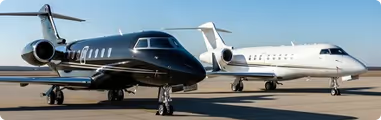
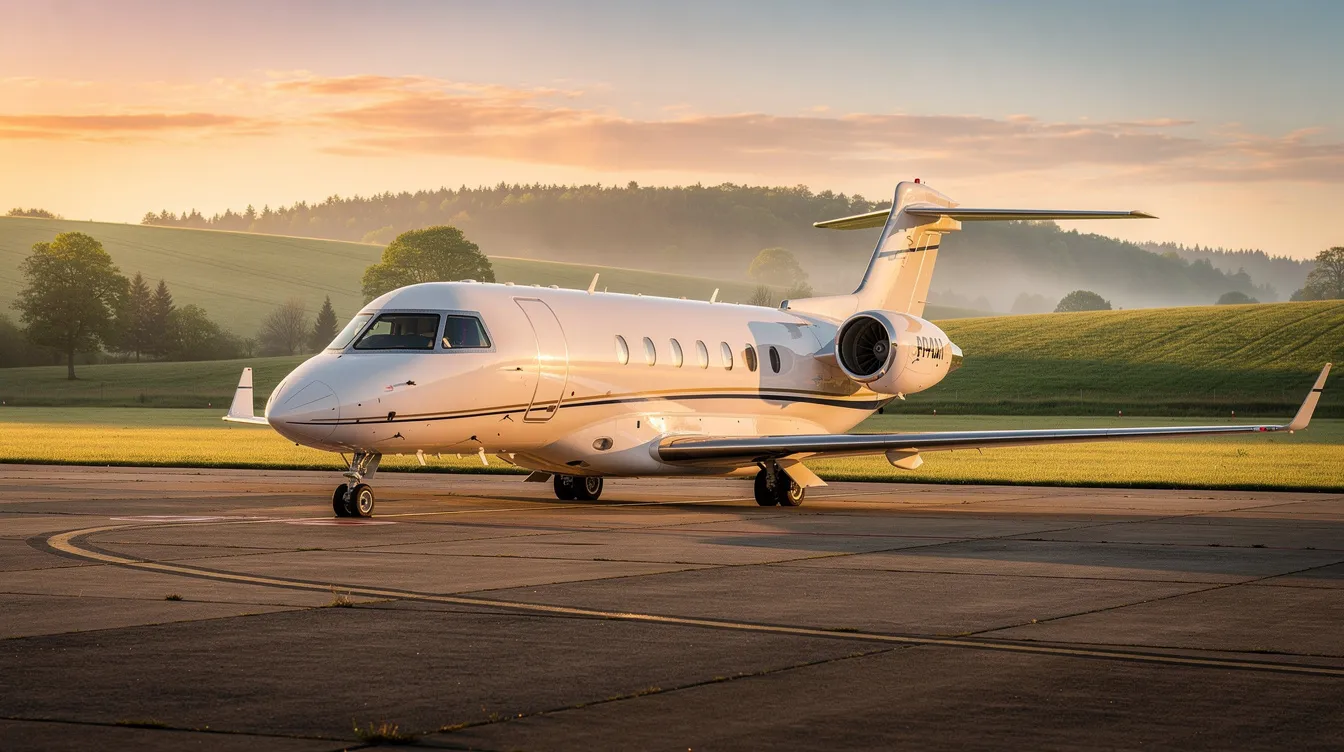
Small aircraft charter is how a growing number of executives, founders, and families access private aviation without the overhead of owning or co-owning a jet. This guide is designed for executives, founders, and families seeking a flexible, time-saving alternative to commercial air travel. Learn how small aircraft charter can streamline your travel experience and provide access to thousands of destinations. Using turboprops and light jets that seat four to eight passengers, this segment of private air travel is optimized for regional trips and corridors under three hours, where the time savings over commercial airlines are most pronounced. FLYT's membership model brings fixed hourly rates, transparent pricing, and fleet flexibility to this category, making it a practical entry point for frequent private flyers.
Key takeaways
Small aircraft charter using turboprops and light jets offers an efficient alternative to owning a private jet, particularly for flights under two to three hours. Small aircraft charters provide time-saving benefits that compound quickly for frequent travelers.
FLYT provides membership-based access to small aircraft with fixed hourly rates, transparent pricing, and no ownership burden. Private jet membership offers flexible access without ownership commitments, and membership models provide predictable pricing for private jet travel.
Private charter flights with smaller aircraft can access thousands of smaller airports, cut total travel time, and offer competitive pricing versus large cabin jets or fractional ownership arrangements.
Members can receive predictable, near-instant pricing estimates via the FLYT team and platform for routes like New York to Boston, New York to Washington, D.C., and intra-Florida flights.
This article compares turboprops vs. light jets, explains cost drivers, and shows when small aircraft charter is the smarter choice for executives and frequent flyers.
What is small aircraft charter?
Small aircraft charter refers to private flights operated on turboprops and light jets, typically seating four to eight passengers. These are professionally crewed, pressurized, business-grade aircraft flown under FAA Part 135 charter regulations, the same framework governing on-demand private charter operations across the United States. This is not about hobbyist Cessna rentals or air taxis. It is about purpose-built aircraft designed for reliable, efficient private flights on routes of roughly 300 to 1,500 nautical miles, which translates to about one to three hours in the air.
Business jets are more common for charter due to higher demand in this segment, and the aircraft involved range from single-engine turboprops like the Pilatus PC-12, which can accommodate six to eight passengers comfortably, to twin-engine models like the Beechcraft King Air 360, which has a range of 1,806 nautical miles. On the jet side, light jets such as the Citation CJ3 and Embraer Phenom 300 fill the gap between turboprops and midsize jets. Private jets can access over 20,000 destinations worldwide, and small aircraft can land at thousands of smaller airports that commercial options simply do not serve. Small aircraft charters provide on-demand travel using private terminals, and travelers can charter a private jet through this model with as little as 24 hours' notice.
FLYT's membership model gives access to this category of aircraft without the capital lock-up of ownership or long term commitments tied to fractional programs. Common use cases include:
Executive day trips between regional financial or tech hubs
Multi-city itineraries where a founder needs to hit two or three meetings across the east coast in a single day
Family weekends to island or resort destinations underserved by commercial airlines
Regional board meetings across Florida, Texas, or the Southeast where direct routing saves hours
Why small aircraft charter matters for executives and families
Time-Saving Benefits
The real cost of commercial air travel is rarely the ticket price. It is the hours lost in major hubs like New York, Boston, Chicago, or Los Angeles, where early arrivals, long security queues, connection layovers, and ground transportation eat into the day. Charter flights allow passengers to bypass long security lines entirely, and passengers can typically arrive at a private terminal just 15 to 20 minutes before departure. Private terminals provide a faster boarding experience than commercial terminals, which reshapes the math on door-to-door travel time.
Flexible Scheduling
Small aircraft charter changes this equation for groups and time-sensitive schedules. Private jets can significantly reduce travel time compared to commercial flights, and passengers can set their own schedules when using small aircraft charters. Charters offer personalized service and tailored itineraries, which means the flight adapts to the traveler, not the other way around. Small aircraft charters allow for more flexible scheduling than scheduled airlines.
A New York-based founder can fly from Teterboro to Boston for a morning investor meeting, continue to Philadelphia in the afternoon, and return the same evening using a light jet. Commercial connecting flights or hub transfers make this itinerary impractical on a single day.
A family flying from Miami to Nantucket for a long weekend avoids the two-connection commercial routing and arrives on their own schedule via turboprop.
For groups of three to six travelers, the per-person cost of a charter flight narrows against last-minute premium cabin commercial fares, especially on dense business corridors.
Departing from Teterboro instead of JFK saves 30 to 60 minutes on the ground for many New York-based flyers, and similar gains exist at airports like Westchester County, Fort Lauderdale Executive, and Van Nuys.
The benefits compound for frequent private flyers: reduced overnight stays, fewer missed meetings, and a seamless travel experience that keeps schedules intact.
Types of small aircraft: turboprops vs light jets
Small aircraft charter broadly splits into two categories: pressurized turboprops and light jets. Each aircraft type is suited to different mission profiles, and the right choice depends on route length, airport constraints, passenger count, and how the traveler values speed versus cost. Small aircraft have stricter weight and baggage restrictions than commercial airliners, which makes right-sizing the aircraft an important step rather than an afterthought.
FLYT members can interchange across these categories, choosing the right aircraft for each trip instead of being locked into a single model. This is where fleet interchange becomes a meaningful operational advantage.
When a turboprop is the smarter choice
Turboprops are efficient aircraft that excel on routes under roughly 500 to 700 miles and to airports with shorter or unpaved runways. Turboprops are ideal for short-distance trips and are cost-effective for smaller runways, which makes them the ideal choice for destinations like Nantucket, Martha's Vineyard, island strips in the Bahamas, and smaller Northeast fields.
Hourly charter rates for turboprops typically range from $1,800 to $3,000, making them the most cost-efficient option for short private charter flights.
Turboprops deliver strong short field performance, which opens up airports that many jets cannot reach.
Concrete use cases include New York to Nantucket, Miami to Key West, intra-Caribbean routes, and cross-state trips in Texas or California.
Lower fuel burn and maintenance costs per hour translate directly to more competitive pricing for the passenger.
That said, smaller aircraft are more susceptible to turbulence and adverse weather conditions, which is a consideration on routes with challenging weather patterns. Pilots operating turboprops are trained for these conditions, but it is a factor worth discussing with the FLYT concierge team when planning winter or storm-season flights.

When a light jet is the better fit
Light jets offer faster speeds and higher altitudes than turboprops, making them the better fit for routes of 700 to 1,500 miles. Corridors like New York to Chicago, New York to Miami, or Dallas to Denver are where light jets deliver meaningful time savings over turboprops.
Higher cruise altitudes (30,000 to 45,000+ feet) often mean a smoother ride and faster groundspeeds, reducing total flight time on longer sectors.
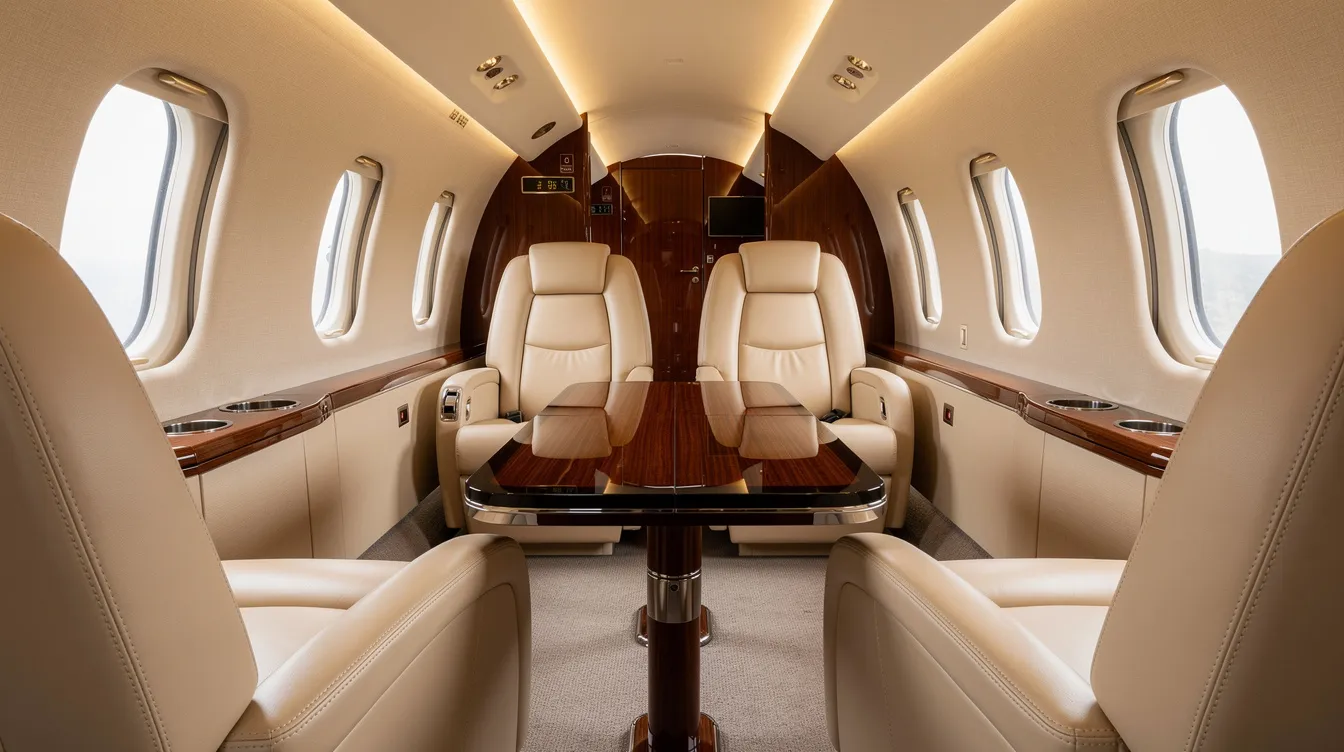
Cabins in models like the Phenom 300 or Citation CJ4 offer quieter environments, near-stand-up interiors, and layouts that support productive business conversations or focused work in-flight.
For time-sensitive regional trips, a light jet can shave 30 to 60 minutes off a flight compared to a turboprop on the same route.
FLYT's membership approach allows members to step up to a light jet only when the trip or one of several leg flights justifies the added speed and cost, rather than paying for it on every leg.
For context on where these aircraft sit in the broader spectrum, heavy jets and large cabin jets like the Gulfstream G650, which has a maximum range of 7,000 nautical miles, serve a different mission entirely. Very light jets and light jets occupy the sweet spot for regional and medium-range private aviation.
Comparison of turboprops and light jets
Feature | Turboprops | Light jets |
|---|
Typical passenger capacity | 4 to 8 | 4 to 8 |
Cruise speed | 250-300 knots | 350-450 knots |
Range | Up to 700 miles | 700 to 1,500 miles |
Runway requirements | Shorter can use unpaved runways | Longer, paved runways are required |
Hourly charter rate | $1,800 to $3,000 | $3,000 to $6,500 |
Cabin comfort | Cozy, functional | Quieter, more spacious |
Ideal mission | Short regional trips, island access | Longer regional trips, faster travel |
Weather sensitivity | More susceptible to turbulence | Generally smoother ride |
How small aircraft charter pricing really works
Cost Drivers
Private jet charter rates can range from $2,000 to $15,000 per hour, depending on aircraft type, and the range within small aircraft charter specifically runs from roughly $1,800 per hour for turboprops to $6,500 for upper light jets. But hourly rates are only one piece of the equation.
Core cost drivers include:
Aircraft type
Flight time
Positioning legs (ferrying the aircraft to your departure airport), which are the repositioning segments often sold at a discount as empty leg flights
Airport and handling fees
Crew costs
Regulatory compliance under FAA Part 135
Many operators advertise hourly rates that exclude fuel surcharges, repositioning, landing fees, and segment taxes, meaning the number on the quote often differs from what lands on the invoice. Chartering is typically more expensive than commercial air travel on a per-seat basis for one or two passengers, but the calculus shifts when you factor in group size, time savings, and the cost of overnight stays avoided.
For reference, the high costs of ownership can exceed $1 million per year, and chartering is often more cost-effective than outright ownership if you fly below roughly 200 hours annually. In the industry, Tradewind's pricing starts at $5,700 per hour with no hidden fees for certain aircraft categories, and FlyFlorida allows booking and payment for each flight individually for ad-hoc travelers. These models illustrate the range of approaches in charter operations.
FLYT's model is designed around transparent pricing that includes all taxes and fees, using fixed hourly rates and clear inclusions so members know what they will pay before confirming a trip. This contrasts sharply with the opaque, broker-based pricing that still dominates much of the charter market.
Instant-style pricing and predictability with FLYT
While private charter flights involve many variables, FLYT's model gives members fast, predictable pricing guidance on typical routes. Jettly offers instant pricing based on real market data as a marketplace approach, but FLYT's model goes further for members by combining instant pricing capability with fixed hourly rates and concierge-level route optimization.
Members can request near-instant pricing for frequent business corridors: New York to Washington, D.C., New York to Boston, Los Angeles to San Francisco, Miami to Nassau, or even San Juan for Caribbean access.
This pricing reflects fixed hourly rates, known taxes, and standard fees, reducing the risk of surprise add-ons that plague ad-hoc charter quotes.
The approach contrasts with broker-based pricing, where rates shift based on operator availability, fuel prices, and demand surges.
For repeat routes, members can book flights with confidence that the price quoted is the price paid.
Membership-based access vs one-off small aircraft charter
Many private aviation users begin with one-off bookings when they need to charter a private aircraft for a specific trip, then transition to a more structured model as their flying increases. Charter services in the ad-hoc world require no long-term commitments or membership fees, which makes them accessible but unpredictable. Small aircraft charters offer a flexible alternative to commercial air travel at any commitment level, but the experience and economics improve substantially with a membership structure.
FLYT's membership concentrates on frequent private flyers who value predictable costs, concierge planning, and aircraft fleet interchange across small aircraft types. The model provides greater flexibility than owning or fractionally owning a single airframe while delivering more consistency than booking one-off charter flights.
Membership-based services can connect users to over 20,000 aircraft globally, providing access to a depth of fleet that no single owner could maintain.
Many private jet services require no long-term commitments or deposits, but those that do, like FLYT, offer tangible benefits in pricing stability and availability.
Private jet memberships often include access to thousands of aircraft, which means members are not dependent on a single operator or base for dispatch.
Charter flights provide access to over 20,000 aircraft globally across various platforms, but membership models curate that access around vetted operators and consistent standards.
For comparison, Jettly connects users to over 20,000 aircraft globally as a marketplace, and Linear Air offers access to over 7,000 available aircraft. FLYT's approach differs by pairing fleet scale with a membership-first model that prioritizes operational quality and pricing clarity.
How FLYT's floating fleet and risk pool model works
FLYT operates an asset-light floating fleet, meaning aircraft are not tied to a single base or owner schedule. This allows more flexible dispatch from multiple regions, whether a member needs to fly from the Northeast, Southeast, Texas, or the West Coast.
A risk pool model spreads utilization and maintenance risk across a network of aircraft, rather than leaving members exposed to downtime on a single jet.
This structure supports more consistent access during peak periods like holidays, major conferences, and popular resort weekends, without requiring co-ownership of a specific aircraft.
Members benefit through more reliable availability and stabilized hourly rates over time, because the fleet is managed as a portfolio rather than individual assets.
The model also means FLYT can operate across a range of aircraft categories, from turboprops to light jets to larger options, matching fleet to demand rather than forcing demand into a fixed fleet.
Learn more about FLYT's risk pool and volatility protection and how the AI fleet engine optimizes availability.
Comparing membership to fractional ownership and jet cards
Choosing the right access model depends on how often you fly, how much capital you want to deploy, and how much operational variability you can tolerate.
Fractional ownership involves buying a share in a specific aircraft. A 1/16 share in a Phenom 300E light jet, for example, can cost approximately $360,000 upfront, with monthly management fees of $8,000 to $12,000 on top of hourly rates. This is a long-term capital commitment with residual value risk.
Jet cards involve pre-purchasing a block of hours at a published hourly rate. A 25-hour light jet card may cost $150,000 to $160,000 in 2026. These often come with blackout dates, peak surcharges, and restrictions on aircraft category changes.
FLYT's membership model requires no aircraft purchase, is asset-light, provides access to multiple small aircraft types, and uses fixed hourly rates designed for operational clarity. No long-term asset risk, no monthly management fees tied to a specific airframe.
For flyers under roughly 50 hours per year, on-demand or membership models typically deliver the best cost per hour once all variables are factored in.
Explore detailed comparisons on FLYT vs fractional ownership, FLYT vs jet cards, and FLYT vs brokers and jet cards.
Popular small aircraft charter routes and regions
Small aircraft charter delivers the strongest value on dense regional corridors where secondary airports are available and commercial options are limited or inconvenient. Private jet travel allows access to smaller airports not served by airlines, and charter flights can access over 3,000 airports not served by commercial airlines. Tradewind connects travelers to over 3,000 airports, illustrating the breadth of the network.
FLYT focuses on providing access across the United States and to key near-international destinations where small aircraft deliver strong time savings. Here are the patterns that drive the most demand:
New York to Boston, New York to Washington, D.C., and New York to Nantucket or Martha's Vineyard
Los Angeles to Napa, Los Angeles to Las Vegas, and intra-California corridors
Miami to Nassau, Miami to Key West, and intra-Florida routes
Dallas to Houston, Dallas to Austin, and Texas triangle flights
Cross-regional routes like Atlanta to New York or Chicago to Detroit
Using airports like Teterboro, White Plains, Fort Lauderdale Executive, or Van Nuys can reduce ground time by 30 to 90 minutes compared with departing from or arriving at major commercial hubs.

New York and Northeast private charter patterns
Small aircraft charter is heavily used in and out of the New York area. The density of business activity across the Northeast makes this region one of the most active for private charter operations. Small aircraft can operate out of regional and municipal airports that dot the corridor from Connecticut to Washington, D.C.
Typical charter flight corridors include New York to Boston, New York to Washington, D.C., New York to Toronto, New York to Nantucket, and New York to the Hamptons.
Turboprops handle shorter island and regional hops efficiently, while light jets serve slightly longer business sectors.
Airports like Teterboro, Westchester County, and smaller Connecticut fields offer fast, convenient access compared to JFK, LaGuardia, or Newark.
FLYT's model supports frequent Northeast flyers who need to move quickly between financial centers, tech hubs, and resort destinations, with the ability to search for and book flights on familiar routes at known rates.
Florida, the Southeast, and island access
Private charter flights in Florida and the Southeast often use small aircraft for short legs between cities and resort destinations. The region's geography, with its mix of coastal cities, islands, and seasonal population shifts, makes it a natural fit for small aircraft charter.
Turboprops are particularly well-suited for island and coastal charter operations due to their runway flexibility and operating efficiency. Routes like Miami to Nassau, Miami to Key West, and Orlando to Savannah are common.
Light jets become attractive for longer Southeast routes such as Miami to New York or Atlanta to New York, especially for time-sensitive business travel or leisure travel involving tight weekend schedules.
FLYT supports snowbird patterns, weekend escapes, and regional business trips with small aircraft charter, allowing members to fly between seasonal residences or to resort destinations with minimal planning friction.
The combination of competitive pricing on turboprop legs and the speed of light jets for longer sectors gives Southeast-based members operational flexibility that fractional ownership or single-operator models cannot match.
Safety, regulation, and operational standards
Regardless of aircraft size, private charter flights must meet strict regulatory and safety standards. In the United States, FAA Part 135 governs on-demand charter operations, covering aircraft maintenance, crew qualification, duty and rest limits, and operational control. This framework ensures that every air carrier operating charter flights maintains professional standards comparable to commercial operators, tailored for private aviation.
Part 135 mandates aircraft maintenance programs, minimum equipment requirements, and crew training that meet federal standards for on-demand operations.
Reputable operators maintain pilots with significant experience and enforce dual-pilot crews on jets, recurrent simulator training, and documented safety management systems.
Third-party safety audits from organizations like ARGUS, Wyvern, and IS-BAO provide additional layers of oversight, going beyond what Part 135 alone requires.
FLYT works exclusively with vetted operators and an asset-light fleet model that prioritizes consistent, high operational standards across every aircraft in the network.
The emphasis is on operational rigor and professionalism. Every operator in FLYT's network is selected based on safety record, certification status, and adherence to best practices in the industry.
How to plan and book a small aircraft charter with FLYT
Unlike anonymous marketplaces, FLYT uses a membership and concierge-driven approach to planning each private charter flight. The process is designed to be efficient and repeatable, not transactional.
Define your routing and timing: origin, destination, and required departure or arrival windows. FLYT's team can help identify the most efficient airport near your origin and destination.
Choose between turboprop and light jet based on route length, runway requirements, and travel needs. The concierge team provides guidance on the trade-offs.
Confirm passenger count and luggage requirements. This step matters more in small aircraft charter than in larger jets, because weight and space constraints are real.
Review pricing based on fixed hourly rates. Repeat members on familiar routes receive quick, near-instant pricing guidance because their patterns and preferences are already known.
Confirm the journey and receive departure details, including FBO location, ground transportation options, and any specific needs for the trip.
What to consider before you charter a small aircraft
Before contacting the FLYT team, answering a few key questions will make the process faster and the recommendation more precise.
Are your origin and destination airports flexible, or do you need to depart from a specific field? Flexibility on airport can meaningfully reduce repositioning costs and travel time.
How many passengers will fly, and what are their baggage needs? Golf clubs, skis, and bulky equipment affect aircraft selection.
Do you need to work in-flight, hold a private conversation, or simply arrive refreshed? This influences whether a turboprop or light jet is the better fit.
What are your required arrival and departure windows? Tight windows may favor a light jet for speed; flexible timing opens up turboprop options at lower cost.
Share your annual or quarterly travel patterns with FLYT so the team can propose an efficient private charter strategy across multiple trips, not just optimize a single leg.
FAQ
Can I charter very small planes like a two-seat Cessna through FLYT?
FLYT focuses on professionally crewed turboprops and jets designed for business and family travel, not bare-bones two-seat trainers or hobby aircraft. Ultra-small piston aircraft are uncommon in mainstream charter operations due to regulatory costs, limited comfort, and restricted weather capability. FLYT's network uses modern, pressurized aircraft that balance efficiency, comfort, and safety for serious private air travel. See more in our FAQ.
How far in advance do I need to book a small aircraft charter?
Many flights can be arranged within 24 to 72 hours, but availability tightens around major holidays, peak business days, and large events. Business travelers with recurring routes, such as New York to Washington weekly, benefit from working with FLYT to map a forward calendar and secure predictable access. Members typically enjoy faster confirmations and more consistent access than ad-hoc charter customers due to the membership and fleet structure. Learn about how it works.
Is small aircraft charter cost-effective compared with commercial business class?
For one or two passengers on a simple route, premium commercial fares are often cheaper. But the calculus shifts with three to six passengers and tight schedules. When valuing executive time, overnight stays are avoided, and door-to-door travel time savings, a small aircraft charter can be financially rational for frequent flyers. Compare the all-in cost of a typical trip, including hotels, ground transport, and lost productivity, rather than just the seat price, when evaluating private charter against commercial options.
Explore how FLYT delivers premium private aviation with less complexity and operational efficiency.
Discover how FLYT's membership model supports flexible, transparent private charter flights designed around the way you actually fly. For personalized assistance, contact us.

Conclusion
Small aircraft charter offers a strategic, efficient alternative to traditional private jet ownership, especially for executives and families focused on time savings, flexibility, and predictable costs. By leveraging turboprops and light jets, travelers gain access to thousands of airports, reduce total travel time, and enjoy tailored itineraries without the complexities of asset management. FLYT’s membership model enhances this experience by combining transparent fixed hourly rates, concierge support, and a floating fleet that adapts to your travel needs. Whether for regional business trips, multi-city itineraries, or leisure escapes, small aircraft charter with FLYT delivers a smarter, more modern approach to private aviation, prioritizing operational efficiency and flexibility over ownership burdens. Discover how this model can transform your travel—providing premium access without the traditional headaches of private jet ownership.