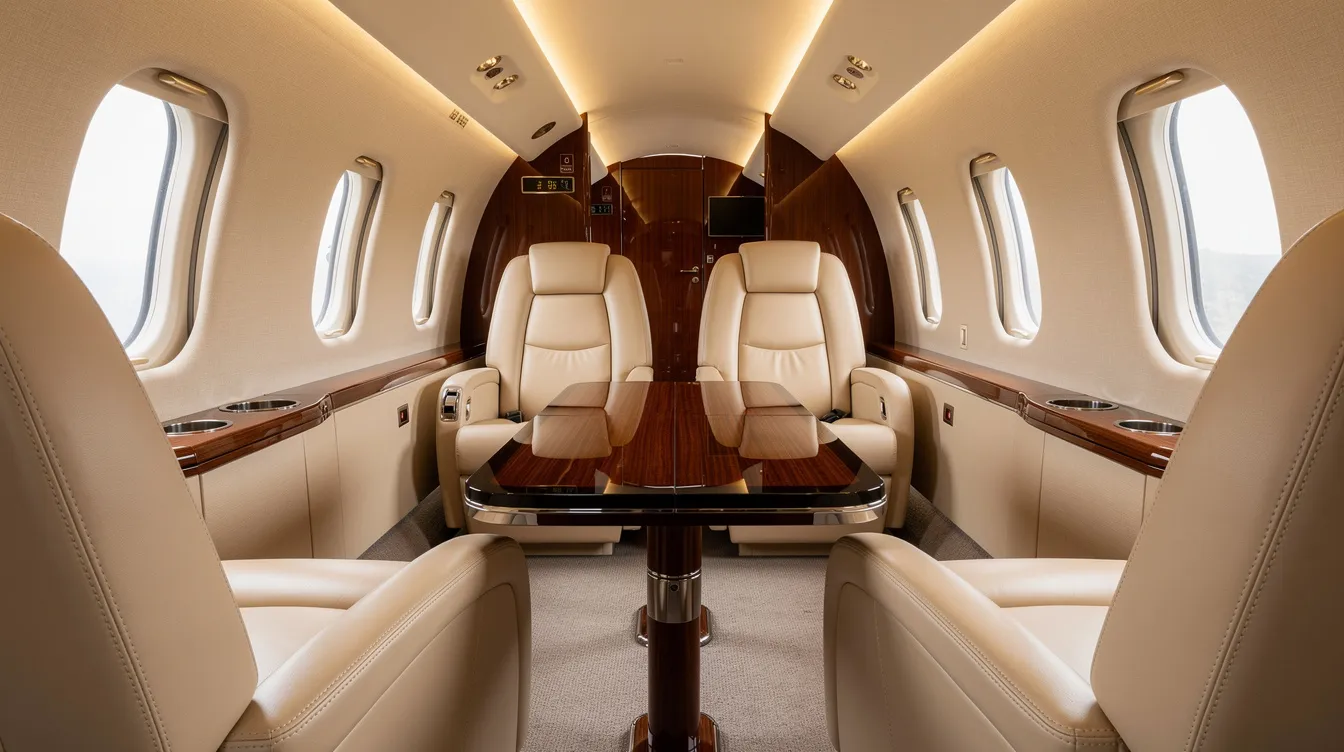
Private aviation demand in North America is running roughly 18–22% above pre-2019 levels, and the cost of owning a private plane continues to climb, with annual operating expenses often exceeding $1 million. Against that backdrop, the concept of a ride-share private jet has moved from niche curiosity to a serious consideration for business executives and frequent travelers alike.
Ride-sharing services make private aviation more accessible and affordable by letting travelers share the operational costs of a flight, but the model comes with trade-offs that are worth understanding before you commit. This article breaks down what ride-share private jet travel actually involves, how it compares with charter, fractional ownership, and membership-based access, and where a structured program like FLYT fits for those who fly often enough to need predictability rather than one-off deals.
Key takeaways
Ride-share private jet refers to per-seat or shared private flights where passengers split costs, most commonly on high-demand routes like Los Angeles to Las Vegas and New York to Miami, reducing the barrier to private air travel.
These models can lower entry costs by 40–70% compared to chartering an entire aircraft, but they come with constraints on scheduling, aircraft choice, and privacy that matter more as your flying frequency increases.
For travelers flying 25–150+ hours per year across varied routes, a membership-based approach with fixed hourly rates, fleet interchange, and guaranteed aircraft availability tends to deliver better cost predictability and operational reliability than ad hoc ride-share bookings.
FLYT offers a membership alternative designed around transparent pricing, global private jet access, and concierge support, without requiring aircraft ownership or long-term fractional commitments.
The right access model depends on your total annual flight hours, route diversity, and how much schedule control you need; ride share is a tactical tool, while membership is a strategic infrastructure.
Why is ride-sharing private jets getting so much attention
The disruptions that began in 2020 did not simply fade. Commercial airlines continue to face schedule instability, reduced service to smaller airports, and rising fares. For business travelers and founders whose time carries a measurable cost, the friction of commercial travel has become harder to justify.
Ride-share private jet concepts, including per-seat services, semi-private flight options, and shared charter arrangements, emerged as part of the broader modernization of the charter industry, responding to the high cost of booking a full private charter while also giving solo travelers and small groups a way to book individual seats on select shared flights as demand on corridors like Los Angeles to Las Vegas, New York to Miami, and Dallas to Aspen keeps growing. Q1 2026 booking data shows midsize jet charter rates averaging $5,800–$7,200 per hour on heavily trafficked U.S. routes, with large-cabin jets exceeding $20,000 per hour.
Private jet travel saves time by avoiding commercial airport delays, and chartering a private jet typically costs around $2,000 per hour at the low end for turboprops and light jets, scaling significantly upward for larger aircraft. The convenience of private jet ride-sharing includes significant time savings on airport waiting times, which is exactly what makes it attractive: you get many of the benefits of flying private without bearing the full cost of an entire aircraft.
The core appeal for executives and founders goes beyond comfort. A quiet cabin and a 2–5-hour private flight that doubles as uninterrupted work time can be more valuable than the ticket price differential. FLYT's approach is straightforward: for travelers who fly regularly, access to a professional private aviation network with fixed hourly pricing matters more over a full year of trips than chasing empty leg deals.

What does a ride-share private jet actually mean
Ride share private jet is an umbrella term for shared private aviation options where travelers pay by the seat instead of chartering the entire aircraft. The model works because not every traveler needs eight seats on a light jet or twelve on a midsize jet for every trip.
These models typically operate on high-demand routes where multiple travelers are willing to share a cabin. Think Los Angeles to Las Vegas, Los Angeles to Aspen, New York to Miami, or London to Paris. Private jet ride-sharing operates primarily through digital platforms that connect passengers headed in the same direction on the same day.
Ride share can be marketed under several names: semi-private jet flight services, shared charters, shuttle-style flights departing from fixed-base operators, or per-seat access on empty leg flights, sometimes called leg flights, where the aircraft is repositioning without passengers for its next client and the seats are offered at a discount. Seat-by-seat booking allows users to purchase only the seats they need on shared flights, and semi-private flights typically use smaller aircraft for fewer passengers, keeping the cabin experience closer to private flying than to a commercial flight.
Passengers still benefit from many elements of private flights: use of private terminals, faster boarding times, and significantly fewer passengers than commercial airlines. Shared flights typically operate out of private Fixed-Base Operator terminals instead of crowded commercial airports, and passengers can enjoy VIP terminals, personalized service, and faster boarding times compared to commercial travel.
Not all ride-share models work the same way. Frequent travelers should choose an access model based on total annual flying needs, not just a single bargain route.
Types of ride-share private jet models
There are four main structures in private jet ride share: semi-private routes, shared charter, per-seat empty legs, and hybrid membership programs. Each offers different cost-sharing options, along with different levels of control and predictability.
Ride Share Model | Description | Flexibility & Control | Cost Savings | Typical Aircraft |
|---|
Semi-private scheduled routes | Fixed or quasi-scheduled per-seat services on popular routes; shuttle-like operation | Fixed departure times, limited routes | Moderate (40-50%) | Light jets, regional aircraft |
Shared charter | One party books the entire jet, opens unused seats to others | Some schedule flexibility | Moderate to high (40-70%) | Light to midsize jets |
Empty leg per-seat offers | Discounted repositioning flights sold by the seat | Low, dictated by the aircraft schedule | High (up to 70%) | Various |
Hybrid memberships & jet cards | Blend of fixed pricing, guaranteed access, occasional shared flights | High; guaranteed availability | Varies | Wide range |
Ride-share private jets allow passengers to share costs, and passengers share the operational costs of the jet, reducing the cost per person significantly. Shared flights can reduce costs by 40% to 70% compared to traditional private jet charters. But each model trades some combination of schedule control, privacy, and route flexibility for those savings.
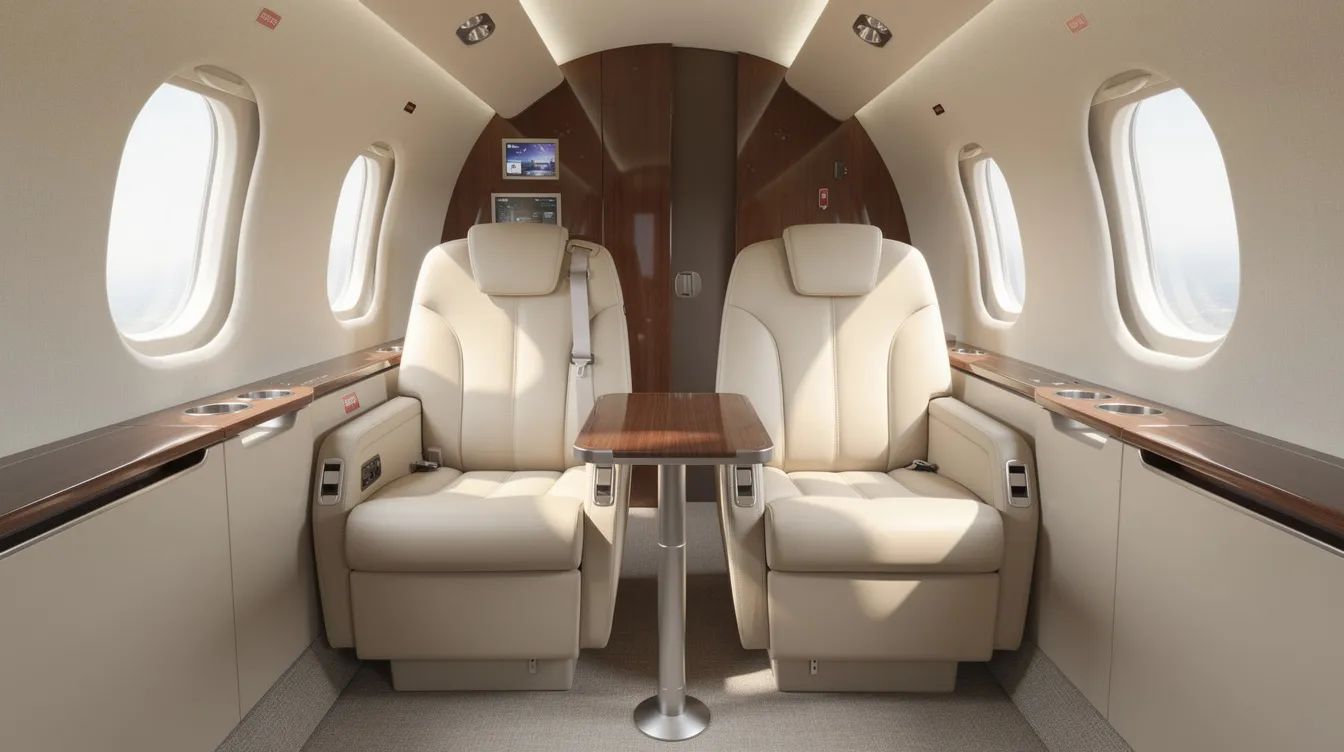
Ride share vs charter vs membership vs fractional ownership
Executives and private jet travelers should think about private aviation access in terms of annual flight hours and capital allocation, not just the price of the next flight. Here is how the four main models compare.
A ride-share private jet is best suited to occasional flyers on specific routes. Upfront commitment is low, but constraints on schedule, aircraft type, and privacy are real. If you need to be in Las Vegas by 3 PM on a Tuesday, you are dependent on whether a shared flight aligns.
An on-demand private charter gives full control over the schedule, routing, and the entire aircraft. Charter flights are priced by market demand, and there is no long-term commitment. But pricing is variable, and many travelers find it hard to budget accurately when charter company rates fluctuate by season and route.
Fractional ownership means buying a share of a specific private jet, for example, one-sixteenth or one-eighth. Fractional ownership guarantees a set number of flight hours per year and locks in access, but requires large upfront capital. Entry costs for a midsize share have climbed to $250,000–$400,000, before monthly management fees and multi-year contracts. Learn more about fractional ownership vs membership.
Private jet membership (like FLYT memberships) occupies a middle path for frequent travelers flying 25–150 hours per year. Private jet membership offers flexible access to aircraft. Private jet membership eliminates the need for aircraft ownership. Membership programs provide predictable pricing for private flights. And unlike fractional programs, there is no asset depreciation or residual value risk.
Where does a ride-share private jet make sense?
Ride share works best for solo travelers or couples booking individual seats on repeat, high-demand routes. Rideshare flights are commonly available on high-demand routes, such as New York to South Florida, Los Angeles to Las Vegas, or London to Nice, where shared flights operate frequently enough to be practical.
Good use cases include short-notice weekend getaways, seasonal events, or test-driving private aviation before committing to a membership or fractional program. Semi-private jet flights allow for flexible scheduling and custom routes on certain corridors, and they also appeal to travelers who want spacious seating and access to private terminals without the usual commercial-airline wait times.
Ride share can also complement an existing private aviation setup. A member who normally books a full aircraft might occasionally need a single seat on a route that does not justify the cost of a whole plane. Leisure travelers heading to exclusive destinations on popular corridors may find per-seat models ideal for that purpose.
The limits are real, though. Fixed departure times, tighter luggage policies, and less confidentiality compared to booking a full private jet for a board meeting or investor roadshow mean ride share is not a universal solution. For a business trip requiring discretion, many travelers prefer a private charter or membership booking.
When membership or fractional ownership is more efficient
Executives and founders flying between 25 and 200 flight hours per year, often on varied routes like Los Angeles to New York, New York to London, or regional hops between secondary U.S. cities, typically benefit more from structured private aviation membership or fractional ownership than ad hoc ride share.
Membership and fractional models offer guaranteed access, consistent aircraft standards, and predictable pricing that support long-term budgeting. Membership-based services often include concierge support, a premium service for frequent flyers that handles everything from FBO selection to ground transportation at the final destination. Unlike dynamic per-seat pricing, a fixed hourly rate lets finance teams plan quarterly and annual travel budgets with confidence.
For regular transcontinental or long-range trips, having reliable access to midsize jets, a super midsize jet, or ultra-long-range jets is operationally important and rarely covered well by ride-share models. Private jets can access over 5,000 airports worldwide, which is a significant advantage when your schedule requires reaching smaller airports or remote destinations not served by commercial airlines.
FLYT's asset-light floating fleet and risk pool model approach is designed to capture this middle ground: providing flexible, global private jet access with fixed hourly rates and no need to own or co-own an aircraft.
Popular ride-share private jet routes and how they work in practice
Ride-share private jet services cluster around corridors with heavy business and leisure demand, where filling 6–12 seats on a repeated schedule is viable. Popular routes for ride-share jets include New York to Miami, and a handful of other city pairs support enough volume for regular shared flights. Some semi-private providers, such as Surf Air, focus on repeat corridor service rather than bespoke charter-style scheduling.De
Los Ángeles a Las Vegas. This is the classic ride-share corridor. Shared flights typically use light jets or regional aircraft, departing from private terminals in Van Nuys or Hawthorne and landing at airports like Henderson Executive or North Las Vegas. Private jet flights often land closer to final destinations than commercial flights, saving significant ground transportation time on the Las Vegas end. Flight duration is roughly 45 minutes, making it ideal for weekend getaways or quick business trips.
New York to Miami and West Palm Beach. Semi-private flights and shared charters run multiple times per week during peak seasons, attracting both business executives and lifestyle travelers seeking an exclusive and comfortable experience. Many travelers on this route value the ability to bypass congested commercial terminals at JFK or LaGuardia and instead use a private terminal in Teterboro or White Plains.
Seasonal corridors. Routes like Los Angeles to Aspen in winter or Dallas to Aspen during ski season see demand spikes around holidays and weekends, making shared private jets more available but also more variable in price. Private jets can reach remote destinations not served by airlines, which is particularly relevant for mountain airports with limited commercial service.
Truly long-range or intercontinental ride-share options, for example, New York to London, exist but are less common. They are often limited to specific programs or one-off launches, whereas membership and private charter remain the primary access routes for consistent global private flights.

How does this compare with membership-based access?
With a private jet membership, a traveler can book Los Angeles to Las Vegas and Los Angeles to New York under the same fixed hourly rate structure, regardless of whether a shared shuttle happens to be available that weekend. Private jet travel offers customizable itineraries for passengers, which means departure times, airports, and aircraft category are chosen by the member, not by whatever shared flight schedule exists.
For companies running roadshows, multi-city client tours, or internal leadership offsites, guaranteed aircraft availability and predictable turnaround times matter more than catching one low-cost per-seat fare on a single leg. Think of ride-share routes as tactical tools, and membership or structured charter as strategic infrastructure for an overall travel program.
Cost, transparency, and the realities behind "cheaper" private flights
Cost is the main reason most travelers seeking private aviation look at ride-share private jets, but the real comparison should be cost per productive hour saved and the predictability of total annual spend.
Per-seat ride-share pricing can range from premium economy level to first-class commercial pricing on routes like Los Angeles to Las Vegas or New York to Miami, depending on demand, timing, and aircraft type. Ride-share models can significantly reduce private jet travel costs on these corridors. But pricing fluctuates, and many travelers find that what seemed like a deal on one booking becomes expensive on the next.
Whole-aircraft charter on a light or midsize private jet might average $4,000–$9,000 per hour in North America. Fixed hourly rates for private jets typically range from $2,500 to $9,000, depending on aircraft category. Charter rates for the Beechcraft King Air 350 start in the mid-$2,000s per hour, while the Cessna Citation V has charter rates around $1,800 per flight hour at the lighter end. Hourly rates for the Gulfstream G550 can reach up to $15,000 for those requiring a heavy or long-range cabin. Larger long-range jets can exceed even that, excluding taxes and positioning fees.
Ride-share providers often use dynamic pricing models similar to airlines or ground ride-share apps, where fares move with demand. This makes it harder for many travelers and business executives to budget accurately over a year. Jet card programs often feature fixed hourly pricing for guaranteed availability, and FLYT's transparent pricing structure is built on the same principle: members know in advance what they will pay per flight hour, which brings discipline and predictability to operational expenses.
Hidden costs and trade-offs
Shared private jet travel can carry hidden costs: baggage surcharges, change fees, ground transfers from smaller airports, and the opportunity cost of schedules that do not perfectly align with meetings or events. Semi-private flights offer enhanced privacy compared to commercial airlines, but they still involve sharing a cabin with other passengers, which may not suit every business trip or investor discussion.
Fractional ownership has its own hidden costs: capital tied up in a depreciating aircraft share, monthly management fees, fuel surcharges, and exit or remarketing fees at the end of the contract term. The operating costs add up quickly when you account for crew salaries, hangar fees, insurance, and periodic maintenance.
Owning a private jet outright can involve annual operational expenses well into the hundreds of thousands or millions of dollars. For many travelers, the math simply does not work unless utilization is extremely high and consistent.
FLYT's asset-light, floating fleet model and risk pool approach shift these ownership and utilization risks away from the member. The member pays a published membership fee and fixed hourly rates. No repositioning fees. No depreciation risk. No hangar bills. The focus stays on flying, not on managing an aviation asset.
Safety, regulation, and operational standards in ride-share private aviation
While ride-share makes private air travel feel more casual, the underlying charter operations remain highly regulated. Every charter operator and aircraft must meet safety standards regardless of whether it is a full charter, a semi-private flight, or a shared seat.
In the United States, FAR Part 135 governs commercial charter operations, including most ride-share and per-seat models. Operators must maintain strict pilot qualifications under FAA regulations, and the maintenance, dispatch, and crew rest requirements are codified in detail. Fractional ownership programs may fall under Part 91K, with their own set of operational rules.
Reputable providers will use third-party safety audits and rating systems such as ARGUS, Wyvern, or IS-BAO to validate safety and operational practices. Top operators exceed FAA minimum safety standards, going beyond the baseline to implement additional training, maintenance protocols, and operational checks. Vetted operators must meet proprietary safety criteria set by the platforms and membership programs that work with them, and passenger identities are pre-screened for safety on many shared and semi-private services.
Seat-sharing structures must be designed within regulatory boundaries. Not every "by the seat" scheme is compliant, which is why established charter and membership operators invest heavily in compliance and governance. FLYT partners only with vetted operators and aircraft within a controlled network, prioritizing safety, reliability, and consistent standards over the pure volume of available flights.

Why operational discipline matters more as you fly more
For travelers flying private a few times per year, a single provider failure is inconvenient. For executives or teams flying dozens of times per year, operational missteps can impact deals, earnings calls, or board meetings. The stakes are different when private flying is part of your operating rhythm rather than an occasional luxury.
Membership-based private aviation with a managed floating fleet gives more control over dispatch reliability, crew standards, and contingency planning than fragmented ride-share platforms that rely on many disparate operators. As flight distance increases, especially on long-range legs above five hours, night operations, or winter-weather routes into mountain airports, pilot experience, dispatch planning, and maintenance history become increasingly critical.
FLYT's model is built around repeat, professional travelers who value this operational discipline at least as much as the aircraft interior.
How FLYT approaches modern private jet access differently
FLYT is a membership-based private aviation service designed for frequent private flyers who prioritize time, predictability, and flexibility over owning an aircraft. It is not a ride-share marketplace, and it is not a fractional ownership program. It is structured access to a diverse fleet of private jets, managed through a single relationship.
FLYT's fixed hourly rate structure means members know in advance what they will pay per flight hour across aircraft categories, from turboprops and light jets through midsize jets, a super midsize jet class, heavy jets, and ultra long-range jets. This makes annual travel budgets straightforward, unlike dynamic ride-share pricing or variable charter quotes.
The fleet interchange concept is central. Members select the right aircraft type for each trip: a light jet for Los Angeles to Las Vegas, a super midsize jet for Los Angeles to New York, a long-range jet for New York to London. There is no obligation to a single tail number. Jet cards allow pre-paid flight hours for guaranteed access in some programs, but FLYT's membership goes further with category flexibility and no repositioning fees.
FLYT operates an asset-light, floating fleet model. Rather than owning a fleet outright, the company orchestrates a network of over 20,000 aircraft to match member demand globally. This reflects a broader charter-industry shift toward digital coordination and flexible access. This risk pool approach means members are not exposed to the capital risk of aircraft depreciation or the operational burden of fleet management.
Concierge-level support ties it together. Trip planning, multi-leg routing, FBO selection, and ground connections are managed by experienced aviation professionals. The FLYT platform keeps the booking process efficient, and travelers comparing app-enabled on-demand service may also encounter providers such as Private Jets Inc when evaluating digital operators, while the human support layer ensures that nothing falls through the cracks.
Membership vs ride share for serious private flyers
The contrast is straightforward. Booking occasional ride-share private jets for single routes means accepting variable pricing, limited schedule options, and different operators on every flight. Building a travel program around FLYT membership means every flight, whether Los Angeles to Las Vegas or New York to Aspen, follows the same transparent pricing framework.
FLYT's model is built for executives, founders, investors, and families who expect to use private aviation repeatedly across a calendar year, not just for occasional leisure trips. Members optimize aircraft choice by mission: turboprops or light jets for short hops into regional airports, midsize and super midsize jets for cross-country business routes, and long-range or ultra-long-range jets for intercontinental travel.
This approach removes the capital and operational complexity of fractional ownership or whole-aircraft ownership while still providing a premium, consistent, and globally scalable travel solution. It is a cost-effective alternative to ownership for travelers seeking reliable private jet access at scale.

Frequently asked questions about ride share, private jet, and FLYT
Is ride-share private jet travel actually cheaper than first-class commercial?
On popular short routes such as Los Angeles to Las Vegas, per-seat pricing on shared private flights can be comparable to or somewhat higher than last-minute domestic first-class tickets, but with significantly less time lost in the airport. Compared to commercial flights on major commercial airlines, the total door-to-door time savings can be substantial when you factor in security, boarding, and baggage claim.
On longer or less common routes, ride-share options may not exist or may price closer to traditional private charter levels, making structured membership or charter more sensible for frequent users. The best approach is to evaluate total trip value, including time saved, productivity onboard, and ground transport efficiency, rather than just the ticket price alone.
Can I use ride-share private jets for international or long-range flights?
Most ride-share and semi-private programs focus on domestic or short-haul international routes. Long-range or intercontinental per-seat private flights exist but are rare and often seasonal. For regular missions like New York to London, Los Angeles to London, or transpacific routes, private charter and membership-based access to long-range private jets are currently the primary options.
FLYT can arrange global private flights via its network, using appropriate long-range aircraft when required, providing access that extends well beyond the domestic corridors where ride-share is most common.
How does FLYT differ from an "Uber for jets" style app?
FLYT is not a last-minute seat-selling marketplace. It is a membership-based private aviation platform offering fixed hourly rates, guaranteed aircraft access, and curated operators. Instead of prioritizing the maximum number of random flights, FLYT focuses on consistent operational standards, safety, and a long-term relationship with members.
FLYT's asset-light floating fleet model is designed for strategic, repeat usage rather than opportunistic, one-off bargains. The emphasis is on providing access to a managed network where quality and reliability are controlled.
What if my travel mix includes both solo trips and family or team travel?
This is a common pattern for FLYT members. Aircraft selection can be adjusted per trip, from smaller jets for solo or duo travel to larger cabin jets for families or executive teams. Under FLYT's structure, the same transparent pricing framework applies whether the member is flying alone from Los Angeles to San Francisco or with a full team from New York to Las Vegas.
Building a simple annual flying plan with estimated hours and routes is the best way to determine whether membership offers better value than sporadic ride-share bookings. Enabling passengers to choose the right aircraft for each mission is a core benefit of the fleet interchange model.
Do I need to live in a major hub like Los Angeles or New York to benefit from FLYT?
While many members frequently fly to and from hubs such as Los Angeles, Las Vegas, New York, Miami, and London, FLYT's network is designed for global reach beyond those cities. FLYT can arrange private flights to and from secondary and regional airports, often closer to members' homes, offices, or vacation properties, which is one of the primary cost benefits of private aviation over commercial travel.
Members based outside major hubs should think of membership as a way to provide access to both primary and secondary destinations worldwide, turning what might be a multi-connection commercial ordeal into a single, direct private flight.
Conclusion: choosing the right form of private jet access for you
Ride-share private jet services have made elements of private aviation more accessible, especially on routes like Los Angeles to Las Vegas or New York to Miami. But they are only one part of the modern private aviation landscape, and they work best as a complement rather than a primary access strategy for frequent travelers.
For occasional or purely leisure travel, per-seat or semi-private models can be useful. For business executives and organizations that fly regularly, structured access with predictable costs and reliable aircraft availability is where the economics and the operational reliability actually work.
FLYT offers a membership-based alternative to ownership, fractional shares, and ad hoc ride-sharing by combining fixed hourly rates, aircraft interchange, a floating fleet model, and concierge support. It is designed for the way serious private flyers actually travel: varied routes, different aircraft needs per trip, and a premium on time.
Explore how FLYT can help you build a more efficient, transparent, and flexible private aviation strategy without purchasing a private jet.