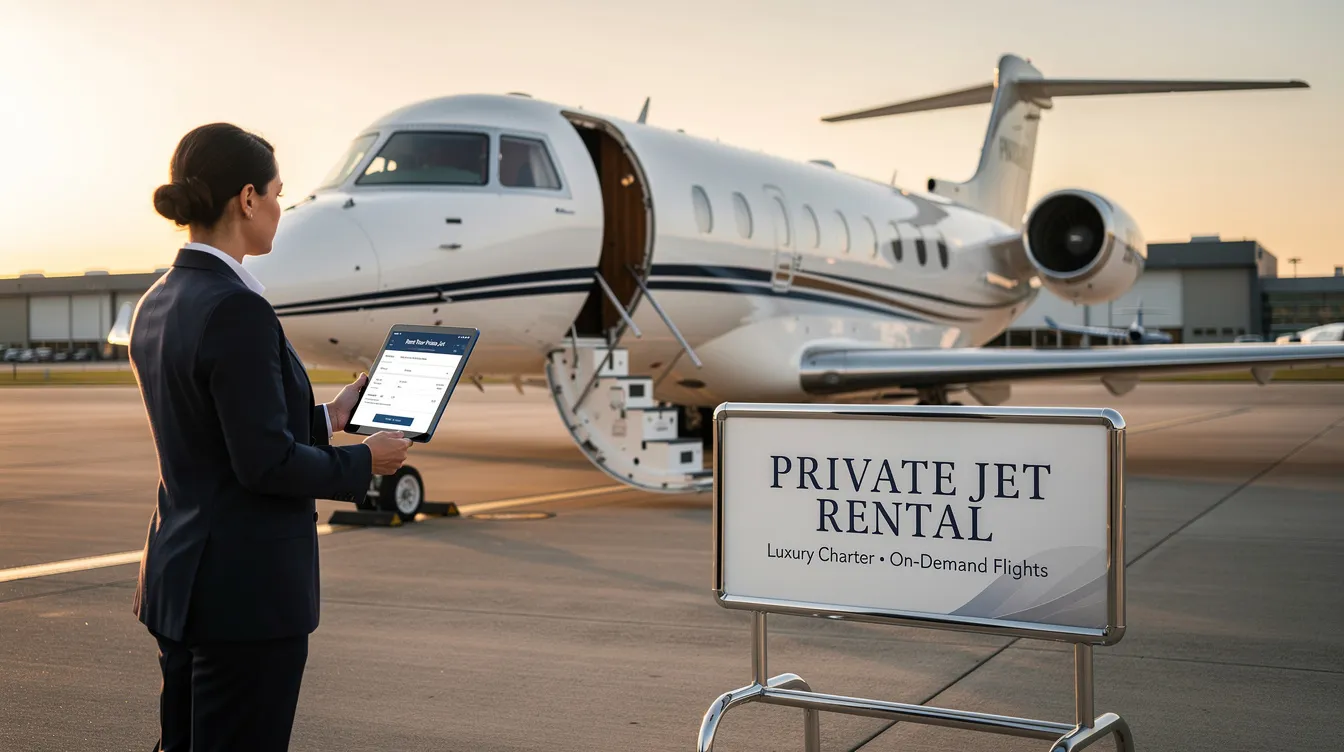
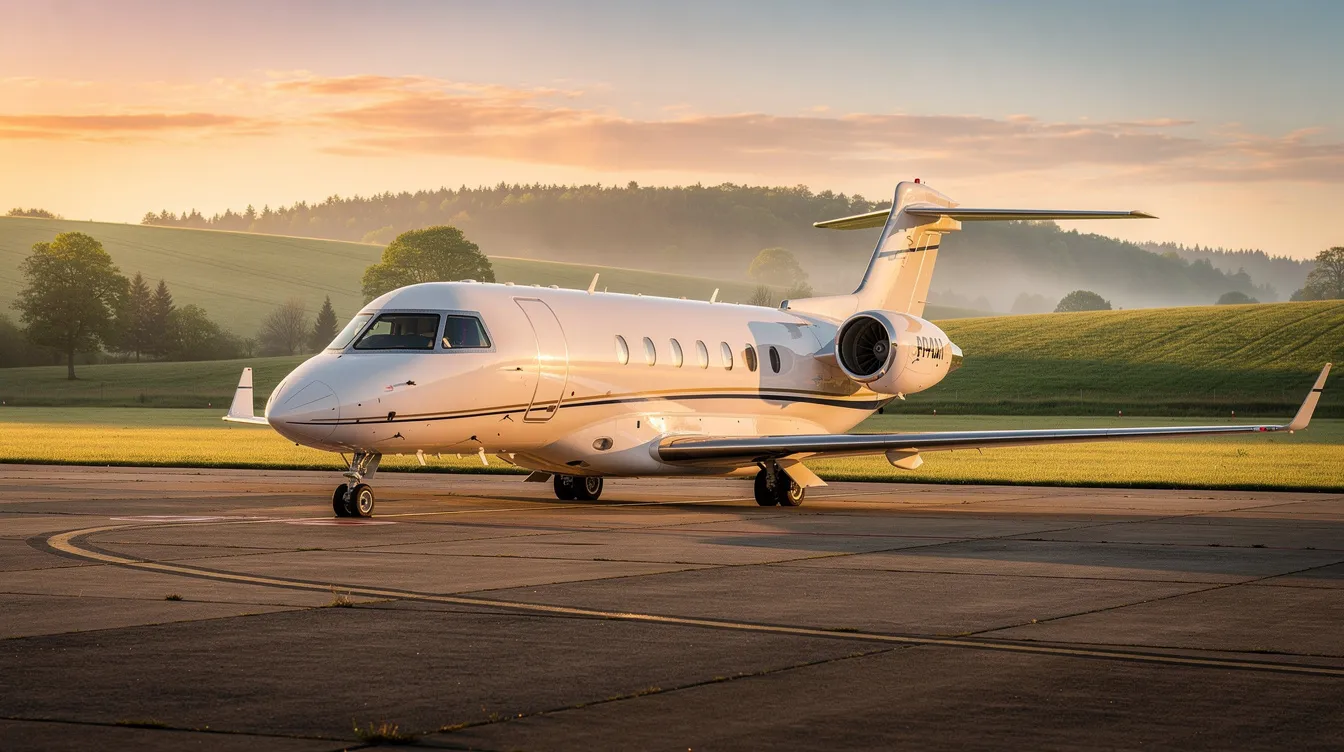
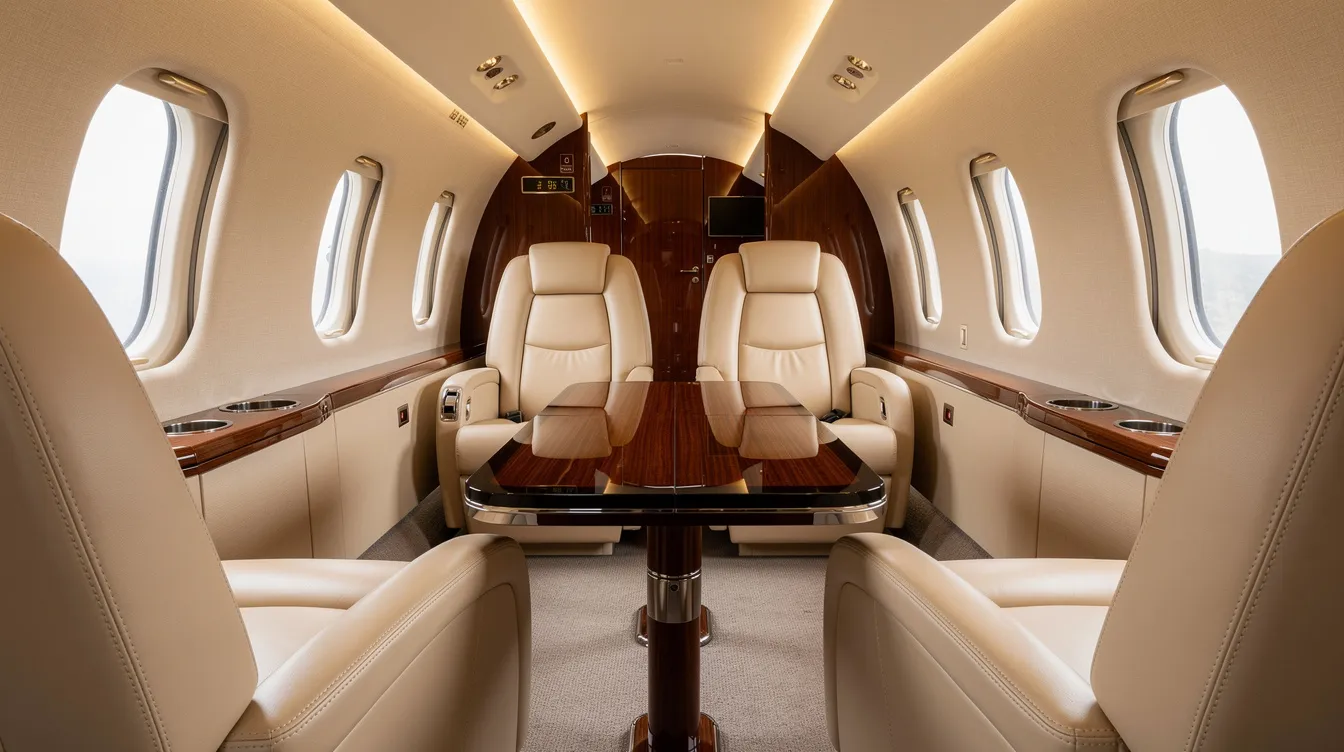
Renting a private jet can mean two very different things: booking ad-hoc private jet charters for a single trip, or using a structured private jet membership with fixed hourly rates and more predictable access. In 2026, typical private jet rental prices range roughly from $2,000 to $14,000+ per flight hour depending on aircraft size, while taxes like the 7.5% federal excise tax and short leg fees can materially change the final bill.
FLYT focuses on the membership side of private aviation: flexible aircraft access, transparent pricing, and concierge-level support without the operating burden of owning a private plane. Learn more about FLYT's approach.
Key takeaways
Private jet rental prices range from $2,000 to $14,000 per hour, with turboprops and light jets at the lower end and heavy or ultra-long-range aircraft at the higher end.
FLYT’s membership model offers fixed hourly rates, transparent pricing with no hidden fees, and fleet interchange from light jets to ultra-long-range aircraft without ownership commitments. Discover the benefits of FLYT memberships.
For travelers flying fewer than roughly 200 flight hours per year, renting through membership or on-demand private jet charters is usually more capital-efficient than owning an aircraft outright.
Private jet memberships offer flexible access to aircraft, predictable pricing for flights, and lower upfront costs than ownership.
FLYT is built for executives, founders, investors, and frequent flyers who want global access, concierge support, and cost predictability without fractional shares, aircraft ownership, or traditional jet card complexity. See why FLYT stands apart.
How to rent a private jet today (and why executives are rethinking ownership)
To rent private jet access in 2026, you generally choose between two models. The first is on-demand private jet charter, where each charter flight is quoted separately for a specific trip. The second is membership-based access, where a provider like FLYT offers fixed hourly rates, fleet interchange, and structured support across repeated private flights. Learn more about how FLYT works.
Renting a private jet involves a five-step process: submit trip details such as travel dates and passenger count, review suitable aircraft options, confirm pricing and the charter agreement, submit the passenger manifest before the flight, and arrive at the fixed base operator for departure. It is a more controlled process than buying airline seats, but it still requires operational precision.
Typical use cases are practical rather than theatrical. A founder may fly from New York to Miami for quarterly board meetings. A family office may use Los Angeles to Las Vegas for a weekend itinerary. An investor team may route from London to Dubai for meetings where commercial flights would add layovers, security time, and schedule risk.
The primary difference between renting a private jet and flying commercial is cost versus time efficiency. Private jets offer unmatched time savings and flexibility, and private jet charters often eliminate connecting flights and layovers. Private jets provide more destination flexibility than commercial airlines because private jets utilize small regional airports closer to destinations, and private jets can land on shorter runways at remote airports.
There are three main ways to access private aviation:
Ad-hoc private charter bookings for one trip at a time
Jet cards or memberships with fixed hourly rates
Fractional or full ownership with capital commitments and recurring operating costs
Many executives and founders now favor asset-light access over tying up capital in a business jet. In a volatile interest-rate and fuel-price environment, owning a depreciating aircraft, paying crew salaries, and managing utilization can be difficult to justify unless annual usage is very high. Learn about FLYT’s asset-light floating fleet model and risk pool approach.
The rest of this article breaks down private jet pricing, aircraft type selection, taxes, fees, private jet costs, and how FLYT structures modern private jet rentals to be more predictable and transparent.

How much does it cost to rent a private jet in 2026?
How much does it cost to rent a private jet? The answer depends mainly on aircraft category, flight hours, routing, airport choice, and whether the aircraft must reposition before or after the trip. Private jet rental prices range from $2,000 to $14,000 per hour in many common 2026 use cases, though the total private jet price can exceed that range for specialized aircraft, international charter flights, or peak travel periods.
As a practical benchmark, current hourly rates excluding taxes and fees often fall into these bands:
Aircraft category | Typical hourly rate (USD) | Passenger capacity (approx.) | Typical range (nautical miles) |
|---|
Turboprops | $2,000–$3,000 | 6–18 | Up to 1,500 |
Light jets | $3,000–$5,000 | 6–8 | 1,500–2,000 |
Midsize and super midsize jets | $4,500–$8,000 | 6–9 | Up to 3,500 |
Heavy jets | $7,500–$12,000+ | 12–18 | 3,000–6,000+ |
Ultra-long-range aircraft | $11,000–$18,000+ | 8–19 | Up to 7,000 |
Hourly rates for turboprop jets start around $2,000. Heavy jet charters can cost between $5,400 and $11,000 per hour in some market conditions, while charter rates for large jets can exceed $10,000 per hour when range, cabin size, aircraft availability, or peak demand is a factor.
Here are a few ballpark one-way examples:
Los Angeles to Las Vegas on a light jet: roughly 40–50 minutes of flight time, often around $8,000–$12,000 all-in once minimums, landing fees, and positioning are considered.
New York to Miami on a super midsize jet: often roughly $28,000–$40,000 all-in, depending on aircraft options, airport choice, and timing.
London to New York on an ultra-long-range jet: often starting around $120,000–$160,000 all-in, especially once international fees, handling, and crew planning are included.
The important distinction is flight time versus billable time. A one-hour flight may not result in one billable flight hour. Billable time often includes aircraft positioning, taxi time, and daily minimums. On shorter routes, a 1.0-hour segment can bill closer to 1.5–2.0 hours depending on the operator.
According to current market guidance from private aviation cost trackers, base hourly pricing is often only part of the invoice; fees, taxes, and positioning can add materially to the total cost. FLYT’s membership approach uses published fixed hourly rates and minimizes variable add-ons, allowing members to estimate trip budgets more accurately than with purely on-demand private charter quotes. Explore FLYT pricing for details.
Key cost drivers: from flight hour to final invoice
The estimated cost of a private jet rental is shaped by several variables:
Aircraft size and age: larger cabins and newer aircraft with modern avionics or advanced avionics usually cost more.
Total flight hours: longer routes increase direct operating cost.
Positioning legs: aircraft positioning can add cost before passengers board.
Airport choice: fixed base operators, airport authority charges, and local handling vary by field.
Time of year: holidays, major events, and peak weekends can affect availability.
International routing: international flights require permits, customs planning, international fees, and sometimes crew rest planning.
Additional fees may include landing charges and crew overnight expenses. Items like crew overnights, peak demand surcharges, and winter deicing can move a quote by thousands of dollars for a single private jet rental. Fuel prices also matter; when fuel is volatile, a fuel surcharge may appear on private jet charter cost estimates.
Sophisticated travelers should always ask whether quotes are all-in and which variables are still estimates. The key variables include fuel surcharge, federal excise tax, international head taxes, local airport fees, and handling costs.
FLYT builds these variables into its pricing logic where possible, reducing surprise add-ons and hidden fees for members, especially on frequently flown routes.
Understanding private jet hourly rates by aircraft category
Most private jet rentals are priced by aircraft category and flight hours, not by individual seat. Choosing the right aircraft type is the main lever for cost efficiency, comfort, range, and schedule control.
Turboprops, such as the King Air 350i, are cost-efficient for regional missions under 500 miles. They are often priced around $2,000–$3,000 per hour, and turbo prop jets typically seat 6 to 18 passengers depending on configuration. These light aircraft can use smaller airports and shorter runways, making them useful for remote destinations.
Light jets, such as the Embraer Phenom 300 or Citation CJ4, usually carry 6–8 passengers and are ideal for regional trips of 1.5 to 3 hours. Light jets often have ranges around 1,500–2,000 nautical miles and hourly rates around $3,000–$5,000. They work well for routes like New York–Chicago, Dallas–Santa Fe, or Los Angeles–Aspen.
Midsize jet options, such as the Citation XLS+, typically seat 6 to 9 passengers comfortably. Super midsize jets, such as the Praetor 500 or Challenger 3500, offer more cabin space, longer range, and better performance for coast-to-coast missions. Super midsize jets offer a range of 3,500 nautical miles in many configurations, with hourly rates often around $4,500–$8,000.
Heavy jets, such as a Challenger 650 or Gulfstream G300, accommodate 12 to 18 passengers for long-range travel in many cabin layouts. They are commonly used for transcontinental routes, U.S.–Caribbean travel, and some U.S.–Europe missions. Heavy jet charter typically costs $7,500–$12,000+ per hour.
Ultra-long-range aircraft, such as a Gulfstream G600 or Global 6500, are built for nonstop global missions. Ultra long range jets can fly up to 7,000 nautical miles, making them suitable for routes like New York–Tokyo, London–Los Angeles, or Dubai–Sydney. These aircraft often range from $11,000 to $18,000+ per hour and are useful when nonstop range, sleeping configuration, and cabin productivity matter.
Aircraft options must match range and capacity needs. Oversizing can waste capital, while undersizing can create operational risk through fuel stops, baggage constraints, or passenger discomfort. FLYT’s fleet interchange capability allows members to move between these categories trip by trip, using a consistent fixed hourly rate structure rather than renegotiating each private jet charter service separately. Learn more about aircraft interchange.

When to choose light jets vs heavy or ultra-long range
Use turboprops and light jets for sub-2 hour flights with smaller groups. Use a midsize jet or super midsize jet for longer domestic flights, especially 4–5 hour sectors. Use heavy or ultra-long-range aircraft for intercontinental private jet charter flights, larger passenger counts, or itineraries where cabin workspace is critical.
A heavy jet for a 45-minute hop may feel convenient, but it rarely improves the same trip enough to justify the higher hourly cost, daily minimums, and short leg fees. A smaller aircraft category may deliver the same schedule result at a lower total cost.
FLYT advisors and digital tools are designed to recommend the lowest effective aircraft category for each mission. The goal is not to select the largest aircraft; it is to preserve comfort, range, and privacy while keeping private jet rental costs efficient. Learn about FLYT’s AI fleet engine that supports these recommendations.
Taxes, fees, and “hidden costs” in private jet rental
Private jet pricing can appear opaque because many fees sit on top of the hourly rate. Understanding those line items helps executives benchmark quotes correctly.
The U.S. federal excise tax is 7.5% on all domestic flights operated as commercial charter. In practice, the 7.5% Federal Excise Tax applies to domestic commercial charters and is calculated on top of base charter rates, segment fees, and certain surcharges.
There are also per-segment fees within the U.S., such as the $4.50 per passenger segment fee. International head taxes can apply per leg, including U.S. international head tax in the roughly $20 range per passenger and Alaska/Hawaii head tax around $10 per passenger.
Common operator charges can feel like hidden fees if they are not disclosed early. These include:
Short leg fees for sub-60-minute flights
Daily minimums, often 1.5–2.0 hours per day for smaller aircraft and 3+ hours for heavy jets
Overnight charges for each crew member
Hangar, deicing, and weather-related charges
Landing fees and fixed base operators handling charges
Local airport authority charges and international fees
Typical service extras can also affect the total cost. Wi-Fi usage charges may apply on some aircraft. Bespoke catering can range from a few hundred to several thousand dollars. Ground transportation coordination can also be added, especially on complex multi-city trips.
Private jet cancellation fees can be steep and restrictive, especially during peak periods or for international charter flights. Review the charter agreement for cancellation policies before confirming any private jet rental.
FLYT’s transparent pricing and fixed hourly rate structure are designed to surface these elements upfront wherever possible, reducing the risk of post-trip surprises and “gotcha” line items. See FLYT vs charter for more on transparency.
Short leg fees and how to manage them
Short leg fees compensate aircraft owners and operators for high takeoff-and-landing wear, maintenance cycles, and inefficient utilization on very short flights. A 25-minute hop may still be billed at a 1.0–1.5 hour minimum.
There are practical ways to reduce the impact:
Group nearby meetings into one longer routing.
Use smaller aircraft categories where appropriate.
Schedule multiple city pairs in one continuous itinerary.
Avoid unnecessary leg flights that force extra positioning.
FLYT advisors can model itineraries in advance to reduce short legs and unnecessary aircraft positioning. For members who fly many short sectors, this planning can directly improve cost efficiency.
Private jet rental vs ownership, fractional shares, and jet cards
This comparison is best viewed through capital allocation, risk, and operational control.
Full ownership provides the most control, but it carries the highest fixed burden. Acquisition cost can range from roughly $8 million to $70 million+, and annual fixed costs include crew salaries, hangar, insurance, maintenance, training, and administration. In many cases, ownership is difficult to justify below 200–300+ flight hours per year.
Fractional ownership, such as a 1/8 or 1/16 share, can guarantee access without buying an entire aircraft. But fractional programs still require multi-year commitments, management fees, monthly charges, residual value exposure, and rules around aircraft usage. You reduce the burden, but you do not eliminate it.
Jet cards are prepaid blocks of flight hours at fixed hourly rates. They can offer predictable cost per flight hour and guaranteed availability windows. The tradeoff is usually a large upfront deposit, program restrictions, blackout periods, and less flexibility if your travel pattern changes.
On-demand private jet charters remain useful for occasional flyers. They offer flexibility for a specific aircraft or a specific trip. But each quote is negotiated separately, and pricing can shift with aircraft availability, fuel prices, seasonality, and market demand.
FLYT’s membership model is an access-over-ownership approach. Members do not place a specific aircraft on the balance sheet. Instead, they access fixed hourly rates across a floating, asset-light fleet, with the ability to right-size aircraft per trip without fractional contracts or large jet card prepayments. Learn more in the FLYT vs jet cards and FLYT vs fractional comparisons.
Memberships typically have lower upfront costs than ownership. Private jet memberships provide predictable pricing for flights, and memberships eliminate the operational burdens of aircraft ownership. For many executives flying 25–150 hours per year, structured membership with FLYT can offer better capital efficiency than buying a business jet or committing to a large fractional share.
When membership-based private jet rental makes the most sense
Membership-based private jet travel is especially useful for recurring but variable travel patterns. Examples include:
Multi-city investor roadshows across the U.S. and Europe
Recurring routes such as New York–Miami, London–Zurich, or Los Angeles–Seattle
Family vacations where aircraft size changes by occasion
Executive travel between regional airports and major cities
Group charters for board meetings, events, or portfolio-company travel
The operational benefits are meaningful. Members can receive consistent service standards, consolidated reporting for finance teams, and budget forecasts built around fixed hourly rates and known taxes.
FLYT’s asset-light model gives members access to a global network of aircraft without tying them to a single home base, tail number, or aircraft owner. That flexibility matters when meetings move, passenger counts change, or the next trip requires a different aircraft size. Learn about the FLYT asset-light floating fleet and charter volatility protection features.
How FLYT structures modern private jet rental
FLYT is a membership-based private aviation service focused on flexibility, transparent pricing, and operational intelligence. It is designed for frequent flyers who want the utility of private jet service without the friction of aircraft ownership or one-off private charter negotiations.
At a high level, members gain access to a curated floating fleet, pay fixed hourly rates by aircraft category, and interchange between light jets, midsize aircraft, heavy jets, and ultra long range jets based on each trip’s requirements.
The asset-light floating fleet model is central. FLYT does not require members to own a share of an aircraft. Instead, it draws from a risk pool model of vetted operators and aircraft worldwide, optimizing routing, availability, and positioning behind the scenes. Learn more about the FLYT risk pool and AI fleet engine.
Members can access a global fleet of over 20,000 aircraft through this broader private aviation ecosystem. Private jet charters can access over 6,000 airports worldwide, and private jets provide access to over 6,000 airports worldwide, including smaller airports that are not served efficiently by commercial airlines.
Pricing transparency is also central. FLYT provides clear hourly rates by category, no opaque markup on government fees, and proactive disclosure of possible extras such as deicing, short leg fees, or premium catering. The goal is to make the total private jet price easier to understand before the aircraft moves. See FLYT platform details.
Concierge and platform support help members plan complex travel. That includes multi-leg trips, group charter flights, international routes, vip airliners when appropriate for specialized group movement, baggage planning, ground transportation, and schedule changes.
FLYT’s approach is not optimized for one-time celebratory flights. It is built for executives and frequent travelers who value time, predictability, confidentiality, and operational control.
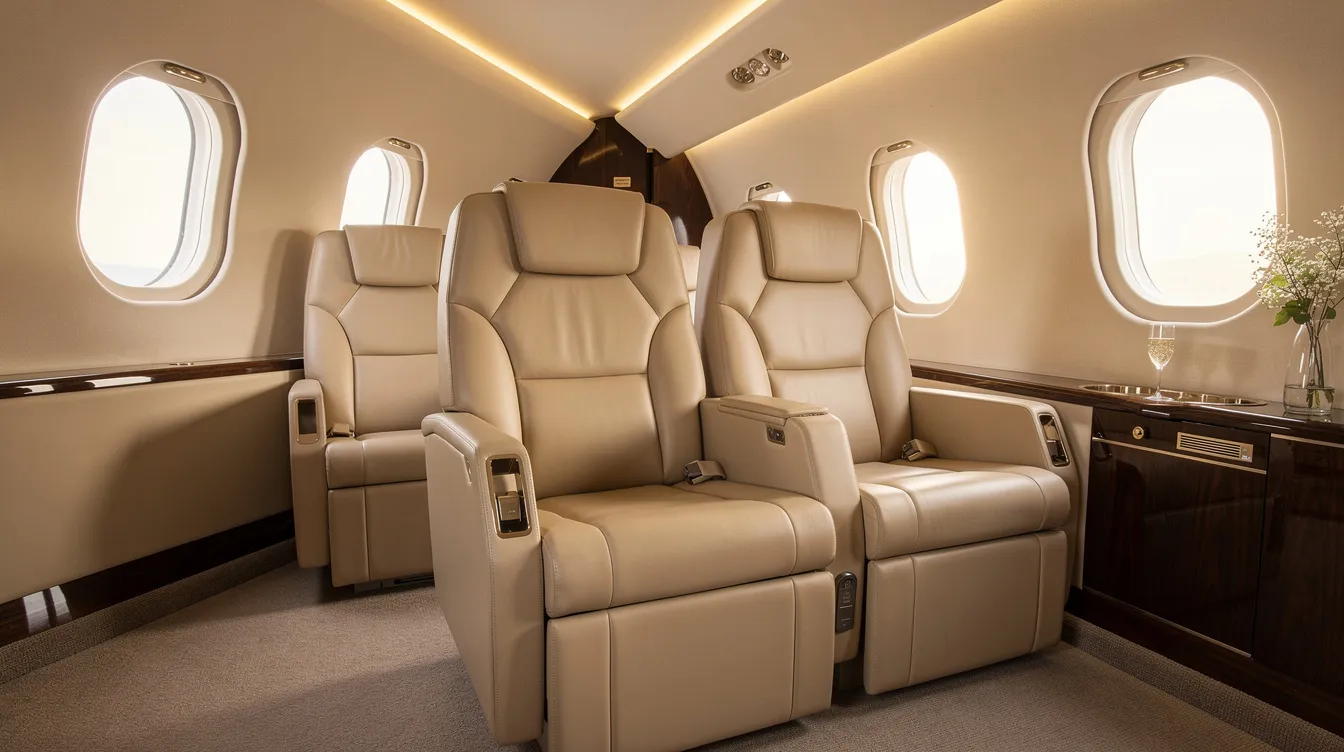
The entire cabin of a private jet is secure for confidentiality, which is especially important for board discussions, investor calls, legal matters, or M&A work. Travelers can customize their flight experience with tailored services, and private jet charters enhance comfort and privacy during travel.
Global reach and fleet interchange in practice
Fleet interchange becomes useful when trips vary. A member might use a light jet from Dallas to Aspen for a weekend, a super midsize jet from New York to San Francisco for a product launch, and an ultra long range jet from London to Singapore for investor meetings.
The member does not need to renegotiate a new contract for each category or enter separate jet card programs. All trips sit inside one relationship with FLYT.
This matters for international flights and domestic flights alike. A global network allows aircraft selection to follow the mission rather than forcing the traveler into a single-owned or fractional aircraft. Private jets allow for direct flights to remote destinations, and chartering saves time by bypassing crowded commercial terminals.
Operational tips for renting a private jet more efficiently
Even experienced travelers can reduce annual private aviation spend by structuring trips and aircraft choices more thoughtfully. The savings often come from avoiding inefficient timing, unnecessary aircraft upgrades, and preventable repositioning.
Book ahead when practical. Booking 1 to 3 months in advance is ideal for domestic flights, especially around holidays, major events, or high-demand corridors. Last-minute trips are often possible, but planning expands aircraft availability and can improve pricing.
Avoid peak departure windows when possible. Sunday evenings on New York–Florida routes, Monday mornings on London–Zurich, and major holiday periods can increase demand. In ad-hoc markets, those demand spikes can raise charter rates quickly.
Use secondary airports where practical. Teterboro instead of JFK, Van Nuys instead of LAX, and Farnborough instead of Heathrow may reduce taxi time, slot constraints, and handling friction. Regional airports and smaller airports can also place passengers closer to the destination.
Consolidate several short legs into one itinerary. This can reduce positioning, minimums, and short leg fees. FLYT advisors can help design efficient routing for roadshows, multi-city investor meetings, or family itineraries.
Right-size the aircraft. Choose light jets when flying 2–4 passengers on sub-2-hour flights. Move up to heavy jet charter or ultra-long-range only when nonstop range, cabin workspace, sleeping configuration, or passenger count truly require it.
Empty leg flights can offer substantial discounts on private charters. An empty leg occurs when an aircraft must reposition without passengers, and empty leg flights can be useful when schedule flexibility is high. The tradeoff is that an empty leg can change if the aircraft’s primary mission changes, so it is rarely the best foundation for critical executive travel.
Sharing select flights internally can improve cost-per-seat economics. For example, multiple executives, portfolio-company leaders, or family members may travel on the same sector while maintaining privacy and schedule control.
What to ask before you confirm any private charter
Before confirming any private jet charter, ask direct questions:
Is the quote all-in?
How is federal excise tax handled?
What daily minimums apply?
Are there short leg fees?
Which airports and fixed base operators are being used?
What happens if schedules change?
Are fuel surcharge items fixed or estimated?
What cancellation terms are in the charter agreement?
Safety questions matter as much as price. Verification of operator’s safety certifications is essential. Ask about FAA Part 135 compliance where applicable, third-party safety ratings, maintenance oversight, crew experience, and the specific aircraft type being used for the private jet rental.
Key factors include aircraft size, safety ratings, and hidden fees. FLYT pre-screens operators and aircraft against rigorous safety criteria and manages these details on behalf of members, so executives do not need to vet every private jet charter service separately.
FAQ about renting a private jet with a membership model
The questions below address practical issues executives often raise when comparing private aviation models, especially when deciding between on-demand charter, jet cards, fractional ownership, and membership. Visit the FLYT FAQ for more.
Do I need to commit to a minimum number of flight hours with FLYT?
FLYT is designed for frequent flyers, but it does not require the same multi-year, high-hour commitment associated with fractional ownership. The model is most efficient for clients who expect recurring usage, often in the 25–150 flight hours per year range.
There is no requirement to reach the 200+ flight hours per year threshold that would usually make full ownership more rational. The philosophy is access without ownership burden.
Can I book group charter flights and larger aircraft through FLYT?
Yes. Members can arrange group charter flights for board meetings, incentive travel, investor events, or large family movements using larger cabin aircraft, including heavy jets and, when needed, vip airliners.
Pricing for these larger missions still follows a transparent hourly rate logic, with clear disclosure of additional airport, handling, and international fees where applicable.
Does FLYT ever sell individual seats or shared private flights?
FLYT focuses on whole-aircraft access rather than selling individual seats like an airline. That preserves control over schedule, routing, passenger list, privacy, and operational flexibility.
In some cases, members may coordinate their own shared use internally, such as multiple business units or portfolio companies using the same aircraft. FLYT does not operate as a public seat-sharing marketplace.
How does FLYT handle schedule changes or last-minute trips?
Membership includes access to a concierge team and platform designed to handle last-minute requests, subject to aircraft availability and standard operational constraints.
Short-notice travel is often feasible, but planning 24–72 hours ahead typically increases aircraft options and improves cost efficiency, especially during peak seasons or on international routes.
Can I integrate FLYT flights with my company’s travel and finance systems?
FLYT can provide consolidated reporting by cost center, traveler, route, or department. This helps finance and operations teams analyze private jet rental spend across the organization.
Predictable fixed hourly rates and clear tax and fee breakdowns simplify budgeting, approvals, and reconciliation compared with ad hoc private jet charters with variable pricing.
Conclusion
To charter a private jet, the goal is not simply to access an aircraft. The goal is to control time, reduce operational friction, and allocate capital intelligently.
Ad hoc private jet charter flights can work for occasional travel, and ownership can make sense for very high utilization. But for many frequent flyers, a membership model offers the more balanced path: flexible access, predictable pricing, aircraft interchange, and global support without ownership complexity.
FLYT is built around that approach. Explore a membership model designed around efficiency and transparency and discover how modern private aviation can work without ownership complexity.
For personalized assistance, contact FLYT.