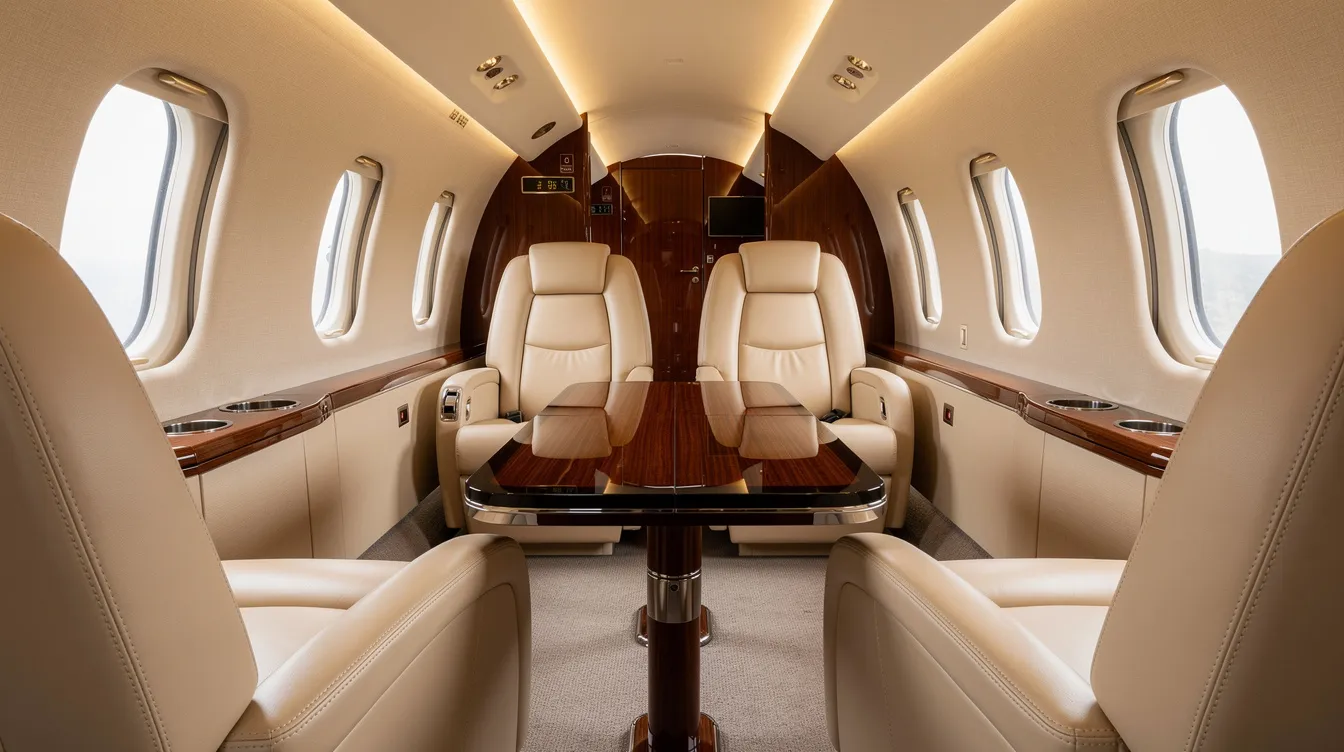
If you're looking to rent a private flight, FLYT offers a smarter way to fly. Private aviation is no longer defined by who owns the aircraft. Increasingly, it is defined by who accesses it most efficiently. This guide is for executives, founders, and investors considering private aviation solutions. Renting a private flight offers unmatched flexibility, time savings, and cost efficiency compared to traditional ownership.
Renting a private flight involves choosing a charter broker or direct operator, with prices ranging from $2,000 to $14,000 per hour. Chartering offers customized travel itineraries, access to over 5,000 U.S. airports, and significant time savings and schedule flexibility.
Key takeaways
Renting a private flight through a membership like FLYT gives executive travelers on-demand charter access, fixed hourly rates, and global reach without owning an aircraft. Private jet membership offers flexible access to aircraft, predictable pricing, and concierge-level logistics support through a single platform.
Charter flights typically range from around $2,500 per hour for turboprops to $14,000 or more per hour for heavy jets and ultra-long-range aircraft, depending on aircraft types, distance, repositioning needs, and logistics. Private jet rental prices range from $2,000 to $14,000+ per hour across the market.
FLYT's membership model focuses on transparent charter pricing with no hidden fees, an asset-light floating fleet, and concierge support for itinerary planning. Members can access multiple cabin classes from light jets to heavy jets, with tailored solutions for business, family, and lifestyle travel.
Flying private is often more cost-effective than ownership or many jet cards for frequent but not constant use, especially when factoring in time savings, flexible scheduling, and the elimination of depreciation, crew management, and hangar fees.
Members can access a global fleet of over 20,000 aircraft, ensuring a wide selection of options worldwide.
Heavy jets are designed for intercontinental travel and typically accommodate 12 to 18 passengers, making them ideal for larger groups. For example, the Gulfstream G650, a prominent heavy jet, can fly up to 7,000 nautical miles, while ultra-long-range jets can exceed 8,000 miles non-stop.
The King Air 350 turboprop accommodates up to 9 passengers, offering a spacious and efficient option for regional and short-haul flights.
The Cessna Citation Longitude, a super-midsize jet, has a maximum range of 3,500 nautical miles, bridging the gap between regional and long-distance travel.
Booking private jets typically requires 24–72 hours' notice for domestic flights, allowing for efficient scheduling and operational planning.

Why executives choose to rent a private flight today
Growing demand and shifting priorities
By mid-2026, demand for charter flights and private jet memberships will have grown steadily as executives place greater weight on time, predictability, and direct access. FAA forecasts continue to show general aviation traffic on an upward trajectory, while commercial aviation faces volatility in scheduling and capacity. For leadership teams managing tight calendars, the math increasingly favors renting over owning.
Cost and accessibility advantages
Renting a private flight removes the fixed costs and long-term commitments that come with aircraft ownership, fractional shares, and many traditional jet card programs. There is no aircraft acquisition, no crew payroll, no insurance renewal, and no depreciation risk. Membership programs typically have lower upfront costs than ownership, making private aviation accessible without a multi-million-dollar capital commitment.
Operational advantages
The operational advantages are straightforward. Private jets can access more airports than commercial airlines, giving travelers direct routing to secondary cities and regional hubs that commercial carriers either underserve or ignore entirely. That means no connections, no layovers at congested hubs, and minimal ground time. Private aviation offers significant time savings and unparalleled schedule flexibility. Private aircraft operate on your timeline, allowing for greater control over departure and arrival windows. Instead of building a trip around an airline schedule, the schedule builds around you.
Enhanced comfort and reach
Charter flights can save time and enhance comfort for travelers who need to move quickly between meetings, site visits, or client engagements. Private jets serve over 5,000 airports in the United States alone, compared to around 500 served by major commercial airlines. That kind of coverage turns secondary markets into direct destinations.
Charter services and memberships now provide access to thousands of aircraft worldwide, making flying private a strategic tool for founders, investors, and leadership teams managing operations across multiple geographies. The global fleet of business jets stands at approximately 24,000, supporting around 11,500 private jet flights per day worldwide.
FLYT is a membership-based private aviation service built around access, transparency, and cost efficiency. Rather than selling status, FLYT focuses on providing access to the right aircraft, at a predictable cost, with concierge support that handles the logistics so members can focus on what they are actually flying to accomplish.
Now that we've covered why executives are choosing to rent, let's look at how the process actually works.
How renting a private flight actually works
The process of renting a private flight is more structured than most first-time charter clients expect, and simpler than it looks from the outside. Here is how it works, from initial inquiry through landing.
Step-by-Step Process
Defining the trip
Everything starts with the basics: origin, destination, dates, passenger count, luggage volume, and timing constraints. A trip from New York to Los Angeles on June 15, 2026, for four passengers with golf bags and a return three days later is a different mission than a same-day round trip for two executives from Miami to Atlanta with no checked luggage. These details shape every decision that follows.
Aircraft matching
A charter specialist or FLYT concierge identifies suitable aircraft options based on range, runway length at both ends, cabin needs, and mission type. Renting a private flight involves choosing a charter broker or direct operator. A charter broker acts as an intermediary to arrange flights with various operators, while a direct operator owns and operates the aircraft. When booking a private flight, verify that the operator is FAA-certified. FAA-certified means the operator meets the Federal Aviation Administration's safety and operational standards for commercial charter flights. The private aviation ecosystem relies heavily on specialized safety audits. Safety ratings like ARGUS Platinum or Wyvern Wingman ensure the highest safety standards. Depending on the route, they may recommend a turboprop for a short-distance hop, a light jet for a quick regional leg, a midsize jet for cross-country, or a heavy jet or ultra-long-range aircraft for international flights. Renting a private flight involves choosing a charter broker or direct operator, and comparing charter brokers and direct operators can help find better deals in private aviation.
Building the quote
Quotes factor in aircraft availability on the specific dates requested, repositioning needs if the aircraft must fly empty to the departure point, airport and handling fees, estimated flight time per leg, crew scheduling, and any international permits. The goal is to match the best aircraft to the mission at a price that reflects the actual cost of operating that trip.
Booking and agreement
Once the client selects an option, a charter agreement is signed. This document outlines the charter services being provided, the total cost, cancellation terms, and any add-ons such as catering or ground transportation. FLYT's agreements are structured around clarity, with line items visible so nothing is buried in fine print.
Day of departure
Private jets utilize specialized fixed-base operators (FBOs) instead of busy commercial terminals. Travelers arrive at the FBO, often just 15 minutes before departure, bypassing crowded terminals and TSA queues entirely. Renting a private flight allows you to bypass TSA queues and long lines. Security is handled quickly and privately. Boarding happens within minutes, and in-flight services, from catering preferences to connectivity, are coordinated in advance by FLYT's team.
Digital and concierge access
FLYT members can manage many of these steps through a digital platform plus 24/7 concierge support rather than juggling multiple phone calls and emails. Preferences, past itineraries, and special requirements are stored so repeat bookings become faster each time. Learn more about how it works.
With the process clarified, let's explore what it really costs to rent a private jet.
Charter pricing: what it really costs to rent a private jet
Private jet charter is typically priced per billable flight hour, with separate line items for taxes, airport fees, and specific services layered on top of the base rate. FLYT emphasizes transparent pricing with no hidden fees, giving members a clear picture of what each trip will cost before they confirm. Explore detailed pricing information.
Here are the current mid-2026 hourly rate ranges across common aircraft categories in the North American market:
Turboprop: approximately $2,500–$3,500 per hour. Hourly rates for turboprops start at $2,500.
Light jet: approximately $4,000–$6,000 per hour.
Midsize jet: approximately $5,500–$8,000 per hour.
Super midsize: approximately $7,500–$10,000 per hour.
Heavy jet: approximately $10,000–$14,000+ per hour. Charter costs for large jets can exceed $10,000 per hour.
Ultra long range: above $14,000 per hour, often reaching $20,000+ for top-tier platforms.
The base hourly rate typically covers the aircraft operating cost, crew, insurance, and standard maintenance reserves. The total trip price, however, adds landing fees, handling fees, overnight crew costs, de-icing when relevant, fuel surcharges in volatile markets, and international handling where applicable. These additional items can add 25–40% to the base quote on some trips.
Short flights tend to appear more expensive per mile. That is because fixed positioning fees and minimum billing times, often 45–60 minutes regardless of actual flight time, apply even on quick legs. Longer trips spread those costs more efficiently, which is why a two-hour leg often delivers better per-mile economics than a 30-minute hop.
Route example. A same-day round trip from Chicago to Dallas in a midsize jet, approximately two hours each way with four occupied flight hours, might carry a base cost of around $28,000–$32,000. After adding handling, crew logistics, and landing fees, the all-in range could land between $20,000 and $25,000 for a well-positioned aircraft. This is an illustrative figure; actual pricing depends on aircraft availability, repositioning, seasonal demand, and the structure of comparable private jet charter flights on similar routes.
Aviation taxes can add 7.5% to rental costs in the U.S., applied on top of the charter price for domestic legs. International flights may carry different tax structures depending on origin and destination.
FLYT's fixed hourly rates for members, combined with a clear fee structure, make pricing more predictable for budgeting in private aviation and remove the uncertainty and surprise surcharges that are common pain points in on-demand charter. Private jet pricing is presented with full transparency so members can forecast annual travel budgets with confidence.
For frequent flyers who are not in the air every day, renting a private flight with predictable hourly rates is often more cost-effective over a three-to-five-year horizon than tying up capital in ownership. Chartering a private jet can be more cost-effective than ownership when utilization does not justify the fixed cost burden. See how FLYT compares to charter, jet cards, and fractional ownership.
Next, let's break down the different types of aircraft you can choose when you rent a private flight.
Understanding aircraft types when you rent a private flight
Choosing the right aircraft for a given mission is one of the most consequential decisions in private jet travel. The table below covers the practical differences that matter when selecting aircraft options for a charter of the entire aircraft.
Category | Typical Passenger Count | Typical Range (nm) | Example Models |
|---|
Turboprops | 6–18 | 1,000–1,800 | King Air 350, Pilatus PC-12 |
Light Jets | 6–7 | 1,200–2,000 | Citation CJ3, Phenom 300 |
Midsize Jets | 6–9 | 2,000–3,000 | Citation Latitude, Learjet 60 |
Super Midsize Jets | 8–10 | 3,000–3,500 | Challenger 350, Praetor 600, Cessna Citation Longitude |
Heavy Jets | 12–18 | 3,500–6,000 | Gulfstream G450, Falcon 900, Gulfstream G650 |
Ultra Long Range Jets | 12–19 | 6,000–8,000+ | Gulfstream G650, Global 7500 |
FLYT's approach. FLYT's floating fleet access model allows members to choose the best aircraft by mission, swapping between categories as needs change. Use a turboprop for a quick island hop one week, a midsize jet for a cross-country meeting the next, and a heavy jet for an international board session the week after. This diverse fleet access removes the constraint of being tied to a specific aircraft size and ensures each trip uses the most appropriate and cost-effective option.
With aircraft options clarified, let's compare the cost efficiency of renting versus other private aviation models.
Cost efficiency vs ownership, fractional, and jet cards
This section is not a sales pitch. It is a comparative framework for readers making a capital allocation decision about how to access private aviation.
Full ownership ultra-long-range
The true cost of owning a private jet over five to ten years is substantial. By contrast, renting the entire aircraft only when needed provides private access without carrying the fixed asset risk. Acquisition prices range from $5 million for a light jet to $70 million or more for a large-cabin, ultra-long-range platform. On top of that come financing costs, steep early-year depreciation, crew salaries, training and recurrent certification, hangar fees, insurance, and unpredictable maintenance. Annual ownership costs can exceed $1 million, and total ownership costs can reach $1 million over five years, even for smaller aircraft when all fixed and variable expenses are aggregated. These costs persist whether the aircraft flies or sits idle. Owning a private jet is typically justified only for flying over 200 hours annually, the threshold where utilization begins to offset the fixed cost burden.
Fractional ownership
Fractional programs allow buyers to purchase a share, typically one-sixteenth to one-quarter, of a specific aircraft type. Fractional ownership requires a capital commitment of $400,000 or more, depending on the aircraft category. On top of the initial share purchase, fractional owners pay monthly management fees, hourly operating costs when they fly, and often peak-day surcharges. Fractional ownership allows access to a specific aircraft type, which can be useful for travelers with consistent mission profiles, but it still locks capital and requires a long-term contract, usually five years. At the end of the term, the residual value reflects whatever the market has done to aircraft values in the interim.
Jet cards
Traditional jet card programs require large upfront deposits, often $125,000 to $170,000 for 25 hours on a light jet. They provide fixed or capped hourly rates and some level of guaranteed aircraft availability. However, jet card programs can carry blackout dates, minimum billable flight time per booking, expiration windows on unused hours, and variable surcharge rules that erode apparent value. For travelers whose travel patterns do not fit neatly into a single aircraft category, the rigidity of a single-class card can be limiting.
Membership-based access
FLYT's model avoids asset risk and large buy-ins. Instead, it operates on a risk pool model with fixed hourly rates and fleet interchange across aircraft classes. Memberships eliminate the operational burdens of aircraft ownership: no crew management, no maintenance scheduling, no regulatory compliance. Members access the aircraft class that fits each trip, with predictable costs and no capital tied up in a depreciating asset.
Scenario
Consider an executive flying 100 to 150 hours per year across varying missions: 30 regional hops suited to light jets, 10 cross-country trips in midsize or super midsize aircraft, and five to eight international legs on a heavy jet. Ownership would require either multiple aircraft or constant mismatching of aircraft to the mission. Fractional would lock into a single type. A FLYT membership allows this executive to scale up or down by trip, aligning cost to usage on the same trip or across different weeks, with no idle-asset penalty.
Transparent charter pricing and clear terms protect members from hidden fees like repositioning charges that some providers reveal only after the commitment is made. Predictable budgeting is not a feature; it is a prerequisite for sophisticated travelers.
With cost comparisons in mind, let's examine the operational flexibility that renting a private flight provides.

Operational flexibility: schedules, empty legs, and global reach
Flexible scheduling
Executives value control over time and outcomes. The ability to adjust a departure by two hours because a meeting ran long, or to add a stop in a secondary city on a multi-day roadshow, is not a luxury. It is an operational requirement.
Private charter flights allow departure and arrival times to flex within the operating window, constrained only by crew duty limits and airport hours. Multi-city itineraries across two or three days can be coordinated as a single trip package, with the aircraft repositioning as needed between legs. One-way private jet charters allow flexible travel without return plans, which is particularly useful for open-ended business travel or connecting into a commercial flight for a different segment of a trip.
Empty legs
When an aircraft repositions without passengers, those empty leg flights can be sold at significant discounts on charter costs, often 30 to 50 percent below standard charter pricing. Empty leg opportunities are inherently dynamic, tied to where aircraft need to be for their next booked mission. They are best suited for travelers with flexible dates and routes: short-notice leisure trips or opportunistic travel between major cities. They are not ideal for time-critical board meetings or deal closings where reliability is non-negotiable.
Global reach
FLYT members can access aircraft and charter services across North America, Europe, the Middle East, and key Asia-Pacific corridors. The global network ensures consistent support and standards regardless of departure point. Chartering private jets offers access to over 20,000 aircraft, and members can access a global fleet of over 20,000 aircraft through FLYT's operator relationships. Typical long-haul missions served include New York to London, Los Angeles to São Paulo, and Dubai to Geneva, where heavy jets and ultra-long-range aircraft provide nonstop or single-stop solutions.
Asset-light deployment
FLYT's floating, asset-light model improves aircraft availability across regions because aircraft are deployed where demand actually is rather than being tied to a single home base. This means a member in a secondary market is not waiting for a jet to reposition from a coastal hub. The platform coordinates deployment dynamically, reducing wait times and improving coverage even during peak demand periods.
With operational flexibility established, let's see how FLYT makes flying private more predictable.
How FLYT makes flying private more predictable
FLYT is built as a modern, membership-first alternative designed around transparency, operational intelligence, and member experience. It is not a broker aggregating last-minute inventory. It is a structured platform providing access to private aviation with the consistency and clarity that frequent flyers require.
Membership structure
FLYT provides access to a curated floating fleet with fixed hourly rates by aircraft class and no requirement to purchase or co-own an aircraft. This means no depreciation risk, no crew payroll, and no maintenance surprises. Members pay for what they fly, at rates they know before they book. Private jet memberships provide predictable pricing for flights, which is central to how FLYT operates.
Risk pool model
FLYT manages demand and aircraft access across its member base, reducing idle time and enabling more competitive pricing and reliable availability. By pooling demand across geographies and travel patterns, the model smooths the peaks and troughs that make single-owner or fractional economics inefficient for most travelers.
Transparent pricing
Quotes are clearly itemized, with no hidden fees. Policies around peak days, minimums, and cancellations are defined upfront so members understand the cost structure before they commit. This is not dynamic pricing that shifts with every inquiry. It is a stable framework built for budgeting confidence. Learn more about charter volatility protection.
Fleet interchange
Members can choose a light jet for a quick regional day trip one week and a heavy jet for a transatlantic board meeting the next, all under the same membership framework. This flexibility is rare in fractional programs and impossible with full ownership of a single aircraft. FLYT's diverse fleet and providing access across categories mean the right tool is always available for the job.
Concierge support
Dedicated specialists coordinate ground transportation, catering, special requirements, and multi-leg logistics. For corporate travel involving multiple travelers, complex customs requirements, or tight connections between legs, the concierge layer removes friction so the traveler can focus on work or family.
Renting a private flight through FLYT is about smarter access, not more complexity. It is designed for leaders who value time, clarity, and optionality. Discover the FLYT advantage.
Next, let's discuss how to evaluate providers when you rent a private flight.
How to evaluate providers when you rent a private flight
Not all charter options are equal. Before committing to a provider or membership platform, a structured evaluation protects both your budget and your safety.
Safety credentials
The private aviation ecosystem relies heavily on specialized safety audits. Verify that providers carry recognized ratings. Safety ratings like ARGUS Platinum or Wyvern Wingman ensure the highest safety standards. Confirm whether the company operates aircraft directly or relies solely on brokers, and check that the underlying operators hold proper certification. FAA Part 135 certification is required for legal commercial charter operators in the U.S. When booking a private flight, verify that the operator is FAA-certified. FAA-certified means the operator meets the Federal Aviation Administration's safety and operational standards for commercial charter flights.
Contract terms
Examine cancellation windows, peak day rules, minimum billable flight times, and how costs are handled when operations change due to weather or ATC delays. Strong contracts define these scenarios in advance rather than leaving them to negotiation after the fact.
Itemized quotes
Ask for fully itemized quotes that clearly show the hourly rate, fuel, airport fees, crew overnights, and taxes. This is the most direct way to reveal any hidden fees or ambiguous surcharges. If a provider resists itemizing, that is a signal.
Availability under pressure
Assess aircraft availability during high-demand periods such as around major events, holidays, or conference weeks. Understand whether the membership guarantees availability within a defined window, what alternatives are offered if preferred aircraft types are not available, and whether upgrade or downgrade policies are clear.
Service quality
Evaluate the responsiveness of the team, the quality of digital tools for booking and tracking trips, and the ability to handle complex itineraries spanning multiple continents. For VIP airliners and demanding international routing, the provider's operational depth matters more than their marketing.
FLYT's approach fits this framework directly: transparent pricing, fixed hourly rates, fleet interchange, and member-first support define the experience. As a leading provider in membership-based private aviation, FLYT welcomes scrutiny because transparency is the foundation of its model.
With provider evaluation covered, let's see when renting a private flight makes the most sense.
When renting a private flight makes the most sense
Private charter is not the right answer for every traveler or every trip. But for certain patterns, it is the most strategically sound option.
Time-critical business travel
Same-day out-and-back board meetings, investor roadshows across three or four cities in two days, and site visits in locations with no direct flights on commercial airlines. When the cost of missing a meeting or arriving late exceeds the cost of the charter, the decision is straightforward.
Family and lifestyle travel
School holidays, multi-generational trips, or destinations with limited commercial service. Direct access to resort communities, island destinations, or mountain towns where commercial flights require multiple connections. Privacy, flexibility, and the ability to travel with pets or unusual luggage make private flights practical for longer trips with family.
Recurring but not constant flying
For travelers logging 50 to 200 flight hours per year, membership-based access and charter flights provide strong cost efficiency compared with ownership. This is the range where fixed ownership costs cannot be justified by utilization, but the frequency is high enough that ad hoc booking becomes cumbersome without a structured relationship.
Group travel
Leadership retreats, project teams, or event-specific travel where charter flights can be more efficient than coordinating a dozen executives on separate commercial tickets across different airlines and connection points. Moving a team together, on the same trip, on the same schedule, often improves both logistics and productivity.
Risk management
The ability to avoid congested hubs, reduce exposure to cancellations and delays that plague commercial flights, and maintain control over travel for high-stakes meetings or deal closings. When reliability is the priority, chartering removes the variables that make commercial travel unpredictable.
For many modern organizations, renting a private flight via a platform like FLYT becomes less about indulgence and more about ensuring reliable, productive movement of key people. It is a tool, not a trophy.
Now, let's address some frequently asked questions about renting a private flight.
FAQ
How far in advance should I book a private charter flight?
While on-demand charter can sometimes accommodate same-day requests, three to seven days' notice typically yields better aircraft availability and charter pricing, especially for popular routes between major cities. For peak periods such as major sporting events, school holidays, and the Christmas through New Year window, planning two to four weeks ahead is advisable to secure preferred aircraft types and schedules. FLYT members can often secure aircraft on shorter notice thanks to the floating fleet and risk pool model, but earlier planning still improves the range of charter options and aircraft size choices available.
Are there hidden fees I should watch for when renting a private jet?
Common surprise costs across the private jet charter services market include:
Repositioning fees for deadhead legs
De-icing charges in winter
Crew overnight costs when legs require a layover
Surcharges on peak travel days
International handling and customs coordination
Always request fully itemized quotes and confirm whether taxes, catering, and ground transportation are included or billed separately. FLYT's approach is to present transparent charter pricing up front, outlining all known costs, including fuel surcharges, so members can budget confidently without worrying about post-flight invoices that look nothing like the original quote.
Can I change my itinerary after I've confirmed the charter?
Changes are often possible, such as shifting departure times, adding a stop, or adjusting passenger count, but they may affect aircraft availability, crew duty limits, and total cost. Late changes can trigger additional fees or require re-quoting, especially if they call for a different aircraft or overnighting the crew in a new location. FLYT's concierge team works with members to manage changes efficiently, presenting revised pricing transparently before any adjustments are finalized so there are no surprises.
What documentation do I need for international private flights?
Passengers must carry valid passports, and in many cases visas or ESTA-style electronic authorizations, just as with commercial travel. Certain countries also require advance passenger information and customs pre-clearance, which reputable charter services coordinate well in advance of departure. FLYT's team assists members with entry requirements, customs scheduling, and timing so cross-border private charter flights remain smooth and compliant without requiring travelers to become experts in international aviation regulations.
Is flying private more sustainable than it used to be?
Private aviation has a higher per-passenger carbon footprint than full commercial flights, particularly when aircraft are lightly loaded. However, the industry is moving toward greater sustainability through newer aircraft with improved fuel efficiency, route optimization, and growing adoption of Sustainable Aviation Fuel. Many operators and membership platforms, including FLYT's partners where applicable, offer carbon offset options and increasingly support SAF usage where available. Executives can actively manage their impact by choosing efficient aircraft types matched to passenger count, consolidating trips where practical, and selecting providers that invest in measurable emissions reduction programs. For more details, visit our FAQ page.

Conclusion
Renting a private flight through a membership model like FLYT offers a strategic, efficient, and transparent alternative to traditional aircraft ownership. It provides executives and frequent travelers with flexible access to a diverse fleet, predictable fixed hourly rates, and concierge-level support, all without the complexities and capital commitments that ownership entails.
With global reach and operational intelligence, FLYT empowers members to select the right aircraft for each mission, optimize travel schedules, and maintain control over their time and costs. For those seeking a smarter way to fly private—one that prioritizes efficiency, transparency, and convenience—explore how FLYT is redefining private aviation access for the modern traveler.