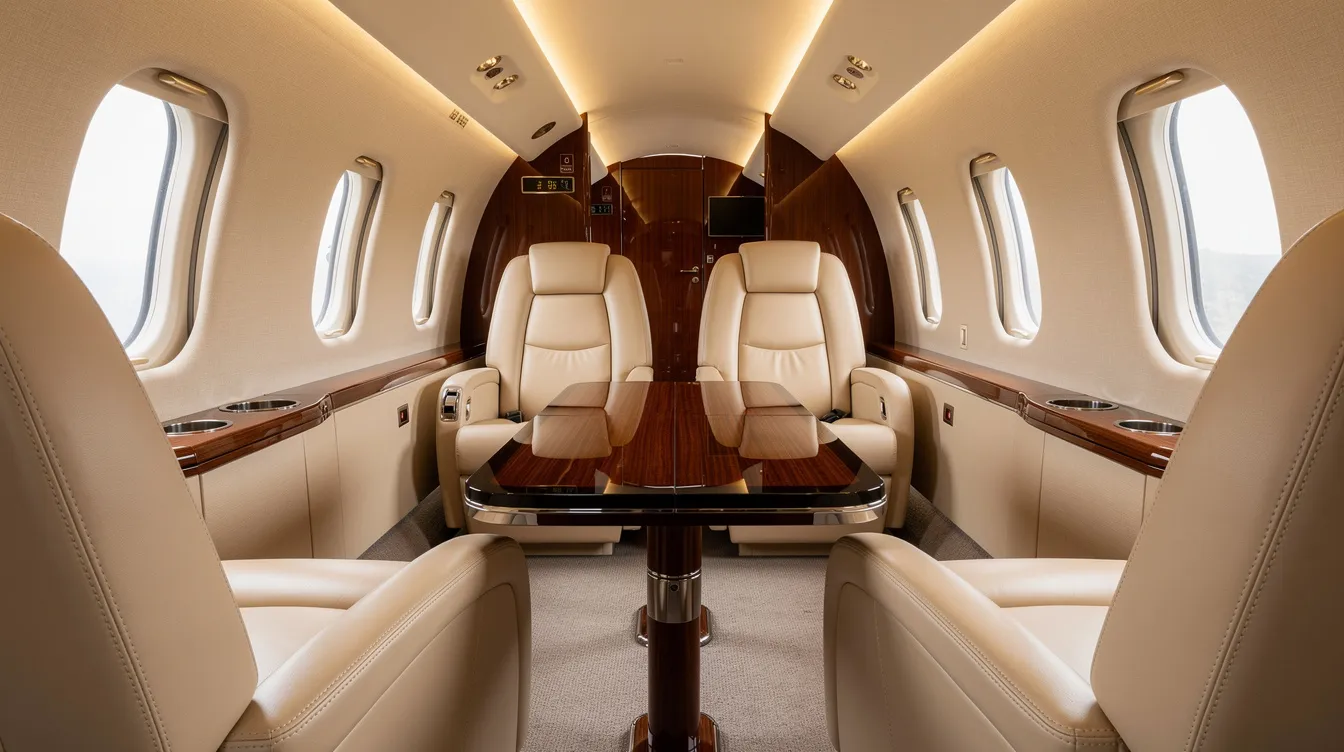
The landscape for private planes to rent has shifted considerably since around 2015. What was once dominated by full aircraft ownership and fractional programs has given way to digital platforms, asset-light fleets, and membership models that provide flexible private jet charter without requiring you to buy anything. Charter services can now provide access to thousands of aircraft worldwide, and digital platforms streamline the booking process so that private jet charter flights can be booked within three hours of contract signing. This is a structural change, not a passing trend.
Discover smarter private planes to rent with FLYT’s membership model. Enjoy fixed hourly rates, global fleet access, and concierge support for efficient, flexible private jet travel without ownership burdens.
The economics explain why. A new midsize business jet can cost $20 million or more, and annual operating costs for a light to midsize jet flown 200 to 300 hours per year typically range from $500,000 to $2 million. For anyone flying fewer hours than that, paying for a private charter or subscribing to a membership-based service means you only pay for the flight hours you actually use. Private jets can save time by bypassing commercial airport lines entirely, and charter flights allow direct access to more airports than commercial airlines serve, but the financial question is how to access those benefits without locking up millions in depreciating metal.
FLYT sits at this intersection as a membership-based private aviation service. It provides access without ownership burden, fixed hourly rates for predictable budgeting, and fleet interchange across global aircraft types. The rest of this article is a practical guide for anyone considering private jet charter services for business, family, or lifestyle travel, covering aircraft selection, real pricing, use cases, and how to decide whether renting private planes through a membership makes sense for your specific travel needs.
Key takeaways
Renting private planes through a membership model can be significantly more efficient than full ownership or ad-hoc charter for executives flying 25 to 200 hours per year.
FLYT offers membership-based private jet access with fixed hourly rates, global aircraft availability across a fleet of over 20,000 aircraft, and concierge support that simplifies every trip.
Flying private is best optimized around time savings, predictable costs, and flexible scheduling rather than luxury for its own sake.
This guide covers aircraft types from turboprops to ultra-long-range jets, typical charter flight pricing ranges from $2,000 to over $15,000 per flight hour, and how private jet membership compares to jet cards and fractional ownership.
Executives, founders, and frequent travelers can use this article to decide how best to access private planes for rent, especially on routes like New York to London or New York to Miami.
Private jet rental vs ownership, fractional, and private jet charter
When people search for private planes to rent, they are actually looking at several distinct access models. Understanding the differences is essential before committing capital or signing contracts.
Full ownership
Means buying an aircraft outright. New business jets range from roughly $5 million for a light jet to $75 million or more for an ultra-long-range aircraft like a Gulfstream G700. Beyond the acquisition cost, you carry all fixed costs: crew salaries, hangar, insurance, maintenance, and depreciation. Full ownership suits the heaviest users, typically those flying 200 to 400 hours per year or more, where fixed costs are amortized across enough flight hours to make economic sense. Below that threshold, you are paying crew and hangar fees for an aircraft sitting idle most of the year.
Fractional ownership
Spreads the cost by letting you buy a share of an aircraft, commonly a 1/16 or 1/8 share, through operators like NetJets. Fractional ownership requires an upfront investment of $500,000 to $1.5 million, depending on aircraft class, plus monthly management fees and occupied hourly rates that can reach $14,000 to $17,000 per hour for large cabin jets. Fractional ownership is ideal for travelers flying over 100 hours annually, but it still involves multi-year contracts and a long-term commitment to a specific aircraft class. Learn more about how fractional ownership compares to FLYT membership.
Jet cards
Offer prepaid blocks of hours at fixed or semi-fixed rates. A jet card typically requires a minimum deposit of $50,000 and provides guaranteed availability within certain booking windows. However, blackout dates, peak-day premiums, and fuel surcharges can inflate the effective hourly cost well beyond the card's stated rate. Jet cards offer guaranteed availability for those who want more predictability than pure charter without the capital of fractional shares. See how FLYT compares to jet cards.
On-demand charter
Is exactly what it sounds like: booking individual private jet flights trip by trip. On-demand charter offers flexibility with no long-term commitment, and for travelers flying less than 25 hours a year, this often remains the most economical route. But pricing is variable, positioning legs add cost, and aircraft availability during peak periods can be limited. Discover the advantages of FLYT over traditional charter.
Membership-based access through FLYT
Occupies a different position. FLYT operates an asset-light floating fleet model with no requirement to buy aircraft or shares. Members pay fixed hourly rates with transparent pricing, and a risk pool model disperses operational risk and cost across the membership base. Memberships typically offer fixed hourly rates for flights, provide cost efficiencies compared to traditional ownership, and eliminate the need for long-term commitments that fractional contracts demand. Membership programs often feature no joining fees for access to a fleet. Explore the full membership benefits and how FLYT protects members from charter volatility.
For executives flying 25 to 200 hours per year on routes like New York to Chicago, New York to Dallas, or New York to London, this membership approach often delivers the strongest balance of access, cost predictability, and flexibility.
Core benefits of renting a private plane through membership
The practical benefits of flying private through a membership center center on three things: time, predictability, and flexibility. Not aspiration.
Time savings
Are the most tangible. Private jet travelers use private terminals operated by FBOs, arriving just 20 to 30 minutes before departure. There are no security lines, no gate changes, no connections. Private aviation enhances flexibility for last-minute travel needs, and charter flights allow direct access to more airports than commercial airlines, meaning you can land at smaller fields closer to your final destination. A meeting in Teterboro is twenty minutes from midtown Manhattan. A meeting routed through JFK or Newark adds hours. Chartering can provide a more comfortable travel experience than commercial flights, with cabins configured for work or rest rather than row seating.
Financial clarity
Follows from fixed hourly rates. When a corporate finance team needs to budget for quarterly board meetings, investor roadshows, or multi-city site visits, variable charter pricing creates uncertainty. A membership with fixed rates simplifies this. You know the cost per flight hour before you book. Air chartering offers concierge-level service and personalized flight times for travelers, and charter services may include catering and ground transportation, though it is important to clarify these details upfront with your provider.
Flexible scheduling
Means adjusting departure windows, rerouting mid-trip, or adding legs without the friction of rebooking commercial flights. Private jet memberships offer flexible access to aircraft, and FLYT's model allows same-day changes when operationally possible. This is not about convenience for its own sake. It is about protecting productive hours.
Aircraft flexibility
Is equally important. Fleet interchange lets you choose a turboprop for a short regional hop and a heavy jet for an intercontinental sector, all within the same membership. You are not locked into a single aircraft size or class. Learn more about aircraft interchange.
Global reach
Rounds it out. FLYT's global network covers key hubs including New York, Los Angeles, London, Geneva, Dubai, and popular destinations across the Caribbean and Europe, providing access to a broad network of vetted operators and aircraft worldwide.
Concierge support
A dedicated expert team handles ground transportation coordination, catering preferences, Wi-Fi needs, and multi-leg charter flight logistics so that busy executives and families deal with one contact rather than multiple vendors.

Aircraft types: choosing the right private plane to rent
Aircraft selection should match mission profile: distance, passenger count, runway constraints, and budget. Picking the right aircraft for each trip is more important than defaulting to the largest cabin available.
Aircraft type | Typical capacity | Range (nautical miles) | Ideal mission profile | Typical hourly charter cost (USD) |
|---|
Turboprops | 4–9 | Up to ~1,800 | Short-haul regional trips, smaller airports | Starting around $2,000 |
Light jets | 4–8 | Up to ~1,700 | Regional non-stop flights | $2,500 to $5,000 |
Midsize & super midsize jets | 6–10 | Up to ~3,500 | Coast-to-coast domestic flights | Around $7,000 |
Heavy jets | 12–18 | 5,500+ | Long-range international travel | $10,000+ |
UltraUltra-long-range | 8–19 | Up to 7,000+ | Intercontinental nonstop flights | $12,000+ |
Regional turboprops | 37–39 | Up to 1,125 | Group regional charters | Starting around $2,000 |
Turboprops
Turboprops such as the King Air B200 or Pilatus PC-12 are built for short-haul regional trips. The King Air 350 accommodates up to 9 passengers. Turboprops are best for short-haul regional trips and have a capacity of 4 to 8 passengers on most configurations, covering routes like New York to Boston or Dallas to Houston. They offer lower fuel burn, the ability to operate from shorter runways, and significantly lower hourly costs. They are not glamorous, but they are efficient.
Light jets
Light jets like the Citation CJ3+ or Hawker 400XP carry 4 to 7 passengers. Light jets are ideal for non-stop flights with a capacity of 4 to 8 passengers on routes up to about three hours, such as New York to Atlanta or Los Angeles to San Francisco. Speed and pressurized cabins make them a clear step up from turboprops for slightly longer distances. The Cessna Citation Encore, a light jet, has a range of approximately 1,700 nautical miles, making it well-suited for regional trips.
Midsize and super midsize jets
Midsize and super midsize jets include aircraft like the Citation XLS+, Challenger 350, and Praetor 500. Midsize and super-midsize jets are suitable for coast-to-coast flights for groups of 6 to 10 passengers, covering routes like New York to Denver or New York to Los Angeles. The Cessna Citation Latitude has a range of 2,700 nautical miles, making it a capable option for longer domestic sectors. These aircraft offer spacious cabins with stand-up headroom, dedicated work areas, and enough range for most domestic missions. The Embraer Phenom 300E, a popular super midsize jet, boasts a cruising speed of 464 knots, enhancing travel efficiency.
Heavy jets
Heavy jets such as the Gulfstream G300 or Dassault Falcon 900 are designed for long-range international travel, accommodating up to 19 passengers in some configurations, though heavy jets typically accommodate 12 to 18 passengers in standard layouts. These are the best aircraft for corporate flights requiring full-size cabins, meeting tables, sleeping berths, and extended range.
Ultra-long-range jets
Ultra-long-range jets like the Gulfstream G600, Global 6500, and the Gulfstream G650 represent the top tier. The Gulfstream G650 can fly up to 7,000 nautical miles, and ultra-long-range jets can fly for over 10 hours nonstop. This means sectors like New York to London, New York to Dubai, or Los Angeles to Tokyo without fuel stops. These are not VIP configured airliners, but they serve a similar function for smaller groups needing intercontinental range from a diverse fleet of options.
Regional turboprops
Regional turboprops such as the Dash 8-200 offer a maximum range of 1,125 nautical miles and seat 37-39 passengers, making them suitable for short-haul group charters and regional routes.
FLYT's fleet interchange and asset-light risk pool model allows members to move up or down between these aircraft types trip by trip. A founder might take a light jet from New York to Chicago on Monday and an ultra-long-range jet to London on Thursday, all under one membership framework, choosing the right aircraft for each journey.
Pricing overview: what private planes to rent actually cost
Charter flight pricing is driven by aircraft type, distance, positioning legs, crew costs, airport fees, and seasonal aircraft availability. Costs for renting private jets generally range from $2,000 to over $15,000 per flight hour, and understanding the components behind those numbers is essential to evaluating any private charter option.
Hourly rate ranges in 2026 terms
Charter rates for turboprops start around $2,000 per hour, making them the most cost-effective option for short regional trips.
Light jets typically run $2,500 to $5,000 per flight hour.
Midsized jets typically cost about $7,000 per hour to charter, covering most domestic routes comfortably.
Ultra-long-range jets can cost $12,000 per hour or more, reflecting the aircraft's range, cabin size, and operational complexity.
Charter flights typically start at $2,000 per hour, but the effective cost per trip depends on several variables beyond the base rate.
Sample route estimates
New York to Miami (roughly 2 hours in a light or midsize jet): approximately $5,000 to $12,000 one-way, depending on aircraft size and operator.
New York to Chicago (roughly 1.5 hours): $4,000 to $8,000 one-way in a turboprop or light jet.
New York to London (6 to 7 hours in an ultra-long-range jet): $80,000 to $150,000 or more one-way, factoring in crew, international fees, and positioning.
What else affects pricing
Positioning or empty legs: when an aircraft must reposition to pick you up, that flight time may be billed. Empty legs are discounted flights returning to a base or going to pick up another passenger, and empty leg flights offer significant discounts on charter prices for those with flexible schedules.
Minimum flight times and daily minimums can inflate short-hop costs.
A Federal Excise Tax is generally applied to U.S. domestic flight legs.
Charter costs fluctuate based on peak travel days and aircraft type, with holidays and major events driving surcharges.
Instant pricing is available through digital booking platforms, and users can compare multiple aircraft options easily online before committing.
A membership with fixed hourly rates, like FLYT's model, smooths these variables. Members know the cost per hour before booking, which reduces surprise surcharges and makes private aviation pricing more transparent for frequent flyers. When evaluating charter options, think in terms of annual hours and routes flown rather than individual trip quotes. See detailed pricing information.
Key use cases for renting private planes
Renting private jets is typically driven by mission-critical travel, not simply leisure, for most discerning travelers who use membership access.
Corporate flights
Is the most common driver. A board meeting split between New York and San Francisco, an investor roadshow across four cities in 72 hours, or a plant visit to a secondary market with limited commercial flights: these scenarios justify flying private because commercial connections would add days to what a private jet compresses into hours. Private jet chartering offers various options for travelers managing tight corporate schedules.
Founder and investor travel
Often involves unpredictable, high-stakes trips. A same-day flight to close a transaction, on-site diligence at a portfolio company in a tertiary market, or a last-minute meeting that simply cannot wait for the next morning's commercial departure. Corporate travel at this level is measured in opportunity cost, not ticket price.
Family and lifestyle travel
Is a growing category. School holidays from New York to Aspen or Miami, multi-generational trips where arriving together matters, or weekend travel to popular destinations in the Caribbean. Spacious cabins, no layovers, and the ability to bring the entire family through a private terminal make these trips fundamentally different from commercial alternatives. When you charter the entire aircraft, you control the cabin environment entirely.
Group charters
Serve small leadership teams, sports and entertainment touring parties, or project teams moving equipment and personnel to locations with limited commercial access. The ability to choose aircraft size based on headcount and cargo needs, from a light jet for four passengers to heavy jets for larger groups, is where fleet interchange proves its value.
Flexible scheduling and the right aircraft choice can turn multi-day commercial itineraries into single-day round trips, eliminating hotel nights and reclaiming productive hours. FLYT's concierge support integrates naturally here: coordinating ground transfers in major cities, aligning private jet flights with meeting schedules, and optimizing aircraft selection per trip.
How FLYT's membership model simplifies private planes to rent
FLYT is a membership-based private aviation service built around a straightforward premise: access without ownership burdens. Members can access a global fleet of over 20,000 aircraft through FLYT's partnerships, without buying a jet, a share of a jet, or a large prepaid block of hours.
The core elements work together:
Fixed hourly rates remove the guesswork from budgeting. You know the cost before you fly, whether the trip is a regional hop or an intercontinental sector.
Transparent pricing means charter costs, positioning, and standard fees are addressed upfront rather than surfacing as post-flight surprises.
A risk pool model distributes operational risk across the membership base. If an aircraft has a maintenance issue or demand spikes in one region, the floating fleet absorbs the disruption rather than leaving an individual member stranded.
Fleet interchange is central to how FLYT operates. Members choose among multiple aircraft types globally, matching each mission's range, passenger count, and budget. A member might fly a turboprop for a 45-minute leg flight scenario between nearby cities, then book an ultra-long-range jet for direct flights from New York to Dubai the following week. The membership accommodates both without requiring separate contracts or commitments.
The floating fleet model works operationally because aircraft are positioned across regions through a network of vetted operators. This approach can improve aircraft availability and reduce the frequency of costly empty repositioning. Digital platforms offer access to over 20,000 aircraft globally, and FLYT leverages this infrastructure to match supply and demand efficiently. Learn more about the AI fleet engine and the platform that powers it.
Global reach extends across North America, Europe, the Middle East, and other key regions. Members can start or end trips in major cities worldwide, and FLYT's aviation experts handle the logistics end to end.
Concierge-level support manages everything from runway slots to catering preferences, Wi-Fi connectivity, and in-flight workspace setup. This personalized service means the member focuses on the trip rather than the flight planning.
Compared to traditional jet cards and fractional ownership, FLYT aims to offer similar or greater flexibility with fewer long-term commitments and significantly less capital at risk. Memberships provide cost efficiencies compared to traditional ownership while preserving the travel experience that private flights should deliver. See how FLYT compares to brokers and other access models.
Operational considerations and aircraft availability when renting a private jet
Sophisticated private jet travelers care about more than the cabin. Safety, regulatory compliance, and reliable execution determine whether a private charter service is worth trusting.
Safety oversight
Is non-negotiable. FAR Part 135 governs commercial charter operations in the U.S., and operators must obtain an Air Carrier Certificate under FAR Part 135 to legally conduct charter operations. Third-party audits add another layer: IS-BAO Stage 3 is a recognized safety designation for operators, and the ARGUS Certified Charter Broker designation validates safety and ethics standards. All flights should be operated by FAA Part 135-certified providers, and safety records and pilot experience should be verified when selecting any provider. FLYT prioritizes these benchmarks in its operator selection process.
Crew duty limits
Are a practical constraint. U.S. Part 135 regulations typically cap crew duty at around 14 hours per day, with mandatory rest periods. For long-range itineraries or multi-leg corporate flights, overnight crew rest may be required, which can affect scheduling and add a hotel night. Understanding this upfront prevents surprises on complex routes.
Ground infrastructure
Matters more than most travelers realize. FBOs handle boarding, fueling, and customs processing at private terminals, but hangar access during severe weather is not guaranteed at every airport. Runway length and weight limits at smaller fields can restrict which aircraft types are available for a given destination.
Timing and boarding
are straightforward. Private jet boarding typically requires arriving 20 to 30 minutes before departure. Fuel stops on long routes generally take 30 to 40 minutes. For international flights, customs and immigration handling at private terminals is faster but still requires advance coordination, and charter requirements include providing passenger identification and adhering to baggage limits.
In-flight amenities
Vary by aircraft but commonly include Wi-Fi, meeting-friendly cabin layouts, catering customization, and pet accommodations. A well-structured membership's concierge support pre-negotiates many of these details.
An experienced membership team like FLYT's can pre-empt most operational issues, turning complex itineraries into predictable, repeatable travel routines. That operational consistency is what separates a reliable plan from a one-off booking.
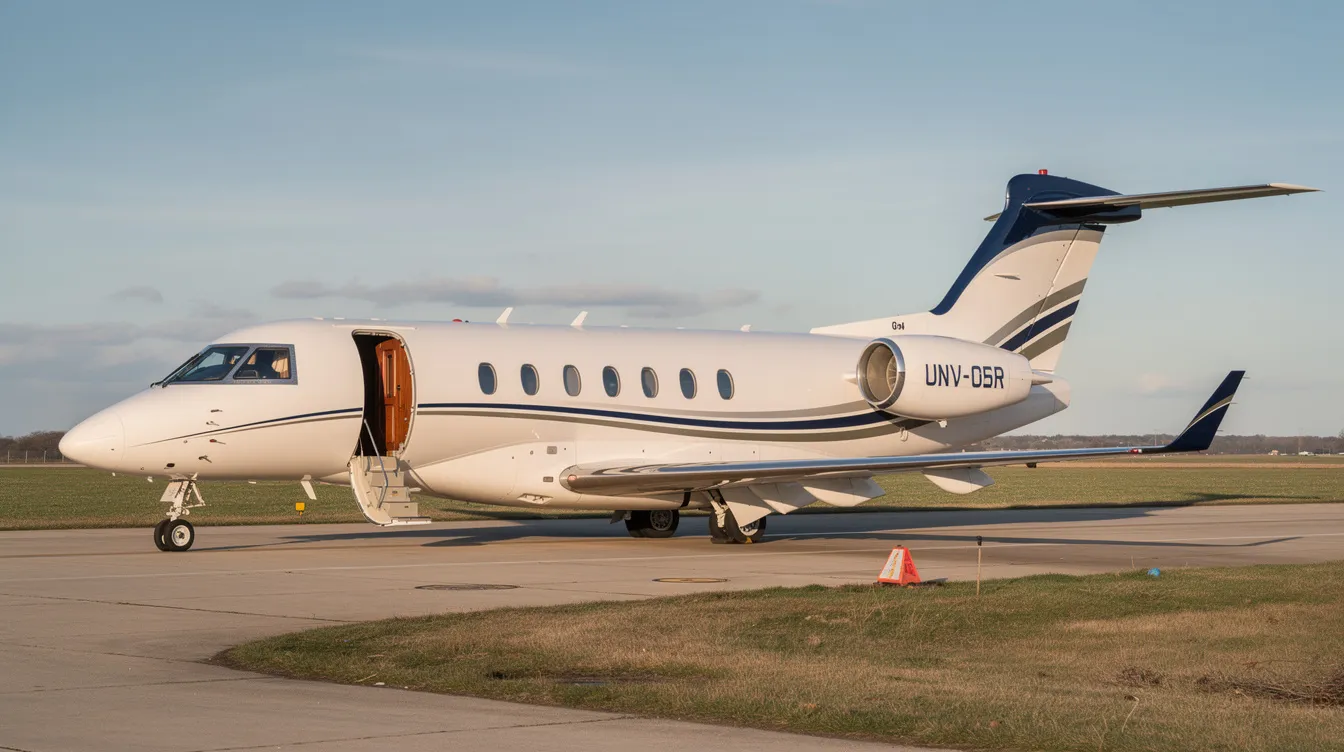
How to decide if renting private planes is right for you
The decision to rent private planes through a membership comes down to a few practical variables, not an emotional one.
Start by evaluating your annual travel hours. Count the trips where commercial flights create meaningful friction: missed connections, lost productivity, overnight stays that a direct private flight would eliminate. Map your typical routes. Are you regularly flying New York to Miami, New York to London, or between secondary markets with limited commercial service? Count your passengers per trip.
Next, calculate the total cost of ownership versus access. Full ownership of even a light jet involves capital, depreciation, crew, hangar, maintenance, and opportunity cost that can exceed $500,000 to $2 million per year. Compare that with paying only for flight hours via membership. For most travelers flying under 200 hours annually, the math favors access over ownership.
Categorize your travel: corporate flights, family, special projects. Assess which trips would materially benefit from flying private versus which are fine on premium commercial. Not every trip needs a private jet. The ones that do are typically defined by time sensitivity, route limitations, or group logistics.
If your travel is episodic but mission-critical, a membership with fixed hourly rates and global reach is likely more rational than buying or co-owning a jet. The demand for private aviation is real, but the smartest approach matches the model to the mission.
Explore how FLYT structures private jet membership for predictable costs and flexible aircraft access tailored to your specific travel patterns. For further questions, visit the FLYT FAQ or contact the team.
FAQ
How far in advance do I need to book a private jet through a membership like FLYT?
For common routes such as New York to Miami or New York to Chicago, many members book 3 to 7 days in advance. Membership structures can often accommodate shorter-notice trips when aircraft availability allows, and charter flights can sometimes be arranged within hours of a request. For peak periods like major holidays, Art Basel Miami, or the World Economic Forum in Davos, booking 2 to 4 weeks in advance helps secure preferred aircraft types and departure times. FLYT's team monitors demand patterns and advises members on realistic booking windows for their most frequent routes and destination preferences.
Can I start my trip in New York and end it in another region on a different date?
Point-to-point one-way trips are common in private aviation. Members frequently start a journey in New York and end it days or weeks later in Europe, the Caribbean, or the West Coast. Multi-leg itineraries and open-jaw trips, such as flying from New York to London and then returning from Paris to New York, can be arranged within a membership framework, with pricing based on actual flight hours and positioning needs. FLYT's floating, asset-light model is specifically designed to handle such flexible routing efficiently, and the leisure or business purpose of the trip does not change how the booking works.
Is a private jet membership only for very large companies or ultra-high-net-worth individuals?
While many members are established corporations and family offices, modern private jet memberships are increasingly used by growth-stage companies, founders, and professionals who fly 25 to 200 hours per year. The key factor is not wealth alone, but whether the value of time saved and schedule control outweighs the incremental cost over premium commercial travel. FLYT is focused on travelers who want predictable, intelligently structured access to private aviation rather than treating ownership as a status symbol. Private jet membership works as a cost-effective alternative for anyone whose travel patterns create enough friction to justify the hourly rates.
How does FLYT handle safety and operator selection if it doesn't own the aircraft?
An asset-light model does not mean compromising on safety. FLYT works exclusively with operators holding relevant certifications such as FAA Part 135 in the U.S. and recognized third-party safety ratings from organizations like ARGUS and Wyvern. Each charter flight is reviewed for crew experience, maintenance history, and operational track record before being offered to members. The approach mirrors how leading brokers in the world operate: for example, Priority One Jets only selects ARGUS or WYVERN-rated aircraft for its clients. Safety is treated as a non-negotiable baseline before any discussion of aircraft type, catering, or scheduling. FLYT is a global leader in applying this vetting standard across its partner network.
What if my travel needs change significantly year to year?
One advantage of membership-based private jet access over ownership or long-term fractional contracts is the ability to scale usage up or down without selling an aircraft or a fractional share. If a member's flying profile shifts from primarily New York-centric domestic trips one year to more international long-range flights the next, the fleet interchange and fixed hourly rates adapt accordingly. FLYT's model is built for flexibility, allowing members to adjust aircraft types and trip frequency as business cycles and personal needs evolve, which is why memberships provide a smarter alternative for anyone whose demand is difficult to predict year over year.

Conclusion
Renting private planes through a membership model like FLYT represents a strategic, efficient approach to private jet travel. By combining fixed hourly rates, flexible aircraft access, and global reach, FLYT removes the complexities and capital commitments associated with ownership or fractional shares. This model prioritizes operational efficiency, predictable costs, and concierge-level support, making it well-suited for executives, founders, and frequent travelers who value time and flexibility above all.
FLYT’s asset-light floating fleet and risk pool model ensure members benefit from a broad selection of aircraft tailored to each mission, whether a short regional hop or an ultra-long-range international flight. With transparent pricing and expert logistics management, FLYT delivers a premium private aviation experience without unnecessary complexity or hidden fees.
For those seeking smarter access to private aviation, FLYT offers a modern alternative that aligns with the demands of today’s business and lifestyle travelers. Discover how FLYT can transform your private jet travel by visiting flyt.com.