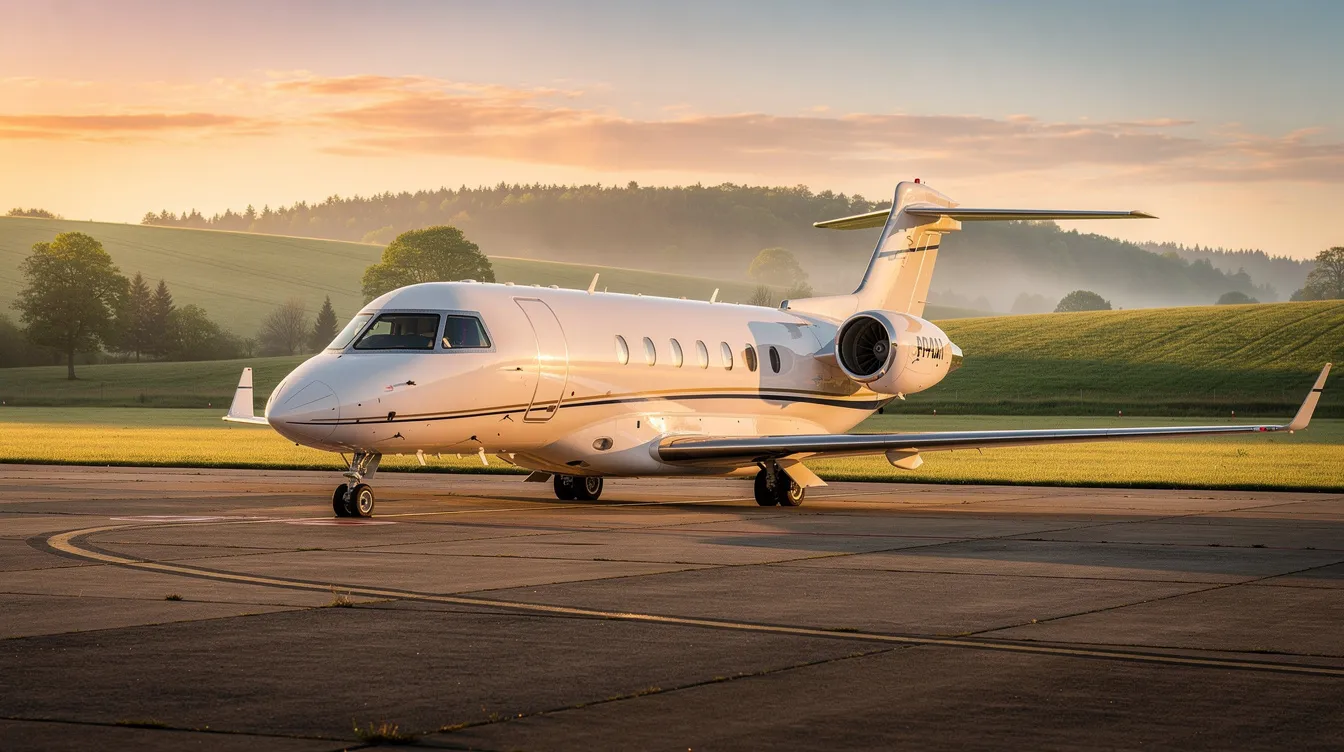
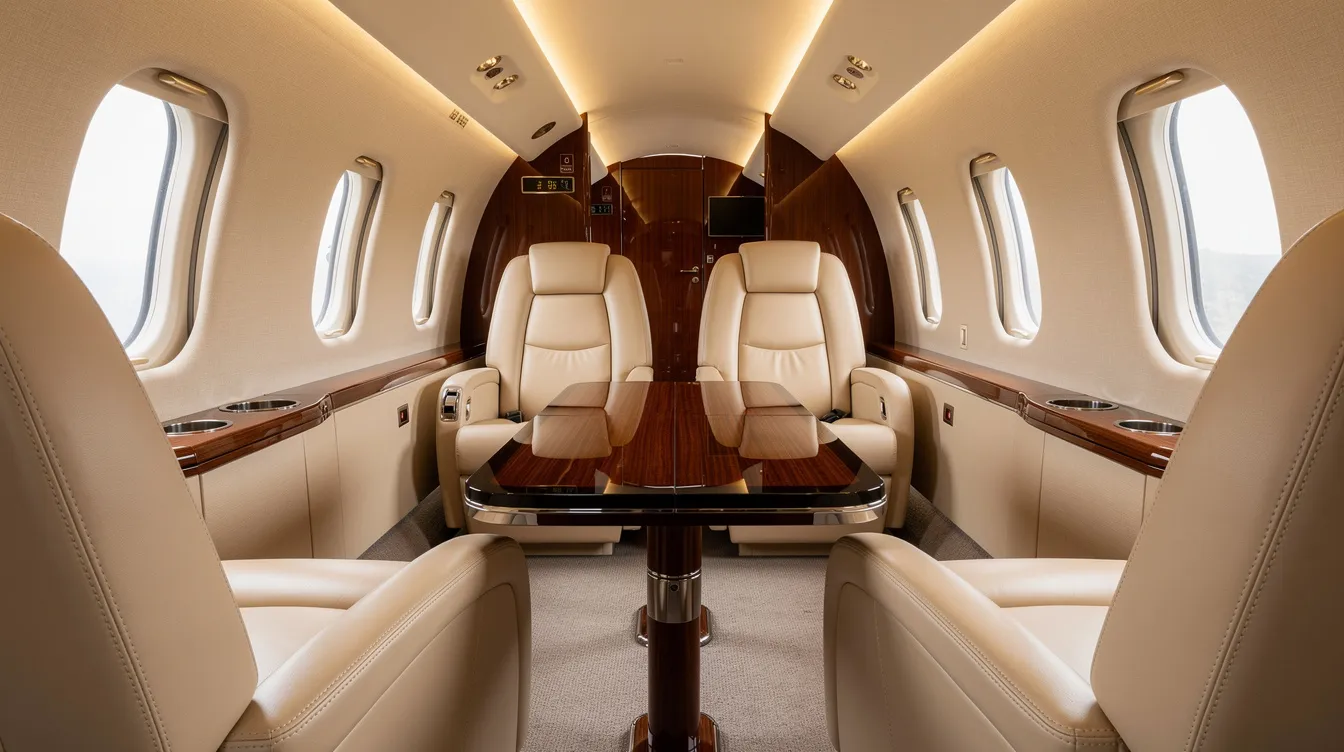
In today’s fast-paced world, time is the most valuable asset for executives, entrepreneurs, and discerning travelers. Private planes for charter offer a strategic solution that goes beyond luxury—providing unparalleled flexibility, operational efficiency, and predictable costs without the burdens of ownership. Whether navigating complex business trips or personal journeys, chartering private aircraft through a membership model like FLYT empowers you to control your schedule, access a global fleet, and enjoy concierge-level service tailored to your unique needs. This article explores why private charter is the smarter, more modern approach to private aviation.
Key takeaways
Private planes for charter give executives, families, and frequent flyers flexible access to a global fleet without the capital burden of owning or co-owning an aircraft. For many travelers, the value is not luxury for its own sake; it is time control, predictable access, and fewer operational constraints.
FLYT offers membership-based private jet access with fixed hourly rates, flexible scheduling, concierge support, and global reach across multiple aircraft types.
Private charter can be more capital-efficient than buying a jet, using a jet card, or entering fractional ownership, especially for travelers flying under roughly 200–300 hours per year.
FLYT’s asset-light, floating fleet model and risk pool approach are designed to improve aircraft availability and pricing transparency across light jets, midsize jets, and long-range jets.
Charter flights can be booked with just a few details provided, and booking a private jet charter involves outlining trip details and finalizing payment.
This article compares charter flight access, jet card programs, and fractional programs, then explains when a private charter membership is the smarter structure.

Your time, your aircraft: what private planes for charter really offer
Private planes for charter provide on-demand access to private aviation without requiring you to buy, manage, or co-own an aircraft. Instead of being tied to one plane, one aircraft type, or one home base, travelers can gain access to aircraft options ranging from very light jets and light jets to long-range jets, ultra-long-range aircraft, and even VIP airliners for larger groups.
The operational advantage is straightforward. Private flyers avoid sprawling terminals and standard security checkpoints. Most travelers use private terminals, known as FBOs, and travelers typically only need to arrive about 15 minutes before departure. You dictate the departure time when chartering a private plane, and you can book direct flights to specific destinations without layovers.
That matters when a schedule is compressed. Chartering a private plane offers unmatched time savings compared to commercial flying, particularly when commercial airlines require connections, early arrivals, checked baggage handling, or overnight stays. Charter flights also provide access to over 10,000 airports worldwide, and private jets have access to over 5,000 airports in the U.S., creating more direct routing to secondary airports closer to the final destination.
Common examples include:
A same-day New York–Chicago board meeting where the return flight leaves after the final dinner.
A West Coast family weekend to Aspen, Sun Valley, or wine country without commercial schedule constraints.
A London–Dubai long-range overnight flight with onboard Wi-Fi, rest, and privacy.
A multi-city business trip across Dallas, Austin, and Houston was completed in a single day.
You can plan complex multi-city trips in a single day with private jets, which is often impossible through commercial routes. Chartering an entire private aircraft operates around individual timelines and requirements, whether the trip is for business, family, leisure, or a combination of all three.
FLYT members use private jet travel primarily to protect their calendar. The benefit is not simply a more comfortable cabin; it is reducing missed connections, avoiding unproductive travel days, and keeping travel plans aligned with the client’s actual priorities.
Private flights can also be more practical for passengers with specific needs. Pets are often welcomed to travel in the cabin with owners rather than in cargo. Private jets usually allow larger or specialized luggage without the fear of loss. Custom catering options allow travelers to request specific meals and drinks, and private jet charters allow for personalized in-flight services and catering.
Private charter vs ownership, jet cards, and fractional programs
The decision between private charter, full ownership, a jet card, and fractional ownership is financial and operational. It is not simply a lifestyle choice. Discerning travelers usually want to know which model gives them the right access, the right aircraft, and the right cost structure without creating unnecessary friction.
Full ownership offers control, but it comes with high ownership costs. A mid to long-range jet can require a capital outlay that often reaches $15–70M+, depending on age, model, configuration, and market conditions. The aircraft also carries depreciation, crew salaries, hangar costs, insurance, maintenance, training, and variable operating expenses. Even when the plane is not flying, the cost continues.
Fractional ownership reduces some of that burden, but it still requires a multi-year commitment to access a private fleet. A buyer might purchase a 1/8 share of a midsize jet for roughly 100 flying hours per year, then pay monthly management fees and occupied hourly fees. This can work for predictable, high-volume travel, but it can be inefficient when routes, passengers, and aircraft needs vary.
Jet card programs became popular in the 1990s and 2000s because they simplified private jet charter services into prepaid blocks of hours, often 25–50 hours at a time. A jet card can provide rate predictability, but many jet card programs include peak-day restrictions, blackout periods, rate escalations, aircraft category limitations, or deposit lock-in.
Modern private charter through membership takes a different approach. The member does not buy a share, does not carry aircraft depreciation, and does not manage crew or maintenance. Instead, the member can access private jet capacity as needed, often with fixed hourly rates, concierge support, and a diverse fleet.
For many clients, rough guidelines are useful:
Annual Flight Hours | Recommended Private Aviation Model |
|---|
Under 25 hours | On-demand charter |
25–250 hours | Membership-based private charter |
250–400 hours | Fractional ownership or jet card programs |
Over 400 hours | Full aircraft ownership |
You can book on-demand charters without any long-term commitments, but a membership model can add structure, priority, and pricing discipline. That is where FLYT is positioned: access without the ownership burden, with a membership framework built for people who fly enough to need consistency but not so much that owning an entire aircraft is the best capital decision.
How FLYT structures smarter private charter access
FLYT is a membership-based private aviation service that combines the predictability often associated with jet cards, the flexibility of on-demand charter, and the efficiency of an asset-light floating fleet model. Instead of anchoring customers to a single aircraft, FLYT is designed around access, routing efficiency, and operational choice.
Travelers can access over 20,000 aircraft for charter through FLYT’s global network. That global fleet gives members more aircraft availability for domestic flights, international flights, and complex itineraries that do not fit neatly into one aircraft category.
The core benefit is fixed hourly rates. Members know the hourly cost by aircraft type in advance, rather than waiting for a fully dynamic quote every time they fly. FLYT also focuses on transparent pricing, including clear treatment of positioning, landing fees, and surcharges. That helps reduce hidden fees, surprise charges, and budgeting ambiguity.
The risk pool model is simple in principle. FLYT aggregates member demand across a vetted operator network, helping spread operational variables such as positioning, peak demand, and routing inefficiencies across a broader system. The result is not the illusion of owning a jet; it is a more efficient way of providing access to one.
FLYT is not selling fractional shares or traditional jet cards. It offers private jet membership for executives, founders, investors, family offices, and customers who value access, predictability, and minimal capital commitment.
Concierge support is embedded in the model. FLYT’s team and aviation experts help coordinate itinerary design, last-minute changes, ground transport, passenger manifests, and in-flight preferences through a single point of contact. For clients managing dense calendars, that operational simplicity is often as valuable as the aircraft itself.

Understanding aircraft types: from light jets to long-range global missions
The best aircraft for a trip depends on distance, passengers, baggage, airport access, and schedule. Cabin size matters, but it is only one variable. FLYT helps members match the aircraft type to the mission rather than defaulting to the largest jet available.
Light jets are often the most cost-effective choice for short and mid-range trips. Aircraft such as the Embraer Phenom 300 or Cessna Citation CJ3+ are commonly used for 2–4 hour flights such as Miami–Nassau, Los Angeles–Sun Valley, or New York–Nantucket. Light jets typically accommodate 4-8 passengers, making them efficient for small executive teams or family travel.
Midsize and super-midsize jets add cabin comfort, baggage capacity, and range. Aircraft such as the Citation XLS, Citation Latitude, Challenger 350, and Praetor 600 can work well for New York–Houston, Toronto–Denver, or London–Marrakesh. Midsize jets can carry 6-9 passengers with longer ranges, often offering spacious cabins, larger workspaces, and better endurance for longer domestic flights.
Heavy jets usually accommodate 12-18 passengers for long trips. These aircraft are often selected for transcontinental business travel, larger family groups, or teams that need more cabin separation and luggage capacity.
Long-range and ultra-long-range jets, such as the Gulfstream G550, Gulfstream G600, and Bombardier Global 6500, are built for international work. Ultra-long-range jets can fly over 7,000 nautical miles non-stop, supporting routes such as New York–London, Dubai–Geneva, or Hong Kong–Sydney. Ultra-long-range jets can cost over $14,000 per hour, so matching the aircraft to the mission is essential.
The global fleet also includes turboprops for shorter regional hops. Turboprops are ideal for short regional flights, seating 6-8 passengers, and can access smaller airports where jets may be less practical. A King Air 350 on Dallas–Austin, for example, may reduce total travel time while keeping cost under control. Hourly rates for turboprops start around $2,000.
FLYT’s fleet interchange philosophy encourages members to choose the smallest efficient aircraft for each leg. That might mean a light jet for a short domestic sector, a midsize jet for a regional business trip, and ultra-long-range capacity for an overseas journey. The result is practical flexibility without paying for unused capacity.
This flexibility also matters across destinations. A member might use one aircraft option for the Caicos Islands, another for Saint Martin, and a different long-range aircraft for routes involving Europe, the Middle East, South Sudan, or Western Sahara. In each case, the goal is the same: align the aircraft with the destination, group size, and operational requirements.
How private charter pricing actually works
Private aviation pricing is driven by aircraft type, distance, occupied flight time, airport fees, crew duty rules, fuel conditions, and aircraft availability on specific dates. Charter costs vary based on aircraft type and distance, but the quote is also shaped by where the aircraft starts, where it ends, and whether the crew must remain overnight.
Typical market hourly rates often fall into these ranges:
Aircraft Type | Typical Hourly Rate (USD) | Passenger Capacity | Range (Approximate) |
|---|
Turboprops | Starting around $2,000 | 6–8 | Short regional flights |
Light jets | $3,000–$5,000 | 4–8 | 2–4 hour flights |
Super-midsize jets | $6,000–$9,000 | 6–9 | Medium range domestic |
Long-range jets | $10,000–$15,000+ | 12–18 | Transcontinental, international |
Ultra-long-range jets | Above $14,000 | 12+ | Intercontinental, global |
Typical one-way domestic charters range from $10,000 to $55,000, depending on the aircraft, route, timing, and positioning requirements. A short regional charter flight may sit near the lower end, while a coast-to-coast or heavy jet trip can move materially higher.
Common cost line items include occupied flight time, positioning flights, landing fees, handling fees, overnight crew costs, de-icing in winter months, and international handling for cross-border missions. These are the areas where a pure ad-hoc charter can become unpredictable.
Empty leg flights can reduce costs for flexible travelers. Empty leg flights occur when jets reposition without passengers. Empty leg flights can save travelers up to 75% on charter costs. Empty leg flights can offer discounts of 25-75% off standard rates. Empty leg flights can save travelers 25–75% off standard rates. Empty leg flights can reduce costs by 25-75%. Travelers can book empty leg flights through various charter platforms, but flexibility is key to benefiting from empty leg flights because timing, routing, and aircraft availability are often fixed around the aircraft’s repositioning needs.
Membership-based fixed hourly rates smooth some of this volatility. During peak periods such as U.S. Thanksgiving, Christmas–New Year, Davos, Art Basel, or major sporting events, aircraft availability can tighten, and ad-hoc charter pricing can move quickly. FLYT’s transparent pricing model is designed to outline all the details in advance, including what is included in the hourly rate and what is passed through at cost.
Booking can also be simple. Booking a private jet can be done in as little as 4 hours, and private jet charters can be arranged in as little as four hours, subject to aircraft, crew, airport, and regulatory availability. Travelers can confirm reservations via digital signatures, then finalize payment through the agreed-upon process. In practice, the traveler provides the route, timing, passengers, luggage needs, and preferences; the provider coordinates the aircraft and services.
Sophisticated travelers should evaluate private jet costs over a 12–24 month horizon. A single flight quote is useful, but the better question is how membership-based charter compares with fully burdened ownership costs, fractional ownership fees, or jet card restrictions across real travel patterns.
Operational reliability, safety, and global reach
Experienced executives assume a high safety baseline. The important question is how a provider verifies that standard on every flight, not how polished the marketing language sounds.
Commercial charter operations in the United States are governed by FAA regulations, and FAR Part 135 governs commercial charter operations for safety. Beyond regulatory compliance, reputable providers use third-party safety ratings and independent audits. ARGUS Gold standards ensure high safety for charter operators, and 73% of operators do not meet ARGUS Gold safety standards. The IS-BAO Stage 3 designation indicates advanced safety management.
FLYT builds safety into aircraft sourcing through practical filters: operator audits, crew qualifications, maintenance standards, and Safety Management Systems. FLYT partners exclusively with operators that maintain robust Safety Management Systems (SMS) and modern maintenance practices, with continuous oversight rather than one-time checks. Every flight receives a full pre-departure safety report.
For reference, organizations such as ARGUS and IBAC’s IS-BAO program provide recognized frameworks for aviation safety assessment. The value to members is not paperwork alone; it is confidence that each aircraft, crew, and operator has been reviewed before the trip begins.
Global reach matters just as much as safety. FLYT supports typical private jet travel corridors such as U.S. coast-to-coast, New York–London, Boston–Paris, Dubai–Geneva, and key business routes across Europe, the Middle East, and Asia.
For complex itineraries, the work behind the scenes becomes more important. Multi-leg investor roadshows, site visits across several countries, and family holidays involving multiple destinations require aircraft sequencing, crew planning, airport slot coordination, customs support, and regulatory preparation.
Reliability is not measured only by takeoff time. It is measured by how consistently the service protects the traveler’s schedule, maintains confidentiality, and adapts when plans change.
Membership-based charter with FLYT: how it works in practice
Joining FLYT begins with membership onboarding. The process clarifies expected flying hours, preferred aircraft categories, passenger profiles, catering preferences, security considerations, and communication needs. Members also review fixed hourly rates by category so they can plan future private flights with more confidence.
Consider a Q3 roadshow across San Francisco, Austin, and New York. A member might use a super-midsize aircraft for the first leg, a light jet for a shorter regional connection, and a long-range jet for the final return with additional passengers. Fleet interchange allows the member to optimize each flight for distance, cabin needs, and budget rather than forcing the entire itinerary onto one jet.
Flexible scheduling is central to the model. Members can request early departures, late returns, or rapid itinerary changes. Chartering a private jet enhances flexibility and reduces travel time because the aircraft is planned around the traveler’s schedule rather than the other way around.
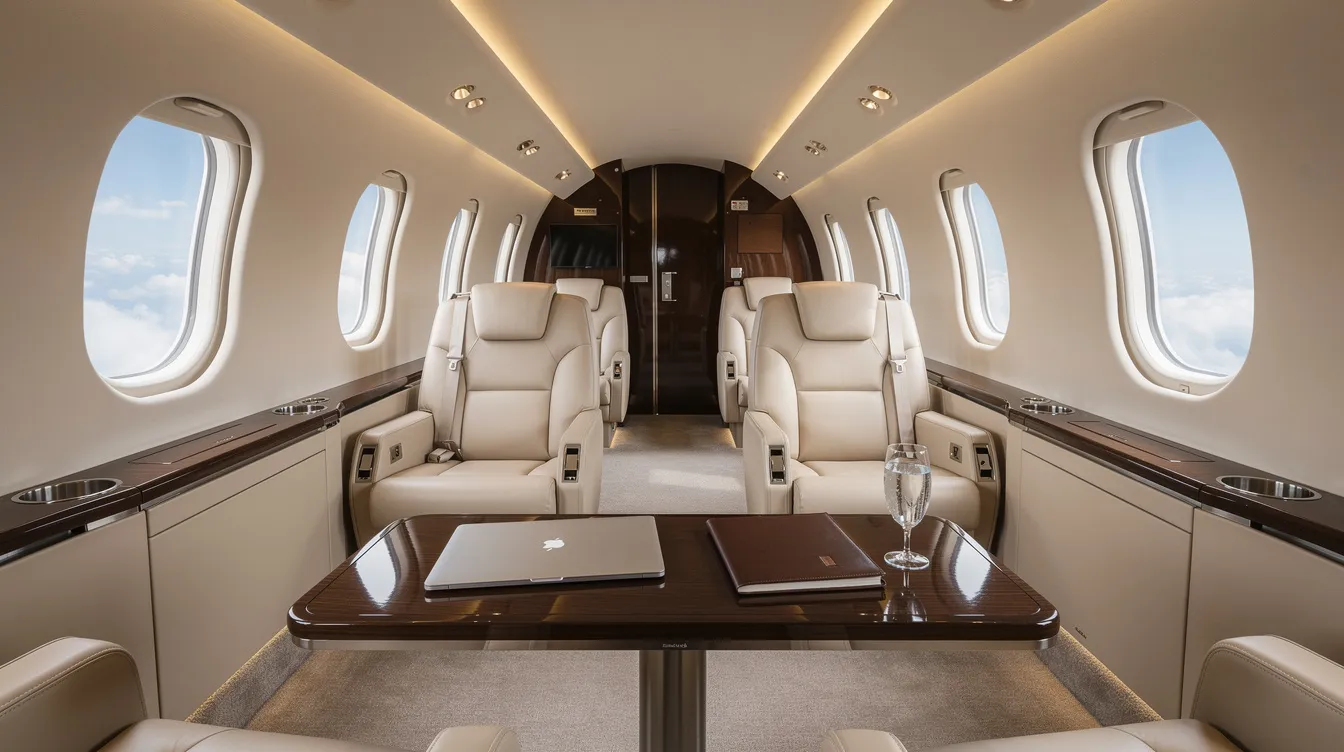
Concierge-level personalized service can include ground transfers, last-minute passenger name changes, catering preferences, aircraft-specific Wi-Fi checks, and secure connectivity for board calls. Many private jets feature high-speed Wi-Fi and spacious work tables, making the travel experience productive rather than idle.
The asset-light model also matters operationally. Because FLYT is not tied to a single home base or a limited owned fleet, it can source the best aircraft for the route, date, group size, and destination. This can improve aircraft availability around peak dates and from secondary airports.
Membership also works as a planning tool. Instead of managing multiple brokers, one-off quotes, and inconsistent invoices, clients have one relationship for charter services, private jet charter coordination, reporting, and post-trip analysis. Finance teams can review usage, cost, aircraft selection, and trip patterns with more clarity.
Is private charter the right model for you?
Business owners, executives, and family offices should evaluate private aviation as a 3–5 year strategy. The right model depends on usage, routes, passengers, capital priorities, and tolerance for operational complexity.
Private charter membership is often a good fit if you:
Fly between roughly 25 and 250 hours per year.
Need multiple aircraft sizes rather than one fixed type.
Travel across varied routes, including domestic flights and international flights.
Value predictable hourly costs without buying a private jet.
Need flexible scheduling for business, family, and leisure.
Prefer one aviation team coordinating the trip from air to ground.
Full ownership may still make sense for customers flying 300–400+ hours per year on predictable routes with consistent aircraft needs. In that case, the fixed infrastructure can be justified by high utilization.
Jet cards and fractional ownership can also work for certain clients, but the details matter. Long lock-ins, peak-day restrictions, program rule changes, and limited aircraft options can reduce flexibility. Fractional ownership also creates asset exposure and multi-year obligations.
The most useful exercise is to map your last 12–18 months of flying. Look at routes, passengers, aircraft types, luggage, schedule changes, and the total cost of delays. Then compare the cost and flexibility you actually used against what FLYT membership would have provided.
For many modern executives and families, private planes for charter through a membership model offer the best balance of control, capital efficiency, and operational simplicity. You retain access without ownership complexity, use the best aircraft for each mission, and work with a team designed to manage the moving parts.
Explore a membership model designed around efficiency, transparency, and flexible global private jet access with FLYT.
FAQ
For more detailed questions, visit the FLYT FAQ.
How quickly can FLYT arrange a private charter flight?
For many domestic routes, FLYT and its operator partners can often arrange a private jet within the same day, with a practical target of 4–6 hours from confirmed booking to wheels up, subject to aircraft availability and airport operating hours.
International flights may require additional lead time for permits, slots, customs, and crew planning. FLYT’s team handles these logistics on behalf of members so the process remains coordinated through one point of contact.
What level of commitment does a FLYT membership require?
FLYT is designed to avoid the heavy, multi-year commitments of fractional ownership and some jet cards. The model focuses on ongoing membership access rather than requiring customers to purchase an aircraft share.
Minimum usage expectations, membership fees, and rate structures can vary based on projected flying hours and aircraft needs. Prospective members should discuss specifics with FLYT based on expected routes, frequency, and service requirements.
Can I switch between aircraft types from trip to trip?
Yes. FLYT’s model is built around fleet interchange, so members can select different aircraft types as their itinerary changes.
A member might use light jets for short hops, midsize jets for regional business trips, long-range jets for transcontinental travel, and ultra-long-range aircraft for transoceanic flights. Switching aircraft types provides operational efficiency and cost optimization tailored to each mission.
What destinations can FLYT members access?
FLYT members enjoy global access to over 10,000 airports worldwide, including primary business hubs and secondary airports closer to final destinations. This expansive reach enables seamless travel across continents, supporting complex itineraries and last-minute changes with ease.
How does FLYT ensure safety and reliability?
Safety is paramount at FLYT. All partner operators meet or exceed rigorous standards, including ARGUS Gold certification and IS-BAO Stage 3 designation. Each flight undergoes comprehensive safety audits and pre-departure checks to guarantee the highest levels of operational integrity and passenger confidence.
Are pets allowed on FLYT charter flights?
Yes, most FLYT partner operators welcome pets in the cabin, allowing members to travel with their animals comfortably and safely. Specific policies and any applicable fees vary by aircraft and operator, so members are encouraged to communicate their needs during booking.
How transparent is FLYT’s pricing?
FLYT offers fixed hourly rates by aircraft category, providing members with predictable costs and clear pricing structures. Positioning fees, landing charges, and surcharges are transparently communicated upfront to avoid surprises. This model supports budgeting and financial planning without hidden fees.
Conclusion
Private planes for charter through FLYT represent a strategic evolution in private aviation, offering executives, entrepreneurs, and discerning travelers a smarter way to fly. By combining flexible access to a global fleet, predictable fixed hourly rates, and concierge-level support, FLYT removes the complexities and capital burdens associated with ownership and traditional fractional programs.
This membership model empowers travelers to optimize their schedule, aircraft choice, and travel experience without compromising safety or reliability. Whether for business roadshows, family vacations, or urgent last-minute trips, FLYT delivers operational efficiency and global reach tailored to modern needs.
Explore a membership model designed around efficiency, transparency, and flexible global private jet access with FLYT. Discover how a private charter can transform your travel into a seamless extension of your lifestyle and business priorities. Visit or contact FLYT to learn more.