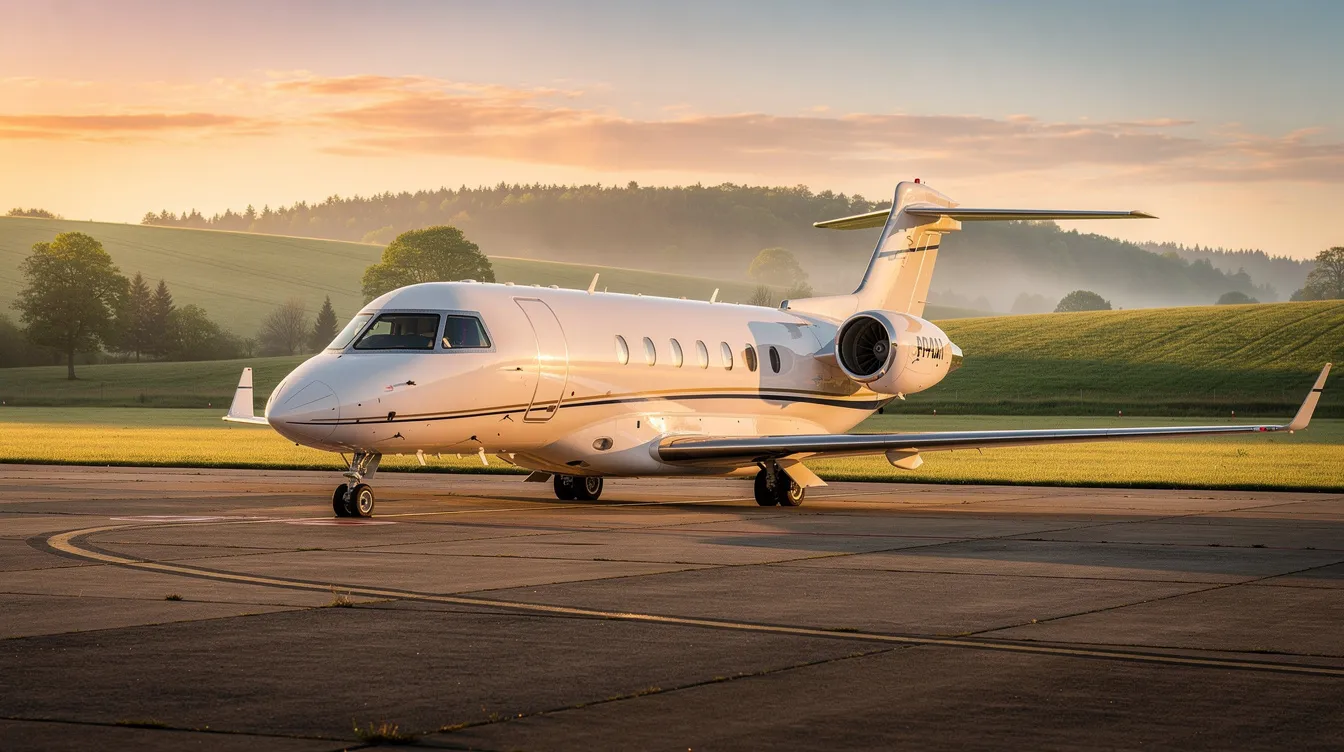
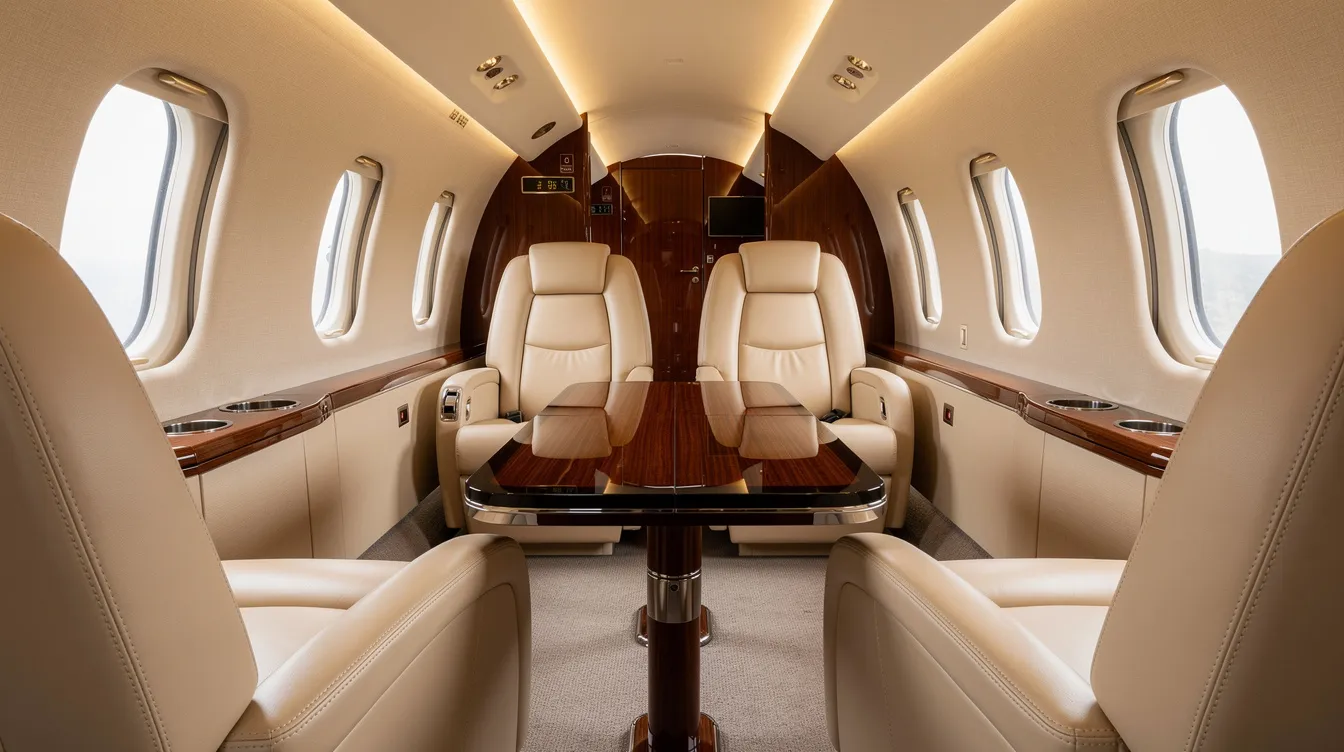
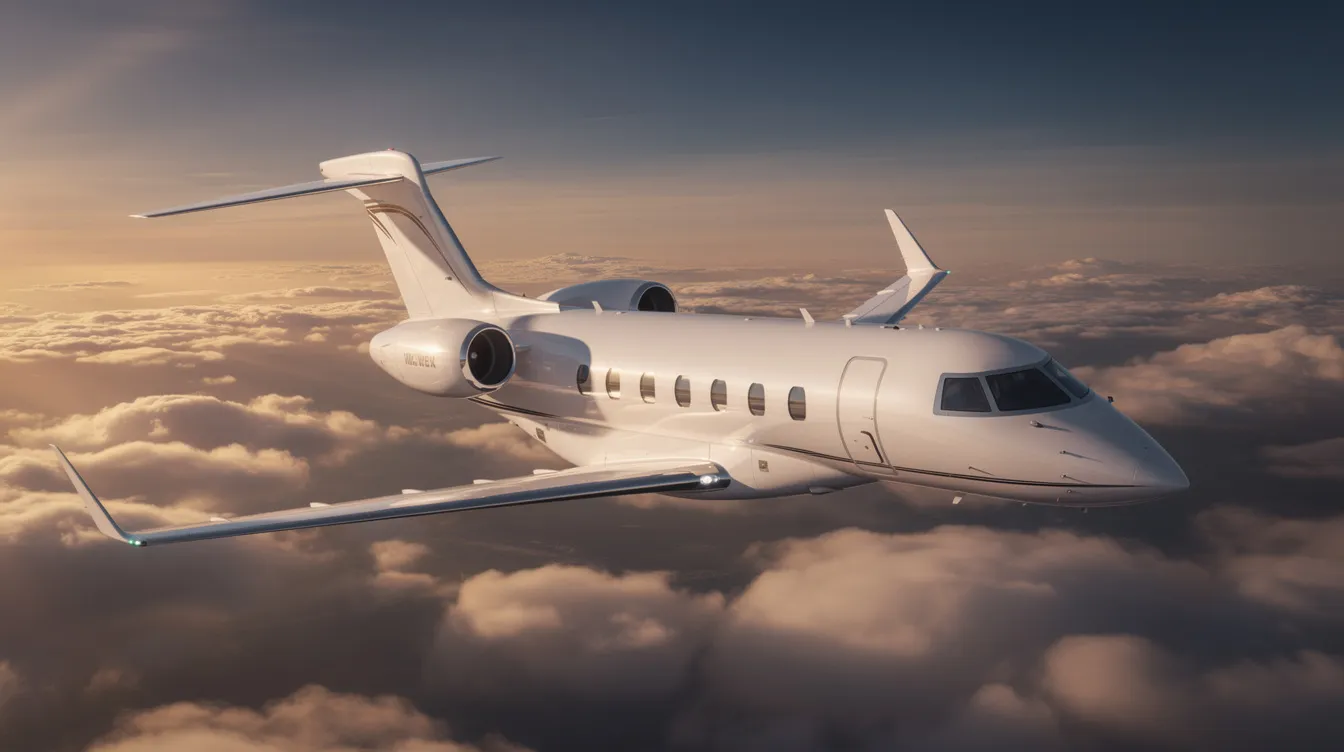
In 2026, private aviation continues to evolve as a strategic, efficient alternative to commercial air travel and outright aircraft ownership. Understanding private plane costs is essential for executives, founders, and frequent flyers who seek flexible, predictable access without the burdens of ownership. This guide breaks down the real expenses behind flying private—from hourly charter rates and operational fees to taxes and airport charges—providing clarity on what it truly takes to fly privately today.
By exploring ownership, charter, and membership models, readers will gain insight into smarter private aviation choices that align with business objectives and travel needs.
Key takeaways
How much does it cost to fly private in 2026? Private jet rental costs range from $2,000 to $14,000 per hour for most missions, while heavy jet charters can exceed $14,000 per hour depending on aircraft size, flight time, route, and aircraft availability.
The total private jet price is not just an hourly rate. It includes taxes, landing fees, fuel surcharges, crew costs, aircraft positioning, short leg fees, and optional services.
Federal Excise Tax is 7.5% on domestic flights in the United States, applied to the total cost of taxable air transportation.
Very light jets and light jets efficiently serve short regional flights for small groups, offering a lower price point compared to multiple premium commercial tickets and the time lost through commercial airlines.
Private jet ownership usually becomes more compelling around 150–200 flight hours per year; flying 150 hours annually can make ownership more economical than renting in some usage models, but only when fixed costs are well absorbed.
FLYT’s private jet membership offers fixed hourly rates for flights, guaranteed aircraft availability, fleet interchange, and concierge support without the obligation to own private jet assets. Learn more about FLYT's approach.

How much does it cost to rent a private plane today?
Private plane costs vary depending on mission profile, but in 2026, renting a private jet ranges from $2,000 to $14,000 per hour across common aircraft categories. Very light jets and turboprops often sit near $2,000–$2,800 per hour, light jets around $3,000–$4,500 per hour, midsize jets around $4,000–$6,000 per hour, and large jets or long-range aircraft around $8,000–$14,000+ per flight hour.
For practical planning, a 2-hour light jet charter flight between Dallas and Miami may cost $10,000–$14,000 all-in, depending on routing and fees. A New York–Los Angeles private jet flight on a super midsize aircraft typically falls around $30,000–$45,000, while international or transatlantic routes can be materially higher.
Most private jet charters have minimum flight time requirements, often 1.0–2.0 hours per leg, so a 45-minute flight may be billed as 1.0–1.5 hours, affecting per-minute cost.
FLYT’s membership model uses fixed hourly rates, enabling clients to forecast trip budgets with confidence. This predictability is vital as private jet rental prices fluctuate with demand, fuel costs, airport selection, and aircraft positioning fees. Explore how FLYT memberships simplify budgeting.
Private jet charter cost overview by aircraft category
Aircraft category | Typical hourly charter rate (2026) | Typical passenger capacity | Common use cases |
|---|
Very light jets (VLJs) | $2,000 – $2,800 | 4–6 | Short regional trips, quick hops |
Light jets | $3,000 – $4,500 | 6–8 | Domestic flights under 3 hours |
Midsize jets | $4,000 – $6,000 | 6–9 | Continental flights, business trips |
Large jets | $8,000 – $12,000+ | 10–14 | Intercontinental, longer range |
Ultra-long-range jets | $11,000 – $14,000+ | 12+ | Transatlantic and global travel |
FLYT’s membership model offers fixed hourly rates within these categories, helping members manage budgets with clarity and flexibility.
What drives the private jet cost on each flight?
Private jet pricing is a composite of several operational variables that together form the total charter cost.
Key drivers include
Flight time and distance
Aircraft type, from very light jets to large jets
Departure and arrival airports
Seasonality and peak demand
Crew, fuel, maintenance, and aircraft positioning
Taxes, landing fees, ramp fees, and handling charges
Additional common fees:
Understanding these helps executives avoid misleading teaser pricing and compare quotes accurately.
FLYT adds value by standardizing many of these inputs into transparent, fixed-rate structures for members. Learn more about FLYT’s pricing transparency and charter volatility protection.
Flight time and distance
Billable flight time is typically measured gate-to-gate or wheels-up-to-wheels-down, depending on the operator. A 3-hour flight generally aligns closely with actual flight time, but shorter hops under an hour may be billed at 1.0–1.5 hours due to minimums.
Weather, air traffic control, and routing can add 5–15% to block time, increasing variable costs when billing is fully time-based.
Travel planners should treat quoted flight times as estimates and build in a 10–20% buffer unless using a membership with fixed hourly rates.
Aviation fuel, the largest hourly expense, varies by aircraft size and flight hours, impacting variable costs significantly.
Aircraft type
Aircraft choice is often the largest factor in private jet cost per hour. Very light jets and light jets suit 2–6 passengers on trips under 3 hours. Larger jets accommodate bigger groups, longer ranges, more baggage, and additional crew.
Indicative 2026 hourly rates are:
Very light jets: $2,000–$2,800
Light jets: $3,000–$4,500
Midsize jets: $4,000–$6,000
Large jets: $8,000–$12,000+
Ultra-long-range jets: $11,000–$14,000+
How to choose the right aircraft:
Select the smallest aircraft that safely covers the route, passenger count, luggage, runway, and weather requirements.
Consider that the cheapest jets may not offer the best value if they require fuel stops or cannot operate from the needed airport efficiently.
FLYT’s fleet interchange model lets members select different aircraft categories trip-by-trip, avoiding the constraints of ownership or fractional shares.
Departure and airport choice
Costs can rise at major private aviation hubs due to higher landing, handling, and parking fees. For example, Teterboro Airport offers New York access but may incur higher fees compared to smaller regional airports, which can reduce both costs and ground time.
Landing and ramp fees depend on aircraft weight and location, set by airport authorities or fixed base operators (FBOs) providing parking, towing, fuel, and passenger handling.
Limited private jet service capacity at some airports can increase positioning fees when aircraft must be ferried in.
Smaller regional airports often reduce congestion and expenses compared to commercial hubs.
Peak demand and seasonality
Peak travel periods—Christmas–New Year, school holidays, major events, and global conferences—can increase private jet pricing by 20–40%. Last-minute bookings during these times limit aircraft choices and increase repositioning.
Flexible travel dates and departure times provide operators with more options, lowering charter costs, improving availability, and opening access to empty leg flights, which are often discounted 25–75% off standard rates.
FLYT membership mitigates seasonal price volatility through fixed hourly rates and structured access. Discover more about the FLYT advantage.
Core fees and taxes: what sits on top of the hourly rate
Private jet charter costs extend beyond aircraft time. While amounts vary by airport and operator, the categories are consistent.
FLYT prioritizes transparency by clarifying these fees upfront.
Types of fees and taxes
Federal excise tax and segment fees: Most U.S. domestic private jet flights incur a 7.5% federal excise tax on the base transportation charge, clearly itemized on invoices. Additionally, a per-passenger, per-segment fee—typically mid-$4 to mid-$5 per takeoff-landing leg in 2026—applies. Multiple legs multiply these fees. These are mandatory government charges, not operator markups.
Landing, ramp, and handling fees: Landing fees range from $100 to $1,500 per flight depending on aircraft weight, location, and airport category. Ramp and handling fees, charged by FBOs for parking, towing, passenger support, and ground services, typically start at $150–$500+ and increase for larger aircraft or busy airports. Some FBOs waive ramp fees with minimum fuel purchases, which can reduce costs on multi-stop trips.
Crew overnight, hangar, and weather-related fees: Crew overnight fees cover hotel, meals, and local transport, typically $200 to $600 per crew member for trips extending beyond a day. Larger jets may have additional pilots and flight attendants. Hangar fees apply when aircraft are stored indoors, often during winter or severe weather, ranging from several hundred to over a thousand dollars per night for larger aircraft. Deicing fees vary from $1,500 to $15,000 depending on aircraft size and weather conditions, especially in the northern U.S., Canada, and Europe.
Short leg fees, minimums, and positioning flights: Short leg fees offset increased fuel burn during takeoff and landing, as well as maintenance impact and crew duty time. Many operators enforce daily minimums around 2 billable hours, inflating effective hourly costs for short flights. Positioning or repositioning flights—where aircraft fly empty to reach departure airports or return to base—are billed at the standard hourly rate. FLYT’s asset-light floating fleet reduces positioning distances, helping control total costs.
Optional services: Custom catering ranges from simple snacks to full meals, often $200–$2,000+ per leg. Wi‑Fi may be complimentary on some aircraft or billed by usage or flight hour, particularly on international flights using satellite data. Ground transportation, security, and concierge services are arranged separately. FLYT’s concierge platform coordinates these with transparent pricing so members choose what adds real value.
Private jet cost by aircraft size and trip profile
Matching aircraft size to mission type clarifies private plane costs. Short regional meetings, family weekends, and transatlantic board trips require different aircraft categories.
Very light jets and turboprops
Ideal for 2–4 travelers on sub-500–700 nautical mile routes like Boston–Washington, DC or Milan–Nice.
A 1.5–2.0-hour flight may cost $5,000–$8,000 all-in, including taxes and fees.
Very light jets start under $1 million, while light jets range from $1.8 million to $4.7 million used. Ownership costs extend far beyond the purchase price.
Light jets
Suitable for domestic trips up to 3 hours with 4–7 passengers, such as Los Angeles–Aspen or London–Geneva.
Prices range from $10,000–$18,000 all-in, depending on aircraft and airport.
Light jets balance speed, comfort, baggage capacity, and cost per seat, making them an affordable entry point for executives traveling in small teams.
FLYT members benefit from fixed hourly rates for frequent regional travel.
Midsize and super midsize jets
Midsize jets accommodate 6–9 passengers on continental flights up to 2,500 nautical miles.
Super midsize jets extend range and cabin comfort for longer routes like New York–Los Angeles.
A 5-hour super midsize flight typically costs $28,000–$45,000, including fees and taxes.
Midsize jets cost $2.1 million to $30 million to acquire, depending on model and condition.
Compared to light jets, midsize aircraft offer stand-up cabins, larger baggage holds, and better range. For groups, per-person costs can rival multiple first-class tickets with added flexibility.
Large jets and long-range aircraft
Large jets seat 10–14 passengers with intercontinental range, suitable for routes like New York–London, Dubai–Paris, or São Paulo–Miami without refueling.
Transatlantic flights can cost $70,000–$120,000+ depending on distance, airports, crew planning, international fees, and onboard services.
Heavy jets generally range from $15 million to $30 million; ultra long-range jets up to $65 million new.
Highly customized executive airliners or Boeing Business Jets can command much higher acquisition costs.
Large jets have the highest hourly operating costs due to fuel burn, crew requirements, and maintenance exposure.
FLYT’s global access and fleet interchange let members select large jets only when long-range performance is essential.
Ownership vs charter vs membership: choosing the right cost model
Choosing between ownership, on-demand charter, fractional ownership, jet cards, or membership depends on flight hours, capital allocation, risk tolerance, and flexibility needs.
Private jet ownership involves fixed costs regardless of flight hours, with variable costs scaling by usage.
Full and fractional ownership: capital-heavy options
Ownership offers flexibility and airport access but entails significant capital and operational responsibility.
Very light jets start under $3 million; used light jets sit in the low millions; large or ultra-long-range jets can cost tens of millions.
Annual fixed costs often exceed $1 million, covering crew salaries (which can surpass $600,000), insurance, maintenance, hangar, training, and regulatory compliance.
Maintenance costs typically account for 5–10% of aircraft value annually. Hourly engine maintenance programs help manage overhaul expenses.
Aircraft depreciation typically reduces value by 20–30% in the first five years. Pre-purchase inspections cost $20,000 to $100,000.
Fractional ownership involves buying shares (1/16th to 1/4th) with guaranteed hours, monthly management fees, and occupied hourly charges. It suits consistent usage but may limit flexibility.
Approximately 24,270 private jets operate globally, but ownership is efficient only for a small subset, usually flying 150–200+ hours annually.
On-demand charter: pay-as-you-fly
Chartering individual flights avoids ownership burdens but exposes travelers to price volatility from demand, fuel, positioning, and airport constraints.
Safety standards, aircraft condition, cancellation policies, and operator certification should be carefully reviewed.
Chartering suits occasional flyers but becomes less predictable for frequent travelers.
Membership and jet cards: predictable private jet cost
Memberships and jet cards provide prepaid blocks of flight hours at fixed rates by aircraft category, offering price predictability and guaranteed availability.
Memberships reduce costs compared to charter by limiting quote shopping, absorbing pricing volatility, and improving planning efficiency.
They also enhance travel flexibility and convenience by smoothing variables like fuel and regional demand into consistent pricing.
FLYT’s membership features fixed hourly rates, fleet interchange across aircraft categories, global access, and concierge support without ownership obligations. Compare FLYT vs charter, vs jet cards, and vs fractional ownership to see how it fits your needs.
How FLYT approaches transparent private jet pricing
FLYT targets executives, founders, family offices, and frequent flyers seeking reliable private jet access without capital lockup.
The model centers on membership-based access, fixed hourly rates, an asset-light floating fleet, and global concierge-level support, simplifying complex private aviation variables into a stable cost structure.
Fixed hourly rates and predictable budgets
FLYT sets fixed hourly rates across aircraft categories, so members know costs before confirming flights.
Rates include typical operating variables like fuel, crew, and handling, supporting accurate budgeting for CFOs and travel teams.
Frequent flyers save time by reducing quote shopping and invoice reconciliation.
Fleet interchange and right-sizing every trip
Members can select the most efficient aircraft per mission, from very light jets to large jets.
Right-sizing avoids paying large-jet rates unnecessarily, materially reducing costs over time.
This flexibility contrasts with ownership or fractional shares tied to a single aircraft.
Floating, asset-light model and operational efficiency
FLYT’s floating fleet positions aircraft based on real demand, reducing deadhead, positioning, and short-leg inefficiencies.
The asset-light approach lowers overhead while maintaining competitive, transparent pricing.
Efficient fleet positioning and route planning benefit regular users with lower private jet rental costs.
Explore a membership model designed for efficiency, transparency, and flexible global access. Learn more about FLYT’s asset-light floating fleet, risk pool, and AI fleet engine.
Frequently asked questions
How far in advance should I book a private jet to get the best price?
For non-peak periods, booking 7–14 days in advance balances availability and pricing. For peak seasons like Christmas and major events, planning 4–6 weeks ahead helps reduce surge pricing and limited aircraft choice.
FLYT members benefit from structured access and fixed hourly rates, lessening the need for aggressive timing. See more FAQs at FLYT FAQ.
Is flying private ever cheaper than commercial flight?
Private jets usually cost more than economy or standard business class. However, private flights can be competitive with multiple first-class tickets on routes involving remote destinations, tight multi-city schedules, or groups of 6–10 passengers.
Comparisons should include saved overnight stays, reduced delays, closer airport access, and productivity gains, not just ticket price.
What is the minimum number of hours per year that justifies a private jet membership?
Private jet memberships often make sense around 25–50 flight hours per year for travelers valuing predictable pricing, guaranteed access, and concierge coordination.
Full or fractional ownership typically requires 150–200+ hours annually to approach economic justification.
FLYT can analyze past travel to recommend the most efficient access model.
How do cancellations and schedule changes affect private jet cost?
Charter contracts usually include cancellation windows (24–72 hours before departure), after which fees escalate.
Same-day schedule changes may incur additional positioning, crew duty, or overnight costs.
FLYT’s membership terms balance operational realities with member flexibility. Understanding these policies upfront helps avoid unnecessary charges.
Can I control costs by always choosing the smallest available jet?
Not always. Very light and light jets have lower hourly rates but may become less economical if they require fuel stops, lack baggage capacity, or cannot operate from necessary runways.
The most cost-effective choice safely covers the route nonstop, fits passengers and luggage, and matches airport constraints.
FLYT advisors assist members in right-sizing each trip rather than defaulting to “smallest and cheapest.”
Conclusion: Making private plane costs work for you
Private jet cost is shaped by aircraft type, distance, operational fees, and access model. Ownership, charter, fractional ownership, and membership each address different financial and operational needs.
For most executives flying under roughly 200 hours annually, ownership is rarely the most efficient capital use compared to flexible access models.
FLYT offers a modern approach to global private aviation with predictable hourly rates, concierge support, and fleet flexibility.
Discover how a FLYT membership can transform private aviation from a variable expense into a predictable travel strategy component. For inquiries, contact FLYT now.