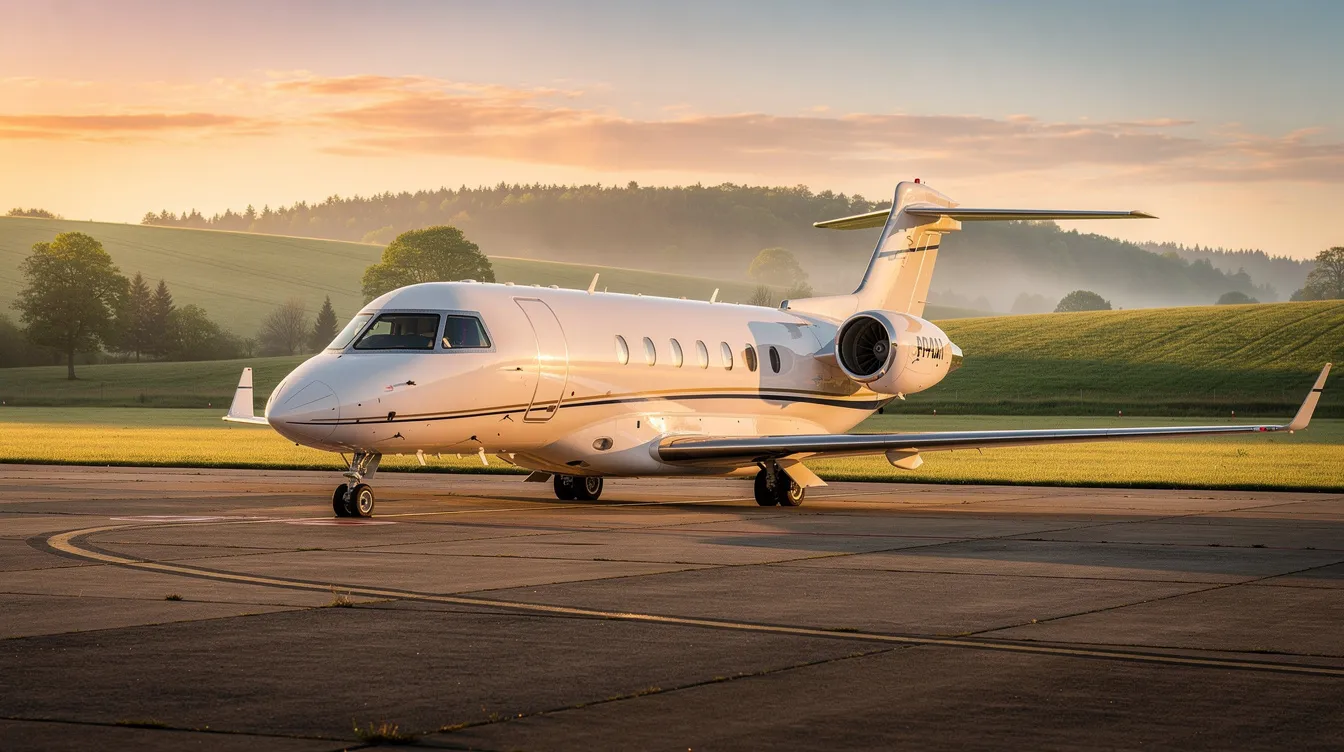
This guide is designed for executives, frequent travelers, and anyone considering private aviation for transatlantic trips. We cover aircraft options, costs, the booking process, customs, and the onboard experience. Private aviation demand remains resilient in 2026, with WingX data reported by Forbes showing global private jet segments up year over year. For executives crossing the Atlantic, the reason is practical: chartering a private plane offers unmatched efficiency compared to commercial airlines, often saving up to 3 hours on each trip by avoiding long security lines, multi-hour layovers, rigid schedules, and congested terminals.
Key Takeaways
Yes, you can take a private plane to Europe. New York–London is typically 6–7 hours eastbound and 7–8 hours westbound; Los Angeles–Paris is roughly 10–11 hours on an ultra-long-range jet.
Transatlantic flights generally require a super midsize jet, heavy jet, or ultra-long-range jet, depending on route, payload, and wind.
Transatlantic private jet flights cost between £50,000 and £200,000, with heavy jets for transatlantic flights costing around £95,000 to £145,000 one-way.
FLYT membership programs offer fixed hourly rates for flights, helping members plan private jet travel with transparent pricing and less ownership complexity.
Compared with commercial flights or first-class commercial flight prices, private jet travel is about schedule control, airport choice, privacy, and productive time onboard.
How taking a private plane to Europe actually works in 2026
A typical request might be New York Teterboro to London Luton, or Los Angeles Van Nuys to Paris Le Bourget, using a private jet instead of a commercial flight. The member shares dates, passenger count, departure city, luggage profile, preferred timing, and final destination. FLYT then matches the aircraft category to range, payload, passenger capacity, and schedule.
For US–Europe direct flight missions, the aircraft choice for transatlantic travel generally includes Super-Midsize, Heavy, or Ultra-Long-Range jets. Some super midsize options can work from the East Coast, but a fuel stop in Gander or Keflavík may be recommended when winds, luggage capacity, or fuel-to-weight ratios make nonstop flying less efficient. Luggage capacity is regulated on transatlantic flights due to fuel-to-weight ratios, which affect the aircraft's ability to fly nonstop.
FLYT coordinates landing permits, overflight rights, slots, handling, ground transportation, and ground transport with European airports such as London Farnborough, Paris Le Bourget, Geneva, and Nice. Private jet charter services manage all operational logistics for flights, but FLYT’s membership model adds continuity for frequent flyers who want one coordinated private jet service across international flights and multi-leg trips.
Travelers can arrive just 15 to 30 minutes before departure at private terminals, and private jet boarding takes only 15 minutes on average. Private flight eliminates multi-hour layovers and lengthy TSA lines, while private jets can utilize smaller regional airports to bypass busy hubs.

Private jet flight times to Europe: real-world examples
Flight time depends on aircraft type, flight distance, routing, and North Atlantic winds. Eastbound sectors are usually faster because of tailwinds; westbound returns often take longer.
New York–London takes about 6–7 hours eastbound and 7–8 hours westbound on aircraft such as a Gulfstream G650 or Bombardier Global 6000. Los Angeles–Paris takes roughly 10–11 hours on an ultra-long-range jet. Miami–Lisbon is about 7–8 hours on a heavy jet, while Toronto–Zurich is around 7–8 hours depending on routing.
Ultra-long-range jets reduce or eliminate fuel stops compared with some super-midsize jets, improving comfort and productivity on overnight sectors. FLYT operations teams monitor wind aloft forecasts, North Atlantic Tracks, and Eurocontrol restrictions daily to select efficient routings and manage flight duration realistically.
Choosing the right private jet for a transatlantic flight
Aircraft category matters because range, payload, cabin height, baggage, and passenger capacity drive the decision. The wrong aircraft type can create unnecessary stops, extra crew expenses, or reduced luggage flexibility.
Very light jets are suitable for short-haul flights only, and very light jets offer affordable options for short trips. Light jets are best for flights under 2,000 miles, making light jets useful for intra-Europe or US domestic legs but not direct transatlantic travel. A midsize jet has a range of 2,000 to 3,500 miles, so midsize jet use is generally regional, not oceanic.
A super midsize jet, such as a Praetor 600 or Challenger 3500, can support some East Coast–Western Europe sectors with a fuel stop. Heavy jets, including Falcon 900LX or Gulfstream IV series aircraft, are workhorses for New York–London, New York–Paris, or Chicago–Frankfurt, and heavy jets can accommodate 10 to 16 passengers comfortably.
Ultra-long-range jets can fly over 6,000 miles nonstop. Aircraft such as the Gulfstream G650/G700 and Bombardier Global 7500 are suited to Los Angeles–London, San Francisco–Zurich, or Dubai–Geneva. FLYT’s fleet interchange model lets members step up to a large jet for the Atlantic crossing, then use smaller private aircraft for regional European sectors.
Private jet cost to Europe: what really drives the number
Private aviation relies on a billable flight hour model for pricing. Private jet cost is primarily the hourly rate multiplied by the billable flight time, plus airport fees, landing fees, fuel surcharge, handling, de-icing, immigration fees, and additional costs. FLYT uses fixed hourly rates to make the total estimated cost more predictable. ultra-long-range
A New York–London round trip on a heavy jet is roughly 13–15 billable hours. A Los Angeles–Paris round trip on an ultra-long-range aircraft is roughly 20–22 billable hours. Private jet hourly rates range from $2,000 to $14,000+, while ultra-long-range jets cost $10,000 to $15,000 per hour in many market examples. Some 2026 ultra-long-range charter pricing can exceed that depending on aircraft age, demand, and positioning.
Private jet rental costs and private jet rental prices change with aircraft availability, fuel prices, flight hours, landing fees, airport fees, overnight crew expenses, hangar fees, and aircraft operators. International handling or landing fees can add high costs during private flights in Europe. The federal excise tax is 7.5% for US domestic flights, and the federal excise tax may apply to domestic segments connected to a larger itinerary.
A first-class seat may cost £5,000–£10,000 on a premium route, so commercial flight prices are lower per person. But a private jet flight gives the traveler the entire aircraft, a customizable itinerary, a confidential workspace, and control over departure time. For groups, boards, family offices, or executives with high-value schedules, total cost is evaluated against time recovered and missed friction avoided.
Typical hourly rates by aircraft category for transatlantic flights
Aircraft Category | Passenger Capacity | Range (miles) | Hourly Rate (USD) | Typical Use Case |
|---|
Super Midsize Jet | 6–9 | 3,000–4,000 | $4,000–$7,000 | East Coast to Western Europe with a fuel stop |
Heavy Jet | 10–16 | 4,000–6,000 | $6,000–$10,000 | Nonstop transatlantic flights |
Ultra Long Range Jet | 12–19 | 6,000+ | $10,000–$15,000+ | Nonstop coast-to-coast and intercontinental |
Membership vs on-demand private jet charter for Europe flights
Frequent transatlantic travelers usually compare private jet charter, jet cards, fractional ownership, and modern memberships like FLYT. On-demand private jet rental can be effective for one occasional charter flight, but private jet charter costs vary with aircraft positioning, peak season, and aircraft availability.
Jet cards allow prepaid flight hours for predictable costs, but they may involve category limits, peak-day rules, and less flexibility than a membership designed around global access. Fractional ownership adds capital commitment, long contracts, residual value exposure, maintenance obligations, and exit complexity.
FLYT’s private jet membership is an asset-light alternative: access to a floating, global fleet without owning the aircraft; fixed hourly rates for specific aircraft categories, including heavy and ultra-long-range jets; and a risk pool model spreading operational risk across members, improving availability. Membership provides guaranteed aircraft access for members, and members can enjoy unlimited flight hours at predetermined prices, subject to their agreement and operating terms.
Membership simplifies travel planning for frequent flyers because one framework can cover US–Europe sectors, US domestic travel, and intra-Europe leg flights. For businesses flying under roughly 200 hours per year, predictable transatlantic pricing with no ownership burden can be a more cost-effective use of capital than buying a jet.
Customs, immigration, and airports of entry in Europe
Flying private does not remove border requirements. Passengers still clear customs and immigration at approved Airports of Entry in European countries.
At Paris Le Bourget, London Farnborough or Luton, Geneva, and Nice, checks usually occur in a private terminal and can take only minutes when paperwork is prepared. Private jet passengers clear customs within minutes upon arrival in many major hubs, although timing depends on the destination and passenger documentation.
For smaller destinations, the aircraft may first land at an Airport of Entry before continuing to a remote airfield near a villa, chalet, or industrial site. FLYT coordinates advance passenger information, visas where required, Schengen versus non-Schengen considerations, handlers, and border authorities. Customs timing can also influence route choice, such as Biggin Hill versus Heathrow.
Onboard experience: working, resting, and arriving ready
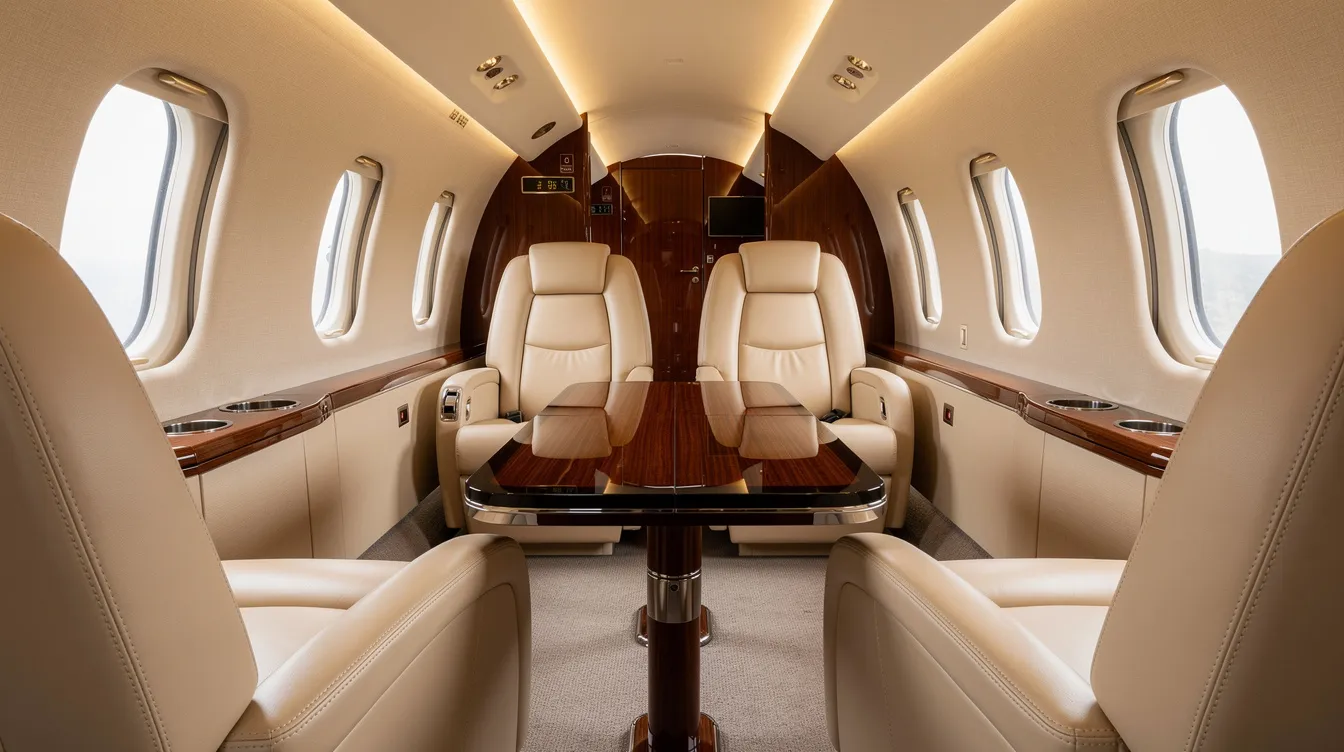
Many travelers view the cabin as an extension of the office, not simply a luxury space. Private jet passengers enjoy ultimate privacy and customizable service onboard, and private jets provide a confidential work environment for meetings.
Heavy and ultra-long-range cabins often include lie-flat or fully flat sleeping arrangements, dedicated workspaces, connectivity for email and calls, and separate seating zones for private discussions or family travel. Private flights allow for personalized catering and flexible schedules, with menus aligned to dietary requirements and sleep plans.
Eastbound overnight flights are often used for rest before morning meetings in London, Zurich, or Frankfurt. Westbound returns often become debrief sessions, planning meetings, or quiet work blocks.
Europe’s key private jet hubs and niche destinations
Europe is one of the densest business aviation markets in the world. Major hubs include Paris Le Bourget, London Farnborough and Luton, Geneva, and Zurich, each supporting private charter flights, corporate movements, and onward connections.
Lifestyle and seasonal destinations include Nice and Cannes–Mandelieu for the Côte d’Azur, Olbia and Cagliari for Sardinia, Ibiza and Palma de Mallorca for the Balearics, and Samedan near St. Moritz for ski trips. Helicopter transfers are often coordinated from these hubs when road time is inefficient.
Private flights offer direct access to over 984 airports, giving travelers options beyond commercial airlines. Light jets and very light jets are especially efficient for intra-European legs after the transatlantic sector. FLYT can combine an ultra-long-range aircraft across the Atlantic with smaller aircraft in Europe under one coordinated private jet travel plan.
Business travel efficiency: why executives choose private jets to Europe
For executives, time and predictability often matter more than marginal savings. Private aviation allows for customizable itineraries and on-demand scheduling, while commercial airlines impose fixed departure times and connection risk.
Private jets remove common friction: no fixed schedules, easier short-notice changes, access to regional airports closer to meetings, and fewer overnight stays created by limited airline schedules. A New York–London–Munich–Geneva–New York itinerary might require four or five separate one-way charters or commercial segments, but FLYT can plan it as one integrated private itinerary.
Empty leg flights can save travelers 30% to 75% on charter costs, and empty leg flights can save 30% to 75% on costs when timing aligns. Shared charters reduce costs by splitting expenses among passengers, though they reduce schedule control. Short leg fees may apply on brief intra-Europe sectors, but choosing smaller airports can reduce landing fees significantly.
Planning your private jet trip to Europe with FLYT
Approach a private plane to Europe as an end-to-end project: aircraft selection, routing, customs, ground connections, catering, and schedule protection. Booking a private jet can be done online in under a minute, but complex transatlantic travel benefits from proper planning.
Start by defining key dates, cities, non-negotiable meetings, and arrival windows. Discuss departure airports such as Teterboro versus White Plains or Van Nuys versus LAX. Then select the aircraft category based on passengers, luggage, nonstop preference, and total cost.
Private jet flights typically require 2-3 weeks' advance booking during peak seasons. Chartering an international flight ideally requires booking two to four weeks in advance. Booking early during high season can lower total costs, especially around June–August holidays, Monaco, Cannes, Davos, and late December.
FLYT’s membership team can model combinations: ultra-long range for North America–Europe, then light jets for regional hops. The goal is not simply to fly private, but to structure private aviation around efficiency, transparent pricing, and access without ownership complexity. Learn more about FLYT’s asset-light floating fleet, AI fleet engine, and charter volatility protection to understand how we deliver smarter private aviation.

Frequently Asked Questions: Private Plane to Europe
Can I fly directly from any US city to Europe on a private jet?
Not always. Nonstop capability depends on flight distance, aircraft category, payload, winds, and runway performance. East Coast cities such as New York or Boston can usually reach London, Paris, or Geneva nonstop on heavy or ultra-long-range jets.
From the West Coast or some Southern routes, FLYT may recommend an ultra-long-range aircraft or a technical fuel stop in Gander or Keflavík when it makes operational sense.
How far in advance should I plan a private jet trip to Europe?
For peak periods, plan at least 2–3 weeks ahead. Earlier planning improves access to preferred aircraft, optimal slots, and better routing at busy European airports.
Last-minute flights are often possible, but aircraft availability, permits, and handling windows become more constrained.
What documents do I need when flying private to Europe?
Standard travel rules still apply. Every passenger needs a valid passport, visas where required, and sometimes proof of accommodation or onward travel, depending on the country.
FLYT’s concierge team assists with advance passenger information, API submissions, handlers, and border coordination so the process remains straightforward.
Can I bring pets or special equipment on a private jet to Europe?
Yes, pets, ski bags, golf clubs, instruments, and professional equipment are typically possible, subject to aircraft weight, balance, cabin rules, and destination regulations.
FLYT helps choose an aircraft with appropriate baggage space and coordinates pet documentation or health certificates required by European authorities.
Is a private jet membership worth it if I only fly to Europe a few times a year?
Membership is most efficient when a traveler combines several transatlantic trips with regional flying during the year. Fixed hourly rates, fleet interchange, and concierge support create predictability across different missions.
Occasional Europe-only travelers may compare FLYT membership against pure on-demand charter, then model actual flight hours before deciding. Explore a membership model designed around flexible, transparent private jet access without the complexity of ownership.
For more details, visit our FAQ, how it works, and contact us pages to learn how FLYT approaches flexible private aviation access.

Conclusion: Experience smarter transatlantic travel with FLYT
Choosing a private plane to Europe is more than a flight—it's a strategic decision to optimize time, predictability, and flexibility. FLYT’s membership model offers a modern alternative to traditional ownership, combining fixed hourly rates, global fleet interchange, and concierge-level support. This asset-light approach removes the complexities of ownership while providing seamless access to premium aircraft tailored for transatlantic travel.
From managing landing permits and ground transportation to coordinating customs and optimizing routing, FLYT ensures every detail is handled with operational precision. Whether crossing the Atlantic on an ultra-long-range jet or connecting regional European destinations, members benefit from transparent pricing and the freedom to customize their itinerary.
Discover how FLYT redefines private aviation by delivering smarter, more efficient access to Europe without ownership burdens. Explore a membership model designed around flexibility, transparency, and global reach at www.flyt.com.