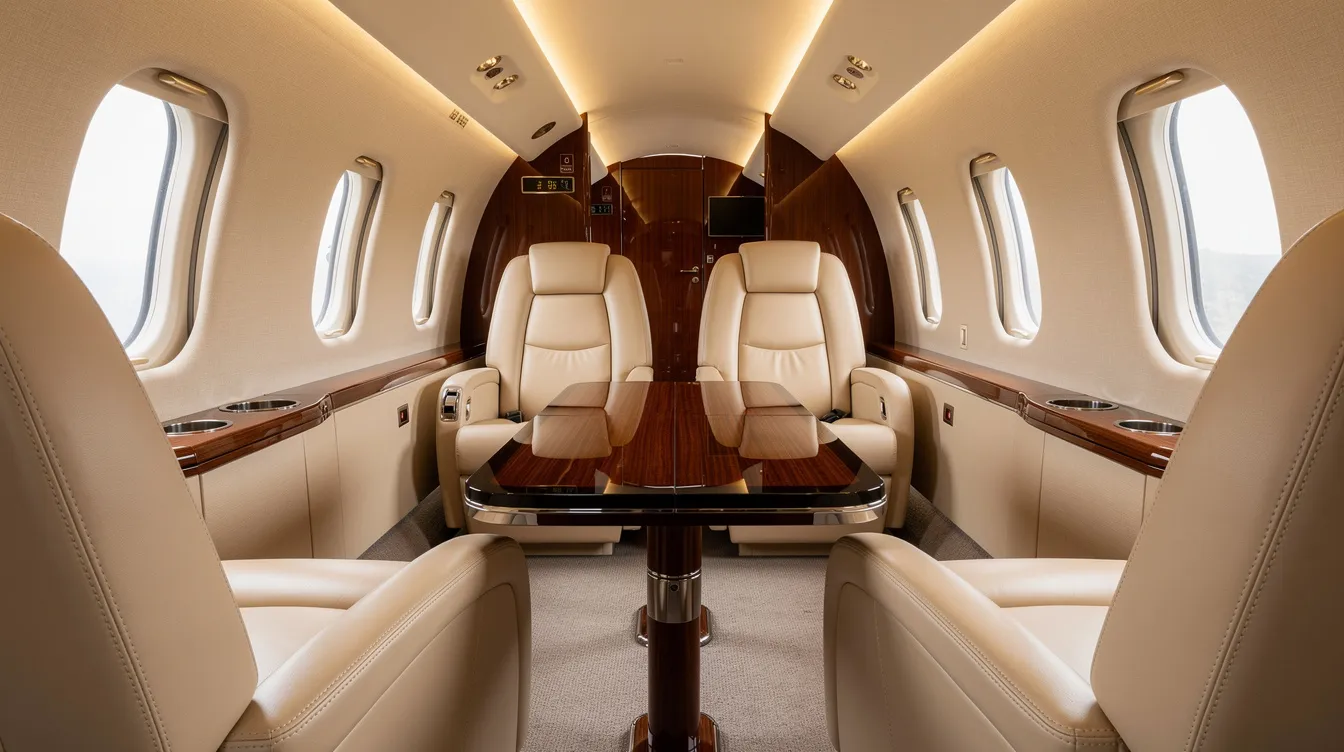
The phrase "private plane tickets" gets searched thousands of times each month, but the concept behind it has changed significantly. In 2026, buying a private plane ticket rarely means purchasing a single seat on a fixed schedule. Instead, it means accessing a private jet charter flight, purchasing membership hours, or taking advantage of an empty leg segment. For frequent travelers who value time, privacy, and schedule control, understanding how these options work - and how to optimize them - is the difference between overpaying and flying efficiently.
This guide is for frequent travelers, executives, and families considering private jet travel options. Choosing the right access model can save significant time and money. By understanding the modern landscape of private plane ticket options, you can make informed decisions that maximize convenience, flexibility, and value—whether you’re flying for business or leisure.
Key takeaways
Private plane tickets today refer to on-demand private jet charter, membership-based access, and empty leg flights rather than traditional airline-style seat purchases. There is no standardized per-seat ticket in private aviation.
FLYT's membership model delivers predictable, fixed hourly rates without requiring aircraft ownership or large jet card prepayments, giving members budget clarity similar to buying a ticket.
Charter costs typically range from $2,000 to $15,000 per hour, depending on aircraft type, and indicative pricing is usually available within minutes once trip details are defined.
Travelers can reduce costs by choosing the right aircraft type for each mission, staying flexible on timing and routing, and using empty leg flights when schedules align.
FLYT is positioned as a membership-first solution for executives and frequent travelers who want global private jet access, fleet interchange across aircraft categories, and concierge support - without the complexity of ownership.
What "private plane tickets" really mean in 2026
There is no standard ticket in private aviation, the way there is on commercial airlines like Delta Air Lines. When someone refers to a private plane ticket, they are typically describing one of several access models, each structured around chartering or reserving an entire aircraft rather than purchasing a single seat on a published route.
Here is what the key terms actually mean:
A private jet charter is the most common model. You rent the entire aircraft for your exclusive use on a specific trip, paying for the full plane rather than per passenger. On-demand charters allow booking flights only when needed without long-term commitments.
A charter flight or private charter follows the same principle. The aircraft operates on your schedule, from your chosen airports, with your passenger list.
Empty leg flights are repositioning segments where a private jet is flying without passengers to its next assignment. These are often available at steep discounts, though schedules are less flexible.
A private jet membership or jet card provides pre-purchased hours or subscription-based access at fixed hourly rates, smoothing out the variable pricing of individual charters.
To make this concrete: suppose you want to fly from New York-Teterboro to Miami-Opa-locka on a light jet in October 2026. You would pay for the whole aircraft, not a seat. With a flight time of roughly 2.5 to 3 hours at an hourly rate of $4,500 to $6,500, the one-way cost might land around $12,000 to $20,000, plus positioning, handling, and fuel surcharges. One-way charters offer flexibility for uncertain return plans, and private jet travel allows access to smaller airports than commercial flights, which often means less ground time on both ends.
The core value is control. You choose the departure time, the routing, the airports, and the aircraft type. That is what separates a private plane ticket from a commercial one.
How private jet charter services work
Chartering a private jet involves more moving pieces than booking a commercial flight, but modern platforms have compressed much of the complexity into a fast, transparent process. Private jets can access over 20,000 unique aircraft worldwide and operate from more than 5,000 airports globally, giving travelers enormous flexibility.
You start with a request and quote. Provide your origin, destination, dates, passenger count, and baggage needs. Platforms and operators return indicative pricing - often within minutes - covering thousands of available private jets globally.
Aircraft size is determined by passenger and luggage capacity requirements. Whether the jet is already positioned nearby or needs to deadhead to your departure point directly affects charter costs. Private jets can operate from shorter runways than commercial airlines, expanding airport options.
Operators audited by third-party companies enhance safety standards, with designations such as IS-BAO Stage 3 or ARGUS Platinum signaling high operational quality.
Confirmation and logistics come next. Once a quote is accepted, contracts are signed, and the operator handles flight permits, crew scheduling, catering, ground handling, and customs or immigration coordination for international travel.
Charter flights can be arranged within three hours of booking in many cases, providing last-minute flexibility. Fuel stops for private jets take an average of 30 to 40 minutes when required.
Day-of operations are streamlined. You depart from a Fixed Base Operator or private terminal, not a crowded commercial terminal. Identity and security checks are faster, baggage is handled more flexibly, and boarding takes minutes.
Roles matter in this process. A charter operator owns and operates the aircraft, managing crew and maintenance. A broker aggregates multiple operators to compare charter pricing and aircraft availability across a wider network. A membership platform like FLYT combines favorable fixed-rate structures with fleet interchange, concierge support, and prioritized scheduling - providing access to a broader, quality-assured fleet without the inconsistency that sometimes comes with brokered flights.
Key decision points for the traveler include departure time flexibility, airport choices, passenger count, baggage volume, and preferred aircraft types - from turboprops and light jets to heavy and ultra-long-range categories.
Private plane ticket pricing: what really drives the cost
Private charter pricing is not driven by seat count like commercial tickets. Instead, it is shaped by aircraft category, flight time, repositioning legs, airport fees, and timing. Understanding these drivers helps travelers make smarter decisions and avoid overpaying.
Here are the primary cost components:
The aircraft category is the largest variable. Charter rates for a King Air 350 turboprop start in the mid-$2,000s per hour. Light jets typically run $3,500 to $6,500 per hour. Midsized cabin jets like the Citation XLS start at $7,000 per hour. Ultra-long-range jets like the Gulfstream G-550 start at $12,000 per hour. Each step up adds range, cabin space, and amenities - but also fuel burn and crew costs.
Repositioning fees add up. If the jet has to fly empty to your departure location, that deadhead leg is billed to you. Repositioning can add 20 to 40 percent to the base charter cost in many cases.
Airport fees, handling charges, and taxes vary. Ramp fees, landing charges, customs, and fuel surcharges are particularly significant at smaller airports or on international routes.
Minimum flight hours apply. Even for short hops, many operators bill a minimum of 1.5 to 2 hours. For example, turboprops and light jets are often charged at a 1.7-hour minimum even if the actual flight time is only one hour.
Private jet charter costs fluctuate on peak travel days. Holidays, major events, and high-demand corridors can push seasonal surcharges up 10 to 30 percent. Flexibility with booking can significantly reduce private aviation costs.
Booking empty leg flights can be a cost-saving strategy. These repositioning segments often carry discounts of 40 to 75 percent off standard charter pricing, though they depend on the primary charter's schedule and may change or cancel.
To illustrate: a light jet from Los Angeles to Las Vegas (roughly one hour) might cost $6,000 to $10,000. A heavy or ultra-long-range jet from New York to London (roughly seven hours) could run $80,000 to $150,000 or more.
For frequent travelers, a membership model like FLYT introduces fixed hourly rates that turn this variable charter pricing into more predictable costs across a full year - closer to a "ticket-like" budgeting experience.
Choosing the right aircraft types for your private plane ticket
Selecting the right aircraft is one of the highest-leverage decisions for controlling cost, comfort, and feasibility. The right jet is the one that matches your mission profile: distance, passenger count, runway length, cabin needs, and budget.
Here is how the main aircraft types break down:
Aircraft category | Typical models | Flight duration range | Passenger capacity | Hourly charter rate (2026) | Ideal use cases |
|---|
Turboprops | King Air 350, Pilatus PC-12 | Under 2 hours | 6-9 | $2,000 - $3,500 | Short regional flights, island hops |
Light jets | Phenom 300, Citation CJ3+ | Up to 3-4 hours | 6-8 | $4,500 - $6,500 | Time-sensitive business travel |
Midsize jets | Citation XLS, Hawker 800XP | Up to 4.5 hours | 6-9 | $6,500 - $9,000 | Coast-to-coast, more luggage capacity |
Super midsize jets | Challenger 3500, Praetor 600 | Long domestic, near-international | 8-10 | $8,000 - $11,000 | High-frequency corporate shuttles |
Heavy jets | Gulfstream G600, Challenger 650 | Long international | 10-16 | $10,000 - $16,000 | Nonstop transatlantic, luxury cabins |
Ultra-long-range jets | Global 6500, Gulfstream G700 | 6,500+ nautical miles | 12-19 | $14,000 - $22,000 | Intercontinental nonstop missions |
Aircraft type also influences aircraft availability. Heavy and ultra-long-range jets are fewer in number and tend to be booked well in advance. Light jets and turboprops are more plentiful. Smaller aircraft can also access airfields that larger jets cannot, saving ground time at both ends.
Membership vs one-off private plane tickets
Private plane access generally falls into four distinct purchasing models: on-demand charter, jet cards, fractional ownership, and membership. Frequent flyers often move from ad hoc charter flights toward structured access for better cost control and scheduling predictability.
Here is how the models compare:
An on-demand charter is most flexible for occasional flyers under 25 hours per year. No commitment, no prepayment. The trade-off is variable pricing, higher margins, and repositioning fees during peak demand.
Jet cards provide guaranteed availability at fixed hourly rates without ownership commitments. They are ideal for moderate flyers flying 25 to 100 hours annually. Hours are typically pre-purchased in blocks and may expire after a year.
Fractional ownership involves owning a share of an aircraft for guaranteed access. It requires a capital commitment of $400,000 or more and suits frequent flyers traveling over 100 hours annually. Whole aircraft ownership offers maximum control but involves high costs, including maintenance, crew, hangaring, and depreciation. Flying 80 to 150 hours annually often makes chartering cost-effective compared to full ownership.
For fewer than 50 to 80 flight hours a year, charters or jet cards are generally preferred over fractional shares.
FLYT's membership operates differently. It offers fixed hourly rates with global aircraft fleet interchange, meaning members can fly a light jet one day and a heavy jet the next, depending on the mission. The model is asset-light - see asset-light floating fleet - and includes concierge-level trip support. A defined budget is essential to narrow down private aviation options, and FLYT's structure helps members build that budget with clarity.
For someone flying roughly 100 hours per year across the US and Europe, membership provides more predictable annual costs than on-demand charters, more fleet flexibility than a jet card, and far less capital exposure than fractional ownership.
How FLYT optimizes your private plane tickets
FLYT functions as a strategic partner rather than a simple booking platform. Its membership-based model focuses on efficient, asset-light private aviation - providing access without ownership complexity while keeping costs transparent.
FLYT's risk pool model and floating fleet approach balance aircraft availability and pricing across its member base. By distributing demand across a contracted fleet sourced globally, FLYT reduces deadhead repositioning and improves leg flight efficiency. Members can access a global fleet of over 20,000 aircraft worldwide, with flexibility that avoids the costs of ownership.
Fleet interchange means members are not locked into one aircraft category. A member can fly a light jet for a short hop and a super midsize for a cross-country route, all under the same membership. Members enjoy fixed hourly rates for flights regardless of which category they select for a given trip. Private jet memberships provide flexible access to a variety of aircraft.
FLYT's concierge team optimizes each charter flight by suggesting better departure airports, aligning aircraft type to mission requirements, and flagging suitable empty leg flights when they match member schedules. Concierge support is included in private jet membership services, and that personalized service extends to arranging ground handling, catering, and permits for international travel.
Consider a multi-city corporate trip: New York to Chicago to Austin to New York over three days. Under one-off charters, you might pay repositioning fees between each leg and face higher per-hour rates from underutilization. With FLYT, a midsize or super midsize jet is matched to the passenger count, routing is optimized to reduce idle time, and the fixed hourly rate eliminates cost surprises.
Learn more about how FLYT’s AI fleet engine and charter volatility protection enhance member experience.

Booking your first private plane ticket with FLYT
Getting started with FLYT follows a straightforward path designed to match your travel profile to the right membership structure before your first flight.
The process begins with an initial consultation. FLYT's team reviews your typical routes, annual flight frequency, passenger patterns, preferred aircraft types, and flexibility around dates and destinations. This travel experience assessment ensures the membership tier fits your actual flying needs. Learn more about how it works.
To receive accurate charter pricing quickly, prepare details on your most common city pairs, typical passenger count, baggage requirements, and how much schedule flexibility you have. The more specific these details are, the faster FLYT can provide indicative costs through its platform and pricing tools. See pricing details for transparency.
For optimal aircraft availability on standard US and European routes, booking 5 to 10 days in advance typically secures competitive options. For peak dates - late December holidays, major events like CES in Las Vegas, or high-demand resort destinations - plan 2 to 4 weeks ahead. Booking for New Year's Eve travel, for example, should ideally begin three to four weeks in advance.
FLYT can also accommodate short-notice private flights. Charter flights can be arranged within three hours of booking in many cases, though late requests may narrow the range of available aircraft and increase repositioning costs.
After onboarding, members can search available charter options, contact FLYT's team directly by phone or through contact us, and book with the confidence that pricing is anchored to their fixed hourly rate plus transparent surcharges.
Business use cases: from executive trips to corporate shuttles
Private plane tickets serve specific operational functions for businesses, not just travel convenience. Private jets reduce ground time compared to commercial airlines, and that efficiency translates directly into productive hours recovered.
Executive roadshows and board meetings across multiple cities - New York, London, and Paris in a single week benefit from schedule control and the ability to modify flights on short notice. Aviation experts within FLYT's team can help structure these multi-leg trips for minimal downtime.
Recurring routes like weekly flights between Los Angeles and San Francisco, or London and Frankfurt, can be structured as corporate shuttles using light jets or turboprops. These routes are operated on a predictable schedule with consistent aircraft and crew.
For CFOs and travel managers, FLYT's business travel model with fixed hourly rates makes annual spend modeling straightforward. Rather than estimating against volatile spot charter rates, finance teams can budget against known hourly costs and transparent surcharges.
Operational benefits compound: fewer overnight stays, the ability to group meetings in a single trip, and reduced time lost in commercial terminals. When a team needs to depart from a smaller airport located closer to a client site, private flights accommodate that without the routing constraints of commercial carriers.
Leisure and family private plane tickets
Families and high-net-worth individuals use private jets for holidays, second-home trips, and last-minute weekend escapes. The value is time savings, flexibility, and privacy - not luxury for its own sake.
Common leisure routes include New York to Aspen, Los Angeles to Cabo San Lucas, and London to Nice. Aircraft types differ by distance: a turboprop or light jet works for a short regional hop, while a midsize or super midsize handles longer intercontinental legs during summer travel.
Practical considerations matter. Pets can fly in the cabin, sports equipment like skis and bikes can be accommodated within aircraft baggage limits, and strollers and extra luggage are handled without the restrictions of commercial check-in. Multi-generational travel may require a larger cabin - a heavy jet with a galley and rest areas can cater to the range of comfort needs across age groups.
Members can mix business and leisure travel under the same membership. Weekday corporate shuttles plus family trips during school holidays all operate under the same fixed hourly rate structure, simplifying budgeting and eliminating the "cost shock" that sometimes accompanies switching from business to leisure charter options.

Frequently asked questions about private plane tickets
How far in advance should I book a private jet charter?
For most routes in North America and Europe, booking 5 to 7 days ahead typically secures strong aircraft availability and competitive rates. Peak seasons and major events - late December holidays, city-specific conferences - may require 2 to 4 weeks of advance notice. FLYT can
What is the difference between a private jet charter and a private jet membership?
A private jet charter involves booking a single flight on demand with no long-term commitment, paying for the entire aircraft per trip. A private jet membership offers pre-purchased hours or subscription access at fixed hourly rates, providing cost predictability and fleet flexibility without ownership.
Can I bring pets on private plane tickets?
Yes, most private jets accommodate pets in the cabin. Policies vary by aircraft and operator, and a pet cleaning fee may apply. FLYT and similar services ensure pet-friendly options and handle any necessary arrangements.
How do empty leg flights work, and can I use them to save money?
Empty leg flights are repositioning trips where a private jet flies without passengers to its next assignment. They are often available at significant discounts but with limited scheduling flexibility. Travelers can use empty legs to reduce costs if their itinerary aligns with the jet’s repositioning route.
Are private jet charter operators subject to safety regulations?
Yes, private jet charter operators must hold an Air Carrier Certificate under FAA Part 135 or equivalent regulations, depending on jurisdiction. Many undergo third-party audits such as IS-BAO Stage 3 or ARGUS Platinum to ensure high safety standards.
What factors influence the cost of private plane tickets?
Costs depend on aircraft category, flight duration, repositioning legs, airport fees, minimum flight hours, and seasonal demand. Larger, longer-range jets cost more per hour. Repositioning fees and peak travel surcharges can also impact pricing.
How quickly can I book a private jet charter?
Many operators can arrange flights within three hours of booking, offering last-minute flexibility. However, availability and pricing may be more limited on short notice, especially for popular aircraft types or peak travel dates.
Conclusion
Private plane tickets in 2026 represent a strategic approach to private aviation, prioritizing flexibility, efficiency, and transparency over traditional ownership complexities. Whether through on-demand charters, memberships like FLYT’s fixed hourly rate model, or leveraging empty leg opportunities, travelers gain control over their journey with predictable costs and global access. For executives and frequent flyers, this modern access model delivers operational benefits, cost clarity, and concierge-level support, making private jet travel a smarter, more accessible option. Exploring these alternatives empowers travelers to optimize their time and resources while enjoying the premium experience private aviation offers—without the burdens of ownership.