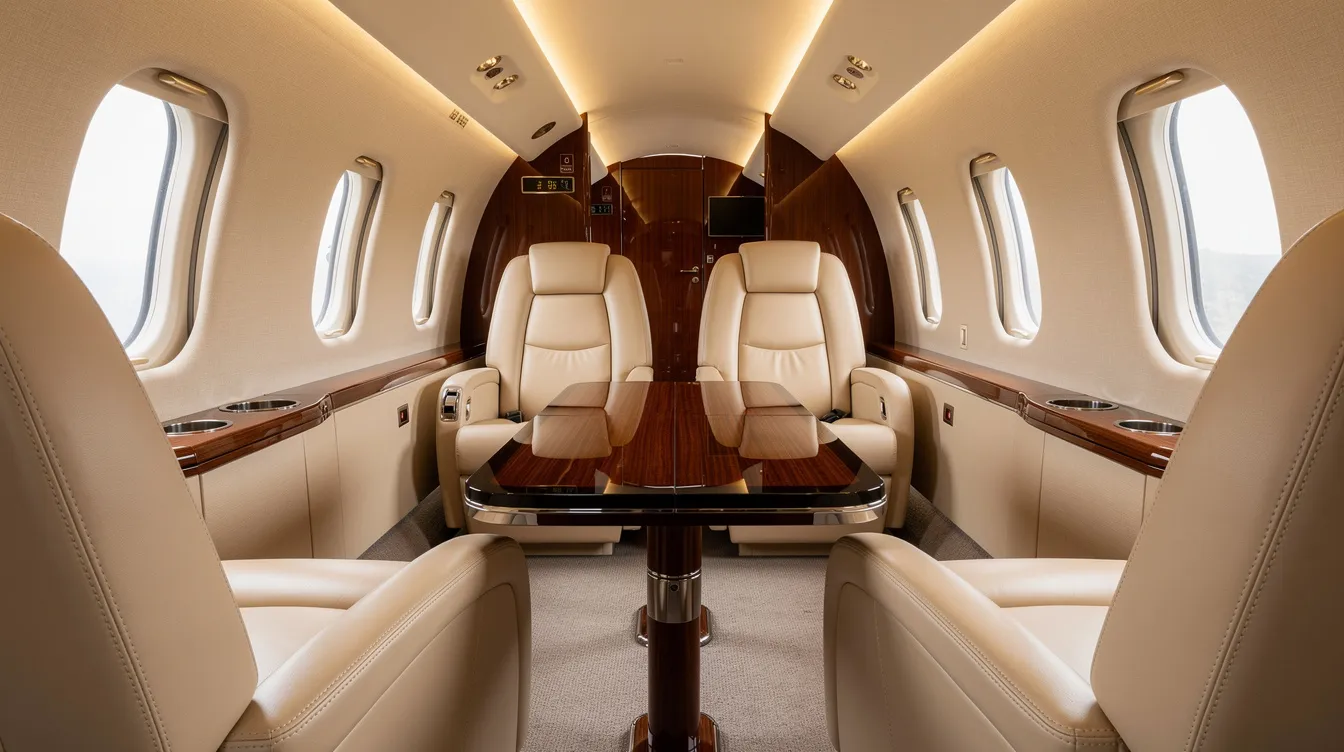
Private plane membership is redefining how executives and frequent travelers access private aviation. Rather than the traditional model of jet ownership, which demands significant capital and operational oversight, memberships offer a flexible and predictable alternative. By paying a structured fee, members gain access to a fleet of private aircraft with fixed hourly rates, concierge support, and global reach. This strategic approach eliminates the complexities and costs associated with ownership while providing the efficiency and reliability that today’s business and lifestyle demand.
In this article, we explore the mechanics of private jet memberships, their benefits, cost structures, and how companies like FLYT are innovating the space with asset-light, membership-first models designed for the modern traveler.
Key takeaways
Private plane membership is a subscription-based service for access to private aircraft, giving frequent travelers structured access without buying an entire jet.
Members enjoy guaranteed aircraft availability and fixed hourly rates, while FLYT focuses on transparent pricing, fleet interchange, and a floating asset-light model.
Private jet membership programs sit between charter, jet card products, fractional ownership, and full ownership, with lower operational burden and flexible aircraft access.
The main benefits are predictable cost, shorter booking windows, concierge services, global reach, and the ability to fly privately across changing business and personal needs.
What is private jet membership today?
Since 2020, private aviation demand has shifted from occasional charter toward structured access. Executives, founders, and families want private flights that are predictable, not a new negotiation every journey.
A private jet membership is a funded or contracted relationship that gives members priority access to private jets, fixed or capped hourly rates, and defined service rules. Private jet membership costs start around $50,000, while initial investments for memberships can exceed $500,000 depending on aircraft type, hours, destinations, and membership plans.
Unlike a one-off charter market booking, membership creates a repeatable travel experience. Members can book flights instantly via smartphone apps or concierge teams, bypass busy commercial terminals when using private jets, and use private aviation for business, family, or mixed trips.

How private jet membership programs work
Most private jet membership programs require a deposit or pre-purchased flight hours, and then the account is drawn down as you fly. Private plane memberships function similarly to prepaid debit cards or subscriptions.
Common structures include deposit-based membership, hours-based programs, and subscription-style plans. Most jet card programs offer a set number of flight hours, typically starting at 25 hours. Jet cards guarantee availability and lock in fixed hourly rates for members.
Operational terms matter. “Occupied hours” differ from total flight time because repositioning may be separate. In fact, 30% of private jet flights are repositioning flights. Membership programs include shorter booking windows for flights, often allowing short-notice requests within defined rules.
Members may receive capped hourly rates, preferred rates below market prices, and preferred rates below public pricing for flights. Programs offer priority fleet access even during peak travel seasons, though membership programs often feature peak-day constraints limiting availability. Members can join multiple waitlists for flight reservations when demand is high.
A strong program also protects members through safety standards, experienced pilots, highly trained crews, and vetted operator relationships. Evaluating fleet safety metrics is crucial when selecting a private aviation provider, especially because private aviation clubs operate under varying regulatory frameworks compared to commercial airlines, and the Federal Aviation Administration oversees different operating categories.
Types of private jet membership: charter, jet cards, and fractional ownership
Private jet membership is an umbrella term. The right model depends on commitment, schedule, access needs, and tolerance for restrictions.
Deposit-based membership or charter memberships use funded accounts with fixed or capped hourly rates and transparent terms. This can make flying private more accessible than ownership while preserving convenience and access.
Jet card programs involve the purchase of flight hours on a specific aircraft type or class. A NetJets card, for example, is commonly compared with other card programs. The benefit is a predictable hourly rate and access; the limitation can be blackout dates, blackout days, unused hours that may expire under certain conditions, fuel surcharges, handling fees, and positioning fees.
Fractional ownership means buying a share of a private jet rather than the entire jet. Well-known structures such as NetJets membership and NetJets programs can provide consistency, but fractional ownership behaves like a long-term commitment model with equity exposure, management fees, depreciation, and strict operational rules.
FLYT’s model remains asset-light: membership, not equity in a plane. Learn more about FLYT’s asset-light floating fleet.
Cost and pricing: what private jet membership really costs
The cost of private flying is never only the headline hourly rate. Full ownership includes crew staffing, maintenance, insurance, hangar, downtime, and aircraft management responsibilities.
Memberships simplify these variables. Memberships lock in fixed hourly rates to protect against volatile pricing, and capped hourly rates are common in private jet memberships. Hourly rates for private jet flights can reach $10,000, and large-cabin jets may cost more depending on range and mission.
Memberships often have additional costs such as fuel surcharges and handling fees. Programs involve significant upfront financial commitments and strict operational rules, so buyers should examine minimums, cancellation windows, peak pricing, and non-peak rules.
Compared with ownership, private plane membership can be a more cost-effective option than full ownership. Memberships require lower upfront investment than full ownership, eliminate responsibilities of aircraft ownership, and allow members to bypass operational complexities such as crew staffing and maintenance. Private jet ownership involves significant administrative burdens.
For a detailed breakdown, see FLYT’s pricing and charter volatility protection pages.
Comparison of private aviation access models
Feature | Full Ownership | Fractional Ownership | Jet Cards | Private Jet Membership (FLYT) |
|---|
Upfront investment | Very high | High | Moderate | Moderate to high |
Operational responsibilities | Full (crew, maintenance) | Shared | None | None |
Pricing | Variable, high | Fixed hourly + fees | Fixed hourly | Fixed hourly, capped rates |
Aircraft availability | Single aircraft | Fraction of aircraft | Fleet access, restrictions | Fleet access, priority availability |
Flexibility | High | Medium | Medium | High |
Peak day access | Guaranteed | Often guaranteed | May have blackout dates | Priority access, fewer restrictions |
Concierge services | Limited by the owner | Included | Included | Included |
Global reach | Limited by aircraft | Limited by aircraft | Limited by the fleet | Global, floating fleet model |
Fleet flexibility and private aviation access
Fleet flexibility matters because one aircraft rarely fits every trip. A short hop to Las Vegas may need a light jet, while a transatlantic flight requires larger jets with greater range.
Aircraft fleet interchange lets members switch between different aircraft sizes per trip requirements. Private jet membership provides access to an entire fleet, and private jet memberships provide access to a national fleet of aircraft. Members can access a national fleet of aircraft, and access to a national fleet ensures greater aircraft availability.
FLYT uses a floating risk pool model, allocating aircraft dynamically rather than tying customers to one tail number. Private jet memberships offer greater fleet availability than ownership because availability is based on a managed fleet, not one specific asset. Explore FLYT’s aircraft interchange and risk pool models.

Membership vs ownership, fractional, jet cards, and on-demand charter
The real question is not “private jet or no private jet.” It is the structure that fits your capital, flight needs, and risk profile.
Full ownership offers maximum control but requires the highest capital and management complexity. Fractional ownership lowers capital versus buying an entire jet, but adds long-term commitments. Jet cards give prepaid access with some restrictions. On-demand charter is flexible, but pricing and aircraft standards can vary. Membership models like FLYT provide no ownership, fixed hourly rates, global access, concierge support, and flexible access.
For a 75-hour EU–US executive, membership may outperform charter through predictable pricing and availability. For a 120-hour family using several airports, membership can simplify aircraft choice and schedule changes. For 200+ hours, ownership or fractional may be reviewed, but only after usage patterns are clear.
Learn more about FLYT vs charter, FLYT vs jet cards, FLYT vs fractional, and FLYT vs brokers vs jet cards.
Inside a FLYT private jet membership
FLYT is a membership-first private aviation company built around operational efficiency, transparent pricing, and global reach rather than aircraft sales.
FLYT membership plans are structured around fixed hourly rates across aircraft categories, a funded balance rather than equity, and access to a curated network of private jets. Members choose the aircraft size by mission: light jets for regional trips, midsize jets for cross-country routes, and large-cabin aircraft for international private flights.
FLYT emphasizes clear pricing, defined rules around peak periods, and no surprise repositioning charges on covered missions. Concierge services support preferences, ground transport, itinerary changes, passengers, catering, and schedule adjustments. Discover more about FLYT’s platform and how it works.
Exclusive benefits and travel experience with membership
FLYT’s exclusive benefits are designed for reliability, not decoration. Members enjoy priority access during busy periods, consistent cabin standards, and access to vetted private aviation services.
Members enjoy exclusive partner offers and premium brand access, and memberships often include exclusive benefits for luxury travel essentials. Members enjoy exclusive offers from premium brands and partners, but the core benefit is time control.
The difference from an ad-hoc charter is the process. Known contacts, saved preferences, and concierge coordination make each trip more personal and less transactional. Learn about FLYT’s premiums and advantages.

How to decide if a private jet membership is right for you
Think like an investor. Compare time saved, capital committed, cost predictability, and operational simplicity.
Review annual hours, typical destinations, number of passengers, required aircraft type, need for national or global coverage, and whether you need guaranteed availability. Around 50–75 hours per year, membership often becomes more compelling than pure charter. At very low usage, charter may work. At very high usage, compare membership, fractional, and ownership.
Ask whether the provider is a direct air carrier or works through an operator network, how aircraft are operated, what safety standards apply, whether unused hours expire, and how availability works on peak days.
If you are interested, contact FLYT to explore a membership plan built around how you actually fly.
FAQ: private jet membership and FLYT
How many hours a year do I need to fly for a private jet membership to make sense?
Membership often becomes compelling around 50–75 hours per year, depending on routes, aircraft class, and booking patterns. For only a few trips, a charter may cost less.
For 200+ hours, a deeper comparison across membership, fractional ownership, and ownership is useful. FLYT can model real trips against different programs. Visit the FAQ for more details.
Can I use one private jet membership for both business and personal travel?
Yes. Many members use one membership for board meetings, site visits, family holidays, and personal weekends.
The important point is record-keeping. FLYT can help tag trips by traveler, purpose, company, or cost center for easier reporting.
What happens if I need to change or cancel a flight at the last minute?
Membership creates defined change and cancellation terms instead of renegotiating every flight. Last-minute changes may still create incremental cost due to weather, positioning, or availability.
FLYT’s concierge team focuses on protecting the member’s schedule and finding the closest operationally efficient alternative.
Is private jet membership suitable for international and transatlantic flights?
Yes. Membership is not limited to regional trips. Larger aircraft can support international and transatlantic missions, with different hourly rate bands.
Global private aviation also requires customs, permits, slots, airport coordination, and ground logistics. FLYT’s global reach is designed for that complexity.
What should I ask before joining a private jet membership?
Ask how guaranteed availability is defined, what aircraft are included, whether pricing can change, what restrictions apply, and how peak demand is handled.
Also ask about safety audits, pilots, average fleet age, refundability, service escalation, and whether the program supports the freedom to fly across the world with limited limitations.
Conclusion
Private plane membership offers a strategic, efficient alternative to traditional private jet ownership, blending flexibility, predictability, and global access without the complexities of managing an aircraft. By choosing a membership model like FLYT, executives and frequent travelers gain transparent pricing with fixed hourly rates, access to a dynamic fleet through aircraft interchange, and concierge-level support tailored to their unique travel needs. This asset-light approach prioritizes operational efficiency and cost control, making private aviation more accessible and manageable for discerning travelers.
Explore how FLYT’s membership plans provide a smarter way to fly privately—offering global reach, priority availability, and a premium experience without ownership burdens. Discover a membership model designed around your schedule and preferences, delivering private aviation with clarity and confidence.
Learn more about flexible private aviation access at FLYT.com.