For high-net-worth individuals and business executives who already fly private domestically, the jump to international routes can seem operationally daunting. Different airspace rules, customs procedures, permit timelines, and aircraft range considerations add layers that don't exist on a New York-to-Miami leg. But with the right membership structure, an international private-plane flight becomes nearly as straightforward as a domestic hop.
Key takeaways
FLYT memberships give frequent travelers predictable hourly rates and full concierge support for international private jet flights, removing the operational burden from passengers.
Flying private internationally still requires passports, permits, and customs clearance, but FLYT manages these regulatory requirements behind the scenes.
Long-range jets in the FLYT ecosystem can connect city pairs like New York to London or New York to São Paulo nonstop, with optimized fuel stops where needed.
Membership-based access simplifies pricing, aircraft selection, and flight planning compared with ownership, fractional shares, or ad-hoc charter. Learn more about how it works.
This article walks through the airport experience, customs, baggage, timing, and how FLYT coordinates complex international itineraries.

Your private international airport experience
Picture departing from Teterboro, conveniently located minutes from Manhattan, instead of navigating the crowds at JFK. Private jets depart through Fixed Base Operators, or FBOs, which function as private terminals rather than main terminals. Members skip crowded terminals and TSA lines entirely.
An FBO is essentially a private terminal: quiet lounges, dedicated workspaces, a concierge desk, and direct car-to-jet access. For international flights, check-in still occurs here, with FLYT's partner ground handlers pre-arranging paperwork and manifest checks. Luggage, passports, and any special items are verified while passengers have coffee, take calls, or brief their team in a private lounge.
Private jets have access to thousands more airports than commercial airlines, including smaller, less congested ones that may be closer to your ultimate destination.FLYT coordinates ground transportation on both sides of the journey, so the door-to-door experience stays seamless. The contrast with commercial air travel is not just about comfort. It is about a more convenient airport process that saves hours otherwise lost to queues.
Yes, private planes can fly internationally – here is what changes
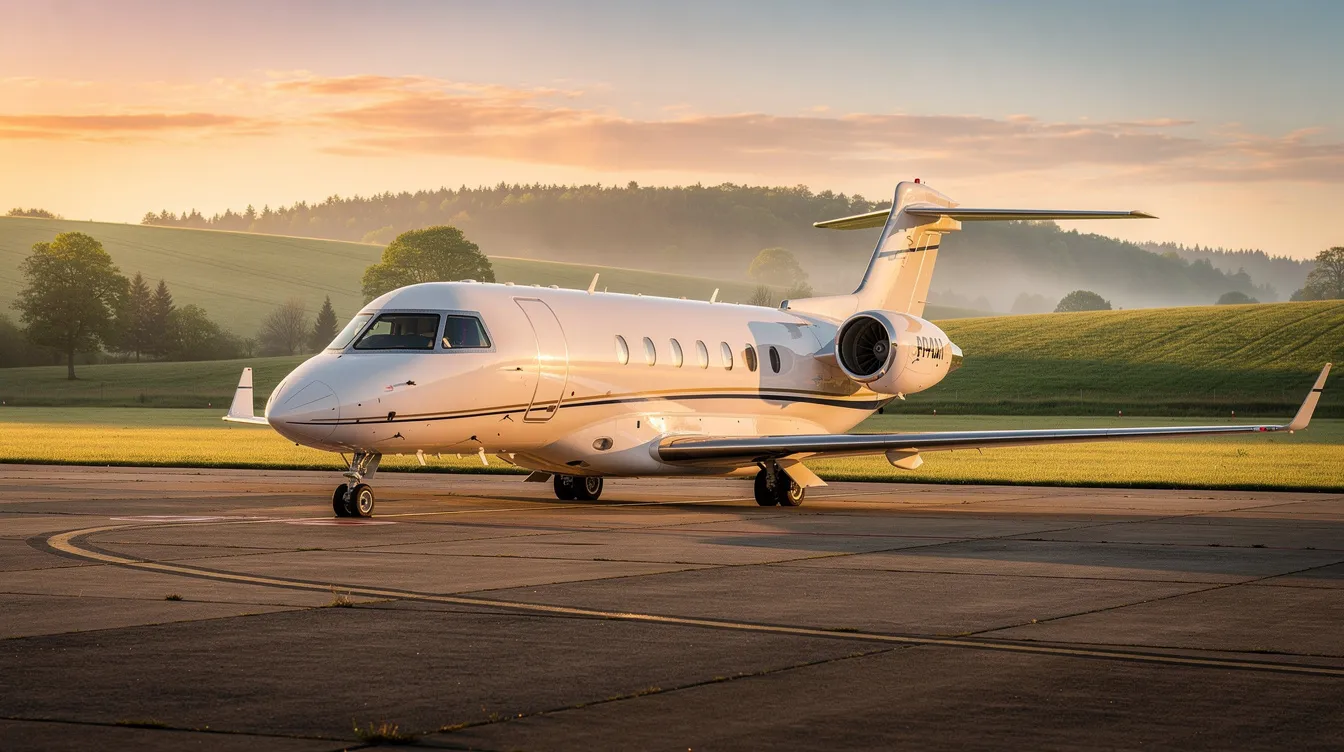
Modern private jets routinely fly internationally. Super midsize aircraft cover transcontinental and shorter transatlantic routes, while long-range jets handle sectors across the Atlantic, to Latin America, and between key hubs in Europe, the Middle East, and parts of Asia. Private jets can fly internationally with proper permits and clearances, and they can do so with fewer logistical hurdles than most travelers expect.
Under the Chicago Convention, every country controls its airspace. This means international flights require overflight permits for transit and landing permits for arrival. All passengers on international flights must possess valid passports and visas where required. Private jets must also comply with international safety equipment standards and be equipped with the required safety gear, just as commercial airlines do.
FLYT's operations team handles permit applications, which can require anywhere from a few days to four to six weeks, depending on the country. Members simply confirm traveler details and desired timing. FLYT then advises on the right aircraft category, matching range to route so a New York to London sector gets a different recommendation than New York to Tokyo, and aircraft size is not subject to specific size restrictions, so long as permit and safety requirements are met.
Packing for an international private flight
Private jets often offer more flexible baggage options than commercial flights, but limits depend on aircraft size and range profile. A heavy jet or long-range aircraft like the Global 7500 offers roughly 195 cubic feet of baggage space. A super midsize jet comfortably handles eight to ten passengers with checked bags and carry-ons on most routes.
Customs rules still govern what can be brought across borders: cash thresholds, restricted goods, high-value items, and professional equipment all apply. Members should flag in advance if traveling with pets, fine art, samples, or bulky sports equipment so FLYT can confirm both space and regulatory requirements.
FLYT coordinates with operators to keep luggage on the same aircraft throughout, reducing the risk of bags being separated during fuel stops or tech stops.
When to arrive for an international private flight
For most international flights, FLYT recommends members arrive 45 to 60 minutes before departure at the private terminal. This window covers identity checks, customs pre-review where applicable, baggage loading, and a brief conversation with the captain about route and weather.
Compare that with commercial international travel, where travelers might arrive two to three hours early and still face queues at security, check-in, and immigration. In some configurations, private jet passengers can check in just 15 minutes before departure on domestic legs.
For destinations with more complex procedures, such as certain Middle Eastern or African airports, FLYT may advise a slightly earlier arrival and will communicate this in advance. On return legs, arrival timing for customs and immigration in the US or Europe is also coordinated so the process remains predictable.

Customs clearance and immigration made manageable
Customs clearance still happens on private flights, but the setting is quieter and more controlled. Private jets allow for quicker customs clearance on the tarmac. Typical scenarios include officers meeting the aircraft at the ramp, a brief inspection and passport check on board, or a short walk to a private customs room inside the FBO.
Passengers need valid passports, required visas, sometimes advance passenger information forms, and accurate declarations for cash and goods. FLYT and its operators pre-submit passenger information and flight details to local authorities through systems like eAPIS, reducing time on arrival and minimizing surprises.
Pet entry rules, agricultural declarations, and country-specific health requirements can complicate things. FLYT coordinates with local agents to ensure compliance in destinations like the EU, UK, or Caribbean, where regulations vary significantly by country.
Flight planning, fuel stops, and in-flight experience
International flight planning differs from domestic in meaningful ways: longer routes, oceanic tracks, airspace coordination, and more variables around weather and winds. Range and payload interact directly. More passengers and baggage can reduce the nonstop range, sometimes making a fuel stop sensible even for long-range jets.
Consider two routes. New York to London flies nonstop on a long-range jet, roughly 3,500 nautical miles. New York to Athens, at roughly 4,600 nautical miles, may include a planned fuel stop in Shannon or Keflavik, depending on conditions. The Global 7500 offers approximately 7,700 nautical miles of ferry range and around 6,600 with full payload, making sectors like New York to Tokyo possible nonstop. Private jets can complete transatlantic flights nonstop with the right aircraft.
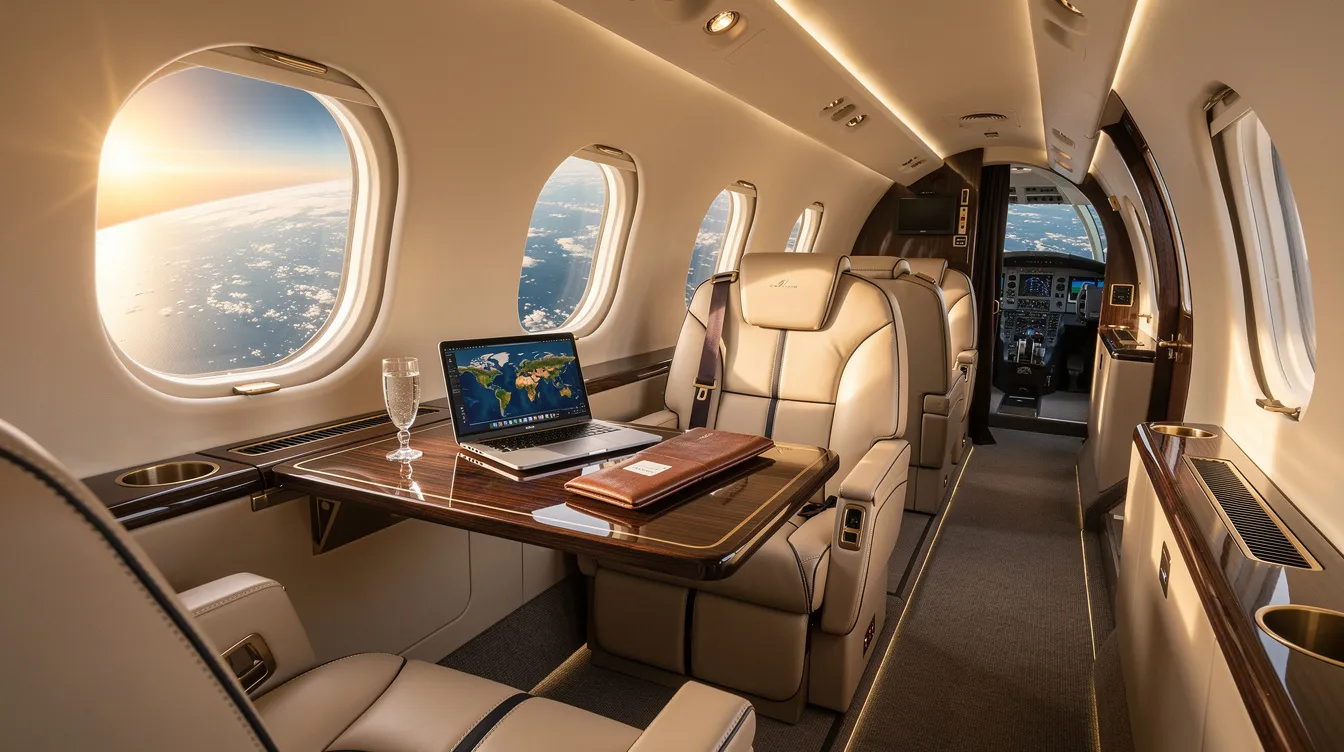
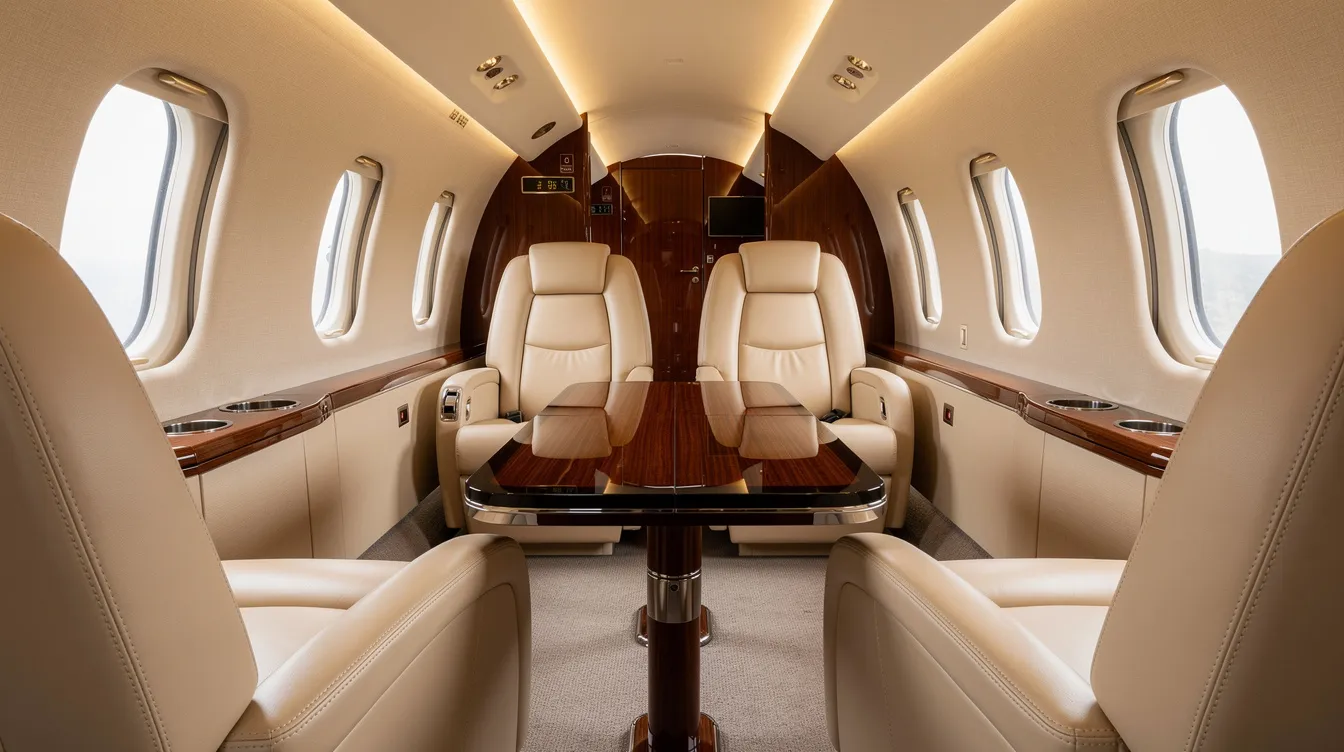
FLYT works with a floating, asset-light fleet, selecting aircraft with appropriate range, performance, and cabin layout for each mission. Cabins of private jets are designed for comfort and feature tailored amenities. Expect lie-flat seating in larger cabins, Wi-Fi suitable for email and video calls, curated catering, and the ability to configure space for work, sleep, or family time. Private jets offer personalized in-flight services that create a customized travel experience tailored to individual preferences.
Typical international flight ranges and aircraft examples
Route example | Approximate distance (nautical miles) | Suggested aircraft type | Notes |
|---|
New York to London | 3,500 | Long range jet (e.g., Global 7500) | Nonstop possible |
New York to São Paulo | 4,700 | Heavy jet or ultra-long-range | Nonstop possible |
New York to Athens | 4,600 | Long-range jet with a fuel stop | Fuel stop in Shannon or Keflavik |
New York to Nassau | 1,100 | Midsize or super midsize jet | Short international flight |
New York to Toronto | 500 | Light jet | Short cross-border hop |

Membership vs. one-off international jet charter
Many travelers' first experience flying internationally was through an ad hoc air charter. Participating in private jet travel often involves booking through a charter broker, which means variable pricing, repositioning fees, opaque surcharges, and inconsistent aircraft quality.
FLYT's membership model replaces price-per-trip negotiations with fixed hourly rates and transparent terms, with the highest level of operational support for international trips. Private jet membership offers fixed hourly rates for flights, allowing CFOs and founders to forecast travel spend accurately. For international use, members get priority access to suitable long-range aircraft, fleet interchange if mission profiles change, and a risk pool model that avoids the capital lock-up of ownership.
Compared with fractional ownership, membership avoids asset residual value risk. Compared with jet cards, it offers more flexibility to scale flying up or down year to year. Research suggests that above roughly 20 to 30 flight hours annually, membership arrangements can yield savings of 15 to 30 percent versus ad-hoc private charter. See how FLYT compares with charter, jet cards, and fractional ownership.
How FLYT supports complex international itineraries
Consider an executive running a multi-city European roadshow, or a family linking New York, Paris, and the Amalfi Coast over ten days. Private flights allow for traveling to multiple cities in a single day. Private jets allow for flexible scheduling and itinerary adjustments, which matters when meeting times shift or weather changes plans, especially on complex itineraries managed by teams with extensive experience.
FLYT's concierge team coordinates aircraft, timings, and ground handling as a single itinerary rather than isolated legs, providing access to personalized concierge support throughout. Fleet interchange works in practice: a long-range jet handles New York to London, then a smaller aircraft covers intra-Europe segments, all under the same membership framework. Learn more about the FLYT platform and concierge support.
For business travel, FLYT can integrate with corporate travel policies, providing reporting on flight hours, sectors flown, and cost per trip. Support runs around the clock for changes due to shifting schedules, weather diversions, or urgent additional stops.
Typical international routes and aircraft types for members
Aircraft choice depends on distance, passenger count, luggage, and desired cabin configuration. Members enjoy access to a fleet of various aircraft matched to each mission.
Common city pairs from New York include:
New York to London: long-range jet, nonstop
New York to São Paulo: heavy jet or ultra-long-range, nonstop
New York to Nassau: midsize or super midsize, under three hours
New York to Toronto: light jet, short cross-border hop
Private jets can access smaller, less congested airports internationally, often placing members closer to exclusive destinations and desired destinations than scheduled service into congested hubs. When the goal is board-level meetings in the air versus overnight rest, cabin layout matters: club seating, divans, or a conference table each serve different purposes.
Cost considerations when flying private internationally
International private aviation costs are driven by hourly rate, flight time, aircraft category, positioning, and route-related fees. Hourly rates for private jets range from $3,000 to $15,000, depending on class and mission. Super midsize jets typically run $8,000 to $11,000 per hour, while ultra-long-range aircraft can reach $12,000 to $25,000 per hour. A short 40-minute flight costs around $2,800, while a 1.5-hour flight in a midsize jet costs about $34,500. Private jet travel costs vary by aircraft type and distance. Additional costs may include fuel surcharges and landing fees, which can add 25 to 35 percent above base rates on international sectors.
FLYT's fixed hourly rates and transparent terms simplify budgeting compared with ad-hoc pricing that can fluctuate by tens of thousands between quotes. Membership smooths costs across a year of both domestic and international flying, reducing per-trip volatility. It is also worth noting that private aviation typically has a higher carbon footprint per passenger than commercial travel, a consideration some members factor into their travel planning.
The capital and opportunity cost avoided by not owning a jet or fractional share is significant, especially for travelers whose annual use fluctuates with deal flow, family commitments, or market conditions. Learn about FLYT's charter volatility protection and how the AI fleet engine optimizes aircraft allocation.
Frequently asked questions
How far can a private jet fly internationally without stopping?
Range depends on aircraft type. Many super midsize jets cover routes like New York to London nonstop, while true long-range jets handle sectors of 6,000 to 7,500 nautical miles, connecting city pairs like New York to Tokyo or Los Angeles to Sydney. Real-world range is affected by weather, headwinds, passenger count, and baggage. FLYT reviews these factors when recommending an aircraft for any given trip across the globe.
Can I fly internationally by private jet with my pet?
Pets can often travel in the cabin on private international flights, which is a significant advantage over commercial flights. However, entry rules vary by country and may require microchipping, vaccinations, and health certificates. FLYT coordinates with operators and destination authorities to confirm requirements in advance so members avoid quarantine issues or last-minute denials at their destination.
Do I still need visas and ESTA when flying privately internationally?
Immigration rules apply regardless of whether you are flying private or on a commercial flight. Travelers must hold valid visas, ETAs, or ESTA approvals where required for the US, UK, Canada, or any other country. FLYT can flag common requirements during careful planning, but final responsibility for legal entry documents rests with passengers and their advisers.
How early should I start planning an international private flight?
Straightforward routes like New York to London can often be arranged within 24 to 72 hours. More complex regions or peak dates benefit from at least one to two weeks of advance notice. Earlier planning helps secure preferred airport slots, the right aircraft type, and any special arrangements like pet travel, security details, or multi-stop itineraries, and gives aviation experts time to optimize every leg. International trips are best handled by crews and operators with extensive experience, especially when permit timelines or airport procedures vary by country, and some members may prefer ARGUS Platinum-rated operators for added peace of mind, with ARGUS Platinum often serving as an added trust signal in that planning context.
Is private jet membership worth it if I only fly a few times a year internationally?
Membership tends to deliver the most value for travelers who log a minimum number of hours per year across both domestic and international trips, often in the range of 20 to 30 hours annually. For very occasional leisure or business use, on-demand charter may be sufficient. Frequent cross-border travelers, however, typically benefit from FLYT's fixed hourly rates, priority fleet access, and simplified logistics across all their flights, whether the seat is pointed toward London or Los Angeles. For more details, visit FLYT FAQ.
Conclusion: A smarter way to fly internationally by private jet
International flights by private plane combine time savings, control over schedule, and direct access to airports closer to where you actually need to be, paired with a more controlled customs and immigration process. The operational complexity of permits, customs clearance, fuel stops, and aircraft selection can be fully managed through a FLYT membership rather than handled piecemeal for each journey.
For executives and families who want global reach without adding an aircraft to their balance sheet, the math favors access over ownership. Predictable costs, the right long-range or midsize jet for every mission, and zero ownership obligations add up to a more efficient way to explore the world.
Discover how FLYT structures memberships for frequent international travelers who value flexibility, transparency, and global private jet access at flyt.com.