Private plane flying has moved from a binary choice - buy an aircraft or stay with commercial airlines - into a more flexible access market. As 2026 begins, recent operator data shows major private aviation providers flying materially above 2019 levels, with some reporting Q3 2025 flight hours 22% to 136% higher than the same quarter before the pandemic.
That matters because private aviation is no longer only an ownership decision. For many executives, founders, family offices, and frequent private flyers, the smarter question is how to access the right aircraft with predictable cost, without taking on the obligations of ownership.
Key Takeaways
Private plane flying now includes on demand charter, jet card programs, fractional ownership, and private jet membership models such as FLYT.
The most efficient model depends on flight hour volume, capital tolerance, route patterns, aircraft types, and the value of time saved.
Instant pricing, empty legs, aircraft matching, and fleet interchange can make flying private more cost effective, though not comparable to low-cost commercial air travel.
FLYT is designed as an asset-light membership model providing access to a global fleet, fixed hourly rates, and concierge-level support without owning or co-owning an aircraft.
Private aviation offers unmatched schedule flexibility and privacy, but it also requires higher financial investment, careful safety vetting, and awareness of environmental impact.
What “Flying Private” Really Means in 2026
Since around 2010, private plane flying has shifted from ownership-led access to flexible access. In the past, a traveler typically had three choices: buy a plane, buy a fractional ownership share, or charter when necessary. Today, technology platforms, broker networks, and membership models have made private flights more transparent and operationally easier for non-owners.
The shift accelerated as business travelers began placing more value on schedule control, privacy, and access to smaller airports. Flying private allows for greater flexibility in scheduling, enabling travelers to depart and arrive at their convenience, fly to almost any airport, and often avoid delays tied to air traffic. Private jets can also access a wider range of airports, including smaller regional airports, which can significantly reduce travel time and avoid congested commercial terminals.
The terminology matters. Flying private is the broad idea of using non-scheduled private air travel. Private flights can include a private charter, a charter jet booked for a specific trip, a jet card, fractional ownership, or a private jet membership. A private jet charter is typically a one-trip arrangement. On demand flights and on demand charter models let clients pay trip by trip, while jet card programs involve prepaid hours. Fractional ownership means buying a share of a specific aircraft program.
Modern platforms have made charter flights and private charter easier to price and compare. Instant pricing tools, digital availability, and aviation experts can now narrow options by route, number of passengers, luggage, flight time, and budget. The result is not cheap travel, but better decision-making.
FLYT sits in this newer category. It is a membership-based way to fly without buying a jet or committing to one specific aircraft. The model focuses on fixed hourly rates, aircraft fleet interchange, concierge support, and global private jet travel through an asset-light floating fleet.
A typical business mission might be New York to Miami for three executives who need a private cabin, a same-day return journey, and ground transportation ready on arrival. A family mission might be London to Dubai on a larger jet with more space, tailored catering, and a spacious cabin for leisure travel. Both are private jet travel, but they require different aircraft, planning, and cost logic.

How Private Plane Flying Works Step By Step
The private aviation journey is more direct than commercial air travel, but it still has a disciplined process. You request the flight, compare aircraft, confirm flight details, arrive at an FBO, board, fly, and land closer to the final destination whenever possible, often reducing delays tied to commercial-airport air traffic through more direct routing and alternate airports.
The booking process for private jet charters typically involves contacting a charter broker or using an online platform to request a flight, specifying details such as departure and arrival locations, dates, and passenger numbers. You also share luggage requirements, preferred airports, pets, catering, schedule flexibility, and any ground transportation needs.
Charter brokers play a crucial role in the booking process by providing personalized service, helping clients choose the right aircraft, and managing all logistics related to the flight. In a membership model like FLYT, the member works through a concierge team rather than acting as their own broker across multiple suppliers.
Aircraft selection depends on several factors: route length, runway performance, passenger count, luggage, weather, airport limitations, and cabin expectations. A light jet may be ideal for shorter regional business trips. A midsize jet is better when range, cabin height, or baggage volume matters. A heavy jet is appropriate when the journey is international, the group is larger, or nonstop range is critical.
Once the aircraft is selected, the booking stage usually includes contract terms, payment, confirmation of the specific aircraft where applicable, crew details, catering, and FBO information. The booking process for private jets often includes receiving an email itinerary from the charter company, which details the flight crew and other important information.
On the day of flight, many travelers arrive as little as 15 minutes before departure at the FBO, complete ID verification and screening, then board directly.
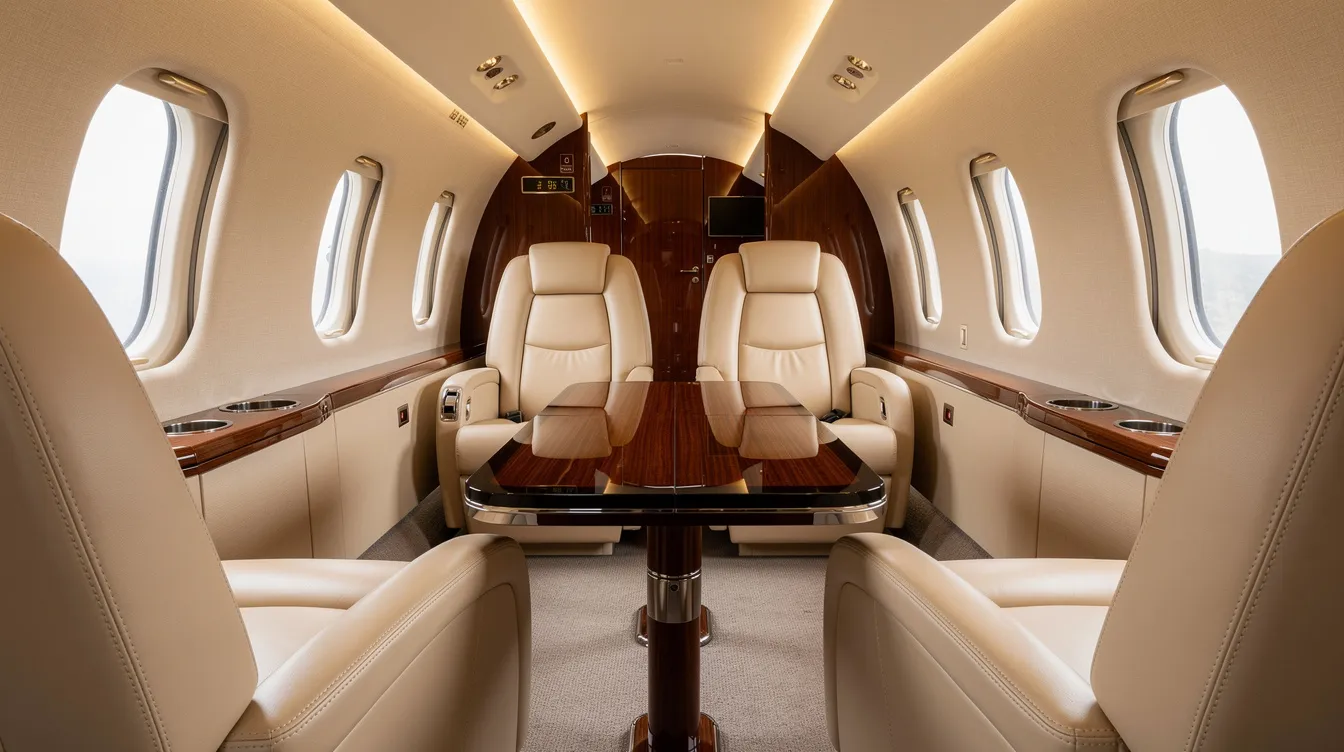
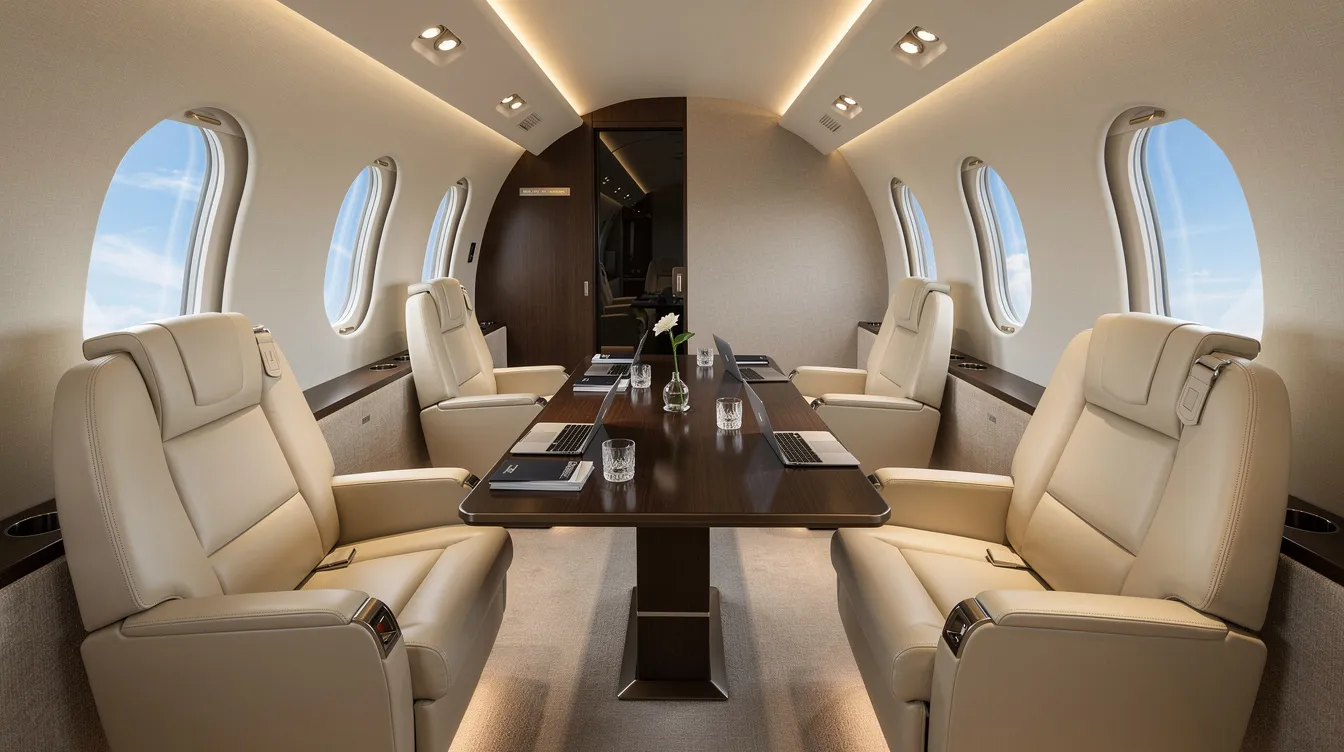
In flight, the experience is tailored to the mission. Private aviation offers highly customizable in-flight catering and personalized service. Passengers on private jets enjoy a more personalized experience, including customized in-flight services such as tailored menus and cabin configurations to meet individual preferences. For executives, the aircraft often becomes a working room in the air, with secure calls, documents, and meetings away from terminal noise.
FLYT members use concierge support to coordinate aircraft, airport selection, crew coordination, catering, ground transport, and last-mile details. The objective is not simply to book a flight, but to make the full journey operationally efficient.
Ways To Access Private Flights: Charter, Cards, Fractional, Membership
The core decision is not “Can I fly private?” It is “Which access model fits my hours, routes, capital strategy, and tolerance for complexity?”
Private aviation offers unparalleled time savings and privacy but requires significantly higher financial investment and involves more regulatory responsibility. Chartering a private aircraft is exponentially more expensive than purchasing a first-class commercial ticket, so the decision should be measured against time saved, productivity, privacy, and control.
The four main access models are:
On-demand charter flights: You pay per trip. Pricing varies by aircraft, distance, availability, repositioning, fuel, and requested services. This is useful for occasional missions, one way flights, or a first flight into private aviation. It can be flexible, but rates can change quickly with demand.
Jet card: A jet card generally involves prepaid flight hours, often with guaranteed availability under defined notice periods. It can simplify booking, but terms may include peak-day rules, minimum billing, surcharges, and expiry provisions.
Fractional ownership: You buy a share in an aircraft program, often with multi-year commitments. A typical buy-in can run from roughly $500,000 to $1.5M+ depending on share size and aircraft class, with management fees, occupied hourly charges, depreciation, and exit considerations. If you opt to own a private aircraft, you take on massive asset management and maintenance costs.
Private jet membership: A membership model can provide access without ownership. FLYT’s approach combines fixed hourly rates, fleet interchange, global network access, and concierge service for private flyers who want predictable private aviation costs without buying a share.
For travelers in the 25–150 hours per year range, private jet membership can be a cost effective option because it avoids tying capital to one aircraft while still providing access to the right aircraft for each mission. This is where FLYT’s asset-light model is most relevant: it is built around access, not ownership status.
Choosing The Right Model For How Often You Fly
A simple flight hour review can prevent expensive misalignment.
Annual flight hours | Recommended access model | Key considerations |
|---|
Under 25 | Ad hoc charter | Flexibility, no long-term commitment |
25–75 | Membership or select jet card | Predictable costs, guaranteed availability |
75–150 | Membership with fleet depth or hybrid model | Greater flexibility, larger programs |
Over 150 | Fractional or full ownership | High utilization, capital commitment, consistent needs |
Many growing founders and executives in the 40–120 hour range over-commit to fractional ownership because they expect usage to rise or want the perceived control of a share. In practice, route patterns often vary: one week requires a small plane for a short hop, the next requires a larger aircraft for a team.
FLYT can help clients map the last 12–24 months of travel against charter, jet card, fractional ownership, and membership scenarios. That exercise often reveals whether a membership structure can cover the same missions with less capital risk and better aircraft flexibility.
Selecting The Perfect Plane For Each Mission
In modern private aviation, you do not need one “forever jet.” The more efficient approach is to select the perfect plane for the mission.
Turboprop
Aircraft such as the King Air 350 or Pilatus PC-12 are particularly cost-effective for regional travel, typically flying at speeds of 220 to 315 mph and covering distances of 600 to 1,000 miles.
Very Light Jet
Aircraft such as the Phenom 100 or HondaJet suit short hops with fewer passengers and limited luggage.
Light Jet
A light jet such as the Phenom 300 or Citation CJ4 usually seats four to eight passengers and is designed for distances of up to 1,500 miles before needing to refuel, making it a luxurious option for shorter trips.
Midsize Jet
A midsize jet such as the Citation Latitude or Hawker 800XP offers more cabin comfort. Midsize jets are suitable for flights of up to 2,450 miles, allowing for non-stop travel between major cities, such as from New York to Los Angeles.
Super Midsize Jet
Aircraft such as the Challenger 350 or Citation Longitude offer longer range, more cabin volume, and better performance for longer domestic or near-international missions.
Heavy Jet
Heavy jets generally accommodate 12 to 18 passengers and are capable of flying nonstop for distances ranging from 5,500 to over 8,000 miles, making them well-suited for intercontinental travel.
Ultra-Long-Range Jet
Ultra-long-range jets, such as the Gulfstream G650, can travel distances of up to 7,000 nautical miles, making them suitable for nonstop international flights.
A Los Angeles to Napa trip may be better served by a turboprop or light jet than by a larger jet, especially when runway access and cost efficiency matter. New York to Aspen may require a midsize or larger aircraft because altitude, weather, and payload can limit smaller aircraft. New York to Tokyo generally calls for an ultra-long-range jet if nonstop travel is the priority.
The trade-offs are not only hourly rate. A larger aircraft may cost more per hour but avoid a fuel stop, preserve a schedule, or provide more space for a team to work. Luggage also matters: golf bags, skis, trade-show cases, and instruments can change the recommended aircraft type.
FLYT’s fleet interchange approach lets a member fly a light jet this week, a midsize jet next week, and a heavy jet next month without owning one specific aircraft. Global fleet access also matters because a member may depart from North America, Europe, or the Middle East without repositioning an owned aircraft across the world.
Empty Legs And One-Way Efficiencies
Empty legs are repositioning flights. Empty leg flights, which occur when a jet is returning to its base without passengers, can offer substantial discounts compared to standard charter prices, making them a cost-effective option for flexible travelers.
They exist because aircraft often need to reposition after one-way missions. If a charter jet drops passengers in Miami and needs to return to New York, that return may be sold at a discount.
Empty legs can be useful for spontaneous leisure travel, flexible one way flights, and travelers who care more about price than exact timing. The limitation is control. The route, date, aircraft, and departure window are often fixed.
For board meetings, investor days, deal travel, or a single day multi-city schedule, fixed hourly rates and structured access are usually more valuable than chasing the lowest headline price. FLYT can surface empty-leg or back-to-back opportunities when they fit, but its core value is predictable access rather than opportunistic discount hunting.
What Flying Private Actually Costs in 2026
Private plane flying is about time, control, privacy, and access. It is not a cheap fare substitute.
Hourly Rate Ranges
Charter costs for private jets can vary significantly based on factors such as aircraft type, distance traveled, and additional services requested, with typical hourly rates ranging from $2,000 for turboprops to over $15,000 for larger jets.
Key factors driving the final cost include:
Aircraft type and range
Distance and flight time
Airport, landing, and FBO fees
Crew costs and overnight expenses
Fuel, de-icing, and maintenance exposure
Catering, ground transportation, and special services
Peak-day demand and aircraft repositioning
Typical 2026 hourly examples, not fixed quotes, may look like this:
Aircraft category | Typical hourly rate (2026) |
|---|
Turboprop or very light jet | $1,500–$3,500 |
Light jet | $3,500–$6,500 |
Midsize jet | $5,000–$8,500 |
Super midsize jet | $6,500–$12,000 |
Heavy jet | $8,000–$15,000+ |
Ultra-long-range jet | $11,000–$20,000+ |
Sample Trip Costs
Sample trip bands can vary widely, but useful planning ranges include:
New York to Chicago day return: roughly tens of thousands, often about $14,000–$25,000 depending on aircraft and timing.
London to Nice weekend: often about $80,000–$120,000 when crew overnight, positioning, and airport fees are included.
Los Angeles to Hawaii family trip: often about $100,000–$200,000 depending on aircraft category, cabin requirements, and route structure.
Booking Windows and Flexibility
The cost of chartering a private jet can be influenced by booking windows, with flights booked 1 to 3 months in advance generally being more economical than last-minute bookings. Private jet charters can be booked as early as months in advance or as late as 24 hours before departure, allowing for flexibility in travel planning.
Instant pricing is useful because it gives executives a fast view of total trip economics. It allows comparison against commercial flights, hotel nights, lost productivity, and schedule risk. Recent reporting from AIN also shows how fixed and capped jet card pricing has increased since 2019, reinforcing the need to understand terms clearly.
FLYT’s fixed hourly rates and transparent pricing model are designed to help members forecast annual aviation spend. For corporate travel teams and family offices, that predictability can be more valuable than a one-off low quote.
Comparing Flying Private To Commercial Business Class
The strongest comparison is not private versus business class ticket price. It is total trip value.
On a New York to Dallas trip, private air travel may save time by using a more convenient airport, arriving shortly before departure, and avoiding crowded commercial terminals. On London to Munich, the ability to depart from a private terminal and land closer to the meeting location can turn a full travel day into a controlled business movement.
Private aviation provides unmatched schedule flexibility and significant time savings compared to commercial airlines. The value rises when four to six passengers travel together, when confidential work matters, or when a same-day return avoids hotel stays and lost time.
There are trade-offs. Private flights generate significantly higher carbon emissions per passenger than high-occupancy commercial airliners. Responsible private aviation planning should consider aircraft sizing, efficient routing, shared legs where possible, and sustainability measures.
FLYT is built for travelers who evaluate cost in the context of time, control, productivity, and reliability. It is not about luxury for its own sake. It is about using private aviation when the operational case is clear.
Safety, Security, And The Experience Onboard
FAA Safety Regulations
Professional private aviation operates under strict safety regulations. Private jets are subject to the same safety regulations as commercial jets, as outlined by the Federal Aviation Administration (FAA), which mandates maintenance, safety procedures, and pilot training.
In the United States, many private operators fly under FAA Part 135 charter rules which require high flight-hour minimums and strict, mandatory aircraft maintenance schedules. FAR Part 135 is a regulation enforced by the FAA that oversees commercial charter operations, ensuring stringent safety standards for on-demand flights, including air taxis and small commuter services. The European market has comparable EASA oversight.
Charter Operator Vetting
If you choose to charter a private aircraft, you must vet the provider’s safety records and certifications. Reputable providers review operator history, crew qualifications, insurance, maintenance records, and third-party safety ratings. Documentation required for flying privately includes an Airworthiness Certificate, Registration Certificate, Weight & Balance data, and Operating Limitations.
Security at FBOs is faster than commercial, but it is not informal. The Transportation Security Administration (TSA) has specific recommendations for fixed-base operators (FBO) that oversee private jet operations, ensuring safety protocols are followed. Travelers should expect ID verification, passenger lists, luggage coordination, and controlled ramp access.
Pilot Certification Requirements
There is also a distinction between flying as a passenger and piloting a private plane. Flying a private plane requires obtaining specific pilot certificates, meeting strict medical standards, and following aviation regulations to ensure safety. The foundational certificate allowing you to fly a single-engine aircraft is the Private Pilot License (PPL). To fly a private plane, you must be at least 17 years old and able to read, speak, and understand English.
You must pass an FAA-approved medical exam to ensure you are fit to fly when piloting a private plane. A Medical Certificate is a mandatory health clearance from an Aviation Medical Examiner. The FAA requires a minimum of 40 flight hours to obtain a Private Pilot License, though the national average is closer to 60–75 hours.
Basic private pilot privileges allow you to fly single-engine aircraft during the day under Visual Flight Rules (VFR). Flying under Visual Flight Rules (VFR) requires clear weather and minimum visibility limits. Flying as the pilot-in-command of a private plane requires earning a specific license and adhering to strict airspace regulations.
Instrument Rating allows you to fly through clouds and in poor weather using only cockpit instruments. Instrument Rating (IR) is critical for flying through clouds and low visibility. Flying solely by referencing cockpit instruments during poor weather is known as Instrument Flight Rules (IFR). The Commercial Pilot License (CPL) is required if you want to get paid for flying. Flight reviews are mandatory training reviews with an instructor every 24 calendar months. A preflight inspection is a mandatory physical check of the aircraft before every single takeoff.
Passenger Experience Onboard
For passengers, the onboard experience is defined by privacy, comfort, and productivity. Depending on the aircraft class, travelers can expect Wi-Fi, quiet cabins, seating layouts for work or rest, tailored catering, and crew discretion. FLYT works with vetted operators and emphasizes operational discipline and consistency over flashy amenities.

What You Can Bring And How Flexible The Rules Are
Private aviation is more flexible than commercial, but every aircraft has limits.
Normal luggage, sports equipment, pets, presentation materials, samples, and instruments can often be accommodated with advance notice. Smaller jets have tighter baggage limits, while larger jets offer more space and cabin flexibility. Lavatory facilities also vary by aircraft size, and on some smaller jets the onboard bathroom may not be the most comfortable option.
Rules on liquids and carry-on items are generally more flexible than commercial, but safety, customs, security, and weight-and-balance requirements still apply. For international flights, documentation, pet entry rules, and customs procedures must be reviewed before departure.
FLYT’s concierge team can advise members on baggage, pets, catering, special items, and aircraft suitability for each route and region.
Inside The FLYT Private Aviation Membership Model
FLYT is a membership-based way to access a global private charter network without owning a jet or buying a fractional share. It is designed for frequent private flyers who want all the benefits of private aviation with less capital lock-up and fewer operational burdens.
The model is asset-light and floating. FLYT does not require clients to commit capital to one aircraft. Instead, it orchestrates access to a global fleet based on each mission, providing access to the right aircraft category at the right time.
Fixed hourly rates are central to the model. Members know the rate by category, such as light jet, midsize jet, or heavy jet, with clear terms and minimal surprise surcharges. This supports cost forecasting, especially for business travel, family offices, and clients with recurring routes.
Fleet interchange is equally important. A member can use a light jet for a solo regional meeting, a midsize jet for a cross-country trip, and a heavy jet for a transatlantic team movement. This avoids the inefficiency of forcing every journey into one owned aircraft type.
The risk pool model helps stabilize access. By aggregating demand across members, FLYT can coordinate supply more efficiently than a single owner managing one aircraft. That structure supports cost efficiency without requiring every client to take on ownership risk.
Concierge-level support ties the model together. FLYT’s aviation team assists with routing, aircraft selection, flight details, FBO coordination, catering, ground transportation, and schedule changes. The goal is a smoother travel experience across the world, not just another charter quote.
Compared with traditional jet card programs, FLYT emphasizes flexibility and transparency.
Frequently Asked Questions About Private Plane Flying
How Far In Advance Should I Book A Private Jet Flight?
Private jet charters can be booked months in advance or as late as 24 hours before departure, offering flexibility for both planned and last-minute travel. However, booking earlier often secures better availability and pricing.
Can I Bring Pets On Private Flights?
Yes, pets are welcome on most private jets. Requirements vary by destination and aircraft, so it's important to notify your concierge team in advance to ensure all documentation and accommodations are arranged.
What Is The Difference Between A Jet Card And A Private Jet Membership?
Jet cards typically involve purchasing prepaid flight hours with some guaranteed availability, while private jet memberships like FLYT offer fixed hourly rates, fleet interchange, and concierge support without ownership or long-term commitments.
Are Private Jets Safer Than Commercial Flights?
Private jets operate under stringent FAA regulations similar to commercial airlines, including maintenance and pilot training standards. Safety depends on the operator's adherence to these regulations and vetting processes.
How Much Does It Cost To Fly Private?
Costs vary based on aircraft type, distance, and services requested. Typical hourly rates range from $2,000 for turboprops to over $15,000 for heavy jets. Membership models like FLYT provide predictable fixed hourly rates to help manage costs.
What Airports Can Private Jets Use?
Private jets can access a wide range of airports, including smaller regional and general aviation airports not served by commercial airlines, enabling closer proximity to final destinations and reducing travel time.
Conclusion
Private plane flying in 2026 offers a sophisticated and flexible alternative to traditional ownership and commercial air travel. With options ranging from on-demand charters to membership-based models like FLYT, travelers can tailor their access to private aviation according to their flight frequency, route needs, and capital preferences. The asset-light, fleet-interchange approach provides unmatched flexibility and predictable costs, supported by concierge-level service that ensures operational efficiency and a premium experience without ownership burdens.
For executives, entrepreneurs, and high-net-worth travelers who value time, control, and transparency, modern private aviation is a strategic tool rather than a luxury. By understanding the nuances of access models, aircraft selection, and cost drivers, you can make informed decisions that optimize your travel while minimizing complexity.
Discover how FLYT approaches flexible private aviation access and explore a membership model designed around efficiency and transparency. See how modern private aviation can work without ownership complexity, delivering global reach and concierge support tailored to your unique travel needs.