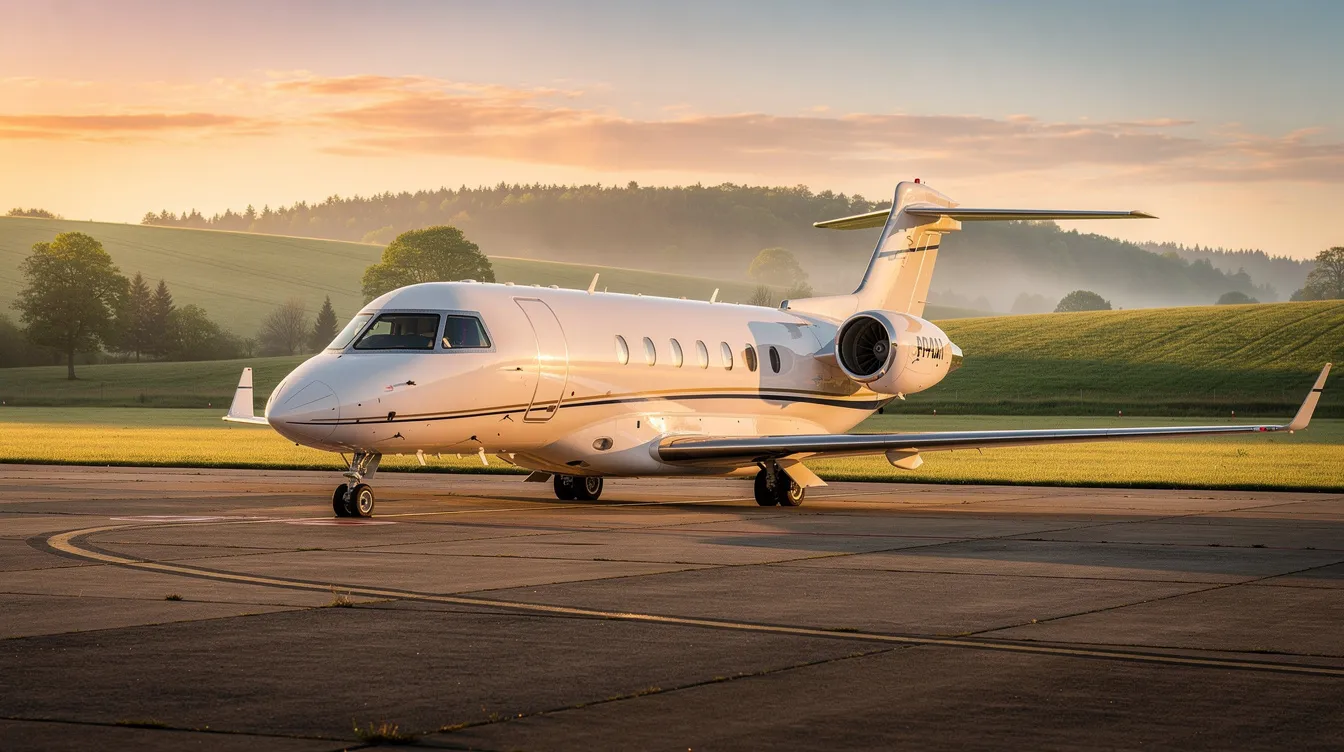
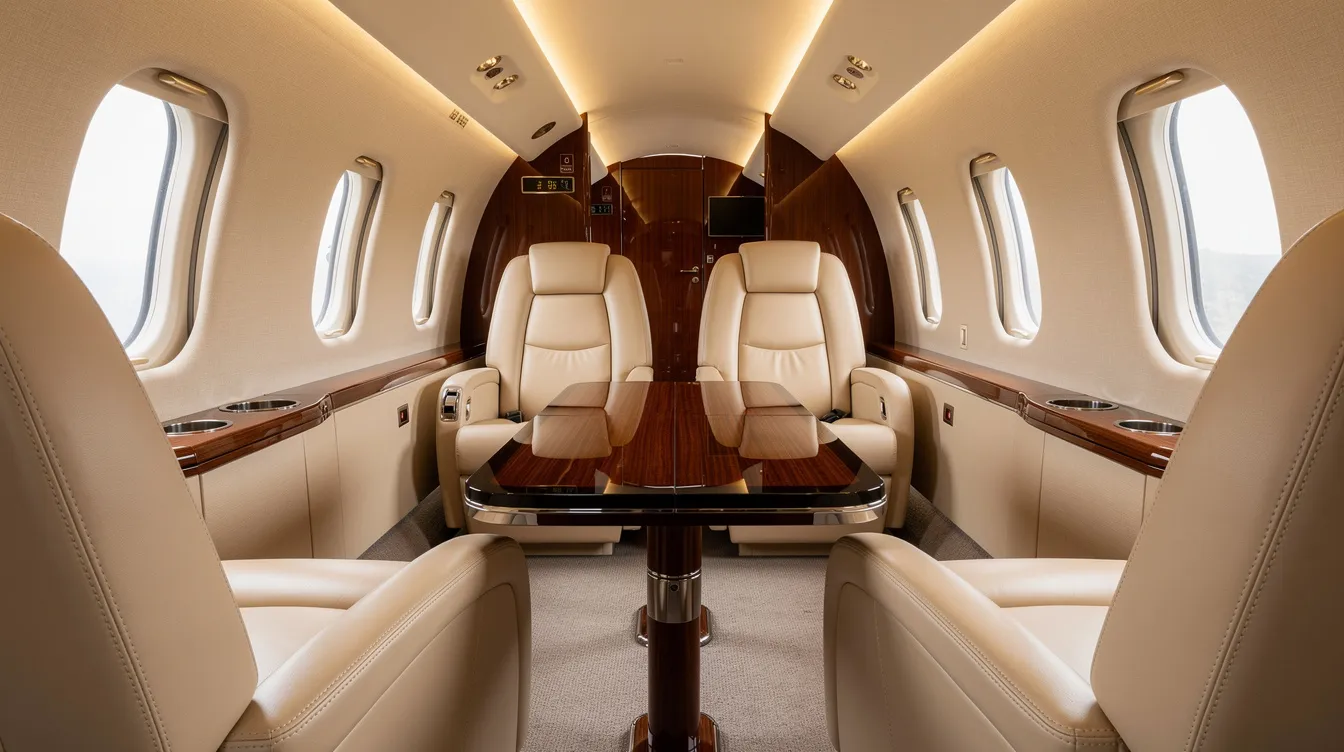
Private plane charter represents a strategic shift in how executives and frequent travelers access private aviation. Rather than committing to the significant capital and operational complexities of owning an aircraft, chartering offers on-demand, flexible access to a wide range of jets tailored to specific trip requirements. This model empowers business leaders and discerning travelers to optimize their time, maintain privacy, and streamline travel logistics without the burdens of ownership. In this guide, we explore how private plane charter works, the factors influencing its cost, and why modern membership-based approaches like FLYT are redefining private aviation for the sophisticated traveler.
Key takeaways
Private plane charter gives travelers on-demand access to an entire aircraft without buying, managing, or crewing a private jet.
Most charter flights in 2026 are priced between about $2,000 and $14,000+ per flight hour, depending on aircraft type, route, and demand; private jet rental prices range from $1,800 to $18,000 per hour in broader market estimates.
FLYT turns traditional private jet charter into a membership model, using fixed hourly rates, transparent pricing, a global fleet, and fleet interchange instead of repeated ad hoc quotes.
A charter flight cost calculator can help with quick estimates, but frequent flyers often benefit more from predictable membership pricing and clear terms.
This guide compares on-demand charter, jet card programs, fractional ownership, and private aviation membership so you can assess which model fits your travel plans.
What private plane charter is and why executives use it
Private plane charter means booking the entire aircraft for a specific trip. You are not buying seats on a scheduled service, and you are not taking on the ownership costs of a private plane. You are securing access to an aircraft, crew, route, and departure time built around your itinerary.
That distinction matters. A New York executive flying to Miami for investor meetings in October 2026 could use commercial airlines, a semi-private by-the-seat service, or charter a private jet. The charter option provides complete control over departure time, destination, routing, passengers, and privacy.
Unlike air taxis or shared semi-private services, private charter gives the flying party total privacy and customizable routing. Private charters allow same-day returns to multiple cities, which can make a board meeting in Atlanta, a site visit in Nashville, and a return flight to New York possible in one day.
Executives, founders, investors, and family offices tend to use private flights for four practical reasons:
Time savings by avoiding layovers, TSA queues, and check-in counters
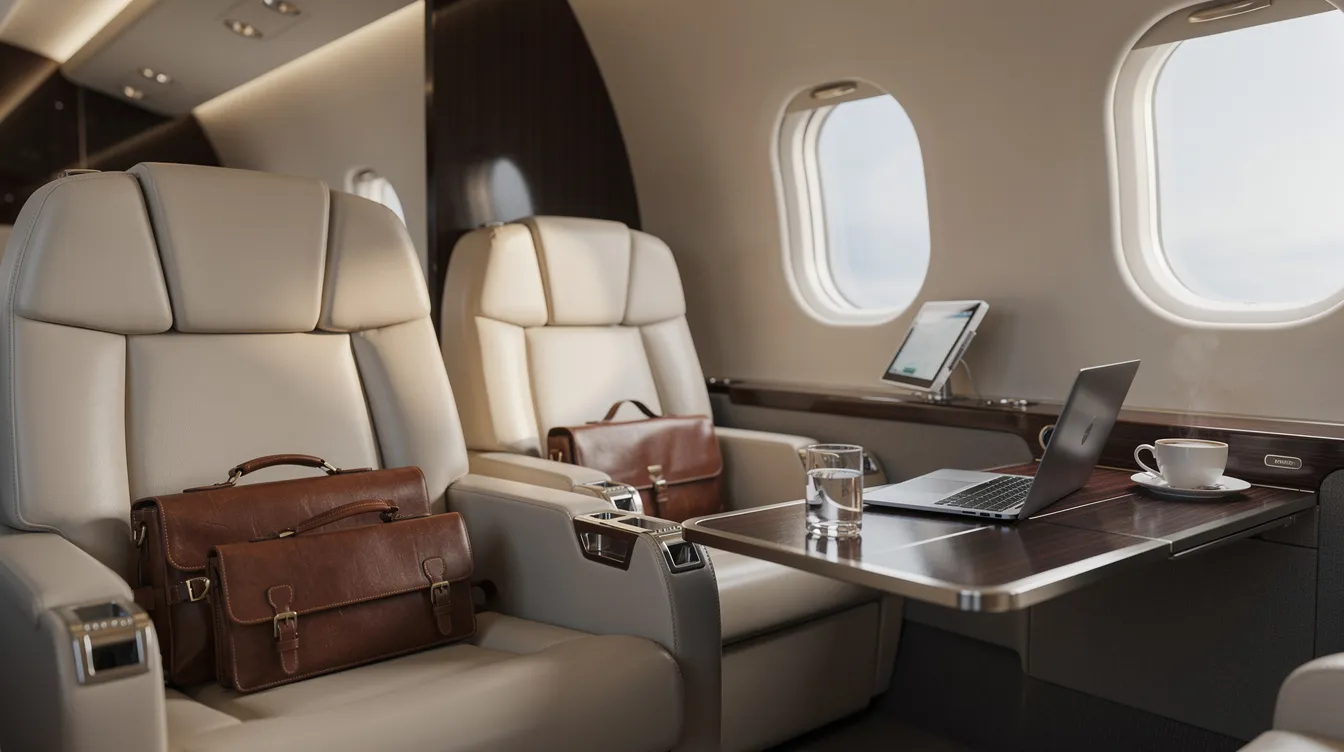
Secure work time in a quiet cabin with enhanced connectivity and secure Wi-Fi
Access to smaller airports closer to meetings, homes, resorts, or wine country
Flexible scheduling when commercial schedules do not match the business need
Charter flights provide access to over 10,000 airports worldwide, far beyond the network served by scheduled carriers. Private charters provide access to over 10,000 airports worldwide, including regional fields that can remove hours of ground travel from a busy day.
Private plane charter is typically priced by flight hour, often with a 1.0 to 2.0 hour minimum. That basic structure is important because the headline charter rates rarely tell the full story. Minimums, positioning, crew duty, airport fees, and international handling can all change the final invoice.
FLYT builds on the traditional charter model by providing access through membership. Instead of negotiating every charter flight separately, members use fixed hourly rates, defined terms, concierge support, and a diverse fleet across aircraft categories.

How private plane charter pricing really works
Most new clients begin with one question: how much does it cost per flight hour? The better question is what will the total mission cost be once aircraft type, route, positioning, passenger count, and operating constraints are included?
In 2026, market pricing for private jet charter services commonly falls into these broad bands:
Turboprops and very light jets: about $2,000 to $3,500 per hour
Light and midsize aircraft: about $3,500 to $6,000 per hour
Large, heavy, and ultra-long-range aircraft: about $6,000 to $14,000+ per hour
These are market ranges, not FLYT member rates. Some sources, including private aviation pricing guides, show wider bands depending on aircraft age, cabin, market demand, and operator structure. For example, mid-sized jet charter rates range from $3,200 to $4,400 per hour in some market estimates, while hourly rates for heavy jets range from $5,400 to $11,000. Charter costs for ultra-long-range jets start at $12,000 per hour.
The main cost drivers are straightforward:
Aircraft type and size
Route distance and total flight hours
Number of passengers and baggage requirements
Repositioning or deadhead leg flights
Crew duty limits, overnight costs, hotels, and per diem
Airport, FBO, customs, handling, and international fees
Billable time is often based on block time, usually from engine start to engine shutdown. If a flight is estimated at 2.2 hours but the operator applies a 3.0-hour minimum, the invoice may reflect 3.0 billable hours. If the aircraft must reposition from another city, that additional flight hour time may also be billable.
This is where hidden fees and surprise charges enter traditional charter. A quote may look attractive until de-icing, wait time, customs handling, premium catering, peak-day surcharges, or repositioning is added. According to industry pricing analysis, base hourly charges are often only part of the final invoice, with additional charges materially affecting total charter costs.
FLYT membership is designed to reduce this uncertainty. Members receive fixed hourly rates, clear operating terms, and fewer pricing surprises, which helps finance teams forecast private air travel more accurately.
Private plane charter pricing overview
Aircraft category | Typical hourly rate range (market) | Passenger capacity | Typical mission range (nautical miles) | Common use cases |
|---|
Turboprops | $2,000 - $3,500 | 6-8 | Up to 1,200 | Short regional trips, small groups |
Very light jets | $2,500 - $4,000 | 2-5 | Up to 1,200 | Quick hops, small parties |
Light jets | $3,500 - $6,000 | 4-8 | 500 - 1,200 | Regional business travel, client meetings |
Midsize jets | $3,500 - $6,000 | 6-9 | 1,500 - 2,500 | Longer domestic flights, small groups |
Heavy jets | $5,400 - $11,000 | 12-18 | 3,000 - 5,500 | Transcontinental, larger groups |
Ultra-long-range jets | $12,000+ | 12+ | 5,500 - 7,000+ | Global non-stop travel |
Using a charter flight cost calculator the right way
A charter flight cost calculator is an online tool that estimates pricing based on route, date, group size, and aircraft options. It can be useful when comparing a one-way trip, a return flight, or a multi-city itinerary.
The typical flow is simple: enter departure and arrival airports, such as Teterboro to Van Nuys, select dates and times, enter passengers, and choose preferred aircraft types. The tool may then show approximate hourly rates, estimated charter costs, and sometimes instant pricing for several charter options.
Some platforms also promote instant booking, though actual confirmation still depends on aircraft availability, crew legality, contracts, and payment. Booking a private jet can be done in four steps: share flight details, review aircraft options, confirm the contract, and coordinate departure logistics.
A calculator usually includes estimated flight hour charges, basic fuel assumptions, and standard operating costs. It may not fully capture de-icing, last-minute routing changes, extended wait time, international permits, or airport curfews.
Private jets can be booked within three hours' notice in some markets when aircraft and crew are already available. Charter flights can be booked within three hours of signing a contract, and private jet charters can be arranged on as little as four hours’ notice for certain domestic flights. Private jet charters can accommodate last-minute travel needs efficiently, but availability and pricing are rarely as predictable as a structured membership.
For occasional flyers, calculators are useful comparison tools. For frequent executives, repeated quote shopping becomes inefficient. FLYT members instead work from transparent pricing and pre-defined terms, reducing the need to negotiate each next trip from the beginning. Learn more about how FLYT works.
Comparing private charter, fractional ownership, jet cards, and membership
Many discerning travelers are moving away from putting aircraft on the balance sheet. The reason is not that private jet travel has become less valuable. It is that the most efficient form of access has changed.
There are four primary ways to access private aviation:
On-demand charter: Pay trip by trip with no long-term commitment.
Jet card: Prepay for a block of hours at published rates.
Fractional ownership: Buy a share of an aircraft program.
Membership: Pay membership fees and use fixed hourly rates for access across a network or fleet.
On-demand charter works well for most travelers who fly only a few times a year or under roughly 25 to 30 flight hours annually. It offers flexibility without a contract, but aircraft availability, charter rates, and hidden fees can vary significantly.
Jet cards are more structured. A jet card usually involves prepaid hours, often 25 to 50, with published rates and service rules. Jet card programs can be useful, but they may include peak-day restrictions, rate escalators, blackout periods, and limited aircraft interchange. See how FLYT compares to jet cards.
Fractional ownership is a larger commitment. A traveler might buy a 1/16 or 1/8 share, enter a multi-year contract, pay monthly management fees, and still pay occupied hourly rates. Fractional ownership can make sense for high-volume users, often closer to 150 to 200+ hours per year, but it exposes the buyer to depreciation, fixed costs, and fleet limitations. Compare FLYT membership vs fractional ownership.
FLYT membership is different. It provides access without equity ownership, using fixed hourly rates, a floating global fleet, and aircraft interchange across categories. Members can select different jet sizes based on passenger count and trip length rather than being locked into one tail number. Learn more about the asset-light floating fleet and aircraft interchange features.
Consider three scenarios:
A founder flying 20 hours per year may be best served by on-demand private charter, especially if routes are predictable and peak travel is limited.
A CEO flying 40 to 70 hours per year may find membership more cost-effective than repeating ad hoc charter or buying a jet card.
A family office flying 120+ hours per year across business trips, international flights, and family vacations may compare FLYT membership against fractional ownership to avoid capital lock-up and depreciation.
The practical question is not only “what is the hourly rate?” It is “what is the effective cost per flight hour after fees, restrictions, aircraft mismatch, and time spent managing the process?” Discover the FLYT advantage over other private aviation models.
Choosing the right aircraft type and cabin for each mission
Matching the aircraft type to the mission is one of the most effective ways to control charter costs without sacrificing productivity. The best aircraft for a 45-minute regional meeting is rarely the perfect aircraft for long-distance travel across the Atlantic.
Turboprops
Ideal for short-haul flights
Seat 6-8 passengers
Suitable for regional routes, shorter runways, mountain airports, and island airports
Efficient access to smaller airports
Very light jets
Light jets
Accommodate 4-8 passengers for short flights
Work well for regional business travel, quick client meetings
Suitable for routes within roughly 500 to 1,200 nautical miles
Midsize jets
Typically seats 6-9 passengers
Offer longer ranges
Examples include Citation Latitude
Support longer domestic sectors, more cabin space, enclosed lavatories, and better work comfort
Heavy jets
Carry 12-18 passengers over long distances
Appropriate for senior leadership teams, transcontinental missions, group charters, international flights requiring more range and cabin volume
Ultra-long-range jets
Can fly up to 7,000 nautical miles non-stop
Capable of non-stop flights over 8,000 miles (statute miles)
Built for global travel and nonstop U.S.–Europe, Middle East, or Asia itineraries
Cabin features are important because flights often serve as productive time for business travelers who prioritize Wi-Fi, quiet workspaces, enclosed lavatories, galley service, and in-flight amenities such as catering. On longer missions, larger cabins with lie-flat seating help reduce travel fatigue and enhance comfort.
FLYT members benefit from fleet interchange, allowing the choice of different aircraft options trip by trip. For example, a short regional meeting may call for light jets, while a multi-continent itinerary may require long-range or ultra-long-range jets.
Aircraft availability can tighten around major events like Davos in January, Art Basel in December, Monaco race weekends, major holidays, and financial conference weeks. A broad global fleet and flexible scheduling help reduce friction during these periods.
Operational details that quietly change your charter price
Two charters on the same route can have very different prices. The difference is often operational, not cosmetic.
Round-trip timing is one factor. A same-day return can reduce repositioning if the aircraft and crew remain with the client, but it can also create crew duty pressure. A multi-day trip may add overnight parking, hangar, crew hotels, and per diem.
Positioning legs is another major variable. If the aircraft starts two hours away, the operator may need to fly an empty segment before picking you up. That time is often built into the quote or billed separately.
Empty leg flights can reduce costs by 25% to 75%. Charter flights can save up to 75% with empty leg options, but empty legs are usually schedule-dependent and less flexible. One-way charters allow direct access to destinations without return hassles, but they may cost more if no matching repositioning demand exists.
International fees add another layer. Customs, immigration, navigation charges, overflight permits, local handling, crew visas, airport slots, and long-haul duty rules can affect international flights across Europe, the Middle East, Asia, and beyond.
Peak travel dates also affect both hourly rates and aircraft availability in traditional charter. Major holidays, large conferences, sports events, and Thursday-evening business routes often create supply pressure.
A sophisticated access model uses a risk pool model and a floating fleet to reduce deadhead flying. The goal is to match demand with aircraft more efficiently, reduce waste, and create more stable pricing for members.
Explore how FLYT’s AI fleet engine optimizes aircraft allocation and minimizes charter volatility through charter volatility protection.
Inside the private flight experience: from booking to landing
A typical private plane charter follows a clear sequence: request, aircraft selection, confirmation, pre-flight coordination, and the onboard experience. The advantage is not only comfort; it is control over time and movement.
The booking phase begins with flight details: route, dates, preferred times, passenger count, baggage, pets, secure connectivity, catering, and whether meetings will take place onboard. Chartering a private jet allows for personalized travel itineraries, including last-minute itinerary changes during trips.
Aircraft options are then curated around route, runway length, flight hour estimates, payload, cabin preferences, and required in-flight amenities. The right process does not simply offer the largest jet; it selects the aircraft that fits the mission.
On the day of travel, passengers usually drive directly to an FBO or private terminal. Private plane charters eliminate inefficiencies of commercial travel by allowing passengers to skip TSA queues and check-in counters when using private air travel.
The onboard experience typically includes privacy, Wi-Fi on most business missions, refreshments or catering, and a crew briefed on confidentiality. Private aviation enhances comfort and reduces travel time significantly, especially when eliminating delays, layovers, and long terminal walks.
Guaranteed departures avoid mass cancellations and crew shortages common in commercial airlines, subject to weather, safety, and regulatory constraints. Private travel reduces travel fatigue by eliminating stress from delays and layovers.
FLYT supports the journey through concierge-level support, including ground transportation, ground transport changes, multi-city coordination, and schedule adjustments. This personalized service matters most when travel plans shift during the day.
Why many frequent flyers are moving from ownership to membership
From 2020 through 2026, many executives re-evaluated capital-intensive jet ownership. Aircraft remained valuable, but the fixed-cost structure became harder to justify for travelers who wanted flexibility across regions and aircraft categories.
Owning a private jet includes acquisition cost, financing, crew salaries, training, maintenance reserves, hangarage, insurance, regulatory compliance, and variable operating costs per flight hour. These ownership costs continue even when the aircraft is idle.
Fractional ownership reduces the scale of commitment but does not remove the structure. Owners still face capital outlay, management fees, depreciation exposure, program rules, and aircraft category constraints.
FLYT’s asset-light model eliminates aircraft from the client’s balance sheet. Members pay for access through fixed hourly rates rather than carrying depreciation risk or fleet obsolescence.
A floating global fleet also avoids tying a member to a specific tail number or region. Instead, FLYT focuses on providing access to aircraft where demand exists, improving operational flexibility.
For many executives, the core value is not the optics of owning a jet. It is time, predictability, flexible scheduling, and confidence that the right aircraft will be available for the mission.
How FLYT structures private plane charter access
FLYT is a membership-based private aviation service built for frequent flyers who want the advantages of private access without ownership complexity. The model is designed around efficiency, transparency, and operational discipline.
Members access a global fleet through fixed hourly rates. Clear terms around minimums, peak periods, and operating rules improve budgeting and reduce the ambiguity that often comes with a one-off charter.
The asset-light, floating fleet approach means aircraft can be positioned according to demand rather than tied to static ownership structures. This supports better aircraft availability and more efficient routing.
FLYT also allows members to interchange aircraft categories. A member may use light, midsize, large-cabin, heavy, or ultra-long-range aircraft depending on group size, route, baggage, and schedule.
Marketplaces also show how broad private aviation networks have become. For example, Jettly offers access to over 20,000 aircraft globally. FLYT’s difference is not simply network breadth; it is the membership structure, fixed pricing logic, and concierge oversight designed for recurring users.
FLYT’s aviation experts act as a strategic travel partner. They align private flights with board meetings, family vacations, roadshows, international itineraries, and lifestyle travel throughout the year.
If you already use a mix of charter, jet card hours, commercial premium cabins, or fractional ownership, the useful comparison is your effective annual cost per flight hour. FLYT helps translate that pattern into a clearer membership structure.
Practical steps to plan your next private plane charter
With the right preparation, private air travel can be integrated into an executive calendar rather than managed as a series of isolated transactions.
Before requesting a quote or reviewing membership, gather:
Typical routes for the next 12 months
Estimated annual flight hours
Preferred departure and arrival airports
Usual passenger count and baggage profile
Cabin preferences and connectivity needs
Peak periods, conferences, holidays, and recurring board dates
A simple planning flow works well:
Define likely missions, including business trips, family travel, international flights, and same-day multi-city needs.
Align each mission with an aircraft category so you are not overbuying cabin size or underestimating range and baggage.
Choose an access model: on-demand charter, membership, jet card, fractional ownership, or a hybrid structure.
For example, a leadership team may plan quarterly board meetings, investor roadshows, site visits, and holiday travel. That pattern might total 50 to 70 flight hours per year, making membership more predictable than a repeated one-off charter.
Look beyond headline hourly rates. The better comparison includes total annual spend, aircraft availability, schedule flexibility, time saved, and exposure to surprise charges.
To understand whether membership fits your next trip and the year behind it, explore how FLYT can translate projected flight hours into a clear, predictable private aviation structure.

Frequently asked questions about private plane charter
These questions often come up once a traveler understands the basics of charter pricing, aircraft access, and private aviation membership. For more details, visit FLYT’s FAQ page.
How far in advance do I need to book a private plane charter?
Many domestic charter flights can be arranged within 24 to 48 hours, with some same-day options depending on aircraft availability, crew duty limits, airport slots, and contract timing.
Private jets can be booked, which usually reduces aircraft options. Peak periods, major holidays, Monday mornings, Thursday evenings, and global events benefit from 5 to 7 days of lead time or more.
International flights may require additional time for permits, customs, slots, and handling. FLYT membership helps by giving members a team that proactively manages access against known travel calendars.
How safe is it to charter a private plane through an access program?
Reputable private charter and membership providers use certified operators that meet regulatory standards for maintenance, crew training, and operations. In the United States, this commonly means FAA Part 135 certification for charter operations; travelers can review the FAA’s overview of commercial operations.
It is also reasonable to ask about third-party safety audits such as ARGUS, Wyvern, or IS-BAO. Safety should be treated as a requirement, not an upgrade.
FLYT prioritizes operators with strong safety records and transparent reporting. Members should expect the ability to ask detailed questions about the aircraft, operator, crew, and maintenance standards.
Can I bring pets or special equipment on a private charter flight?
Most private charter aircraft can accommodate pets, subject to operator policy, cleaning requirements, cabin configuration, and international health documentation on cross-border routes.
Luggage capacity depends on aircraft type and configuration. Golf clubs, skis, trade show materials, large samples, instruments, or pet crates should be discussed before aircraft selection.
Choosing the smallest possible aircraft solely to reduce hourly rates can backfire if baggage, pets, or passenger comfort exceeds the mission profile. FLYT’s concierge team helps match aircraft types to passenger and equipment needs before arrival at the FBO.
What happens if my schedule changes on the day of the flight?
One of the main advantages of private plane charter is greater control over schedule and destination than commercial airlines can offer. Departure times can often be adjusted within crew duty, aircraft availability, airport curfew, and slot constraints.
In a traditional charter, same-day changes can affect cost through extended wait time, additional flight hours, crew duty resets, or revised positioning. The process allows for last-minute itinerary changes during trips, but those changes should be managed carefully.
FLYT members work with a dedicated team that can adjust departure times, coordinate ground transport, and re-optimize aircraft usage within the membership framework where possible.
How do I know if a membership model like FLYT makes sense for me?
Start by estimating annual flight hours over the next 12 to 24 months, broken down by region, mission type, passengers, and trip length.
If you fly only a few times a year, on-demand charter may be sufficient. If you fly dozens of hours or more, need global reach, manage recurring board meetings, or require frequent multi-city days, structured membership can improve predictability and reduce effective cost per flight hour.
Compare your current mix of private charter, commercial premium cabins, jet card usage, and ownership costs against a projected FLYT membership structure. The goal is a data-driven decision based on access, flexibility, and total annual economics.
Conclusion
Private plane charter offers a strategic, flexible alternative to ownership, providing executives and frequent travelers with tailored access to a global fleet of aircraft without the complexities and capital commitment of buying a jet. Membership models like FLYT elevate this experience by combining predictable fixed hourly rates, transparent pricing, and concierge-level support with a floating, asset-light fleet that adapts to diverse travel needs.
By focusing on operational efficiency, global reach, and simplified access, FLYT represents a smarter way to navigate private aviation—prioritizing time, flexibility, and cost control over traditional ownership burdens. To explore how this modern approach can fit your travel requirements, visit FLYT.com and discover a membership designed for the discerning private flyer.