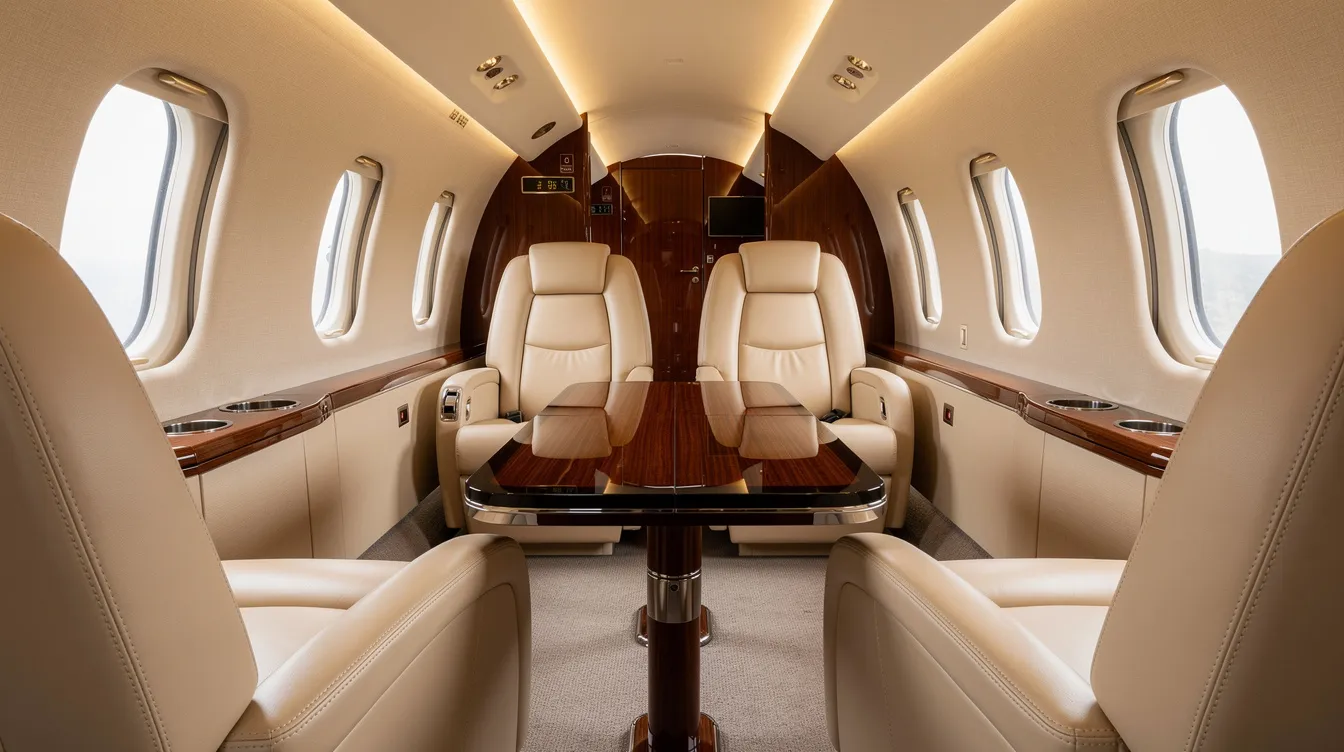
Private jet flights have transformed from a symbol of exclusive luxury to a strategic tool for business efficiency and flexible travel. For executives, founders, and frequent travelers, the ability to access private aviation without the complexities of ownership has become paramount. This guide explores how modern private jet charter works, the evolving landscape of private aviation, and why membership models like FLYT offer a smarter, more predictable way to fly. Understanding these dynamics helps travelers optimize time, control costs, and enjoy seamless access to a global fleet tailored to their unique travel needs.
Key takeaways
Frequent flyers are moving from full aircraft ownership and rigid jet card programs toward private jet membership models that offer flexible access, fixed hourly rates, and less capital exposure.
FLYT’s asset-light, floating fleet model is designed to provide access to private jet travel without requiring members to buy, manage, or co-own an aircraft.
The cost of a private jet's flight depends on aircraft types, route length, aircraft availability, positioning, crew requirements, airport fees, and short-notice demand. Learn more about pricing.
Fleet interchange helps members choose the right aircraft for each trip, from light jets for regional travel to ultra-long-range aircraft for intercontinental missions.
For frequent executives, founders, investors, and family offices, membership can provide a more predictable alternative to on-demand private jet charter, fractional ownership, or traditional jet card structures. See how FLYT compares in flyt vs charter, flyt vs jetcards, and flyt vs fractional.
Why private jet flights have changed since 2020
Private aviation has become less about occasional indulgence and more about operational reliability. Since 2020, executives and high-net-worth travelers have had to navigate commercial airline disruption, crowded hubs, reduced route flexibility, and higher fares. Industry reporting has noted that U.S. private charter activity remains materially above 2019 levels, reflecting a lasting shift in how frequent travelers evaluate time and control.
The core pain point is not simply the flight. It is the lost time around the flight: early arrival requirements, hub connections, cancellations, missed meetings, and the limited reach of commercial air travel. For a founder, investor, or leadership team, a delayed commercial airline itinerary can affect a transaction, a board meeting, or a site visit.
Ownership has also become more complex. A private plane carries ownership costs beyond acquisition: crew, maintenance, hangarage, insurance, compliance, depreciation, and management. Fractional ownership reduces some burden but still introduces capital lock-in and contract complexity.
That is why flexible access models have gained ground. Private jet memberships offer flexible access to aircraft. Memberships provide cost savings compared to traditional ownership. Private jet memberships allow booking without long-term commitments. FLYT approaches the market from this access-first perspective: providing access through a floating, asset-light model built for people who fly frequently but prefer capital efficiency over ownership obligations.

How private charter flights actually work
Private charter flights are different from commercial flights because you are not buying a seat on a scheduled route. With a private charter, you hire the entire aircraft for a defined itinerary, schedule, passenger group, and route. Booking a private jet involves selecting a flight model, whether that means on-demand private jet charter, a jet card, fractional ownership, or a membership structure like FLYT.
The booking process typically involves four simple steps:
Define travel requirements, including origin, destination, dates, passengers, luggage, pets, and timing.
Review aircraft options based on range, group size, runway requirements, and aircraft availability.
Confirm pricing, cancellation terms, routing, and the flight details.
Finalize the contract and coordinate day-of-flight logistics.
Booking a private jet involves defining travel requirements and finalizing details. Understanding cancellation policies is important when booking a private jet, especially for peak periods, international flights, or trips involving multiple aircraft.
There are three main roles in the private aviation value chain. An operator controls or manages the aircraft and is responsible for crew, maintenance, and regulatory compliance. A broker sources charter options from operators. A membership platform such as FLYT organizes private jet charter services around defined access, transparent pricing, fixed hourly rates, concierge support, and fleet interchange.
Dedicated charter specialists assist with personalized flight arrangements. In broader private aviation marketplaces, instant pricing is available for over 20,000 aircraft globally, though experienced travelers still review aircraft quality, operator credentials, and routing assumptions before confirming. Instant booking can be useful, but the best aircraft for a mission is not always the first aircraft shown.
Empty leg flights occur when jets reposition without passengers. Empty leg flights are often available on short notice. These flights can be discounted by 25–75% off normal rates. Empty leg flights can offer discounts of 25-75% off standard rates. They provide significant cost savings compared to standard charters, and empty leg flights are ideal for flexible travelers. The tradeoff is that timing and routing are dictated by the aircraft’s repositioning need, not by your calendar.
For example, a New York to Miami private jet flight may involve a light jet, midsize jet, or super midsize aircraft depending on passengers, luggage, schedule, and range. If a nearby aircraft is available, the quote is cleaner. If the aircraft must reposition from another city, charter costs can increase. FLYT’s membership framework is designed to make those variables clearer before the trip is confirmed.
Private jet travel vs commercial airline: time and control
Consider a business day that starts in Houston and requires a board meeting, then a factory visit in Tulsa, then a same-day return. Commercial air travel may require a connection, early airport arrival, security queues, and a schedule built around airline inventory. A private jet can use a smaller airport, fly direct, and align the aircraft around the day’s work rather than the other way around.
Private jet travel offers total control over your schedule. Custom schedules allow you to depart exactly when you want. Chartering allows for personalized travel schedules and routes.
Key differences include:
Check-in time: Travelers can check in just 15 minutes before departure. Travelers can arrive just 15 minutes before departure for charter flights.
Airport access: Private jets can access over 10,000 airports worldwide. Private jets can access thousands of airports that commercial airlines cannot serve. Private planes can land closer to the final destination than commercial airlines.
Schedule control: Private jet travel gives the traveler far more control than a commercial airline schedule.
Privacy: Private jet travel provides complete privacy. Private aviation provides complete control over the travel environment. Confidential meetings can be hosted on private jets without interruptions.
Weather routing: Private jets can avoid major weather systems to minimize turbulence, although weather conditions can still affect routing, departure times, and airport selection.
Passengers can clear customs and security quickly using Fixed-Base Operators. Private Terminals provide luxury lounges and seamless baggage handling. In practice, the value is not only comfort; it is the ability to preserve the working day.
A family weekend from Los Angeles to Aspen is another example. Instead of routing through a hub, private flights can often land closer to the final destination, support more flexible scheduling, and accommodate skis, pets, or golf clubs more directly. Private jets enable pets to travel directly in the cabin. Private jets allow bringing oversized bags without standard commercial restrictions. Private jets offer more luggage capacity than commercial flights, although private jets have strict weight and volume limits for luggage that must be managed before departure.
Charter flights save time compared to commercial airlines. Private jet charters can be booked on as little as four hours’ notice, subject to aircraft availability, crew duty time, airport rules, and route complexity. FLYT’s model is built for travelers who place measurable economic value on time, privacy, and control.
Understanding aircraft types and mission profiles
Aircraft types exist because every mission has a different operational profile. The right aircraft depends on range, passengers, luggage, runway performance, cabin needs, and whether the trip is well-suited for a domestic flight, an international flight, business travel, or leisure travel.
Light jets usually seat six to eight passengers and are efficient for regional missions. Light jets can travel distances up to 1,500 miles. They are well-suited for routes such as Boston to Chicago, London to Milan, or a same-day business trip into wine country, where speed and runway access matter more than cabin volume. Very light jets serve shorter routes with smaller groups, while air taxis may fit certain short-hop markets where available.
Turboprops are efficient for distances of 600 to 1,000 miles. They can be cost-effective for short regional routes, especially where smaller runways are involved. A turboprop will not match jet speed, but it can be the perfect plane for remote destinations where runway performance matters.
Midsize and super midsize jets serve longer domestic and near-international missions. Midsize jets typically have a range of 2,450 miles. A midsize jet such as a Citation Latitude can fit many executive routes with strong cabin comfort and baggage capacity. Super midsize aircraft are often used for routes such as New York to Los Angeles or longer European and Middle Eastern sectors where nonstop capability and cabin productivity matter.
Long-range jets and heavy jets support larger groups and longer missions. Heavy jets can fly non-stop for over 8,000 miles on certain aircraft and mission profiles. Ultra-long-range aircraft are built for global routes. Ultra-long-range jets can fly over 7,000 nautical miles, making ultra-long-range missions such as New York to Dubai, Los Angeles to Tokyo, or Dubai to Singapore practical when conditions allow.
FLYT’s fleet interchange concept matters because most travelers do not need the same jet for every mission. A member might use light jets for regional private air travel, a super midsize aircraft for a cross-country trip, and long-range jets for international work. Rather than buying one aircraft and forcing every trip into that asset, FLYT helps members select the right aircraft, and sometimes the perfect aircraft, for the specific mission.
What drives the cost of a private jet's flight
The economics of a private jet's flight usually begin with hourly rates multiplied by flight time, then adjusted for positioning, airport fees, crew costs, taxes, handling, catering, and route-specific requirements. Private jet hourly rates range from $2,000 to $14,000 across broad market categories, though exact charter costs vary by aircraft, location, demand, and timing. See pricing details.
Primary cost drivers include:
Aircraft category, from turboprops and light jets to super midsize aircraft and ultra long range aircraft.
Route distance, flight time, fuel stops, and airport selection.
Positioning legs when the aircraft must move before or after your trip.
Crew duty limits, overnight requirements, and international handling.
Short-notice requests, peak dates, major events, and weather conditions.
Turboprop charters start at approximately $4,000 per hour in many market contexts. Midsize jets typically cost around $7,000 per hour to charter. Ultra-long-range jets can exceed $12,000 per hour in charter costs. These figures are broad benchmarks, not universal quotes.
Empty leg flights can lower the total charter when a traveler is flexible enough to match an aircraft’s repositioning schedule. But they are not a substitute for reliable private jet travel if you need to depart at a moment’s notice for a board meeting, medical need, or family obligation.
The issue with many charter services is not the visible hourly rate; it is the uncertainty around hidden fees, surprise charges, repositioning markups, and changing availability. Some providers advertise all-inclusive pricing, but travelers should verify what is included. FLYT focuses on transparent pricing, known minimums, fixed hourly rates, and clear expectations so members can forecast usage with fewer variables. Learn about FLYT’s charter volatility protection.
Typical private jet charter rates by aircraft category
Aircraft category | Passenger capacity | Typical range (miles) | Hourly charter rate (USD) | Common use cases |
|---|
Very light jet | 4-6 | Up to 1,200 | $2,000 - $4,000 | Short regional trips, air taxi |
Light jet | 6-8 | Up to 1,500 | $4,000 - $6,000 | Regional business travel |
Midsize jet | 6-9 | Around 2,450 | $7,000 | Cross-country flights |
Super midsize jet | 8-10 | Up to 3,000 | $8,000 | Longer domestic and near-international |
Heavy jet | 10-18 | Over 7,000 | $12,000+ | Intercontinental and global travel |
Ultra long range jet | 12+ | 7,000+ | $12,000+ | Nonstop global missions |
Membership vs on-demand charter vs ownership
Every frequent flyer eventually faces the same question: charter a private jet as needed, buy a jet card, enter fractional ownership, or use a membership model.
On-demand private jet charter offers maximum flexibility for occasional users. You can review aircraft options for each trip and choose from available charter options. The tradeoff is variability. Pricing can move quickly, aircraft quality differs by operator, and per-trip negotiations may become inefficient for frequent private flights.
Fractional ownership gives access to a managed fleet but requires a capital purchase, a multi-year commitment, monthly management fees, occupied hourly rates, and exposure to depreciation. It can make sense for high-volume flyers with predictable usage, but it is not always the most efficient structure for travelers who want flexibility across aircraft categories. Compare flyt vs fractional for more.
Traditional jet card programs offer prepaid hours and a simpler buying process than ad hoc charter. A jet card may work well for defined aircraft categories and recurring routes, but jet card programs can include blackout dates, rate escalation, minimum flight times, fuel adjustments, and expiration rules. See flyt vs jetcards.
FLYT membership is designed around flexible aircraft access rather than asset ownership. Members gain access to a diverse fleet, a global fleet, concierge support, fixed hourly rates, and a risk pool model that spreads operational risk across members rather than tying one traveler to one aircraft.
A simple way to think about fit:
Occasional leisure traveler: on-demand private charter may be sufficient.
Frequent but predictable flyer: a jet card may work if the aircraft category and rules fit.
Very high annual usage with stable needs: fractional ownership may be worth evaluating.
Frequent traveler needing flexibility: FLYT membership can be more cost-effective when global reach, fleet interchange, and predictable rates matter.
Inside a modern FLYT private jet flight
A modern FLYT trip begins with the mission, not the aircraft. A member shares dates, origin, destination, passengers, preferred timing, baggage, pets, and any operational constraints. The FLYT team then aligns the request with the membership framework, aircraft access band, route, and available aircraft.
In the planning phase, FLYT reviews aircraft options, confirms flight details, and helps choose the right aircraft for the route. This can include a light jet for a short regional trip, a midsize jet for a longer domestic itinerary, or a heavy jet for global travel. The best aircraft is the one that fits the mission without unnecessary cost or operational compromise.
Pre-flight logistics may include slot coordination, permits, catering, ground transportation, ground transport at arrival, and multi-leg routing. Memberships typically include concierge support for travelers, and FLYT’s personalized service is built to reduce friction before the traveler reaches the airport.
On the day of departure, members arrive through a private terminal rather than the commercial terminal. The typical pre-departure window is 15 to 30 minutes. If all passengers are ready, the aircraft may be able to depart early, subject to airport slots, crew readiness, and air traffic control.
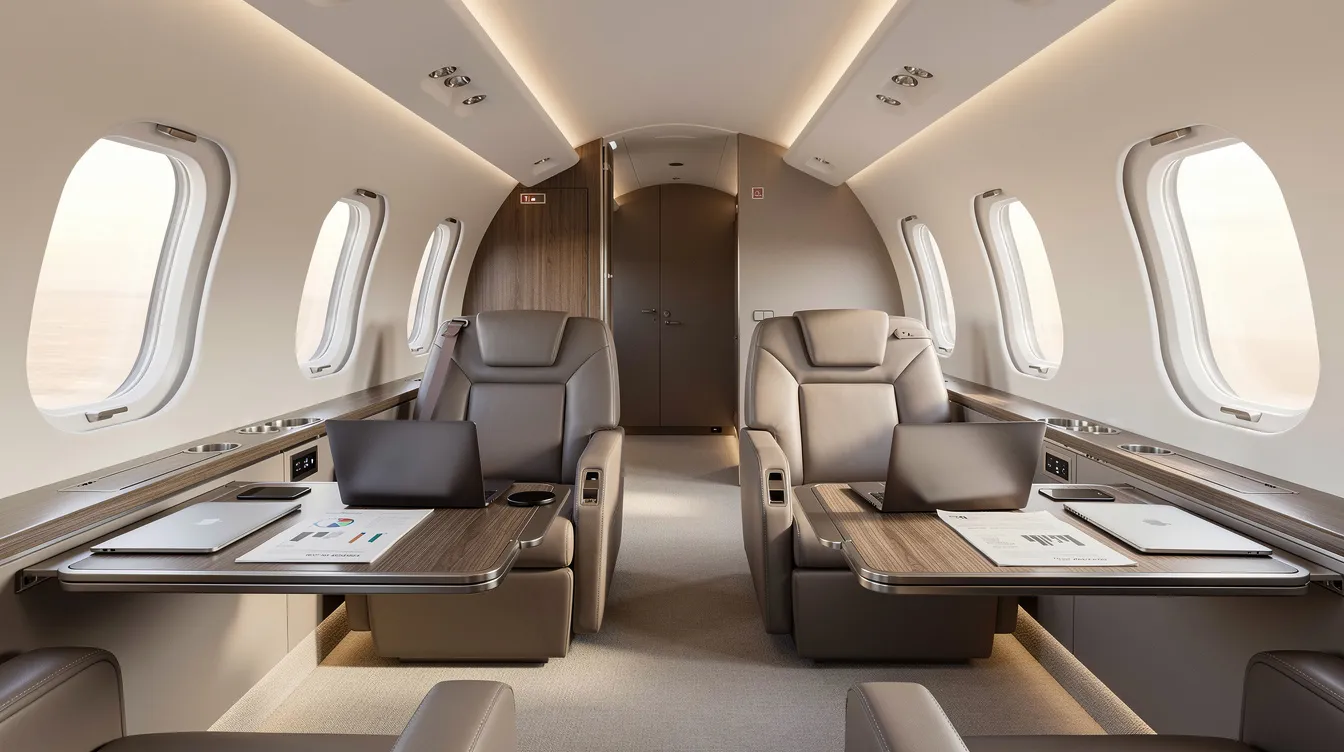
Inside the cabin, the priorities are productivity and discretion. Wi-Fi supports work in flight. A quiet cabin allows confidential calls or planning sessions. Many private aircraft utilize lower simulated cabin altitudes to improve air quality, helping reduce fatigue on longer sectors. Catering can be tailored to the traveler rather than standardized.
If an aircraft has a mechanical issue or operational disruption, FLYT’s floating, asset-light structure can support substitution with equivalent aircraft types where available. The objective is schedule integrity: keeping the traveler’s plan intact while FLYT manages operational complexity.

Global private jet travel and typical routes
Frequent private flyers often need consistency across regions. A global network matters because standards should not change dramatically between New York, London, Dubai, Singapore, or Los Angeles. Global private jet access requires operator vetting, safety oversight, regulatory knowledge, and local handling partners.
Typical routes include:
New York to London, usually requiring heavy jets or ultra-long-range aircraft depending on passengers, weather, and payload.
Los Angeles to Cabo San Lucas, often suited to light jets, midsize jets, or super midsize aircraft depending on group size.
London to Zurich, commonly served by light jets or midsize aircraft.
Dubai to Riyadh, often handled by midsize or super midsize jets.
Singapore to Hong Kong, typically matched to midsize, super midsize, or larger aircraft depending on passenger and baggage needs.
International flights introduce additional planning. Permits, customs, immigration timing, overflight approvals, crew duty limits, and handling arrangements all affect the itinerary. Over ultra-long-range sectors, crew planning and alternates become especially important.
FLYT membership is structured for global reach with consistent attention to safety, transparent pricing, concierge coordination, and aircraft standards. For discerning travelers, the value is not simply the ability to fly globally; it is the ability to do so with all the details managed coherently.
Safety, transparency, and the risk pool model
For experienced executives, safety and contractual clarity often matter more than cabin design. Verification of safety credentials is crucial when booking a private jet. In the United States, FAR Part 135 governs commercial charter operations for safety. Operators must obtain an Air Carrier Certificate under FAR Part 135 before conducting eligible commercial charter operations.
Safety protocols include strict pilot qualifications and maintenance standards. ARGUS Gold standards are required for charter operators’ safety in many sophisticated buying processes, and IS-BAO Stage 3 certification indicates high safety standards for operators that have reached that level of audited maturity.
Transparency is the second pillar. Transparent pricing means clear hourly rates, known surcharges, defined minimums, and no opaque repositioning markups. It also means stating what is not included. A quote should make clear whether catering, de-icing, international handling, fuel adjustments, crew overnight, or ground transportation are included.
The risk pool model is a practical response to aircraft downtime and capital inefficiency. Instead of one owner bearing the risk of a single private jet, multiple members draw from a floating fleet. This helps reduce exposure to maintenance downtime, resale risk, and underutilized assets.
FLYT is built around this asset-light, risk-shared structure. Members focus on travel plans and mission requirements while FLYT manages access, operator coordination, aircraft substitution, and the operational details behind the flight.
How to plan your next private jet flight with FLYT
Planning a private jet flight with FLYT starts with a clear view of how you actually travel. The best membership fit depends on frequency, route pattern, group size, flexibility, and the economic value of saved time.
Step 1: Analyze your flying pattern
Review the last 12 to 24 months of trips. Include hours flown, recurring routes, domestic flights, international flights, business use, leisure travel, passenger count, luggage, pets, and any recurring equipment such as skis or golf clubs.
Step 2: Discuss membership tiers and aircraft access
Speak with FLYT about fixed hourly rates, access bands, and likely aircraft categories. Light jets may fit regional business trips. Super midsize aircraft can support cross-country routes. Long-range jets may be appropriate for intercontinental travel.
Step 3: Define operational preferences
Identify preferred departure airports, arrival airports, typical notice periods, peak travel dates, and recurring routes that can be optimized. Private jets can access more airports than scheduled carriers, so choosing the closest suitable airport can reduce total travel time.
Step 4: Request each trip clearly
Provide dates, origin, destination, passenger list, special requirements, pets, baggage dimensions, catering preferences, and timing constraints. The more precise the request, the easier it is to source the right aircraft and finalize the flight details.
A practical next step is to evaluate how much time, attention, and capital you can reallocate by shifting from ownership complexity to FLYT-style access.
Explore a membership model designed around efficiency and transparency.
Frequently asked questions
How many hours per year justify a private jet membership instead of ad hoc charter?
There is no universal threshold. Many frequent flyers begin to see value when they fly enough that predictable fixed hourly rates, preferred access, and concierge coordination outweigh the flexibility of occasional on-demand charter.
The pattern matters as much as the number of hours. Executives with quarterly board meetings, regular transcontinental routes, or recurring multi-city business travel may benefit from membership earlier than most travelers who fly private only for occasional leisure trips.
A useful exercise is to review the last 12 to 24 months of private jet travel, including charter costs, repositioning charges, cancellation exposure, and time lost. FLYT can then help model whether membership would have created more predictable costs and better access.
Can I switch between light jets and larger aircraft under one membership?
Yes. One of the core advantages of FLYT’s fleet interchange concept is the ability to use different aircraft types under one membership framework.
A member may choose light jets for short regional flights, a midsize jet for a longer domestic mission, a super midsize aircraft for transcontinental travel, and ultra long range aircraft for international routes. The corresponding hourly rates are known in advance within the membership structure.
This avoids being locked into an aircraft that is too small for some trips or inefficiently large for most missions.
How far in advance do I need to book a private jet flight as a member?
Lead time depends on route complexity, seasonality, aircraft category, and whether the trip is domestic or international. A simple domestic flight may be arranged much faster than a multi-country itinerary requiring permits and customs coordination.
Private jet charters can be booked on as little as four hours’ notice, but short notice always depends on aircraft availability, crew readiness, airport access, and operational feasibility.
For holidays, major sporting events, financial conferences, and peak ski or island seasons, members should share travel plans as early as practical to secure preferred schedules and aircraft types.
What happens if there is a mechanical issue with the aircraft on the day of departure?
Mechanical issues are an operational reality in aviation. The advantage of a floating, asset-light fleet model is that FLYT can work to substitute equivalent aircraft types when available rather than leaving the traveler tied to one grounded aircraft.
Contingency planning, vetted operators, safety standards, and clear service expectations are part of how FLYT manages operational risk for members.
The goal is to maintain schedule integrity and minimize disruption to critical business or family itineraries.
Can I integrate private jet flights into a broader corporate travel policy?
Yes. Many companies increasingly treat private aviation as a strategic tool for specific missions rather than a perk. Examples include senior leadership roadshows, remote site visits, multi-city investor meetings, and time-sensitive board travel.
FLYT-style membership and fixed hourly rates make it easier for finance teams to forecast budgets, define use cases, and compare private aviation against the true cost of commercial delays, overnight stays, and lost executive time.
Clear reporting on routes, aircraft types, hours flown, and passengers can also support governance, ESG considerations, and board-level oversight of private aviation use.
Conclusion
Private jet flights have evolved into a strategic asset for frequent travelers who prioritize time, flexibility, and operational efficiency. FLYT’s membership model offers a modern, asset-light approach to private aviation, delivering predictable pricing, global access, and concierge-level support without the burdens of ownership. By leveraging fleet interchange and a floating risk pool, FLYT empowers members to select the right aircraft for each mission, whether regional, transcontinental, or international.
For executives, founders, and investors seeking a smarter alternative to traditional ownership or jet cards, FLYT provides a seamless private aviation experience built around transparency, flexibility, and operational intelligence. Discover how FLYT redefines private jet travel by offering access without ownership complexity, enabling you to focus on what matters most—your business and lifestyle.
Explore a membership model designed around efficiency and transparency at FLYT.com.