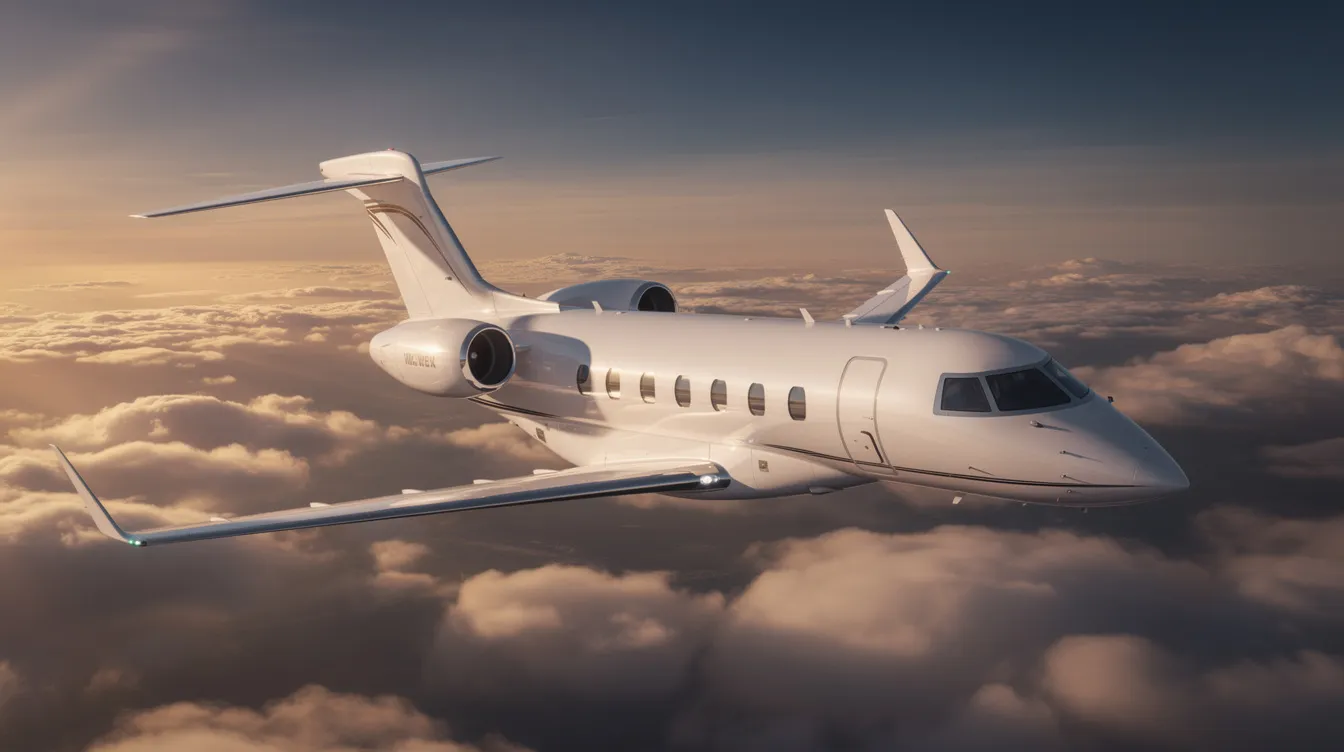
When your travel group reaches 15 passengers, you move beyond midsize jets and into a category of aircraft built for range, cabin volume, and operational flexibility. Membership-based private aviation services provide flexible access to jets, offering a smarter alternative to ownership. This article breaks down the specific aircraft, realistic costs, and access models that matter for groups of this size in 2025 and 2026.
Key takeaways
A jet for 15 passengers requires a large cabin or ultra-long-range aircraft such as the Gulfstream G650, Bombardier Global 6000, or Dassault Falcon 7X. Light jets and super midsize jets simply cannot seat this many travelers in a single airframe.
A 15-passenger private jet typically costs $7,000 to $15,000 per flight hour in 2025–2026. A coast-to-coast flight often totals $70,000 to $120,000 one way, while international flights on transcontinental routes run $90,000 to $140,000.
Large cabin and ultra-long-range jets are the practical choices for 15 passengers, offering multiple cabin zones, lie-flat sleeping, and enough baggage capacity—typically 150 to 200 cubic feet—for extended trips. Splitting into two smaller aircraft is possible but adds coordination complexity.
Access to smaller airports reduces travel time by 2 to 4 hours per trip, enhancing overall efficiency. Private terminals eliminate long security lines, benefiting families and corporate travelers alike.
Fifteen-passenger jets support multiple work areas for meetings, high-speed satellite Wi-Fi, and advanced noise reduction technology, enhancing productivity and comfort on long-distance travel.
Operators must hold ARGUS Platinum and IS-BAO certifications, with crews qualified via Airline Transport Pilot licenses and specific type ratings. Maintenance follows strict regulatory schedules to ensure continued airworthiness and safety.
FLYT offers membership-based access with fixed hourly rates and fleet interchange, giving frequent 15-passenger private travelers predictable costs without the burden of buying or fractionally owning an aircraft.
This article compares private jet charter, fractional ownership, jet cards, and membership, then shows how FLYT's asset-light model supports complex itineraries for 15 passengers globally.
What size private jet do you really need for 15 passengers?
Once a group reaches 15 passengers, you are firmly in the large cabin and ultra-long-range aircraft category. Very light jets, light jets, midsize jets, and even super midsize jets top out around 8 to 12 passengers, making them relevant only if the group is willing to split across two aircraft.
Key considerations when sizing for 15 passengers:
Most private jet options certified for 14 to 19 seats are configured by operators for 12 to 16 passengers to preserve spacious cabin configurations, lie-flat beds, and dedicated working areas.
Heavy jets are the standard choice for luxury group travel, and ultra-long-range jets can travel 4,000 to 6,700 nautical miles without refueling, covering virtually any point-to-point mission.
Jettly and other industry sources consistently note that large business jets are ideal for long-range travel with groups this size.
Long-range jets like the Challenger 850 serve regional sub-3,000 nm missions well, while ultra-long-range aircraft such as the Gulfstream G650 and Global 6000 handle intercontinental routes.
Mission profile should drive aircraft selection more than the headline seat count. Distance, runway length, baggage volume, and whether passengers need to sleep or hold meetings all influence which aircraft makes operational sense. A group of 15 flying private overnight across the Atlantic has very different needs than the same group on a two-hour domestic hop.
Best private jet models for 15 passengers
This section profiles the specific aircraft that consistently perform well for 15-passenger missions, with a focus on range, cabin layout, and operational flexibility. Each aircraft model below represents a different balance of capability and cost. Passenger capacity for luxury private jets in this segment typically ranges from 15 to 19 passengers, though real-world configurations prioritize comfort over maximum density.
These are the luxury private jets that executives, families, and government delegations routinely select for 2025–2026 travel.
Gulfstream G650
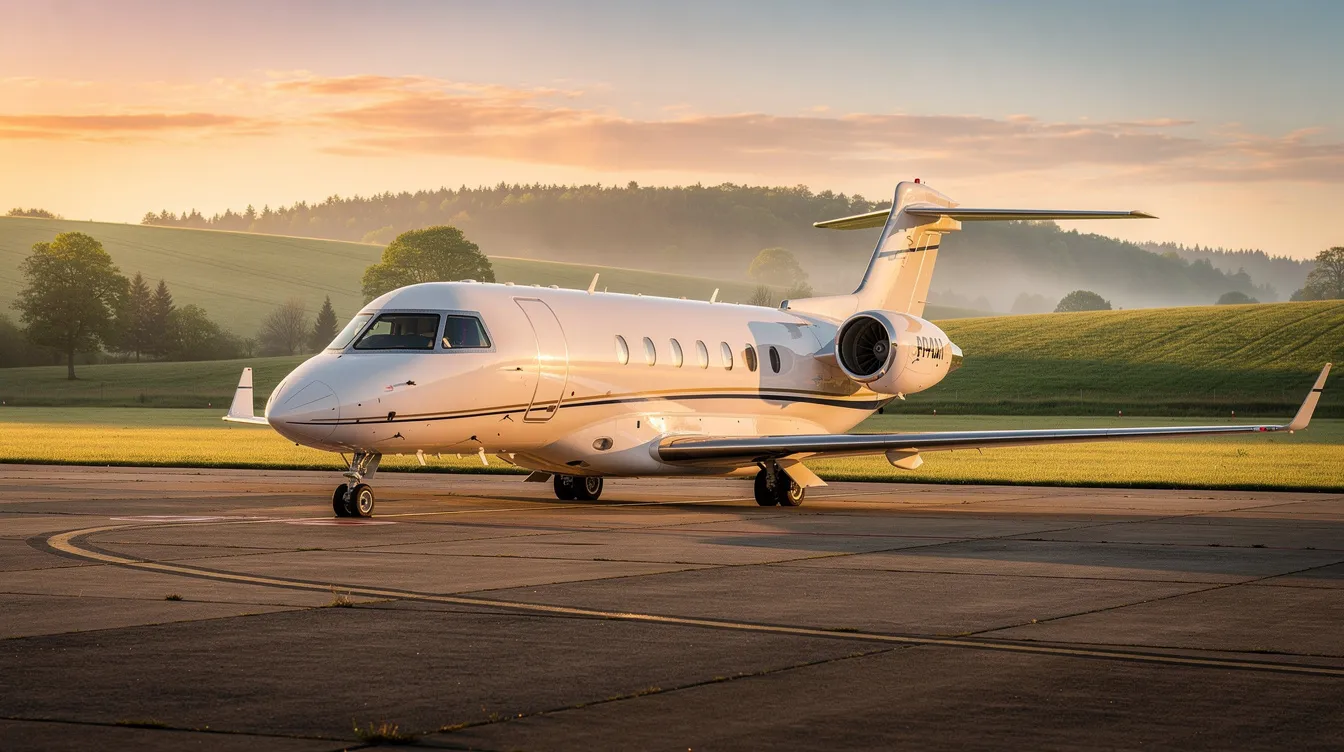
The Gulfstream G650 is the benchmark ultra-long-range jet, widely used by corporate flight departments, Fortune 500 companies, and UHNW families for missions carrying 12 to 15 passengers. Among Gulfstream aircraft, the G650 stands out for its combination of speed, range, and cabin volume.
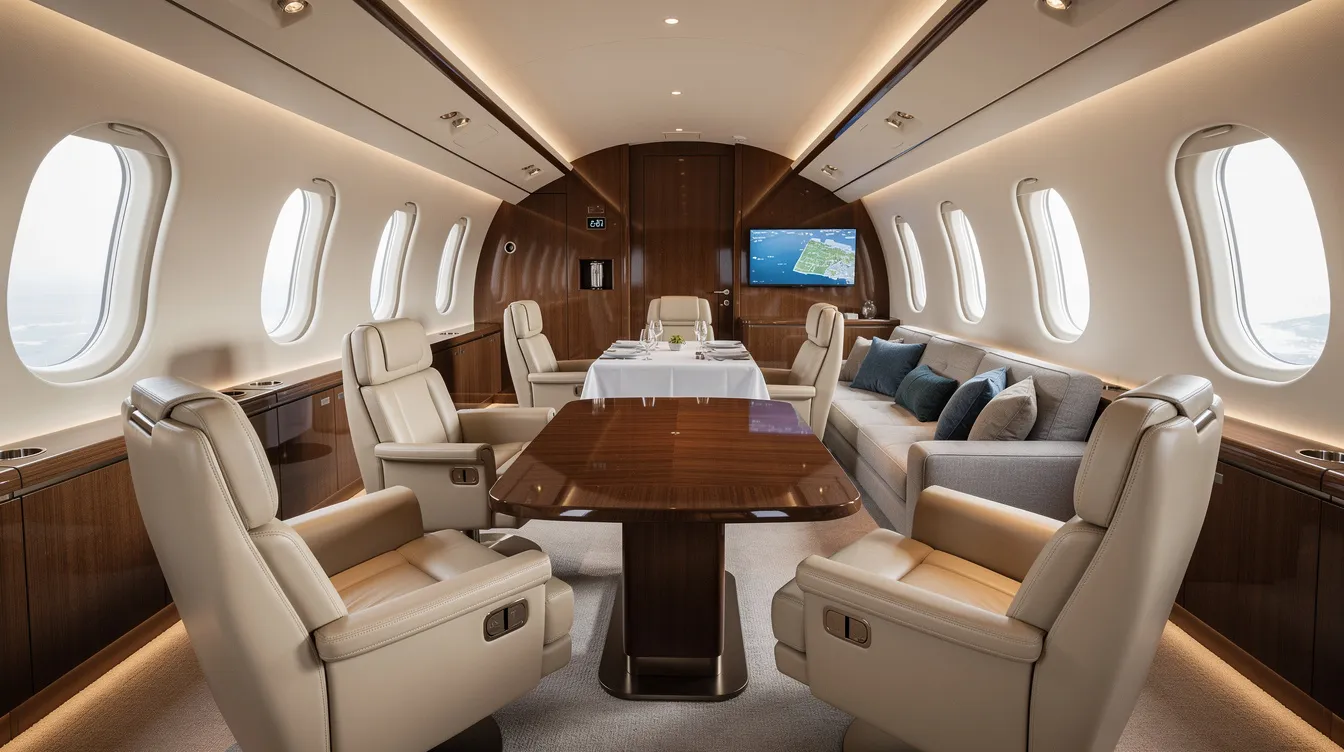
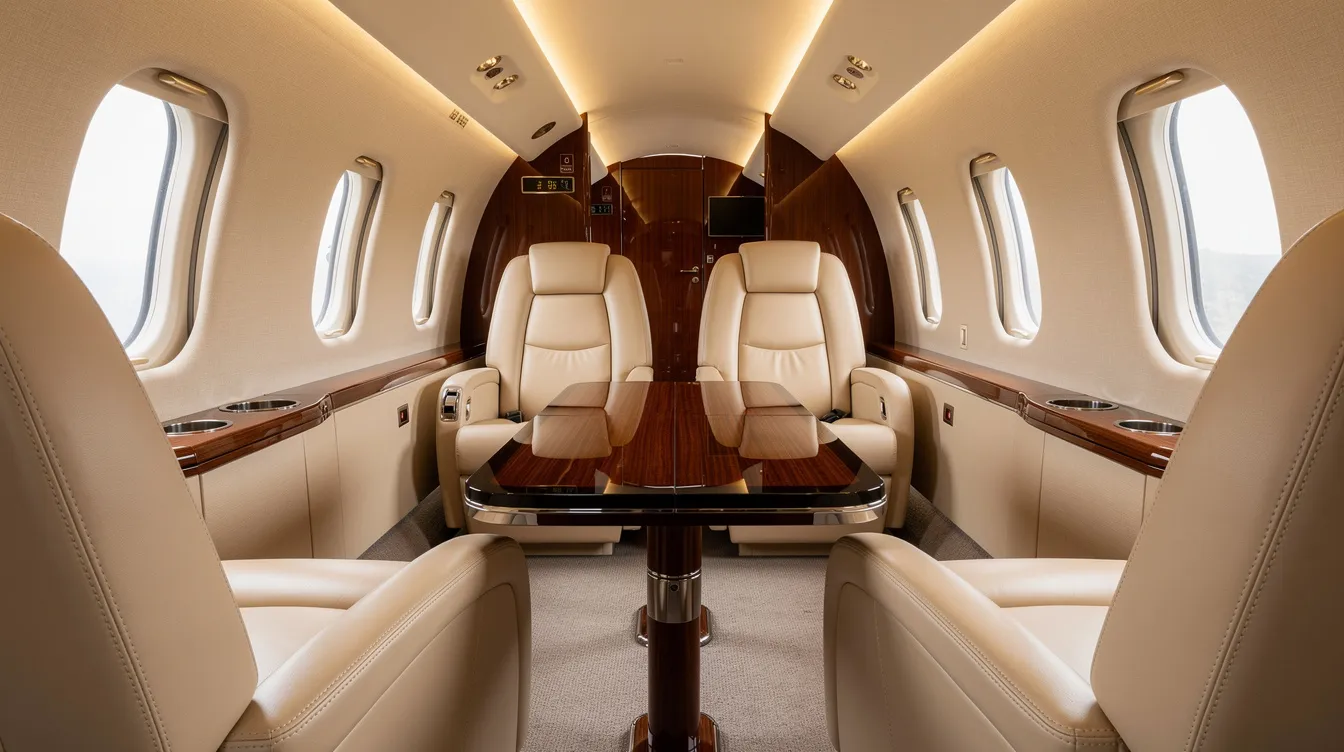
The Gulfstream G650 accommodates up to 15 passengers in typical charter layouts, with certification for up to 19 seats. Most operators reduce seat count to create multiple cabin zones: conference, lounge, dining, and stateroom.
Range of approximately 7,000 nm (the extended range G650ER reaches roughly 7,500 nm), enabling nonstop intercontinental flights such as New York to Tokyo, London to Buenos Aires, and Dubai to New York.
Cruise speed near Mach 0.90, making it one of the fastest civilian aircraft in operation.
Cabin altitude around 4,100 ft at 45,000 ft cruise, which reduces fatigue on nonstop flights crossing multiple time zones.
High-speed satellite Wi-Fi and advanced connectivity suitable for board-level meetings and secure communications across all cabin zones.
Catering options on the G650 include multi-course meals and premium beverages prepared in full-sized galleys, rivaling the quality found at fine dining establishments on the ground.
Charter costs for the G650 typically fall in the $10,000 to $15,000 per flight hour range, with the G650ER sometimes commanding higher rates depending on the year of manufacture and region.
Bombardier Global 6000
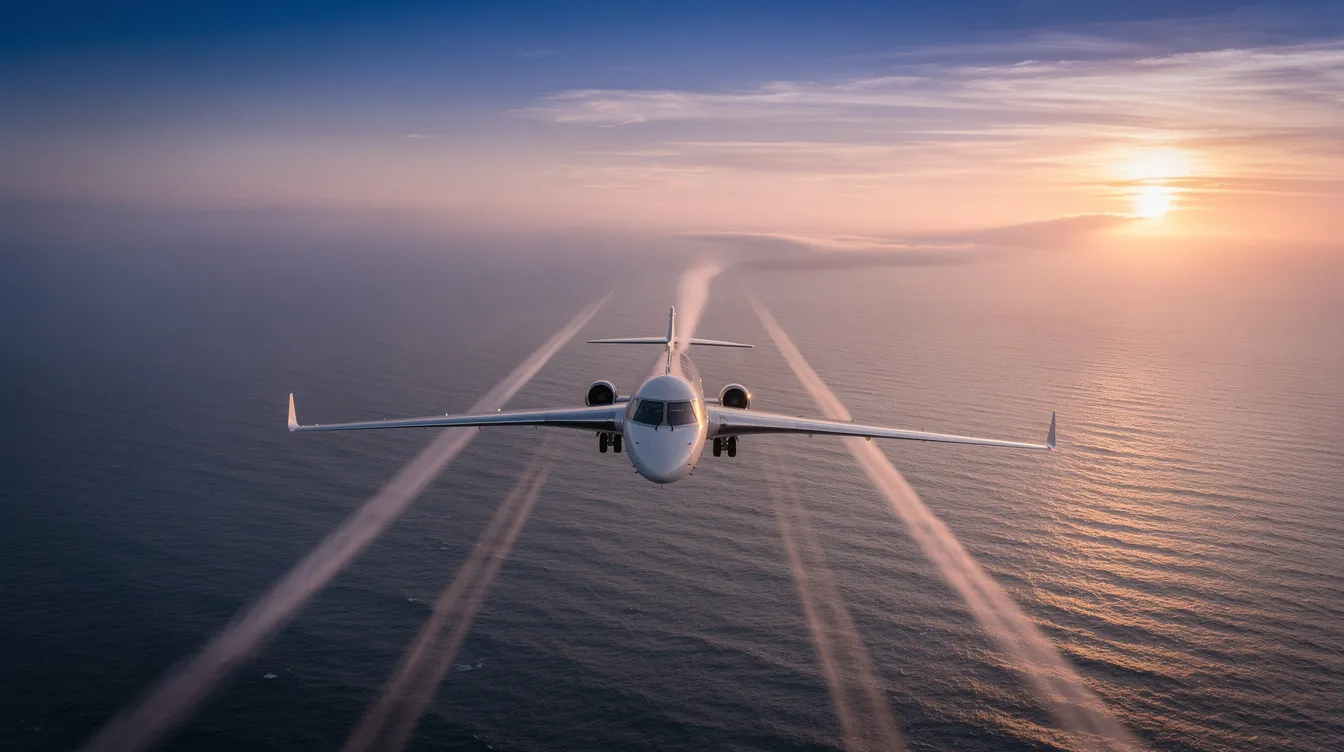
The Bombardier Global 6000 is a long-range large-cabin jet often configured for 12 to 15 passengers with three distinct living zones. Its spacious cabin and exceptional range make it a strong contender for intercontinental group travel.
The Bombardier Global 6000 has a range of 6,750 nautical miles at maximum range, making nonstop flights like New York to London, Paris to Dubai, and Los Angeles to Honolulu routine for 15 passengers.
Cabin height of approximately 6 feet 2 inches, width around 7 feet 11 inches, and roughly 195 cubic feet of baggage space accessible during flight.
Sophisticated climate control systems, lie-flat seating and divans, and a quiet interior suited to long missions.
Operating economics can be slightly more favorable than the G650 on many intercontinental missions, particularly where the full speed advantage of the Gulfstream is not critical.
Typical charter cost band of roughly $9,000 to $14,000 per flight hour in North America and Europe.
Dassault Falcon 7X
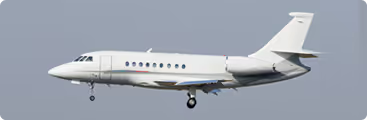
The Dassault Falcon 7X is a tri-jet known for combining a flight range of approximately 5,950 nm with excellent short runway capability. This makes it ideal when 15 passengers need access to challenging airports that exclude many heavy twin-engine jets.
The Dassault Falcon 7X can accommodate up to 19 passengers, though most operators configure for 12 to 16 to preserve comfort, with day and night layouts that convert sofas and club seats to beds.
Route examples at typical payload: New York to London, Geneva to Dubai, and Singapore to Sydney.
It can operate from runways as short as approximately 5,700 ft, giving access to airports like London City or smaller European Alpine airfields that many other large cabin jets cannot use.
Typical hourly charter range of $7,500 to $12,000, positioning it as an efficient option for 15 passengers when runway constraints or access to smaller airports matters more than absolute speed.
Challenger 850 and Similar Large Cabin Jets
The Challenger 850—a large cabin conversion derived from commercial flight modifications of the CRJ200 airframe—offers cost-effective cabin space for 15 passengers on routes under roughly 3,000 nm.
Seating configurations typically allow 14 to 16 passengers with generous cabin volume comparable to many heavy jets, but range is more modest at approximately 2,456 nm.
Common routes: New York to Miami, London to Athens, or Dubai to Riyadh, where a full intercontinental range is unnecessary.
Pre-owned Challenger 850s trade in the $8 to $12 million range, keeping charter rates in the lower large cabin band at about $7,000 to $10,000 per flight hour, reflecting lower operating costs compared to ultra-long-range jets.
FLYT members flying frequent regional missions with 10 to 15 passengers can benefit from fixed hourly access to similar large-cabin aircraft through the membership model rather than purchasing such an aircraft outright.
Typical charter costs for a private jet for 15 passengers
As of 2025–2026, charter costs for 15 passenger jets range from $7,000 to $15,000 per flight hour, depending primarily on aircraft type and region. Charter brokers may add significant markups to these base prices, making direct access or membership models increasingly attractive.
Sample Routes and Pricing
Realistic one-way charter pricing for 15 passengers:
New York to Los Angeles (coast-to-coast flight, ~5 hours): $70,000 to $120,000
Chicago to San Francisco (~4 hours): $50,000 to $80,000
London to Dubai (~7 hours): $90,000 to $140,000
Hong Kong to Sydney (~9 hours): $100,000 to $150,000
These figures generally include aircraft, crew, fuel, and standard catering but exclude extras such as de-icing, premium catering, positioning legs, or last-minute schedule changes. For domestic flights, access to smaller airports reduces travel time by 2 to 4 hours compared to using congested major international hubs. Choosing well-connected airports like Teterboro instead of JFK, or Farnborough instead of Heathrow, cuts landing fees and ground time.
FLYT's membership with fixed hourly rates is designed to convert these variable private jet charter quotes into predictable line items for frequent flyers moving 10 to 15 passengers several times per year.
Key Factors Affecting Price
Aircraft type and age are the main drivers of charter pricing. Newer jets like the Gulfstream G700 or Global 8000 command higher rates than earlier-generation models.
International routes increase total trip costs by roughly 25 to 50 percent due to overflight permits, handling, customs, and crew duty rules, especially on complex itineraries.
Peak periods (late December, World Economic Forum in Davos, major sporting finals) compress supply and can add 10 to 30 percent to charter costs.
Positioning charges can add 2 to 4 hours of flight time to the bill if the aircraft must fly empty to collect or reposition the group. Membership or floating fleet access can reduce this risk through FLYT's risk pool model and charter volatility protection.
Airport landing fees range from $100 to $1,500 per landing depending on location and aircraft weight, adding up on multi-stop itineraries.
Cancellation policies may impose penalties of 10 to 50 percent of the charter cost, another area where membership access offers greater flexibility.
Customized onboard service-security, bespoke catering, medical staff, or concierge add-ons-will also influence the total trip cost for 15 passengers.
Use cases: when a 15-passenger jet creates real value
Flying private with a group of 15 is not simply about comfort. It is a strategic decision that converts transit time into productive or meaningful hours. Below are two categories where a large cabin private jet creates measurable returns, whether the mission is business or leisure trips.

Corporate, investor, and government travel
Consider a board of directors or deal team of 12 to 15 executives moving between New York, London, and Zurich over three days for quarterly meetings or an M&A roadshow. Private jets provide high privacy for corporate teams, allowing confidential discussions in dedicated cabin zones that function like airborne conference rooms.
Fifteen-passenger jets support multiple work areas for meetings, enabling corporate teams to prepare for presentations while crossing time zones.
Fifteen-passenger jets enhance productivity during long-distance travel by eliminating layovers and allowing direct routing to secondary airports like London Farnborough or Zurich Altenrhein, cutting 2 to 4 hours of ground time versus major international hubs.
FLYT can support complex itineraries where aircraft type might change between legs-15 passengers outbound, 8 returning-through fleet interchange under a single membership.
Membership-based fixed hourly rates help CFOs and travel managers forecast travel budgets for recurring board meetings or government delegations, avoiding the volatility of spot-market charter pricing.
Family, leisure, and event travel
A multi-generational family trip from Los Angeles to Maui or London to the Maldives with 12 to 15 travelers, including children and grandparents, benefits enormously from private jet travel.
Separate cabin zones for children and adults, lie-flat sleeping for overnight sectors, and space for sports equipment or oversized luggage.
Private terminals and streamlined security allow older relatives and young children to avoid crowds and long security lines that make commercial flights stressful. Private jets allow for flexible scheduling without penalties, adapting departure times to the family's rhythm rather than airline timetables.
FLYT's concierge coordinates door-to-door logistics: ground transfers, villa or hotel arrival times, and catering aligned with dietary requirements for all 15 passengers.
For families or groups flying multiple leisure trips per year, membership access is often financially smarter than ad hoc chartering each trip at fluctuating rates.
Why membership can beat owning or chartering a 15-passenger jet
Buying a large cabin or ultra-long-range jet in 2025–2026 costs $25 to $75 million, plus $2 to $4 million annually in fixed operating costs before a single hour is flown. Aircraft owners also face depreciation, maintenance inspection downtime, crew management, and residual value risk. The higher operating costs of full ownership only pencil out at very high annual utilization.
Many corporate or family flight departments move 10 to 15 passengers just 25 to 150 hours per year, rarely enough to justify owning such an aircraft purely on cost grounds. Membership-based private aviation services provide flexible access to jets without tying capital to a depreciating asset, offering an asset-light alternative with predictable pricing.
For those considering jet cards or fractional ownership, membership avoids long-term share commitments, capital calls, and complexity around residual value or aircraft resale. FLYT is designed for executives and families who value financial efficiency and operational simplicity over visible asset ownership.
Cost Comparison
Buying a large cabin or ultra-long-range jet requires a significant upfront investment and ongoing fixed costs, which only make sense at very high annual utilization. Membership models, by contrast, allow access to the same class of aircraft for a predictable hourly rate, without the capital risk or depreciation.
Operational Simplicity
Membership-based private aviation services eliminate the need for crew management, maintenance oversight, and regulatory compliance, all of which are handled by the provider. This operational simplicity is especially valuable for organizations or families that fly 25 to 150 hours per year.
How FLYT Membership Works
FLYT offers access to a curated network of aircraft—from super midsize to ultra long range large cabin jets—using a floating, asset-light fleet model. Personalized service and concierge support are built into every interaction.
Members benefit from fixed hourly rates for each aircraft category, allowing accurate budgeting of 15-passenger trips months in advance regardless of last-minute swings in the open charter market. See details on FLYT pricing.
Fleet interchange means a member can use a Gulfstream G650 for a 15-passenger transatlantic leg and then a midsize jet for a 6-person regional hop, all under the same membership framework.
FLYT's risk pool model spreads operational and market risk across members, improving aircraft availability and reducing the need for any single client to own or fractionalize a jet.
Concierge-level support manages slot coordination at busy airports, onboard passenger preferences, and ground logistics, allowing the client team to focus on business or family rather than flight operations.
Complex itineraries and splitting groups: one large jet or two smaller jets?
Sometimes aircraft availability, runway constraints, or budget make a single 15-passenger private jet challenging to secure—especially on short notice. The alternative is splitting the group into two smaller groups. Both approaches have merit depending on the mission.
When one large cabin jet is the smarter option
Board-level confidentiality, a unified group experience, in-flight meetings, and simplified logistics all favor keeping 15 passengers on a single aircraft.
A Gulfstream G650, Global 6000, or Falcon 7X with 15 passengers offers shared dining, a single meeting space, and synchronized arrival times—critical for corporate and diplomatic missions.
Per-seat cost can actually be lower on a single large jet when landing fees and crew costs for two smaller aircraft are factored, especially on longer routes.
For complex itineraries with multiple legs across several days, the cabin space and baggage capacity of one large jet reduce operational friction significantly compared to larger jets split across two airframes.
Membership-based access to large cabin jets via FLYT can secure this configuration repeatedly, rather than relying on spot-market availability each time.
When splitting into two jets might make sense
Runway length at a destination may exclude heavy jets, or very short regional sectors may make light jets or turboprops far more economical.
Example: a 15-person roadshow where 8 executives fly the evening departure and 7 support staff fly the next morning, each on a super midsize or midsize jet.
In dense markets with limited large cabin availability, two smaller jets can reduce last-minute premiums, but coordination complexity increases.
FLYT's floating fleet and fleet interchange support split configurations under a single membership, aligning aircraft size precisely to each leg's actual passenger count.
On a simple comparison, two midsize jets each carrying 7–8 passengers on a 4-hour domestic leg might cost $60,000 to $90,000 combined versus $50,000 to $75,000 for a single large cabin jet, making the single jet more capital-efficient in most scenarios.
Safety, standards, and comfort for 15 passengers
For 15 passengers—often including senior executives, family members, or officials—safety and consistent operating standards in business aircraft operations are non-negotiable. This section covers the regulatory frameworks, crew standards, and onboard technologies that matter most.
Certifications, Crew, and Maintenance
Operators must maintain ARGUS Platinum and IS-BAO certifications (Stage II or III), which are meaningful indicators of operational maturity and audit-backed safety performance. Safety records for leading models in this category show excellent performance across millions of flight hours.
Crew qualifications on large cabin jets require airline transport pilot licenses and type ratings specific to their aircraft, well beyond a standard private pilot certification. Recurrent simulator training occurs at least twice per year.
Maintenance follows strict regulatory schedules for airworthiness, overseen by the FAA or EASA, using OEM-approved parts and procedures.
Heavy jets have advanced avionics and weather radar systems that support safe operations in challenging conditions across multiple regions.
For 15-passenger missions spanning several countries, flight planning, weather monitoring, and duty-time management become more complex, reinforcing the importance of a professional operations team. FLYT prioritizes operators and partners who demonstrate consistent, audit-backed safety performance rather than lowest-bid contracts.
Onboard Comfort: Turbulence, Wellness, and Workability
Modern large cabin jets use advanced wing designs, fly-by-wire systems, and higher cruise altitudes to smooth the ride on long-haul flights. While they are smaller than widebody commercial airliners, the engineering prioritizes passenger experience.
Ultra-low cabin altitude and high air refresh rates reduce fatigue. Circadian lighting on newer aircraft like the G650 and Falcon 7X helps 15 passengers crossing multiple time zones manage jet lag.
Advanced noise reduction technology enhances passenger comfort during flights, keeping cabin noise levels well below those of commercial equivalents.
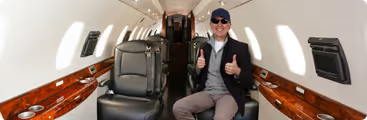
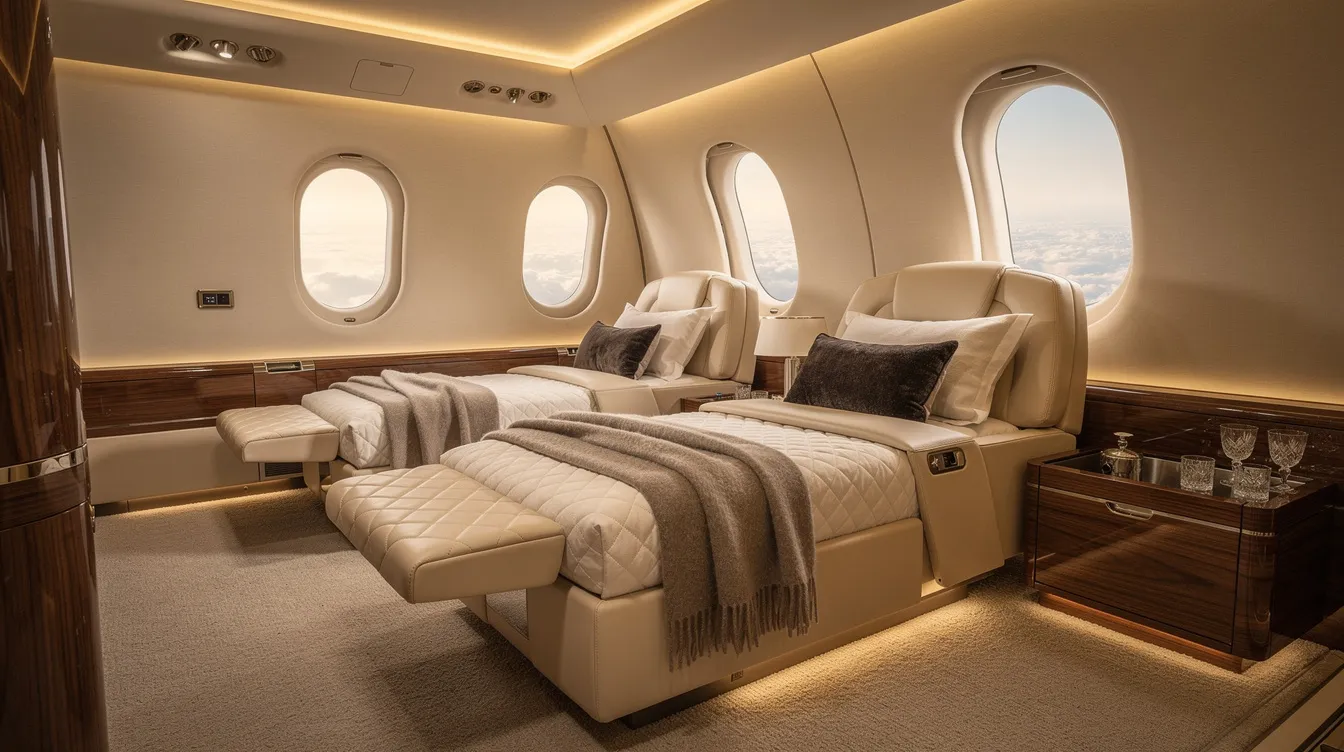
Luxury jets often provide lie-flat seating for overnight flights, with most large cabin configurations offering beds for at least 6 to 8 passengers. Full-sized galleys in luxury jets enable hot and cold meal preparations during flight.
Private jets often include high-definition entertainment systems and advanced audio systems, along with integrated cabin management systems that control lighting, temperature, and entertainment from individual seat panels. High-speed satellite Wi-Fi is standard on luxury private jets, supporting video conferencing and collaborative work across all cabin zones.
Fifteen-passenger jets feature multiple cabin zones for work and relaxation, and FLYT's advisors can match members with aircraft whose cabin configuration aligns with each trip's priority—whether sleep, meetings, or a mix of both.
How to structure access to a 15-passenger private jet with FLYT
The main paths to accessing a private jet for 15 passengers are ad-hoc charter, jet cards, fractional ownership, full ownership, and membership models. For frequent travelers who want predictable pricing and flexible aircraft selection but do not want to own an asset, membership offers a distinct structural advantage.
Charter, jet cards, fractional ownership, and how membership differs
Ad-hoc charter is flexible but volatile: no long-term commitment, but pricing, aircraft availability, and quality vary significantly trip by trip. See how FLYT compares to charter.
Jet cards offer pre-paid blocks of hours at set rates, usually tied to a specific aircraft category, but often come with blackout dates, peak surcharges, and limited fleet interchange. Learn more about FLYT vs jet cards.
Fractional ownership means purchasing a share (1/16 or 1/8) of a large cabin aircraft. It provides predictable access but requires material upfront capital, long-term contracts, and exposure to residual value risk. Cancellation policies in fractional programs can also impose penalties of 10 to 50 percent. Compare FLYT vs fractional ownership.
FLYT membership requires no aircraft purchase, no fractional share. Members receive fixed hourly rates and the ability to move between super midsize, large cabin, and ultra long range jets as trip profiles change. For an organization flying roughly 100 hours per year with 10 to 15 passengers, membership can reduce capital at risk while maintaining schedule control and consistent service quality. See FLYT vs brokers and jet cards.
What working with FLYT looks like for a 15-passenger group
A member submits a trip plan—dates, cities, 15 passengers, luggage requirements, and any meeting schedule—through the FLYT platform or concierge. Booking requires detailed passenger counts and travel dates to ensure proper aircraft selection.
FLYT models several aircraft options (for example, Falcon 7X versus Global 6000 versus two super midsize jets), providing transparent fixed hourly pricing, estimated total trip cost, and a clear comparison of pros and cons for each scenario.
Once the member selects an option, FLYT coordinates aircraft, crew, slots, handling, catering, and ground transportation, delivering a single consolidated itinerary. For recurring trips—monthly board shuttles, quarterly Europe–US meetings, or seasonal family migrations—FLYT can lock in schedules and capacity under the membership so planning load on the client's team remains minimal.
The objective is operational efficiency and predictable spend, not simply a luxury experience. A Boeing Business Jet may offer master suites and en-suite bathrooms for ultra-large group or head-of-state missions, but for most 15 passenger groups, the aircraft profiled in this article hit the practical sweet spot of range, comfort, and cost.
FAQ
These questions address practical planning details that come up frequently when executives, family offices, or travel managers evaluate private aviation strategies for groups of 15. For more questions, visit FLYT's FAQ.
How much luggage can 15 passengers bring on a large cabin private jet?
Most large cabin and ultra long range jets used for 15 passengers offer roughly 150 to 200 cubic feet of baggage space, typically allowing 2 to 3 checked bags per traveler plus hand luggage. Specific limits depend on aircraft type, route length, and any bulky items like golf bags or skis. On maximum range missions, operators may need to reduce payload slightly, so it is worth confirming baggage allowances during booking.
Can a 15-passenger jet handle complex multi-stop itineraries in different regions?
Aircraft like the Gulfstream G650, Global 6000, and Falcon 7X are designed for multi-leg trips across North America, Europe, the Middle East, and Asia. However, regulatory permits, crew duty rules, and airport slots require careful planning. FLYT's operations support and floating fleet model add real value here, managing the logistical complexity so the travel party focuses on the mission rather than the mechanics of moving between regions.
How far in advance should we plan a 15-passenger trip?
For straightforward domestic flights, booking 24 to 72 hours ahead is usually sufficient. International flights should be booked 7 to 14 days in advance to secure preferred aircraft, optimal slots, and any special services required for 15 passengers. Politically sensitive or peak-season missions benefit from 3 to 4 weeks of lead time.
Is a membership with FLYT suitable if we also sometimes fly smaller groups?
FLYT's fleet interchange is designed precisely for this situation. Members who occasionally need a large cabin jet for 15 passengers and, at other times, a super midsize or midsize jet for 4 to 8 passengers can access both under fixed hourly rates without maintaining separate programs or aircraft ownership. Explore a membership model designed around efficiency and transparency.
What is the minimum flying volume where membership starts to make financial sense?
Organizations or families flying roughly 25 to 150 hours per year—especially with a mix of 8- to 15-passenger trips spanning both business and leisure—are typically the best fit for a membership model like FLYT. This is the range where predictable pricing and guaranteed access matter, but full ownership rarely optimizes capital allocation. Below 25 hours, an ad hoc charter may suffice. Above 150 hours with consistently large cabin needs, fractional ownership or ownership enters the conversation, though even then, the capital commitment and higher operating costs deserve careful analysis.
Conclusion
For groups of 15 passengers, selecting the right private jet involves balancing capacity, range, comfort, and operational efficiency. Large cabin and ultra-long-range jets like the Gulfstream G650, Bombardier Global 6000, and Dassault Falcon 7X provide the optimal combination of space, amenities, and nonstop intercontinental capabilities. While chartering remains a flexible option, membership-based access models such as FLYT’s offer predictable pricing, fleet interchange, and concierge-level support without the burdens of ownership or fractional shares. Access to smaller airports and private terminals further enhances travel efficiency by reducing ground time and avoiding commercial airline hassles. Whether for corporate roadshows, family vacations, or government delegations, a 15-passenger private jet transforms complex group travel into a seamless, productive, and comfortable experience. Exploring membership with FLYT can deliver the operational simplicity and financial predictability that sophisticated travelers demand in today’s private aviation landscape.