Private aviation has moved from a purely ownership-driven market to a more flexible access market. After the post-2020 surge in private flights, charter demand cooled from its 2022 peak, yet remains above pre-pandemic levels, according to CNBC. That shift has made private jet flight sharing more relevant for frequent travelers who want efficiency without committing capital to an aircraft.
Key takeaways
Private jet flight sharing lets travelers book individual seats or split a charter flight, reducing cost while preserving core private aviation benefits.
Main models include semi-private jet flights, shared charter flights with open seats, and membership-based access with more predictable pricing.
FLYT focuses on fixed hourly rates, flexible aircraft access, and smart use of open seats as a cost-effective alternative to ownership or many jet cards.
Shared private jet flights work best on high-demand routes such as Los Angeles ⇄ Las Vegas and New York ⇄ Miami.
Safety regulations require operators to be properly certified to avoid illegal charters, regardless of whether passengers book one seat or the entire aircraft.
What is private jet flight sharing?
Private jet flight sharing is a way to fly private by buying individual seats or sharing the cost of a private jet flight instead of paying for the entire aircraft. In the U.S., these private flights must be operated by a properly certificated air carrier, typically under FAA Part 135 rules for on-demand charter operations.
The idea is simple: passengers share aircraft economics. If a 7-seat light jet is flying New York ⇄ Miami, one traveler may not need to absorb the whole charter. With private jet seat sharing, the available seats can be divided among other travelers, reducing per-person cost.
There are three common structures:
Semi-private flights: scheduled routes with limited passengers, often from a private terminal.
Shared charter: one party books a charter flight, then sells unused open seats.
Traditional private charter: one customer controls the schedule, routing, and cabin.
Shared charters allow groups to book and share unused seats, while semi-private flights operate on scheduled routes with limited passengers. By contrast, ownership and fractional ownership require far more capital. Fractional ownership guarantees a set number of flight hours annually, but usually involves multi-year commitments, monthly fees, and exposure to asset value.

Private jet flight sharing models explained
Not every shared flight works the same way. For sophisticated business travelers, the right model depends on route frequency, schedule sensitivity, privacy needs, and how often you expect to fly private.
Semi-private flights
Semi-private jet flights operate on set routes with fewer passengers than commercial airlines. The capacity of shared aircraft typically accommodates 4 to 12 passengers, while semi-private jet flights typically accommodate 6 to 14 passengers, depending on aircraft type.
These services usually focus on popular regional corridors, such as Los Angeles ⇄ , Las Vegas, or New York ⇄ Miami. Semi-private jet flights use smaller aircraft for fewer passengers, and semi-private flights provide access to smaller airports not served by major commercial airlines.
Passengers often use a private terminal, avoid commercial airport lines, and arrive just 15 to 30 minutes before takeoff. Passengers can arrive just 30 minutes before departure on many semi-private services. These flights offer more flexible scheduling than commercial airlines, although fixed departure times limit passengers’ control over schedules.
Flight sharing services can include membership-based apps or regional shuttles. Passengers can browse available flights on a flight-sharing app, compare individual seats, and book without organizing a full aircraft.
Shared charters
A shared charter begins when a traveler, family office, or company books a charter flight and makes unused seats available. Passengers can book individual seats on shared private jets, and shared private jet flights reduce costs by splitting expenses.
This is private jet sharing with more customization than scheduled semi-private options. It may be useful for a business trip, ski weekend, or golf trip where small groups need the same final destination.
Membership and open-seat access
Some membership programs provide private jet membership with shared access to private jets. Jet cards offer prepaid hours with guaranteed access, and jet card programs often feature fixed hourly rates for flights.
Membership programs provide cost efficiencies compared to ownership. Members can enjoy flexible scheduling and tailored itineraries, access to smaller airports, and concierge-level service. Several companies, including Surf Air and Tradewind Aviation, have helped familiarize travelers with by-the-seat and regional shared models, while FLYT approaches access through membership, fixed rates, and fleet flexibility.
Empty legs
Empty legs are repositioning flights. They can offer discounts, but they are less reliable than shared charter flights because the timing and routing depend on aircraft movement. They are useful when travel plans are flexible, but less suitable for critical meetings.
Comparison of private jet flight sharing models
Model | Passenger Capacity | Scheduling Flexibility | Privacy Level | Pricing Structure | Typical Use Case |
|---|
Semi-private flights | 6 to 14 | Fixed departure times | Moderate | Per-seat pricing | Frequent routes with consistent demand |
Shared charters | Varies (up to full) | Customized schedule | Moderate to high | Shared charter cost split | Small groups sharing a trip |
Membership access | Varies | Flexible, on-demand | High | Fixed hourly rates | Frequent flyers seeking flexibility |
Empty legs | Varies | Dependent on repositioning | High | Discounted one-way rates | Flexible travelers with open schedules |
How flight sharing compares to other ways to fly private
Executives should compare private air travel options across four factors: capital outlay, schedule control, price predictability, and operational burden.
A traditional charter provides maximum control. You choose the departure time, route, cabin, catering, and privacy. It is often best for a large group, confidential board work, or custom routes. The trade-off is cost: you pay for the entire aircraft, including operational expenses that may include repositioning, crew, fuel, and airport fees.
Jet cards and fractional programs create more certainty. Jet cards offer prepaid hours with guaranteed access. Fractional ownership guarantees a set number of flight hours annually. Both can work well, but jet cards, fractional shares, and aircraft ownership can involve meaningful upfront capital, contract terms, and limited flexibility.
Flight sharing provides access to the private jet experience at a lower cost. Per-seat costs can be reduced by up to 70% compared to traditional charters, depending on route, load factor, and aircraft size. Flight sharing allows access to luxury travel at a fraction of the cost of full charters, but passengers share a cabin with unknown travelers, reducing privacy.
For business use:
Routes and use cases where flight sharing works best
Shared flights primarily operate on popular regional corridors because the model needs consistent demand. Shared private jet flights typically use smaller aircraft, and high seat utilization is what creates the cost benefits.
Common examples include Los Angeles ⇄ Las Vegas, New York ⇄ Miami, and Los Angeles ⇄ Aspen. Popular routes for shared flights include New York to Miami, where commercial travel can be crowded, and premium commercial flights may still require long airport processing.
Transcontinental and business-heavy corridors such as New York,Dallas, or Chicago ⇄ to South Florida can also support shared private jet flights. For business travelers, avoiding congested commercial hubs can be more valuable than the seat itself.
Lifestyle use cases include weekend escapes, golf trips, family travel, and ski weekends. Small groups may book a private charter, then release open seats to other passengers to save money.
Private aviation also supports exclusive destinations and smaller airports that commercial airlines serve poorly, including Caribbean islands, smaller Colorado ski towns, and executive retreats in the Pacific Northwest.

The onboard private jet experience when you share
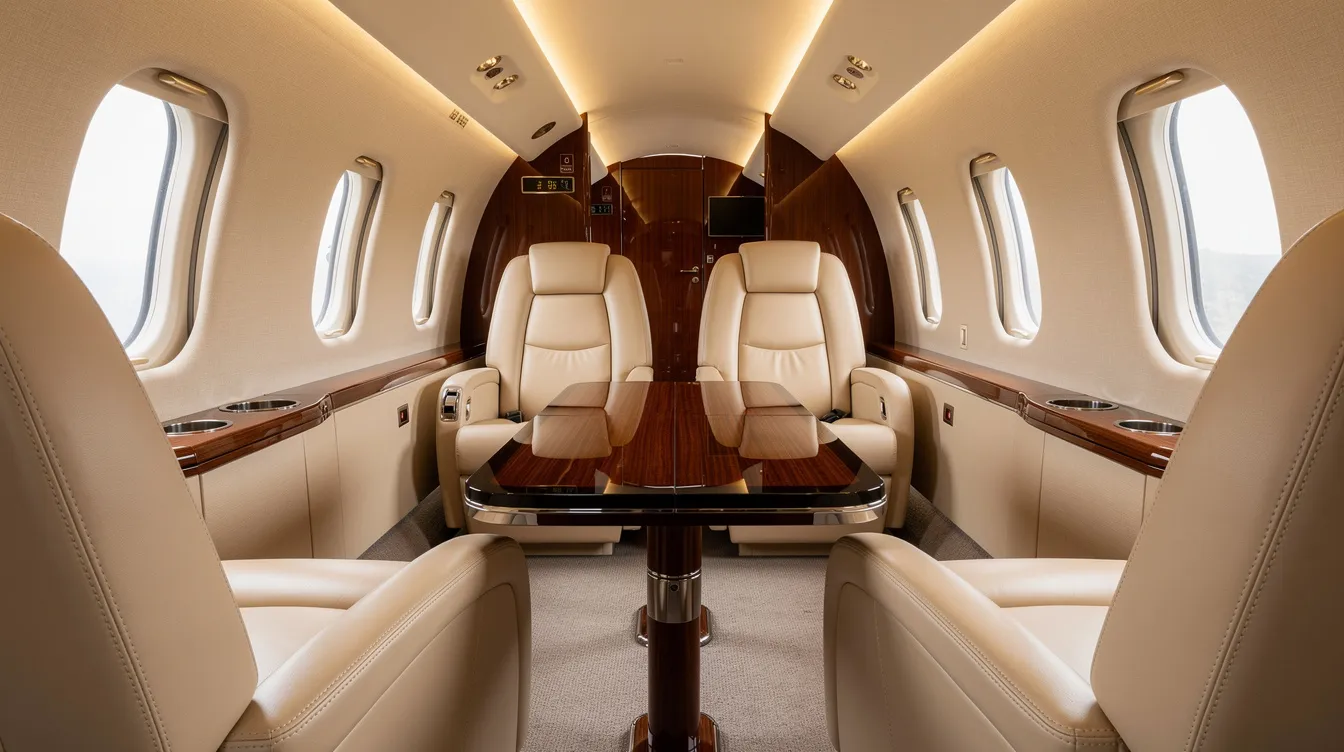
A shared flight still offers many private aviation advantages: private terminals, faster boarding, fewer passengers, and a calmer cabin than most commercial flights.
Typical semi-private cabins may carry 6–20 passengers, depending on the aircraft type. Seating may include spacious seating, direct aisle access, and a quieter environment than standard airline cabins. This can create an exclusive and comfortable experience without requiring the traveler to charter the whole jet.
Common amenities include Wi-Fi, beverages, light catering, and personalized service on the ground. Some programs include ground transportation coordination, concierge support, and additional perks for frequent travelers.
The trade-off is privacy. Other passengers may be in the cabin, and shared flights may limit luggage due to more passengers. If confidential calls, sensitive negotiations, or board-level discussions are required, a full private charter may be the better choice.
Costs, pricing structures, and booking policies
Cost-effective private aviation is not “cheap travel.” It is a smarter allocation of time, capital, and access.
Pricing depends on route distance, aircraft category, occupied seats, peak days, taxes, repositioning, and booking policies. Light jets cost less than super-midsize or large-cabin aircraft, while a smaller aircraft may be better for short regional missions. semi-private
Per-seat pricing on semi-private and shared charter flights can compare favorably with last-minute business-class tickets on major commercial airlines. Private jet seat-sharing can reduce costs for travelers because passengers share the economics of the aircraft.
Fixed hourly rates provide predictable pricing for private jet flights. Fixed hourly rates make private jet travel more accessible for frequent flyers, and cost-sharing models in private aviation often utilize fixed hourly rates to stabilize budgeting. Shared private jet flights can reduce costs through fixed hourly rates when the model allocates costs across passengers or members.
Still, booking details matter. Review advance purchase windows, cancellation rules, luggage allowances, weather policies, and whether flights may be canceled if a minimum number of seats are not sold. Transparent pricing is more valuable than vague “from” rates that escalate once fees are added.
Safety, certification, and operational standards
Sharing a jet does not reduce safety obligations. A direct air carrier or approved flight operator must meet regulatory requirements, crew standards, and maintenance programs. The FAA’s Part 135 framework governs many U.S. charter operations.
Before booking shared private jet flights, verify:
Part 135 certification or equivalent authority
Third-party safety ratings such as ARGUS or Wyvern
Pilot qualifications, recurrent training, and duty-time limits
Documented maintenance standards
Clear identity verification and baggage procedures at the FBO
A reputable charter company, broker, or membership platform should curate operators carefully, especially when enabling passengers from unrelated parties to share the same aircraft.

How FLYT approaches private jet access and open seats
FLYT is a membership-based private aviation platform built around access, predictability, and operational efficiency rather than ownership complexity.
FLYT members benefit from fixed hourly rates across a curated floating fleet. That makes forecasting private jet travel easier for family offices, founders, and executives than relying only on ad hoc charter or conventional jet cards. Learn more about how FLYT works.
The FLYT asset-light model uses a floating fleet and risk pool approach. Instead of tying members to one owned aircraft, FLYT can support aircraft fleet interchange and match the aircraft type to the mission: light jets for efficient regional movement, larger aircraft for longer travel or larger parties. Discover the benefits of our asset-light floating fleet and risk pool model.
Where appropriate, FLYT can leverage open seats and optimized routing to improve cost efficiency while still prioritizing privacy, schedule reliability, and personalized attention. This creates a middle path between full ownership, fractional commitments, and one-off charter volatility. See how we mitigate charter volatility.
For discerning travelers, the value is not just a private experience. It provides access to a more controlled, transparent, and flexible way to manage private travel globally. Explore our pricing and the FLYT platform to understand how we deliver this exclusive experience.
Is private jet flight sharing right for you?
Start with your actual travel patterns: frequency, routes, group size, luggage, confidentiality, and tolerance for schedule changes.
If you often fly between dense markets, semi-private or shared private options can lower cost and reduce airport friction. If your itinerary requires exclusive use, significant equipment, or niche airports, whole-aircraft charter may still be better.
A portfolio approach often works best. Use shared seats where demand is strong and predictable. Use membership access for custom routes, international travel, family trips, and sensitive business missions.
FLYT membership is designed for frequent travelers who want predictable pricing, global reach, concierge-level support, and flexible private jet access without the burden of ownership. Explore how FLYT’s fixed hourly rates can be structured around your travel profile rather than a generic jet card. Learn about the advantages of FLYT and how we compare to charter, jet cards, fractional ownership, and other options (brokers vs jet cards).
Frequently asked questions
Is private jet flight sharing always cheaper than traditional charter?
Not always. Per-seat pricing is often lower than paying for the entire aircraft, but total trip cost depends on route, aircraft type, demand, and passenger count. For 6–10 travelers, a full charter may be more efficient.
How far in advance do I need to book a shared private flight?
Popular semi-private routes may be booked days or weeks ahead. Last-minute seats can appear when operators release open seats closer to departure, but availability is not guaranteed.
Can I bring my entire team or family on a shared private flight?
Sometimes, but seat availability is limited by aircraft size and existing bookings. If you need 6–10 seats, a charter or membership platform may provide better control and privacy.
What happens if my schedule changes after I’ve booked?
Change rules vary by operator and membership program. Review cancellation windows, fees, and minimum-seat policies before committing to a semi-private or shared charter booking.
Does FLYT offer international private flights as well as domestic?
Yes. FLYT is designed for global private jet travel, with access to international charter flights, transparent pricing, and concierge support for customs, ground logistics, and cross-border coordination. Visit our FAQ or contact us for more details.
Conclusion
Private jet flight sharing offers a strategic and efficient alternative to traditional ownership and charter models, blending flexibility, cost-effectiveness, and access to premium travel experiences. For frequent flyers and executives seeking to optimize travel without the complexities of ownership, flight sharing through membership platforms like FLYT presents a smarter approach. By leveraging fixed hourly rates, a floating fleet model, and concierge-level service, FLYT delivers predictable pricing and global reach while minimizing operational burdens. This asset-light, membership-first model ensures travelers benefit from flying privately with enhanced convenience, privacy, and tailored support.
Explore how FLYT’s innovative private jet membership can transform your approach to private aviation. Discover a more flexible, transparent, and efficient way to access private jet travel without ownership headaches at flyt.com.