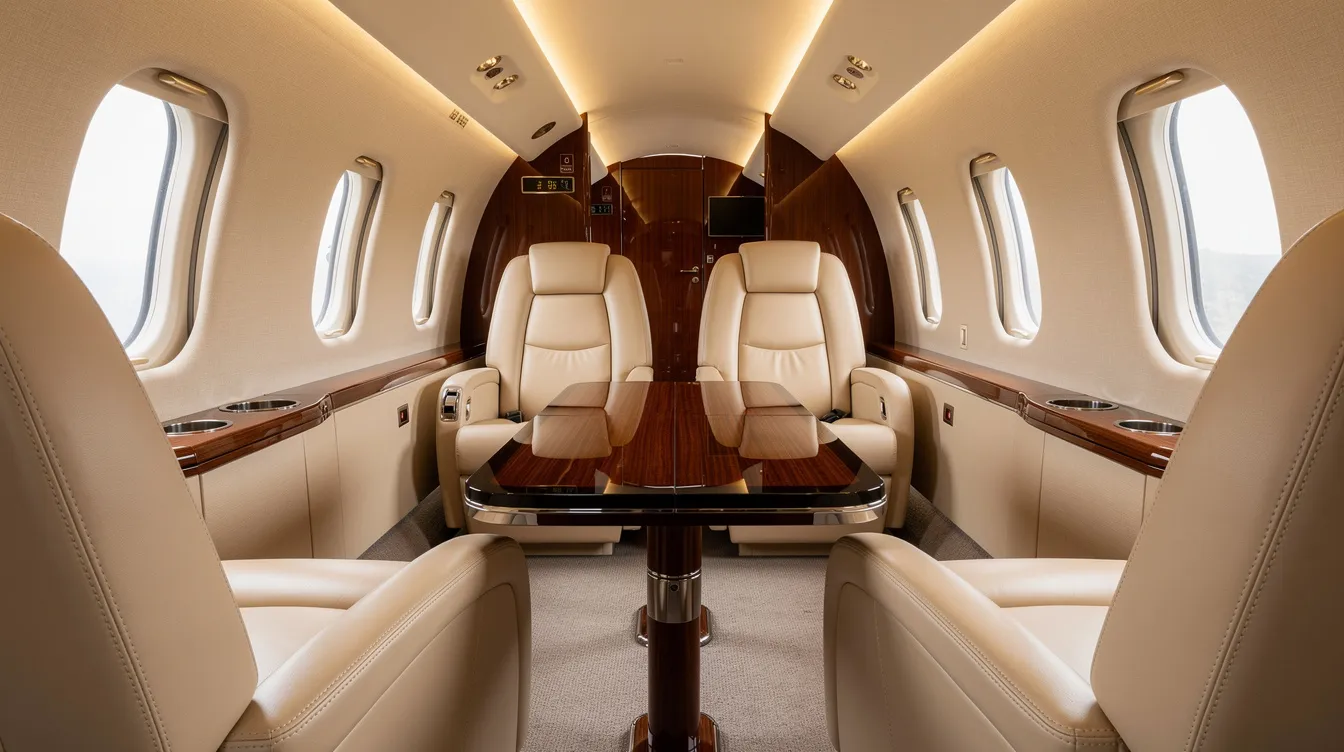
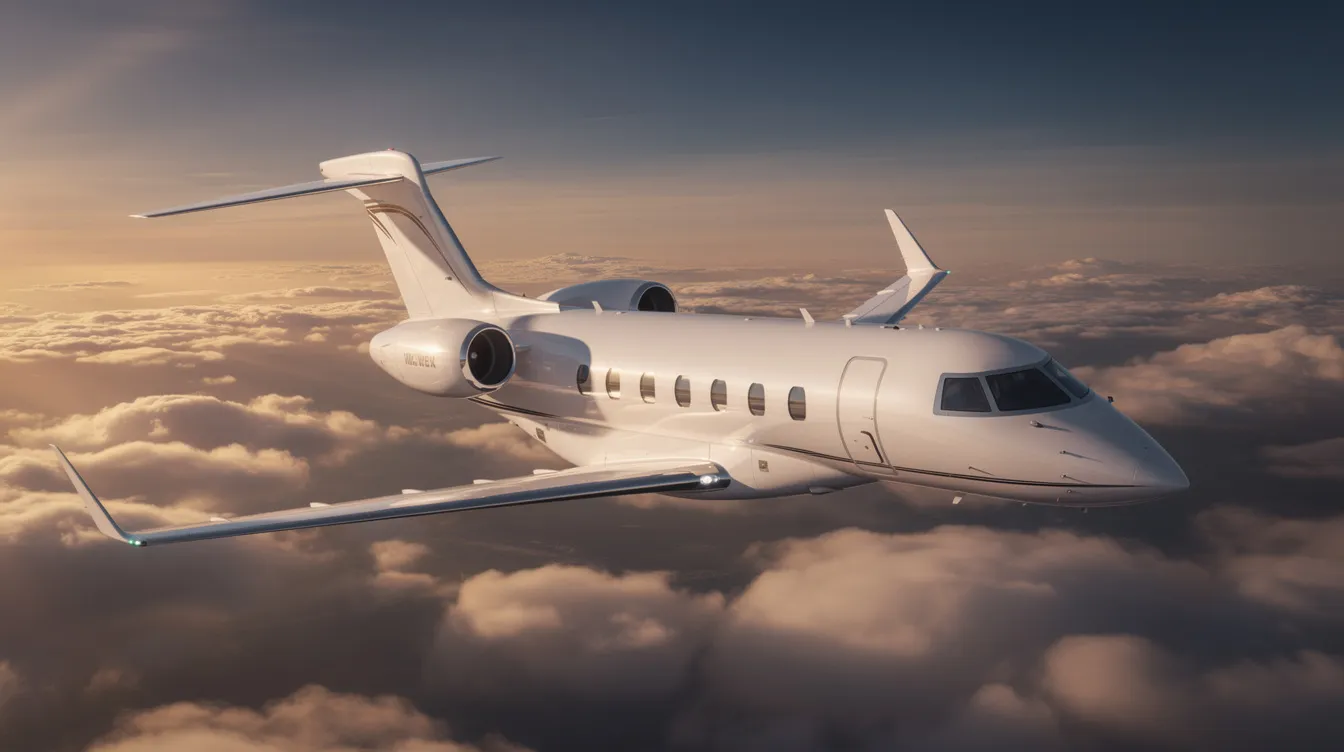
Private jet cost is one of the most misunderstood numbers in executive travel. Hourly rates, repositioning charges, taxes, airport fees, and seasonal surcharges all layer on top of each other, and most published figures only capture a fraction of the total. This guide breaks down every component of private jet pricing in 2026, provides real-world trip examples, and explains how a membership-based model like FLYT turns volatile charter quotes into predictable, transparent costs.
Key takeaways
Private jet cost is shaped primarily by aircraft category, flight hours, and a stack of fees and taxes that often go unmentioned in headline quotes. In 2026, realistic hourly charter rates range from roughly $3,000 to $6,000 for a light jet up to $10,000 to $18,000 or more for ultra-long-range aircraft.
For most executives flying under 150 to 200 hours per year, private jet membership and on-demand charter services are usually more cost-effective than full ownership or fractional shares. Chartering is usually more cost-effective for those flying fewer than 150 hours annually, because the capital and operational overhead of owning simply does not pencil out at lower utilization.
Total trip cost is never just the hourly rate. It equals the occupied flight hour rate plus airport and handling fees, plus federal excise tax at 7.5% in the U.S., plus itinerary-driven extras such as deicing, crew overnights, and aircraft positioning. Expect the real number to land 25 to 40 percent above the base hourly quote on most domestic flights and even higher on international routes.
FLYT's membership model addresses this volatility by offering fixed hourly rates, transparent itemized costs, and fleet interchange across aircraft categories, all without the capital burden of owning or co-owning a jet.
Throughout this article, you will find specific examples for routes like New York to Los Angeles, London to Dubai, and Los Angeles to Aspen, plus practical tactics to reduce private jet cost without sacrificing reliability or safety.
What actually drives private jet costs in 2026?
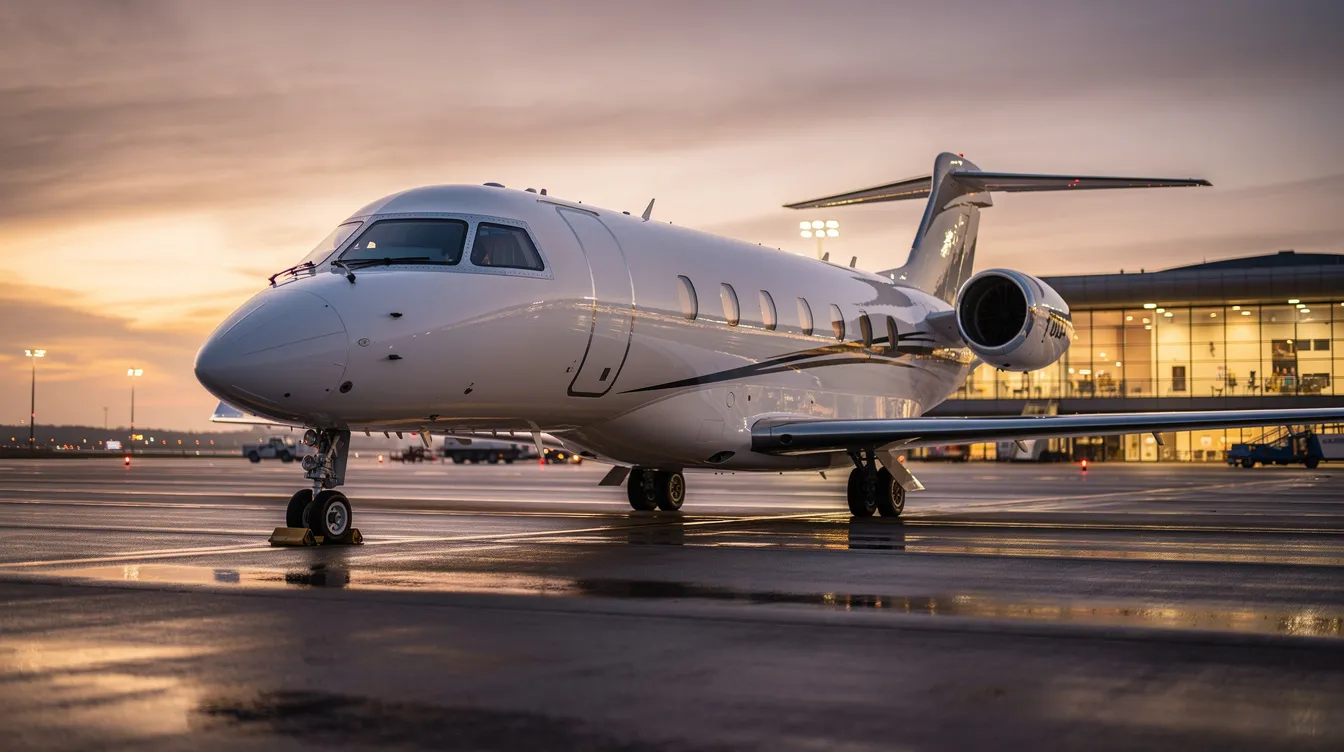
Most private jets are billed by the occupied flight hour, meaning you pay for the time passengers are actually onboard the aircraft in flight. That hourly rate is then shaped by four variables that can move the final invoice significantly in either direction: the aircraft type you select, the route and distance, the airports you choose, and the timing of your trip relative to market demand.
Understanding occupied flight hours is critical. This metric counts only the hours when you are in the air, but many charter quotes also fold in non-revenue repositioning time, the deadhead legs when the aircraft flies empty to reach your departure point or return to its base. Whether that repositioning is priced separately or buried in the hourly rate can swing the total cost by thousands of dollars.
The cost of a private jet is determined by aircraft size and range. Flight distance significantly impacts fuel consumption and pricing, and fuel expenses can fluctuate widely and significantly impact operating costs. Seasonality and demand also matter: major holidays, global events, and peak travel corridors can push rates 20 to 40 percent above baseline, while off-peak windows offer meaningful savings.
Here are the primary drivers in concise form:
Aircraft categories: turboprops, very light jets, light jets, midsize private jet, heavy cabin, and ultra-long range each occupy distinct cost bands driven by maximum takeoff weight, fuel burn, cabin space, and advanced avionics.
Distance and routing: longer sectors consume more fuel, and overflight fees or complex international routing add navigation charges.
Airport selection: landing fees, ramp fees, and FBO handling vary dramatically between major hubs and regional airports. High-density fields like Teterboro or Van Nuys carry premium handling costs.
Seasonality and demand: aircraft availability tightens around peak days, holidays, and major events, driving surcharges that can make the same route cost substantially more one week versus another.
Realistic 2026 hourly ranges for the U.S. and European markets look roughly like this:
Aircraft category | Typical hourly rate (USD) |
|---|
Turboprops | $2,000 to $3,500 |
Very light jets & light jets | $3,000 to $6,000 |
Midsize jets | $4,500 to $8,000 |
Heavy & ultra-long-range jets | $10,000 to $18,000+ |
One reason private jet charter cost quotes can seem inconsistent is that different operators include or exclude different line items. One quote may bundle federal excise tax and positioning into the hourly rate, while another strips both out. That opacity is exactly why transparent models, where every line item is visible before you commit, have become a priority for frequent flyers.
How much does it cost to charter a private jet by aircraft type?
Aircraft selection is the single biggest lever on trip cost. As a general rule, the smallest jet that is the most efficient choice. Hourly rates for chartering vary significantly depending on the size of the jet. You pay a flat fee per flight hour when chartering a private jet, and that rate scales with aircraft performance, cabin amenities, and fuel burn. Charter flights typically cost between $2,000 and $15,000 per hour depending on the category.
Very light jets and light jets
Very light jets in the very light jet category seat four to six passengers and work well for short regional flights under roughly 1,000 miles. A light jet expands the envelope to six to eight passengers and a range of about 1,500 to 2,000 nautical miles. Charter rates for these aircraft run roughly $3,000 to $6,000 per hour in 2026.
A concrete example: a round-trip charter flight from New York to Chicago on a light jet, roughly two hours each way, would land in the $18,000 to $30,000 range once you factor in the hourly rate, landing fees, handling, and taxes. If you need to rent a private jet for a quick day trip with a small team, this category keeps the total cost manageable.
Midsize and super midsize jets
A midsize jet seats seven to nine passengers, offers a stand-up cabin with more cabin space, and handles transcontinental or Western European routes comfortably. Super midsize aircraft push the range further and add amenities like full galleys. Hourly rates for this category typically fall between $4,500 and $8,000 per hour. Larger jets provide higher passenger capacity and greater fuel burn rates, so the step up from light to midsize is meaningful on longer sectors.
For instance, Los Angeles to Miami on a super midsize jet, roughly five hours of flight time, might cost $45,000 to $60,000 one way before taxes and extras. The per-person math improves quickly when the entire aircraft is filled with a team of seven or eight.
Large cabin and ultra-long-range jets
Large jets cost $8,000 to $14,000 per hour domestically. For intercontinental missions like New York to London or London to Dubai, ultra-long-range aircraft with nonstop capability are essential. Hourly rates for this tier run from roughly $10,000 to $18,000 per hour, and VIP airliners can reach $16,000 to $23,000 per hour for the most expansive cabins and passenger capacity. A 10- to 12-hour sector on a heavy cabin jet would generate a base cost of $100,000 to $180,000 before fees and taxes.
These are the aircraft for international flights where time, comfort, and nonstop routing all matter. The larger aircraft also supports flight attendants and premium in-flight service on long-haul sectors.
Turboprops
If your route involves short hops to smaller or mountainous airports, turboprop jets cost $2,000 to $4,000 per hour and remain the most economical option. A flight from Denver to Telluride, for instance, might cost $6,000 to $10,000 round trip on a turboprop. These aircraft access runways that business jets cannot, making them a practical tool for certain itineraries.
Typical private jet trip examples and ballpark costs
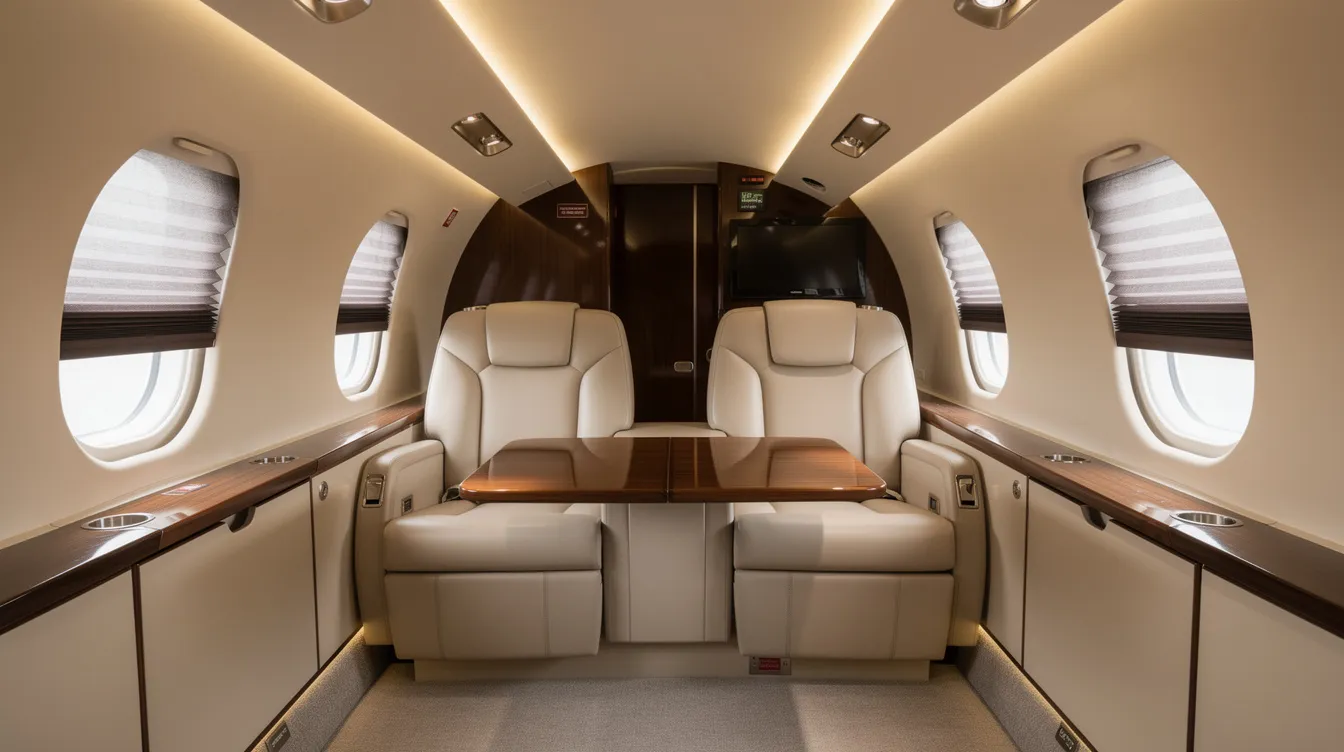
The following scenarios offer simplified, approximate benchmarks so you can quickly compare private jet travel costs against commercial flight alternatives. These figures assume 2026 market rates and include estimates for handling, positioning, and taxes, but actual quotes will vary based on operator, season, and aircraft availability.
Domestic U.S., New York (TEB) to Los Angeles (VNY) on a super midsize jet: flight time approximately five and a half to six hours one way. At an hourly rate of $9,000 to $12,000, the one-way base cost runs $50,000 to $70,000. A same-day or one-night round trip, including positioning, crew overnights, landing fees, and handling, could land in the $110,000 to $150,000 range. This is a common route for executives who need to be in both cities within 48 hours and cannot afford the schedule friction of a commercial flight.
European short-haul, London (LTN) to Ibiza on a light jet: flight duration roughly one and a half to two hours. At European light jet rates of approximately $3,500 to $5,500 per hour, a one-way trip costs around $6,000 to $10,000. A round trip with extras typically runs €15,000 to €25,000.
Transatlantic, London (LTN) to New York (TEB) on a large cabin jet: flight time around seven to eight hours nonstop. At $11,000 to $18,000 per hour, one-way cost before taxes and ground fees runs $80,000 to $150,000. Add customs, crew overnights, and return positioning, and the round-trip total can exceed $200,000.
Short-haul regional, Los Angeles to Aspen on a light jet or turboprop: flight time about one and a half to two hours each way. Despite the short flight duration, daily minimums and expensive mountain-airport handling fees push the round-trip total cost to $15,000 to $25,000. Short legs can be disproportionately expensive per mile because takeoff and landing cycles, not just cruise time, drive costs.
Per-person comparison: if a six-person executive team shares a midsize jet mission costing $60,000 round trip, the per-person cost is roughly $10,000. Last-minute business-class tickets on the same route might run $2,500 to $4,000 per person, but those fares do not account for hours lost in airport queues, connections, or the inability to hold confidential conversations. When time, flexibility, and productivity are considered, flying private narrows the gap substantially.
Private jet charter costs vs ownership, fractional, and membership
Accessing private aviation falls along a spectrum from capital-heavy models, where you own or co-own the aircraft, to asset-light models, where you pay for access on a per-trip or membership basis. The right position on that spectrum depends on how many flight hours you log, how much capital you want to deploy, and how much operational complexity you are willing to absorb.
Full private jet ownership
To own a private jet outright, you begin with acquisition. A new light jet costs approximately $3 million to $5 million. Midsize aircraft range from $8 million to $20 million. Ultra-long-range and large-cabin jets can reach $30 million to $120 million, depending on the model and configuration. Private jet purchase prices vary heavily based on condition and age, so pre-owned aircraft can reduce entry cost, but maintenance reserves and avionics upgrades may offset some of those savings.
Annual operating costs for a private jet can exceed the initial purchase price over a surprisingly short horizon. Fixed costs for private jet ownership include crew salaries and insurance premiums. Pilot and crew salaries alone can run $200,000 to $500,000 per year, depending on aircraft type and crew requirements. Insurance costs typically run 1 percent to 2 percent of the aircraft's value annually. Hangar storage costs vary based on location and facility type, but commonly range from $30,000 to $150,000 per year.
Typical variable costs for a private jet include fuel and maintenance expenses. Fuel costs are a significant expense in aircraft operation, and they scale directly with hours flown. Private jet ownership often includes management fees for overseeing operations, crew scheduling, and regulatory compliance, which can add $5,000 to $15,000 per month. Fixed costs also include fees for managing aircraft operations and crew scheduling.
All in, a light jet flying 200 to 300 hours per year generates annual fixed and variable costs of roughly $500,000 to $900,000, excluding depreciation. For a midsize or heavy aircraft, annual operating costs climb above $1 million. Private jet ownership starts to become competitive with charter only at roughly 300 to 400 or more flight hours per year.
Fractional ownership and jet cards
Fractional ownership means purchasing a share of a specific aircraft, typically a 1/16th share for about 50 hours per year or a 1/8th share for about 100 hours. Fractional ownership requires a minimum investment of $400,000, and for larger or newer aircraft, the buy-in is considerably higher. Monthly management fees of $8,000 to $25,000 layer on top, along with occupied hourly rates that can be higher than comparable on-demand charter rates because you are also paying for guaranteed availability and shared overhead. Fractional ownership suits frequent flyers over 100 hours annually who want consistency but can tolerate capital lock-up and long-term contracts.
Jet cards provide predictable pricing for moderate flyers by pre-purchasing a block of hours at fixed rates. Jet card programs typically offer fixed hourly rates for flights. Jet cards require a minimum deposit of $50,000 to $150,000, depending on the provider and aircraft category. A 25-hour jet card typically starts from around $150,000. These programs offer more flexibility than fractional shares, but they still involve upfront capital, and some include peak-day surcharges, blackout periods, or rate escalators that erode the predictability they promise.
For reference, some providers have explored subscription-style access at lower price points. Surf Air offers unlimited flights for a monthly fee starting at $295, though that model targets scheduled routes on smaller aircraft and is fundamentally different from on-demand private charter.
On-demand charter
Charter services offer flexibility without long-term commitments. You book a specific aircraft for a specific trip, and the relationship ends when the wheels stop, so the cost to rent can swing widely from one itinerary to the next. The upside is zero capital outlay and complete flexibility. The downside is price volatility: private jet charter costs depend on the hourly rate and additional service fees, and those can shift dramatically based on demand, operator, and how thoroughly the quote discloses all charges. Repositioning fees apply if the aircraft has to move before pickup. Many frequent flyers choose fractional ownership or on-demand charters to manage costs, but pure charter leaves you exposed to inconsistent service levels and hidden fees across different charter company providers.
Membership-based access through FLYT
Membership programs allow access to private jets without ownership costs. FLYT sits between the predictability of ownership and the flexibility of on-demand charter services. Members access a global fleet at fixed hourly rates by aircraft category, with fleet interchange that lets you move from a light jet on a short hop to an ultra-long-range cabin on an intercontinental mission without maintaining separate contracts. There is no aircraft to depreciate, no crew to employ, and no hangar fees to pay. Chartering private jets allows flexibility without capital outlays for ownership, and FLYT's membership structure adds the consistency and transparency that pure charter often lacks.
Understanding fees, taxes, and "hidden" costs in private aviation
Many travelers are surprised by charges that surface after the headline hourly rate. This section breaks down the most common line items so you can evaluate any private jet rental prices with full awareness of what is and is not included.
Airport and handling fees
Landing fees range from $100 to $1,500 per flight depending on aircraft weight and airport authority. A turboprop landing at a small regional field might incur $100 to $200; a heavy jet at a major hub can exceed $1,000.
Ramp and handling fees from FBOs, the fixed-base operators that serve as your private terminal, vary widely. High-density airports like Teterboro or Van Nuys charge premium handling rates. Airport fees vary dramatically between major hubs and alternatives, and choosing a secondary field can cut these costs meaningfully.
Hangar fees apply when aircraft need to be sheltered overnight, especially in cold climates or during winter operations.
Government taxes and surcharges
Federal Excise Tax is 7.5% on domestic flights in the U.S. This applies to the air transportation portion of the charter cost, not to fixed management fees in fractional programs, a distinction recently reaffirmed by the U.S. Sixth Circuit.
Per-segment fees are charged per passenger per leg on domestic U.S. itineraries, adding a small but real cost to multi-stop trips.
International flights may trigger additional head taxes and country-specific charges. European operators often apply VAT on ground services and certain charter elements.
Fuel surcharges are common, reflecting current fuel prices. Some operators include fuel in the hourly rate; others pass it through as a separate line item, which makes comparing quotes difficult without reading the fine print.
Operational extras
Crew overnight stays can add $200 to $600 per crew member per night when the flight requires a layover at the destination. Multi-day trips compound this quickly.
Aircraft positioning and repositioning fees apply when the aircraft is not based near your departure point. This can add one or more additional billable flight time segments at the same hourly rate plus fuel.
Deicing in winter operations is charged per event and can run several hundred to several thousand dollars depending on aircraft size and conditions.
Additional costs like premium in-flight catering, ground transportation arrangements, and satellite Wi-Fi are typically available but priced separately.
A transparent provider itemizes every one of these charges in advance rather than treating them as after-the-fact hidden fees. FLYT's approach is to show each line item clearly on estimates and invoices so members can make informed routing and scheduling decisions.

How does the cost of a private jet compare to a commercial flight
On a purely ticket-price basis, a private charter will almost always exceed commercial business class. That comparison, however, only captures one dimension of the equation. The real calculation for most executives involves schedule control, productive travel time, and the elimination of friction that commercial aviation introduces.
Consider a six-person executive team flying from New York to Dallas round-trip. Business-class tickets at $1,200 to $2,000 per person, round-trip, total $7,200 to $12,000 for the group. A midsize jet on the same route, roughly three hours each way, might cost $40,000 to $55,000 round trip. The price premium is real.
But factor in what commercial travel actually costs that team beyond the ticket. Two to three hours of airport time per leg across arrivals, security, boarding, and baggage claim. Possible overnight hotel stays if connections are needed. Lost productivity during those hours, and the inability to discuss sensitive deals openly in a commercial cabin. If each team member's time is valued at even $500 per hour, the six to eight hours of collective friction per leg represent $18,000 to $24,000 in opportunity cost per round trip.
Now consider a family or investor group traveling to a secondary airport with no nonstop commercial service. The private jet eliminates connecting flights, overnight hotels, and hours of waiting, often making the total cost comparison much closer than it appears at first glance. Private travel becomes the operationally rational choice when schedule control and time value are weighted properly.
FLYT is designed for travelers who already value time and operational control highly. The goal is not to offer the lowest possible headline fare but to provide predictable, optimized private jet pricing that makes smart financial sense when the full cost of travel is considered. Learn more about FLYT's advantage.
How FLYT's membership model makes private jet costs more predictable
FLYT is a membership-based private aviation service that gives access to private jets globally without the capital burden of owning, co-owning, or pre-purchasing an aircraft. It is built for executives and families who fly enough to need reliable private jet service but not enough, or not consistently enough, to justify tying up millions in a depreciating asset. Explore how FLYT works.
Fixed hourly rates
Members see consistent pricing by aircraft category rather than fluctuating quotes that change with every call to a different charter company. Whether you are booking a light jet for a two-hour domestic hop or an ultra-long-range cabin for a transatlantic crossing, the hourly rate is established in advance and remains stable. This supports accurate budgeting for ongoing costs and annual travel planning without the guesswork that defines much of the on-demand charter market. See details on FLYT pricing.
Asset-light, floating, ultra-long-range
FLYT utilizes a vetted network of operators and aircraft rather than tying members to a single tail number. This asset-light floating fleet approach reduces deadhead repositioning by matching the nearest suitable aircraft to each mission. It also means members are not exposed to the depreciation risk, maintenance surprises, or crew salaries that come with owning a private plane. The operational efficiency gained by an asset-light model is passed back to members in the form of more competitive and stable rates. Learn about the risk pool model and charter volatility protection that support this.
Fleet interchange
Members can switch between aircraft sizes based on each trip's requirements. A two-hour flight with four passengers calls for a light jet. A 10-hour sector with 12 passengers and baggage calls for a larger aircraft. FLYT's fleet interchange lets you move between categories without separate programs, duplicate contracts, or complex administrative structures. You always fly the right-sized aircraft for the mission, which is one of the most reliable ways to keep private jet rental costs in line.
Transparent pricing and concierge support
Every estimate shows hourly charges, applicable taxes such as federal excise tax, and expected extras like crew overnights or handling fees. There are no buried surcharges. A dedicated concierge team optimizes routings, minimizes positioning fees, and manages logistics from wheels-up to ground transportation at the destination. The result is a private jet service where members understand exactly how much it costs before they confirm. Discover the FLYT platform and concierge benefits.
Practical ways to reduce private jet costs without compromising experience
Be flexible on dates and times. Avoiding peak days and slot-constrained periods can lower hourly rates and reduce airport fees. Flying midweek rather than Friday afternoon, or departing a day before a major event rather than the morning of, can yield meaningful savings.
Fly to secondary or executive airports where appropriate. Choosing White Plains instead of Teterboro for certain New York-area trips, or Burbank instead of Van Nuys during peak season, can reduce landing and handling fees as well as taxi times. Regional airports often offer faster turnarounds and lower ongoing costs.
Consolidate trips and plan efficient routing. Scheduling meetings to avoid unnecessary overnight crew stays or extra positioning segments materially reduces total cost. If you can combine two cities into one routing sequence rather than two separate round-trip flights, the savings on repositioning alone can be substantial.
Consider empty leg flights when your schedule allows. Empty leg flights offer discounts of up to 75% off standard rates. These flights occur when jets reposition without passengers, and they can reduce costs to around $1,000 to $2,000 for the entire aircraft on certain routes. Empty leg flights are ideal for travelers with flexible schedules, though they are often posted on short notice and require adaptability in timing and routing. Learn more about premium savings.
Work with a membership-based provider like FLYT that proactively optimizes aircraft selection and routing and that discloses all fees up front so members can make cost-aware choices. A concierge team that understands your travel patterns can identify savings you would not find on your own.
Is FLYT right for your private aviation profile?
The typical FLYT member flies roughly 25 to 200 private hours per year. They are often an executive, investor, or business owner who values flexibility and predictability more than the prestige of having their name on a tail number. They want to know what private jet rental will cost before they book, and they want the freedom to scale up or down based on changing business and personal needs.
If you fly fewer hours annually, perhaps 10 to 25, on-demand private charter might be sufficient for most trips. However, FLYT membership can still streamline access during peak periods or complex itineraries where availability and pricing on the open market become unpredictable.
If you are a high-utilization flyer considering fractional or full private jet ownership, FLYT's membership plus fixed hourly rates can be modeled side by side against those capital-intensive options. In many cases, the math favors membership until utilization crosses the 300-plus-hour threshold, and even then, the operational simplicity of not owning may tip the decision. Compare FLYT vs charter, FLYT vs jet cards, and FLYT vs fractional ownership.
A useful exercise: quantify your last 12 to 24 months of travel. How many flight hours did you log? What routes did you fly? What aircraft size did you need? Use that data as a baseline for comparing charter, ownership, and membership scenarios. The numbers, not assumptions, should drive the decision.
Explore how FLYT builds a tailored membership profile based on real travel patterns and cost objectives. There is no pressure to commit before the economics make sense for your specific situation. Contact FLYT to start the conversation.
Frequently asked questions about private jet cost
How much does it really cost to charter a private jet for a short trip?
A typical same-day regional round trip on a light jet in 2026, such as Los Angeles to San Francisco or New York to Boston, will often fall in the $10,000 to $20,000 range for the entire aircraft. That figure accounts for daily minimums, airport fees, and applicable taxes. Cost per person can be comparable to or moderately above last-minute business class if all seats are filled.
Membership models like FLYT's can provide more predictable private charter pricing for frequent regional missions, eliminating the need to negotiate fresh quotes every time. See more FAQs at FLYT FAQ.
When does buying a private jet start to make financial sense?
Full private jet ownership typically starts to be considered at 300 to 400 or more flight hours per year, depending on aircraft type, financing terms, and residual value assumptions. Below that threshold, the fixed overhead, from pilot and crew salaries to insurance and hangar fees, spreads across too few hours to be competitive with access-based models.
Many executives flying 50 to 250 hours annually find that a mix of membership-based access and charter delivers similar flexibility with far less capital risk and administrative overhead than choosing to own a private jet outright.
How are federal excise tax and other taxes calculated on private flights?
In the U.S., most domestic private jet charters are subject to a federal excise tax of 7.5% applied to the base cost of air transportation, plus a small per-segment fee per passenger per leg. This tax applies to the private jet charter cost itself, not to fixed management or membership fees.
International flights may incur additional head taxes and country-specific charges. A transparent provider like FLYT shows these clearly on estimates and invoices, so there are no surprises at settlement.
Are there true "all-inclusive" private jet prices with no extra fees?
Some charter company quotes appear all-inclusive but may still exclude weather-dependent items like deicing or itinerary changes that trigger extra positioning or crew overnights. Travelers should also confirm the operator holds a valid air carrier certificate, not just focus on how the price is presented. True zero-extra-fee pricing is rare in private aviation because too many variables sit outside anyone's control.
The more realistic and honest goal is fully transparent, itemized pricing. FLYT's approach lets members see what is fixed, such as hourly rates and membership terms, and what varies trip by trip, such as taxes, airport fees, and exceptional services. That clarity is more valuable than an all-inclusive label that quietly omits line items.
How far in advance should I book to get the best private jet pricing?
Booking 5 to 10 days in advance typically provides better aircraft availability and pricing than same-day or next-day requests, especially around holidays or major events. Last-minute bookings often limit your options to whatever aircraft happens to be nearby, which may not be the most cost-effective choice for your route.
FLYT membership can mitigate peak-period volatility by providing access to a larger floating fleet and predictable hourly rates even when demand is elevated. For travelers who value both spontaneity and cost control, that combination is difficult to replicate through ad hoc chartering alone.
Discover a more flexible approach to global private jet travel. Learn how FLYT's membership structure can bring predictability to your private aviation costs.
Conclusion
Navigating private jet costs requires a clear understanding of the many variables that influence pricing—from aircraft category and flight hours to taxes and operational fees. For executives and frequent travelers, the challenge lies in balancing flexibility, predictability, and cost efficiency without the burdens of ownership. FLYT’s membership-based model offers a strategic alternative, combining fixed hourly rates, transparent pricing, and global fleet interchange within an asset-light framework. This approach empowers members to access the right aircraft for each mission, control expenses with confidence, and avoid the capital lock-up and complexity of owning a private jet.
For those seeking smarter private aviation access that prioritizes operational efficiency and financial clarity, FLYT provides a premium experience designed around your travel needs. To explore how FLYT’s innovative membership can transform your private flying experience, visit FLYT.
Discover a more flexible approach to global private jet travel with FLYT.