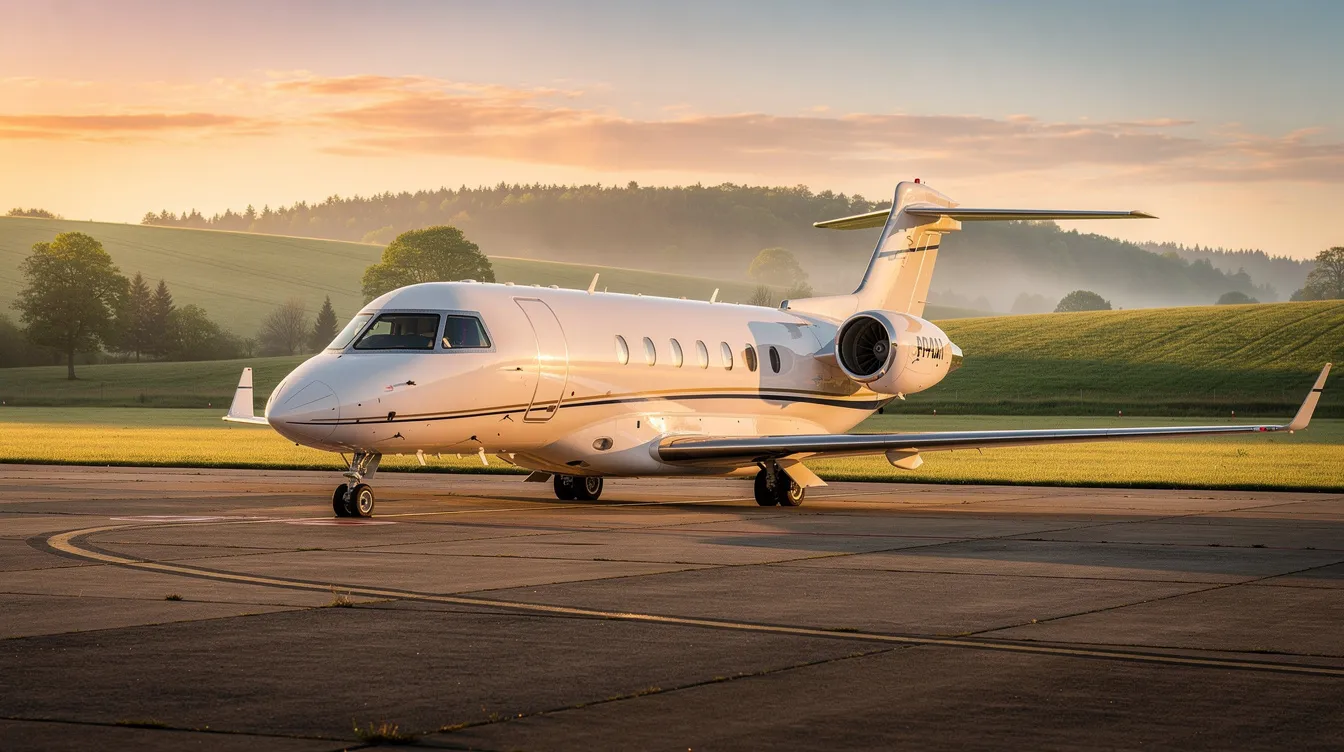
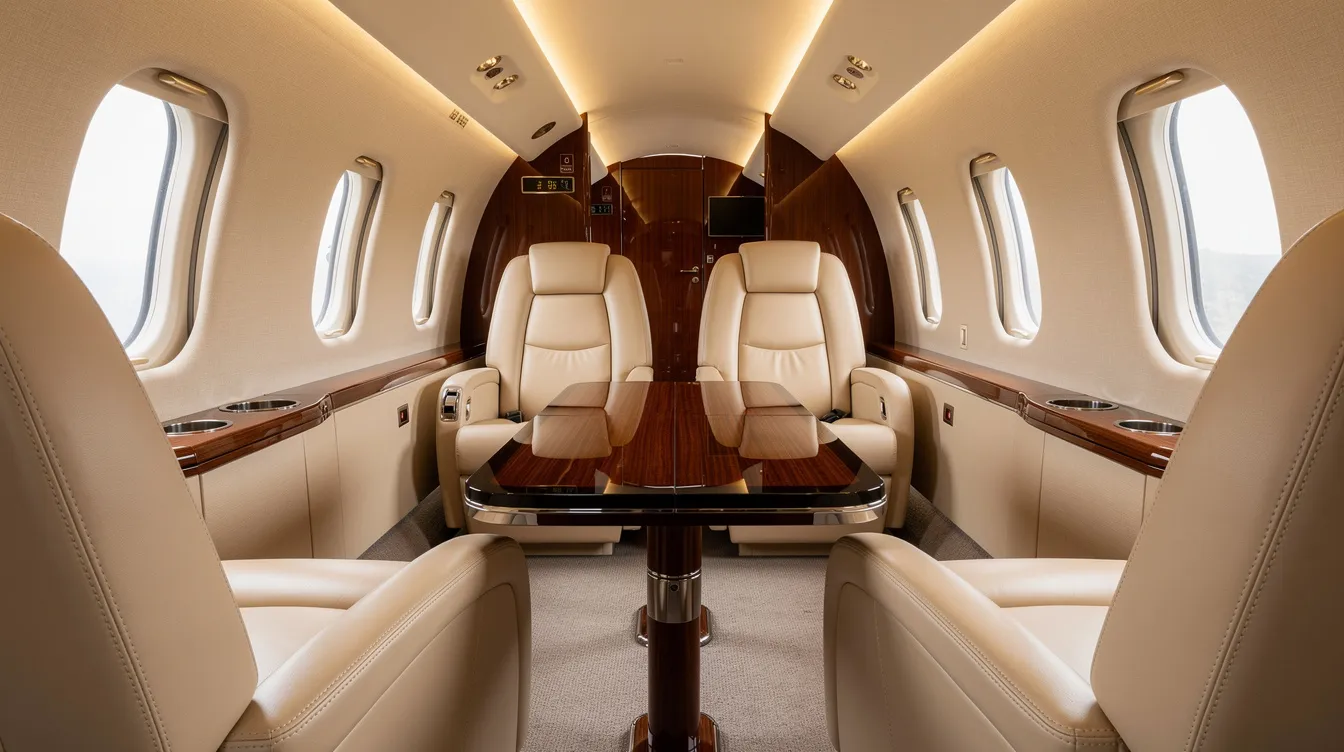
Private aviation offers unparalleled convenience and flexibility for executives, entrepreneurs, and high-net-worth travelers who value time and predictability. However, understanding the true cost of private airplanes is essential to making informed decisions about how to access this premium mode of travel. In 2026, the landscape of private jet ownership, rental, and membership continues to evolve, driven by innovations in pricing transparency, asset-light models, and flexible access options. This guide breaks down the real expenses behind private airplane costs, from purchase price to hourly rental rates, and explores how modern membership programs like FLYT provide smarter alternatives to traditional ownership. Whether considering buying a jet, chartering flights, or joining a membership, grasping these financial and operational factors is key to aligning private aviation with your strategic travel needs.
Key takeaways
The cost to buy a private jet ranges from about $2 million for very light jets to $75 million+ for large-cabin and ultra-long-range aircraft, while VIP airliners can cost far more to access and operate.
For most executives flying under roughly 200 flight hours per year, private jet rental, jet cards, or a membership model like FLYT’s fixed hourly rate structure are typically more efficient than full ownership.
2026 hourly rates vary by aircraft size: Turboprop jets cost $2,000 to $4,000 per hour, Very Light Jets range from $2,750 to $3,500 per hour, Light Jets charge $2,900 - $3,500 per hour, Midsize Jets cost between $4,300 and $4,750 per hour, Large Jets range from $7,200 to $9,500 per hour, Ultra Long-Range Jets cost $10,000 - $14,000 per hour, and VIP airliners can cost $16,000 to $23,000 per hour.
Hidden fees in private aviation can include federal excise tax, aircraft positioning, short leg fees, landing fees, deicing, overnight expenses, fuel surcharges, and international handling.
FLYT approaches private airplane cost through membership-based access, fixed hourly rates, fleet interchange, concierge support, and global aircraft options without the capital burden of ownership.
What drives the real cost of a private airplane?
Private airplanes cost more than the hourly quote suggests because the economics fall into three buckets: purchase price, annual ownership obligations, and trip-by-trip private jet rental pricing. The right comparison is not only “how much does it cost,” but whether the aircraft matches the mission.
The physical size of the aircraft is a major driver of both initial and ongoing costs. Aircraft with greater range and higher speed tend to be more expensive. Larger aircraft are significantly more expensive to operate than smaller jets, and longer flights require more fuel and potentially larger aircraft, increasing costs.
Flight distance significantly affects private jet pricing. A short regional itinerary may suit turboprops or the very light jet category, while international flights often require a heavy jet with intercontinental range, more crew members, and higher fuel burn.
Typical 2026 private jet charter rates range from $2,000 to $15,000 per hour across common aircraft categories. Turboprops cost $2,000 to $4,000 per hour; very light jets generally sit near $2,750 to $3,500; a light jet often runs $2,900 to $3,500; a midsize jet is commonly $4,300 to $4,750; and large jets range from $8,000 to $14,000 per hour in many markets.
Compared with a commercial flight, flying private is rarely cheaper per seat. The financial case comes from time: avoiding scheduled airlines, using regional airports, holding multiple meetings in one day, and reducing wasted ground transportation. For frequent flyers, the value is often operational rather than theatrical.
How much does it cost to buy a private jet in 2026?
A private plane can cost about $2 million to $3.5 million in the very light jets segment, while a new light jet may run roughly $3 million to $10 million. Midsize and super-midsize business jets often fall in the $10 million to $30 million band. Large cabin and VIP-configured aircraft commonly reach $40 million to $75 million+, with flagship models such as the Gulfstream G700 exceeding $75 million.
The price of purchasing a private airplane is influenced by aircraft specifications and market demand. Renowned manufacturers often justify premium pricing through reliability and performance, especially when the aircraft has strong range, cabin technology, and dispatch reliability.
A Cessna Citation M2 Gen2 may sit around $6 million, while an Embraer Phenom 300E is often in the mid-single-digit millions depending on configuration. A Bombardier Challenger 350 or 3500 is usually in the $20 million+ range. Larger aircraft such as a Bombardier Global 6000 or Gulfstream G550/G650 can trade from the mid-$30 million range upward depending on year and spec.
Pre-owned jets can be 20% to 50% less expensive than new aircraft, but the discount is not always a bargain. The age of an aircraft dramatically affects its valuation, and newer aircraft with lower airframe hours command higher prices. Older jets may require avionics upgrades, interior refurbishment, engine work, or immediate inspections.
Private jets lose value over time, similar to luxury cars. Many private jets lose 20% to 30% of their value in the first five years, which should be treated as a real part of private jet cost, not a theoretical accounting entry.
Annual cost of owning a private airplane
The purchase price is only the beginning. Purchasing and maintaining a private airplane involves high costs, and the initial purchase price of a private plane is only about 20% of the total financial commitment over time.
Annual ownership costs are split into fixed costs and variable costs. Fixed costs include crew salaries and pilot training, insurance, hangar fees, management, software subscriptions, and regulatory support. Variable costs include fuel burn and routine maintenance reserves.
Owning a private jet costs $500,000 to $2 million annually for many aircraft, and total fixed costs for private jets often range from $500,000 to over $1 million annually. Annual insurance premiums for private jets typically range from $20,000 to $200,000. Crew salaries and benefits often run $200,000 to $500,000+ for a two-pilot operation.
Storing a private jet can cost between $500 and $3,000 per month in some locations, while hangar fees at premium airports may reach $30,000 to $100,000+ per year. Landing fees and taxes vary by airport, and an airport authority may charge differently based on weight, timing, and facility demand.
Annual maintenance for business jets can exceed $500,000. Routine major inspections can cost hundreds of thousands annually, and major inspections for private jets can cost six figures. Engine programs such as Rolls-Royce CorporateCare, Honeywell MSP, or JSSI can smooth maintenance exposure, but they add steady hourly commitments.
Fuel costs can range from under $700 per hour for small jets to over $7,600 for larger aircraft. Interest rates for aircraft loans generally fall between 6% and 8%, which can materially raise the total cost if the aircraft is financed.
Across aviation broadly, ownership costs for private airplanes can range from $30,000 for used planes to over $20 million for jets. The level of luxury and in-flight technology significantly dictates the final price.
Summary of ownership costs
Cost category | Typical range | Notes |
|---|
Purchase price | $2 million to $75 million+ | Varies by jet size, age, and features |
Fixed annual costs | $500,000 to $2 million+ | Crew, insurance, hangar, management |
Variable costs (per hour) | $1,000 to $7,600+ | Fuel, maintenance, inspections |
Depreciation | 20-30% in the first 5 years | Significant impact on overall ownership cost |
Ownership break-even: When does buying a jet make sense?
The core question is whether annual ownership cost, including depreciation, financing, crew, maintenance, and downtime, is lower than private jet rental costs, fractional ownership, or membership-based access.
Owning a jet becomes economical at 200-250 hours per year. For large-cabin aircraft, the threshold is often closer to 300+ hours annually. Below that, high fixed costs are spread across too few hours, pushing effective cost per flight hour above charter or membership alternatives.
Chartering a jet is cheaper if flying less than 150 hours yearly. Consider an executive flying 150 hours annually. Owning a midsize aircraft might require $1.5 million in fixed annual cost plus several thousand dollars per hour in variable expense. That can move the effective hourly cost well above the market rate for private jet charter or a fixed hourly membership.
Non-financial reasons can still justify ownership. Some private jet owners want one specific tail number, a customized cabin layout, or a dedicated crew. Those are valid strategic preferences, but they should be recognized as control decisions, not pure cost decisions.
Private jet rental: hourly rates, trip pricing, and hidden fees
On-demand private jet rental lets a client pay for access rather than ownership. The cost to rent depends on aircraft size, route, availability, peak demand, airport selection, and whether the aircraft must reposition.
Private jet rental prices in 2026 generally start around $2,000 per hour and can move past $14,000 per hour for long-range aircraft. Large jets range from $8,000 to $14,000 per hour in many charter markets, while VIP airliners can cost $16,000 to $23,000 per hour.
A quoted hourly rate usually includes the aircraft, standard crew, fuel assumptions, and basic insurance. It may not include aircraft positioning, deicing, premium catering, Wi-Fi, crew overnight expenses, or international handling.
The federal excise tax is 7.5% on domestic flights, and the IRS explains air transportation excise taxes in detail. A federal excise tax line may apply to U.S. domestic segments, plus small per-passenger fees on leg flights.
Aircraft repositioning can increase charter costs. Empty leg flights can offer a lower price point when timing happens to match, but they are not a reliable planning tool for executives with firm schedules. Peak demand can raise private jet charter prices, especially around holidays, major events, and constrained airports.
The most important discipline is quote transparency. A serious charter company or private jet service should show taxes, landing fees, short leg fees, and likely additional costs before the trip is confirmed.
Light jets and very light jets: the cost-efficient workhorses
Turboprops and Very Light Jets are best for short-range regional trips. They are frequently the right aircraft options for short regional flights, short-haul flights, and shorter flights where cabin space requirements are modest.
Very light jets often seat four to six passengers, while light jets may seat six to eight. A new light jet, such as a Citation M2 Gen2 or Phenom 300E, can be efficient for flights up to roughly 1,500 to 2,000 nautical miles, depending on payload and weather.
Purchase prices vary widely. A Cirrus Vision Jet SF50 can sit near $2 million new, while used Citation Mustang and Embraer Phenom 100 aircraft may range from $1.5 million to $3.5 million. Light jets such as the Citation M2 Gen2 or Phenom 300E can run $5 million to $10 million, depending on year and condition.
For rental, the hourly rate for the turboprop category is often $2,000 to $4,000 per hour. Very light jets typically run $2,750 to $3,500 per hour, and light jets often charge $2,900 to $3,500 per hour. Improved fuel efficiency helps keep this category cost-effective for regional missions.
At FLYT, this is where fleet interchange becomes practical. A member can use smaller aircraft for a New York–Nantucket or Los Angeles–Aspen private flight, then step up to a midsize jet or heavy jet when passenger count, distance, or weather makes that the better choice.
Large cabin jets and aircraft like the Bombardier Challenger: what do they really cost?
Large-cabin private aviation begins where comfort, range, and payload become more important than the lowest hourly rate. This category includes aircraft such as a Bombardier Challenger family jet, Challenger 605/650, Bombardier Global 6000, Gulfstream G550/G650, and comparable long-range aircraft.
Aircraft designed for intercontinental travel command higher prices than those for regional trips. A new Challenger 350-line aircraft can exceed $20 million, while a Global 6000 or Gulfstream G550 may trade from the mid-$30 million range upward pre-owned. Flagship aircraft such as the Gulfstream G650 or Global 7500 can cost between $50 million and $70 million when new.
Large and ultra-long-range jets commonly run $8,000 to $14,000+ per flight hour, and complex international routes can cost more due to permits, handling, crew duty rules, and airport constraints. Fuel burn often exceeds 300 gallons per hour, and larger crews increase operating expenses.
A New York–London round trip on a large-cabin jet can easily become a six-figure itinerary. The flight time may be seven to eight hours each way, before positioning. Add overflight permits, international handling, crew lodging, catering, and applicable taxes, and the total budget can move from a base hourly calculation into the $250,000+ range.
Taxes, surcharges, and “line items” that change your final price
The visible headline rate is rarely the full invoice. For both owners and charter clients, smaller line items can become meaningful.
Airport landing fees range from $100 to $1,500 per flight. Landing fees can vary based on aircraft weight, airport congestion, and whether the airport is one of the major hubs. Ramp and handling fees at private terminal facilities can also vary materially.
Deicing fees can vary from $1,500 to $15,000. For large jets during severe winter weather, deicing can become a major operational cost. Fuel prices also matter, and fuel surcharges may appear when Jet-A prices spike.
Other costs include segment fees, international head taxes, special route taxes for Alaska or Hawai‘i, crew repositioning, and short leg fees when minimum daily usage applies. The right provider should identify these hidden fees early so the client can compare private jet charter costs on a like-for-like basis.
This is one reason fixed hourly rates are increasingly important in private travel. Predictable pricing does not eliminate every variable, but it reduces ambiguity and makes budgeting more disciplined.
Membership, jet cards, and asset-light alternatives to ownership
Private jet membership and jet cards sit between full ownership and ad-hoc rental. Jet cards typically involve pre-purchased blocks of hours on a given aircraft category, often with fixed hourly rates, peak-day rules, minimums, and possible surcharges.
Fractional ownership offers more structure but requires capital commitment, monthly management fees, and occupied hourly charges. Fractional ownership costs around $600,000 to $700,000 annually for many users, depending on share size, aircraft category, and utilization.
Private jet memberships offer flexible access to private aviation. Memberships can provide cost savings compared to full ownership, and private jet memberships can reduce the need for maintenance costs because the member is not responsible for maintaining a specific private aircraft.
FLYT’s model is designed around an asset-light floating fleet, a risk pool model, fixed hourly pricing, and concierge-level support. Memberships often include concierge-level support for travelers, which helps coordinate aircraft, schedules, catering, ground transportation, and international requirements.
For an executive flying 100 to 150 hours per year, the comparison is straightforward. Full ownership may be too capital-intensive. A traditional jet card may be category-limited. A FLYT membership can provide flexible aircraft access with fleet interchange, allowing the member to use the perfect aircraft for each mission instead of forcing every trip into one owned asset.
Comparing private jet cost models: ownership vs charter vs membership
Ownership provides maximum control but carries the highest capital outlay and operational complexity. It can work for organizations flying well above 200 to 300 hours annually with predictable routes and a clear need for one aircraft.
Private jet charter is flexible and useful for occasional flyers. It allows you to rent a private jet without long-term commitment, but cost and availability can vary by market, aircraft supply, and timing.
Membership-based access, such as FLYT, is built for frequent private jet travel without the burdens of ownership. It emphasizes fixed hourly rates, transparent private jet pricing, concierge support, and aircraft interchange. For many HNW families and businesses, this is the cleaner trade-off between access, flexibility, and capital efficiency.
The right decision starts with actual travel patterns: passenger count, city pairs, flight time, frequency, baggage, and required cabin experience. From there, the economics become much clearer.

How FLYT approaches private airplane cost and access
FLYT treats private aviation as an access problem, not an ownership trophy. The model is built for people who want to experience private aviation with less complexity, clearer pricing, and operation worldwide through coordinated aircraft access.
The FLYT membership structure uses a floating, asset-light fleet rather than tying members to a single tail number. This helps align aircraft supply with real mission demand and supports competitive fixed hourly rates across categories.
Members avoid managing hangars, crew salaries, maintenance reserves, insurance renewals, and unscheduled aircraft events. Instead, they access a private jet service designed around scheduling, dispatch, concierge support, and cost visibility.
Fleet interchange is central. A member can choose very light jets or light jets for regional trips, a midsize aircraft for longer domestic travel, and larger aircraft with a spacious cabin when range or passenger count requires it.
Explore how FLYT can structure membership around your real flying profile, expected hours, aircraft preferences, and financial constraints.
Frequently asked questions about private airplane costs
What factors most influence the cost of flying private?
The main drivers include aircraft size and category, flight distance, aircraft age and condition, peak demand periods, airport fees, repositioning requirements, and additional services such as catering or ground transportation.
How does the hourly rate turboprop compare to other aircraft types?
Turboprop aircraft typically offer the most cost-efficient hourly rates, ranging from $2,000 to $4,000 per hour, making them ideal for short regional trips where speed and range requirements are moderate.
Are there hidden fees beyond the hourly charter rate?
Yes. Common additional costs include federal excise tax, airport landing and handling fees, crew overnight expenses, deicing charges, fuel surcharges, repositioning fees, and international handling costs.
When does owning a private jet become financially sensible?
Ownership generally becomes economical for those flying 200 to 250 hours annually for smaller jets, and 300+ hours for large-cabin aircraft, due to the high fixed costs spread across sufficient usage.
How does a membership model like FLYT help manage private jet costs?
FLYT’s membership offers fixed hourly rates, fleet interchange flexibility, and concierge-level support, allowing members to avoid ownership burdens like maintenance and crew management while accessing a broad range of aircraft tailored to each mission.
Conclusion: Making private airplane costs work for your strategy
Private jets are expensive assets, but private aviation can be a strategic tool when aircraft size, access model, and provider structure are aligned with actual use.
Understanding purchase price, annual ownership cost, hourly rates, federal excise tax, aircraft positioning, and short leg fees is essential before committing capital. Most executives and families under roughly 200 flight hours per year are better served by private jet rental or membership than outright ownership.
Before buying, map your real routes, passenger loads, frequency, and flexibility requirements. Then compare ownership, charter, jet cards, fractional ownership, and membership with the same assumptions.
Discover how FLYT structures membership-based private aviation around efficiency, predictability, and access without the burden of ownership. By leveraging a floating, asset-light fleet and concierge-level support, FLYT offers flexible aircraft access worldwide with transparent fixed hourly rates. This modern approach helps executives and high-net-worth travelers optimize their private aviation experience—maximizing time, minimizing complexity, and avoiding ownership headaches.
Explore how FLYT can tailor membership to your travel profile and discover a smarter way to fly private at www.flyt.com.