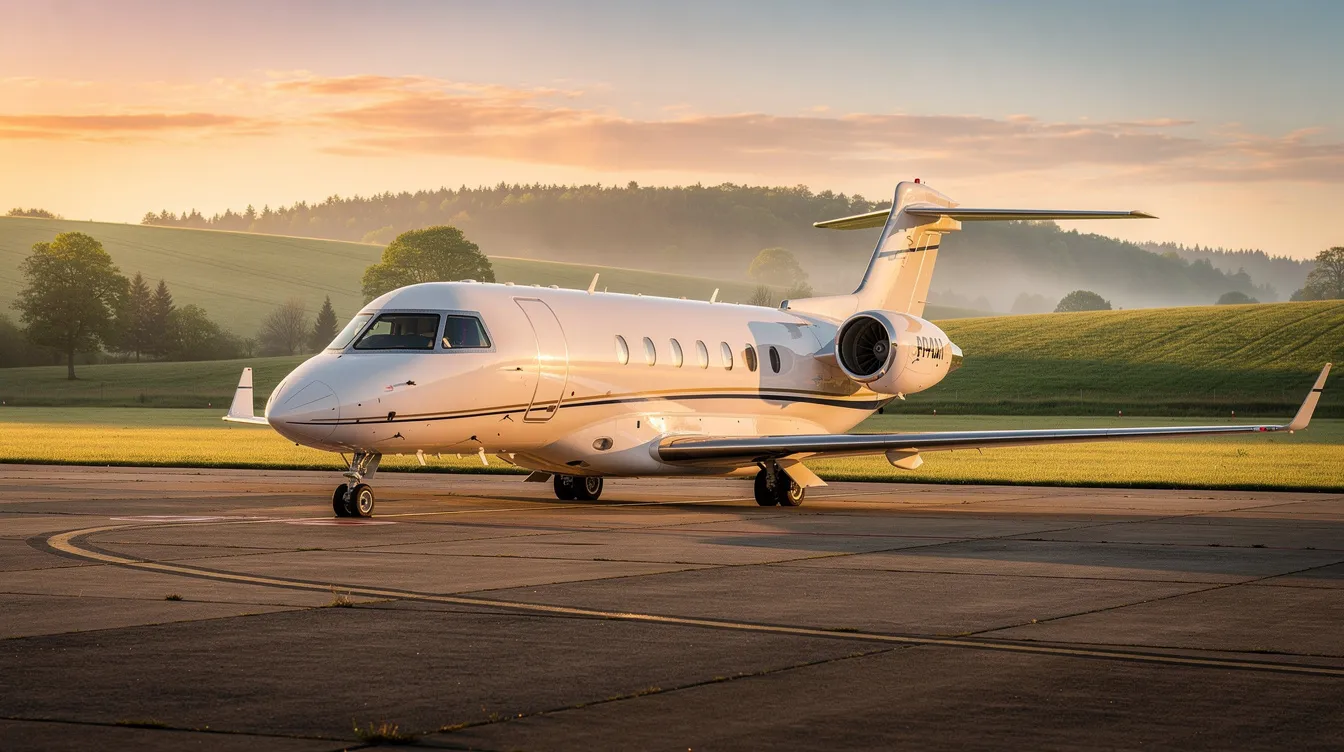
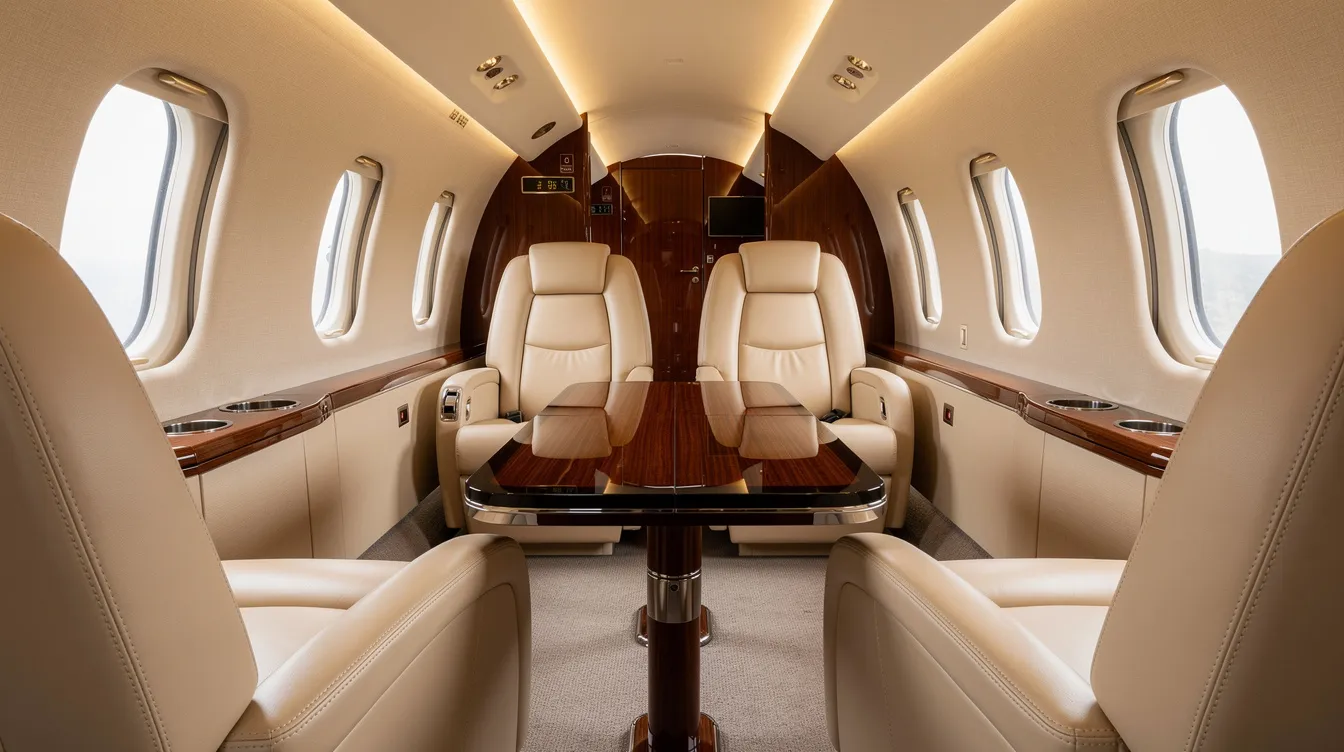
Private aircraft flights represent a strategic evolution in business and leisure travel, offering a smarter, more efficient alternative to traditional commercial airlines. For executives, entrepreneurs, and frequent flyers, the ability to gain access to a global network of private jets without the burdens of ownership is increasingly essential in a fast-paced world. The growing demand for flexible, predictable, and transparent private aviation solutions has led to innovative membership models like FLYT, which prioritize operational efficiency and concierge-level support. This introduction explores how private aircraft flights redefine travel by delivering time savings, enhanced convenience, and tailored experiences that align with the needs of today’s discerning travelers.
Key takeaways
FLYT offers membership-based private aviation for frequent flyers who want flexible access, fixed hourly rates, global reach, and concierge-level support without buying or managing an aircraft. Learn more about FLYT memberships.
Members can choose the right aircraft for each mission, from a light jet for short regional flights to large cabin jets for transatlantic travel or large groups.
FLYT is designed around transparent pricing, instant pricing, and clear flight details, reducing the uncertainty often associated with ad hoc private charter. Explore our pricing model.
The asset-light floating fleet and risk pool model help preserve capital compared with fractional ownership, traditional jet card structures, or full aircraft ownership. Discover the asset-light floating fleet and risk pool approaches.
For business executives, founders, families, and private jet travelers, the value is not just comfort. It is time saved, complexity reduced, and access delivered with operational discipline. See the FLYT advantage.
What “flying private” really solves for today’s traveler
Private aircraft flights have moved well beyond the idea of occasional luxury. In 2025, global business aviation recorded approximately 3.52 million business jet departures, with North America accounting for about 2.62 million of those flights, according to Volo Aviation data. That scale reflects a practical shift: frequent flyers are using private aviation as a productivity tool.
The central problem is not that commercial airlines are uncomfortable. It is that commercial flights are built around fixed networks, fixed schedules, and crowded hubs. For an executive moving between meetings, a founder visiting investors, or a family coordinating travel around school calendars, the friction compounds quickly.
Private charters operate on your schedule, avoiding fixed commercial schedules. Booking a private aircraft flight focuses on individual needs rather than fixed schedules, which is why private aircraft flights offer significant advantages over commercial airlines for travelers who value control.
A private flight can remove the long terminal process, reduce connection risk, and bring the traveler closer to the final destination. Private aircraft can bypass main terminal security lines entirely, and private jet passengers can arrive just 15-30 minutes before departure. Private flights save an average of 2 hours per trip by eliminating long security lines, and private jet travel reduces overall travel time significantly because private jets allow for direct flights without layovers.
Consider a New York-area executive traveling from Westchester to a meeting outside Boston. A private charter flight from White Plains or Teterboro to Boston Hanscom may avoid the ground time, terminal congestion, and airport mismatch of a JFK–BOS commercial route. The difference is not cosmetic. It can determine whether the traveler returns home that evening or loses a day.
Private jet travel also changes the working environment. You have the entire aircraft to yourself when flying privately, pets can travel in the cabin with their owners on private flights, and private jets offer more luggage flexibility than commercial jets. For private travel involving family, equipment, or a golf trip, that flexibility matters.
The practical advantages are straightforward:
Time savings through faster airport access, fewer delays, and direct routing
Privacy for calls, sensitive documents, and family travel
Flexibility to adjust a travel itinerary around meetings or weather
Access to smaller airports closer to factories, offices, homes, or resorts
A more personalized service model before, during, and after the flight
FLYT’s approach is built for travelers who see time as capital. The emphasis is predictable access and pricing, not “Instagram luxury.” Learn more about how FLYT works.

How private charter flights work with FLYT
A modern private jet charter experience should feel structured, not improvised.
Booking Process
With FLYT, the booking process is designed to move from request to confirmation with minimal friction. A member enters the route, date, passenger count, baggage needs, and other flight details through the platform or with a dedicated team.
The system provides an estimate, matches the mission to an aircraft category, confirms the aircraft, and supports the trip until landing.
Booking a private charter flight can be done in three steps:
Share the route, timing, passenger count, and travel needs.
Review the aircraft category, pricing logic, and available aircraft.
Confirm the itinerary while FLYT coordinates operations, catering, and ground transportation.
Membership Model
FLYT uses a membership-based model with fixed hourly rates across aircraft categories instead of relying only on spot-market charter pricing. Private jet memberships offer flexible access without ownership commitments.
Memberships typically provide fixed hourly rates for flights, and private jet memberships allow access to a global fleet of aircraft. Membership programs often include concierge support for travelers, and private jet memberships can reduce upfront costs compared to ownership. Learn more about FLYT memberships.
Fleet Operations
This matters because traditional private charter can be inconsistent. Two similar trips may price differently depending on aircraft location, crew positioning, seasonality, or broker inventory.
FLYT’s asset-light floating fleet helps address that issue by positioning aircraft strategically within key regions such as the Northeast, Florida, and major European hubs.
The goal is to minimize inefficient repositioning, reduce deadhead exposure, and provide members with a more consistent operating framework. The model is not about owning more metal. It is about providing access to the right aircraft, at the right time, with less capital tied up in a single asset. See how our risk pool model supports this.
Members can book one-way trips, same-day returns, a round trip, multi-leg roadshows, or international sectors. For complex itineraries, FLYT’s operations team coordinates ground transport, FBO handling, customs considerations, schedule changes, and aircraft swaps if needed. Discover the benefits of aircraft interchange.
Choosing the right aircraft: from light jets to large groups
In private aviation, the best aircraft is the one that fits the mission. Choosing too much aircraft adds unnecessary cost. Choosing too little can compromise range, baggage capacity, or passenger comfort.
Factors to Consider
Choosing the right aircraft type should consider distance and passenger count. It should also account for runway length, weather, baggage, cabin expectations, pets, and whether the flight is a one-hour regional hop or an overnight ocean crossing.
FLYT’s fleet interchange allows members to move across aircraft categories by trip. A member may use a light jet for a New York day trip, step into a midsize aircraft for a family weekend, and use large cabin jets for international business travel.
This flexibility avoids being locked into one aircraft type or a fractional share that may not fit every mission.
Aircraft Categories Overview
A high-level way to think about aircraft categories:
Aircraft Category | Passenger Capacity | Typical Range (nautical miles) | Use Case Examples |
|---|
Light jet | 2–6 | 1,200–1,800 | Regional trips, short-haul business travel |
Midsize jet | 6–8 | 2,000–3,000 | Longer domestic flights, enhanced comfort |
Super-midsize jet | 7–9 | 3,000–3,500+ | Coast-to-coast flights |
Large cabin aircraft | 10–14 | 4,000–7,000+ | Long-haul international, large groups |
Private jets can access over 5,000 U.S. airports compared to only 500 for commercial airlines. Private jets can access over 20,000 airports worldwide, and over 20,000 unique aircraft are available for private charter.
That airport access is a significant role in why private air travel can outperform fixed scheduled routes.
Some operators also specialize in air taxis or commuter-style services. Tradewind Aviation connects travelers to over 3,000 airports, showing how regional private aviation can open city pairs that commercial networks do not serve efficiently.
Light jets: efficient access for regional and short-haul trips
Light jets are ideal for short regional flights with 2–6 passengers. Typical ranges often fall around 1,200–1,800 miles, making them useful for routes such as New York–Miami, New York–Toronto, and Los Angeles–San Francisco.
Common examples include the Phenom 300 and Citation CJ series. A King Air 350 has a maximum range of 1,806 nautical miles, while the Pilatus PC-12 accommodates 6-8 passengers with a range of 1,700 miles.
Those aircraft are not identical to light jets, but they illustrate how efficient aircraft can serve regional travel needs with strong runway flexibility.
Light jets are especially useful for founders and business executives attending investor meetings, board sessions, site visits, or same-day client meetings where overnight stays are inefficient. They are also cost-efficient relative to larger aircraft, making them a practical choice for frequent regional charter flights.
Important advantages include:
Strong short field performance for smaller airports
Lower hourly economics than larger aircraft
Faster boarding and deplaning at private terminals
Enough cabin space for focused work on shorter routes
Private jet charter pricing typically starts around $2,500 per hour, though actual charter rates vary by aircraft, route, season, and operating conditions.
Midsize and super-midsize jets: balancing range, comfort, and cost
Midsize and super-midsize aircraft are often the workhorses of business aviation. They suit travelers who mix regional flights with longer domestic sectors and need more cabin comfort than a light jet can provide.
Typical ranges run from roughly 2,000 to 3,500+ miles. Routes such as New York–Dallas, New York–Aspen, and Los Angeles–Chicago often fit this category well, depending on winds, passenger count, and aircraft performance.
Examples include the Citation XLS, Citation Longitude, Challenger 300/350, and Praetor 600. The Citation Longitude has a maximum range of 3,500 nautical miles. A Bombardier Challenger 350 is a common reference point for travelers comparing super-midsize cabins, range, and baggage capacity.
Cabin Benefits
Private jets often fly at higher altitudes than commercial airliners, which can also help with routing efficiency and smoother conditions on certain days.
FLYT members can step up to these categories when the mission justifies it without changing ownership structure, buying new jet cards, or renegotiating access around one aircraft.
Large-cabin jets and aircraft for large groups
Large cabin jets, heavy jets, and long-range aircraft are designed for longer sectors such as New York–London, New York–São Paulo, Los Angeles–Honolulu, or U.S.–Caribbean family travel with more passengers and baggage.
These aircraft often carry 10–14 passengers, offer lie-flat seating, and provide multiple cabin zones for rest, work, and dining when the in-cabin travel experience matters on longer journeys.
Familiar examples include Gulfstream and Global series aircraft. The Gulfstream G650 can fly up to 7,000 nautical miles non-stop, making it suitable for many long-haul international missions.
For large groups, corporate events, investor retreats, sports teams, or entertainment travel, FLYT can coordinate larger aircraft or regional airliners through vetted operators with extensive experience handling complex trips.
The point is not excess. It is mission fit: safety, range, reliability, passenger count, and schedule certainty.
Membership pricing still applies by category, giving members a clearer cost-per-hour framework for major trips than one-off spot charter volatility.
Private jet membership vs charter, jet cards, and ownership
Selecting a charter method can include options like on-demand charters or jet cards, but the right model depends on frequency, predictability, and capital strategy. See FLYT vs charter, FLYT vs jet cards, and FLYT vs fractional ownership for detailed comparisons.
Common Access Models
There are four common access models:
On-demand charter: book each trip individually
Jet card: pre-purchased or pay-as-you-go hours with defined terms
Fractional ownership: buy a share of an aircraft
Membership: access aircraft through a structured service model
On-demand charter is the most flexible option for occasional flyers. Jet cards provide a flexible, pay-as-you-go model for moderate flyers. Jet cards offer predictable pricing without ownership risks, but the fine print can vary widely.
Fractional ownership requires a capital commitment of $400,000 or more and typically requires a long-term commitment. Fractional ownership is ideal for those flying over 100 hours annually, especially when their travel pattern fits a consistent aircraft size.
However, it can introduce depreciation exposure, management fees, exit negotiations, and residual value risk.
Imagine a New York-based family office or firm flying 75–150 hours annually over a 3–5-year horizon. Fractional ownership may offer structure, but it can also tie capital to one aircraft category.
FLYT’s model aims to retain the predictability of fixed hourly rates and fleet access while reducing ownership risk, depreciation exposure, and exit complexity.
Pricing, instant estimates, and transparent costs
Private aviation pricing often becomes confusing because the base hourly rate is only one part of the total. Repositioning, overnight crew charges, fuel surcharges, landing fees, international handling, de-icing, taxes, and even hidden fees that may not be obvious in an initial quote can all affect the final invoice.
Transparent Pricing
FLYT’s objective is transparent pricing. Transparent pricing includes all taxes, fees, and fuel surcharges when structured as all-inclusive pricing, and members should understand what is included, what is conditional, and what may vary by route.
That kind of disclosure also helps members avoid hidden fees when comparing providers.
Fixed hourly rates are common in private jet charter services, but the quality of disclosure is what determines whether pricing is actually useful. See FLYT pricing.
FLYT provides fixed hourly rates by aircraft category, with clear policies for taxi time, minimums, core-region repositioning, seasonal surcharges, and international handling where applicable.
Members can use the platform for instant pricing and trip estimates, then rely on a dedicated team for more complex itineraries.
Instant Estimates
The broader aviation industry is also moving toward digital quoting. Jettly offers instant pricing for over 20,000 aircraft. Linear Air provides instant booking with no membership fees. Stratos Jets offers real-time quotes through its FlightDeck platform.
These examples show the direction of the market: more visibility, faster quoting, and less tolerance for opaque pricing.
For FLYT, the difference is that instant estimates sit inside a membership model designed for repeat users, not just one-off searches.
Members can estimate:
A New York–Miami light jet trip
A New York–Aspen super-midsize trip
A Caribbean family itinerary with luggage and pets
A multi-leg business schedule across several cities
Empty Leg Flights
Inquire about empty leg flights to reduce costs in private aviation. Empty leg flights can provide significant discounts on charter costs, but they are opportunistic rather than guaranteed.
Empty legs work best for flexible travelers who can adjust the date, time, or airport within a region.
Examples of routes and cost drivers
A private flight from New York to Nantucket in summer is priced differently from New York to Palm Beach in January. The distance may be shorter, but demand, airport congestion, aircraft availability, and repositioning can materially affect pricing.
Primary cost drivers include:
Aircraft category and aircraft type
Distance and flight time
Airport fees and FBO handling
Seasonality and peak demand
Crew duty time and overnight requirements
International permits, customs, and handling
Whether the aircraft can be efficiently reused after your trip
FLYT’s floating fleet and risk pool model help reduce inefficient repositioning over time. When aircraft are deployed across dense travel corridors, members benefit from more predictable economics than a purely reactive charter model.
For frequent flyers who repeat routes such as New York–Chicago, New York–West Palm Beach, or New York–Miami, this predictability matters. It allows travel managers, CFOs, and principals to forecast private aviation budgets across a fiscal year instead of treating every flight as a new negotiation.
Use cases: business, family, and lifestyle travel
Private aircraft flights are most valuable when the schedule is complex, the destination is inconvenient, or the opportunity cost of delay is high.
Business Travel
For business travel, the common pattern is compression. A leadership team may need to visit New York, Atlanta, and Dallas in 48 hours. A founder may need to attend an investor meeting in the morning, visit a plant in the afternoon, and return home that night.
Private jet travel makes those itineraries possible without relying on scheduled routes.
Family and Leisure Travel
For family and leisure travel, the value is control. School breaks from New York to the Caribbean, ski trips to Aspen or Jackson Hole, and last-minute weekend plans are often constrained by airline frequency, baggage rules, and peak-season airport congestion.
Large Groups
For large groups, FLYT can coordinate multiple aircraft or a larger airframe for corporate offsites, investor retreats, sports travel, or entertainment schedules. The work is operational: matching the ideal aircraft to passenger count, baggage, timing, and budget.
A few practical vignettes:
Problem: A board meeting is scheduled in a secondary market with limited commercial service.
Solution: A midsize private charter flight lands at a smaller airport closer to the meeting site.
Problem: A family is traveling with children, pets, skis, and flexible return timing.
Solution: FLYT selects available aircraft with sufficient baggage space and adjusts ground transportation around arrival.
Problem: An executive team needs to visit three cities in two days.
Solution: The itinerary is built around direct routing, FBO access, and on-trip schedule adjustments.
Private jet travel offers a more personalized in-flight experience, but the more important point is that the trip is built around the traveler’s purpose.

New York as a hub for private aviation
The New York area is one of the most active private aviation regions in the world. Teterboro, White Plains, Farmingdale, and Newark’s FBOs support dense business and lifestyle demand across the Northeast, Florida, the Midwest, Europe, and the Caribbean.
Common member patterns include New York–Boston, New York–Washington, D.C., New York–Chicago, and New York–South Florida. Seasonal flows include Nantucket, Martha’s Vineyard, the Hamptons, St. Barths, Turks and Caicos, and other island destinations.
For Westchester or Long Island-based executives, using suburban airports can save substantial ground time compared with JFK or LaGuardia. That is where private air travel becomes operationally meaningful: the airport is closer, the terminal process is shorter, and the schedule follows the traveler.
FLYT’s model is designed to support dense, repeated corridors with efficient fleet deployment and predictable hourly structures.
Safety, operations, and concierge support
Safety and operational discipline are non-negotiable in private aviation. A reputable operator will provide information on safety records, crew qualifications, aircraft maintenance, and regulatory compliance. Learn about our safety standards and operational protocols.
Safety Standards
In the United States, charter operators generally operate under FAA Part 135 standards and must hold appropriate authority such as an air carrier certificate. FLYT works with vetted operators that meet stringent safety standards in the U.S. and equivalent requirements internationally.
FAA guidance on Part 135 operations provides important context for the regulatory framework.
Where applicable, FLYT considers:
Independent safety audits
Crew experience thresholds
Maintenance and insurance standards
Operator performance monitoring
Dispatch reliability and operational history
Concierge Support
Concierge support is the visible layer of a much larger operating system. FLYT can coordinate catering, dietary preferences, ground transportation, hotel timing, meeting room support, and schedule adjustments.
The goal is an exceptional experience without asking the traveler to manage the mechanics.
How FLYT keeps complex trips simple
Complex trips are rarely complex because of flying alone. They become complex because of timing, airports, passenger changes, weather, crew duty rules, and international handling.
FLYT manages the process through a single point of contact or a coordinated team. Behind the scenes, that may include slot requests at busy airports, FBO coordination, crew duty time review, customs planning, and contingency options if weather or air traffic control disrupts the plan.
For a three-city European investor tour, for example, the visible itinerary might look simple: London, Geneva, Milan. The operational layer may include overflight permits, airport slots, passenger documentation, ground transport, catering, and aircraft availability.
FLYT’s role is to keep those moving parts aligned.
Frequent flyers also benefit from stored preferences. Catering style, preferred airports, ground transport partners, aircraft preferences, and communication cadence can all be kept on file.
Each subsequent charter flight becomes easier because the service adapts around known travel plans.
Environmental considerations and the future of private aviation
Private aviation’s environmental footprint is under increasing scrutiny, particularly for public companies, investment firms, and high-profile travelers.
Environmental Impact Drivers
The drivers are straightforward. Fuel burn, aircraft type, passenger count, route efficiency, and empty repositioning all influence carbon emissions.
Private aviation typically produces higher emissions per passenger than commercial premium cabins, especially when aircraft fly empty before or after a trip.
Industry Response
The aviation industry is responding through several practical measures:
Sustainable Aviation Fuel, or SAF, where available
Newer, more fuel-efficient aircraft
Better routing and dispatch planning
Reduced empty repositioning
More efficient fleet utilization
The International Air Transport Association provides useful background on Sustainable Aviation Fuel, including the supply and cost challenges that still limit adoption.
An asset-light, floating fleet model can help reduce unnecessary empty legs compared with poorly utilized owned aircraft. It does not eliminate emissions, but it can improve operational efficiency by positioning aircraft where demand is more predictable.
FLYT will continue evaluating SAF access, operator efficiency, and routing practices without overstating what the industry can solve overnight.
The future of private aviation will be shaped by access, transparency, sustainability pressure, and operational intelligence.

Frequently asked questions about private aircraft flights and FLYT
How many hours per year do I need to fly for a FLYT membership to make sense?
Membership typically starts to make sense when a client expects to fly at least 25–50 hours per year. The benefits usually become more pronounced as usage approaches 75–150 hours annually.
Below that threshold, occasional on-demand charter may be sufficient. Frequent flyers, however, often value fixed hourly rates, consistent service, guaranteed access rules, and a more efficient planning process.
A useful first step is to map the last 12–24 months of private jet travel or expected upcoming travel. FLYT can review historical trips and compare spot charter against membership pricing logic without obligation. See more FAQs at FLYT FAQ.
Can I use my FLYT membership for international flights and non-U.S. destinations?
Yes. FLYT membership provides access to a global fleet, enabling international travel across multiple continents. The platform and concierge team handle the complexities of international permits, customs, and handling to ensure seamless global journeys.
Are there blackout dates or restrictions on when I can fly with FLYT?
FLYT memberships prioritize flexibility and access, with minimal blackout dates. While peak travel periods may require earlier booking due to higher demand, FLYT’s floating fleet model and operational expertise help minimize restrictions. Members receive clear guidance on availability during high-demand times.
What types of aircraft can I access with a FLYT membership?
Members can access a broad range of aircraft categories, from light jets for regional trips to large cabin jets suitable for international travel and larger groups. The fleet interchange feature allows members to select the most appropriate aircraft per mission without changing membership terms.
How does FLYT pricing compare to traditional charter or fractional ownership?
FLYT offers fixed hourly rates by aircraft category, providing predictable costs without the capital commitment or complexity of fractional ownership. Compared to traditional charter, FLYT’s model reduces variability by minimizing repositioning fees and offering transparent all-inclusive pricing.
Can I bring pets or extra luggage on my flights?
Yes. Private aircraft flights with FLYT accommodate pets traveling in the cabin and offer more generous luggage allowances compared to commercial airlines. Members can specify pet and baggage needs during booking to ensure proper accommodations.
How far in advance do I need to book a flight with FLYT?
FLYT can often arrange flights with as little as 24 hours’ notice, depending on aircraft availability and itinerary complexity. For peak periods or international trips, earlier booking is recommended to secure preferred aircraft and schedule.
What safety standards does FLYT adhere to?
Safety is paramount. FLYT partners with vetted operators who meet or exceed FAA Part 135 standards and equivalent international regulations. Operators undergo rigorous audits, and FLYT continuously monitors safety records, crew qualifications, and maintenance compliance.
Does FLYT offer concierge and ground transportation services?
Yes. FLYT provides concierge-level support that includes catering, ground transportation coordination, hotel arrangements, and itinerary management. The goal is to deliver a seamless and personalized travel experience from start to finish.
What happens if my flight is delayed or canceled?
FLYT’s operations team proactively manages disruptions, coordinating alternative aircraft, revised schedules, or ground transport as needed. Members have a dedicated point of contact to ensure timely communication and solutions that minimize inconvenience.
How does the asset-light floating fleet model benefit me?
The asset-light floating fleet allows FLYT to strategically position aircraft across key regions, reducing inefficient repositioning and improving availability. This model provides members with consistent access, better pricing stability, and operational flexibility without the capital burden of ownership.
Can I book one-way or multi-leg trips?
Yes. FLYT supports one-way, round-trip, same-day returns, and complex multi-leg itineraries. Members benefit from operational coordination that handles aircraft swaps, customs, and ground logistics to ensure smooth connections and efficient travel.
How do I get started with a FLYT membership?
To explore membership options, prospective clients can contact FLYT for a personalized consultation. FLYT reviews travel patterns, provides pricing comparisons, and outlines membership benefits tailored to individual or corporate travel needs. Learn more at FLYT Memberships.
Conclusion: a modern, membership-driven way to fly private
Private aircraft flights are not simply a premium alternative to commercial air travel. Used correctly, they are a strategic tool for saving time, reducing friction, and improving access to people, places, and opportunities.
The most important decisions are practical: which aircraft fits the mission, which access model fits the annual travel profile, and which provider offers transparent pricing without unnecessary ownership complexity.
FLYT brings these priorities together through fixed hourly rates, fleet interchange, global reach, concierge support, and an asset-light membership model.
For frequent flyers, the question is not whether private jet travel feels better. It is whether the model preserves time, capital, and flexibility.
Explore how FLYT membership could align with your annual travel profile and financial objectives. Contact us to learn more at FLYT Contact page.