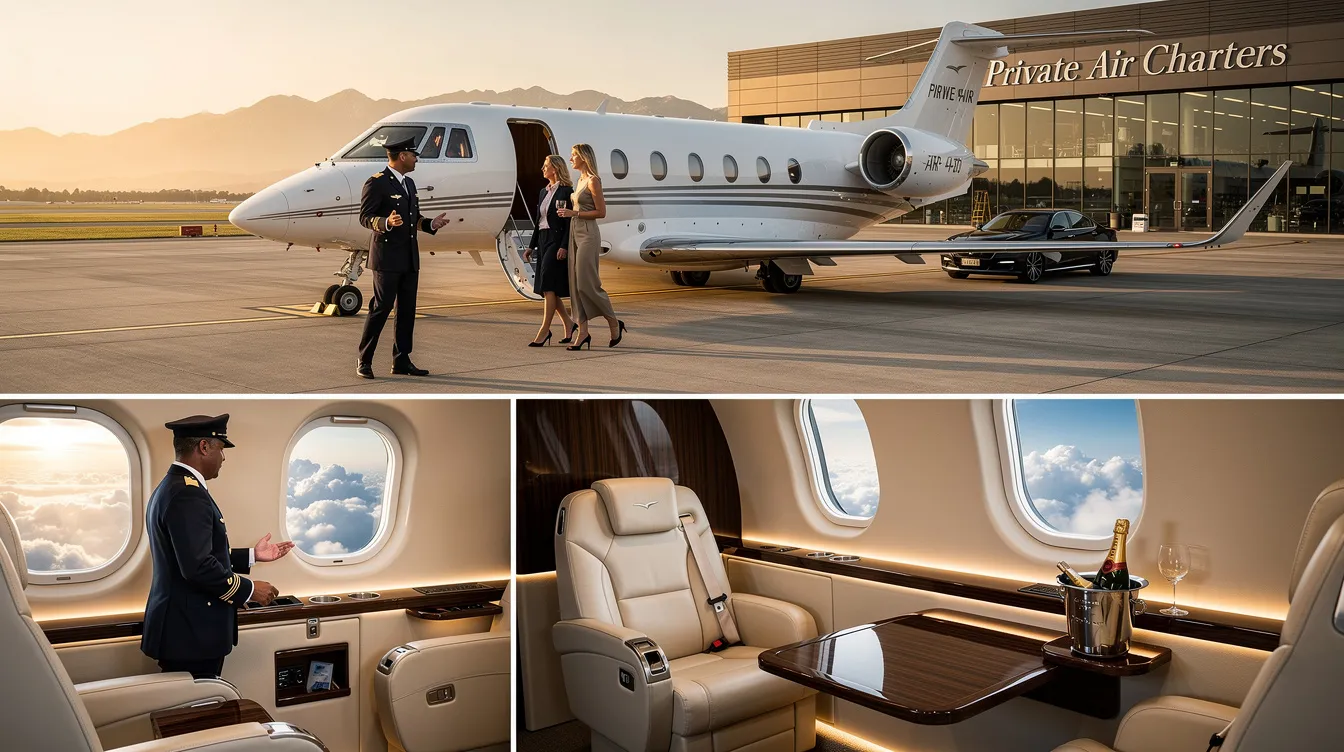
Private air charters have transformed the landscape of private aviation, offering a smarter, more flexible alternative to traditional ownership and commercial flying. For executives, entrepreneurs, and frequent travelers, the ability to access a private jet on-demand without the complexities and capital commitments of owning an aircraft has become increasingly valuable. This shift reflects a broader industry trend toward operational efficiency, predictable costs, and tailored travel experiences that prioritize time and convenience over luxury alone.
In this guide, we explore how private air charters work, their advantages, and why modern travelers are rethinking how they access private aviation.
Key takeaways
Private air charters allow executives, families, and discerning travelers to rent an entire aircraft for a specific trip without the capital lock-up of private jet ownership.
Modern private aviation is increasingly about time, predictable costs, aircraft availability, and operational control rather than luxury for its own sake.
FLYT offers membership-based private jet charter access with fixed hourly rates, global fleet interchange, and concierge support as an alternative to a jet card, jet card programs, fractional ownership, and full ownership. Learn more about FLYT memberships.
A floating, asset-light global fleet gives members flexible scheduling and access to the right aircraft types for each mission. Discover the asset-light floating fleet model.
The right private aviation model depends on annual flight hours, route patterns, passenger needs, and how much complexity a traveler wants to manage.
Private air charters have become a practical tool for executives and families who need direct access to destinations, reliable timing, and fewer operational compromises. This guide is designed for executives, families, and frequent travelers considering alternatives to commercial flights or private jet ownership. Understanding private air charters can help you make informed decisions about cost, flexibility, and convenience in private aviation. For a business traveler managing meetings across multiple cities, the value is often not the plane itself. It is the ability to fly point-to-point, avoid unnecessary layovers, and protect hours that would otherwise be lost flying commercial.
That shift matters financially. Buying a private jet ties up capital, creates fixed obligations, and exposes the owner to maintenance, crew, hangar, insurance, and resale risk. A well-structured private charter or membership model can provide many of the same benefits of private jet travel while reducing the burden of ownership.
FLYT is built around this access-first philosophy: fixed hourly rates, flexible aircraft access, a global fleet, and concierge-level support without requiring clients to buy, manage, or depreciate an aircraft. Explore how FLYT works to deliver this.

What is a private air charter, and why are executives rethinking ownership
Private air charters are on-demand access to a private jet or other aircraft types for a specific trip. Instead of purchasing an entire aircraft or a fractional share, the traveler books a charter flight for a defined route, date, passenger count, and travel need.
In practice, aircraft booking involves providing trip details to a broker, operator, or membership platform. Those details usually include origin, destination, preferred timing, passengers, luggage, catering preferences, and any special requirements. The provider then sources an aircraft, and some providers offer instant access to availability or booking options while still confirming aircraft availability and presenting charter options.
Private air charters are a form of private jet charter services that allow you to rent an entire aircraft for a specific trip, which is why the model appeals to people who want control without permanent asset responsibility. Charter flights can be booked without long-term contracts or hidden fees when the provider uses clear terms and transparent pricing.
Since 2020, more frequent flyers have reconsidered whether traditional ownership still fits their travel needs. Route patterns have become less predictable, families are splitting time across more destinations, and business travel often requires last-minute flexibility. In that environment, access can be more efficient than possession.
Consider a founder based in New York who needs to fly to Austin for investor meetings, continue to Miami for a family weekend, and return to New York before Monday. Flying commercial could mean connections, schedule risk, and lost working time. A private charter can turn the same week into direct flights, confidential work time, and flexible scheduling around the actual agenda.
How private air charters actually work
A private jet charter begins with a request. The client shares the route, dates, number of passengers, preferred aircraft size, luggage needs, and any service requirements. From there, aviation experts search for suitable aircraft and match the mission to available capacity.
Operators, brokers, and membership platforms play different roles. An operator manages aircraft and crews directly. A broker searches the market for suitable jets. With a membership platform like FLYT, you get curated access to a global fleet and concierge team, rather than owning a heavy asset base that limits flexibility. Learn more about the FLYT platform. details
The quoting process considers the aircraft type, flight time, crew requirements, airport fees, fuel, repositioning, and other operational details. Booking can be completed in as little as three hours in some cases, although more notice generally improves aircraft availability and pricing.
A floating, asset-light fleet model allows aircraft to move where demand exists. This matters because charter flights allow access to over 20,000 aircraft globally across the broader marketplace, while some platforms also use technology to compare options quickly. Jettly offers access to over 20,000 aircraft globally, and Jettly provides instant pricing and aircraft comparisons; FLYT applies a membership-first lens by combining broad access with structured rates and concierge support.
Aircraft types vary by mission. Turboprops serve short regional hops efficiently. Light jets and very light jets suit shorter business trips. Super-midsize and heavy jets are used for longer domestic or transcontinental travel. Ultra-long-range aircraft support intercontinental journeys.
On the day of the flight, passengers arrive at a private terminal, often called an FBO. Private air charters allow executives to bypass airport crowds, and passengers can avoid long TSA lines and arrive just 15–20 minutes before departure. The result is a travel experience built around the passenger’s schedule rather than the airline’s network.
Private air charters vs jet cards vs fractional ownership vs full ownership
On-demand private charter, jet cards, fractional ownership, and full ownership represent different structures for accessing private aviation. The right model depends on how often someone flies, how predictable the routes are, and how much capital they want tied to aviation.
Private jet charter is trip-by-trip access. It offers flexible scheduling, no long-term commitment, and the ability to select aircraft for each journey. Pricing can vary, especially during periods of high demand, but the model works well for travelers who want private flights without committing to a fixed program.
A jet card typically involves pre-purchased hours at fixed hourly rates. Jet card programs can provide more predictability than the spot charter market, but they often include rules around peak days, aircraft categories, service areas, cancellation windows, and funds held in advance. Compare FLYT vs jet cards for a detailed look.
Fractional ownership gives the buyer a share of an aircraft and an annual number of hours. It can make sense for some heavier users, but it involves capital outlay, monthly management fees, hourly charges, and multi-year commitments. The owner also has exposure to utilization risk and residual value. See FLYT vs fractional ownership for insights.
Full ownership gives the highest level of control. It also brings the highest fixed costs: pilots, hangar, maintenance, insurance, compliance, downtime, and resale risk. Even when the aircraft is not flying, the cost structure continues.
FLYT’s membership model sits between these categories. It is designed for clients who want predictable fixed hourly rates and structured access, but do not want equity ownership, aircraft depreciation, or rigid long-term obligations. For many executives flying 50–200 hours per year, that balance can be more efficient than locking capital into a single plane or fractional share. Learn more about FLYT pricing and the advantages of the model.
The advantages of private air charters for business and lifestyle travel
Private air charters offer distinct operational advantages over commercial flights for business travel. The most obvious is scheduling control. Private jet charters offer flexible scheduling for last-minute trips, allowing travelers to depart when the meeting ends rather than when the airline schedule permits.
Private air charters eliminate layovers or delays that come from hub-based airline networks. Private jets can operate from more airports than commercial airlines, giving passengers direct access to smaller airports closer to city centers, industrial hubs, second homes, and resort destinations.
For business, this changes the calendar. Private air charters allow for same-day returns after multi-city site visits, which can prevent unnecessary hotel nights and reduce time away from teams or family. A team can leave London in the morning, meet in Zurich, continue to Milan, and return the same day.
For lifestyle travel, the benefits are similar. A family flying from Los Angeles to Jackson Hole for a long weekend can avoid limited airline schedules and crowded terminals. A couple planning a wine country weekend, a sporting event, or travel around special events can use private charter to align the journey with the actual itinerary.
Private charters can also conduct confidential meetings mid-air. For executives, private air charters ensure corporate privacy and protect sensitive data by reducing exposure in terminals, lounges, and crowded cabins. Quiet cabins and controlled passenger lists can turn travel time into working time.

Understanding private charter pricing and fixed hourly rates
Pricing for private charters is typically based on hourly rates and additional fees. Traditional charter costs may include aircraft hourly rate, flight time, landing fees, handling fees, crew duty limits, overnight costs, de-icing, catering, and repositioning.
Private jet charter costs can vary based on peak travel days. Short-notice requests, major holidays, sporting finals, finance conferences, school breaks, and high-demand leisure routes can all affect price and aircraft availability.
Empty leg flights can offer substantial discounts on charter prices. These empty legs occur when an aircraft needs to reposition without passengers. They can be useful for flexible travelers, although timing and routing are usually less controllable than a standard charter.
Typical pricing varies by aircraft. Charter rates for King Air 350 start in the mid-$2,000s per hour. Midsized jets like Citation XLS start at $7,000 per hour. Ultra-long-range jets like Gulfstream G-550 start at $12,000 per hour. These rates can move based on route, aircraft age, region, demand, and provider terms.
This is why frequent flyers often prefer fixed hourly rates. Instead of evaluating each charter quote from scratch, they can plan around a clearer cost framework. FLYT’s membership model combines fixed hourly rates with an asset-light floating fleet and a risk pool approach, helping members understand costs before they fly. Learn more about the risk pool model and charter volatility protection.
For example, a New York–Chicago round-trip could be priced three ways. A one-off private charter quote may include aircraft rate plus repositioning and fees. A jet card hourly rate may appear fixed, but it includes peak-day or program surcharges. A FLYT membership hourly rate is designed around clear inclusions and published terms, giving members a more structured way to compare the trip.
Aircraft types and matching the jet to the mission
Aircraft types range from Very Light to Heavy jets based on size and capacity. The right choice depends on passengers, distance, luggage, runway requirements, cabin preference, and whether the trip is primarily business or leisure.
Turboprops, such as the King Air 350, are efficient for short regional routes and smaller airports. The King Air 350 accommodates up to 9 passengers, making it practical for regional business groups, family trips, and airports where a jet may be unnecessary.
Very light jets are useful for short routes with a small passenger count. The Embraer Phenom 300E has a range of 2,010 nautical miles, making it a strong fit for many regional private flights where speed and efficiency both matter.
Light and midsize jets suit many domestic business routes. The Cessna Citation Latitude offers a range of 2,700 nautical miles, and the Citation Latitude is often discussed as a practical cabin-size step for travelers who want more comfort without moving into heavy-jet economics.
Super-midsize jets extend range and cabin comfort for longer domestic routes and certain international legs. Heavy jets typically accommodate 12 to 18 passengers, offering spacious cabins for larger teams, family groups, and longer missions. Some business jets and vip airliners can also support group charters when the passenger count or onboard requirements are more complex.
Ultra-long-range jets support global private jet travel. The Gulfstream G650 has a range of 7,000 nautical miles, which places it in the category of aircraft capable of long intercontinental sectors. These jets are often selected when nonstop capability, cabin endurance, and long-range performance matter more than hourly rate alone.
FLYT’s model is aircraft-agnostic by design. A member may need a turboprop for a regional site visit, a midsize jet for a domestic board meeting, and a heavy jet for an international family holiday. Fleet interchange allows the aircraft to fit the mission, rather than forcing the mission into one owned aircraft. Learn more about aircraft interchange and the AI fleet engine.
Inside the experience: what to expect on a private air charter
The day-of-flight experience is intentionally simple. Passengers arrive at the FBO, check in with minimal friction, and board directly once the aircraft and pilots are ready. There is no crowded terminal, no conventional boarding group, and no long security queue.
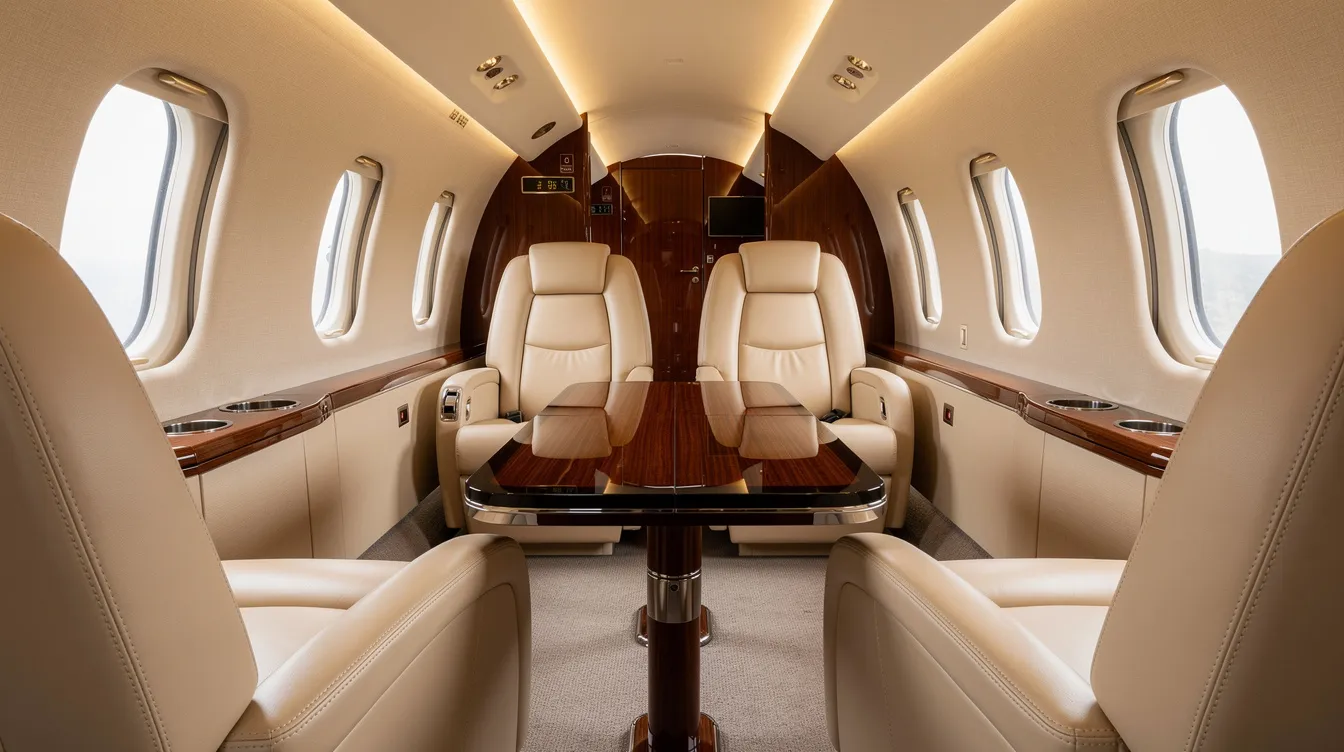
On board, modern private jets often include Wi-Fi, power outlets, tailored catering, quiet cabins, and seating configurations for work or rest. Private air charters offer optimized productivity through quiet workspaces and high-speed internet, making the flight part of the working day rather than a gap in it.
Charter services provide personalized in-flight amenities and catering. That can mean dietary preferences, specific beverages, meeting materials, pet arrangements, or cabin setup for children. The point is not excess; it is reducing friction.
Privacy is another operational advantage. Passenger names, itineraries, and onboard conversations can be handled discreetly, subject to legal and regulatory requirements. For a board member, investor, founder, or legal team, confidentiality may be as important as speed.
FLYT’s concierge support can coordinate ground transportation, aircraft timing, catering, and last-minute schedule adjustments. Airshare coordinates all details from catering to ground transportation, and this type of end-to-end coordination reflects the broader service expectation in premium private aviation. FLYT applies that expectation through a membership structure designed for consistency.

FLYT’s membership-based approach to private air charters
FLYT is a membership-based private aviation service that delivers structured access to private jet charter, rather than selling aircraft ownership or a traditional jet card. The model is built for frequent private flyers who want access, control, and cost clarity without taking on unnecessary complexity.
The core mechanics are straightforward:
Access to a curated global fleet through a floating, asset-light model. See FLYT’s asset-light floating fleet.
Fixed hourly rates across select aircraft categories. Understand FLYT pricing.
Predictable pricing with transparent terms instead of opaque surcharges. Learn about FLYT premiums and fees.
Fleet interchange, allowing members to scale aircraft size up or down by trip. Explore fleet interchange.
Concierge private aviation support from request through landing. Contact FLYT concierge for details.
The asset-light approach matters. Instead of relying on its own fleet, FLYT can match members to aircraft across a vetted network. That improves flexibility when travel needs change, when passengers increase, or when a route requires a different aircraft category.
The risk pool model also supports efficiency. By aggregating demand across members, FLYT can manage access and operational planning more intelligently than a purely one-off booking model. Members receive the benefits of structured access without needing to buy a jet, manage pilots, or absorb aircraft downtime.
For clients used to private jet rentals, on-demand charter, or a jet card, FLYT provides a more modern framework: membership fees, fixed hourly rates, global reach, and concierge support. It is designed to make private aviation more predictable, not more complicated. Compare FLYT vs charter and FLYT vs brokers and jet cards to see the differences.
When a private air charter membership makes the most sense
A private air charter membership usually makes the most sense for travelers flying roughly 25–200 hours per year across business and leisure itineraries. These clients often fly enough to value structure, but not enough to justify buying and managing an entire aircraft.
The fit is strongest when travel patterns are irregular. A founder may need investors and teams across several U.S. and European hubs. A family may split time between major cities and second homes. A fund or corporate team may need site visits in secondary markets that commercial airlines serve poorly.
Membership also helps when aircraft needs vary. One trip may require a light jet for two executives. Another may require spacious cabins for family travel. Another may involve group charters for a management team. A diverse fleet is more useful than a single aircraft when the mission changes week to week.
Occasional flyers may still prefer pure on-demand private jet charter. Ultra-heavy users flying 400–600 hours per year may evaluate full ownership or custom corporate aviation solutions. The practical step is to assess the last 12–24 months of flight activity, routes, passengers, and short-notice demand before choosing a model.
Choosing a private air charter partner
Choosing a private air charter partner should start with safety, transparency, service quality, and operational depth. The provider should be able to explain how aircraft are sourced, how operators are vetted, what is included in pricing, and what happens when plans change.
Operators of private air charters must hold a valid FAA Part 135 certificate. FAR Part 135 governs commercial charter operations for safety, including standards around operations, maintenance, crew duty, and passenger carriage. The FAA provides more information on Part 135 operating requirements. See FLYT’s safety and operational standards for more.
Pilot experience should be assessed based on total flight hours in a specific aircraft. A pilot with broad total hours may still need relevant experience in the exact aircraft type, route environment, and operating conditions.
Third-party standards can also matter. Airshare has IS-BAO Stage 3 and ARGUS Platinum designations. Priority One Jets only selects ARGUS or WYVERN-rated aircraft. Wyvern brokers meet strict safety requirements for charter flights. Air Charter Advisors uses FAR Part 135 air carriers for safety. These examples show the kinds of safety markers a serious buyer should understand when evaluating any provider.
Commercial terms deserve the same scrutiny. Ask about peak days, cancellation windows, aircraft substitution, pets, luggage, de-icing, international handling, and whether deadhead or repositioning is included. Clear terms are particularly important for long flights, multi-stop itineraries, and time-sensitive business travel.
A broad, vetted fleet is often more valuable than one branded aircraft type. Reliability comes from access, operational planning, and responsive service. For FLYT, that means providing access through a membership-first platform, supported by an expert team focused on transparency and execution.
Frequently asked questions about private air charters
How far in advance do I need to book a private charter flight?
Many private flights can be arranged within 24–48 hours, and some booking requests can be completed faster depending on aircraft availability. However, pricing and options are usually better when you book several days to a couple of weeks ahead, especially during peak travel periods.
FLYT members benefit from structured access and predictable hourly rates, which can reduce the stress of last-minute charter pricing swings. See the full FLYT FAQ.
Can I change my itinerary after booking a private jet charter?
Yes, itinerary changes are often possible. Departure times, additional legs, alternate airports, and passenger updates can usually be reviewed, but changes may affect cost, crew duty limits, and aircraft availability.
With FLYT, members work directly with the concierge team to manage schedule shifts, subject to operational constraints and membership terms.
What security and customs processes apply to a private charter?
Passengers still comply with national security, immigration, and customs rules. The difference is that screening is typically faster and handled through private terminals rather than crowded commercial checkpoints.
International flights still require passports, any relevant visas, and customs coordination. FLYT’s support team can help coordinate these requirements where applicable.
Are pets allowed on private air charters?
Many private jets do allow pets, subject to operator policies, aircraft type, cleaning requirements, and destination regulations. Travelers should disclose pet details when requesting the flight.
That information helps FLYT search for the right aircraft and outline any additional handling or cleaning fees in advance.
What information do I need to provide to get a precise private charter quote?
You should provide dates and times, origin and destination airports, passenger count, luggage needs, preferred aircraft category, and special requirements such as catering, pets, onboard equipment, or ground transportation.
More detail helps FLYT match the right aircraft from the global fleet and provide a clear estimate based on fixed or quoted hourly rates.
Conclusion: A modern approach to private jet charter access
Private air charters are no longer just a luxury travel category. Used well, they are a strategic aviation tool for protecting time, improving schedule control, and allocating capital more intelligently.
FLYT focuses on access without the ownership burden, predictable costs through fixed hourly rates, and operationally informed use of a global floating fleet. The result is private jet travel structured around the way executives, families, and teams actually move through the world.
If your travel needs have outgrown commercial schedules but do not justify aircraft ownership, it may be time to compare your current flying patterns against a membership model designed around efficiency and transparency. Contact FLYT to explore how flexible private aviation access could align with your next journey.