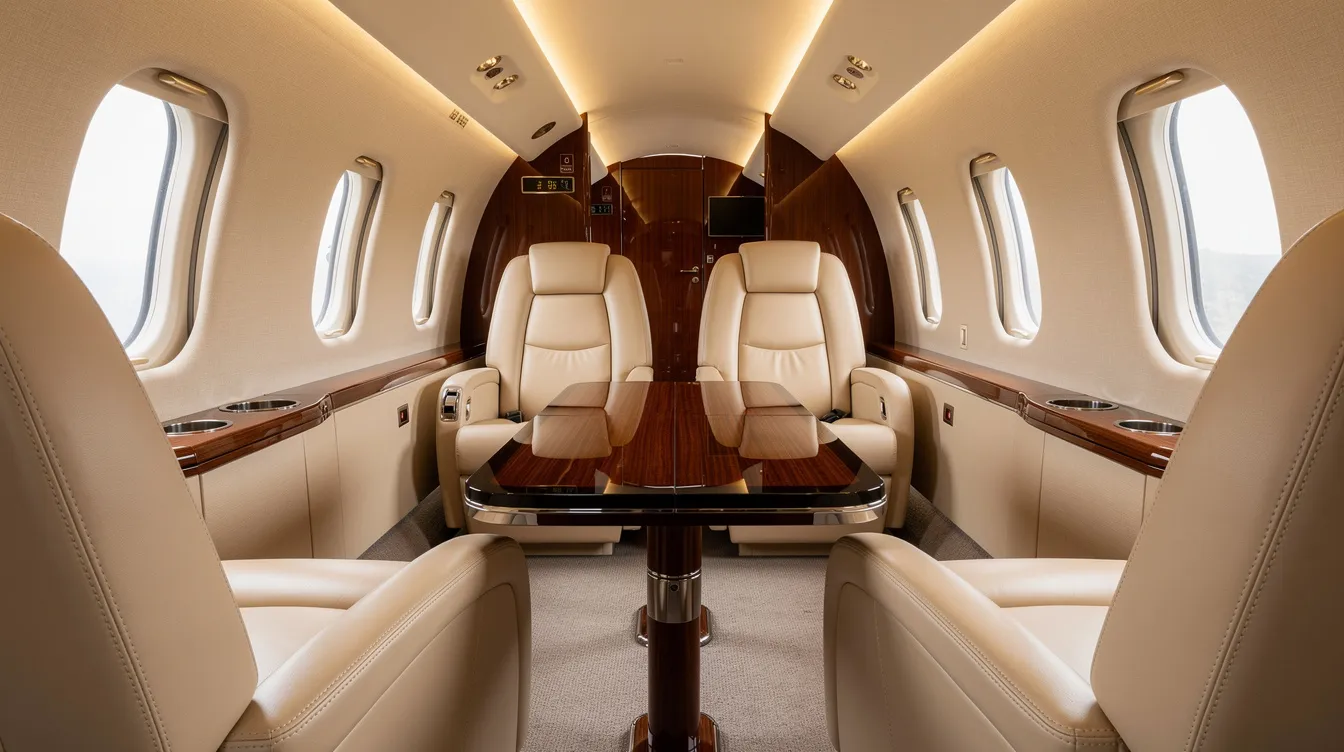
Private air charter has changed. What was once mainly a one-off transaction for a single charter flight is now becoming a more structured access model for executives, founders, investors, and family offices that need flexible scheduling without the obligations of owning an aircraft.
The shift is financial as much as operational. Frequent flyers want aircraft availability, predictable charter costs, global reach, and support when travel plans change. FLYT is built around that need: membership-based private aviation access with fixed hourly rates, a floating global fleet, fleet interchange, and concierge trip management for business and lifestyle travel. Learn more about how FLYT works.
Key Takeaways
Private air charter in 2026 is increasingly membership-driven, not just a one-off private jet charter booking.
Charter flight cost depends on aircraft type, flight hour pricing, routing, positioning, airport choice, and seasonal demand.
A charter flight cost calculator can help model likely costs, but final pricing depends on available aircraft, crew logistics, and trip details.
FLYT offers access without ownership burden through fixed hourly membership rates, a floating global fleet, and concierge-level planning. Explore our membership options.
For many business executives, private aviation is less about luxury and more about time control, privacy, and capital efficiency.
What is private air charter today?
Private air charter is pay-per-flight access to a privately operated aircraft. Instead of buying a private plane, travelers gain access to the entire aircraft for a specific itinerary, whether that is a single domestic flight, a multi-city business route, or an international trip.
In 2026, private air charter generally falls into two categories:
Traditional private charter, where every trip is quoted individually based on available aircraft, routing, aircraft type, and market conditions.
Membership-based access, where members use pre-negotiated hourly rates, defined service levels, priority access rules, and concierge support.
FLYT sits in the second category. It is not a simple on-demand brokerage model. FLYT provides membership-based private jet travel through fixed hourly rates, aircraft fleet interchange, an asset-light floating fleet, and concierge trip management. Discover the benefits of our asset-light floating fleet and aircraft interchange.
That distinction matters. Traditional air charter can be useful for occasional private flights, but frequent travelers often need more cost clarity and operational consistency. Membership models help business aviation users plan annual budgets, manage aircraft options, and avoid the capital exposure of ownership. See how FLYT compares to traditional charter, jet cards, and fractional ownership.
The post-2020 private aviation industry has also become more practical. Many travelers who began flying private for health, privacy, or schedule control now use private air travel as an operating tool. Common use cases include:
Board meetings, investor roadshows, and high-priority client visits.
Manufacturing site visits near smaller airports.
Family vacations that must fit around school calendars.
Group charters for leadership teams, special events, or complex multi-stop travel.
Charter flights save time and enhance comfort, but the larger advantage is control. Private passengers typically arrive at the terminal 15 to 30 minutes before departure, avoid commercial connections, and can adjust itineraries as business needs evolve.

How charter flight pricing actually works
Charter pricing is primarily a function of aircraft type, flight hours, and routing. It is then refined by positioning costs, airport fees, crew duty limits, international handling, de-icing, and whether the aircraft waits for a return flight or repositions elsewhere.
Hourly rates for private jets range from $1,800 to $18,000 depending on aircraft category, market demand, and mission complexity. Charter rates typically start at $2,000 per hour, with turboprops and smaller aircraft near the lower end and long-range aircraft at the higher end.
For illustration, 2026-style market ranges often look like this:
Aircraft Category | Typical Hourly Rate Range | Typical Passenger Capacity | Typical Range (nautical miles) |
|---|
Turboprops | $2,000–$3,000 | Up to 9 | Varies (e.g., King Air 350 ~1,800 nm) |
Light & Very Light Jets | $2,000–$4,000 | 4–8 | Phenom 300E ~2,000 nm |
Midsize Jets | $3,500–$5,500 | 6–9 | Citation Latitude ~2,700 nm |
Large Cabin Jets | $10,000–$12,000 | 10–18 | Gulfstream G650 ~7,000 nm |
Ultra-Long Range Jets | $12,000+ | 12+ | Gulfstream G650 ~7,000 nm |
These are not FLYT rate guarantees. They are directional market references. FLYT members use fixed hourly rates by aircraft category once enrolled, which helps reduce uncertainty versus purely dynamic charter rates. Learn more about our pricing structure.
A charter flight cost calculator is useful because it allows an executive assistant or principal to test scenarios before committing. For example, a New York–Miami private jet flight on a light jet may look materially different from a super midsize aircraft in December, when aircraft availability and holiday demand affect charter options.
Here are the major cost drivers.
First, total flight hours matter. Pricing often uses block time, from engine start to engine shutdown. If an aircraft must reposition before pickup or after drop-off, that time can influence the total trip economics.
Second, airport choice matters. Private jets access over 5,000 airports globally, including many smaller airports closer to offices, homes, resorts, or industrial sites. That direct access can save hours, but handling fees and airport operating rules vary.
Third, seasonality matters. Ski weekends, major sporting events, peak holidays, and summer routes can compress aircraft availability and raise costs.
Fourth, crew logistics matter. Crew duty days are finite. If a schedule exceeds practical duty limits, the trip may require crew rest, hotel costs, or a next-day departure.
Finally, waiting versus repositioning matters. If the aircraft waits for a same-day return flight, there may be crew and ramp costs. If it repositions away, the return leg may require another available aircraft.
FLYT’s model is designed to make these variables more transparent. Rather than forcing each trip into an opaque quoting process, FLYT converts access into fixed hourly membership rates, with concierge support to identify the right aircraft and routing before a trip is confirmed. Learn about our risk pool and charter volatility protection that helps manage cost fluctuations.
What a charter flight cost calculator should show
A useful charter flight cost calculator should ask for practical flight details, not just city pairs.
At a minimum, it should request:
Origin and destination airports.
Departure date and preferred departure time window.
Passenger count and luggage requirements.
Aircraft category preference, such as turboprop, light jet, midsize, heavy jet, or larger aircraft.
One-way, same-day return, overnight, or multi-leg itinerary.
International flights, customs needs, pets, catering, or special equipment.
The output should include estimated flight hours, an indicative total cost range, possible aircraft types, and likely ancillary variables. Example aircraft may include a Citation CJ3+, Praetor 500, Gulfstream G600, or similar models, depending on route and passenger count.
A good tool should also flag potential extra costs such as de-icing, after-hours handling, customs processing, crew hotels, fuel escalation, or repositioning. These are often where hidden fees appear in traditional private jet charter services.
Calculators are directional tools, not final quotes. Available aircraft, runway performance, weight, weather, operator rules, and airport restrictions can change the final cost. FLYT’s platform and concierge team help validate estimates for members and refine routing before confirmation. Learn more about the FLYT platform and our AI fleet engine.
Some marketplaces in the aviation industry emphasize instant pricing, instant booking, or instant access. For example, Jettly provides instant pricing and a user-friendly booking process, and Jettly offers access to over 20,000 aircraft globally. Air Charter Advisors offers free, all-inclusive quotes for private flights. These examples show how the market is moving toward clarity, but frequent travelers still need to evaluate the service model, safety oversight, and operational support.
For frequent flyers, the best use of a calculator is comparison. A same-day out-and-back may cost less than an overnight stay in one scenario, while an overnight may reduce repositioning in another. FLYT helps members test those options within a membership framework.
Who benefits most from private air charter?
Private air charter is not simply about cabin comfort. It is a tool for high-value time management, schedule control, privacy, and access to airports that commercial airlines do not serve efficiently.
The strongest users tend to be people whose schedules are expensive to disrupt. That includes founders managing teams across North America and Europe, PE and VC investors visiting portfolio companies, family offices coordinating multi-generational private travel, and senior executives commuting between headquarters and regional sites.
A business traveler might use a midsize jet to complete Chicago–Cleveland–Nashville–Chicago in one day. Flying commercial could require connections, two overnights, additional hotels, and lost workdays. With private air charter, the same team can travel together, hold meetings on board, and return home the same evening.
Key benefits include:
Time saved by avoiding connections, long security lines, and hub delays.
Flexible scheduling around meetings rather than airline timetables.
Greater privacy for sensitive conversations compared to commercial flights.
Ability to keep teams, equipment, family members, or pets together.
Private jet travel offers greater privacy compared to commercial flights, especially for leadership teams discussing acquisitions, investor updates, restructurings, or confidential client matters. Private air charter services streamline logistics, such as bringing pets in the cabin easily, and private flights provide customizable catering options based on passenger preferences.
Chartering allows for customized trips tailored to individual needs. For example, a family office may combine a board meeting, school calendar, ground transportation, and a weekend in wine country under one coordinated itinerary.
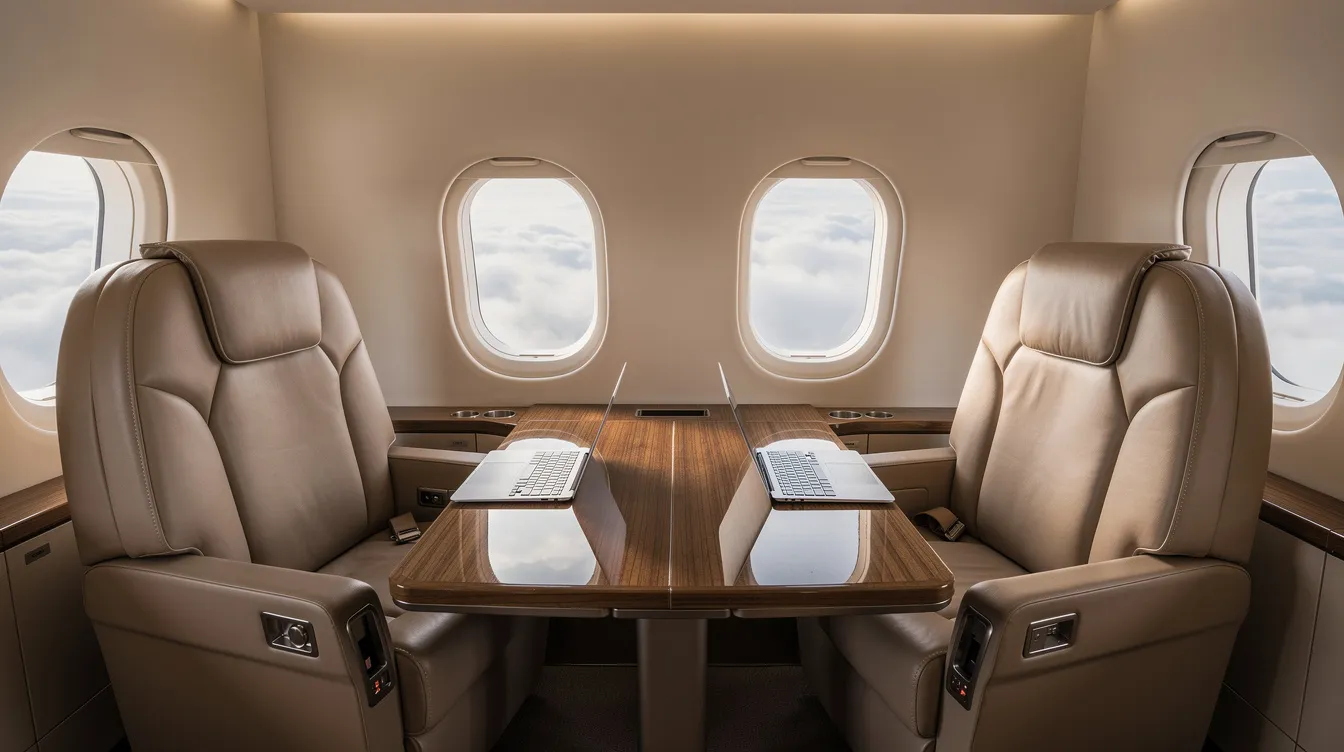
Aircraft types and matching the right jet to the mission
Aircraft types are not about prestige. The best aircraft is the one that fits the mission: range, passenger count, runway performance, cabin layout, luggage volume, and operating efficiency.
Turboprops are often efficient for short regional sectors and smaller airports. A King Air 350 accommodates up to 9 passengers, making it practical for regional business routes, resort access, and airports where runway length or operating conditions favor turboprop performance.
Light jets are strong options for short-to-medium routes with smaller teams. The Embraer Phenom 300E accommodates 6-8 passengers, making it a common choice for executives who want speed, efficiency, and a productive cabin for regional private jet charter missions.
Midsize and super midsize jets add range, cabin comfort, and luggage capacity. The Cessna Citation Latitude has a range of 2,700 nautical miles, which supports many nonstop domestic missions and select longer sectors. These business jets are often appropriate for teams of six to nine passengers who need efficient private air travel without moving into large cabin pricing.
Large-cabin and heavy jet aircraft support longer missions, larger teams, and more cabin space. Heavy jets typically accommodate 12 to 18 passengers, making them useful for transcontinental routes, international flights, and leadership teams that need more room for work and rest.
Ultra-long-range aircraft are designed for long-distance travel. The Gulfstream G650 can fly up to 7,000 nautical miles, which makes nonstop intercontinental missions possible under the right conditions. Ultra-long-range jets and large-cabin aircraft are often selected for routes such as New York–Dubai, London–Singapore, or West Coast–Europe travel.
VIP airliners and larger aircraft can support larger groups, including corporate delegations, entertainment teams, sports organizations, and complex group charters. Private jet charters can accommodate any group size, including large airliners, when the itinerary and operating requirements justify it.
FLYT’s fleet interchange model allows members to select the right aircraft for each trip. A member may use a turboprop for a short regional hop, a light jet for a same-day client meeting, a super midsize jet for a cross-country route, and a large cabin aircraft for an overnight international flight.
That flexibility matters because using the perfect aircraft for every mission can reduce charter flight cost without sacrificing productivity. FLYT’s advisors help members evaluate available aircraft, route requirements, passenger needs, and in-flight amenities before confirming the aircraft type.
How aircraft availability affects pricing and planning
Aircraft availability varies by region, season, and notice period. A route that is simple on a Tuesday in March may be more constrained during holiday peaks, major events, ski season, or short-notice travel windows.
This is where the operating model matters. Asset-heavy models own or control specific fleets, often with fixed bases and capital structures. FLYT uses an asset-light floating fleet approach, providing access across a broad network rather than limiting members to a single tail number or base.
A well-structured membership can also define priority access bands, response standards, and booking windows. In many cases, 24–72 hours’ notice produces better aircraft options and more efficient routing. Same-day requests may still be possible, but choices can narrow.
Booking a private jet can be done in as little as three hours in some market conditions, and charter services can accommodate last-minute travel requests. Private air charter allows for on-demand travel and last-minute changes to itineraries, but earlier engagement usually improves planning.
Small changes can make a measurable difference. Moving a departure by a few hours, using a nearby secondary airport, or adjusting a return flight can improve available aircraft and reduce repositioning costs.
For complex itineraries, FLYT’s concierge team works ahead of the trip to optimize routing, crew logistics, airport access, and ground coordination. That is especially useful for international flights, multi-leg investor tours, or travel around special events.
Flying private vs. owning: membership, jet cards, and fractional ownership
Beyond ad hoc private charter, travelers usually compare three models: fractional ownership, jet card programs, and membership-based access. The right choice depends on annual hours, route patterns, financial priorities, and tolerance for fixed obligations.
Fractional ownership involves buying a share of a specific aircraft type. Contracts often run three to five years and include monthly management fees, occupied hourly rates, maintenance exposure through program costs, and residual value risk when the share is sold or returned.
This can make sense for certain high-utilization profiles, but it is not capital-light. Private charter avoids large capital investments and maintenance costs associated with ownership. Full ownership adds even more complexity: crew hiring, hangarage, insurance, maintenance planning, regulatory compliance, and depreciation.
Jet cards are different. A jet card usually involves pre-purchasing flight hours in blocks, often 25 hours or more. Jet card programs may offer capped rates and defined service terms, but rules vary around peak-day surcharges, aircraft substitutions, expiration, cancellation, and whether pricing is truly all-inclusive.
Membership-based access, such as FLYT, is designed for travelers who want structure without equity. Members gain access to a diverse fleet, fixed hourly rates published by aircraft category, concierge planning, and aircraft interchange without purchasing an aviation asset.
From a CFO perspective, the comparison is straightforward:
Ownership creates balance sheet exposure and depreciation risk.
Fractional ownership reduces sole-asset burden but still locks up capital.
Jet cards simplify access but may require prepaid hours and can create unused balances.
Membership fees and fixed hourly rates can be modeled as operating costs tied more closely to actual use.
FLYT also uses a risk pool model conceptually. Members share access across a broad fleet framework instead of relying on one private plane. That spreads utilization, supports flexible scheduling, and reduces individual exposure to the operational risks of a single aircraft. Learn more about our risk pool model.
Where FLYT fits in the private aviation landscape
FLYT is a membership-based private aviation service that blends the predictability many travelers associate with fractional ownership and the flexibility of on-demand charter, without requiring the customer to own an aircraft asset.
The core elements are practical:
Fixed hourly rates by aircraft category.
Global reach through an asset-light floating global fleet.
Fleet interchange across light, midsize, large-cabin, and long-range aircraft.
Concierge-level planning support before, during, and after the trip.
Transparent pricing designed to reduce surprise charges.
In simple terms, FLYT is providing access rather than selling ownership. Members do not compete for one tail number. Instead, they gain access to a broader aircraft network managed around availability, mission requirements, and service standards.
Consider a member flying 150–200 hours per year. That member may use light jets for regional day trips, a midsize aircraft for domestic client meetings, and a heavy jet or large-cabin aircraft for two annual transatlantic family or business trips. One membership framework can support both business and personal private travel.
This is the practical appeal. FLYT helps members charter a private jet experience without turning aircraft access into a capital project. Read more about the FLYT advantage and how we compare to brokers and jet cards.

Planning a private air charter trip end-to-end
A private air charter trip begins with the objective. Is the trip for a board meeting, site visit, family travel, investor roadshow, medical need, special events, or a combined business-and-personal schedule?
From there, the planning flow is straightforward:
Define origin, destination, and alternate airports.
Confirm departure date and preferred time window.
Share passenger count, luggage, pets, and special requirements.
Choose the right aircraft category.
Confirm catering, ground transport, and arrival logistics.
A business traveler or executive assistant typically works with FLYT through the platform or concierge team. The request is refined, routing is optimized, aircraft options are reviewed, and the final trip is confirmed once aircraft, crew, and service preferences align.
Operational details matter. Crew duty days often run within practical 10–14-hour limits depending on schedule, jurisdiction, and operator requirements. Long duty days, late departures, or multi-leg routes may require crew rest.
Ultra-long-haul planning can also involve fuel stops. A stop may add 30–45 minutes or more, depending on airport handling and clearance. On routes such as Los Angeles–Honolulu–Sydney, the choice between a planned stop and nonstop ultra-long-range capability can materially affect timing and aircraft selection.
Within 24 hours of departure, travelers should confirm:
Passenger manifest and identification documents.
Catering preferences and in-flight amenities.
Ground transportation at both ends.
Luggage dimensions, golf clubs, skis, or equipment.
Pet arrangements and any cabin requirements.
Airport terminal address and arrival time.
Ground transport is often where good planning becomes visible. Coordinated drivers, ramp access, luggage handling, and timing can turn a complex itinerary into a controlled travel day. FLYT’s concierge support is designed to handle these details so members can focus on the purpose of the trip.
What to consider beyond the hourly rate
The headline hourly rate matters, but it is not the whole decision. Total trip value includes schedule reliability, support when plans change, safety oversight, aircraft suitability, and the ability to flex aircraft types as needs evolve.
In the broader market, hidden fees can include repositioning, crew hotels, after-hours handling, de-icing, customs support, fuel escalators, and airport-specific charges. A quote that appears cheaper may become more expensive once the full itinerary is priced.
For example, a low headline quote may require an aircraft to reposition from another region, add crew overnight costs, and charge after-hours handling at the destination. A more transparent membership quote may look less dramatic upfront, but it gives the finance team a clearer view of the actual cost.
Executives also care about qualitative factors. Reliable Wi-Fi, quiet cabins, privacy, catering, and ground coordination can determine whether flight time becomes productive time. For many travelers, flying private is valuable because it protects the calendar, not because it adds ornament to the journey.
Why executives are choosing membership-based private air charter
Executive travel patterns have become more dynamic since 2024. Companies operate across more hubs, teams are hybrid, deal timelines are compressed, and families often combine business obligations with personal travel.
That environment favors flexible access over fixed ownership. Buying an aircraft can tie millions of dollars into a depreciating asset. Ownership also brings maintenance, crew, insurance, storage, and regulatory obligations that many travelers do not want to manage.
Membership-based private air charter converts much of that complexity into a more predictable access model. Costs become easier to model by flight hour and aircraft category. Travel patterns can change without forcing a sale, share adjustment, or underused jet card balance.
Operationally, fleet interchange is central. A member can shift from a super midsize to a large cabin aircraft when two additional executives join a route. Another trip may call for a smaller aircraft because only two passengers are traveling to a regional airport.
FLYT aligns with this direction through an asset-light structure, global access, concierge coordination, and transparent pricing that can be incorporated into annual travel budgets. It is a smarter alternative for travelers who want complete control of the schedule without the ownership burden.
Looking toward 2027–2028, flexible aircraft access will likely become more important as companies expand, consolidate, and open new regional operations. A membership model gives frequent flyers a framework that can adapt as travel patterns change.
Learn how FLYT approaches flexible private aviation access without ownership complexity.
Frequently asked questions about private air charter
Is private air charter cost-effective compared to business class?
It depends on the value of time, the number of travelers, and routing complexity. One aircraft carrying six to eight executives can often outperform multiple business-class tickets, hotel nights, and lost workdays on a tightly scheduled route.
For example, if a leadership team loses half a day to connections and delays, the opportunity cost may be higher than the premium paid for private air charter. This is especially true when decisions, site visits, or client meetings cannot wait.
FLYT helps members model annual travel budgets and compare private charter with commercial alternatives. The goal is not to assume private is always cheaper, but to identify when it is operationally and financially rational.
How far in advance should I book a private charter flight?
Same-day travel is often possible, and private air charter services can accommodate last-minute travel requests. However, 24–72 hours’ notice usually provides better aircraft choice, more efficient pricing, and stronger routing options.
Membership models like FLYT may define aircraft availability bands depending on aircraft category, route complexity, and notice period. For complex international trips or late-2026 European investor tours, engaging the concierge team a week or more ahead is ideal.
FLYT’s team can support both planned and short-notice requests within the membership framework.
What level of safety oversight should I expect in private aviation?
Safety oversight should be non-negotiable. Travelers should look for operators with strong maintenance programs, experienced crews, appropriate type ratings, recurrent training, insurance coverage, and regulatory compliance.
In the U.S., safety certifications should include an FAA Part 135 certificate for operators in the US, and FAR Part 135 governs commercial charter operations for safety. Companies can verify safety ratings through auditing systems like ARGUS or Wyvern.
The broader market offers useful benchmarks. Airshare has received IS-BAO Stage 3 and ARGUS Platinum designations. Stratos Jets is an ARGUS Certified broker, ensuring high safety standards. Wyvern brokers meet strict safety requirements for charter flights. Air Charter Advisors uses only FAR Part 135 or 121 air carriers.
You can learn more about the regulatory framework through the FAA’s Part 135 guidance and third-party safety organizations such as ARGUS, Wyvern, and IS-BAO.
Can I use private air charter for both business and personal trips under one membership?
Yes. Many executives and family offices use one membership for board meetings, site visits, family vacations, school breaks, and holiday travel.
The important details are administrative. The membership should define designated users, assistant booking permissions, cost allocation, and reporting for different entities or cost centers.
FLYT can help members establish profiles and permissions so assistants can book on behalf of principals while finance teams retain visibility into usage and cost.
What happens if my schedule changes at the last minute?
Flexibility is one of the central reasons travelers choose private air charter. Departure times can often be adjusted on the day of travel, subject to crew duty limits, airport hours, and aircraft availability.
Membership frameworks usually define change and cancellation policies in advance. That predictability is important because rules and responsiveness matter as much as the headline hourly rate.
FLYT’s concierge team works with members to re-time flights, adjust routing, swap aircraft types, or coordinate new ground transportation when schedules move. The goal is to keep disruption and additional cost as controlled as possible.
Conclusion
Private air charter through a membership model like FLYT represents a strategic evolution in private aviation. By combining fixed hourly rates, flexible fleet interchange, and concierge-level support, it offers executives and frequent flyers a smarter, more efficient way to access private jets without the financial and operational burdens of ownership. This approach emphasizes predictability, global reach, and operational efficiency, aligning closely with the needs of modern business travelers who prioritize time, privacy, and cost clarity. For those seeking a premium private aviation experience that adapts to dynamic travel demands, membership-based private air charter provides a compelling alternative to traditional ownership and ad hoc charter solutions.
Discover a more flexible approach to global private jet travel with FLYT’s membership model designed around efficiency and transparency. Visit FLYT.com or contact us to learn more.