Private Plane: a smarter guide to Private Jet Types, charter, and Membership
Choosing how to fly private in 2026 is less about prestige and more about operational logic. The aircraft you select, the access model you commit to, and the pricing structure you accept will determine whether private aviation works as a strategic tool or an expensive habit.
This guide breaks down every major jet category, compares the primary ways to access private flights, and explains why membership-based models are reshaping how executives and founders think about private travel.
Key Takeaways
Private jet charter services, aircraft type selection (from very light jets to ultra-long-range heavy jets), and membership models like FLYT each affect cost, range, and overall travel experience in fundamentally different ways.
Choosing the right jet category is primarily a financial and operational decision. Oversizing wastes the budget. Undersizing costs you time, comfort, or a fuel stop.
Membership-based private aviation with fixed hourly rates and fleet interchange, as offered by FLYT, delivers predictable pricing and flexible access without aircraft ownership or fractional commitments.
Different trip profiles demand different aircraft: short regional hops suit very light or light jets, transcontinental routes call for super-midsize, and intercontinental missions require heavy jets or ultra-long-range aircraft.
This article compares charter vs ownership vs jet cards vs membership and provides a practical framework for discerning travelers to decide how to fly private more intelligently.
Understanding Private Aviation Today
Private aviation has shifted significantly since 2020. COVID-era disruptions accelerated demand for flexible, asset-light access over traditional ownership. Fractional usage rose from roughly 5% in 2021 to 20% in 2023 among private flyers evaluating alternatives, and membership programs have continued gaining momentum into 2026.
For most travelers, "plane private" simply means flying on private jets instead of commercial airlines. Whether through private charter, memberships, jet cards, or ownership, the core value proposition remains: private flights can save up to 50% of travel time compared to commercial flights, private aircraft bypass TSA lines and crowded terminals, and travelers can check in just 20 minutes before departure. Private aviation provides significant time savings by using smaller airports, allowing access to over 5,000 airports worldwide, many of which are inaccessible to commercial airlines. This access enhances convenience and reduces ground time substantially.
The use cases are broad. Executive teams shuttle between New York and Miami. Founders visit portfolio companies across multiple cities in a single day. Families travel from London to Dubai without layovers. Investors run multi-city tours across Europe in 48 hours. In each case, the decision framework is the same: choose the right aircraft type, select the right access model, and understand how pricing actually works.
FLYT operates as a membership-based private aviation service focused on predictable costs, flexible aircraft access, and global reach. Rather than locking capital into ownership or fractional shares, FLYT members access a floating fleet matched to each trip's specific requirements.
Private Jet Charter vs Other Ways to Fly Private
A private jet charter is the simplest entry point: you book an aircraft for a specific trip, pay hourly plus fees, and walk away with no ongoing commitment. Private jet charters allow travelers to skip long check-in lines, customize their flight experience, and access over 5,000 airports worldwide. Platforms like Jettly connect users to over 20,000 aircraft globally and offer instant pricing for private jet charters, enhancing transparency and ease of booking.
Primary Access Models Compared
Access Model | Flexibility | Pricing Structure | Commitment/Deposit | Key Considerations |
|---|
On-demand Charter | Maximum | Variable, per trip | None | No guaranteed access during peak demand |
Jet Cards | Moderate | Semi-fixed, prepaid | $150k–$350k for 25 hours | Peak-day surcharges, minimums, blackout dates |
Fractional Ownership | Low | Fixed + variable | $500k–$1.2M+ for 1/16 | Capital commitment, monthly fees, residual value risk, and high annual operating costs |
Membership-based Access | High | Fixed hourly, fleet swap | Lower, annual or monthly | Predictable pricing, flexible aircraft access, no ownership or large upfront deposit |
Membership with fixed hourly rates and fleet interchange reduces complexity, especially for executives flying 25 to 200 hours per year across mixed trip profiles. Private jet travel offers access to over 20,000 aircraft globally through networked providers.
The rest of this article assumes you may use any access method, but focuses on how to choose the correct aircraft type and why a membership model can make those choices more predictable.
How Private Jet Size and Type Impact Your Travel Experience
Aircraft type directly affects cost per hour, total trip cost, airport access, range, cabin comfort, and whether you can fly non-stop on routes like Los Angeles to New York or Paris to Dubai.
The main private jet categories covered here are: very light jets, light jets, super-light jets, midsize, super-midsize, heavy jets, ultra-long-range, and executive airliners. These are industry-standard groupings recognized by aviation experts and charter operators worldwide.
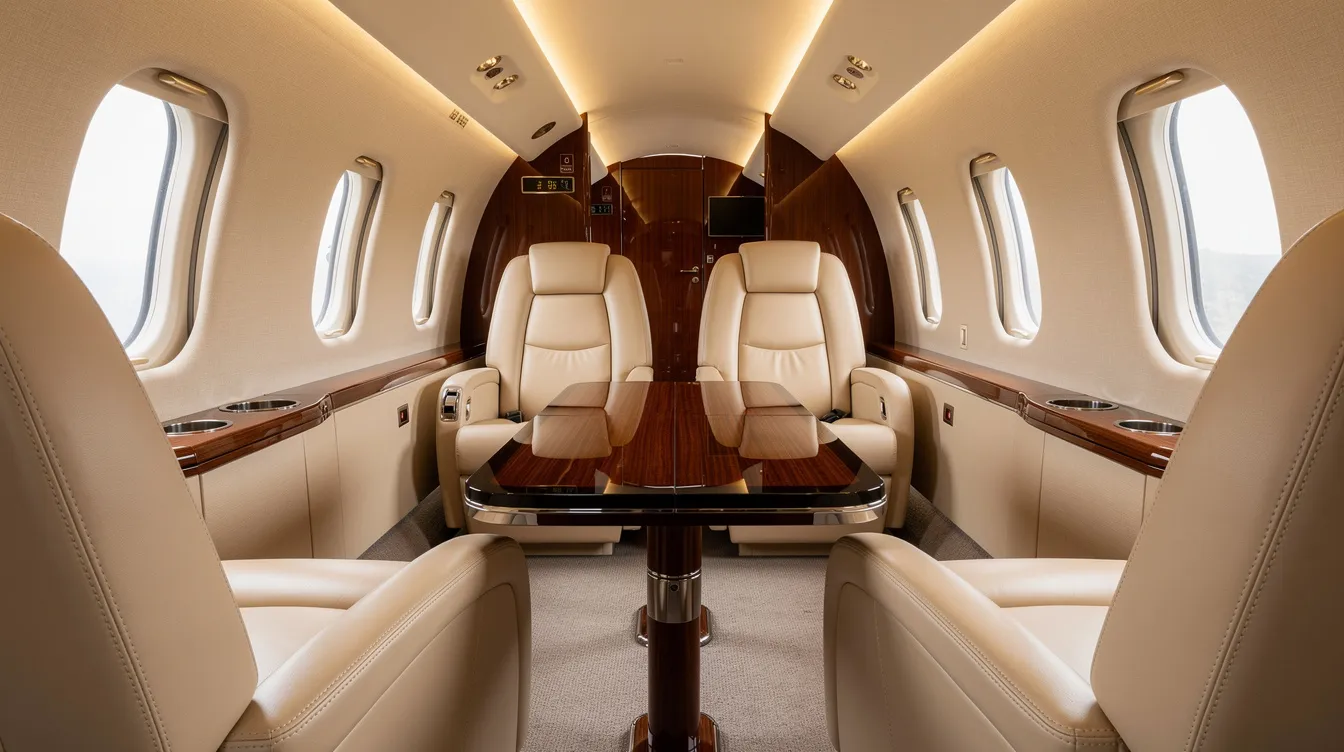
Private jets offer greater comfort with spacious cabins and tailored service compared to commercial alternatives. Passengers on private jets enjoy higher privacy and productivity during travel, enhanced by the ability to fly at higher altitudes to avoid weather disturbances, resulting in smoother journeys.
Oversizing wastes the budget. Booking a heavy jet for a 400-mile hop between two nearby cities means paying for cabin space, range, and fuel burn you don't need. Undersizing can mean fuel stops, baggage limits, or missing amenities like a fully enclosed lavatory. Private jets offer a more comfortable flying experience with spacious cabins, but only if the cabin matches the mission.
Consider a 2026 business trip from Boston to Chicago (roughly 850 miles). A very light jet gets you there, but the cabin is tight: limited headroom, minimal baggage, no flight attendant. A super-midsize jet adds stand-up cabin height, proper work space, generous luggage capacity, and the ability to hold a productive meeting en route. The trade-off is a higher hourly rate, but the flying experience and productivity gain may justify it.
FLYT's asset-light floating fleet model is designed to help members right-size aircraft trip by trip rather than being locked into one jet type. You can review the full range of aircraft types available within the platform.
Very Light Jets
Very light jets (VLJs) are 2-4 passenger jets optimized for short regional trips of roughly 600 to 1,200 miles. Think Frankfurt to Geneva, Dallas to Nashville, or Boston to Philadelphia. VLJs can carry up to four passengers and combine turboprop-like efficiency with jet cruise speeds.
VLJs excel at accessing smaller airports near city centers across North America and Europe. Their ability to operate from shorter runways means they can reach destinations not served by large private jets. Typical VLJ cabins in 2026 feature club seating for four, limited baggage (around 60 cubic feet), sometimes a compact lavatory, and typically no flight attendant.
Representative models include the Embraer Phenom 100 and Cessna Citation Mustang. Piston aircraft and turboprop options exist below VLJs for very short hops, but VLJs provide a meaningful step up in speed and cabin environment.
Who should consider VLJs?
Solo executives, couples, or small teams prioritizing cost-effectiveness for sub-2-hour flights.
Within a FLYT membership, VLJs can be integrated into a broader strategy for frequent short-haul trips while reserving larger jets for longer missions.
Light Jets and Super-Light Jets
Light jets represent a step up from VLJs, typically seating five to eight passengers, with ranges around 1,400 to 2,500 miles. Routes like New York to Miami, London to Marrakech, or Chicago to Denver are well within a light jet's capability, often nonstop.
Common amenities include enclosed lavatories, more headroom, better baggage capacity, and basic connectivity options. These features suit small executive teams or families who need convenience without stepping up to midsize pricing.
Super-light jets extend range and cabin space further. The Embraer Phenom 300 and Gulfstream G100 are examples in this subclass, with ranges reaching approximately 3,000 miles. They handle up to six passengers comfortably and offer improved cabin dimensions that make longer flights more productive.
Key advantages:
Light and super-light jets handle most domestic and short international routes without the cost premium of midsize or heavy jets.
Within a FLYT-style membership, members can move between very light jets and light jets depending on passenger count and route while maintaining fixed hourly rates and predictable pricing.
Midsize and Super-Midsize Jets
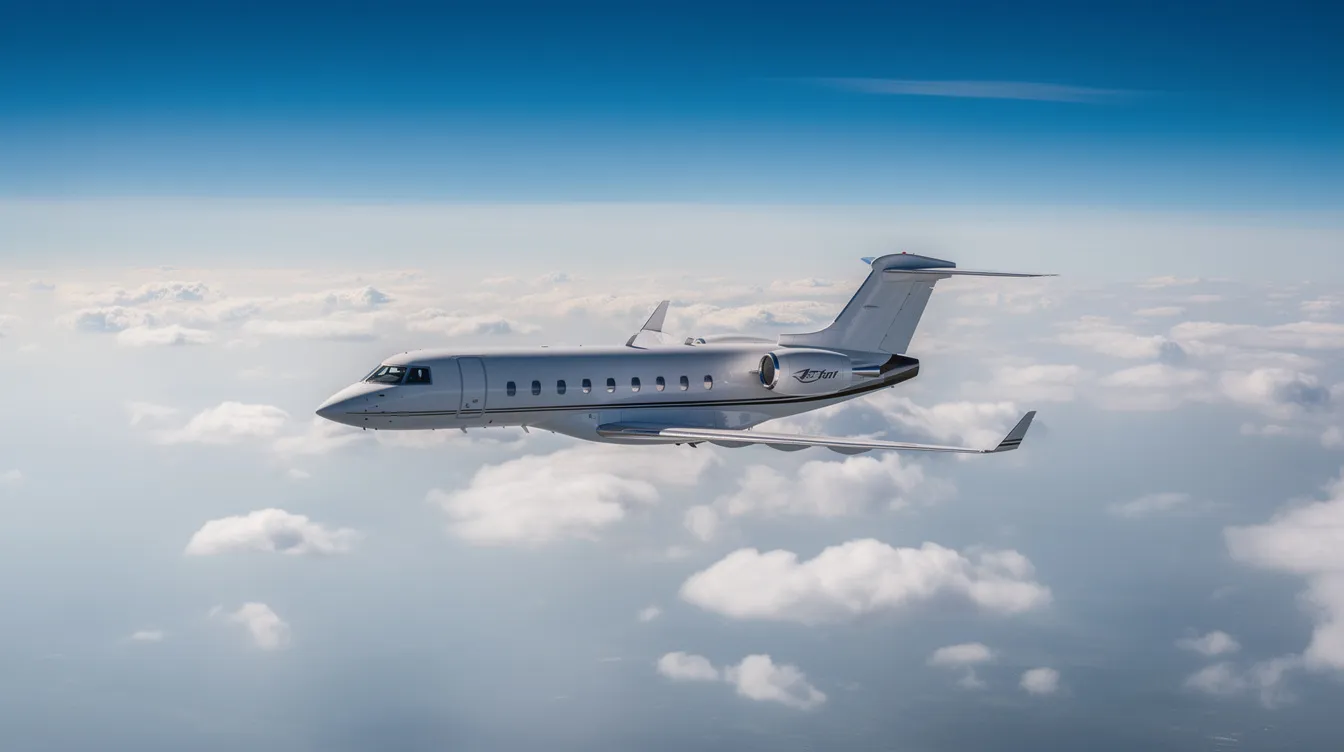
Midsize jets accommodate up to eight passengers with meaningfully more cabin volume: stand-up or near-stand-up cabins, conference-style seating, divans, generous baggage, and quiet interiors designed for in-flight work. Ranges exceed 3,000 miles, covering transcontinental flights like Los Angeles to New York or London to Istanbul nonstop.
Representative midsize models include the Hawker 900XP and Citation Latitude. Both offer spacious cabin layouts, divans for rest on longer segments, and enough cabin space for executives to conduct business or families to travel in comfort.
Super-midsize jets add range, speed, and amenities. Full-height cabins, reliable Wi-Fi, and advanced avionics make them the ideal aircraft for longer missions: Chicago to San José del Cabo, Paris to Riyadh, or multi-leg European tours. Models like the Cessna Citation X and Bombardier Challenger 350/3500 are known for high cruise speeds and reliable transcontinental performance.
Why choose midsize or super-midsize?
Many corporate travelers gravitate to this class as a sweet spot between cost, range, and comfort.
FLYT's fleet interchange supports this flexibility, allowing members to step up to super-midsize when the mission demands it and scale back to a light jet for shorter hops.
Heavy Jets and Ultra Long Range Aircraft
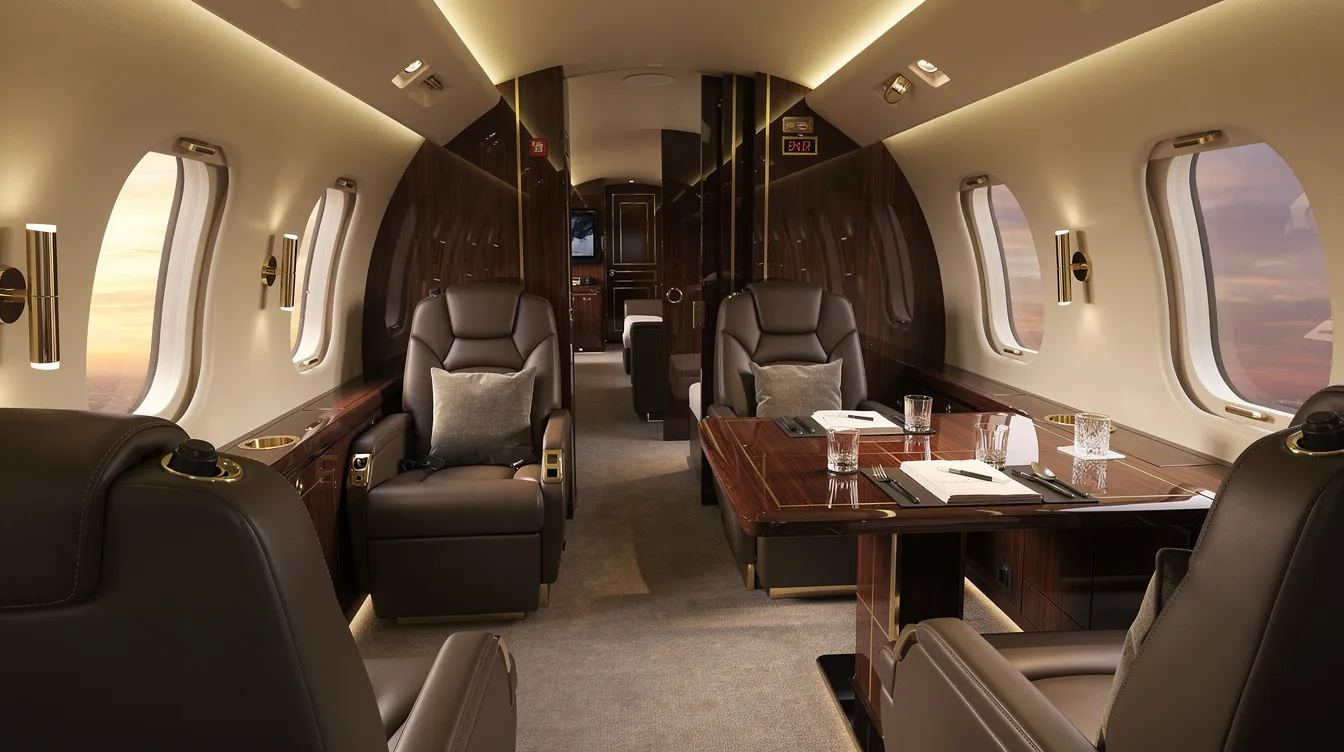
Heavy jets are large private jets seating 10 to 16 passengers with ranges up to approximately 6,000 to 7,300 miles. These are the aircraft for long-haul routes: New York to London, Dubai to Paris, São Paulo to Miami. Heavy jets can accommodate 12 to 18 passengers comfortably, with separate living zones, lie-flat beds, full galleys, entertainment systems, and at least one flight attendant.
Examples include the Bombardier Global 5000 and Gulfstream V. Chartering a heavy jet can cost around $5,000 to $10,000 per hour, depending on the model and region. The Gulfstream G650, a flagship in this segment, can cost over $70,000 per hour to charter when factoring in all associated costs for certain premium configurations and peak demand.
Ultra-long-range jets extend the capability further. Ultra-long-range jets can stay in the air for intercontinental missions and fly up to 8,000 nautical miles, making nonstop routes like Los Angeles to Tokyo or London to Singapore feasible. The Dassault Falcon 7X, Bombardier Global 7500, and Gulfstream G700 define this segment. The Global 7500, for instance, offers approximately 7,700 nautical miles of range, four cabin zones including a bedroom suite, and a stand-up shower in certain configurations.
When do heavy and ultra-long-range jets make sense?
Multi-time-zone board meetings
Investor roadshows across continents
Medical transport requiring specialized equipment and a range
Family travel, where nonstop capability significantly improves the travel experience
Executive Airliners
Executive airliners are converted commercial aircraft configured for private use. The Boeing Business Jet and Airbus ACJ family are the most recognized examples. Executive airliners can seat 19 to 48 passengers, with layouts that include large lounges, meeting rooms, private suites, separate bedrooms, showers, and dedicated crew rest areas.
Use cases include:
Charter rates for executive airliners are significantly higher than those for heavy jets, reflecting the size, crew requirements, and custom interiors involved. These aircraft require longer runway infrastructure and are limited to airports with appropriate handling capacity.
While executive airliners represent the top tier of private aviation, most FLYT members and frequent private flyers will typically use light, midsize, or heavy jets.
How to Match Jet Type to Your Mission Profile
The practical framework for matching jets to missions is straightforward: evaluate distance, passenger count, baggage needs, and schedule constraints. Cabin size or class alone should not drive the decision.
Mission Scenarios:
Quarterly board meeting, Atlanta to New York (750 miles, 4 passengers): A light jet handles this efficiently. No need for midsize unless the group is larger or requires extended working space.
Family holiday, London to Maldives (5,000+ miles, 6 passengers): A heavy jet or ultra-long-range aircraft is necessary. Nonstop capability avoids fuel stops and keeps the journey seamless for travelers with children.
Investor tour, three European cities in two days (4 passengers, legs of 400-800 miles): A super-light or light jet that can access smaller airports near each city center offers the best combination of speed and flexibility.
Multi-continent deal closing, New York to Dubai (5,800+ miles): Ultra-long range. Anything shorter means a fuel stop and wasted hours.
Rules of thumb:
Use very light or light jets for sub-600-mile hops with few passengers.
Super-midsize for US or intra-Europe transcontinental flights.
Heavy jets for overnight or intercontinental routes.
Private jets allow access to over 5,000 airports worldwide, but airport selection plays into aircraft choice. Shorter runways often require VLJs, turboprops, or certain light jets. Some heavy jets need longer runways and specific infrastructure.
FLYT's concierge team runs these mission-matching calculations for members, ensuring each trip uses the most efficient category at a fixed hourly rate.
Cost Considerations: What Really Drives Private Jet Pricing
The main cost drivers in private jet charter services are aircraft category, flight time, repositioning legs, peak-day surcharges, airport and handling fees, and catering or ground arrangements. Charter rates typically range from $2,000 to $25,000 per hour, depending on jet class.
Hourly Rates by Jet Category
Jet Category | Typical Hourly Rate |
|---|
Very Light Jet | $2,000 – $3,000 |
Light Jet | $3,500 – $5,000 |
Midsize Jet | $4,500 – $7,000 |
Super-Midsize Jet | $6,000 – $8,500 |
Heavy Jet | $8,000 – $12,000 |
Ultra Long Range Jet | $12,500 – $18,500 |
Executive Airliner | $15,000+ |
Hourly rates rise substantially from very light jets through ultra-long-range aircraft. The difference in total mission cost can be dramatic when you oversize the jet. A light jet at $4,000 per hour versus a heavy jet at $8,000 per hour doubles your flight cost before fees.
Fixed vs Variable Pricing
Fixed hourly rates in membership models like FLYT's pricing provide predictable pricing per hour of actual flight time without unpredictable surcharges or opaque line items.
Jet ownership involves hidden or less visible costs: annual operating costs for a private jet can exceed $1 million when factoring in depreciation, maintenance events, crew salaries, hangar fees, and insurance.
For business use, you may be eligible for significant tax benefits related to private aviation, but those advantages must be weighed against the total cost of operation.
Smarter lens: Think in terms of cost per productive hour saved and capital preserved rather than just cost per hour. An executive whose time is valued at several thousand dollars per hour may find that private flights, saving up to 2-3 hours per trip compared to commercial flights, create a measurable return on the investment.
Membership vs Jet Cards and Fractional Ownership
Jet cards involve prepaid blocks of 25 to 50 hours on specific categories of private jets. Pricing is semi-fixed, but peak-day surcharges, conversion multipliers for switching aircraft types, and minimum-use requirements can erode predictability.
Comparison Table: Membership, Jet Cards, and Fractional Ownership
Feature | Membership (e.g., FLYT) | Jet Cards | Fractional Ownership |
|---|
Upfront Cost | Low/Moderate | Moderate ($150k–$350k) | High ($500k–$1.2M+) |
Hourly Rate | Fixed | Semi-fixed, surcharges | Fixed + variable |
Aircraft Flexibility | High (fleet interchange) | Limited | Locked to share the aircraft |
Residual Value Risk | None | None | Yes |
Management Fees | None | None | $15k–$25k/month |
Best For | 25–200 hours/year, varied trips | 25–50 hours/year, single jet type | 100+ hours/year, consistent use |
FLYT's membership model provides access without title, fixed hourly rates across categories, fleet interchange options, and an asset-light floating fleet that optimizes availability globally. There are no depreciation concerns, no monthly management fees tied to a specific airframe, and no exit-value calculations.
How to decide:
Map your recent 12 to 24 months of private flying—hours, routes, passenger count—and test different scenarios. What would those trips have cost under charter, jet cards, fractional, or a FLYT-style membership?
Inside the FLYT Model: Asset-Light, Flexible, and Global
FLYT is a membership-based private jet access platform built for executives, founders, and investors who prioritize efficiency, predictability, and global reach in private travel. It is not an ownership program or a charter brokerage.
How the Asset-Light Floating Fleet Works
FLYT uses a networked fleet rather than owning every aircraft, providing access to jets worldwide without the burden of ownership.
The risk pool model stabilizes the system. Hours and demand are spread across members and aircraft, helping maintain availability and supporting fixed hourly rates across different aircraft categories.
Aircraft fleet interchange is core to the design. Members can choose between very light jets, light jets, super-midsize, heavy jets, and ultra-long-range aircraft as trip profiles change—all within one membership framework.
Concierge-level support covers trip planning, aircraft selection, ground transport coordination, in-flight requirements, and trip-specific details, while giving members the flexibility to customize their flight experience through the service model.

Operational Efficiency and the Executive Travel Experience
What executives and founders actually value in 2026 is straightforward: reliable departure schedules, productive time on board, privacy for sensitive discussions, and seamless logistics across multiple destinations. Private jets allow for maximum schedule control and direct flights, and passengers on private jets enjoy higher privacy and productivity during travel.
How Jet Classes Support Executive Needs
Super-midsize and heavy jets enable in-flight meetings with conference seating, Wi-Fi connectivity for deal work, and rest spaces on overnight segments.
Private aircraft allow passengers to meet their crew and board quickly, often within minutes of arriving at the airport.
Flying private reduces ground time and avoids long security lines.
Membership-based models like FLYT's enable integrated planning for a series of trips—quarterly board meetings, recurring transatlantic travel, multi-city tours—rather than treating each charter as a one-off transaction. This creates operational continuity and removes the friction of rebooking from scratch every time.
Private aviation can also complement premium commercial travel when appropriate. Flying private on regional links while using commercial long-haul, depending on time and cost trade-offs, is a legitimate strategy.
How to Evaluate a Private Aviation Partner
When selecting a private aviation provider in 2026, apply this checklist:
Safety: Verify third-party audit standards, operational track record, crew training, and maintenance history. Reputable providers maintain the highest safety standards and work with vetted operators. FLYT's approach to safety and security reflects this standard.
Pricing transparency: Look for clear hourly rates without hidden fuel surcharges, repositioning surprises, or opaque peak-day policies.
Contract clarity: Understand cancellation terms, peak-day rules, minimum commitments, and what happens if your usage changes.
Global coverage: Confirm the provider can manage international missions, including overflight permits, customs handling, and ground logistics.
Fleet flexibility: The ability to switch between aircraft categories—from very light jets up to heavy jets and ultra-long-range—under a single relationship is increasingly valuable for frequent flyers.
FLYT is built around these principles: membership, fixed hourly rates, fleet interchange, and a focus on providing access with efficiency and clarity rather than marketing spectacle.
FAQ
Is a private jet membership worth it if I only fly 20-30 hours a year?
For 20-30 hours annually, high-minimum jet cards or fractional ownership rarely make economic sense. The capital commitment and monthly fixed fees inflate the cost per hour when spread over so few flights. A flexible membership with lower commitments and fixed hourly rates can still be attractive, especially if your trips vary in distance and passenger count.
Very low-frequency flyers (under 15-20 hours) might remain with on-demand private charter. But frequent business travelers approaching 25+ hours should evaluate membership options like FLYT's to compare predictability and total cost of use. Model your last 12-18 months of trips by hours and aircraft types before deciding—ideally with input from aviation experts who can run the numbers across access models.
How far in advance do I need to book a private jet?
Under normal conditions, booking 3 to 7 days in advance secures broader aircraft choice and better availability, especially for midsize and super-midsize jets on popular business routes. This lead time gives providers room to position aircraft efficiently and offer better pricing.
Membership programs often include specified call-out times—commonly 24 to 72 hours—for guaranteed access, even during peak periods. A pure on-demand private charter can be less predictable on high-demand days like holidays or major events. Truly last-minute flights on the same day are often possible but may limit aircraft options and could involve repositioning costs if no suitable aircraft is nearby.
Can I switch between aircraft types once I'm in a membership program?
Some programs lock members into a single jet category, which limits flexibility. Others, including FLYT, are designed specifically around fleet interchange and category flexibility. A member might take a very light jet for a solo regional meeting one week and a super-midsize or heavy jet for a long-haul family trip the next, all within the same membership framework.
Review contract terms carefully. Understand any pricing differentials, minimums, or blackout rules tied to switching aircraft categories. Some programs apply conversion multipliers when you move between jet classes, which can significantly increase costs on trips that don't match your primary aircraft type.
How does private jet safety compare to commercial airlines?
Reputable private aviation operators adhere to strict regulatory standards and often maintain safety programs comparable to, or exceeding, those of commercial carriers. The key is verification. Look for third-party safety ratings such as ARGUS, Wyvern, or IS-BAO certification. Evaluate crew experience and aircraft maintenance records when comparing charter brokers, jet card issuers, and membership providers.
Sophisticated membership platforms like FLYT work only with vetted operators and aircraft, aligning with professional travelers' expectations for safety and reliability during every flight.
What if my travel plans change at the last minute?
One advantage of private aviation is greater flexibility to adjust departure times, routings, and even airports closer to meetings or homes. Some providers can also arrange helicopters for transfers or missions where fixed-wing aircraft are less practical. Private jets allow check-in just 20 minutes before departure in many cases, providing a convenience that commercial schedules cannot match.
Cancellation and change policies vary widely across charter, jet cards, and memberships. Executives should review notice periods, penalties, and peak-day rules in advance. A concierge-supported membership can help quickly re-optimize aircraft type and schedule when meetings move, or deals run long, reducing disruption to the overall travel experience and keeping the journey on track.
For more information or to discuss your private aviation needs, contact FLYT to learn how their flexible, asset-light approach can elevate your travel experience.
Conclusion: A Smarter Way to Fly Private Plane
The core of intelligent private aviation is matching the right aircraft type to each mission and choosing an access model that preserves capital and delivers predictable costs. Whether you need a very light jet for a 90-minute regional hop or an ultra-long-range heavy jet for a nonstop intercontinental journey, the aircraft should fit the trip, not the other way around.
Understanding categories from very light jets to ultra-long-range aircraft helps avoid overspending or compromising on range and comfort. Membership-based access like FLYT's can integrate private jet charter services, fixed hourly rates, fleet interchange, and concierge support into one coherent, asset-light solution for destinations around the world.
If your travel patterns span multiple trip types, passenger counts, and regions, explore whether a flexible membership model could better align with your 2026 travel needs than traditional ownership, jet cards, or purely ad-hoc charter.