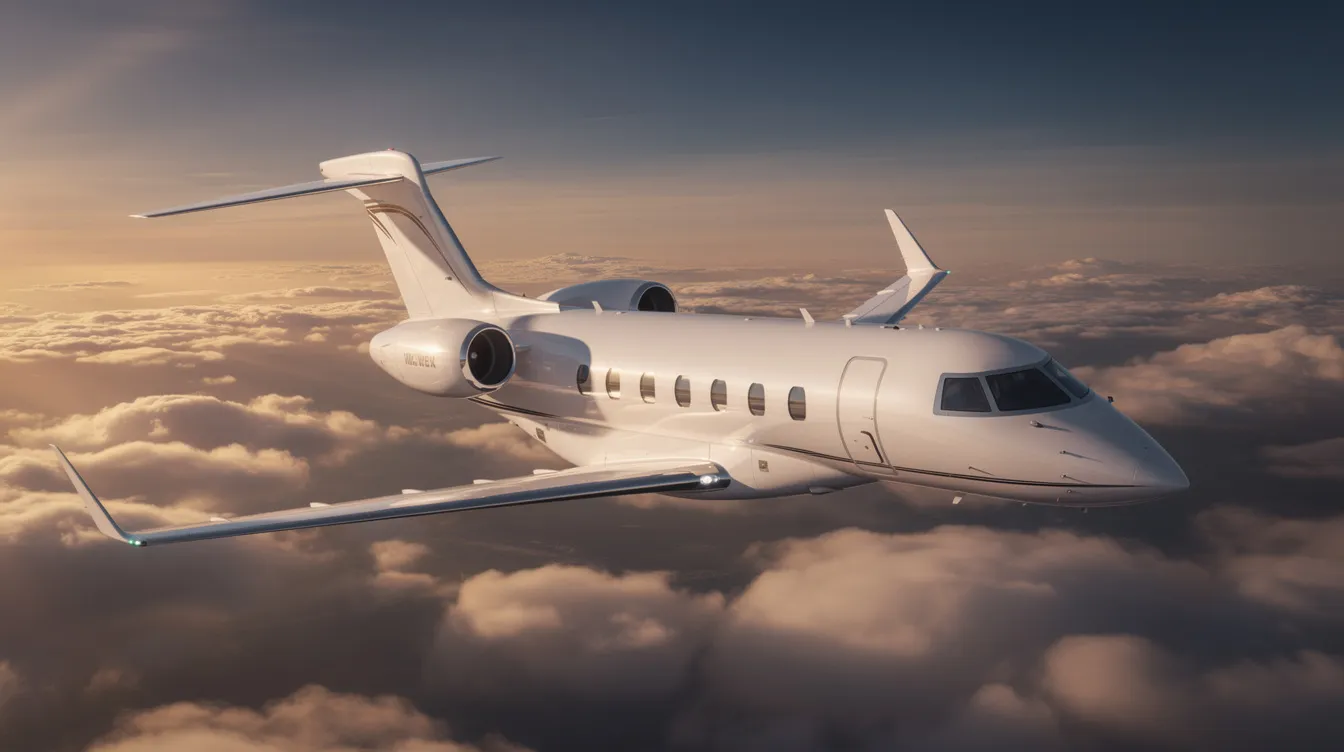
Personal jets have become an essential component of modern private aviation, offering a strategic balance between convenience, flexibility, and cost efficiency. For executives, entrepreneurs, and frequent flyers, personal jets provide a smarter alternative to traditional ownership, enabling access to a wide range of aircraft without the complexities of managing and maintaining a private jet. This guide explores the evolving landscape of personal jets in 2026, highlighting key categories, technological advancements, ownership models, and how membership-based services like FLYT are redefining access to private flying. Understanding these dynamics is crucial for discerning travelers seeking operational efficiency, predictable costs, and global reach without the burdens of ownership.
Key takeaways
Personal jets now range from entry-level very light jets like the Cirrus SF50 Vision Jet to a light business jet such as the HondaJet HA-420, giving executives and families more precise aircraft choices in 2026.
Private jet membership provides access without ownership obligations, allowing frequent flyers to use a consistent fleet of aircraft without buying, crewing, or managing a jet.
Aircraft ownership offers control, but the full cost includes acquisition, pilots, maintenance, hangarage, insurance, training, depreciation, and operational complexity.
FLYT is designed around fixed hourly rates, fleet interchange, global access, and concierge-level service for travelers who value time, predictability, and capital efficiency.
Modern personal jets increasingly include advanced flight deck technology, emergency autoland, and safety systems such as the Cirrus airframe parachute system.
What is a personal jet in 2026?
Personal jets have changed materially since the 1990s, when owner-flown turbine aircraft were rare and often operationally demanding. Today, personal jets describe a spectrum of aircraft optimized for 1–8 travelers, often certified for single-pilot operation, and used for on-demand private flights rather than scheduled airline routes.
The category matters because the economics of private aviation are becoming more precise. Executives, founders, investors, and families increasingly want to fly directly, reduce wasted ground time, and preserve privacy without necessarily placing an aircraft on the balance sheet.
A personal jet is smaller than traditional large business jets or converted executive airliners. It typically has a smaller cabin, lower operating costs, shorter runway capabilities, and more flexible routing. Private jets can land at approximately 5,000 airports in the U.S., while private jets can access over 5,000 airports worldwide, giving travelers more options than commercial airline networks.
Reference models include the Cirrus SF50 Vision Jet from Cirrus Aircraft, the Eclipse 500, the HondaJet HA-420 from Honda Aircraft Company, the Embraer Phenom 100EV, and compact midsize jets such as the Cessna Citation XLS+. FLYT members can access a mix of personal jets and broader business jets depending on passenger number, range, cargo, destination, and overall mission profile.
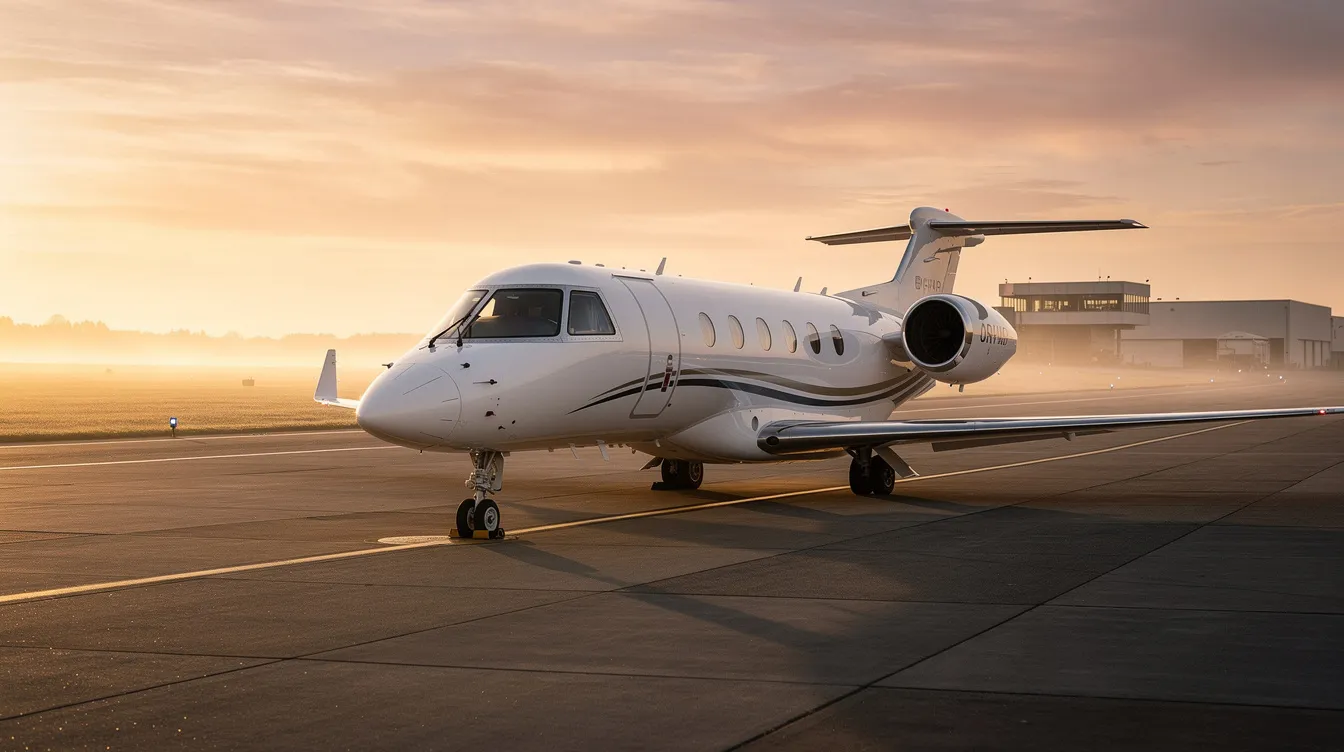
Types of personal and small business jets
The primary types of personal jets are categorized by size and range. Personal jets are categorized into six main classes based on size and cabin amenities: entry-level jets, light jets, midsize jets, super midsize aircraft, heavy jets, ultra-long-range jets, and executive airliners.
Entry-level jets are compact and designed for small groups. Entry-level jets typically have a capacity of 4 to 5 passengers, and entry-level jets are certified for single-pilot operation in many models. Very light jets are suitable for regional trips, owner-flown missions, and short business hops.
The Cirrus SF50 Vision Jet is one of the clearest personal jet icons. The Vision Jet was introduced after certification in 2016, is powered by a single Williams FJ33 engine, and includes the Cirrus Airframe Parachute System and Safe Return Emergency Autoland capability. Its maximum takeoff weight, wingspan, speed, range, and flight deck design place it firmly in the modern very light jets category. The prototype helped create a new perspective on owner-pilot jet access.
The HondaJet HA-420 is a useful reference in the light business jet segment. Its first flight was in 2003, following an earlier maiden flight program, and FAA certification arrived in 2015. A Honda Aircraft Company model typically carries up to 6–7 passengers, cruises at efficient speed for regional business travel, and offers a cabin suited to 2–4 hour sectors.
Light jets accommodate 6 to 8 passengers comfortably. A light jet often works well for a leadership team, family journey, or same-day business trip. The widest cabin in this class is often a point of comparison because a few inches can affect productivity on board.
Medium jets typically feature stand-up cabins and inflight entertainment. The most popular midsize jets feature enclosed lavatories and Wi-Fi, though many operators describe connectivity as wi fi in passenger materials. Midsize jets provide coast-to-coast travel capability for 7 to 9 passengers.
Mid size jets such as the Citation XLS+ bridge the gap between personal jets and larger long range aircraft. A spacious mid-size cabin, stronger performance, and additional baggage capacity make these models suitable for small teams, family travel, and multi-city schedules. Above that, heavy jets often have a capacity of 10 to 14 passengers, heavy jets often include multiple cabin zones and private bedrooms, and ultra-long-range jets can accommodate 14 to 19 passengers.
Executive airliners accommodate 15 to 50 passengers with global reach. At the upper end, Bombardier aircraft can fly up to 8,000 nautical miles, Gulfstream jets can fly up to 4,300 nautical miles non-stop, Dassault aircraft can fly up to 5,950 nautical miles, and Embraer jets offer a flight time of around 8 hours. A Falcon aircraft from Dassault sits in this broader long-range market.
For FLYT, the point is not to push every traveler into the largest aircraft. The value is aircraft fleet interchange: use personal jets and light business jets where they are efficient, then move to super midsize, large cabin, or long-range aircraft when the mission requires it.
Personal jets and business jets overview
Jet category | Passenger capacity | Typical range (nautical miles) | Cabin features and notes | Example models |
|---|
Entry-level jets | 4–5 | ~1,000–1,200 | Compact, certified for single-pilot operation, regional use | Cirrus SF50 Vision Jet, Eclipse 500 |
Light jets | 6–8 | ~1,500–2,000 | Comfortable cabins, suitable for short to medium range | HondaJet HA-420, Citation CJ3+ |
Midsize jets | 7–9 | ~2,000–2,500 | Stand-up cabins, inflight entertainment, coast-to-coast range | Citation XLS+, Embraer Phenom 300 |
Super midsize jets | 10–11 | ~3,000–3,500 | Wide-body cabins, transatlantic capability | Bombardier Challenger 350, Gulfstream G280 |
Heavy jets | 10–14 | ~4,000–5,500 | Multiple cabin zones, private bedrooms, long-range capability | Gulfstream G450, Dassault Falcon 7X |
Ultra-long-range jets | 14–19 | 6,000+ | Extended global range, large cabins | Bombardier Global 7500, Gulfstream G650 |
Technology and safety: from flight deck to full automation
Modern personal jets now integrate avionics once associated with larger business jets. Glass cockpit systems, synthetic vision, integrated flight management, traffic awareness, terrain alerts, and stability protections reduce workload for pilots and improve situational awareness.
The flight deck in many current models uses Garmin G3000, Garmin G5000, or Collins Pro Line architecture. These systems make it easier to manage navigation, weather, performance, and communications from a single interface, sometimes supported by a mobile device for planning or passenger updates.
Emergency autoland is one of the most important features to reach the personal jet market. On the Vision Jet, safe return allows a passenger to activate a system that can navigate to an appropriate airport, communicate with air traffic control, and land the aircraft. HondaJet Elite II also brought Emergency Autoland certification into the light jet conversation in 2024.
The Cirrus Airframe Parachute System, also known as CAPS, is a whole-aircraft parachute installed on the Vision Jet. It is intended as a last-resort safety net and has influenced how owners, insurers, and the industry think about single-engine jet risk.
Other capabilities include envelope protection, autothrottle, automatic emergency descent, and improved maintenance monitoring. FLYT prioritizes aircraft with modern avionics suites, professional crews, and strong safety records so members benefit from technology and disciplined operations together.
Ownership vs membership: capital, control, and complexity
Owning a personal jet provides unmatched schedule autonomy. Private jet owners can skip long security lines and arrive just 15 minutes before departure. Owners fully customize the interior cabin layout, select preferred finishes, and control the aircraft’s use.
The tradeoff is cost and complexity. Acquisition may start around several million dollars for a new very light jet and rise sharply for light, midsize, and larger aircraft. Owners share costs like flight crew and maintenance only in shared structures; full owners carry those responsibilities directly. Business aviation provides financial and tax advantages under specific regulations, but those advantages require careful structuring and professional advice.
Full ownership involves pilots, hangarage, insurance, recurrent training, scheduled maintenance, unscheduled maintenance, engine reserves, navigation fees, fuel, and depreciation. Under 150–200 annual flight hours, fixed costs can dominate the economics and raise the true cost per flight hour.
Compare the main access models:
Full ownership: maximum control but highest capital and management burden.
Fractional ownership: equity shares with shared costs but long-term contracts and exposure to fleet decisions. Fractional ownership began in 1996 for business aircraft. Fractional ownership typically requires monthly management fees, and fractional ownership may be regulated by FAA Part 91 or Part 135. Fractional owners can sell their equity position if needed. Learn more about fractional ownership vs jet cards.
Jet cards: pre-paid blocks of hours, sometimes with variable pricing and blackout dates. Fixed hourly rates provide predictable pricing for private jet services. Some companies offer unlimited access for a fixed monthly fee. Fixed rates simplify budgeting for frequent private flyers. See how FLYT compares to jet cards.
Membership with FLYT: access to a global network of aircraft via an asset-light floating fleet model and fixed hourly rates without ownership or long-term equity commitments. Membership models provide access to a fleet without ownership costs. Explore FLYT memberships and pricing.
Operational use cases: how personal jets are actually flown
Personal jets are best understood as productivity tools. The value is not only the flight itself, but the ability to control departure time, airport selection, passenger list, privacy, and ground logistics.
Short-haul business travel is a natural use case. New York to Washington DC, London to Paris, and Los Angeles to Silicon Valley can become same-day routes with fewer schedule compromises. Smaller airports close to the site or meeting can matter more than cruise speed.
Family and lifestyle travel is another major category. Dallas to Aspen, London to Nice, or São Paulo to Florianópolis are practical examples where a smaller aircraft may arrive closer to the final destination and reduce total journey time.
Long-range connections often require fleet mixing. A member might use a personal jet or light business jet to reach a major hub, then continue on a Bombardier Global, Gulfstream, or Dassault Falcon for a transatlantic segment.
Corporate shuttle and team travel can be highly efficient for 5–8 passengers visiting manufacturing facilities, investment targets, or multiple offices. A mid-size aircraft can turn fragmented commercial schedules into one controlled business day.
An air charter service works well for occasional travel, but ad hoc pricing and aircraft availability can vary. FLYT’s membership options cater to frequent private flyers and executives by using a global network and risk pool model to stabilize access, service standards, and budgeting. Learn about charter volatility protection and the AI fleet engine that powers FLYT’s platform.

Environmental considerations and smarter utilization
Personal jets and business jets have a higher per-passenger carbon footprint than commercial flights, particularly when passenger loads are low. That reality is under increasing public, corporate, and regulatory scrutiny.
On a 500–1,000 nautical mile sector, emissions can become significant over a year of frequent flying. The more thoughtful question is how to match the right aircraft to the route, the passenger count, and the mission.
Using smaller modern aircraft for regional sectors can reduce waste compared with operating a larger long-range jet on a short trip. Efficiency improves when aircraft size, passenger load, routing, and repositioning are managed carefully.
Operational measures include direct point-to-point planning, optimized routing, reduced empty legs, higher average fleet utilization, and newer engines with better fuel performance. Sustainable Aviation Fuel is becoming more relevant, while electric and hybrid concepts may influence short-range air travel over the next decade.
FLYT’s asset-light floating fleet model helps by matching aircraft to each flight rather than forcing every mission onto one owned aircraft. Better utilization across a distributed fleet can reduce unnecessary repositioning and support more efficient private aviation.
How FLYT fits into the personal jet landscape
FLYT is a membership-based private aviation partner for frequent flyers who want reliable access without tying up capital in a depreciating asset. The model is built for people who need to fly with control, privacy, and consistency, but do not want ownership obligations.
Private jet membership includes concierge-level service. FLYT coordinates trip planning, airport selection, ground transport, in-flight preferences, and operational details through a central platform. That support is valuable for executives and families who want the aviation experience to be managed, not merely booked.
The FLYT program provides fixed hourly rates across defined aircraft categories. Members do not need to purchase, finance, crew, insure, or maintain an aircraft. Instead, FLYT sources qualified aircraft through a curated global network.
The asset-light floating fleet and risk pool model are central. Aircraft are positioned through qualified partners across regions, improving the match between supply and demand. Members can use a light jet for a 2–3 hour regional flight one week and a super midsize or long range jet for an international itinerary the next.
This is strategic capital allocation. FLYT preserves the core advantages that attract people to personal jets—time savings, privacy, access, and control—while reducing the ownership burden. Learn more about the FLYT advantage.
FAQ: personal jets, safety, and FLYT membership
How safe are personal jets compared to larger commercial aircraft?
Modern personal jets and light business jets are certified under rigorous FAA and EASA standards, with redundant systems, defined maintenance programs, and trained pilots. Technologies such as the Cirrus Airframe Parachute System on the Vision Jet and Emergency Autoland on the HondaJet Elite II add safety layers, but they complement professional training rather than replace it.
FLYT works with qualified operators and prioritizes modern, well-equipped fleets with strong operational records. Visit FLYT FAQ for more details.
Can I fly a personal jet myself if I get a pilot's license?
Yes, some very light and light business jets are certified for single-pilot operation. However, flying a jet requires an instrument rating, a type rating, recurrent training, medical currency, and disciplined operational experience.
Most FLYT members choose crewed aircraft because professional pilots improve safety, reliability, and productivity. For travelers focused on business efficiency rather than piloting as a personal pursuit, membership is usually the more practical route.
What routes are most efficient for using a personal jet instead of commercial airlines?
Personal jets are most efficient where commercial service is fragmented, nonstop options are limited, or smaller airports reduce ground time. Examples include Columbus to Raleigh, Zurich to Ibiza, and regional hops across the Middle East or Southeast Asia.
FLYT advisors can review historical travel patterns and identify where private flights deliver the greatest time savings and operational value. Contact FLYT for personalized consultation.
How does FLYT pricing compare to owning a small jet outright?
Membership hourly rates may be higher than the direct fuel-and-maintenance cost of an owned aircraft on a narrow per-hour basis. But ownership also includes acquisition, depreciation, financing, hangarage, insurance, crew, training, compliance, and unpredictable maintenance.
For many travelers flying under roughly 200–250 hours per year, FLYT’s fixed hourly rates and no-capital model can produce a lower all-in burden with far less administrative complexity. See FLYT pricing for details.
Can FLYT support long-range and international trips, or only short personal jet flights?
FLYT is not limited to small personal jets. Members can access mid-size jets, super midsize aircraft, large cabin jets, and long-range business jets for transcontinental and intercontinental travel.
Through its global network, FLYT coordinates aircraft sourcing, handling, regulatory requirements, and on-the-ground services. Explore a membership model designed around efficiency, transparency, and flexible global private jet access at how it works.
Conclusion: embracing smarter personal jet access with FLYT
Personal jets represent a strategic tool for executives, entrepreneurs, and frequent flyers who prioritize time, predictability, and operational efficiency. While ownership offers control, it carries significant capital, complexity, and risk. Alternatives like fractional ownership and jet cards provide options but often lack the flexibility and transparency modern travelers demand.
FLYT’s membership model redefines private aviation by delivering access without ownership burdens. Its asset-light floating fleet, fixed hourly rates, and global reach enable members to select the right aircraft for each mission—whether a short regional hop on a light jet or a long-range international flight on a super midsize or heavy jet. Concierge-level support and a curated network of qualified operators ensure a premium, consistent experience tailored to discerning travelers.
For those seeking freedom from ownership complexity and a smarter way to access personal jets, FLYT offers a transparent, flexible, and efficient solution. Discover how FLYT approaches flexible private aviation access by visiting flyt.com.