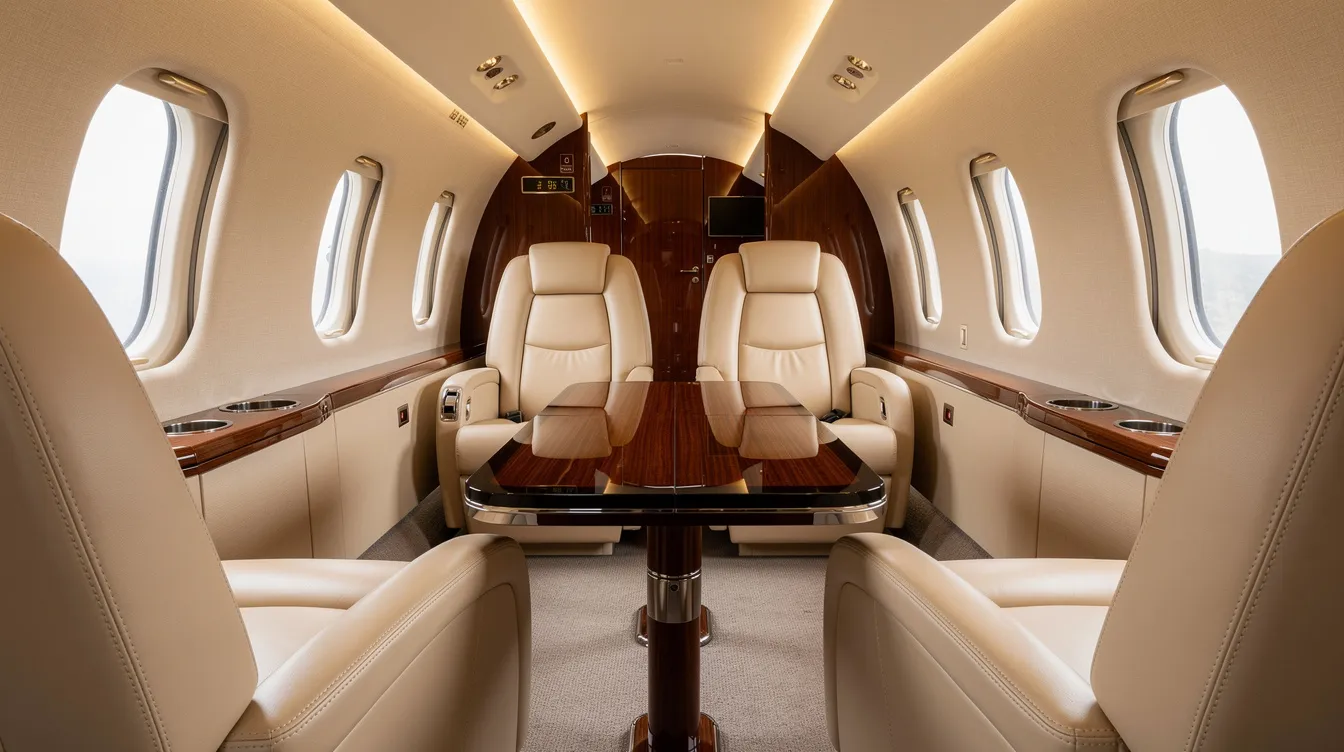
Ordering a private jet used to mean hours of phone calls, opaque quotes, and pricing that shifted between the first conversation and the final invoice. That model still exists, but it is no longer the only option. For executives and frequent travelers who rely on private flights to protect their time, a membership-first approach now offers a faster, more transparent path from trip request to wheels-up.
This guide walks through how to order a private jet in three clear steps, explains what actually drives charter pricing, and shows how FLYT's membership model replaces ad hoc quoting with fixed hourly rates, flexible scheduling, and concierge support.
Key takeaways
Ordering a private jet follows three straightforward steps: submit your trip request, review aircraft and pricing options, and confirm your itinerary. FLYT members handle this through a dedicated platform or concierge team with predictable fixed hourly rates rather than volatile ad-hoc charter pricing.
Traditional private jet charter costs can range from $1,800 to $18,000 per hour, depending on aircraft type, route, and market conditions. FLYT's model is built to eliminate pricing surprises by agreeing on transparent costs before each flight. Learn more about pricing.
Choosing the right aircraft type matters more than most first-time private jet travelers realize. A light jet for a 90-minute hop costs a fraction of what a heavy jet charges for the same route, and matching aircraft to mission is where real savings happen. Explore aircraft interchange for flexible access.
Membership-based private aviation services offer flexible and cost-efficient access to jets. FLYT's membership provides global reach and concierge support without the capital lock-up of fractional ownership, traditional jet cards, or full aircraft ownership.
FLYT is designed as a strategic, asset-light floating fleet way to access private aircraft for executives, founders, and frequent travelers who value time, predictability, and operational efficiency over owning metal. See how our risk pool model and charter volatility protection work.

How to order a private jet in 3 straightforward steps
The process of ordering a private plane does not need to be complicated. Whether you are booking your first charter flight or your fiftieth, the workflow follows the same logic. Here is how it works in practice.
Step 1: Submit your trip request
Define the basics. You need an origin and destination (for example, New York Teterboro to Miami Opa-locka), your preferred travel date, a departure time window, how many passengers are flying, and any notable luggage requirements. FLYT members can submit this via the platform or directly through their concierge contact. This is also the stage where road transportation and catering preferences are flagged during pre-flight planning.
Step 2: Review aircraft and pricing options
Based on your trip details, your advisor presents aircraft options suited to the mission. These typically span several categories: turboprop, light jet, midsize, super-midsize, or heavy jet. Each option includes estimated flight time, charter pricing per flight hour, seating capacity, and a summary of available in-flight amenities. Digital platforms now provide instant pricing for private jet rental, making it possible to compare aircraft options side by side. Chartering a private jet involves selecting an aircraft size based on your trip, and this step is where that decision gets made.
Step 3: confirm and fly
Review the total trip price or fixed hourly rate, confirm the contract terms, process payment, and receive your final itinerary. That itinerary includes FBO details, crew information, departure logistics, and any ground transport arrangements. Private jet charters can be booked within three hours of contract signing in many cases, particularly for domestic routes with positioned aircraft.
For FLYT members, same-day or next-day departures are common on domestic legs. International flights or complex multi-city routing (Los Angeles to London to Dubai, for instance) benefit from 24 to 48 hours of planning time to coordinate permits, customs, and crew duty schedules.
Understanding charter pricing and what really drives your cost
Charter flight pricing is not random. It is shaped by a small set of variables, and understanding them gives you more control over your budget before you ever order a private jet.
Primary cost drivers
The main factors behind every private jet charter quote include:
Aircraft type and size: Larger cabin, higher hourly rate.
Total flight hour count: Includes any positioning legs needed to move the aircraft to your departure city.
Routing and airports used: Congested hubs vs. smaller airports.
Calendar timing: Charter costs fluctuate based on peak travel days and additional fees.
International fees and applicable taxes: Especially for transatlantic or multi-country routing.
Landing fees, handling charges, and overnight crew costs.
What the numbers actually look like
For a traditional on-demand charter or private jet rental, current market rates break down roughly as follows:
Aircraft category | Typical charter rate per hour | Seating capacity | Typical range (hours) |
|---|
Light jets | $1,200 - $3,300 | 4 - 7 passengers | 1 - 3 |
Midsize jets | $5,000 - $8,500 | 6 - 9 passengers | 3 - 5 |
Heavy jets | $5,400 - $11,000 | 10 - 16 passengers | 6 - 10+ |
Ultra-long-range jets | Starting at $12,000 | 12+ passengers | 8 - 12+ |
Private jet charter costs can range from $1,800 to $18,000 per hour when you account for the full spectrum of aircraft types and market conditions. Additional costs for private jet travel can include in-flight catering and de-icing, which rarely appear in initial estimates.
A charter flight cost calculator is useful for ballpark planning, but it rarely captures every line item. A comprehensive quote for private jet travel includes all fees, such as landing and handling, but many online tools omit these. FLYT's approach is different: fixed hourly rates are agreed within the membership, with transparent terms on what is included and what may be incremental, explained before anything is signed. Learn more about how it works.
Choosing the right aircraft type for your mission
Aircraft selection is a strategic decision. It balances cost per hour, total travel time, passenger count, and comfort. Picking the largest jet available is rarely the most efficient move.
Light jets and very light jets
Optimal for short-haul flights of one to three hours. Routes like Boston to Washington or Dallas to Houston fit this category well. Light jets typically accommodate 4 to 7 passengers, are cost-efficient, and can access smaller airports closer to your office or home. Charter rates for light jets range from $1,200 to $3,300 per hour, making them the most accessible entry point for private jet travel.
Midsize and super-midsize jets
These cover the workhouse business corridors: New York to Dallas, Chicago to San Francisco, Los Angeles to Cabo. More cabin space, better baggage capacity, and enough range to handle four- to five-hour legs without fuel stops. Midsize charter rates sit in the $5,000 to $8,500 per hour range depending on the specific aircraft type and route.
Heavy and long-range jets
When the mission demands nonstop transcontinental or intercontinental capability, heavy jets and ultra-long-range aircraft earn their cost. New York to Los Angeles, New York to London, or multi-stop European itineraries call for aircraft types that range from heavy jets for 10 to 16 passengers down to purpose-built long-distance travel platforms. Fuel stops for private jets typically take 30 to 40 minutes, so eliminating them on a transatlantic leg saves meaningful time.
Private jets can access thousands of smaller airports not available to commercial airlines, and smaller private jets can access regional airports closer to final destinations. This flexibility in airport selection often saves more time on the ground than in the air.
FLYT's membership and fleet interchange model is designed so members can shift aircraft types trip by trip. A light jet for a 90-minute meeting hop on Tuesday and a long-range jet for a quarterly international board meeting on Friday, all under one membership, without owning multiple aircraft.
Membership vs on-demand charter vs jet card vs ownership
Many readers comparing private aviation solutions want a financially rational framework before they commit. Here is how the main models stack up.
On-demand charter
No long-term commitment. You pay per trip based on market charter rates, which vary with demand, fuel prices, and availability. On-demand charters allow pay-per-trip access without long-term commitments, which suits occasional flyers. The downside: budgeting is difficult, pricing is inconsistent, and peak-period availability is never guaranteed. Private jet travel is significantly more expensive than commercial flights, and ad-hoc charter amplifies that gap with unpredictable surcharges.
Jet cards
Prepaid blocks of flight hours, typically 25 or more. Jet cards offer fixed hourly rates for guaranteed availability within defined notice windows. Jet card memberships typically require a minimum commitment of 25 hours per year. Benefits include rate predictability and scheduling priority. Limitations include capital tied up in deposits, potential peak-day surcharges, and program restrictions that may not match every travel pattern. For a deeper look at how this compares, see FLYT vs jet cards.
Fractional ownership and full ownership
Capital-intensive models. Fractional ownership typically requires a minimum commitment of 10 years, along with monthly management fees, occupied hourly rates, and exposure to residual value risk. Full private jet ownership costs can exceed $1 million annually when you account for crew salaries, hangar fees, insurance, maintenance, and depreciation. Many executives and business travelers are actively trying to exit these structures. A detailed comparison is available at FLYT vs fractional ownership.
FLYT membership
Asset-light access. Fixed hourly rates by aircraft category, membership-based fleet access, and a risk pool model instead of owning metal. Membership models are becoming preferred over traditional ownership because they offer global reach without tying up millions in aircraft equity. Membership provides flexible access without the costs of ownership, and FLYT's structure is built for frequent users who want complete control over their schedule without the operational burden. Discover the FLYT advantage and how we compare to charter and brokers.
How FLYT structures predictable costs and flexible scheduling
FLYT's core promise is straightforward: predictable private aviation costs and flexible aircraft access for frequent flyers and corporate clients.
Fixed hourly rates in practice
Before each trip, a member knows their rate by aircraft category. That rate covers standard positioning, fuel, and crew within defined service zones. Incremental items like de-icing on a winter morning in Chicago or specific international handling fees are disclosed upfront, not buried in a post-flight invoice. Private jet memberships allow for instant pricing and booking, which means the quoting cycle that plagues traditional charter simply does not apply.
Flexible scheduling
Members can adjust departure times within an agreed window, handle short-notice departures for urgent meetings, and reschedule within the same day when corporate agendas shift. This level of flexible scheduling is central to how FLYT works for business travel. A return flight pushed back by two hours because a board session ran long is a routine adjustment, not a crisis.
Corporate shuttles and recurring routes
Corporate shuttles and recurring team travel, such as a weekly Newark to Toronto flight or a San Francisco to Seattle founder shuttle, can be optimized within FLYT's model for consistency and cost control. Fixed hourly rates and predictable scheduling simplify budgeting and HR planning for organizations running these routes regularly.
Concierge support
A dedicated team coordinates airports, ground transport, catering, and travel documents, providing access to personalized service that frees executive assistants and operations teams from managing individual private charter arrangements flight by flight.
What to consider before you order a private jet
A few minutes of preparation before submitting a request leads to better aircraft matches, fewer mid-process changes, and more accurate pricing.
Define your trip parameters
Number of passengers
Approximate dates and earliest or latest acceptable departure times
Meeting schedule at your destination (this affects whether a same-day return flight is realistic)
One-way, same-day return, or multi-city routing
Pre-booking considerations for private jets include aircraft size, budget, and lead time
Think about baggage and special requirements
Ski gear for Aspen in February, conference booth materials, musical instruments, pets on board, or medical support equipment all affect which aircraft fits. Mention these in the initial request so your advisor can match the right aircraft without last-minute changes.
Airport selection
Smaller airports closer to the office or home can reduce ground transfer time significantly. But your advisor may suggest alternatives to minimize repositioning costs or avoid congestion at peak-hour airports. Over 20,000 unique aircraft are available for private jet travel, and positioning one near a regional field is often faster than fighting traffic to a major hub.
Booking through reputable, rated operators ensures safety and reliability. Selecting a charter provider involves assessing their safety record and operational standards, which is something FLYT handles as part of its vetting process for every aircraft and crew in its network.
FLYT advisors, who function as aviation experts, walk members through these questions in a structured way, turning a vague request into a precise, efficient flight plan.
In-flight experience, connectivity, and working time in the air
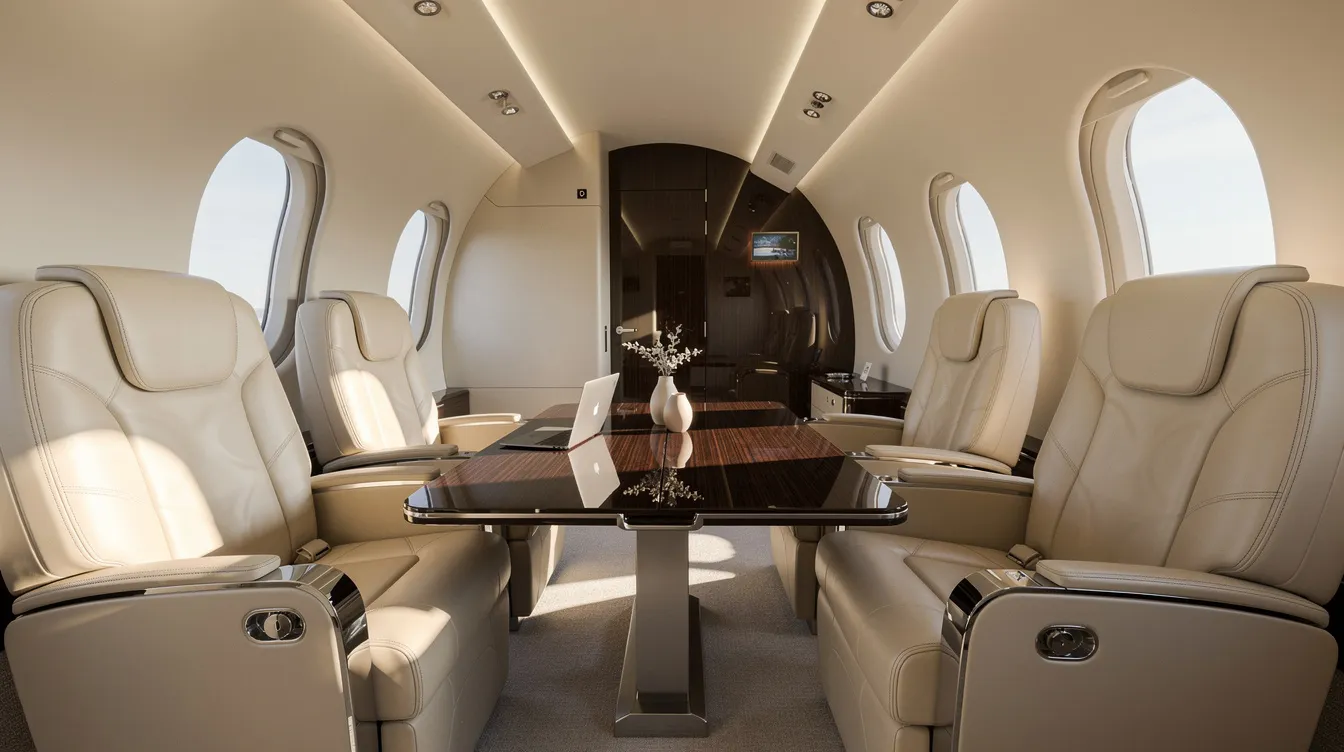
The cabin of a private aircraft is not a luxury lounge. It is a quiet, productive environment where executives and teams can work through the entire flight hour without interruption.
What to expect on board
Modern private jets are equipped with connectivity and workspace features that support real work:
Wi-Fi is suitable for email, video calls, and document collaboration
Power outlets at each seat
Quiet cabins designed for focused conversation
Catering can be adapted to the mission. Light working breakfasts for a 7:00 a.m. departure, simple snacks for a 60-minute hop, or full meals on longer segments like New York to Denver to San Francisco. The travel experience on a private plane is shaped by these details more than by the aircraft's exterior.
Privacy simplifies sensitive work. Board materials, deal documents, or early-stage product plans can be reviewed without concern for nearby passengers or public networks. When you fly on an entire aircraft reserved for your group, confidentiality is the default.
FLYT's concierge team confirms any specific cabin requirements in advance, from seating configuration for team working sessions to child-friendly setups for family vacations.

Example scenarios: ordering the right jet for common routes
Concrete examples help translate abstract charter pricing and aircraft type decisions into real trips.
Scenario 1: founder, New York to Miami, family weekend
A founder flying from Teterboro to Opa-locka on a Thursday afternoon with family, returning Sunday evening. A light jet handles this route efficiently, with a flight distance that translates to roughly 2.5 to 3 hours of air time. Membership pricing stabilizes the seasonal fluctuations that spike charter rates during holiday weekends or peak travel days. No need to shop three brokers for the best quote each time. Total cost stays within the member's known rate structure.
Scenario 2: leadership team, Chicago to San Francisco, two-day offsite
A group of seven is traveling from Midway to San Jose for a strategy session. A super-midsize jet provides the range, workspace, and baggage capacity the team needs. Flexible scheduling matters here: if the final session runs an hour late, the departure time adjusts. Group charters like this are where membership value compounds, because the alternative is re-quoting and renegotiating with a charter broker every quarter.
Scenario 3: investor, quarterly London to New York plus ad-hoc Europe
An investor with recurring transatlantic trips and occasional meetings in Zurich, Paris, or Milan. Long-range aircraft combined with FLYT's global access and fleet interchange model eliminate the need to own or co-own a transatlantic private aircraft. FLYT's membership covers the long flights and the short European hops under one relationship, providing access to the right aircraft for each leg without separate ownership stakes.
Each of these scenarios illustrates how fixed hourly rates, concierge support, and fleet flexibility reduce the friction of ordering a private jet compared to shopping each trip individually through traditional charter options.
How ordering a private jet with FLYT differs from traditional charter
The typical on-demand charter experience involves searching multiple brokers, comparing inconsistent quotes, negotiating terms, and hoping the aircraft and crew quality match what was promised. FLYT's membership-driven process replaces that cycle entirely.
FLYT operates an asset-light, floating fleet and risk pool model. Rather than filling a fixed owned fleet first, the focus is on allocating the right aircraft to each member's trip from a network that spans the world. Users can compare aircraft options through the platform rather than chasing individual operators.
Members do not need to manage separate jet cards, multiple fractional shares, and scattered charter relationships. Instead, they work with one membership, one platform, and one concierge team. This is a fundamentally different approach to private aviation than assembling a patchwork of charter contacts and hoping for consistency.
Operational intelligence is central. Data-driven recommendations on departure times, airport choice, and aircraft types reduce repositioning, minimize idle time, and maintain consistent service levels. This structure is designed for frequent users of private aircraft: executives, founders, and investors who want access and reliability with far less ownership burden. FLYT is a global leader in making this model work efficiently at scale.
Explore how FLYT's membership brings predictability and flexibility to private jet travel.
Frequently asked questions
For more answers, visit the FLYT FAQ.
How far in advance do I need to order a private jet through FLYT?
Many domestic trips can be arranged within 24 hours for members, and some straightforward legs come together even faster. Complex multi-leg or international itineraries, such as New York to Paris to Dubai, benefit from 48 to 72 hours of lead time to coordinate permits, customs clearance, and crew scheduling. True emergencies are handled on a case-by-case basis, subject to aircraft availability, crew duty limits, and local operating hours at the requested airports. The air travel logistics are managed by FLYT's team so members can focus on the trip itself, not the booking mechanics.
Can I still use a charter flight cost calculator if I am a FLYT member?
Public charter cost calculators are useful for broad market comparisons and understanding where charter rates currently sit across different aircraft categories. However, FLYT members typically rely on their known fixed hourly rates and tailored quotes rather than generic online tools. The concierge team can provide quick scenario pricing, such as annual spend estimates based on projected flight hours per year, using the member's contracted rates. Several factors like aircraft class, routing, and season influence these projections, and the team accounts for all of them. Platforms like Jettly connect users to over 20,000 aircraft globally for charter, and a similar scale applies across the industry, but membership pricing removes much of the need for comparison shopping.
What happens if my meeting runs late and I need to change my departure time?
Members contact FLYT to adjust their departure within operational limits. The team coordinates crew duty windows, airport slots, and any incremental charges transparently. While last-minute changes can have cost implications, such as overnight crew requirements if a departure shifts to the next morning, these are disclosed and agreed upon before the itinerary is updated. This is the kind of flexible scheduling that distinguishes membership from rigid charter contracts, where changes often trigger full rebooking and new quotes.
Can I use different aircraft types under one FLYT membership?
Fleet interchange is one of the core advantages. Members can select from light jets, midsize, super-midsize, or larger aircraft, depending on each trip's requirements, without holding separate fractional ownership stakes or maintaining different jet card balances for each class. The right way to think about it is in terms of mission profile: short hops, regional shuttles, or long-range international flights each call for a different aircraft, and FLYT's aircraft types are accessible under a single membership. Private jet membership offers access to over 20,000 aircraft through industry networks, and FLYT's structure is built to match you with the right one for each city pair.
Is FLYT suitable for corporate shuttles and recurring team travel?
FLYT's model is well-suited to recurring corporate shuttles because fixed hourly rates and predictable scheduling simplify budgeting at the corporate level. A weekly flight between two offices, for example, can be standardized with consistent aircraft types, aligned departure times, and pre-arranged catering. The concierge team helps design shuttle programs that integrate with working hours at each location, reducing the administrative load on internal operations teams. For organizations where business travelers move between offices regularly, this replaces the inefficiency of booking each leg as a separate charter and introduces the consistency that makes private aviation operationally viable at scale. Contact the FLYT team to discuss how a shuttle program might work for your organization.
Conclusion
Ordering a private jet has evolved into a streamlined, transparent process that prioritizes flexibility, predictability, and operational efficiency. FLYT’s membership model exemplifies this modern approach by offering fixed hourly rates, a diverse fleet interchange, and concierge-level support—all without the complexities and capital commitments of ownership. Whether you require a short regional hop or a global multi-leg itinerary, FLYT provides intelligent access to private aviation tailored to the needs of executives, founders, and frequent travelers.
Explore how FLYT redefines private jet travel with its asset-light, risk-pool model and global reach. Discover a smarter way to fly private that balances premium service with practical cost management. To learn more about how FLYT can transform your private aviation experience, visit www.flyt.com.