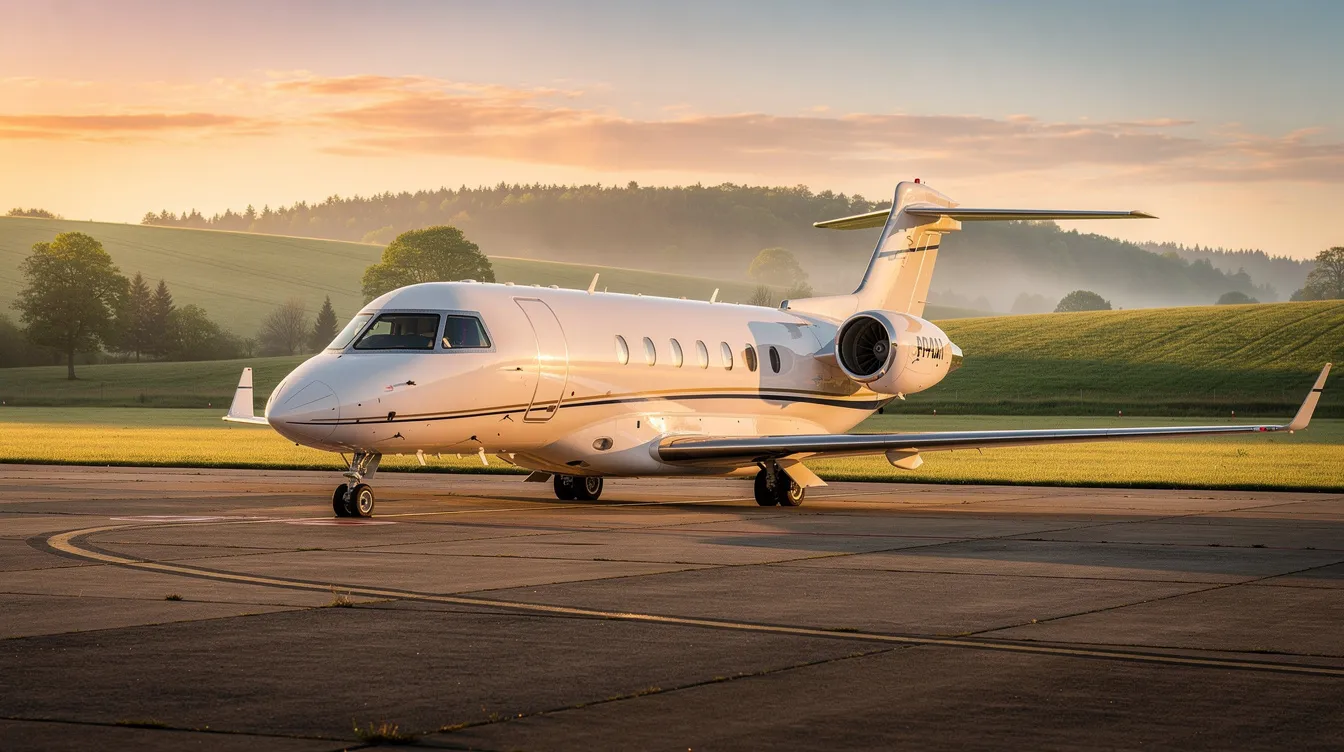
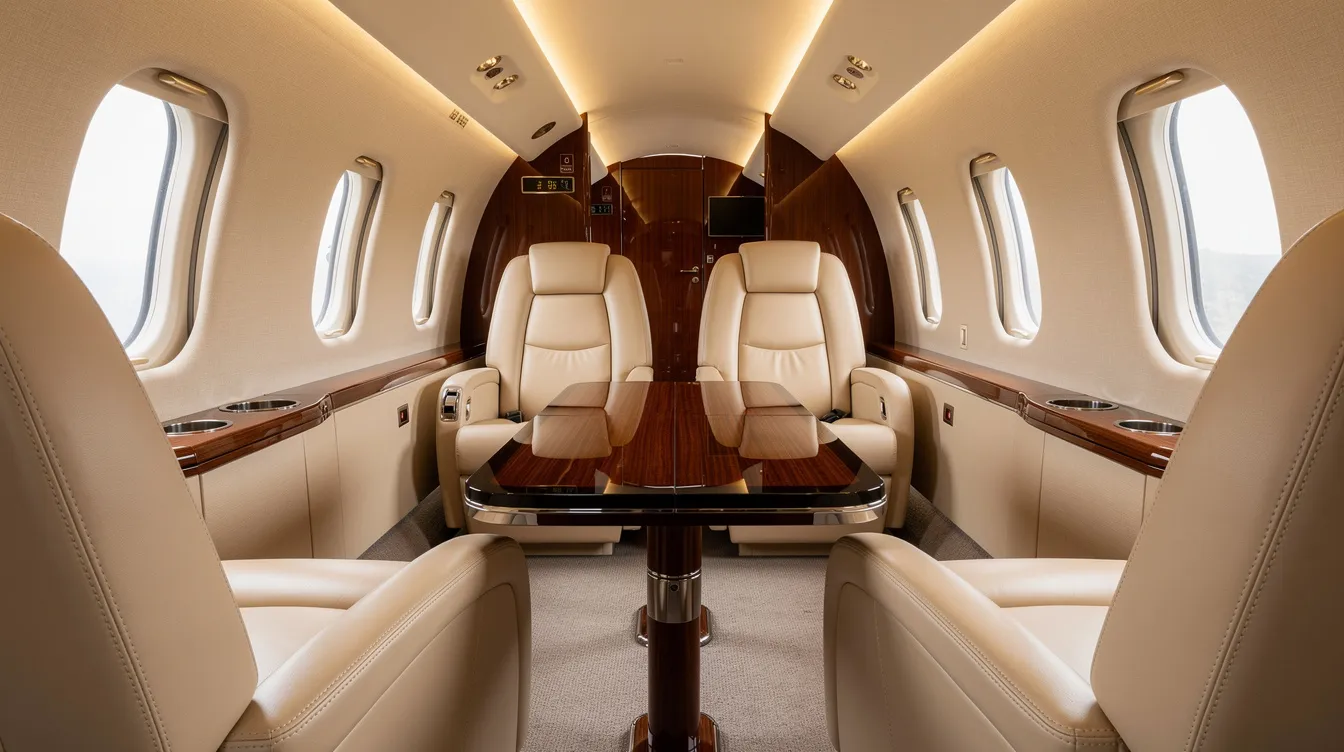
For executives, founders, and frequent travelers weighing the economics of flying private, the light jet category is often where the math starts to make sense. Light jets sit at the intersection of speed, cabin comfort, and manageable cost, making them the most popular private aircraft class for regional and short-haul flights across the U.S. and Europe. But understanding what a light jet charter actually costs requires more than scanning a single hourly rate. This guide breaks down the real numbers, the variables behind them, and the access models that determine whether you pay predictably or reactively.
Key takeaways
Light jet charters typically cost between $2,500 and $5,500 per flight hour in the U.S. in 2026, with total trip costs driven by hours flown plus taxes, fees, and positioning. Total hourly rates, including fuel, can reach $4,000 to $6,000 depending on the model.
Light jets are usually the most efficient choice for four to seven passengers on trips up to about three hours (routes like New York to Chicago, Los Angeles to Scottsdale), with many round trips coming in under $20,000.
The main cost drivers are aircraft category, flight time and distance, airport selection, trip pattern (same-day versus multi-day), and extras like in-flight catering and ground transportation.
Membership models like FLYT's fixed hourly rates and floating fleet can remove significant pricing volatility compared with purely on-demand private charter flights, particularly for frequent flyers.
Smart planning, including flexible airports and dates, right-sizing the aircraft, and avoiding unnecessary repositioning, can materially reduce light jet charter cost without compromising comfort or schedule.
What does a light jet charter really cost in 2026?
Light jets are the entry point to private jet charter for most business travelers, and the 2026 market reflects a mature pricing landscape. Across the private aviation industry, private jet charter costs range from $1,800 to $18,000 per hour depending on the category. For well-known light jet models, the picture is more specific. Light jets are commonly priced around $2,200 to $3,200 per hour for the flight time alone, but once you layer in fuel, fees, and operational costs, the all-in rates shift upward considerably.
Here is what you can expect on several popular routes in 2026:
New York (TEB) to Chicago (MDW): approximately 2.0 to 2.5 flight hours, with a total one-way cost on a light jet typically ranging from $9,000 to $12,000, including standard fees.
New York to Miami: approximately 2.5 hours, with total one-way costs running roughly $14,000 to $18,000 on a light jet. A midsize jet on the same route would push that to $18,000 to $24,000 or more.
Los Angeles (VNY) to Aspen (ASE): around 2.5 hours depending on routing and weather, with total costs in the range of $15,000 to $25,000 one-way after positioning and airport handling.
Chartering a light jet typically involves additional operational fees and taxes beyond the base hourly rate, which is why published hourly figures alone can be misleading.
One critical point: private jet charter pricing is per aircraft, not per seat. If six executives are traveling together on a $14,000 one-way leg, the effective per-person cost is around $2,300, which begins to compete with last-minute flexible first-class fares on commercial airlines. Private jets access over 5,000 airports compared to roughly 500 for commercial airlines, adding schedule and routing flexibility that further shifts the value equation.
For travelers who fly regularly, the difference between an on-demand private jet rental offered by many private jet companies, where each trip is quoted at current market rates, and a membership approach like FLYT's fixed hourly rates becomes significant. On-demand pricing fluctuates with supply, positioning, and demand. A membership model smooths that out, which the sections below explore in detail.
How light jet charter prices are calculated
The basic formula behind a private jet charter cost is straightforward in concept, and it explains private jet pricing even if the line items can multiply. Total charter price equals billable flight hours multiplied by the hourly rate, plus applicable taxes, plus airport and handling fees, plus any extras such as catering, Wi-Fi, or ground transport.
Here is a worked example that illustrates how these components stack up:
Start with a 2.5-hour light jet flight at a base hourly charter rate of $4,500 per hour. That produces a base cost of $11,250.
Federal Excise Tax adds 7.5% to domestic flights, so on this basis, that is approximately $844.
Per-passenger segment fees (roughly $5.30 per passenger per segment) for six passengers on one segment add about $32.
Landing fees and handling charges at the destination and departure airports might total $800 to $1,500 depending on location.
If the aircraft needs to reposition 30 minutes to reach your departure airport, positioning fees are charged for the hours the aircraft flies to or from the departure airport, adding another $2,250 in this example.
Total: roughly $15,000 to $16,000 all-in for this single leg.
What counts as a billable flight hour is important to understand. Block time runs from engine start (or push-back) to engine stop at the destination, including taxi on both ends. Many operators also impose minimum daily or per-leg billing of 1.5 to 2.5 hours, which means a 45-minute hop may still be billed as 1.5 hours. Short leg fees also offset increased fuel consumption during takeoff and climb, which is proportionally higher on brief flights.
Membership models like FLYT can lock in the hourly rate and simplify these components, while traditional on-demand private jets may use more dynamic, trip-specific pricing that fluctuates with market conditions. Learn more about FLYT's asset-light floating fleet and risk pool model that supports cost efficiency.
Light jet charter cost breakdown example
Cost component | Description | Estimated cost (USD) |
|---|
Base hourly rate | 2.5 hours at $4,500/hour | $11,250 |
Federal Excise Tax (7.5%) | Applied to the base hourly rate | $844 |
Segment fees | $5.30 per passenger × 6 passengers | $32 |
Landing & handling fees | Fees at departure and arrival airports | $800 – $1,500 |
Positioning fees | 30-minute repositioning flight at $4,500/hour | $2,250 |
Total estimated cost | | $15,176 – $15,876 |
Key factors that drive light jet charter cost
Several variables consistently move pricing for light jets. Understanding these levers helps executives and frequent travelers actively manage private jet travel budgets instead of simply accepting opaque quotes.
The five major factors are aircraft type, flight distance and routing, airports used, time of year and scheduling, and ancillary services. Each is explored below.
Aircraft type and light jet category
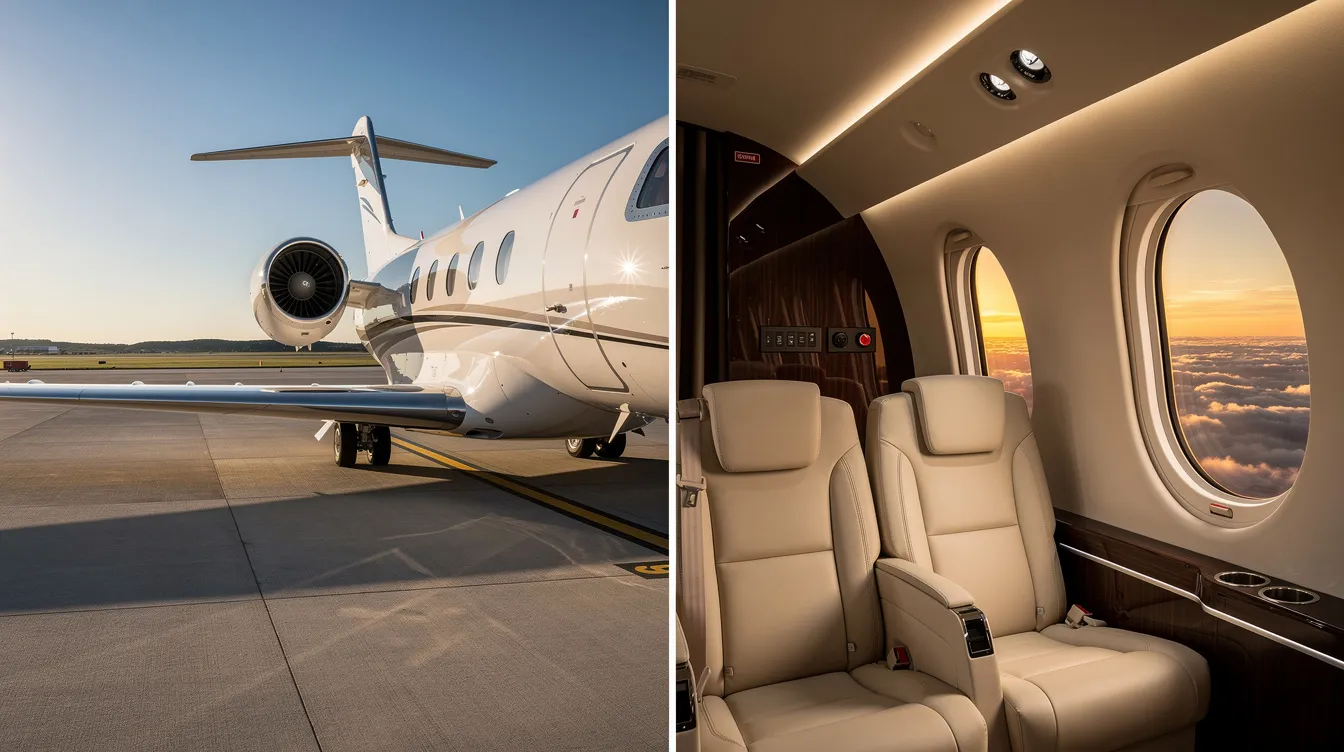
Aircraft type significantly influences charter pricing. What qualifies as a light jet is generally an aircraft seating six to nine passengers comfortably, with ranges of roughly 1,200 to 2,000 nautical miles, twin-engine, and cruising at speeds around 420 to 480 knots. Popular examples include the Embraer Phenom 300 and 300E, Cessna Citation CJ3+ and CJ4, and the Learjet 45XR.
Within the light jet category, hourly rates still vary meaningfully by age, performance, and brand reputation:
A newer Phenom 300E or Citation CJ4 can command $4,500 to $5,500 per flight hour or more.
An older Citation CJ3+ might sit closer to $3,800 to $4,800 per hour.
The HondaJet Elite II, which straddles the line between very light jet and light jet, runs approximately $3,000 to $3,800 per hour.
By contrast, very light jets like the Citation Mustang or Eclipse 500 are typically priced between $2,000 and $3,000 per hour, but very light jets accommodate four to seven passengers in tighter cabin space with less range.
Right-sizing to a light jet instead of a midsize jet can save thousands on routes like Boston to Charlotte or Dallas to Santa Fe without sacrificing comfort for four to five passengers. With FLYT membership, members can move between light jets and other categories through fleet interchange while keeping predictable cost structures, paying only for the aircraft class the mission truly requires.
Trip distance, routing, and flight hours
Flight distance significantly affects private jet charter costs because distance translates directly into billable flight hours. A typical light jet cruising at 430 to 460 knots covers a 600-mile hop in roughly 1.5 to 1.8 hours, while a 1,200-mile trip bills near 3 hours.
A New York (TEB) to Atlanta (PDK) mission on a light jet runs approximately 2.0 to 2.5 block hours and might total $10,000 to $14,000 one-way. A shorter New York to Washington, D.C. hop is under an hour of flight time, but after minimum billing of 1.5 to 2 hours and fixed fees, the per-mile cost looks disproportionately expensive.
Flight distance affects fuel consumption and overall cost, and pushing a light jet to the edge of its range introduces potential fuel tech stops that add extra billable hours, ground time, and sometimes crew complications.
When a mission requires a fuel stop and total flight hours climb past 3.5, it often becomes more economical and operationally sensible to upgrade to a midsize jet that can fly the route nonstop.
FLYT's floating fleet model aims to optimize routing and reduce unnecessary repositioning legs, which can otherwise add significant deadhead hours to on-demand pricing for private flights. The AI fleet engine dynamically manages this optimization.
Airports, positioning, and ground logistics
Landing fees and handling charges vary significantly by airport. Landing fees range from $100 to $1,500 per flight depending on the facility, and ramp handling, parking, and ground services add further costs. Large commercial hubs like LAX or JFK tend to charge more and impose longer taxi times than business aviation airports like VNY or TEB.
Positioning, or ferry flights, happens when the private aircraft must fly empty to reach your departure airport. Aircraft positioning fees may apply if repositioning is needed, and those 0.5 to 2 extra flight hours of empty flying are billed at the full rate. On a light jet at $4,500 per hour, a one-hour ferry leg adds $4,500 to your invoice before you even board.
Choosing White Plains (HPN) instead of Teterboro (TEB), or Van Nuys (VNY) instead of LAX, may reduce both airport fees and positioning time depending on where the aircraft is based. Smaller airports and regional airports often offer faster turnaround and lower per-flight costs.
Private jets access over 5,000 airports in the U.S., giving travelers far more options than commercial airlines for departure and arrival points.
FLYT's asset-light, floating fleet approach is designed to minimize positioning wherever possible, since members benefit from an optimized risk pool of networked aircraft rather than depending on one aircraft base. Learn more about the FLYT platform and how it reduces charter volatility through risk pool and charter volatility protection.
Timing, seasonality, and peak demand
Peak travel seasons can increase private jet charter prices substantially. Timing and demand can significantly influence charter flight costs across the board.
Christmas through New Year, major sporting events (Super Bowl, Masters, Formula 1), February school breaks, and high summer in Europe are the most pronounced peak windows. Aircraft supply tightens, and pricing premiums of 15 to 30 percent or more are common on on-demand quotes.
On business corridors like New York to Chicago or London to Zurich, early-morning Monday departures and late-afternoon Thursday or Friday returns tend to be priced higher than mid-day or off-peak departures.
Flexibility of even one day on departure or return can meaningfully reduce the cost to charter a light jet, especially around popular leisure destinations like Aspen, Palm Beach, or the French Riviera.
Fixed hourly rates under a FLYT membership can blunt some of this volatility, shifting the conversation from "when is it cheapest?" to "when is it most efficient for your own schedule?" Discover the advantages of FLYT membership.
Onboard services and other extras
Additional services like catering add to the charter cost, though they rarely rival the flight hour charges. Here are common ancillary line items for a light jet private jet flight:
Custom in-flight catering beyond standard snacks and beverages: approximately $250 to $1,000 per leg depending on menu complexity.
Wi-Fi connectivity is often included on newer light jets but may be billed based on usage on some private aircraft, particularly on international private charter flights.
Deicing during winter operations at cold-weather airports can add several hundred dollars per event.
Ground transportation at both ends, from rental car to chauffeured sedan, is sometimes arranged through the charter operator at an additional cost.
Overnight expenses for the flight crew, including lodging and per diem, apply when itineraries require crew members to stay at the destination.
While these extras are modest relative to flight hours, they matter for accurate budgeting on multi-leg itineraries or executive roadshows. With FLYT's concierge-level support, members receive clear visibility on these costs in advance, reducing the risk of surprise line items after the trip.
How light jets compare to other private jet categories
Not every mission calls for a light jet, and sometimes a different aircraft class is the smarter financial choice. This section compares light jets with the categories above and below them so readers can identify the optimal fit for each trip profile.
Versus turboprops and very light jets
Modern turboprops like the Pilatus PC-12 or King Air 250 offer lower hourly rates and can access very short runways that even light jets cannot use. Turboprop charters start at around $2,000 per hour, making them efficient for short regional flights of one to two hours with a smaller group.
Very light jets such as the Citation Mustang or HondaJet sit between turboprops and true light jets in capability. They are typically priced between $2,000 and $3,000 per hour but come with tighter cabin space and range limitations. Very light jets accommodate four to seven passengers.
A 45-minute hop from Dallas to Austin or Zurich to Geneva might be most cost-effective on a turboprop, while a two- to three-hour sector like New York to Nashville or London to Barcelona leans in favor of a light jet for speed and comfort.
Light jets occupy the sweet spot for many executives who want a jet-speed experience on regional routes without the cost structure of midsize jets or heavy jets. Midsize jets typically seat seven to nine passengers but command hourly rates roughly 40 to 60 percent higher than light jets.
Versus midsize, super-midsize, and large cabin jets
Midsize and super-midsize jets like the Citation XLS+ or Challenger 350 bring more range and cabin volume, useful for transcontinental or coast-to-Caribbean missions, but hourly charter rates run $5,500 to $8,500 for midsize and $7,000 to $11,000 for super-midsize. Super midsize jets accommodate eight to ten passengers.
Large cabin jets can seat nine to sixteen passengers and feature spacious cabins suited for longer flights, while ultra-long-range jets carry ten to nineteen passengers on nonstop flights across oceans. Heavy jet charters can cost between $8,500 and $15,000 per hour, and heavy jet charter rates can exceed $10,000 or more per hour for newer, larger aircraft.
For Los Angeles to New York or London to Dubai, light jets are simply not appropriate due to range and comfort constraints. For Los Angeles to Sun Valley, New York to Toronto, or London to Copenhagen, a light jet is often the most rational and cost-effective option.
FLYT's fleet interchange within membership allows a member to use a light jet for short-haul flights and step up to larger aircraft only when the mission truly requires it, optimizing spend across the entire year rather than overpaying for cabin space and range you do not need.
Light jet charter cost models: on-demand vs membership
How you pay for light jet access can matter as much as the raw hourly rate. For frequent flyers, the pricing model directly affects predictability, capital efficiency, and administrative effort across dozens of trips per year.
Three dominant models shape the market: pure on-demand jet charter, jet cards and fixed-hour programs, and fractional ownership. A fourth model, modern membership programs like FLYT's, has emerged as a distinct alternative.
On-demand private charter flights
On-demand charter services work on a pay-as-you-go basis. Each private jet flight is quoted individually based on current market supply, aircraft location, and requested schedule.
No long-term commitment is required, making it suitable for occasional flyers or one-off events. Chartering can be more cost-effective for infrequent flyers than ownership.
Chartering offers flexibility to set your own travel schedule, and you have broad access to various light jets and business jets on the market.
The drawbacks are real: pricing volatility between trips, more exposure to aircraft positioning fees and repositioning charges, and the need to re-shop the market each time for competitive private jet charter rates and verified safety standards.
Many travelers start with on-demand charter and then move to more structured programs once their flight hours per year become predictable, typically in the range of 25 to 50 hours annually.
Jet cards and fixed hourly programs
Traditional jet cards involve pre-purchasing blocks of hours, often 25 to 50 hours, on a specified category like light jets. You receive guaranteed availability and fixed hourly charter rates in exchange for an upfront commitment that can range from $150,000 to $250,000 or more for a 25-hour light jet card.
This brings budget predictability, but jet cards may include higher all-in rates than the very best spot deals, plus capital tied up in prepaid hours. Some programs impose blackout dates or surcharges during peak periods, which can erode the benefit of a stated fixed rate.
Peak-day premiums are common in legacy jet card programs, meaning the effective cost of chartering a private jet during holiday travel or major events may still surprise you.
FLYT represents a modern evolution of this idea: membership with transparent fixed hourly rates and a floating, asset-light fleet, designed to keep capital commitments and structural complexity lower than traditional jet card or fractional programs. Private jet charter prices become more predictable without locking large sums into prepaid hour blocks.
Fractional ownership and when it doesn't fit light jet users
Fractional ownership means buying a share of a specific aircraft type, often one-sixteenth to one-quarter, along with monthly management fees plus occupied hourly rates. It is typically best suited for very high utilization at 150 to 200 or more hours per year.
For many light jet users flying 25 to 100 hours annually, fractional ownership ties up disproportionate capital and adds complexity around resale, residual values, and long-term contractual commitments relative to actual flying needs.
Chartering avoids maintenance and crew costs associated with ownership. In fractional models, aircraft maintenance, insurance, crew salaries, and hangar costs are all embedded in fixed monthly fees regardless of how much you fly.
FLYT is specifically designed for flyers who want ownership-like access and reliability on light jets without the balance-sheet exposure of owning a share. It is an asset-light model where capital stays available for core business or investments rather than depreciating on the ramp. Learn more about how FLYT works for business travel.
Examples: what you might actually pay for a light jet charter
These illustrative scenarios translate hourly rates into end-to-end trip budgets. All figures are indicative 2026 ranges, not binding quotes, and assume standard light jet models.
Same-day business trip, New York (TEB) to Chicago (MDW) and back. Two legs at roughly 2.0 to 2.5 hours each, with the aircraft waiting in Chicago for your meetings. Total billable hours approximately 4.5 to 5.0. At an all-in rate near $5,000 per hour including fees, expect roughly $22,000 to $27,000 for the round trip. Private jet costs can be lower when sharing with others: split among five executives, and the per-person cost is $4,400 to $5,400, competitive with flexible business-class fares plus the time savings.
Long weekend leisure trip, Miami (OPF) to Turks and Caicos (PLS). Approximately 1.5 to 2.0 hours each way on a light jet, with the aircraft returning empty or repositioning during your stay. One-way flight costs typically range from $8,000 to $14,000 per leg depending on positioning and handling. Booking one-way flights can reduce overall charter costs if you can match with empty leg charter flights for the return. Empty leg flights can save up to 75% on costs when availability aligns with your itinerary.
Short international hop, London (LTN) to Nice (NCE). About 2.0 hours on a light jet with additional handling for customs and international overflight permits. Expect roughly $12,000 to $18,000 one-way, with fuel surcharges that can add roughly $300 per hour during high market prices layered in during volatile fuel periods.
Executive roadshow, three cities in one day: Dallas to Houston to New Orleans and back to Dallas. Total flight time across four legs is approximately 4.5 to 5.0 hours, but minimum billing may push billable hours to 6.0 or more on short legs. Total cost could reach $28,000 to $35,000 all-in. This is where understanding minimum leg fees and additional service costs matters most.
A FLYT member running these same missions under fixed hourly rates gains budget clarity before the trip starts, rather than waiting for ad-hoc quotes that shift with demand and aircraft availability. Explore the FLYT platform for how this works in practice.
Managing and optimizing your light jet budget with FLYT
For executives and frequent private flyers who use light jets regularly, cost control does not mean flying less. It means flying smarter.
FLYT's membership model and fixed hourly rates create a more predictable cost base than purely on-demand chartering a private jet for every trip. You know the rate before you commit, and the floating fleet reduces the exposure to repositioning fees that inflate ad-hoc quotes.
Right-size every mission. Use fleet interchange to fly a light jet for a two-hour business hop and step up to a midsize or larger aircraft only when the route or passenger count demands it. This single lever can save tens of thousands across a year of travel.
Leverage concierge support to pick cost-efficient airports and schedules. Flying into smaller airports instead of major hubs, departing mid-morning instead of early Monday, and grouping legs to reduce repositioning all lower the total cost without changing the private jet travel experience.
Private jet travel offers more flexibility than commercial flights, and private jet charters provide a tailored travel experience with amenities matched to the mission. The point is not to minimize every line item but to allocate spend where it delivers real value: time saved, meetings made, and disruption avoided.
The asset-light nature of FLYT means no capital is tied up in a private plane or fractional share. Instead, you allocate capital to your core business or investments while still accessing private jets when and where you need them.
Light jets vs commercial flights: When does charter make sense?
The question is not whether flying private is more expensive per ticket than commercial flights. It usually is. The question is whether the total cost, including time, productivity, and schedule risk, favors a light jet charter for specific missions.
Door-to-door travel time on a private jet flight from White Plains (HPN) to Chicago Midway (MDW) might total three hours, including arriving 15 minutes before departure, a two-hour flight, and a short taxi to your car. The same journey on commercial airlines through JFK or LaGuardia to O'Hare typically takes five to seven hours, including security, connections, and ground transport. Private jets can reduce travel time significantly compared to commercial airlines.
For a group of four to seven executives traveling together, the per-person cost gap between a light jet and flexible first-class fares narrows considerably. On routes requiring connections on commercial flights, the gap narrows further when you factor in hotel nights, lost productivity, and disruption risk.
A same-day round trip that is physically impossible on commercial schedules, such as visiting a client in Nashville and returning to New York by evening, becomes routine on a light jet using regional airports.
For founders, investors, and corporate leaders, the less obvious financial benefits include reduced overnight stays, the ability to visit multiple cities in a single day, and lower disruption risk for time-sensitive meetings. Private jet charter flights make business and leisure travel operate on your own schedule rather than an airline's.
Flight training and aircraft maintenance costs, crew members' salaries, and the entire aircraft operating burden fall on the charter company or membership provider, not on you. Chartering a private jet removes all of those fixed obligations.
Frequently asked questions about light jet charter cost
These questions address practical cost concerns that come up regularly for executives evaluating light jet charter options.
How far can I realistically fly on a light jet before costs jump to another category?
Most light jets are optimal for nonstop flights up to roughly two to three hours, covering about 1,000 to 1,500 nautical miles depending on passenger load and weather. Routes like New York to Miami or London to Ibiza sit comfortably within this envelope. While some models can technically exceed this range, pushing limits often introduces fuel stops and extra billable hours that erode the cost advantage. For routes like New York to Los Angeles, stepping up to a midsize jet is both financially and operationally sensible.
Do I pay less if I only have two passengers instead of six on a light jet?
Pricing is based on the entire aircraft, not the number of passengers. The hourly rate and most fees remain the same whether one person or six are on board. The effective cost per person simply improves as the aircraft is more fully utilized, which is why light jets are particularly attractive for small teams traveling together. Passenger count can influence aircraft selection: if only two people are flying, a very light jet or turboprop might be a more cost-effective option.
How much notice do I need to charter a light jet at a reasonable rate?
True last-minute charter flights, same-day or next-day, are often possible but typically carry less pricing flexibility because options are limited to aircraft already positioned nearby. Booking five to ten days in advance usually offers a better balance of choice and cost, especially around busy dates or popular leisure destinations. FLYT members benefit from a structured access model that prioritizes availability and predictable pricing, mitigating some of the premiums associated with very late bookings.
Can light jets handle international flights, and how does that change the cost?
Many light jets routinely fly short international routes such as the U.S. to the Caribbean or the U.K. to continental Europe. Costs will include additional items such as overflight permits, handling fees at international airports, and immigration or customs support. These international fees are usually modest compared with the flight hour cost but important to include in budgeting, especially on multi-border itineraries. FLYT's concierge support helps members anticipate these costs in advance rather than discovering them on the final invoice.
Are light jet charter prices likely to rise significantly year over year?
Private aviation pricing is influenced by fuel prices, aircraft maintenance costs, crew availability, and broader inflation, so hourly rates can shift year to year. Spot market on-demand private jet rental prices can be particularly volatile during periods of high demand or fuel instability. Membership structures with fixed hourly rates, like those offered by FLYT, are designed to provide cost stability over a defined period. Executives who need budget certainty over multiple financial years may prefer locking into transparent membership terms rather than relying solely on ad-hoc, trip-by-trip negotiation for domestic flights and leg flights alike.
For more answers, visit the FLYT FAQ or contact us to discuss your specific needs.
Conclusion: A smarter way to approach light jet charter cost
Light jets occupy the cost-efficient center of private jet charters for many business and family missions. With hourly rates that are well below midsize jets and heavy jets but well above turboprops, they deliver jet speed, reasonable cabin space, and access to thousands of airports at a price point that scales for small teams and frequent travelers.
Understanding what drives the private jet flight cost, from aircraft type and flight distance to airport choice and seasonal demand, puts you in a position to make deliberate decisions about when, where, and how to fly private. The difference between an informed traveler and one who accepts opaque quotes can be thousands of dollars per trip.
For frequent light jet users, the access model matters as much as the hourly rate. FLYT's membership, fixed hourly rates, and asset-light floating fleet offer a disciplined alternative to ownership, fractional programs, and ad-hoc on-demand charter. The model is built around efficiency, transparency, and global reach rather than the complexity and capital drag of owning a private aircraft.
Explore how FLYT structures private jet access for travelers who want predictability and flexibility without ownership burden.