Light jet charter is an increasingly popular solution for executives, frequent flyers, and anyone considering private jet travel. This guide is for those who want to understand how light jet charter offers a cost-effective, flexible alternative to commercial flying and jet ownership. By learning the ins and outs of light jet charter, you can make informed decisions that maximize your time, comfort, and budget—whether you’re traveling for business or leisure.
Key takeaways
Light jet charter is ideal for groups of 2–7 passengers on sub-3-hour routes such as New York–Miami or London–Geneva, delivering meaningful time savings over commercial airlines without the cost of larger aircraft.
Light jets and very light jets carry lower hourly rates than mid-size jets and heavy jets while still providing core private jet comforts like enclosed lavatories, Wi-Fi, and club seating.
FLYT's membership model offers predictable fixed hourly rates and flexible aircraft types without the capital outlay, residual value risk, or long-term commitments of ownership, fractional ownership, or traditional jet cards.
This guide covers how private jet charter costs are calculated, when light jets are the right aircraft type, how to plan a trip with FLYT advisors, and how aircraft availability is managed through an asset-light, floating fleet.
What is a light jet charter?
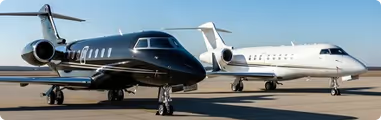
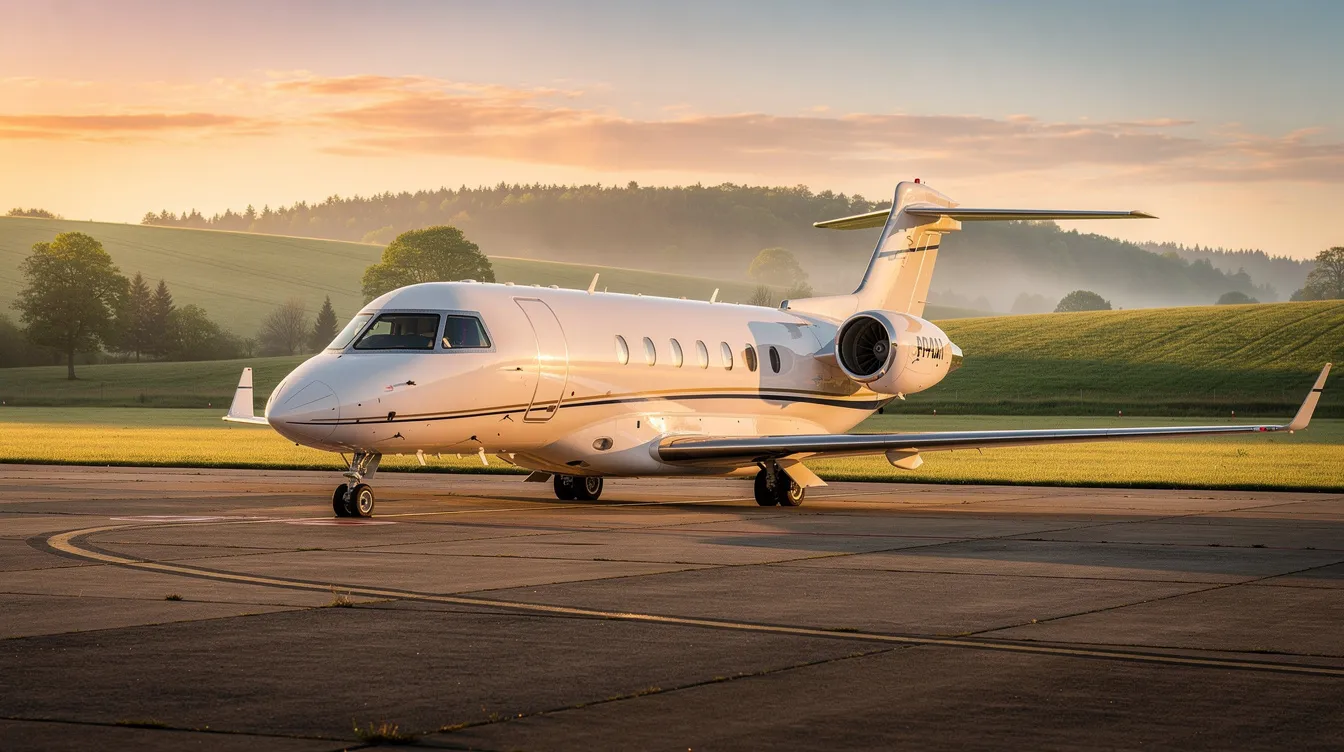
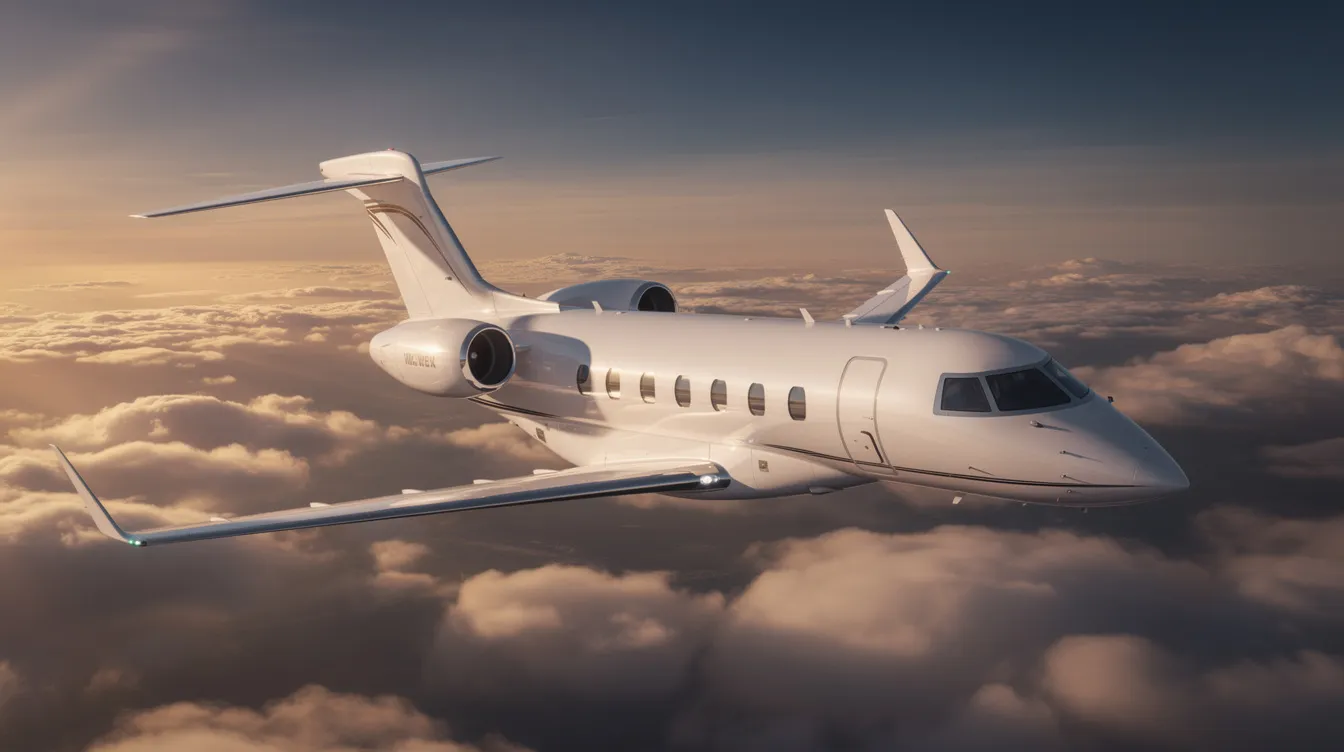
A light jet charter is the private rental of a small business jet designed for regional and short-to-medium-range missions. Unlike flying commercial or purchasing a seat on a shared flight, chartering a light jet means booking the entire aircraft for your party. You control the schedule, routing, passenger list, and departure airport. The crew members, fuel, and operation are all included in the arrangement.
Definition: Light jets typically seat five to eight passengers and operate on routes of 1,500 to 2,000 miles. They sit between very light jets and mid-size jets in the private aviation hierarchy. They are larger and more capable than turboprop and piston aircraft, but smaller and more economical than heavy jets or ultra-long-range aircraft. Think of the light business jet as the workhorse of private jet travel for domestic flights and shorter international flights.
Typical light jet specs include:
Seating for 5–8 passengers
Flight range of roughly 1,500–2,200 nautical miles
Cruise speed around 400–470 knots
Common examples include the Embraer Phenom 300, Cessna Citation CJ3+, and the Learjet 45. These private aircraft offer enough cabin space and flight distance to cover most regional trips efficiently.
Example routes where a light jet charter makes strong operational and financial sense:
New York to Miami (~2.5–3 hours), a staple for both business and leisure travelers
London to Geneva (~1–1. is hours) for executive meetings
Los Angeles to Napa (~1 hour) for short getaways
Chicago to Toronto (~1.5 hours) for cross-border business travel
Dubai to Muscat (~1 hour) for regional corporate travel
These are the kinds of missions where light jets outperform commercial flying in door-to-door time and outperform larger aircraft in cost efficiency.
When a light jet is the right aircraft type
Choosing the right aircraft size keeps costs aligned with mission needs. Paying for a larger aircraft when a light jet will do wastes capital. Using a private plane that's too small for the passenger count or luggage load creates discomfort or forces a fuel stop. The goal is to match the mission to the aircraft, not the other way around.
A light jet is typically the right fit when:
Your group is 2–7 passengers (many configurations comfortably handle up to six passengers with standard luggage)
Flight time is up to approximately 3 hours
Luggage needs are modest—carry-on bags plus a few checked pieces, not heavy sports equipment or oversized cargo
You don't need a flight attendant, lie-flat beds, or private suites
You want the efficiency of private air travel without the overhead of a larger aircraft
Concrete route examples where light jets tend to be more cost-efficient than mid-size jets or heavy jets, organized by region:
North America:
New York to Chicago (~2–2.5 hours)
Los Angeles to Las Vegas (~1 hour)
San Francisco to Lake Tahoe (~45 minutes)
Denver to Aspen via Centennial Airport or other smaller airports nearby
Europe:
London to Nice (~1.5–2 hours)
Paris to Milan (~1.5 hours)
Zurich to Barcelona (~2 hours)
Middle East:
When should you consider alternatives?
Very light jets are better suited for shorter hops with 2–4 passengers and minimal luggage—think metro-paired routes or flights under 1.5 hours.
Mid-size jets make sense for missions of 3–5+ hours, larger groups, heavier baggage, or when you need a more spacious cabin and improved performance at high-altitude airports.
Ultra-long-range and heavy jets are necessary for nonstop transcontinental or intercontinental routes such as New York to London or Los Angeles to Tokyo, or for large cabin jets carrying sports teams, business associates, or corporate shuttles with significant cargo.
FLYT advisors help members navigate these decisions as part of trip planning. They evaluate passenger count, luggage volume, flight distance, and airport conditions—runway length, elevation, available slots—to recommend the most efficient aircraft type for each mission. This process ensures you're never overpaying for capacity you don't need.
Light jet charter costs and hourly rates
Private jet charter cost is driven primarily by hourly rates multiplied by flight time, plus taxes and trip-specific items. Understanding this structure helps frequent flyers budget accurately and compare charter options across providers.
For 2024–2026 reference, typical charter market ranges for occupied flight hours are:
Very light jets: approximately $2,500–$3,500 per flight hour
Light jets: approximately $3,500–$5,000 per flight hour
Mid-size jets: approximately $5,000–$7,500 per flight hour
These are industry-wide ranges, not guaranteed quotes. Actual charter pricing varies by aircraft model, region, season, and charter operator.
Cost drivers that affect the total trip price:
Peak date surcharges during holidays, major conferences, or large sporting events
Aircraft positioning fees when the jet needs to fly empty to your departure airport
Overnight expenses for crew members on multi-day trips
Deicing charges during winter operations
Landing fees at departure and arrival airports, which tend to be higher at larger commercial facilities
International fees, including customs processing, overflight charges, and immigration handling
On light jet sectors, these extras tend to be lower than on larger aircraft types because crew sizes are smaller, fuel burn is lighter, and ground handling at regional airports is often simpler. Industry data suggests the all-in trip cost for light jets runs roughly 20–40% above the base hourly rate once these items are factored in.
FLYT's membership model addresses the unpredictability of ad hoc private jet pricing by replacing dynamic on-demand rates with fixed hourly rates. Members know the cost per flight hour for each aircraft class before they book, which simplifies budget approvals and makes private jet pricing transparent.
Comparing light jets, very light jets, and mid-size jets
Many travelers evaluating private jet charter services debate between very light jets, light jets, and mid-size jets for similar missions. The right choice depends on cabin needs, route length, and how much you want to spend per flight hour.
Comparison Table:
Category | Seating Capacity | Typical Range (nm) | Baggage Capacity | Hourly Rate (USD) | Amenities |
|---|
Very Light Jets | 2–5 | ~1,200 | Limited | $2,500–$3,500 | Compact cabin, basic lavatory, minimal galley |
Light Jets | 5–8 | 1,500–2,200 | Modest | $3,500–$5,000 | Enclosed lavatory, club seating, basic galley |
Mid-size Jets | 7–9 | 2,500–3,500 | Generous | $5,000–$7,500 | Spacious cabin, improved lavatory, larger galley |
For typical 500–1,200 mile trips—the sweet spot for light jet charter—upgrading to a mid-s1,200-mileans paying materially more per hour for cabin comfort that may not be necessary on a 2-hour flight. Airport access may also be restricted, as some smaller airports may have length or weight limitations that can accommodate light jets but not larger aircraft.
FLYT's fleet interchange capability resolves the either-or dilemma. Members can choose a light jet for regional trips, then step up to a mid-size or heavy jet when the mission demands it—all under the same membership framework. This avoids locking into a single jet size through fractional ownership or purchasing separate jet cards for each aircraft category.
Operational advantages of light jets
Small-airport access and door-to-door time savings
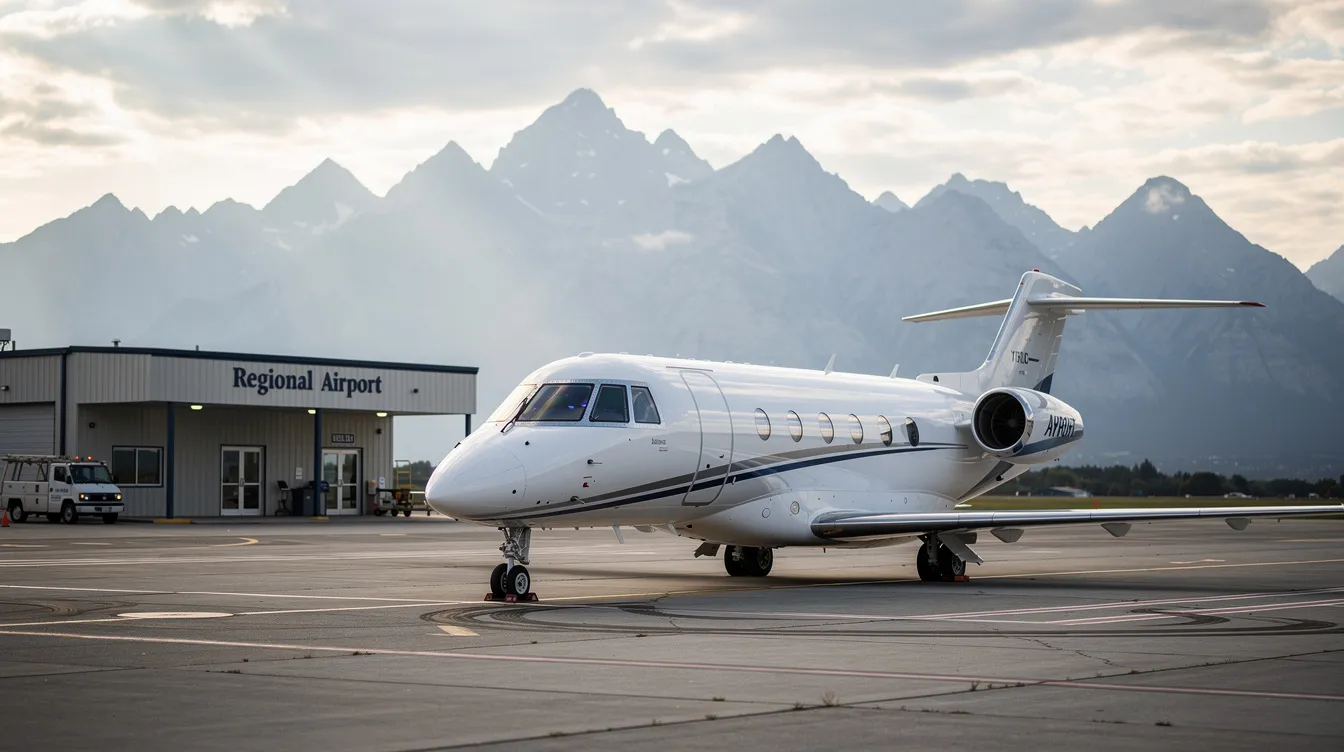
One of the clearest advantages of a light jet is the ability to access smaller airports and private terminal facilities that larger aircraft cannot use. Flying into Teterboro instead of JFK for a New York trip, Van Nuys instead of LAX in Los Angeles, or London Farnborough instead of Heathrow can shave 30–90 minutes off ground transfer time in each direction. Denver-based travelers might use Centennial Airport rather than Denver International Airport to avoid congestion and reduce time spent on ground transportation.
This matters because the time savings from private flights evaporate if you're sitting in traffic or waiting at a crowded commercial terminal. Using regional airports brings you closer to your actual destination and eliminates the need for rental cars in many cases—a car service from the FBO to your meeting may be all that's required.
Turn-time efficiency
Light jets require less time for ground handling, fueling, cleaning, and crew turnaround than larger aircraft. This makes them well suited for:
Same-day out-and-back trips (fly to a morning meeting, well-suited)
Multi-leg itineraries (visit two cities in one day)
Tight business itineraries where delays at Denver International Airport or other major hubs are unacceptable
Compared to flying commercial, where boarding starts 30–60 minutes before departure, and security adds another layer, private charter passengers typically arrive at the private terminal just 15–20 minutes before wheels-up.
Onboard amenities
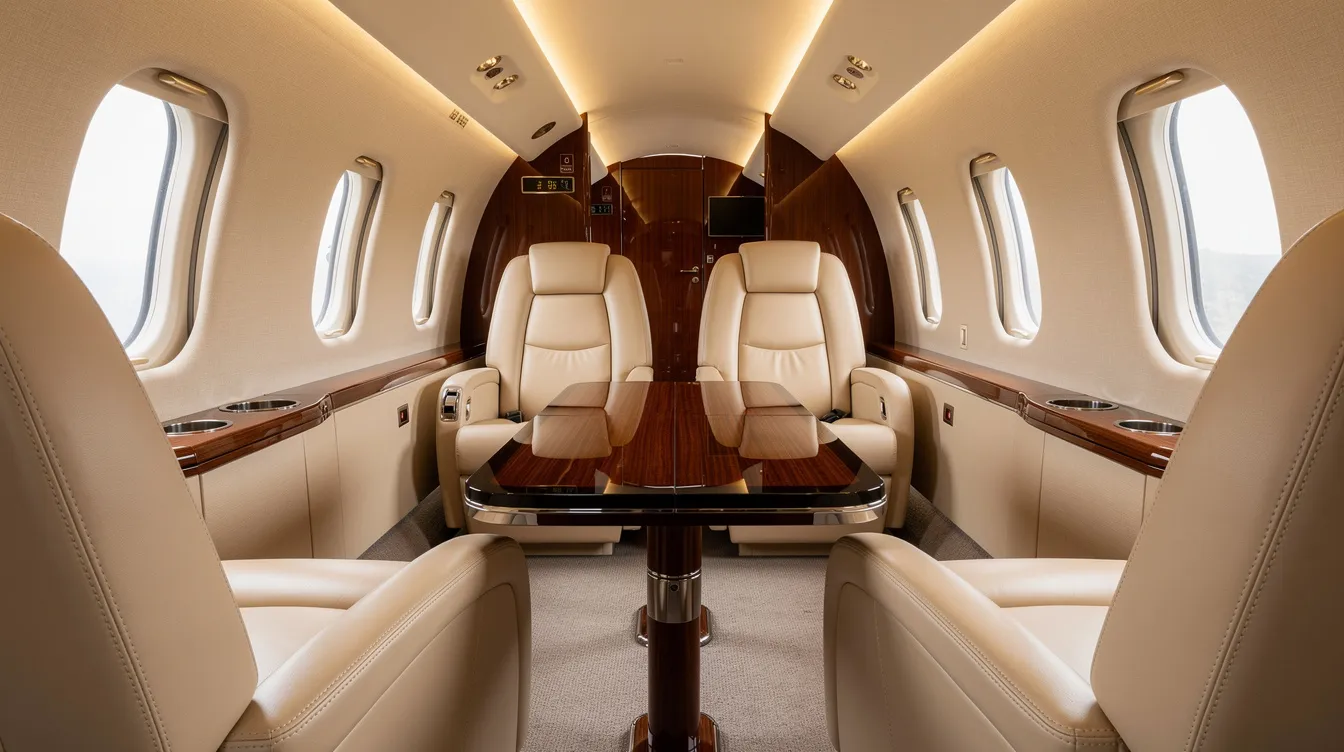
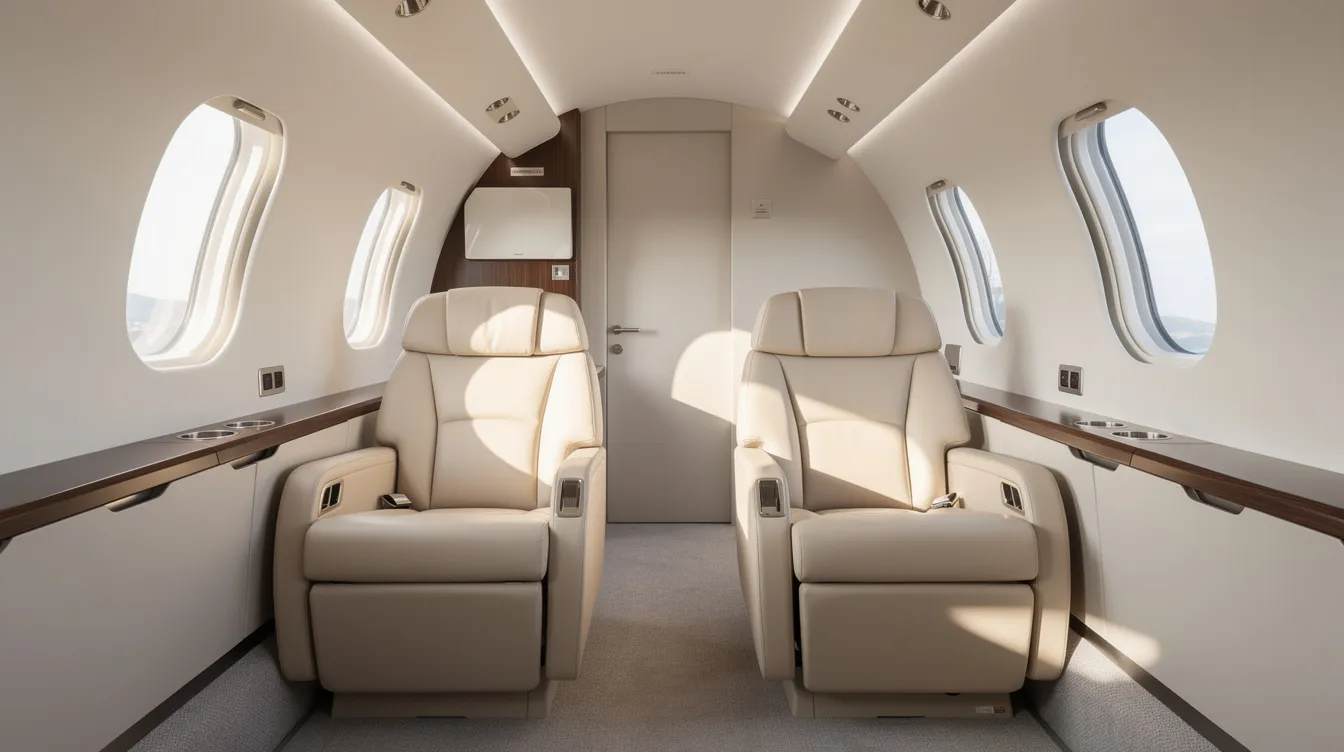
Most light jets include an enclosed lavatory, club seating that supports face-to-face meetings, and modern amenities sufficient for regional business and leisure travel. Many newer models offer Wi-Fi suitable for email and document review. The cabin environment is inherently private, making light jets well-suited for confidential discussions among business associates.
Safety and regulatory compliance
Operators providing private jet charters, including light jets, must hold an FAA Part 135 Certificate to conduct commercial flights. Safety compliance is verified through industry-recognized ratings such as ARGUS or Wyvern. This oversight provides members and charter clients with confidence in the safety and professionalism of their operators.
Global access and fleet scale
Light jets offer access to over 5,000 regional airports worldwide, significantly expanding destination options beyond commercial airline networks. Platforms like Jettly connect users to more than 20,000 aircraft globally, enabling flexible, last-minute bookings often within three hours of contract signing. This scale supports the broad geographic reach that private jet memberships provide.
Light jet charter with FLYT: membership-based access
FLYT is a membership-based private aviation service built around access, predictability, and flexibility. Rather than requiring clients to buy a private plane, take on fractional ownership, or commit to a prepaid block of flight hours, FLYT membership provides on-demand access to private jets at fixed hourly rates across multiple aircraft categories.
Flexible aircraft access without ownership obligations
Private aviation services like FLYT offer flexible aircraft access without the burdens of ownership. Members benefit from the operational efficiency of a floating, asset-light fleet, avoiding capital outlay, depreciation risk, and management complexity.
Predictable pricing with fixed hourly rates
Membership-based private aviation services provide predictable pricing, often including fixed hourly rates for each aircraft category. This transparency simplifies budgeting and reduces the financial uncertainty common in ad hoc charter bookings. Learn more about FLYT pricing.
Global reach and concierge support
Membership services enable global access to private jets, supported by concierge-level trip planning, ground transportation coordination, and personalized service. This ensures seamless travel experiences for busy executives and frequent flyers.
Catering to frequent flyers and executives
Private jet memberships primarily serve frequent flyers and executives who value time, flexibility, and reliability. FLYT's model supports this clientele by combining operational intelligence with premium service. Discover the FLYT advantage.
Planning a light jet trip: practical steps
Key planning inputs your advisor will need
Departure and arrival airports (or cities, if you're flexible on which field to use)
Preferred departure and return times
Passenger count and any special needs (children, elderly travelers, medical equipment)
Luggage specifics: standard bags, golf clubs, skis, musical instruments, or oversized items
Pet requirements, including size, crate preferences, and any international documentation
Connectivity needs: whether Wi-Fi is essential for the flight
Working with FLYT advisors
FLYT advisors evaluate airport options that match light jet performance. For example, a departure from San Francisco might use a smaller regional field instead of SFO to reduce ground delays and taxiing time. Arrival airports are chosen to minimize ground transportation to the final destination—sometimes a 20-minute drive from a regional airport beats a 90-minute drive from a larger hub.
Advisors also handle schedule optimization. If you're flying a round trip, they'll evaluate whether a same-day return is feasible or whether an overnight makes more operational and financial sense. For international flights, they coordinate customs, immigration, and any required documentation.
Transparent cost in advance
Under FLYT membership, charter costs are known before booking. The fixed hourly rate is applied to estimated flight time, and any known surcharges—deicing, international handling fees, overnight expenses for crew—are disclosed upfront. This enables accurate trip cost approvals for corporate travel policies without the last-minute surprises common in ad hoc private charter.
A concrete scenario
Consider a founder flying from San Francisco to Salt Lake City for a board meeting. The mission: 3 passengers, 2 carry-on bags each, flight time approximately 2 hours 15 minutes, departing early morning and returning the same evening. A FLYT advisor selects a Citation CJ3 or Phenom 300, identifies a regional departure airport near the founder's office, confirms Wi-Fi availability, arranges light catering, and provides a fixed-cost estimate. The founder approves, boards 15 minutes before departure, and is in the boardroom by mid-morning.

Light jets within a broader private aviation strategy
Typical usage mix
Sophisticated flyers rarely rely on just one aircraft category. Light jets are one tool in a broader private aviation strategy that might also include very light jets for quick hops, mid-size jets for coast-to-coast domestic flights, and heavy jets for nonstop intercontinental routes.
An executive's typical year might look like this:
60% of trips on light jets: regional trips between nearby cities, client visits within a 3-hour radius, weekend family travel to Las Vegas or similar destinations
25% on mid-size jets: longer domestic flights like Los Angeles to New York, or routes requiring more cabin space for larger groups
10% on heavy jets or large cabin jets: nonstop international flights such as New York to London, or group travel with sports teams, corporate shuttles, or extended family
5% on very light jets: short shuttle flights under an hour for 2–3 passengers
Capital efficiency matters
Owning a light jet involves a multi-million-dollar purchase, plus hangar costs, insurance, crew salaries, maintenance reserves, and depreciation. If annual utilization falls below 200–250 flight hours, the math often favors access models over ownership. FLYT's asset-light risk pool spreads fixed costs across members and avoids idle capital sitting in a hangar.
Membership model advantages
For travelers evaluating private aviation for 50–200 flight hours per year, a membership model anchored on light jets for most missions—with the flexibility to step up to larger aircraft when needed—often represents the most efficient allocation of capital and time.
Frequently asked questions about light jet charter
How far can a light jet fly without refueling?
Many light jets cover roughly 1,500–2,200 nautical miles nonstop under standard loads, which is enough for routes like New York to Miami, London to Athens, or Los Angeles to Denver. Some models, such as the Phenom 300, can push toward the higher end of that range with a moderate passenger count.
Exact flight range depends on the specific aircraft, passenger count, luggage weight, wind conditions, and altitude. FLYT advisors factor all of these variables into routing recommendations. For flights that push slightly beyond a light jet's comfortable range, FLYT may recommend a brief fuel stop—which typically adds 20–30 minutes—or upsizing to a super-light or mid-size jet for a nonstop option.
Do light jets have Wi-Fi, and can I work securely onboard?
Many modern light jets in the charter market are equipped with Wi-Fi suitable for email, document review, and video calls, though bandwidth and performance vary by aircraft model, age, and route. Satellite-based systems generally outperform air-to-ground options at altitude.
FLYT can prioritize Wi-Fi-equipped aircraft when aircraft availability allows and will confirm connectivity details during trip planning. Rather than assuming Wi-Fi is standard, advisors verify the specific aircraft's equipment before your flight.
The cabin itself is private by design, making it well-suited for confidential conversations and sensitive work. For travelers handling highly classified material, basic digital security practices on their own devices provide an additional layer of protection.
How much notice do I need to arrange a light jet charter?
Same-day or next-day light jet charter flights are often possible, especially on common business routes. However, 24–72 hours of notice generally yields better aircraft availability, preferred departure times, and more options for charter services at both ends.
FLYT's floating fleet and risk pool model is designed to improve short-notice access for members compared with purely ad hoc, on-demand charter. That said, major events and peak periods—New Year's in South Florida, large conferences, major sporting events—may require additional lead time to lock in your preferred aircraft type and routing.
Can I bring my pet on a light jet charter?
Many light jets allow pets onboard, subject to the charter operator's policies, aircraft interior considerations, and any international health or documentation requirements. Pets typically travel in the cabin with passengers rather than in cargo.
FLYT arranges pet-friendly aircraft and confirms any cleaning fees or additional conditions in advance. Travelers should share pet size, breed, crate requirements, and routing details early in the planning process so advisors can match the right aircraft and ensure a smooth experience for everyone onboard.
What if I occasionally need a larger jet than a light jet?
Many frequent flyers find that light jets handle 60–80% of their missions. They frequently need mid-size, super-mid, or heavy jets for larger groups, heavier luggage, or longer nonstop routes. A luxury private jet with private suites may be appropriate for an overnight transatlantic crossing, but would be excessive for a 90-minute regional hop.
With FLYT membership, stepping up from a light jet to a larger aircraft type simply means applying the appropriate fixed hourly rate for that mission. There are no new contracts, no additional long-term commitments, and no need to own or lease a second aircraft. This flexibility is a core benefit of a membership-based, fleet-interchange model compared with owning a single private aircraft or holding a fractional share in just one aircraft size.
Additional frequently asked questions
How does a light jet charter compare to first-class commercial flying for business travel?
The primary advantage isn't comfort—it’s time. A private charter eliminates check-in queues, security screening, layovers, and the need to build your schedule around airline timetables. On a 500-mile trip, flying privately on a light jet often saves 3–5 hours in total door-to-door time compared to commercial airlines, even accounting for ground transportation at both ends. For executives whose time carries a high opportunity cost, the math frequently justifies the premium over a first-class ticket. Light jets also access smaller airports closer to final destinations, reducing or eliminating the need for rental cars or lengthy transfers from major hubs.
Are light jets suitable for both business and leisure travel?
Absolutely. Light jets serve both business and leisure travel equally well. Executives use them for same-day client meetings, board sessions, and multi-city tours. Families and leisure travelers use them for weekend trips, holiday travel, and reaching destinations poorly served by commercial carriers. The private plane experience—schedule control, no crowds, personalized service—appeals across both use cases. FLYT's concierge services extend to leisure-focused needs like resort transfers, ski destination logistics, and catering tailored to family preferences.
What is the difference between a piston aircraft, a turboprop, and a light jet for short trips?
Piston aircraft and turboprops are propeller-driven and typically fly at lower altitudes and slower speeds. They're suitable for very short flights (under an hour) and can access extremely small airstrips, but they lack the pressurized cabin comfort, speed, and range of a light jet. A light jet cruises at 400+ knots at higher altitudes, providing a quieter cabin, faster transit times, and a more comfortable experience for anything beyond a very short hop. For most private charter flights over 200 miles, a light jet or very light jet is the more practical and time-efficient choice.
Explore how FLYT's membership model can simplify your approach to private aviation—with predictable pricing, flexible aircraft access, and the operational support to match the right jet to every mission. Learn more about the FLYT platform and how the AI fleet engine optimizes availability.
Conclusion
Light jet charter represents an efficient and cost-effective solution for frequent flyers and executives seeking flexible, predictable private aviation without the complexities of ownership. With FLYT’s membership model, travelers gain access to a floating fleet of aircraft at fixed hourly rates, ensuring the right jet is available for each mission—whether a short regional trip or a longer journey requiring a larger cabin. The operational advantages of light jets, including access to smaller airports, reduced ground time, and onboard amenities tailored for productivity and comfort, make them an ideal choice for business and leisure travel alike. By embracing a membership approach that prioritizes transparency, flexibility, and concierge-level support, FLYT offers a smarter alternative to fractional ownership and traditional jet cards, empowering members to optimize their travel with confidence and ease.
Discover how FLYT can streamline your private aviation experience with predictable pricing and flexible aircraft access.