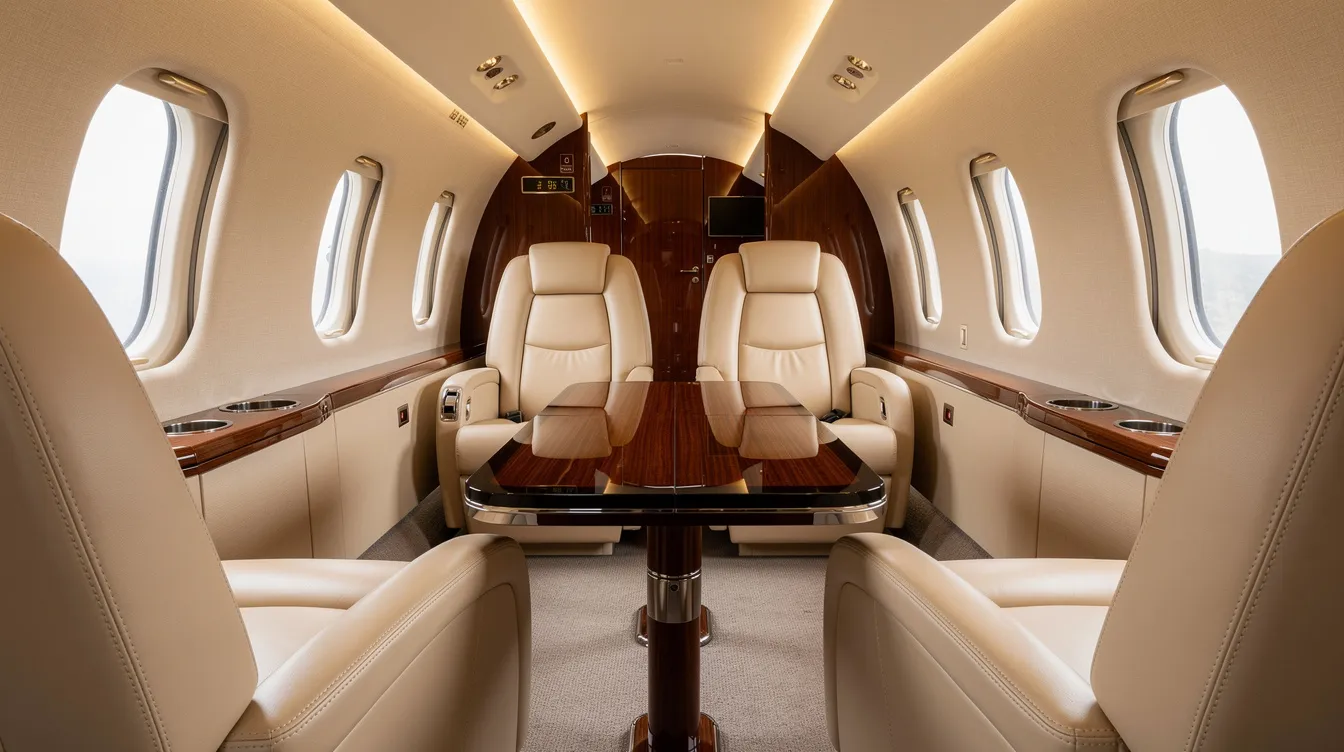
Jet private travel is no longer confined to ownership or traditional models. In 2026, executives and frequent flyers seek smarter, more flexible ways to access private aviation that align with evolving business demands and dynamic schedules. This guide explores how modern private jet options—from charter and jet cards to fractional ownership and membership programs like FLYT—offer strategic alternatives focused on efficiency, transparency, and operational intelligence. Understanding these options helps discerning travelers optimize their time, capital, and travel experience, moving beyond luxury for its own sake toward private aviation built around predictability and productivity.
Key takeaways
Jet private access in 2026 is no longer defined by ownership. Executives now compare private charter, jet card programs, fractional ownership, and membership models based on capital efficiency, access, and operational control.
FLYT’s membership model is designed for private jet travel without capital lock-up, long-term leases, or fractional ownership commitments, providing access to a global fleet through fixed hourly rates.
Members can select the right aircraft type per mission, from very light jets for regional trips to midsize jets, super midsize jets, or heavy jets for longer routes.
Empty leg flights and empty legs can create value for flexible travelers, but core business travel still benefits from predictable pricing and confirmed membership bookings.
The focus is not on luxury for display. It is private aviation built around time savings, corporate travel productivity, transparent costs, and concierge-level execution.

What “jet private” really means in 2026
For many travelers, a search for “jet private” now opens a much wider set of options than simply buying an aircraft. It can mean one-off charter flights, empty leg flights, jet card programs, fractional shares, or membership-based private flights through a global network. The right model depends on routes, passenger count, flexibility, and how often the traveler expects to fly.
Demand has changed since 2020. Remote leadership teams, health and security concerns, and more complex business schedules have made private aviation more relevant to founders, investors, executives, and discerning travelers. Private jets utilize thousands of smaller airports closer to destinations, which means private jet services provide point-to-point air travel instead of commercial schedules. Passengers can skip long TSA lines when traveling via private jets, and private jet travel reduces airport wait times to just 15-30 minutes.
There is an important distinction between owning a jet and flying private. Private jets provide unmatched comfort and privacy compared to commercial airlines, but ownership is only one way to access that value. Most frequent flyers now use business jets through memberships, jet cards, private charter, or hybrid arrangements. Private aviation enhances flexibility with on-demand scheduling, and private jet services offer on-demand aviation tailored to individual schedules.
FLYT is built around that shift. As a membership-based private aviation company, FLYT provides flexible access without requiring customers to buy, co-own, or manage an aircraft. Private jets often fly at higher altitudes than commercial jets to reduce travel time, and private jets offer access to over 60,000 routes worldwide. The operational question is no longer, “Should I own?” It is, “Which access model creates the most value for my schedule, capital, and journey?”
Core ways to fly private: ownership, cards, charter, membership
When an executive begins comparing jet private options, four models usually appear: full ownership, fractional ownership, jet cards, and on-demand charter. Membership models like FLYT sit between these categories, providing access and predictability without the administrative weight of owning an asset.
Full ownership delivers control, but it also carries the most complexity. A modern midsize jet can cost roughly $8 million to $15 million, while large-cabin or ultra-long-range aircraft may exceed $25 million. Private jet ownership costs can exceed $1 million annually once crew, hangar, insurance, parking, maintenance, inspections, and depreciation are included. According to industry cost guides, annual fixed costs for larger private jets can range from hundreds of thousands to well over $1 million depending on aircraft size and usage.
Fractional ownership reduces the burden but still ties up capital. A 1/16 to 1/4 share may provide a defined number of hours, but the account often includes upfront acquisition, monthly management fees, occupied hourly rates, repositioning charges, and multiyear contracts. Recent market analysis shows fractional acquisition costs and fees have risen materially since 2016, according to Avi-Go’s fractional ownership cost research.
Jet cards allow guaranteed access to private jets without ownership. They typically work as prepaid blocks of 25, 50, or 100 hours on a defined cabin category. Jet card programs can simplify booking flights, but members should review peak-day rules, fuel surcharges, service areas, upgrades, and any limits on aircraft availability.
On-demand private charter is more flexible than ownership because charter flights do not require long-term commitments for private jet services. Booking a private jet can be done directly with an operator or through a broker, and booking a private jet can be done via mobile apps. Private jet charters offer access to over 20,000 aircraft, and private jet charters operate on over 60,000 routes worldwide. Charter flights can save time and enhance comfort, but costs fluctuate with demand, aircraft position, route, season, and date.
Membership models like FLYT are a middle path. Members gain access to multiple aircraft categories, fixed hourly rates, a global network, and concierge support without ownership equity. Private jet memberships provide flexible flying options without long-term commitments. XO provides access to over 2,000 aircraft globally, and Jettly offers access to over 20,000 aircraft worldwide; these figures show how the aviation industry is moving toward network-based access rather than single-asset dependence. FLYT’s position is to combine that access logic with transparent pricing, personalized service, and operational discipline.
Comparison of private jet access models
Access Model | Capital Commitment | Flexibility | Aircraft Access | Pricing Structure | Administrative Burden |
|---|
Full Ownership | High ($8M to $25M+) | Low to moderate | Single aircraft | Fixed costs + variable usage | High |
Fractional Ownership | Moderate to high | Moderate | Share of specific aircraft | Acquisition + fees + hourly | Moderate |
Jet Cards | Prepaid hours (25-100 hrs) | Moderate | Defined cabin category | Fixed hourly rates | Low to moderate |
On-demand Charter | None | High | Wide fleet (20,000+ aircraft) | Variable per flight | Low |
Membership (FLYT) | Annual membership fee | High | Multiple categories, global | Fixed hourly rates | Low |
Inside a modern private jet membership with FLYT
FLYT’s membership model gives members access to a floating, asset-light global fleet without buying or co-owning an aircraft. Instead of being tied to one tail number, members can fly through a vetted network of operators selected around route, aircraft type, availability, and mission fit.
The model is built around predictable pricing. Members use published fixed hourly rates by aircraft category, reducing exposure to short-notice charter premiums, sudden market spikes, and opaque after-the-fact fees. Private jet hourly rates range from $2,000 to $15,000 in many market settings, with typical hourly rates for turboprops starting around $2,000. In 2026, broader market estimates place light jets around $3,000-$7,000 per hour, midsize aircraft around $4,500-$10,000 per hour, and large-cabin aircraft often higher, according to CollectAir's private jet cost data.
Aircraft fleet interchange is central to the value. A member might use a light jet for a Boston-Toronto meeting, a super midsize jet for Los Angeles-Chicago, and a large-cabin aircraft for London-Dubai. The member does not need to force every mission into the same aircraft. Learn more about aircraft interchange.
FLYT’s asset-light floating fleet model is also a risk pool model. Instead of one owner absorbing the fixed overhead of an idle jet, demand is spread across many members and many aircraft. This improves utilization and helps smooth availability, while keeping capital available for business investments rather than being tied to ownership.
Concierge support matters because private travel is not just the flight. FLYT’s team can help with travel arrangements, catering requests, schedule changes, ground transportation, and coordination between passengers, operators, and destinations. The goal is a calm, reliable flying experience, not theatrics. Discover the FLYT advantage.
A typical membership structure may include:
Annual membership or account commitment rather than multi-year equity ownership
Fixed hourly rates by aircraft category (see pricing details)
Access to light, midsize, super midsize, and large cabin aircraft
Concierge support for trips, catering, ground transport, and changes
Flexible private flights for business, family, and lifestyle use
Choosing the right aircraft type for each mission
Intelligent aircraft selection is one of the clearest ways to control private aviation costs. Paying for more cabin, range, or engines than the trip requires can create unnecessary spending. Under-sizing the aircraft can compromise range, luggage capacity, cabin comfort, and reliable performance.
Very Light Jets accommodate 1 to 4 passengers on short regional trips. The Embraer Phenom 300E has a range of 2,010 nautical miles, making it useful for efficient regional and short-haul missions. Light jets are often suitable for Newark-Nashville day trips or similar routes where speed and access to secondary airports matter more than cabin size.
Midsize Jets are suitable for coast-to-coast flights with 6 to 8 passengers. A midsize jet may fit Dallas-San Francisco with 5-6 executives, depending on payload, weather, and baggage. The Cessna Citation Latitude has a range of 2,700 nautical miles, which is one reason this category remains popular with corporate travel teams.
Super midsize aircraft are often used for cross-country U.S. flights, longer business routes, and missions where passengers need more cabin space, Wi-Fi, luggage capacity, and nonstop travel. Large cabin aircraft and heavy jets are designed for longer international trips. Heavy Jets feature large cabins designed for intercontinental travel and luxury, and heavy jets typically accommodate 12 to 18 passengers. The Gulfstream G650 can fly up to 7,000 nautical miles; private jets can fly non-stop for distances up to 7,000 nautical miles; and ultra-long-range jets can fly non-stop for over 8,000 miles. A Boeing business jet configuration may serve highly specialized long-haul needs, though most members do not require that level of capacity.
With FLYT, the member can select an aircraft type per trip instead of being locked into one model. That matters for site visits, board meetings, family holidays, investor roadshows, or multi-city schedules where the passengers, cabin needs, and destinations change frequently.
Operational details also influence the decision. Runway length, customs handling, landing permissions, baggage for events, catering, airport parking, and in-flight connectivity can all determine whether one aircraft is appropriate and another is inefficient. Aviation experts evaluate those details before the customer arrives at the terminal.
Pricing, fixed hourly rates, and the role of empty leg flights
Private aviation pricing in 2026 is shaped by aircraft category, fuel, crew, maintenance, airport fees, repositioning, peak-day demand, international handling, and aircraft availability. A simple hourly quote can hide significant variation if the provider does not clarify what is included.
Fixed hourly rates help create budget discipline. For a company planning annual corporate travel, predictable pricing allows finance and operations teams to estimate costs by route and aircraft category. A fixed rate may still include minimum flight times, defined service areas, or special charges for de-icing, international handling, or unusual requests, but the member has a clearer point of comparison than many ad hoc quotes.
Empty leg flights are repositioning flights that would otherwise operate without passengers. Empty legs often exist after one-way charters or before an aircraft moves to its next booked trip. Empty leg flights offer discounted rates for repositioning jets, and empty leg flights offer discounted rates for flexible travelers. Empty leg flights can offer significant discounts on private jet travel, especially between high-demand city pairs such as Los Angeles-Las Vegas, New York-Miami, or London-Nice.
The trade-off is reliability. Empty leg flights can change or disappear if the primary itinerary changes. They are useful for flexible leisure weekends or last-minute private travel, but they should not be the foundation for critical board meetings, legal closings, or time-sensitive M&A discussions.
A practical example: a New York-Miami private charter might quote $18,000-$30,000 one way, depending on aircraft and demand. A membership rate may price the same mission using fixed hourly logic, giving the member a clearer estimate before departure. A discounted empty leg could be far cheaper, but only if the timing, airport, aircraft, and passenger requirements align. Charter costs for transcontinental flights can exceed $150,000 one-way on larger aircraft or on high-demand dates, which is why transparent pricing matters for frequent flyers.
FLYT can surface relevant empty legs when they create value, but the core membership is designed around confirmed access, consistent service, and fewer surprises. That balance is important: use opportunistic discounts when they fit, but build business travel around reliability. Learn more about charter volatility protection.
Global network, safety standards, and the on-trip experience
A global network matters because executives rarely travel in a neat pattern. One month may include New York, London, and Zurich; the next may involve Dallas, Mexico City, Singapore, and regional manufacturing hubs. Fragmented regional charter markets can make consistency difficult unless the provider has strong operator relationships across the world.
FLYT is designed around providing access through a vetted global fleet of operators across North America, Europe, the Middle East, and key Asia-Pacific routes. That helps members accommodate varied destinations and changing schedules without starting a new provider search for every journey.
Aviation safety is foundational. FLYT aligns its operator review process with recognized third-party safety frameworks such as ARGUS, Wyvern, and IS-BAO where appropriate, along with regulatory compliance, crew experience thresholds, maintenance standards, and ongoing operator monitoring. Fleet flexibility should never come at the expense of consistent standards.
The on-trip experience should feel controlled from start to finish:
Streamlined booking through the platform or concierge team
Coordinated ground transport at departure and arrival
Quiet cabin environment with Wi-Fi for work
Catering calibrated to trip length and passenger preferences
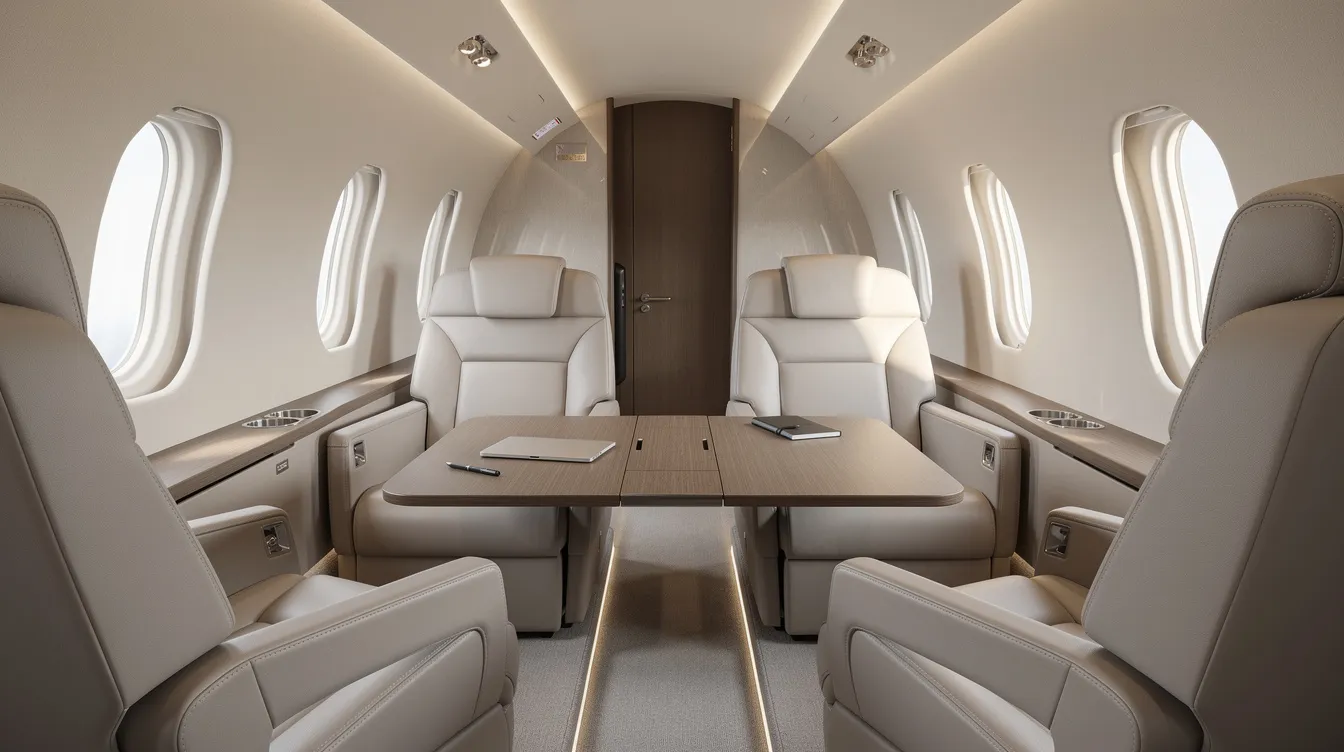
Private flights use Fixed-Base Operators for departures, bypassing busy public terminals. Cabins of private jets can be customized to the traveler’s preferences, and private jets allow for personalized in-flight experiences and amenities. Private jets provide a more personalized travel experience than commercial flights because the cabin, catering, timing, and support can be adjusted around the traveler rather than the airline schedule.
For many travelers, the strongest value is not the champagne image often attached to luxury aviation. It is the ability to land closer to a facility, keep a leadership team productive, hold confidential conversations in the cabin, and maintain control when commercial air travel is too rigid.

When a private jet membership beats ownership and traditional charter
Many frequent flyers are re-evaluating whether capital should be tied to an aircraft, a fractional share, or a long contract. Routes change. Teams grow. Families travel differently. Market conditions shift. In that environment, access can be more efficient than ownership.
Full ownership can make sense for travelers flying 400-500+ hours per year, requiring a specific cabin layout, or operating sensitive in-house missions. For everyone else, fixed ownership costs can dominate the economics. The aircraft may sit idle while crew, insurance, hangar, maintenance, and depreciation continue.
Fractional programs and jet cards solve some problems but introduce others. The common pain points include multi-year commitments, blackout periods, peak surcharges, limited aircraft variety, and ancillary fees that are not always visible at the start. Many travelers also dislike being restricted to a single category when their actual trips require a mix of regional, cross-country, and international capabilities.
Membership-based access is often a better fit when:
Capital remains available for core business or investments
Predictable budget through fixed hourly rates
Freedom to scale flying up or down annually without selling an asset
Multiple aircraft categories are needed throughout the year
Concierge support reduces administrative burden
Consider a founder who flies 75-150 hours per year across the U.S. and Europe. Some trips involve two executives, some involve six passengers, and some require a larger cabin for family travel. A single aircraft share may be too narrow. On-demand charter may be too variable. FLYT’s membership model fits this pattern by combining access, fixed hourly rates, fleet interchange, and concierge support without forcing the traveler into ownership.
The best next step is practical: review the last 12-24 months of flights, including routes, passengers, aircraft used, schedule changes, and total costs. If your flying patterns are frequent but variable, an asset-light global membership may create more value than buying or committing to a fixed share.
FAQ
How many hours a year justify considering a private jet membership like FLYT?
Travelers flying roughly 50-200 hours per year are often strong candidates for a membership model. They usually fly too often for purely ad hoc charter to be efficient, but not enough to justify full ownership or large fractional shares.
Those flying under 50 hours may still benefit if they value guaranteed access, fixed hourly rates, concierge planning, and predictable execution. Before choosing a model, review your last 12 months of trips, routes, passenger count, and cabin needs. See FLYT FAQ for more.
Can I use a FLYT membership for both corporate travel and family trips?
Yes. A membership can typically support both corporate travel and family or lifestyle trips under the member’s account. The key is matching the aircraft type to the mission.
A midsize jet may suit an executive team, while a larger cabin aircraft may be better for family holidays with more passengers and luggage. Concierge support can coordinate multi-stop itineraries, ground transportation, catering requests, and special preferences.
How far in advance do I need to book flights through a membership?
Peak-season, holiday, and transatlantic flights are best secured several weeks in advance. Short-notice flights are often possible when aircraft are available, especially through a floating fleet and global network.
Corporate travel planners should share tentative calendars early when possible. That gives the concierge team more room to protect aircraft options on high-demand dates and reduce last-minute friction.
Are empty leg flights reliable enough for critical business trips?
No. Empty leg flights are opportunistic because they depend on the primary booked charter. If that original itinerary changes, the empty leg may change or disappear.
Executives should treat empty legs as a useful value opportunity for flexible trips, not as the backbone for board meetings, investor days, or legal closings. FLYT can surface relevant empty legs when practical, while standard membership bookings remain the better choice for critical missions.
How does FLYT vet operators and maintain safety standards across its global fleet?
FLYT works with operators that meet or exceed applicable regulatory requirements in their jurisdictions, including crew experience minima, maintenance standards, and operational controls.
The review process may include recognized third-party safety audits, continuous performance monitoring, and operator history evaluation. Safety, reliability, and operational discipline are fundamental to the membership model, and fleet flexibility is not a substitute for consistent standards.
Discover a more flexible approach to global private jet travel with FLYT: access without ownership complexity, predictable pricing, and support designed around how modern executives actually fly. Learn more at flyt.com.
Conclusion
In 2026, private jet travel is evolving beyond traditional ownership into smarter, more flexible models that prioritize efficiency, transparency, and operational intelligence. FLYT exemplifies this shift by offering a membership-based private aviation service designed for executives and frequent flyers who value predictable costs, global access, and concierge-level support without the burdens of asset ownership. By leveraging a floating, asset-light fleet and fixed hourly rates, FLYT enables members to select the right premium aircraft for each mission, optimizing travel time and capital allocation. This approach balances flexibility with reliability, empowering clients to navigate complex travel schedules while maintaining control over their private aviation experience.
For those seeking a premium private jet alternative that aligns with modern business demands, FLYT offers a strategic, membership-first solution. Discover how FLYT redefines private jet access with a global network, transparent pricing, and a commitment to operational excellence at flyt.com.
Explore a membership model designed around efficiency and transparency. Experience private aviation without ownership complexity. Learn more about how FLYT can elevate your travel at flyt.com. For inquiries, contact us.