Renting an aircraft in 2026 can cost you anywhere from $130 per hour for a basic Cessna to north of $14,000 per hour for a large-cabin jet. The gap is enormous, and the final number depends on far more than just the aircraft type. This guide is for student pilots, private pilots, and business travelers interested in understanding airplane rental costs. Knowing the full range of airplane rental costs helps you budget accurately and avoid unexpected fees. This guide breaks down every layer of airplane rental costs so you can budget accurately, whether you're a student pilot booking flight training or a business executive chartering a weekend getaway.
Key Takeaways
In 2026, single-engine piston aircraft like the Cessna 172 typically cost $130–$220 per hour wet, while private jets range from about $3,000 to $14,000+ per hour depending on aircraft type and route. Renting a plane involves a variety of costs that fluctuate based on aircraft type, location, and season.
Published hourly rental rates rarely reflect the true total trip price. Additional fees like daily minimums, fuel surcharges, airport fees, insurance, and taxes can add 10–40% or more to the base rate, so always request a total estimated trip cost before booking.
FLYT offers membership-based private jet access with fixed hourly rates and charter volatility protection, giving frequent flyers a way to stabilize what they spend without the capital commitment of aircraft ownership.
The rest of this article walks through factors that drive airplane rental costs, gives real-world examples at every aircraft category, explains hidden surcharges, and shows when a membership like FLYT can beat ad-hoc charter.
Quick Answer: Typical Airplane Rental Costs in 2026
How much to rent a plane depends mainly on aircraft type, rental structure, and route. Here are concrete 2026 price bands:
Aircraft Type | Typical Hourly Rate (2026, USD) |
|---|
Single-engine piston trainers (e.g., Cessna 172) | $130–$220 |
Multi-engine pistons (e.g., Piper Seminole, Beechcraft Baron) | $280–$550 |
Turboprops (e.g., Pilatus PC-12, King Air 250) | $1,200–$2,500 (including crew) |
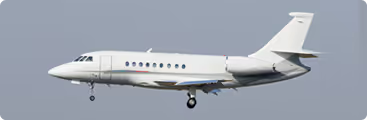
Light jets (Citation CJ3 class) | $3,000–$6,000 |
Midsize jets (Citation XLS+, Hawker 800XP) | $5,000–$8,500 |
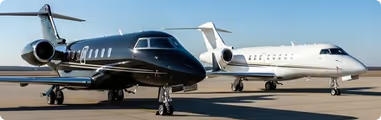
Super-mid and large cabin jets (e.g., Challenger 350, Gulfstream G450+) | $9,000–$14,000+ |
Piston aircraft rental prices usually assume the renter is the pilot, whereas jet prices assume a fully crewed charter or membership flight. Many providers charge daily minimums - often 2–4 flight hours per day on jets and 1–2 on pistons - which matters significantly for weekend trips and multi-day rentals.
FLYT's membership model replaces variable charter quotes with transparent rental rates and access to a global, asset-light floating fleet. Learn more about how it works or explore FLYT memberships.
Types of Plane Rentals and How They're Priced
The phrase "rent a plane" can mean very different things. A licensed private pilot hiring a Cessna by the hour at a local flight school is a world apart from a business leader booking a fully crewed jet for a transatlantic crossing. Pricing structures reflect these differences.
Wet and Dry Rentals Defined:
Wet rentals include fuel and sometimes insurance costs in the hourly rate. This simplifies budgeting for renters by avoiding surprise fuel bills.
Dry rentals require renters to pay for fuel separately, allowing flexibility in choosing fuel options but potentially increasing total costs.
For light aircraft, airplane rental costs are usually posted as an hourly rate tied to Hobbs or tach time. Private jets are quoted at an hourly rate plus taxes and fees for a defined itinerary. Here are the main rental structures:
Hourly rental charges are based on aircraft operation time, typically measured by Hobbs or tachometers. This is common for flight schools and local flying clubs.
Wet rentals include fuel and often insurance in the hourly rate, simplifying budgeting for renters by avoiding surprise fuel bills.
Dry rentals exclude fuel, requiring renters to pay for fuel separately, which allows flexibility in choosing fuel options but can increase total costs.
Block time rentals offer discounted rates for multiple hours booked upfront, providing savings for frequent flyers.
Daily or multi-day rentals usually have minimum flight times, typically ranging from 2 to 4 hours per day, so renters pay for a minimum number of hours even if they fly less.
Membership programs like FLYT provide fixed hourly rental rates, guaranteed access to a fleet, and often include perks and discounts.
Flying clubs and some fixed-base operators blend these models, charging a modest monthly fee plus reduced per-hour rates and sometimes offering hourly rental discounts for block purchases.
Hourly Rentals
Hourly rental is the most common option for training and local leisure flying. Renters are charged per hour of engine run time as recorded on a Hobbs or tachometer. Hourly aircraft rental rates vary widely depending on aircraft type (a Cessna 172 vs. a Piper Arrow), modern avionics (steam gauges vs. glass cockpit), and whether the rate is wet or dry.
Rental fees typically cover basic aircraft maintenance and wear but may exclude landing fees, overnight parking, and instructor time. Pros include paying only for time flown and trying different aircraft. Consthe include higher effective costs for multi-day trips due to minimums and fuel surcharges. For jet travelers, traditional hourly billing can be unpredictable. That's where FLYT's fixed hourly rate model provides a clear advantage by removing guesswork from the equation.
Daily and Multi-Day Rentals
Flight schools and flying clubs commonly allow you to take an aircraft for multiple days but require a minimum number of billed flight hours per day (often 2–3 hours) to compensate for lost local rental revenue. Daily minimums usually require a minimum number of billed flight hours per day even if you fly less.
For example, a 3-day weekend trip in a Cessna 172 with a 2-hour daily minimum means you're billed for 6 flight hours even if you only flew 4.5. At $170 per hour, that's $1,020 vs. $765 for actual time - a meaningful difference. These minimums also exist in the private jet world, where a light jet may have 2–3-hour daily minimums plus repositioning legs priced into the quote.
Travelers who routinely need multi-day access with unpredictable usage may benefit from memberships like FLYT, where repositioning and minimum complexity are mitigated by the floating fleet and risk pool model. Weekend and holiday demand can also change aircraft availability and rental duration rules, especially at busy airports.
Flying Clubs and Local Rental Programs
A local flying club or flight club operates as a member organization where pilots pay a joining fee and monthly dues in exchange for lower per-hour rental rates and access to multiple aircraft. The typical financial structure includes a small initiation fee, a monthly membership of $50–$100 or more, and then reduced hourly wet rates on a range of single-engine and sometimes multi-engine piston aircraft.
Non-price benefits include easier scheduling, community events, and well-maintained aircraft with standardized configurations, which can make building flight time more efficient and affordable for recreational pilots who fly regularly. Joining a flying club can reduce rental costs significantly compared to renting through most rental companies.
Clubs are ideal for piston private pilots flying 30–100 hours per month. Business travelers without a pilot's license generally look at private jet charter or membership programs. The parallel is direct: just as flying clubs trade higher ad-hoc rental prices for predictable, member-only rates, FLYT's memberships do the same for jet travelers.
Equity clubs require a share purchase for lower rental rates, while non-equity clubs offer more flexible memberships without ownership commitment.
Factors That Drive Airplane Rental Costs
Beyond the headline hourly rate, airplane rental costs are shaped by aircraft type and size, avionics and aircraft age, location and regional pricing, rental duration, and demand. Prices for renting aircraft vary based on location and operational costs of providers. Understanding these factors lets pilots and travelers estimate total rental prices before calling FBOs, local flight schools, or private jet providers.
FLYT's risk pool and AI-driven fleet engine are designed to manage many of these cost drivers on behalf of members, smoothing out volatility across seasons and geographies.
Aircraft Type, Size, and Role
Aircraft size and type significantly influence rental costs - it is the single biggest driver of rental prices. Use cases and cost differences break down intuitively:
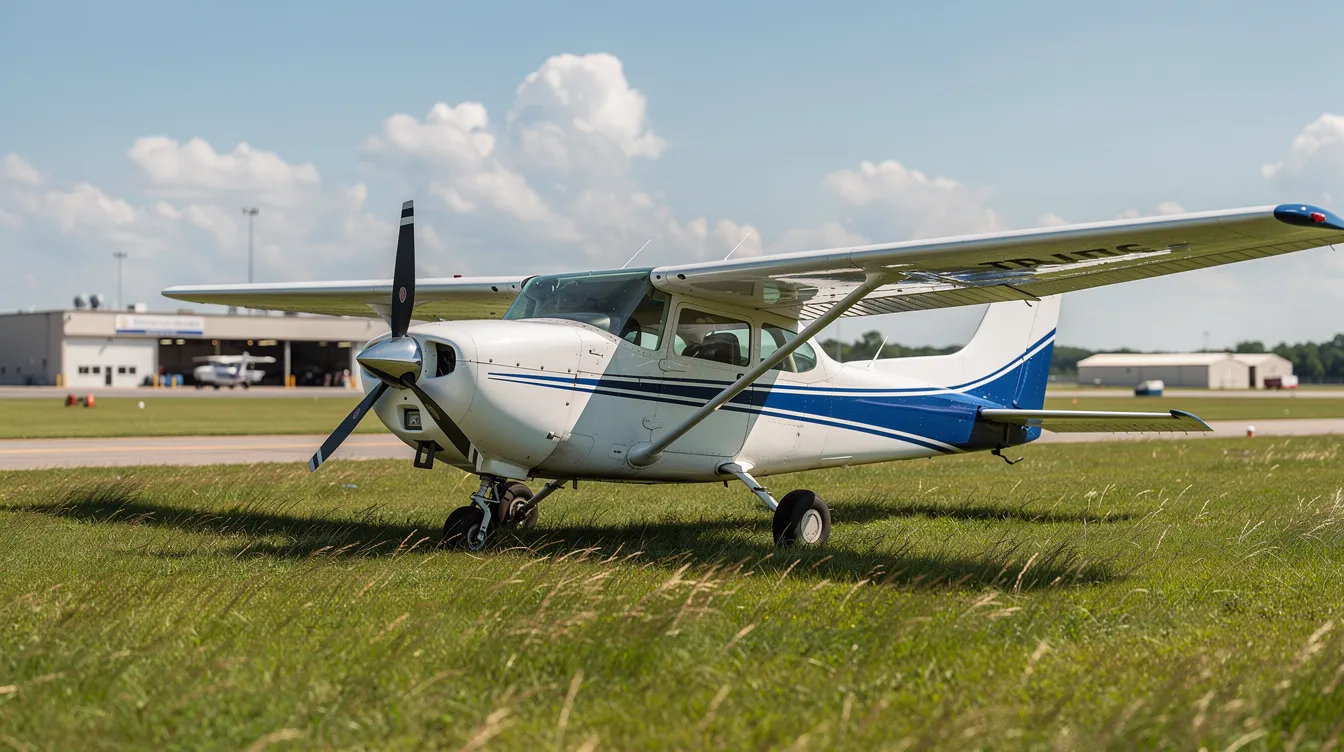
Single-engine piston (e.g., Cessna 172) for flight training and short leisure flights. Rental fees for small aircraft can range from $100 to $200 per hour.
Multi-engine piston (e.g., Piper Seminole) for advanced training and redundancy, typically costing $280 to $550 per hour.
Turboprops (e.g., King Air 250, Pilatus PC-12) for regional business trips and short-field performance. Turboprops can cost between $1,000 and $2,500 per hour.
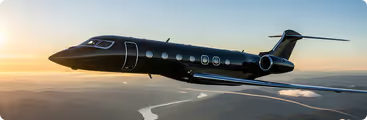
Light to large jets for fast, long-distance business and luxury travel, accommodating up to four passengers or more, depending on cabin size. Light jets usually rent for $3,000 to $6,000 per hour, with midsize and large cabin jets commanding higher rates.
Higher speeds and longer range reduce travel time but raise hourly rental prices and fuel consumption. Cabin size, baggage capacity, and onboard amenities (Wi-Fi, galley, sleeping berths) also push rental rates upward. FLYT's aircraft interchange model lets members select different aircraft types for different missions while keeping pricing predictable.
Avionics, Equipment, and Aircraft Age
Newer aircraft with glass cockpits (e.g., Garmin G1000) and upgraded safety systems tend to command higher rental prices than older, basic models. In 2026, renters often pay a premium for modern avionics, onboard connectivity like Wi-Fi and Bluetooth audio, and upgraded interiors with comfort features.
While older aircraft may be cheaper to rent per hour, they may not be as efficient or comfortable for longer trips. Renters should balance budget against safety and comfort, especially for business travel, where in-flight productivity matters. FLYT's fleet focuses on premium, well-equipped aircraft with transparent premiums, ensuring members fly contemporary cabins without paying opaque markups.
Location, Airport Fees, and Regional Pricing
Aircraft rental rates vary significantly by region. Rentals around major hubs like New York, Los Angeles, or London typically cost 15–35% more than in rural or secondary markets due to higher operating expenses and strong demand. Common location-related surcharges include:
Landing fees and facility fees at large or premium airports can exceed $250 at busy airports.
Ramp and handling charges, especially for jets at fixed base operators.
Overnight parking or hangar storage for multi-day rentals.
Smaller regional airports can reduce airport fees and sometimes hourly rates, but may add ground transfer time. FLYT's platform helps optimize airport selection and routing for members to balance cost, convenience, and availability.
Rental Duration, Minimums, and Seasonality
Rental duration affects the effective hourly rate. Short one-hour flights may pay a standard hourly rate, while longer or multi-day trips trigger daily minimums and repositioning fees for jets. Typical daily minimums are 1–2 hours per day for pistons on overnight or weekend holds and 2–4 hours per day for jets.
Busy seasons - school holidays, summer travel, and major events like the Super Bowl - raise demand and push hourly rental prices up. Renting during off-peak times can lead to significant savings. Planning ahead and booking in advance for peak weeks, or considering mid-week travel, helps secure better pricing and availability. FLYT's charter volatility protection is specifically designed to insulate members from extreme price swings during these periods.
Cost Ranges by Aircraft Type: From Cessna to Gulfstream
This section serves as a practical reference for budgeting. Specific quotes will vary by operator and route, but these ranges represent realistic 2026 planning numbers. Taxes (e.g., the U.S. 7.5% federal excise tax), segment fees, and international handling charges sit on top of these base rental prices for jets. Readers who fly jets more than a few times per year should investigate FLYT's fixed hourly pricing.
Aircraft Type | Typical Hourly Rate Range (2026, USD) |
|---|
Single-Engine Pistons (e.g., Cessna 172, Piper Warrior) | $130–$220 (wet) |
Multi-Engine Pistons and High-Performance Pistons | $280–$550 (wet) |
Turboprops (e.g., Pilatus PC-12, King Air 250) | $1,000–$2,500 (includes crew) |
Light Jets (e.g., Citation CJ3, Phenom 300) | $3,000–$6,000 |
Midsize Jets (e.g., Citation XLS+, Hawker 800XP) | $5,000–$8,500 |
Super-mid and Large Cabin Jets (e.g., Challenger 350, Gulfstream G450/G600) | $9,000–$14,000+ |
Single-Engine Pistons (e.g., Cessna 172, Piper Warrior)
Cessna 172 rental rates range from $130 to $220 per hour, with the national median sitting around $176 per hour wet as of early 2026. Wet rental rates typically range from $130 to $220 per hour for common training and touring aircraft. Dry rates may be $20–$40 per hour lower, but require the renter to purchase fuel separately.
A concrete example: a weekend getaway totaling 5 flight hours at $170 per hour wet would cost about $850 before taxes and landing fees. Flight schools and local flying clubs may offer block-hour discounts (e.g., 10–20 hours prepaid) that reduce the effective rate by 5–15%. For student pilots and new holders of a private pilot certificate, this class offers the most cost-effective way to log hours and stay current.
Multi-Engine Pistons and High-Performance Pistons
Multi-engine piston aircraft typically cost $280 to $550 per hour wet. Multi-engine aircraft rentals range from $250 to $500 per hour in many U.S. markets, with glass cockpits and newer airframes at the upper end. High-performance aircraft like the Cirrus SR22 land toward the middle of this range.
Renters may also need additional renters insurance coverage or endorsements for complex aircraft, adding to overall rental expenses. Instructor fees apply if a certified flight instructor is needed during the rental, typically costing $60 to $120 per hour. A sample scenario: an instrument training weekend with 6 hours in a multi-engine trainer at $400 per hour equals $2,400 in aircraft rental alone, plus instructor fees. These aircraft often serve as a stepping stone toward professional flying skills or turbine operations.
Turboprops (e.g., Pilatus PC-12, King Air 250)
Turboprops occupy the middle ground between pistons and jets, offering short-field capability and solid range. Turboprop rentals like the King Air cost $1,000–$2,500 per hour. These rental rates usually include the aircraft, crew, standard catering, and basic handling, but not premium catering or de-icing.
A 2-hour each-way business trip in a PC-12 at $1,800 per hour totals about $7,200 in flight time before taxes and fees. For short-to-medium regional routes with 4–8 passengers, turboprops often deliver strong value versus small jets. Comparing total mission costs helps identify the best rental option for the specific flight distance and passenger count.
Light, Midsize, and Large Cabin Jets
Private jet rental costs per hour in 2026 break down as follows:
Light jets (e.g., Citation CJ3, Phenom 300): $3,000–$6,000 per hour. Light jets usually rent for $3,000 to $6,000 per hour.
Midsize jets (e.g., Citation XLS+, Hawker 800XP): $5,000–$8,500 per hour.
Super-mid and large cabin jets (e.g., Challenger 350, Gulfstream G450/G600): $9,000–$14,000+ per hour. Large cabin jets can cost $6,000–$14,000+ per hour.
These rental prices assume a full charter with a professional crew, not a self-flown rental. Real-world trip examples:
A 2.5-hour light jet hop (New York to Miami) at $4,000 per hour equals roughly $10,000 in flight time, plus taxes and additional fees.
A 6-hour large-cabin crossing (New York to London) at $11,000 per hour comes to about $66,000 in flight time, before surcharges.
Positioning legs - moving the aircraft to your departure or back to its base - can add non-obvious hours, inflating the effective hourly rate. For frequent flyers, FLYT memberships provide fixed hourly rates and reduced repositioning exposure via a global floating fleet. See how FLYT compares to traditional charter.
Beyond the Hourly Rate: Extra Costs to Budget For
When people ask how much to rent a plane, they focus on the hourly rate and underestimate everything else. Additional costs may include fuel, airport fees, and insurance. These extras can add 15–30% to a piston rental and 20–40% to a private jet charter. One of FLYT's core advantages is consolidating many of these variables into predictable hourly membership pricing.
Fuel, Landing Fees, and Airport Charges
With a dry rental, renters pay fuel separately at posted FBO prices, and fuel prices vary widely by location and season, affecting the total trip cost. In 2026, Avgas often runs $5.50–$8.50 per gallon, while Jet-A also fluctuates, making these costs especially important on dry rentals and longer trips. Fuel costs typically range from $4 to $8 per gallon. Fuel costs scale dramatically: a Cessna 172 burns roughly 7–8 gallons per hour versus hundreds of gallons for a large jet.
Common airport charges include landing fees at busy airports and commercial fields, ramp and handling fees for jets at fixed base operators, and overnight parking or hangar charges. Airport fees can exceed $250 at busy airports. A single landing at a major international airport could add $50–$200+ in fees for a jet, versus little or nothing at a small regional airfield. Always ask for a total estimated trip cost that includes expected airport and fuel charges, not just hourly rental rates.
Insurance, Instructor, and Crew Costs
Rental companies require that self-fly renters have a valid pilot certificate appropriate for the aircraft type, a current medical certificate, a current flight review or checkout flight with the rental provider, and most rental companies require proof of insurance meeting their minimum limits. Insurance is typically recommended for renting aircraft to cover potential damages. Non-owned aircraft insurance costs randamage $100 to $500 annually depending on coverage and experience.
Instruct, or fees apply if a certified flight instructor is needed during the rental, typically costing $60 to $120 per hour. For jets, crew costs (pilots and cabin attendants) are typically bundled into charter or membership hourly rates. Catering costs for light jets can add $200 to $500. FLYT's fixed hourly membership rates package aircraft, crew, and operations into a single predictable figure.
Taxes, Surcharges, and International Extras
Common taxes and surcharges include the U.S. federal excise tax (7.5%) on domestic charter flights, per-segment fees, and VAT in some jurisdictions. International operations add overflight and navigation fees, higher handling and security charges at major hubs, and customs and immigration handling fees.
A concise example: a 3-hour light jet charter at $4,500 per hour might end up closer to $16,000–$18,000 total once taxes, airport charges, and positioning are included. Always read the fine print and request itemized quotes that break out each tax and surcharge before committing.
Rent vs Own vs Membership: Which Makes the Most Financial Sense?
Once airplane rental costs reach a certain threshold each year, pilots and executives start comparing rental options to aircraft ownership, fractional shares, jet cards, or memberships. Three broad paths exist:
Renting or chartering on demand - pay only when you fly, with the highest per-trip variability.
Owning or fractional ownership - large upfront capital plus ongoing expenses in maintenance, insurance, crew, and hangar.
Membership or jet card models - pre-committed usage for predictable hourly rates and cost savings over time.
For most private pilots flying under 50–75 hours annually, renting small aircraft remains more economical than owning. Compare FLYT with traditional charter, jet cards, fractional ownership, and brokers.
When Does Ownership Start to Compete with Renting?
Main ownership cost components include acquisition price, financing, hangar or tie-down, insurance costs, aircraft maintenance, crew (for jets), and capital upgrades. A simplified example: a small piston bought for roughly $50,000 carries $15,000–$25,000 per year in fixed ongoing expenses. Renting the same model for 50 hours annually at $170 per hour costs only $8,500. Ownership may make sense when flying well above 75–100 hours per year, but maintenance risk and capital lock-up must be considered.
For jets, multi-million-dollar acquisition and high annual fixed costs make ownership impractical for all but the highest-usage operators. Many high-net-worth individuals prefer asset-light solutions to avoid depreciation risk and operational complexity.
How FLYT's Membership Model Changes the Equation for Jet Users
FLYT is a membership-based private aviation service offering access to a global, asset-light floating fleet via fixed hourly rates, without the need to buy or co-own an aircraft. FLYT's risk pool model aggregates member demand to spread repositioning and market volatility, delivering more stable aircraft rental rates across geographies.
Key benefits versus on-demand charter include transparent, published hourly rates, reduced exposure to peak-season price spikes, and access to multiple aircraft types via fleet interchange to match each trip.
Learn more: How FLYT Works · Memberships · The FLYT Advantage
If you already spend five or six figures per year on charter, model what your annual budget would look like under FLYT's fixed hourly rental rates. Contact FLYT for a personalized cost comparison and to understand how the risk pool model can stabilize long-term aircraft rental rates.
How to Get the Best Value When You Rent a Plane
Moving from what it costs to how to save money, here are practical strategies for both piston rentals and private jet use:
Choose the right aircraft type for the mission - avoid over-sizing.
Rent in off-peak times or from secondary airports for lower rental costs.
Use flying clubs, block time, or memberships to lower hourly rates.
Track total trip cost per seat, not just aircraft rental rates, especially when comparing private jets to commercial business class for small groups.
Optimizing Aircraft Type, Route, and Schedule
Choose the smallest, most efficient aircraft that safely and comfortably handles the route, passenger count, and baggage needs. Flying midweek or outside peak holiday windows often results in better rental prices and easier aircraft availability. Consider secondary airports close to your final destination where landing fees and handling charges are lower, as long as ground transfer time remains reasonable. Combine legs where sensible to maximize productive hours per billed hour. Block time rentals offer discounted rates for frequent flyers who commit to pre-purchased hours.
Using Clubs, Block Time, and Memberships
For piston private pilots, joining a local flying club or purchasing block hours through a flight school meaningfully reduces hourly rental costs and improves aircraft access. For business travelers and families who fly private jets several times per year, jet cards and memberships trade upfront commitment for lower or fixed hourly rates, guaranteed availability, and priority access during busy periods.
FLYT specializes in membership-based private jet access, combining fixed hourly rates, fleet interchange, and global availability without fractional ownership commitments or jet card lock-ins. Analyze your last 12–24 months of flying hours, routes, and spend - and compare ad-hoc charter invoices against a membership cost projection. Contact FLYT for a personalized cost comparison and to understand how the risk pool model can stabilize long-term aircraft rental rates.

FAQ: Common Questions About How Much It Costs to Rent a Plane
These answers address specific questions not fully covered above, using practical 2026 figures and clear assumptions.
How much does it cost to rent a small plane like a Cessna 172 for a day?
Daily rental is usually charged per hour, but with a daily minimum - often 2 hours. In 2026, a Cessna 172 at $170 per hour wet with a 2-hour daily minimum would cost about $340 for a day, even if you only fly 1.3 hours. Some flight schools add a small overnight or tie-down fee if the aircraft is kept away from its home base. Block time or flight club membership can reduce the effective cost to rent for frequent renters. Always ask about both the hourly rate and minimum daily hours before planning a weekend trip. Renters must have a valid pilot's license and a valid pilot certificate appropriate for the aircraft. A rental agreement will typically spell out these requirements. Rental companies may require a checkout flight for new renters before solo use.
What would a typical weekend private jet trip cost in 2026?
A Friday–Sunday weekend from New York to Miami in a light jet - about 2.5 hours each way - may bill 5–6 flight hours at around $4,000 per hour, yielding $20,000–$24,000 before taxes and fees. Daily minimums, overnight fees, and potential repositioning influence whether you pay only for actual flight time. Catering upgrades, ground transport, and de-icing in winter add several thousand more. For a super-mid weekend trip of 3 hours each way, expect roughly $60,000–$70,000 all-in. Frequent travelers with similar patterns should compare these one-off costs with FLYT's fixed hourly membership pricing.
Is it cheaper to rent a plane or fly commercial business class?
For a single traveler, commercial business class is almost always cheaper. Private aircraft rental becomes financially competitive when you have 3–8 passengers, you value time savings and schedule control, and you factor in productive work time and reduced overnight stays. A transcontinental business-class ticket runs $3,000–$5,000 versus $25,000–$35,000 for a light jet charter, but the jet offers flexibility, privacy, and the ability to reach airports commercial airlines don't serve. Businesses often justify private jet usage based on time and productivity rather than ticket-price parity alone. Recreational pilots fly small pistons for personal enjoyment where commercial comparison doesn't apply.
What insurance do I need if I want to rent and fly a plane myself?
Most rental companies require a valid pilot certificate, a current medical certificate, a recent flight review (current flight review within the past 24 months), and non-owned aircraft renters insurance coverage meeting the provider's limits. Non-owned aircraft insurance costs range from $100 to $500 annually, with higher limits required for complex or multi-engine piston aircraft. Always confirm whether the rental company's policy covers hull damage and liability, and check deductibles in the rental agreement before flying. For private jet charter or membership flights with FLYT, passengers are covered under the operator's insurance - no separate pilot renter's policy needed.
How do FLYT's fixed hourly rates compare to typical charter pricing?
Traditional charter pricing for jets fluctuates by season, route, and aircraft availability, often producing wildly different quotes for the same trip booked weeks apart. FLYT's model is built around fixed hourly rates underpinned by its asset-light floating fleet and risk pool, designed to smooth out charter market volatility. Frequent private flyers can often achieve more predictable, and in many cases lower, effective per-hour costs compared to booking each trip through brokers or marketplaces. Visit FLYT vs Brokers & Jet Cards or FLYT Pricing for a side-by-side comparison and request a tailored analysis of your projected flying.
Conclusion: Navigating Aircraft Rental Costs with Confidence
Renting a plane in 2026 offers unmatched flexibility and access to private aviation without the financial and logistical burdens of ownership. Whether you are a student pilot building hours in a Cessna or a business traveler chartering a midsize jet, understanding how much to rent a plane involves more than just the hourly rate. Total rental expenses include fuel, insurance, airport fees, and other surcharges, which can significantly impact your budget.
Choosing the right rental structure—whether hourly, daily, block time, or membership-based—can optimize your costs. Longer commitments like weekly or monthly rentals often provide better value, while flying clubs and memberships like FLYT offer predictable pricing and exclusive benefits.
By carefully considering aircraft rental costs, rental duration, and additional fees, you can make informed decisions that fit your travel needs and budget. Explore options like FLYT's fixed hourly rates and its innovative risk pool model to enjoy cost-effective, transparent, and premium private aviation experiences.
Elevate your next trip with confidence and clarity—renting a plane has never been more accessible or straightforward.