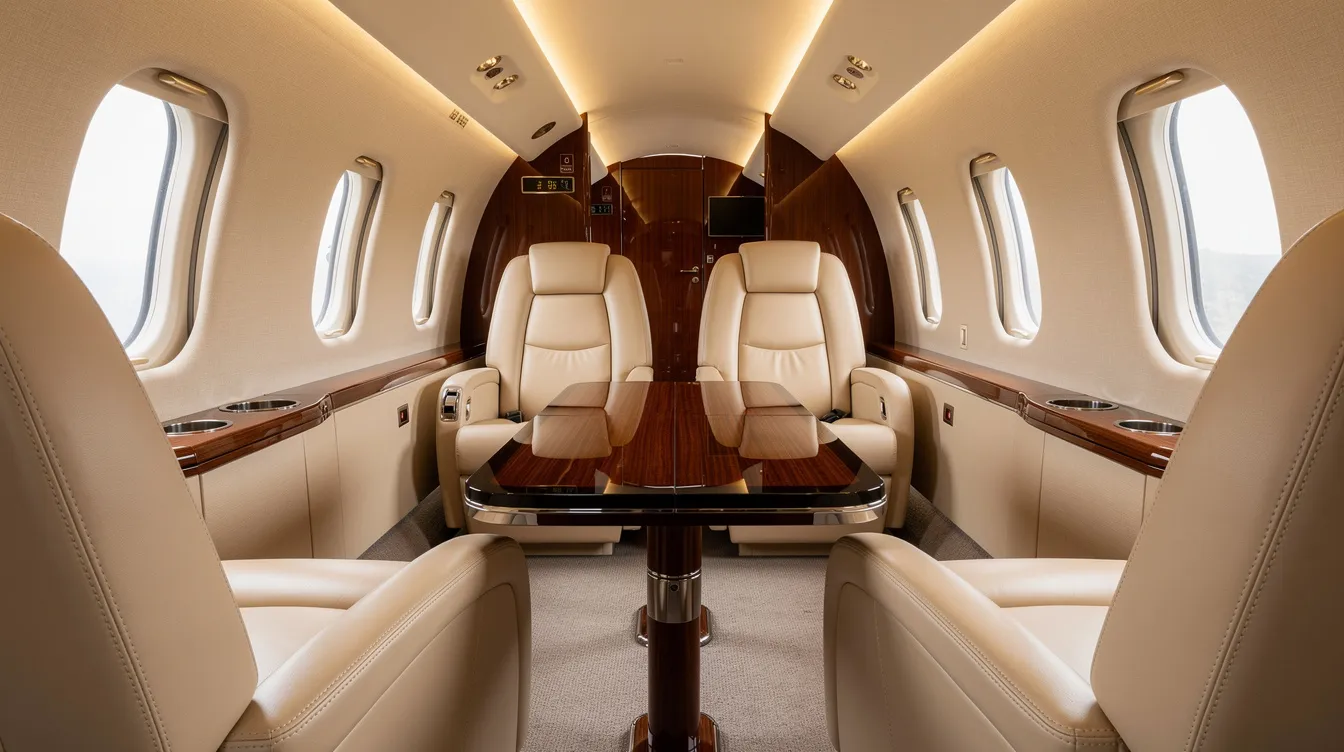
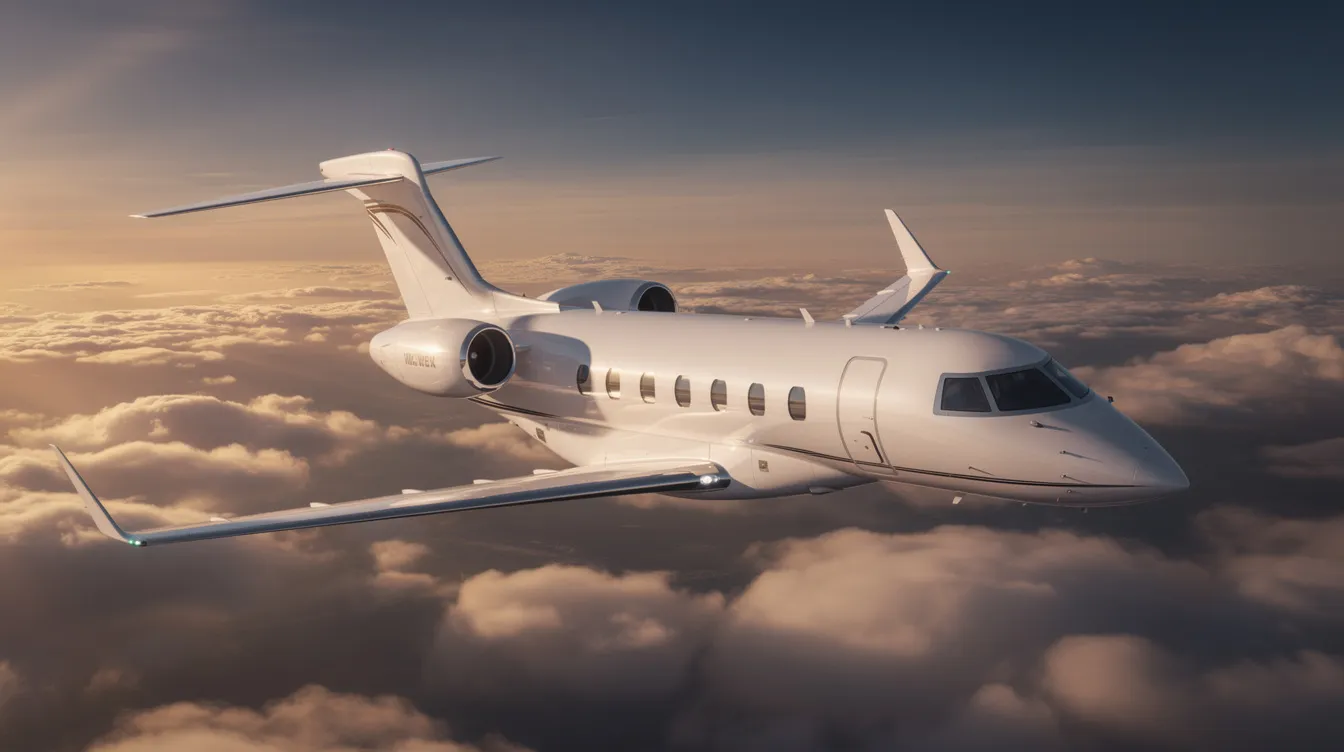
Private jet charter costs in 2026 are shaped by more variables than most travelers expect. The headline hourly rate is only the starting point. What you actually pay depends on aircraft type, flight distance, taxes, airport fees, repositioning, and a long list of operational charges that rarely appear in marketing materials. This guide breaks down every layer of private jet pricing, from turboprops to ultra-long-range jets, so you can make informed decisions about how to fly private efficiently.
Key takeaways
A typical two-hour flight on a private jet can cost $8,000 to $37,000 depending on aircraft category. Turboprop charters start at around $2,000 per hour, light jet flights typically range from $2,900 to $3,500 per hour, midsize jets cost between $4,300 and $4,750 per hour, and ultra-long-range jets can reach $10,000 to $14,000 or more per hour.
Total private jet cost combines hourly rates, a 7.5% federal excise tax on domestic flights, landing fees, handling charges, short leg fees, fuel surcharges, and optional services like premium catering and ground transportation. Expect final invoices to run 20 to 40 percent above the base hourly rate.
Choosing the right aircraft size for each mission is the single biggest lever to control cost per trip. Flying a heavy jet on a one-hour route wastes money; choosing a turboprop or light jet for short regional flights keeps spending proportional to the mission.
Membership programs provide predictable pricing for frequent flyers. FLYT's fixed hourly rates and transparent pricing model help executives avoid volatile on-demand charter pricing, surprise surcharges, and the capital burden of ownership. Learn more about FLYT memberships and how it works.
Private jet travel is an operational and time-efficiency decision, not just a luxury purchase. For executives, founders, and investors, the ability to fly direct, avoid layovers, and work productively in a secure cabin often justifies the cost relative to the alternative.
How much does it cost to fly private? (quick reference)
Before diving into the mechanics of how private jet charter prices are calculated, here is a direct answer to the question most people search for first: how much does it cost to charter a private jet in 2026?
Private jet flight costs vary based on aircraft size and flight distance, but these benchmarks reflect what travelers are actually seeing in quotes this year:
New York to Boston on a turboprop (approximately one hour each way): $4,000 to $6,000 one-way, all-in
Los Angeles to Las Vegas on a light jet (one to 1.5 hours): $6,000 to $9,000 one-way
New York to Miami on a midsize jet (approximately 2.5 to 3 hours): $18,000 to $25,000 one-way
New York to Los Angeles on a super midsize jet (5 to 5.5 hours): $30,000 to $45,000 one-way
New York to London on a heavy jet or ultra-long-range jet (approximately seven hours): $85,000 to $150,000 or more one-way
These numbers represent total trip cost estimates, including most standard fees. However, they are not per-seat prices. When you charter a private jet, you book the entire aircraft, whether you fill every seat or fly solo.
Most private jet charters carry a daily minimum of 1.5 to 2.0 billable flight hours. That means even a 45-minute short hop on a light jet is often billed as 1.5 hours. This minimum exists because operators need to cover fixed costs regardless of how short the leg is.
Total trip budgets usually end up 20 to 40 percent higher than the pure hourly rate multiplied by flight time once fuel surcharges, federal excise tax, segment fees, and airport and crew expenses are layered in.
For frequent flyers logging 25 to 50 or more flight hours per year, this pricing variability becomes a planning problem. That is why many move to fixed-rate private jet membership models like FLYT, gaining cost predictability without sacrificing flexibility.
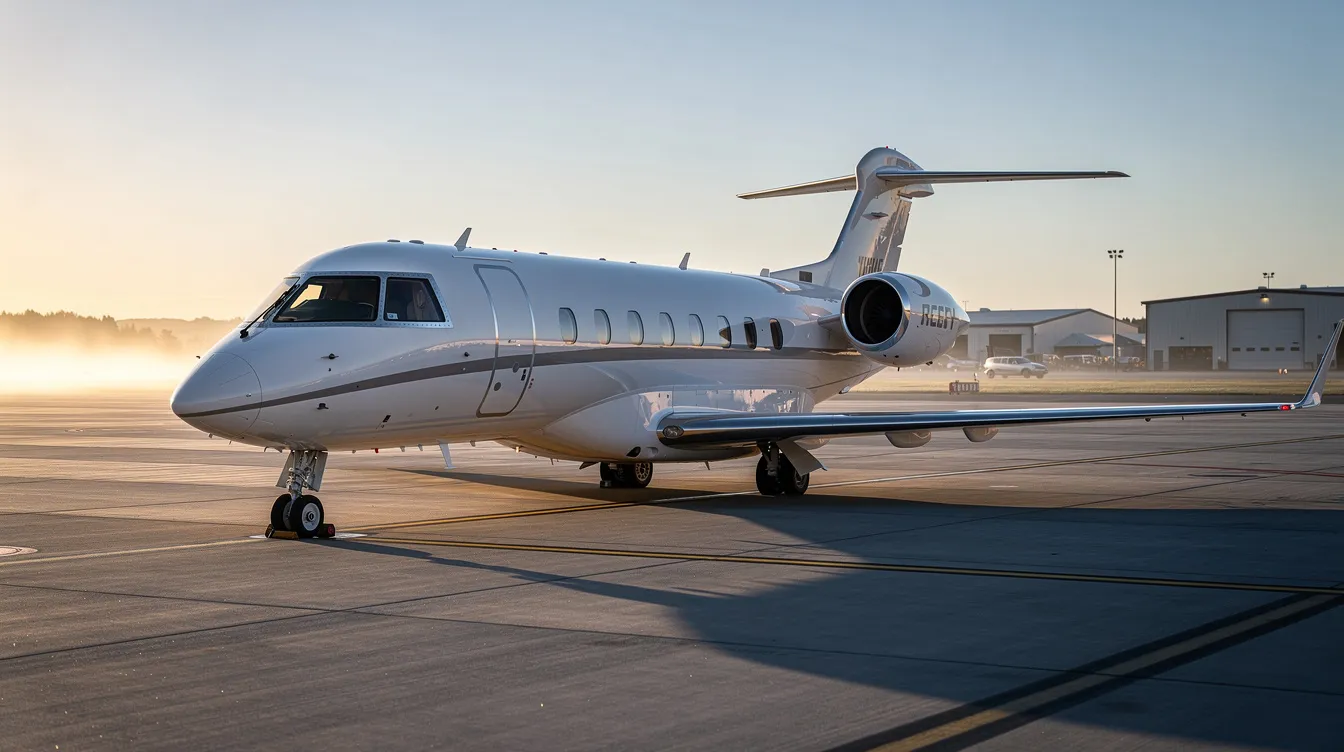
How private jet charter prices are calculated
Private jet cost is a stack of components, not a single headline number. Understanding this structure is the difference between budgeting accurately and getting surprised by a final invoice that is 30 percent above what you expected.
The core of every private jet charter is billable flight time multiplied by an hourly rate that varies by aircraft type. Hourly rates are influenced by aircraft category and passenger capacity, ranging from roughly $2,000 per hour for turboprops to $14,000 or more for ultra-long-range aircraft. Fuel costs comprise a major variable expense in private jet chartering, and they fluctuate with the Jet-A market price, which is why many operators now break out fuel surcharges as a separate line item.
Billable flight time does not always equal the actual time you spend in the air. Some operators start the clock when aircraft engines spool up and stop it on arrival, while others bill more narrowly from wheels-up to wheels-down and then add taxi time, but they also apply minimums per leg or per day. A billable flight hour on a light jet might be billed at a 1.5-hour minimum even if the actual flight is 50 minutes. For midsize jets and heavier, that floor is often two hours or more. This distinction matters enormously on short flights.
Base hourly rates typically include the aircraft, crew, standard fuel allocation, and basic insurance. What the base rate usually excludes includes fuel surcharges above baseline, aircraft positioning fees when jets must travel empty to your departure point, deicing, premium catering, and certain airport-specific charges like handling and ramp access.
The result is a layered cost that requires itemized quoting to evaluate properly. Membership programs like FLYT address this by converting much of this complexity into transparent fixed hourly rates, bundling many of these items into a predictable structure where members know what each hour of flying will cost before they commit. See how FLYT’s asset-light floating fleet and risk pool model underpin this approach.
Private jet rental cost by aircraft type
Choosing the right aircraft category is the most practical way to control private jet rental costs while matching range and passenger needs. There is no point paying heavy jet rates for a 90-minute hop, and a light jet cannot get you nonstop from Los Angeles to Tokyo.
The main categories scale in hourly rate alongside weight, range capability, and cabin size: turboprops, very light jets, light jets, midsize jets, super midsize jets, heavy jets, and ultra long range jets. Each serves a different operational purpose, and understanding where each fits prevents overspending on missions that do not require the capability.
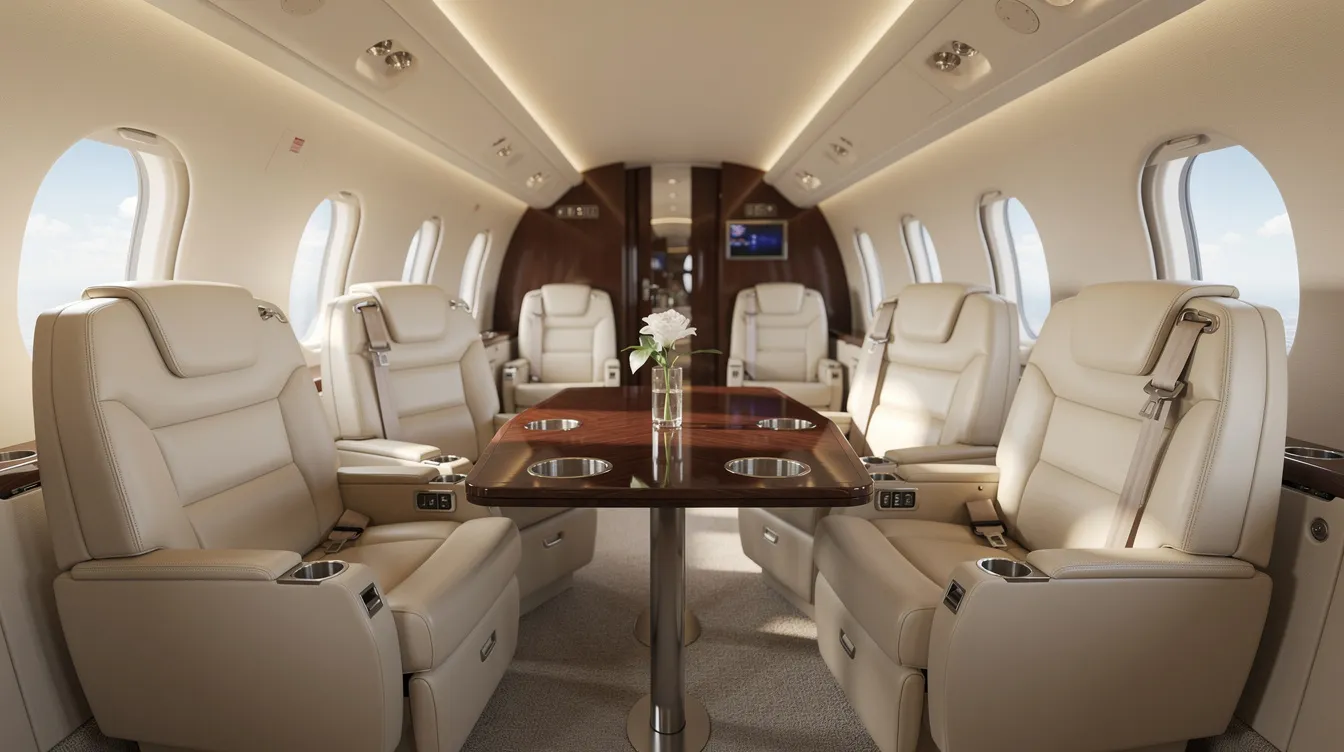
Turboprops and light jets: efficient short-haul private jet travel
Turboprops and light jets are the entry point to private jet travel, built for one-to-three-hour regional flights covering up to approximately 1,200 to 1,800 nautical miles.
Turboprop aircraft are more cost-effective for short distances compared to jets. Models like the Pilatus PC-12 and King Air B200 carry four to eight passengers with hourly rates starting at around $2,000. A one-way private flight from Dallas to Houston or New York to Boston on a turboprop typically runs $4,000 to $7,000 all-in, making these aircraft practical for short regional flights where speed is less critical than cost efficiency.
Light jets like the Cessna Citation CJ3+, Phenom 300E, and Learjet 75 step up in speed and pressurized cabin comfort. Light jet flights typically range from $2,900 to $3,500 per hour, and these aircraft carry up to eight passengers in a compact cabin with limited luggage space. A one-way charter on a light jet from Los Angeles to Las Vegas or London to Paris typically costs $8,000 to $12,000, which is the range most "weekend away" itineraries fall into.
Light jet costs are the most commonly quoted in the market because light jets form roughly 70 percent of short-haul private jet charter flights in the U.S. and Europe by volume.
Operational details that affect cost include luggage limits, possible weather routing adjustments, and the fact that short leg fees and daily minimums can make multiple very short hops disproportionately expensive per mile. If your itinerary involves three 30-minute legs in a single day, each billed at a 1.5-hour minimum, the economics shift quickly.
Midsize and super midsize jets: business workhorses
Midsize jets and super midsize jets are the backbone of business-oriented private jet charter services, balancing cabin size, range, and hourly cost for missions in the three-to-six-hour range.
Midsize jets such as the Citation XLS+, Hawker 800XP, and Learjet 60 seat seven to nine passengers with stand-up cabins or near-stand-up headroom. Midsize jets cost between $4,300 and $4,750 per hour in 2026, with ranges around 2,000 to 2,800 nautical miles. A trip from New York to Palm Beach (approximately 2.5 hours) on a midsize jet runs $15,000 to $22,000 one-way, including standard fees and taxes.
Super midsize jets like the Challenger 3500, Praetor 500, and Gulfstream G280 carry eight to ten passengers with full stand-up cabins, increased baggage capacity, and ranges of 3,000 to 3,800 nautical miles. Hourly rates fall in the $6,000 to $8,500 range. New York to Los Angeles on a super midsize jet, approximately 5.5 hours, typically quotes at $30,000 to $45,000 one-way once fees and taxes are included.
These categories are common for board meetings, investor roadshows, and family trips where passengers need space to work and rest without stepping up to heavy jet pricing. The same aircraft type works for a coast-to-coast flight or a multi-city business tour, making super midsize jets particularly flexible for corporate travel patterns.
Heavy and ultra-long-range jets: global private jet travel
Heavy jets and ultra-long-range jets serve seven-to-fifteen-passenger groups on long domestic and intercontinental routes where nonstop capability creates real-time advantages.
Heavy jets such as the Gulfstream G450, Legacy 650, and Challenger 604/605 carry up to 12 to 16 passengers with hourly rates typically $8,500 to $12,000. Heavy jet charters can cost closer to $10,000 per hour for prime airframes, with ranges of 3,500 to 4,500 nautical miles. New York to London on a heavy jet typically runs $80,000 to $110,000 one-way in 2026.
Ultra-long-range jets like the Gulfstream G600, Global 6500, and Global 7500 extend ranges to 6,000 nautical miles or more. Hourly rates sit around $10,000 to $14,000 and up. A private jet flight from Los Angeles to Hong Kong on an ultra-long-range aircraft can run $180,000 to $220,000 one-way, depending on the season and aircraft availability.
At the top end of the market, VIP airliners such as a Boeing Business Jet or ACJ320neo can charge $16,000 to $23,000 per hour. These aircraft serve heads of state, large corporate delegations, and situations where a private aircraft needs to function as a mobile office for extended missions.
For global executives and investors, per-seat economics on heavy and ultra-long-range jets can sometimes approach first or business-class commercial fares when the cabin is fully utilized. A group of 10 flying from New York to London at $100,000 works out to $10,000 per seat, which is competitive with last-minute business class commercial flights on the same route.
Key fees, taxes, and hidden costs in private jet charters
Many first-time private jet travelers underestimate the impact of taxes and ancillary fees on overall private jet rental prices. These charges can add 25 to 40 percent to the base flight price, and they vary by route, airport, and operator.
The main mandatory charges include:
A 7.5% federal excise tax (FET) on domestic flights, applied to the base transportation charge on most Part 135 private jet charter flights
Segment fees of approximately $4.50 to $5.30 per passenger per takeoff-to-landing leg on domestic segments
International head taxes for cross-border flights
Airport-related fees add up quickly. Landing fees range from $100 to $1,500 per flight depending on the airport and aircraft weight. Ramp and handling fees run $100 to $500 per stop at smaller FBOs, while premium facilities at congested hubs charge significantly more. Landing and handling fees at airports can vary significantly based on the location, with major hubs like JFK, LAX, and London Luton commanding premium rates.
Operational additions include crew overnight fees, which range from $200 to $600 per crew member for multi-day trips. Crew costs include expenses for pilot accommodation and per diems for longer trips. Hangar fees and deicing charges in winter are additional variables. Deicing fees can vary from $1,500 to $15,000 depending on aircraft size, making winter operations in northern climates meaningfully more expensive.
Repositioning fees are charged if an aircraft must fly empty to the pick-up location. Aircraft positioning fees apply when jets must travel empty, sometimes adding one or more billed hours to the invoice. Fuel surcharges react to jet fuel market conditions and can add $500 to $850 per hour, depending on the aircraft category and current pricing environment.
Private jet costs can include charges for premium in-flight catering and onboard services, international handling fees for cross-border operations, and ground transportation arrangements at either end of the trip. None of these is optional overhead for the operator; they are real costs that flow through to the total charter cost. More on FLYT’s premiums and add-ons.
Short leg fees and daily minimums
Short flights often look disproportionately expensive per mile because of daily minimums and short-leg fees. This is one of the most common sources of sticker shock for travelers new to private jet pricing.
Typical daily minimums by category:
Very light jets and light jets: 1.0 to 1.5 billable flight hours per leg
Midsize jets: approximately 2.0 hours
Heavy and ultra-long-range jets: 2.5 to 3.0 hours or more
An operator may bill a 25-minute hop, say from Teterboro to Westhampton, as 1.0 or 1.5 billable hours on a light jet to cover fixed costs that do not scale down with shorter flights. A billable flight hour carries the same rate whether the wheels are up for 20 minutes or 60.
Short leg fees help offset fuel burn during takeoffs, which is disproportionately high relative to cruise. Short leg fees also compensate for accelerated maintenance cycles driven by more frequent takeoff and landing cycles. On busy corporate shuttles or multi-stop itineraries, these fees add up.
Consider a one-day regional business tour with three short legs, each under 45 minutes of actual flight time. If each leg is billed at a 1.5-hour minimum on a light jet at $3,200 per hour, the base flight cost alone reaches $14,400 before any fees, taxes, or handling. The same aircraft flying one 2.5-hour leg would bill $8,000. The economics of short hops reward consolidation when itineraries allow it.
Federal Excise Tax, segment fees, and international charges
Within the U.S., most private jet charters under Part 135 (operated by a carrier holding an air carrier certificate from the Federal Aviation Administration) are subject to a 7.5% federal excise tax FET on the base fare. A 7.5% federal excise tax applies to all domestic flights, and segment fees of approximately $4.50 to $5.30 per passenger apply for every takeoff-to-landing leg.
On international flights to or from the U.S., an international head tax applies per passenger per arrival or departure. Routes to Alaska and Hawaii carry their own head taxes of roughly $10 per passenger. These are government-imposed charges that apply regardless of whether you book via on-demand charter, jet card, or membership.
International routes incur additional costs beyond taxes. Permit fees, overflight charges, and handling fees can range from a few hundred to several thousand dollars depending on the country, route complexity, and how much advance notice the operator has. International handling fees for complex multi-stop itineraries through Africa, the Middle East, or Asia-Pacific can run $3,000 to $8,000 or more per stop for full concierge handling.
Sophisticated travelers should always request itemized quotes that separate base flight cost, federal excise tax, segment fees, and international charges. This is the only way to compare quotes from different operators on a like-for-like basis and understand exactly where your money goes.
FLYT's pricing model emphasizes clear, line-item visibility so members understand how much each leg and jurisdiction contributes to overall private jet cost. That transparency makes budget planning possible rather than reactive. Learn about FLYT’s charter volatility protection and AI fleet engine that support pricing stability.
Private jet membership vs on-demand charter vs ownership
There are three main ways to access private jet travel: full aircraft ownership for travelers who may eventually own a private jet, fractional ownership or jet cards, and membership-based access. Each has a different economic profile, and the right choice depends on how many flight hours you fly annually and how much capital you want tied up in aviation.
Full ownership of a private aircraft means purchasing an aircraft outright, often for $8 million to $75 million or more, and then covering annual fixed costs, including crew salaries, hangar fees, insurance, and management. These fixed costs regularly exceed $1 million to $3 million per year before you fly a single hour. Choosing to own private jet capacity makes financial sense primarily for those flying 300 to 400 or more hours annually and who have a tolerance for depreciation risk and operational complexity.
Fractional ownership and traditional jet cards reduce entry cost but still require significant capital. Jet cards require a deposit of $50,000 or more for fixed rates, and fractional shares in light jets often start at $750,000 or above for a 1/16 share. These models generally become rational above 50 to 100 flight hours per year, with monthly management fees and crew standby charges layered on top.
On-demand private charter gives maximum flexibility with no upfront commitment. You pay trip-by-trip at prevailing market rates, but you are fully exposed to peak-season surcharges, repositioning costs, and aircraft availability constraints. Charter flights work well for occasional travelers, but the pricing unpredictability becomes a friction point for anyone flying regularly. Compare FLYT vs charter for a deeper dive.
Private jet membership models like FLYT occupy a middle ground: asset-light access with predictable fixed hourly rates and fleet interchange across categories, without buying or co-owning a private plane. For frequent flyers who need consistent access but want to avoid the capital and operational burden of ownership, this structure offers a fundamentally different risk and cost profile. Explore FLYT vs jet cards, FLYT vs fractional ownership, and FLYT vs brokers for context.
Where FLYT fits: predictable private aviation without ownership burden
FLYT is a membership-based private aviation service designed for frequent flyers—executives, investors, and founders—who value time and predictable costs more than the status of having their name on a tail number.
The model is straightforward. FLYT offers fixed hourly rates across a curated fleet, giving members clarity on what each hour of flying will cost before they plan their annual travel budget. That predictability eliminates the need to chase on-demand private jet charter prices that shift with demand, fuel markets, and availability. Learn more about FLYT’s pricing and platform.
FLYT operates on an asset-light, floating fleet model. Rather than tying members to the same aircraft or requiring capital investment in a specific airframe, FLYT uses a risk pool of aircraft across its network. This improves aircraft availability while avoiding the depreciation exposure and capital load of ownership. Members are not locked into a single aircraft type. See the asset-light floating fleet and risk pool concepts in action.
Fleet interchange is a core benefit. Members can book light jets for short business hops, a super midsize jet for coast-to-coast runs, and ultra-long-range aircraft for transoceanic missions, all within one membership framework. There is no need to renegotiate pricing or switch providers based on mission profile. Discover aircraft interchange advantages.
Pricing transparency and concierge-level support round out the model. There is no aggressive upselling. Members see clear visibility into any additional costs like international handling or custom catering, and FLYT's operations team actively helps optimize aircraft selection for both budget and time. Membership programs provide predictable pricing for frequent flyers, and FLYT's structure is specifically built around that principle. Learn about the FLYT advantage.
How to control and optimize your private jet travel costs
Even within a premium service like private air travel, there are practical levers to keep spending efficient and proportional to the mission.
Start with aircraft selection. Choose the smallest aircraft type that safely and comfortably serves the route and passenger count. A light jet on a 90-minute leg is far more cost-effective than defaulting to a heavy jet because the cabin looks more impressive. The hourly rate difference between a light jet and a heavy jet is often $5,000 to $8,000 per hour, which on a three-hour flight translates to $15,000 to $24,000 in savings.
Plan itineraries to minimize repositioning flights and crew overnight stays. Using efficient airports and sensible departure times reduces dead legs and keeps crews within their duty-day limits, avoiding the need for overnight hotel charges.
Sharing costs with fellow passengers reduces private flight expenses. Travel with a full cabin where appropriate to drive down per-seat cost, particularly on heavy and ultra-long-range jets used for global team or investor travel. Booking during off-peak times can lower private jet charter costs as well, since peak-date surcharges of 15 to 35 percent are common during holidays, major events, and high-demand travel windows.
A membership with fixed hourly rates, such as FLYT's, smooths pricing volatility, eliminates surprise surcharges, and supports annual travel budget planning with real precision.
Choosing the right aircraft and airports
Using regional airports near major cities often reduces both cost and total travel time. Flying into Teterboro instead of JFK, Van Nuys instead of LAX, or Centennial instead of Denver International typically lowers landing and handling fees and cuts ground transfer time. Private jets access over 5,000 airports in the U.S., far more than commercial airlines serve, which opens routing options that simply do not exist on commercial flights.
Light jets and turboprops can access many smaller airfields with shorter runways, cutting ground transportation time and sometimes offsetting slightly slower cruise speeds on shorter sectors. This advantage is particularly relevant for business travelers headed to suburban office parks, manufacturing sites, or resort destinations that are far from commercial hubs.
Ultra-long-range jets should be reserved for truly long-haul missions where nonstop range creates meaningful time and schedule advantages. Flying a Global 7500 from New York to Boston is financially irrational; flying it nonstop from New York to Dubai is exactly what it was designed for.
FLYT's advisory and concierge team can recommend optimal aircraft and routing for each trip, balancing direct costs, per-seat economics, and schedule constraints. That guidance is part of the membership value rather than an added service charge.

Is flying private worth the cost for business and leisure travel?
The question is not whether a private jet service costs more than a commercial ticket. It almost always does. The question is whether the time, control, and productivity gains justify the premium for your specific situation.
Private aviation enables access to smaller airports, direct routing to destinations that bypass commercial hubs, and same-day multi-city trips that would be impossible on commercial airline schedules. Chartering a private jet saves time by avoiding layovers, security lines, and the general friction of hub-and-spoke commercial travel. Private flights allow for direct routing to destinations, which on certain city pairs can save two to four hours per direction.
Productivity benefits are real and measurable. A private aircraft provides a functional workspace onboard where teams can review deals, discuss confidential plans, and prepare for meetings without the distractions and security concerns of commercial flights. Private jets provide a more comfortable travel experience than commercial flights, but the comfort is functional, not merely aesthetic. Private aviation enhances productivity with a functional workspace onboard that turns transit time into work time.
For certain routes and group sizes, per-passenger private jet cost approaches or occasionally undercuts last-minute business-class commercial fares. Six to ten executives on a coast-to-coast private jet flight often find the per-seat math surprisingly competitive, particularly when factoring in the value of three to five hours of additional productive time per trip.
Private jet travel ultimately serves both business and leisure travel needs. FLYT's membership structure is designed to make these efficiencies repeatable and predictable, supporting long-term business planning rather than treating private flight as a one-off indulgence.
FAQ
How much does it cost per hour to charter a private jet in 2026?
In 2026, private jet hourly rates generally range from around $2,000 to $2,500 per hour for turboprops to $10,000 to $14,000 or more per hour for ultra-long-range jets. Light jets sit in the $2,900 to $3,500 per hour band, and midsize and super midsize jets fall in the $4,300 to $8,500 per hour range. These figures cover the entire aircraft, not a per-seat price. Actual invoices run higher once taxes, airport fees, fuel surcharges, and any repositioning are included. Membership programs like FLYT provide fixed hourly rate structures so members know their cost per billable flight hour ahead of time instead of navigating fluctuating on-demand charter quotes.
Do I still have to pay federal excise tax and other fees with a membership?
Yes. U.S. federal excise tax, currently 7.5 percent on most domestic private jet travel, and per-passenger segment fees are government-imposed charges that apply regardless of whether you book via on-demand charter, jet card, or membership. What changes with membership models like FLYT is the predictability of everything else. Fixed hourly rates and clear terms minimize unexpected operator surcharges or hidden fees. Always request itemized estimates so you can separate base flying costs from taxes and third-party fees, even within a membership framework. More answers are available on the FLYT FAQ page.
When does owning a private jet make more financial sense than chartering or membership?
When does it make sense to own private jet capacity instead of using charter or membership?
Ownership typically becomes economically rational only at very high utilization levels, often 300 to 400 or more flight hours per year, when you might consider whether to own private jet capacity rather than rely on charter or membership. Even then, it requires tolerance for capital risk and residual value uncertainty. Buyers must account for acquisition cost, depreciation, financing, crew salaries, hangar fees, insurance, and both scheduled and unscheduled maintenance, which can push annual fixed costs into seven figures before flying a single hour. By contrast, FLYT-style asset-light access allows frequent flyers to secure predictable hourly rates and global fleet access without tying up tens of millions in aircraft capital.
Can I reduce private jet cost by booking one-way or empty leg flights?
One-way pricing is common on floating fleets and can be efficient when the operator does not need to immediately reposition the aircraft. Empty leg flights offer discounts of 25 to 75 percent off standard rates, but they come with significant trade-offs: fixed schedules, limited routing flexibility, and higher cancellation risk if the primary leg changes. Leg flights like these are useful opportunistically, but serious business travelers generally rely on structured solutions such as memberships for reliability, then treat empty legs as an occasional bonus when timing aligns.
How does FLYT help frequent travelers manage their annual private jet spend?
FLYT's membership-based model with fixed hourly rates allows clients to forecast annual private jet travel budgets with far more accuracy than ad hoc chartering. Members can interchange between aircraft categories—light jets for short hops, super midsize for coast-to-coast, ultra long range for transoceanic missions—within one relationship, optimizing each trip without renegotiating pricing from scratch. FLYT's concierge and operations teams actively help members choose the most cost-effective aircraft and routing for each mission, reducing unnecessary repositioning and short leg fees where possible.
The result is a private jet service that adapts to your travel patterns rather than forcing you into a one-size-fits-all structure. This flexibility, combined with predictable pricing and concierge-level support, allows members to optimize each trip for cost and convenience. By leveraging a floating fleet model, FLYT provides seamless access to a diverse range of aircraft types, ensuring the right fit for every journey without the capital commitment of ownership. This strategic approach delivers operational efficiency and global reach, making private aviation a practical, accessible tool for executives and investors focused on time and value. Contact FLYT here to learn more.
Conclusion: flying private with clarity and confidence
Understanding the full scope of private jet costs is essential for making informed travel decisions that balance efficiency, flexibility, and budget. From hourly rates to repositioning fees, taxes, and ancillary charges, the total cost of flying private in 2026 reflects a complex but navigable pricing structure. For executives and frequent flyers, membership models like FLYT offer a strategic alternative to ownership and on-demand charter, delivering predictable pricing, fleet interchange, and global access without capital burden.
By choosing the right aircraft category for each mission and leveraging concierge-level support, travelers can optimize their private aviation spend while enjoying the operational advantages of private jet travel. Explore more about private jet membership benefits, compare fractional ownership vs jet cards, and discover how FLYT’s asset-light floating fleet model transforms private flying into a smarter, more accessible experience.
Learn how FLYT approaches flexible private aviation access and see how modern private aviation can work without ownership complexity.