For executives and frequent flyers, flying private is increasingly a necessity rather than a luxury. Commercial aviation has become less predictable for executives who measure travel in opportunity cost, not ticket price. In 2025, more than one billion passengers moved through U.S. airports, while over 23% experienced delays and roughly 1.5% faced cancellations, according to AirHelp’s disruption report. For frequent flyers, the question is no longer whether private aviation is comfortable. It is whether access, time control, and predictable pricing can be structured intelligently.
This guide is designed for executives, frequent flyers, families, and discerning travelers who want to understand the benefits, process, and options for flying private in 2026.
Key takeaways
Flying private saves time, supports flexible scheduling, and gives travelers access to private flights without needing to own an aircraft.
FLYT provides private jet charter services through a membership model with fixed hourly rates and transparent pricing, avoiding ownership, fractional shares, or long-term commitments.
Members can access multiple aircraft types globally, with strong aircraft availability, concierge support, and private jet travel for both business and leisure trips.
FLYT focuses on operational efficiency, safety, and discretion rather than flashy luxury, making it relevant for executives, founders, investors, families, and discerning travelers.
This article compares membership with private jet charter, jet cards, and fractional ownership, then answers common questions about how to fly private with FLYT.

Why flying private matters for modern executives
For business travelers, the true cost of commercial flights is rarely limited to the fare. It includes security lines, crowded terminals, missed connections, delayed arrivals, and the productivity lost when a schedule is shaped by commercial airlines instead of business priorities. U.S. government data showed major carriers' on-time performance ranging from about 65% to 80% in mid-2025, with cancellations varying by airline, according to the U.S. Department of Transportation.
Private aviation changes the operating model. Private flights allow you to arrive just 15 to 20 minutes before departure, and private aviation eliminates TSA lines and crowded terminals. Private terminals allow direct boarding from the lounge to the aircraft, which means less waiting and more control over the day.
The practical value is clear on routes such as New York to Miami, London to Zurich, Dallas to Houston, or Los Angeles to San Francisco. A leader can hold a morning meeting in one city, fly directly to another, and return the same day without building a schedule around airline frequency. Custom schedules can be made for private flights; departure and arrival cities can be customized for private flights, and private aviation provides flexibility to adjust departure times when meetings move.
Flying private also protects sensitive work. Flying private offers enhanced privacy for business meetings, board discussions, investor conversations, and family travel. Private jets can save time by bypassing crowded commercial airports, and private jets allow for direct flights to more airports than commercial airlines. Private jets can access roughly 5,000 airports in the US, expanding travel options beyond commercial hubs. During major events, private jet charters can save up to 1,100% in travel time when compared with congested airport and ground routing alternatives.
FLYT is built around this operational need. Rather than asking customers to buy a plane, manage pilots, or hold a fractional share, FLYT offers membership-based access to private aviation with predictable pricing, a diverse fleet, and concierge-level support.
What it really means to fly private in 2026
To fly private means using a private jet, private charter, or charter flight instead of scheduled airline service. You generally depart from a fixed-base operator (FBO—a private aviation terminal), rather than a commercial terminal. Private jets can access over 5,000 FBOs globally, and private jet travel allows for direct access to over 60,000 routes, expanding the practical map of where a journey can begin and end.
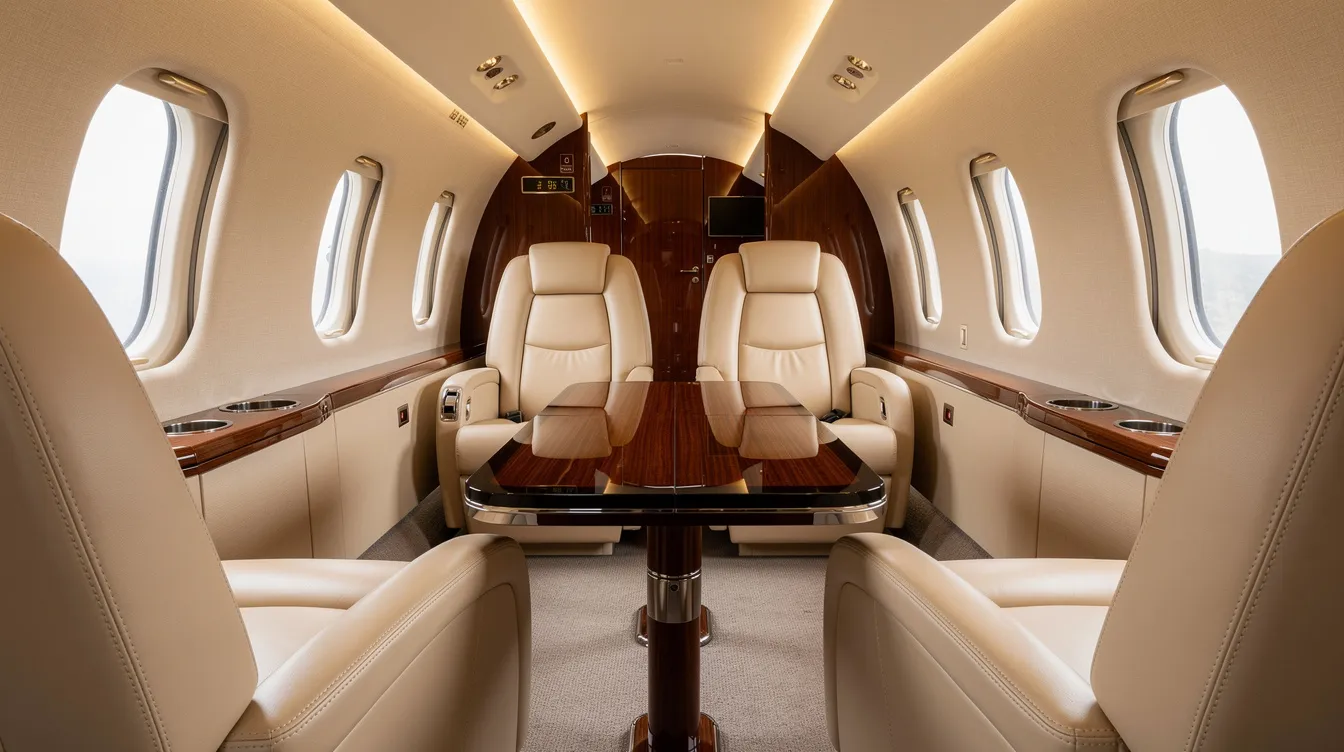
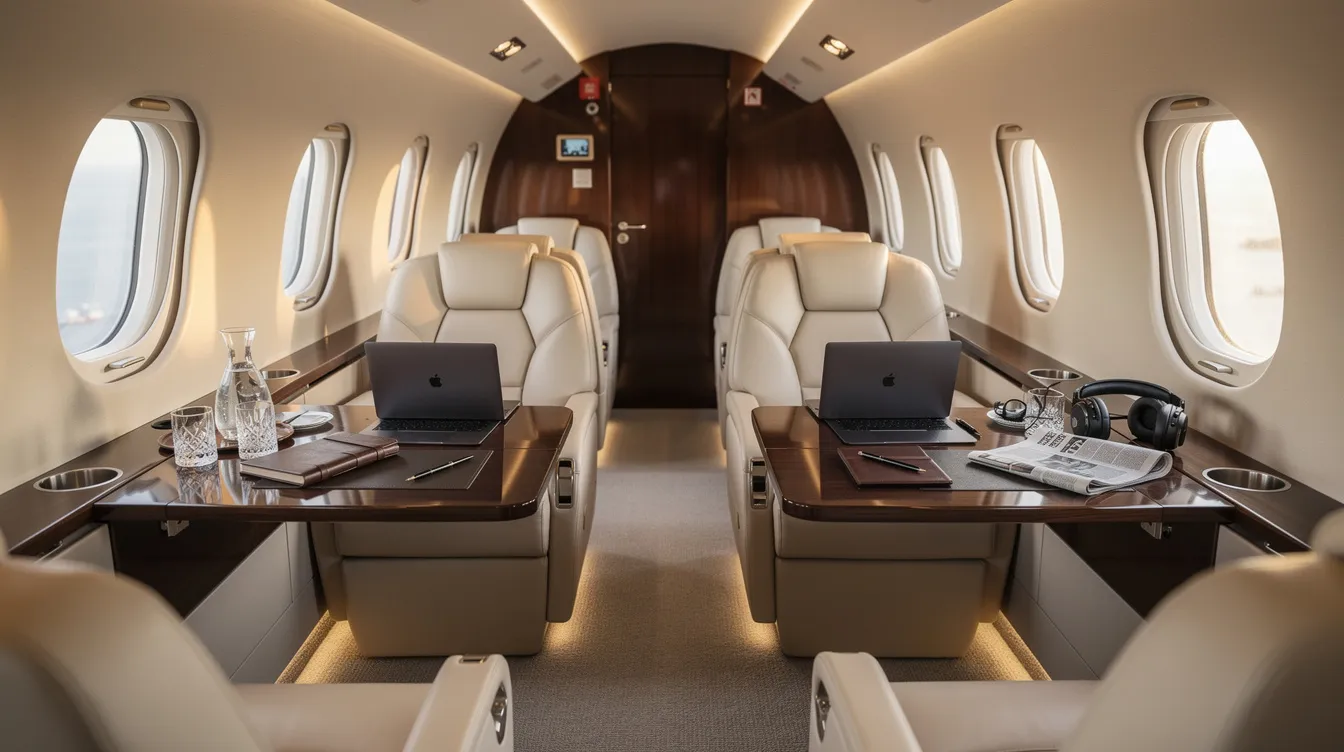
The experience is not only about having the entire aircraft to yourself. It is about designing the travel experience around the mission. Private jet travel enhances comfort with personalized services and amenities, and you have control over the cabin environment, including catering choices. Private aviation also offers stress-free pet travel with pets in the cabin, which can matter for families and customers who travel frequently between homes.
There are several ways to access private aviation. Ad hoc private jet charter works on a trip-by-trip basis. Jet cards usually involve prepaying for a block of hours. Fractional ownership means buying a share of an aircraft. Membership-based private aviation, where FLYT is positioned, focuses on access without ownership burden.
This distinction matters for travel needs that change over time. A founder may need on-demand flights for investor meetings one month, and a round trip for family travel the next. A CFO may fly between London, Geneva, and Frankfurt several times a year. A family office may need a short regional flight in summer and a long-haul jet in winter. In each case, aircraft availability, flexible scheduling, and the right aircraft types matter more than owning a single asset.
How private jet charter services work
Traditional private jet charter services are designed around a specific trip request. You provide the route, dates, passengers, luggage needs, timing, and preferences. Charter Brokers can compare global private flight options, then help search for aircraft that match the itinerary.
The normal booking process looks like this:
You request a flight from one city to another, including timing, passengers, and destination airports.
A broker or aviation expert searches available charter options and receives offers from private aviation operators.
Chartering a private flight involves selecting an operator and an aircraft based on range, cabin size, safety, and price.
Booking private flights typically involves generating a quote and making a payment before final confirmation.
After contract signing, charter flights can be booked within three hours of contract signing when aircraft, crew, and airports are available.
Several factors drive pricing. Aircraft type matters, from turboprops and light jets to midsize, heavy jet, and ultra-long-range aircraft. Flight distance, flight time, crew duty limits, overnight expenses, de-icing, landing fees, handling fees, and repositioning can all affect the final cost. The pricing for private flights usually includes fuel and crew fees, but charter costs fluctuate based on peak travel days and aircraft type.
On-demand charter is useful because it is flexible. It can accommodate last-minute travel plans with flexible scheduling, and empty legs can offer significant discounts on charter prices when an aircraft needs to reposition. The tradeoff is variability. A charter flight that looks attractive in May may be priced very differently in late December, during a major sporting event, or on a high-demand route.
That is why more frequent flyers look beyond a one-off charter. They still value access to private flights, but they also want clearer pricing, more reliable aircraft availability, and fewer surprises from trip to trip. This is where membership models like FLYT become relevant.
Aircraft types and choosing the right private jet
The right private jet is the one that fits the route, passenger count, luggage weight, airport requirements, and budget. Different aircraft sizes accommodate varying passenger numbers and luggage weights, which is why fleet flexibility is central to efficient private aviation.
Aircraft type | Typical passengers | Range (nautical miles) | Typical charter rate (per hour) | Use case |
|---|
Turboprop | Up to 9 | Short regional | Starting at $2,000 | Regional trips, smaller airports |
Light jet | 4-7 | Up to 2,000 | $4,000 - $6,000 | Short business routes, speed over range |
Midsize / Super midsize | 6-9 | Up to 3,000 | Around $7,000 | Cross-country, moderate luggage |
Heavy jet | 12-18 | 5,500 - 7,000 | $10,000+ | Long-range, larger groups |
Ultra-long-range jet | 12+ | 7,000+ | $12,000+ | Intercontinental, nonstop global access |
Turboprops are practical for shorter regional trips and smaller airports. Charter rates for turboprops start around $2,000 per hour, and the King Air 350 accommodates up to 9 passengers, making it useful for regional business or family travel where runway access and cost efficiency matter.
Light jets typically serve shorter business routes with fewer passengers. A Citation CJ3, for example, can work well for regional travel where speed is important but the cabin does not need to support a long-haul journey.
Midsize and super midsize jets add range, cabin comfort, and luggage capacity. Midsize jets typically cost around $7,000 per hour to charter, depending on the market and route. The Cessna Citation Latitude offers a range of 2,700 nautical miles, and the Citation is often considered practical for many U.S. domestic and European business missions.
Heavy jets typically accommodate 12 to 18 passengers and are suited for cross-country, transatlantic, or high-capacity missions. Aircraft such as the Gulfstream G600 or Gulfstream G650 support longer routes and larger groups. The Gulfstream G650 has a range of 7,000 nautical miles, which makes it suitable for demanding international schedules.
Ultra-long-range jets are built for intercontinental access. Ultra-long-range jets can fly over 8,000 miles non-stop, and ultra-long-range jets can cost $12,000 per hour or more. Aircraft such as the Global 6500 or Global 7500 are suited for routes like New York to London, Los Angeles to Tokyo, or other long-range destinations where stopping would reduce efficiency.
FLYT’s fleet interchange model is designed to avoid locking members into one cabin size. A member may use a smaller aircraft for a short business flight, a super midsize jet for a cross-country trip, and a heavy jet for international travel. The goal is to align each flight with the route, passengers, luggage, and cost profile rather than forcing every journey into the same plane.
Safety, standards, and private aviation regulations
Modern private aviation is subject to rigorous oversight. In the United States, FAR Part 135 governs commercial charter operations for safety, and reputable operators must meet requirements for crew training, maintenance, operational control, and documentation in line with broader private aviation industry benchmarks. Safety requires that operators hold valid Air Carrier Certificates before conducting qualifying commercial charter services.
In practical terms, this means private aviation operators are not simply providing access to an aircraft. They are responsible for pilot qualifications, maintenance schedules, operating procedures, and regulatory compliance. In Europe, EASA frameworks play a similar role, while international operations also involve local aviation rules, customs, permits, and airport requirements.
Independent safety audits add another layer of review. Standards such as ARGUS, Wyvern, and IS-BAO help evaluate operator history, pilot experience, maintenance practices, and safety management. A provider may reference ARGUS Platinum, which places operators in the top 5% for safety, or IS-BAO Stage 3, which indicates high safety standards, as part of its safety profile, though travelers should always understand what certifications apply to the specific operator and flight.
For example, Airshare is an FAA Part 145 Repair Station for safety compliance.
Aero also employs a robust Safety Management System for operations.
FLYT’s membership approach is based on aircraft access rather than self-managed ownership. Members fly on professionally managed aircraft selected through vetted operator relationships. This matters because owning a private aircraft can create responsibility for maintenance oversight, crew hiring, insurance, scheduling, regulatory compliance, and operational risk.
FLYT uses an asset-light aviation model, a floating fleet, and a risk pool model to coordinate safe, compliant access across a network of aircraft. The aim is to provide global reach while keeping the highest safety standards, aircraft suitability, and operator quality central to every trip.
Membership vs charter vs ownership: smarter ways to fly private
There is no single best way to access private aviation. The right structure depends on annual hours, route patterns, aircraft needs, capital preferences, and tolerance for operational complexity. The numbers below are examples, not binding quotes.
Fractional ownership means buying a share of an aircraft. Fractional ownership requires a capital commitment of $400,000 or more, and fractional ownership typically requires an upfront investment of $500,000 to $1.5 million for many midsize programs. It may also involve monthly management fees, occupied hourly rates, fuel adjustments, resale risk, and multi-year contracts. Fractional ownership is ideal for those flying over 100 hours annually, especially when routes and aircraft needs are predictable.
Jet cards sit between charter and ownership. Jet cards offer a flexible, pay-as-you-go model for moderate flyers, usually by prepaying for a defined number of hours. They can simplify access and pricing, but some programs include fuel surcharges, peak-day restrictions, blackout dates, or limits on guaranteed availability.
On-demand charter is the most flexible option for occasional flyers. It is often the right choice when flight volume is low or irregular. The limitation is cost predictability. On-demand charter can change materially based on aircraft supply, route, season, and repositioning.
Private jet memberships offer flexible access to aircraft without buying the asset. Private jet memberships typically have lower upfront costs than ownership, and memberships can provide unlimited flights throughout the year, depending on the provider’s structure and terms. Membership options often include concierge-level service, clearer pricing, and a platform-based way to book, manage, and track trips.
FLYT’s membership model is designed for customers who want access, not an asset burden. There is no aircraft purchase, no fractional share, and no need to manage depreciation or resale. Members can access a global fleet of aircraft through platforms and coordinated operator networks, while FLYT focuses on predictable private aviation costs, fleet interchange, and transparent service.
Inside FLYT’s approach to flying private
FLYT is a modern membership-based way to fly private, built around efficiency, transparency, and global access. It is not positioned around luxury for its own sake. It is designed for executives, families, founders, investors, and frequent flyers who want a smarter way to manage private jet travel.
At the core of FLYT’s private jet membership are fixed hourly rates across defined aircraft categories. Members do not need to buy, finance, crew, insure, or maintain a jet. Instead, FLYT focuses on providing access that aligns with actual travel patterns, whether those trips are recurring business routes, leisure destinations, or time-sensitive site visits.
The asset-light, floating fleet model is a key part of the structure. Private jets provide access to over 20,000 aircraft across the broader private aviation market, and FLYT coordinates access through vetted networks rather than tying members to one owned asset. That wider market handles tens of thousands of private flights, reinforcing the scale of access FLYT can coordinate. This approach supports a modern fleet experience and broad aircraft availability while reducing the capital intensity of ownership.
The risk pool model helps smooth demand across members, aircraft, and routes. In simple terms, it allows access to be planned across a network rather than one fixed plane. That does not remove every constraint, especially during peak demand, but it supports more flexible aircraft access and better operational planning.
Fleet interchange is another important advantage. If a short flight only requires a light jet, the member does not need to pay for excess cabin capacity. If a later journey requires a heavy jet or ultra-long-range aircraft, the membership can be structured around that need, subject to availability and terms.
FLYT also supports global private jet access across key business and leisure markets around the world, including North America, Europe, and beyond. The concierge team helps with routing, airport selection, schedule planning, in-flight preferences, and ground transportation. For discerning travelers seeking a premier choice in private aviation, FLYT’s value is the ability to combine personalized service with operational discipline.
Cost transparency and fixed hourly rates when you fly private
Private aviation pricing can be difficult to compare because one quote may include items that another excludes. A low hourly number does not always mean a lower final invoice. Repositioning, fuel adjustments, crew overnights, de-icing, airport fees, special catering, and peak demand can materially affect total cost.
A fixed hourly rate means a defined price per flight hour for a specific aircraft category. In membership models, that rate usually includes recurring operating elements such as aircraft, crew, and standard fuel assumptions, while unusual or discretionary items are disclosed separately. The important point is not that every possible cost disappears. It is important that the pricing framework is clear before you confirm a private flight.
FLYT’s approach to transparent pricing is designed to make private aviation easier to budget. Members can understand how flight hour charges are calculated, how taxi time is treated, and which surcharges may apply before they book. This helps companies, family offices, and individuals forecast aviation spend over a 12- to 36-month horizon.
By contrast, a traditional charter can still be useful but less predictable. Charter costs can move with aircraft demand, route density, crew positioning, weather, airport handling, and seasonal pressure. Fixed hourly rates create a more analytical basis for deciding whether to fly private, use commercial flights, or combine both, depending on the trip.
For many customers, this is the real benefit of membership. It turns private aviation from a series of isolated transactions into a managed travel strategy.
Planning your first private flight with FLYT
The first step is an assessment. FLYT reviews your current mix of commercial and private travel, key routes such as New York to Chicago or London to Geneva, typical passengers, luggage requirements, pets, timing constraints, and annual flight hours. This creates a practical baseline for the membership.
Next comes membership configuration. FLYT helps determine which aircraft categories fit your travel needs, how fixed hourly rates apply, and how expected usage aligns with the risk pool model. This is also where the team can compare membership against current private jet charter, jet card, or ownership costs.
Then you book a trip. The process may start with a simple request: departure city, arrival city, date, preferred departure window, number of passengers, luggage, catering, and ground transportation. The concierge team evaluates airports, aircraft types, and schedule options so the flight supports the reason for travel.
On the day of the flight, you arrive at a private terminal close to departure, move through minimal formalities, and board directly. The cabin can be prepared around your preferences, including work setup, catering, seating needs, pet travel, or family requirements. Upon arrival, the goal is a fast transition from aircraft to vehicle.
After the trip, FLYT provides clear billing and usage tracking. This allows members to review actual flying patterns, adjust future planning, and evaluate whether the membership continues to match business, family, and lifestyle requirements. To explore a more flexible approach to global private jet travel, contact FLYT before your next journey.

FAQ about flying private with FLYT
How far in advance do I need to book a private flight?
Private flights can often be arranged on short notice, but 24 to 72 hours in advance is ideal when you want preferred aircraft types, departure times, and airport options. FLYT membership supports both planned itineraries and short-notice trips, with aircraft availability managed through its floating fleet and risk pool model.
Can I change my itinerary after I have booked?
Itinerary changes are generally possible in private aviation, subject to aircraft availability, crew duty limits, airport access, and any applicable change costs. FLYT’s concierge team works with members to adjust departure times, airports, or aircraft types when plans shift, while keeping pricing impacts transparent.
Do I need to commit to a long-term contract to fly with FLYT?
FLYT operates on a membership basis rather than fractional ownership, so there is no need to purchase an aircraft share or take on multi-year asset obligations. Membership terms are designed to balance predictable access and pricing with more flexibility than typical five-year fractional ownership agreements.
Can I use different aircraft sizes for different trips?
Yes. Members can interchange across aircraft types, such as moving from a light jet for a short regional trip to a super midsize or heavy jet for longer legs, subject to the membership structure and availability. This fleet interchange is central to FLYT’s model because it helps optimize each private flight for passenger count, range, luggage, and budget.
How does FLYT handle international private flights?
FLYT supports global private aviation by coordinating suitable aircraft, customs timing, overflight permissions, airport handling, and local requirements for international routes. The concierge team also assists with documentation, customs and immigration planning, and local ground transportation so cross-border trips remain as structured as domestic private aviation services.
Conclusion: Experience smarter private aviation with FLYT
Flying private in 2026 is no longer about luxury for its own sake—it is a strategic choice grounded in efficiency, flexibility, and predictable costs. FLYT’s membership model offers a modern alternative to ownership and traditional charter by providing access to a diverse fleet through fixed hourly rates, fleet interchange, and concierge-level support. This approach removes the complexities and capital risks of owning an aircraft while delivering global reach and operational reliability.
For executives, founders, families, and frequent travelers seeking a smarter way to fly private, FLYT combines transparency, operational discipline, and personalized service. By focusing on your travel needs rather than the aircraft itself, FLYT enables you to unlock private aviation’s true value: time savings, flexible scheduling, and peace of mind.
Explore how FLYT approaches flexible private aviation access and discover a membership model designed around efficiency and transparency. To learn more, visit www.flyt.com and see how modern private aviation can work without ownership complexity.