Private jet charter pricing is one of the most misunderstood topics in premium travel. This guide breaks down exactly what drives the cost of a charter jet in 2026, from hourly rates and aircraft categories to the fees that rarely appear on rate sheets. Whether you fly 15 hours a year or 200, the numbers below will help you benchmark your options and make sharper capital decisions.
Key takeaways
Most private jet charters range from roughly $2,000 to $18,000 or more per flight hour, depending on aircraft type, flight distance, and timing. Charter jet costs generally range between $2,000 and $18,000 per hour, and charter prices range from $1,200 to $10,000 per hour on the more common domestic segments. A typical user logging 50 to 100 flight hours annually can expect to spend anywhere from the low six figures to $700,000 or more per year, depending on how often they step into larger aircraft or fly during peak demand windows.
For most travelers flying under roughly 150 hours per year, chartering a private jet or using a membership like FLYT is usually more cost-efficient than full or fractional ownership once you factor in capital outlay, maintenance reserves, crew salaries, depreciation, and hangar costs. Ownership math only starts to shift around 200 to 250 hours annually, and even then, the operational complexity and financial exposure can outweigh the savings.
The main drivers of private jet charter cost are aircraft category (turboprop versus light jet versus long-range jets), total billable flight hours including positioning legs, and applicable taxes and airport landing fees such as the 7.5% federal excise tax on domestic U.S. charter charges. Hidden fees in private jet rental often come from repositioning, minimum daily flight hours, deicing, and international handling. FLYT's fixed hourly rate membership is designed to make these costs more predictable and transparent.
The rest of this article compares on-demand private jet charters, jet card programs, fractional ownership, and FLYT's membership model with concrete dollar examples, so you can quickly benchmark your own travel profile and annual budget.
What does it cost to charter a private jet in 2026?
Private jet charter flight pricing starts with a simple concept: you pay a per-hour rate for the entire aircraft, not per seat. Private jets charge by the flight total plane cost, meaning charter jet pricing operates on a per-flight basis rather than per-passenger. Whether you bring one colleague or fill every seat, the hourly rate stays the same.
That hourly rate covers the aircraft, crew members, fuel at standard conditions, and basic insurance. Everything else - taxes, landing fees, positioning, catering, ground transportation - adds to the invoice. Here are indicative 2026 base hourly rates by aircraft category for U.S. and European operations:
Aircraft Category | Typical Hourly Rate (USD) | Passenger Capacity | Typical Range (nautical miles) |
|---|
Turboprops | $2,000–$3,500 | 4–9 | Up to 1,000 |
Very light jets | $2,500–$4,000 | 4–7 | Up to 1,200 |
Light jets | $3,500–$6,000 | 6–8 | Up to 1,500 |
Midsize jets | $4,500–$7,500 | 7–9 | Up to 2,500 |
Super midsize jets | $6,000–$9,000 | 8–10 | Up to 3,000 |
Large, heavy, and long-range jets | $8,000–$14,000+ | 8–16+ | 3,000+ |
To bring those ranges to life, here are three real-world trip examples with approximate all-in private jet charter prices:
New York to Miami round trip on a light jet (about 5–6 total flight hours): typically $25,000–$35,000 including federal excise tax and standard fees.
Los Angeles to Aspen weekend round trip on a light jet (about 4 flight hours plus mountain airport and seasonal factors): often $20,000–$30,000.
London to Dubai one-way on a long-range jet (about 7 flight hours): often $70,000–$100,000+ all-in.
It is worth noting that "billable" hours usually include positioning legs and operator minimums, so the billed flight time can exceed the time passengers actually spend on board. If you are trying to use a jet charter cost estimator or charter flight cost calculator to model annual spending, always build in a buffer of 15 to 30 percent above raw flight time.
At its core, private jet flight cost is a time-management and capital-allocation decision, not simply a luxury purchase. Executives evaluate it against the value of a lost work day, a missed meeting, or the cost of routing through a congested hub on commercial flights.
The main factors that drive private jet charter cost
While rate sheets appear straightforward - an hourly rate multiplied by flight hours - the total cost of a charter flight is shaped by several operational variables working together. Private aviation pricing is affected by factors such as fuel surcharges and landing fees, but also by aircraft size, scheduling constraints, and the distance flown on each leg.
The primary cost drivers fall into five categories:
Aircraft type and size
Total flight hours and distance
Schedule and seasonality
Aircraft positioning
Taxes, airport fees, and passenger-driven services
A sophisticated charter company or membership like FLYT manages these variables on your behalf, but understanding them helps you benchmark quotes and avoid hidden fees.
Aircraft type and size
Aircraft category is usually the single biggest determinant of your hourly rate. The jump in cost from one class to the next reflects differences in fuel burn, cabin space, range capability, crew requirements, and maintenance overhead.
Turboprops and very light jets are best for 1–4 passengers on short regional flights and short-haul flights under roughly 800–1,000 nautical miles, at the lowest hourly rate.
Light jets serve as the core workhorse for 2–7 passengers on trips up to roughly 3–4 flight hours. They balance hourly cost with enough range for most domestic flights.
Midsize jets and super midsize jets offer better cabin volume, spacious cabins, and enough range for U.S. cross-country or medium-haul flights like Western Europe to the Gulf.
Long-range jets and ultra-long-range jets (such as the Gulfstream G650/700, Global 6500, or Falcon 8X) are necessary for nonstop flights on intercontinental segments, but carry a premium hourly cost.
Stepping from a light jet to a super midsize can add $2,000–$3,000 per flight hour, but may eliminate a fuel stop and a crew overnight, sometimes making the larger aircraft more efficient for longer trips. This is why FLYT's aircraft fleet interchange allows members to move between a light jet for a 90-minute hop and a specific aircraft in the long-range category for a transatlantic leg, without changing providers or renegotiating contracts.
Flight distance, routing, and total billable hours
Most charter invoices start from a straightforward calculation: hourly rate multiplied by billable flight hours. The distance flown, winds aloft, and routing constraints determine actual flight time.
Non-stop capability matters for both cost and productivity. A mid-range routing like Chicago to San Francisco might require a super midsize jet if headwinds are strong, even if a light jet shows the range on paper. Routing constraints - avoiding certain airspace, slot restrictions at airports like London City or Teterboro - can add flight time and therefore cost.
Operator billing policies also affect the final cost. A leg with 2.3 hours of actual block time might be billed as 2.5 or 3.0 hours due to minimums or rounding policies. Some operators apply a 1.5-hour minimum for turboprops and light jets, and a 2.0-hour minimum for midsize jets and larger aircraft, even if actual time is less.
Schedule, seasonality, and peak demand
Costs can increase during peak travel times or holidays. U.S. Thanksgiving week, the Christmas-to-New Year window (roughly December 20 through January 5), major events like the Super Bowl, Art Basel Miami, and the 2026 World Cup all tighten aircraft supply and push private jet pricing upward. Industry data suggests peak-period surcharges of 15 to 35 percent above standard rates are common.
Late-night departures, requests within 24 hours of takeoff, or highly constrained time windows reduce aircraft options and lead to higher quotes. Many jet card programs impose blackout dates or higher rates on peak days, which can frustrate members who assumed their fixed rate would apply year-round.
FLYT's charter volatility protection and fixed hourly rate model are designed to reduce this kind of pricing volatility for members. Mid-week travel and flexible departure windows also help, often unlocking better rates or more efficient aircraft choices.
Aircraft positioning and empty legs
Positioning refers to the cost of flying the aircraft from its current location to your departure airport and back to base or on to its next mission. Positioning costs can apply if an aircraft is not at the departure airport. These positioning legs can add 1–4 or more billable flight hours to a trip, particularly from smaller airports or during peak periods.
Empty leg flights are the return side of this equation: flights the aircraft must operate without passengers. These can be sold at a discount - often 30 to 70 percent off the standard hourly rate - when they align with your route and timing. Empty leg flights offer discounted one-way fares, making them worth monitoring if your schedule allows flexibility.
As a practical example, a one-way Los Angeles to New York charter on a super midsize jet may be quoted around $65,000–$80,000, but an opportunistic empty leg could reduce that into the $35,000–$45,000 range.
FLYT's asset-light floating fleet and risk pool model structurally reduce deadhead positioning for members over time, stabilizing effective hourly costs.
Taxes, airport fees, and trip-specific services
Taxes and fees typically add 10 to 25 percent on top of the base charter flight cost, especially in North America and Europe. The most common U.S. line items include:
Federal excise tax (FET): a 7.5% federal excise tax applies to all domestic flights, plus per-segment passenger fees of roughly $4–$5 per person per takeoff and landing.
Airport landing fees: often $100–$1,500 per landing depending on aircraft weight and airport. Landing fees at major facilities like JFK, LAX, or Teterboro sit at the higher end.
Ramp and handling fees from FBOs: ramp and handling fees range from $100 to $500 per flight, sometimes waived with minimum fuel purchases.
International flights incur additional fees from $500 to $5,000, covering customs, immigration, overflight permits, and international fees for handling at foreign airports. Additional services like in-flight catering, Wi-Fi, deicing, crew hotels, and ground transportation all layer on as well.
Airport fees can contribute significantly to the final flight cost, which is why reputable operators and memberships like FLYT disclose these in advance so members are not surprised by extras after a trip.
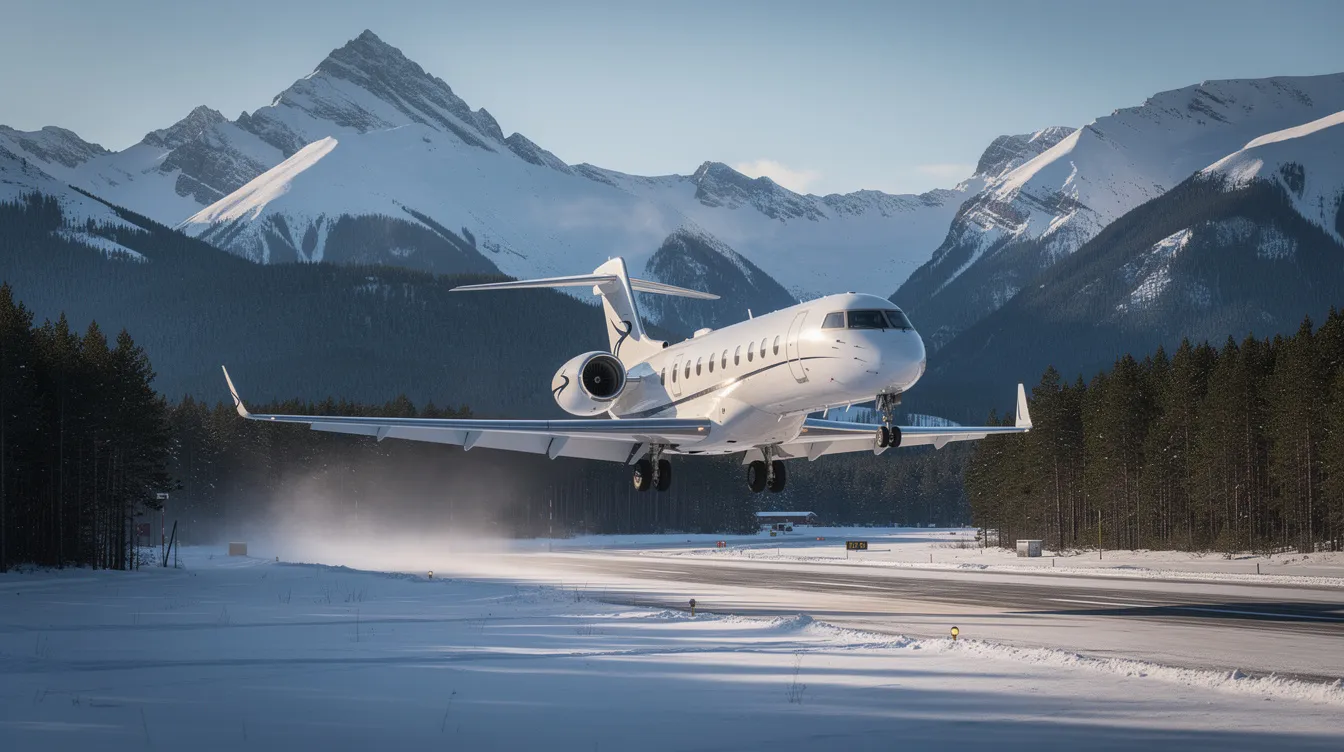
Typical private jet charter pricing by aircraft category
The following ranges are indicative 2026 numbers for North America and Europe. Exact quotes depend on route, runway requirements, season, and demand. Each category suits different mission profiles, and understanding where your travel pattern falls helps you avoid overpaying for cabin space you do not need - or underestimating what a given route actually requires.
Turboprops and very light jets
Turboprops like the King Air 350 or Pilatus PC-12 and very light jets like the HondaJet or Phenom 100 are efficient options for 2–6 passengers on trips under 500–800 nautical miles. Turboprops or very light jets cost $2,000 to $4,000 per hour, and turboprop charters start at around $2,000 per hour.
Private jets can access smaller airports closer to destinations, reducing ground travel time. This makes turboprops and very light jets especially practical for reaching factories, second homes, or smaller airports that larger aircraft cannot use.
A concrete example: a Dallas to Houston round trip same day on a turboprop might run $8,000–$12,000 all-in, depending on timing and FBO choice. For FLYT members flying many short regional hops, fleet interchange allows matching these aircraft types to the mission, reducing overall spend while retaining flexibility for occasional longer trips.
Light jets
Light jets - the Citation CJ2, CJ3, CJ4, Learjet 45, and Phenom 300E among them - form the core of many private jet charter flights for short and medium-distance travel. Light jets accommodate 6-8 passengers for short flights and handle legs of up to roughly 3 hours comfortably.
The hourly rate for a light jet in 2026 generally falls in the $3,500–$6,000 range depending on age and configuration. A Los Angeles to Aspen weekend round trip, about 4 flight hours total, is typically priced in the $20,000–$30,000 range, including applicable taxes and fees.
Light jets are often the most cost-effective category for regular business travel, which is why many FLYT members build their annual flying primarily around this aircraft size and upgrade only when the mission requires it.
Midsize and super midsize jets
Midsize jets (such as the Citation Latitude or Gulfstream G150) and super midsize jets (Challenger 3500, Praetor 500, Citation Sovereign, Citation Longitude) serve 7–10 passengers on 4–6 hour leg flights. Midsize jets typically seat 7-9 passengers for longer trips and offer a stand-up cabin with a real work environment.
Hourly rate ranges for 2026:
Midsize: about $4,500–$7,500 per hour. Midsize jets range from $4,000 to $7,000 per hour on many standard routes.
Super midsize: about $6,000–$9,000 per hour
Midsize jet costs can range from $8,000 to $14,000 for a short trip when you add positioning, taxes, and handling. A practical route like New York to Jackson Hole or Chicago to Cabo San Lucas on a super midsize jet often falls in the $55,000–$80,000 range round trip, depending on dates and overnight requirements.
These business jets often represent the sweet spot for executives who need enough cabin space for a working environment on transcontinental flights without stepping into heavy jet charter pricing.
Heavy, long-range, and ultra-long-range jets
Heavy cabin, heavy jets, and large cabin jets, along with long-range jets (Gulfstream G450, Challenger 605) and ultra-long-range jets (Gulfstream G650/700, Global 6500, Falcon 8X), serve 8–16 passengers on nonstop intercontinental segments. Ultra-long-range jets can fly up to 7,000 nautical miles, covering routes like New York to Dubai or London to Singapore without a fuel stop. On these larger aircraft, a flight attendant is typically part of the crew, and the spacious cabins can include sleeping arrangements and full galley service.
These larger-cabin aircraft cost between $8,000 and $15,000+ per hour, with newer or flagship models at the high end. Heavy jet charters can cost up to $10,000 per hour on many standard routes, though ultra-long-range and flagship configurations push well above that.
A concrete example: London to New York round trip on a long-range jet, around 12–13 flight hours total, often produces quotes in the $110,000–$170,000 band, including international fees and return flight positioning.
Global FLYT members often blend long-range jets for transoceanic legs with smaller aircraft for regional spokes, leveraging fleet interchange at fixed hourly rates across the entire trip.
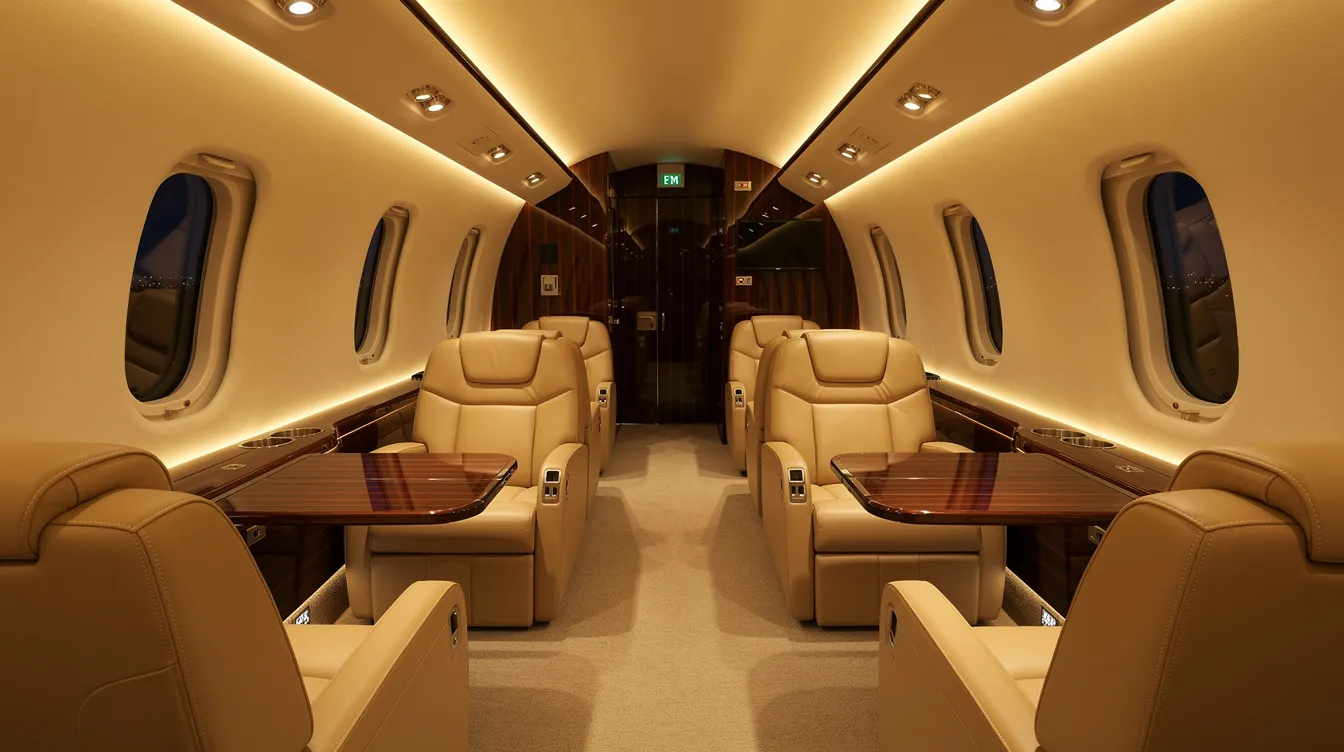
Annual cost scenarios: what different profiles really spend
Most executives and families think in annual budgets, not single flights. The scenarios below outline realistic yearly cost ranges for common usage patterns, assuming a mix of light and midsize jets unless otherwise stated, and including both the hourly rate and estimated taxes and fees to yield realistic all-in numbers.
FLYT's membership is designed primarily for travelers in the roughly 25–200 hour per year range who value predictable private jet pricing and global access.
Occasional flyer: 10–25 flight hours per year
This profile covers someone taking 3–6 leisure or ad-hoc business trips per year, mostly within one region. Think family vacations to a second home, a few board meetings in nearby cities, or short-haul flights on a private plane to avoid commercial routing headaches.
At 15–20 flight hours on a mix of turboprops and light jets, total annual charter spend might sit around $60,000–$140,000 all-in.
For this segment, on-demand charter plus ad-hoc use of empty leg flights is usually more economic than any form of ownership or long-term commitment. On-demand charters offer maximum flexibility for infrequent flyers.
FLYT can still be relevant for smaller portfolios of critical trips where cost certainty and concierge planning matter more than squeezing every dollar from occasional flying private.
Moderate private jet user: 50–100 flight hours per year
This is a common profile for founders, investment principals, and regional CEOs who rely on private jet travel to compress multi-city schedules. The private jet flight cost at this level starts to warrant structured access.
50 hours per year on a light or midsize jet at an effective blended rate of $5,000–$7,000 per hour (including taxes and fees) implies an annual flight budget of approximately $250,000–$350,000.
At 75–100 hours, that range scales to roughly $375,000–$700,000, depending on how often the flyer steps up into super midsize or long-range jets.
At this level, many travelers begin comparing:
FLYT is specifically designed for this band of usage, minimizing capital lock-up and long contracts while providing consistent private jet rental prices and global access.
Heavy user and global traveler: 150–300+ hours per year
Corporate flight departments, family offices, or ultra-high-net-worth families coordinating frequent transcontinental or intercontinental missions fall here.
150 hours at $7,000–$10,000 per blended hour equates to roughly $1.0–$1.5M per year.
250–300 hours, especially in long-range jets, often run from $2.0M upward, even before considering any dedicated aircraft ownership costs.
Ownership and fractional shares start to look potentially competitive by pure hourly cost math at this level, but still carry capital risk, depreciation, and management complexity. FLYT can complement or partially replace owned aircraft, providing overflow capacity, specialized long-range jets, or backup coverage without the fixed cost of adding another tail number.
Beyond the hourly rate: taxes, fees, and hidden costs
The nominal hourly rate is only part of what you actually pay. Sophisticated buyers focus on what is "all-in" and what is not. Hidden costs and hidden fees are not necessarily deceptive - they are simply the line items that less experienced buyers do not anticipate. Together, they can cumulatively add 15 to 30 percent or more to the base charter costs on many missions.
Federal excise tax and government charges
All domestic U.S. private jet flights are generally subject to a 7.5% federal excise tax on the transportation charge, plus per-segment passenger fees of around $4–$5 per leg per person. The FET applies to all domestic flights and is typically shown as a separate line item.
For international flights, FET does not typically apply to certain legs, but other countries impose their own passenger duties, overflight fees, and value-added taxes. International flights incur additional fees from $500 to $5,000 depending on destination and handling complexity.
Most reputable operators show applicable taxes as a separate line item but include them within the final "all-in" number they present for approval. FLYT's transparent pricing structure is designed so members see exactly how taxes are applied, rather than discovering them after the fact.
Airport, handling, and positioning costs
Standard airport-related fees include:
Landing fees vary widely, from about $100 to $1,500 or more. Major airports like JFK, LAX, or London Heathrow sit at the higher end. Airport landing fees on larger aircraft at premium facilities often exceed $1,000.
Ramp and handling fees charged by FBOs typically range from $100 to $500 per stop but are sometimes waived with minimum fuel purchases.
Overnight parking or hangar fees in winter - often $500–$1,500 per night for a larger aircraft - add up on multi-day trips, especially at snow-prone airports. Airport fees can contribute significantly to the final flight cost.
Aircraft positioning is often the highest "hidden" cost for occasional charter users. It can silently add hours to the invoice if not clearly spelled out in the trip details. FLYT's fleet strategy and risk pool model are designed to reduce unnecessary positioning, which in turn stabilizes effective hourly costs for members.
Service-related and seasonal extras
Common service-based add-ons include:
Catering: from simple snacks included in the base rate to bespoke menus ranging from $200–$2,000+ per leg. Custom catering and specialized amenities involve additional costs that scale with passenger count and menu complexity.
In-flight Wi-Fi: often included domestically, but some aircraft still bill per megabyte on international Ku-band systems, adding to additional costs.
Ground transportation: airport transfers, rental car coordination, and chauffeur services can add $200–$1,000+ per segment, depending on the city and vehicle class.
Seasonal and weather-related costs also affect the final cost:
Deicing fees can vary from $1,500 to $15,000 depending on aircraft size and storm severity.
Additional cleaning fees after pet travel or catering incidents can start at around $250.
Crew expenses may apply for overnight stays or multi-day trips. Crew overnight expenses can add $200 to $600 per crew member per night, covering hotel, meals, and local transport. These overnight expenses accumulate quickly on multi-leg itineraries.
While none of these are truly "hidden" when properly disclosed, inexperienced buyers are often surprised by how quickly they accumulate. This reinforces the value of fully transparent proposals from a charter company or membership that puts all costs on the table before departure.
Charter, jet cards, ownership, and FLYT membership: cost comparison
Hourly charter pricing is only one dimension of private jet rental cost. The structure you choose to access private jet travel - on-demand, jet card, fractional, ownership, or membership - can alter your effective hourly cost per flight hour materially.
This section compares four common models with concrete examples, then explains where FLYT's membership fits. The goal is not to oversell any single model, but to help analytically minded readers match structure to travel pattern and risk appetite.
On-demand charter
On-demand charter is a pay-as-you-go private jet rental. You request each trip, receive multiple quotes from a charter company or broker, and approve one, including aircraft type, hourly rate, and estimated fees. Every operator must hold an air carrier certificate to conduct charter operations, which is the baseline regulatory requirement.
Benefits:
Trade-offs:
For a 50-hour-per-year flyer buying purely on demand, the effective blended hourly cost often runs $5,500–$7,500 per hour, including taxes and repositioning. On-demand charters offer maximum flexibility for infrequent flyers but do not provide the cost predictability of structured access.
Jet cards and fractional ownership
Jet cards are prepaid blocks of hours - typically 25 or 50 hours - with guaranteed availability and fixed hourly rates on a given aircraft size or cabin class. Jet cards typically require a minimum deposit of $50,000 to $150,000, depending on the provider and aircraft category.
Benefits:
Key limitations:
Peak-day surcharges, blackout dates, and minimum notice requirements. Jet card programs often have stricter rules during peak travel periods.
Large upfront cash commitments that may sit unused in lower-travel years.
Fractional ownership means purchasing a share of a specific aircraft (often 1/16 or 1/8) with guaranteed hours. Fractional ownership requires a capital commitment of $400,000 or more, with monthly management fees, occupied hourly costs, and exposure to depreciation. A 1/16 share in a midsize jet might require a seven-figure upfront investment plus hundreds of thousands per year in fixed and variable costs. Fractional ownership is best for frequent flyers over 100 hours annually with very stable, predictable travel patterns.
Full ownership
Full ownership suits users with several hundred hours per year on a very specific mission profile, or corporate flight departments with highly specialized requirements.
Core cost components beyond the purchase price include:
Hangar, insurance, crew salaries and training, maintenance, engine reserves, and upgrades.
Annual fixed costs for a midsize or super midsize jet often approach $1.0M–$1.5M+ before any fuel or hourly operating costs. Volatile fuel prices add further unpredictability to the operating budget.
For most readers flying under roughly 250 hours per year, ownership usually produces a higher all-in cost per flight hour than flexible access models once depreciation and opportunity cost of capital are included.
FLYT private jet membership: fixed rates without ownership burden
FLYT is a membership-based private aviation service designed for sophisticated travelers who want predictable private jet travel costs without buying an aircraft or locking up large prepayments in jet card programs.
Core features:
Fixed hourly rates by aircraft category, so members know their cost per flight hour in advance and can model annual budgets with confidence.
Aircraft fleet interchange, allowing switching between light jets for regional trips and long-range jets for global missions without changing providers.
Asset-light floating fleet and risk pool model, which focuses on operational efficiency and reduces unnecessary repositioning.
Global private jet access with a concierge team that manages routing, permits, ground transportation, and other logistics for both domestic flights and international flights.150-hour-per-year
For a 75–150-hour-per-year flyer, FLYT aims to deliver cost predictability similar to a sophisticated jet card, but without the sunk capital and with more flexibility across aircraft types and geographies. Transparent pricing means no opaque backend markups, clear disclosure of taxes, and minimized hidden fees such as unnecessary daily minimums.
FLYT positions itself as a smarter allocation of travel capital - a way to access private aviation without the burden, risk, and operational friction of ownership, while maintaining the service standards that frequent flyers expect.
How to manage and optimize your private jet travel costs
Regardless of budget level, disciplined planning can materially reduce the effective cost per flight hour without compromising safety or experience. Here are practical strategies:
Consolidate trips and reduce unnecessary repositioning. Combining two day trips into a single overnight can cut total positioning and crew costs by 20 to 30 percent on some itineraries.
Choose the right aircraft size for each mission. Flying a heavy jet on a 90-minute hop wastes capital. Fleet interchange through a membership lets you right-size every leg.
Be flexible on departure windows and secondary airports. Booking during off-peak times can lower private jet costs, and flexibility in travel dates can lead to better pricing options. Departing from a secondary field instead of a congested hub often reduces landing fees and handling charges.
Understand and negotiate minimums, daily caps, and cancellation terms. These contractual details quietly influence total cost across an annual flying portfolio.
Use a membership or structured program when you cross roughly 25–50 hours per year. At that threshold, the predictability and reduced friction typically outweigh the premium over pure on-demand pricing.
Consider one-way charters where possible. Booking one-way charters can save money if the aircraft is available nearby, avoiding the cost of a return flight positioning leg.
Watch for group charters on popular routes. When multiple travelers share a private jet flight, the per-person economics of flying private can shift meaningfully.
As a practical example, a FLYT member consolidating a Monday New York meeting and a Tuesday Boston meeting into one overnight trip - rather than two separate day charters - might save $8,000–$12,000 in repositioning and crew costs alone, plus reclaim a full business day.
FAQ
Is it cheaper to charter a private jet or fly first class?
Per-seat, first class on major airlines is almost always cheaper than a private jet charter for a solo traveler on trunk routes like New York to London or Los Angeles to New York. However, private jet travel starts to look cost-competitive when 4–8 passengers are traveling together between secondary cities, or when the schedule would otherwise require overnight stays, lost workdays, or premium last-minute airline fares. Group economy for charter jets can be similar to or less than first-class commercial tickets when the full party's costs are considered. The real return often comes from time saved: private jets provide significant time savings compared to commercial flights, and executives evaluate total trip value rather than raw ticket price.
How far in advance should I book to get better charter pricing?
Booking 7–14 days in advance generally offers a good balance between aircraft choice and price in most markets. Ultra-last-minute bookings within 24–48 hours can still be arranged but may limit options and increase costs, especially around weekends and peak seasons. FLYT members benefit from a dedicated team that can monitor demand and suggest optimal departure windows or airports to keep charter flight costs efficient.
Can I reduce costs by sharing a private jet flight with other travelers?
Traditional charter pricing assumes one party controls the whole aircraft and pays the full cost regardless of how many seats are filled. Sharing costs with fellow passengers reduces private jet expenses, and some platforms experiment with seat-sharing or shuttle services on popular nonstop flight routes. FLYT is designed for clients who value control over timing, routing, and privacy. Members can invite guests and split costs privately, but FLYT does not convert your private jet charter flight into a public shuttle.
What happens to my price if the flight takes longer than planned?
In standard charter contracts, if flight time exceeds the original estimate due to rerouting, weather, or ATC delays, the billable flight hours usually increase at the contracted hourly rate. Some providers offer capped or "not to exceed" pricing on specific domestic programs, but this is not universal. With FLYT, members have clear hourly rates and contract terms, and the operations team plans routings conservatively to limit surprises and communicates updated cost implications promptly if a significant route change becomes necessary.
Are private jet charter costs tax-deductible for business travel?
In many jurisdictions, charter costs for bona fide business travel can be deductible as a corporate expense, but tax treatment is highly fact-specific and subject to evolving regulations. Consult your tax advisor regarding deductibility, SIFL rules in the U.S., and any personal use implications. FLYT provides transparent invoicing with clear breakdowns of the fuel surcharge, landing fees, and additional services that make accounting easier, but does not provide tax advice or determine deductibility.
Explore how FLYT's membership model delivers fixed hourly rates and fleet flexibility without ownership complexity. For more details, visit the FLYT FAQ or contact us to discuss your private aviation needs.
Conclusion: Smarter private jet access with FLYT
Understanding the true cost of chartering a private jet is essential for executives and frequent travelers seeking to optimize their travel budgets without sacrificing flexibility or service quality. The hourly rates are just the starting point; taxes, fees, positioning, and seasonal factors all influence the final price. For most travelers flying under 150 hours annually, chartering or membership models provide a more efficient and predictable alternative to ownership.
FLYT offers a modern, membership-based approach that combines fixed hourly rates, global fleet interchange, and concierge-level support to deliver private aviation without the capital burden or operational complexity of owning an aircraft. Its asset-light floating fleet and risk pool model reduce hidden costs like repositioning, while transparent pricing ensures members know exactly what to expect.
By choosing FLYT, sophisticated travelers gain access to a flexible, efficient, and globally connected private jet experience designed around their needs—not the traditional ownership model. Explore how FLYT can transform your private aviation strategy with smarter, more predictable access to private jets worldwide.
Discover more at FLYT.com.