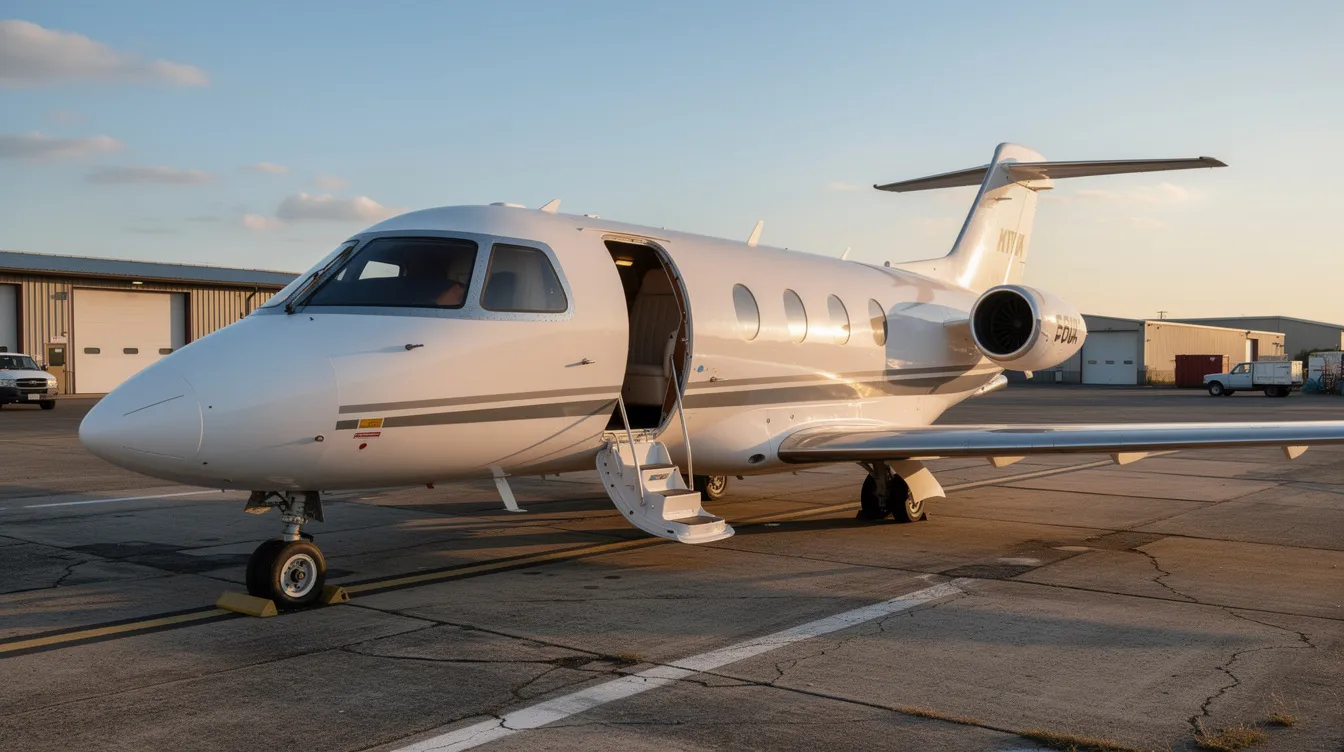
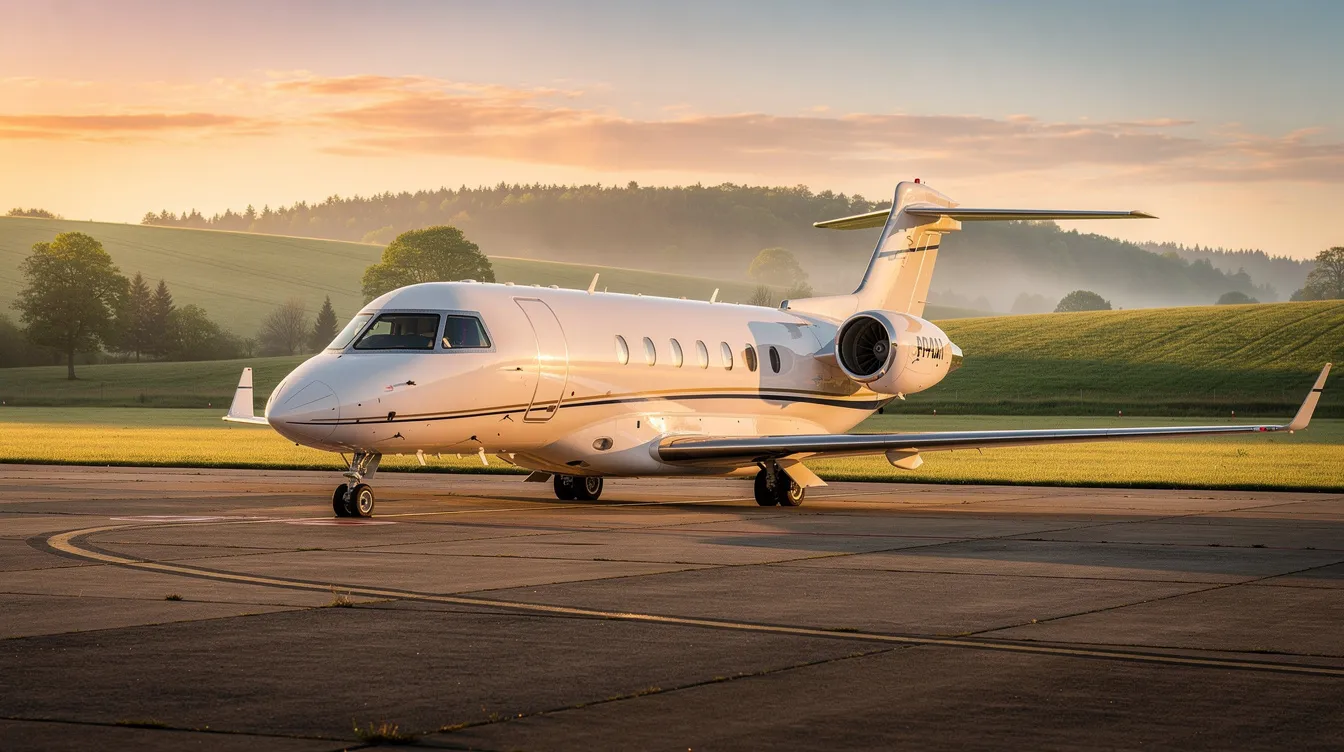
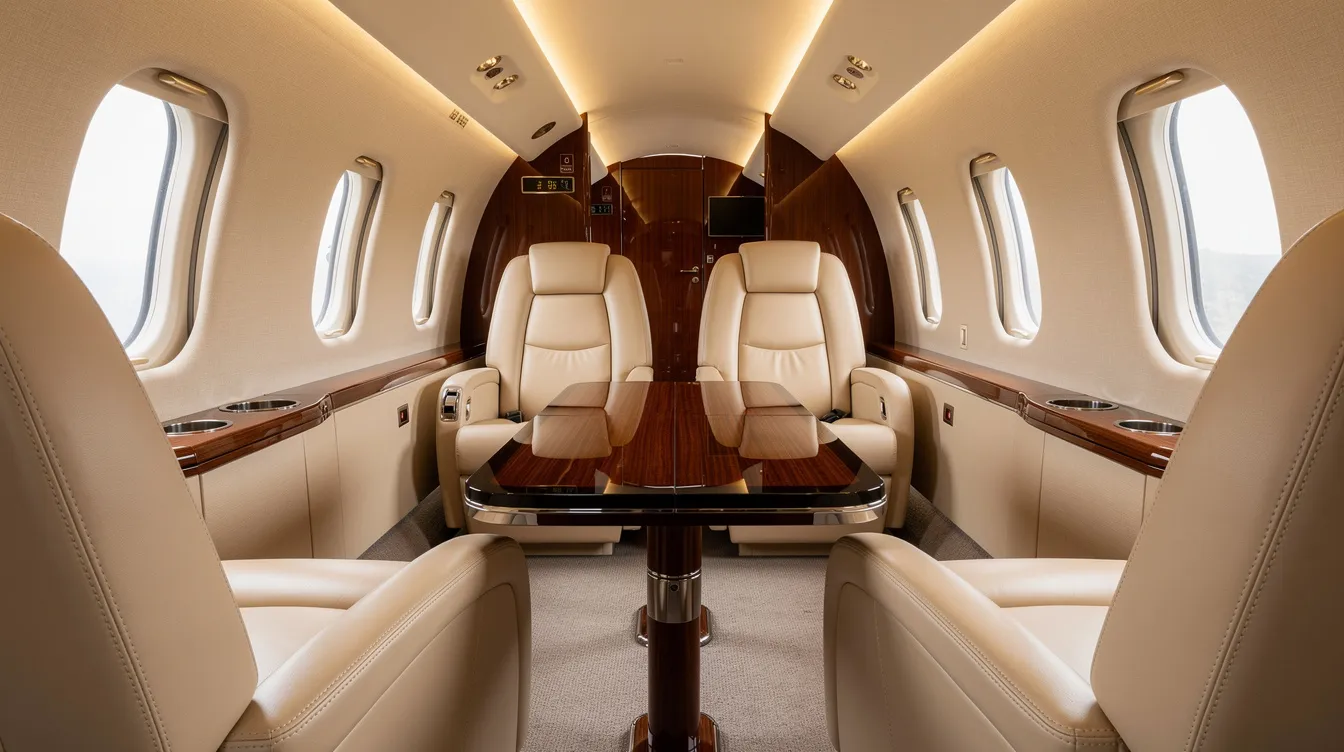
Private aviation has not returned to its pre-2020 baseline. Global business aviation departures reached about 3.5 million in 2025, up more than 6% year over year, according to FlyVolo’s 2025 business aviation data. The growth is not only about demand for comfort. It reflects a deeper operational shift: executives, founders, family offices, and boards are placing more value on time, routing control, and certainty.
That changes the meaning of a cheap private jet. For a buyer, “cheap” may mean finding an entry-level aircraft such as a used Cirrus Vision Jet or an older Eclipse-style very light jet. For a flyer, it usually means reducing the total cost of access through charter, membership, empty legs, shared flights, and better aircraft matching.
The numbers matter. Entry-level jet acquisition can begin around $1 million to $2 million in the used market, while newer very light jets and light jets can move quickly into the multi-million-dollar range. Typical charter rates start around $2,000 to $3,000 per hour for turboprops and very light jets, with midsize, super-midsize, and heavy aircraft costing more.
The most financially disciplined private flyers rarely optimize for the lowest sticker price on an airframe. They optimize for private jet pricing that matches actual usage. FLYT was built around that premise: membership-based private aviation with fixed hourly rates, global reach, concierge support, and access without ownership complexity. Learn more about how FLYT works.
Key takeaways
A cheap private jet is rarely just the lowest-cost aircraft to buy. In 2026, it usually means using smarter access models: private jet charter, membership, empty leg flights, and fleet interchange.
Very light jets are the most economical option for private jet travel, with entry-level aircraft often discussed from around $2 million to buy, while charter and membership access can begin in the low four figures per flight hour.
Empty legs can reduce pricing by 30–75% on selected routes, especially when travelers are flexible with timing, departure date, and routing.
FLYT’s membership model is designed around fixed hourly rates, predictable pricing, global access, and aircraft flexibility rather than the capital burden of owning a private plane.
The right choice depends on mission profile: flight hours per year, passengers, route length, luggage, airports, and whether the trip is domestic, regional, or international.

Ownership vs access: why “cheap” often means not owning the jet
A cheap private jet can become expensive quickly when it sits on your balance sheet. The aircraft purchase is only the beginning. Crew, insurance, hangarage, maintenance reserves, avionics, inspections, and downtime all change the equation.
Here are the main models to understand.
Full ownership
Full ownership gives maximum control, but also maximum responsibility. Acquisition cost can start around $2 million for entry-level jets such as the Cirrus Vision Jet, while a light jet such as a Cessna Citation CJ3+ can exceed $8 million. Owning a private jet can exceed $1 million in annual costs once crew, insurance, maintenance, hangar, management, training, and unscheduled repairs are included. Even a lower-cost aircraft still needs professional oversight, a pilot, compliance support, and capital reserves.
Fractional ownership and traditional jet cards
Fractional ownership means buying an equity share in an aircraft program. Fractional ownership requires a $400,000 investment for 100 hours annually in some entry-level examples, and larger shares can require much more. Traditional jet cards offer fixed hourly rates starting from $50,000 deposits, and jet cards require a minimum deposit of $50,000 to $150,000 in many programs. These models can work, but they often involve 3–5-year commitments, peak-day rules, aircraft category restrictions, and less flexibility than many frequent flyers expect.
Membership and charter access
Chartering avoids maintenance, crew, and insurance costs of ownership. With private charter or membership, there is no single tail number on your balance sheet and no residual value exposure. Private jet membership offers flexible access to aircraft, while membership models provide predictable pricing without ownership costs. Membership programs allow for lower commitments compared to ownership, and membership programs can provide discounted rates for private travel when routing, fleet access, and utilization are managed well.
FLYT’s model is asset-light, leveraging a floating fleet rather than tying capital to a single aircraft. This matters because a route for two passengers on shorter flights may need a very light jet, while a team trip may need a midsize private jet or larger aircraft. The goal is not ownership pride. It is lower total cost, better aircraft fit, and less operational friction. Discover the FLYT advantage.

The cheapest private jets to own: very light and light jets
Some aircraft are widely recognized as lower-cost entry points into ownership. They are affordable aircraft relative to the broader market, but they are not cost-free assets. They still require management, inspections, insurance, training, and careful resale planning.
Aircraft model | Approximate purchase price | Seating capacity | Range (nautical miles) | Notes |
|---|
Cirrus Vision Jet SF50 | $2 million | 7 | 1,150 | Single-engine, parachute system, best for short regional missions |
Cessna Citation Mustang | $1.5M - $2.5M (used) | 4 | ~1,000 | Iconic very light jet, ideal for small groups and short trips |
Embraer Phenom 100 | $4.5 million (new) | 4 | 1,178 | Light jet, efficient with a comfortable cabin |
Embraer Phenom 300 | $9-10 million | 6-8 | 2,010 | Larger light jet, combines speed and cabin comfort |
Cessna Citation CJ3+ | $8.3 million | 7-9 | 2,040 | Popular light jet balancing cost and capability |
Cessna Citation XLS+ | $13 million | 9 | 2,100 | Midsize jet, versatile for short and long-haul flights |
Embraer Legacy 650E | $25.9 million | 12-13 | 3,900 | Heavy jet, spacious cabin, suitable for long international flights |
Note: Prices and specifications are approximate and can vary by year, configuration, and market conditions.
The lesson is simple: cheap to buy is not the same as cheap to operate. An older aircraft with a low purchase price can still create tens of thousands in unexpected maintenance exposure, and sometimes much more.
Cheap to fly, not just cheap to buy: understanding operating costs
The cost of flying private is driven by more than the aircraft sticker price. Private jet charter costs vary based on flight distance and aircraft type, and private jet charter rates vary based on aircraft type and distance. The same principle applies to ownership.
Key operating cost drivers include:
Fuel
Fuel is often the highest direct cost. Smaller jets may burn far less than midsize or heavy aircraft, but fuel cost still changes with route, altitude, weight, and airport choice.
Maintenance reserves and engine programs
Maintenance reserves cover future inspections, parts, labor, engine events, and lifecycle items. A very light jet like a Vision Jet or Citation Mustang may have direct operating costs under $1,200 per hour in favorable scenarios, while a midsize jet such as a Citation XLS+ or Learjet 45XR can commonly run $2,500 to $3,500 per hour before broader ownership costs.
Crew, insurance, and hangarage
Fixed costs do not disappear when the aircraft is unused. Crew salaries, insurance, hangar or parking, recurrent training, navigation databases, and management fees continue.
Airport, navigation, and tax costs
Landing fees, handling fees, navigation charges, and taxes add up. Federal Excise Tax is 7.5% on all domestic flights within the US. International flights may involve VAT, customs handling, overflight fees, and destination-specific charges.
Heavy checks and upgrades
Older jets can look inexpensive until a major inspection, avionics mandate, engine event, or cabin refresh arrives. A dated aircraft may need expensive work before it can deliver the private flight experience the owner expects.
A two-hour private jet flight can range from $8,000 to $37,000 depending on aircraft size, route, positioning, and service requirements. That is why cost-effective private air travel depends on matching the aircraft type to the mission rather than assuming the smallest jet is always best.
For many executives flying under 150–200 flight hours per year, membership or on-demand charter with fixed hourly rates often produces a lower and more predictable total cost than owning even the cheapest private jet outright.
Charter, empty legs, and membership: how to fly private for less
If the objective is cheap private jet travel, optimizing how you book matters as much as what you fly. The aviation industry offers several access paths, each with different economics.
Standard on-demand charter
A standard charter flight is priced around route, aircraft type, flight time, positioning, taxes, crew costs, and extras. Charter rates for turboprops start around $2,000 per hour. Very light jets and light jets often sit above that, while heavy jet charters can cost closer to $10,000 per hour.
Empty leg flights
Empty leg flights are repositioning sectors that would otherwise operate without passengers. Empty leg flights offer significant discounts on private jet charters, often reducing costs by 30–75% compared to standard charters, according to industry examples. Costs can be reduced by up to 75% using specific strategies for private jet travel, especially when travelers can adapt to the available route and timing.
Flexible booking strategies
Flexibility with scheduling can reveal cheaper rates for private flights. Booking in advance usually secures better deals for private flights, particularly around peak holidays and major events. Booking private jets midweek can lead to lower prices because demand is often lower. Booking two one-way trips is often cheaper than a round trip when aircraft positioning works in your favor. Sharing costs with fellow passengers reduces private jet expenses, especially when the aircraft is full.
Brokers and membership platforms
Brokers can access a vast network of aircraft and operators. That can be useful, but pricing and service consistency vary. FLYT adds structure through membership, fixed hourly pricing, concierge support, and curated access. The aim is to make private flights more predictable while preserving flexibility. See the comparison of FLYT vs charter, FLYT vs jet cards, and FLYT vs fractional ownership for more insight.
For example, an empty leg between New York and Miami on a light jet such as a Cessna Citation or Embraer Phenom may price materially below a bespoke round trip. A London to Geneva repositioning sector may do the same. These leg flights can be valuable, but they are opportunistic. They are best used as part of a broader travel planning strategy, not as the only access model.
Choosing the right aircraft type for “cheap” missions
The cheapest aircraft is the one that fits the mission without waste. Choosing too small can create payload or range issues. Choosing too large means paying for capability you do not need.
Turboprops for regional efficiency
Turboprops offer a cost-effective entry point into private travel. Aircraft such as the King Air, Beechcraft King Air, and Pilatus PC-12 are strong for shorter flights, regional airports, shorter runways, and routes where excellent runway performance matters more than maximum speed. They can be ideal for 3–8 passengers on regional sectors.
Very light jets for short business trips
Very light jets work best for 2–4 passengers on sub-800 to 1,000 nautical miles missions. They are useful when flying between different airports that are poorly connected by airlines. Using smaller regional airports can lower costs and reduce ground time.
Light jets for the best balance
Light jets such as the Citation CJ3+ and Phenom 300 often become the best cheap private jet choice for 4–8 passengers flying 1,000 to 2,000 nautical miles. They offer better speed, more baggage space, a more comfortable cabin, and greater dispatch utility than many VLJs without reaching midsize costs.
Midsize and super-midsize jets for longer sectors
A midsize private jet or super-midsize aircraft can make sense when passengers, luggage, weather, or range require it. Aircraft such as the Citation XLS+, Sovereign+, Legacy 450/500, or Bombardier Challenger platforms may have higher hourly rates, but they can lower the cost per seat-mile when fully utilized.
Heavy aircraft for long-range missions
Large jets and heavy aircraft are not usually “cheap,” but they can be efficient for board travel, international flights, and intercontinental sectors where the ability to fly nonstop matters. A larger aircraft may also be necessary for 12 or more passengers, more space, and long-range baggage requirements.
The practical rule is to start with route, passenger count, luggage, airport access, and required arrival time. Then select the aircraft. Not the other way around.
How FLYT makes private jet travel more cost-efficient
FLYT approaches private aviation as an access problem, not an ownership trophy. Private jet memberships cater to frequent flyers and high-net-worth individuals who need reliability, discretion, and flexibility without tying capital to one private plane.
Here is how the model supports lower effective cost:
Membership-based access
FLYT members gain access to a vetted global fleet through an asset-light, floating model. This means providing access without requiring a jet purchase, an equity share, or exposure to a single aircraft’s downtime. Learn about our asset-light floating fleet and risk pool model.
Fixed hourly rates
Fixed hourly rates help executives budget private travel with greater confidence. Instead of facing opaque repositioning markups, seasonal spikes, or inconsistent private jet charter rates, members can plan around a clearer hourly structure. See our transparent pricing.
Fleet interchange
Fleet interchange allows FLYT to match aircraft size to mission. A short trip with two people may call for a VLJ or turboprop. A team movement may call for light jets. A board trip may require a midsize or larger aircraft. This reduces the waste of flying too many aircraft for the route. Learn more about aircraft interchange and our AI fleet engine.
Floating fleet efficiency
A floating fleet can reduce unnecessary repositioning. It also gives the concierge team more options when aligning aircraft, crew, airport, and itinerary. Discover our platform.
Concierge support
Travel arrangements often fail in the details: luggage, pets, catering, ground transport, FBO selection, wifi needs, and last-minute schedule shifts. FLYT’s concierge support is designed to simplify the booking process and reduce friction.
Risk pool model
FLYT’s risk pool model spreads operational exposure across access rather than concentrating it in one owned aircraft. That helps members avoid the single-tail risk of maintenance downtime or residual value changes. Explore our charter volatility protection.
This is not complete luxury for its own sake. It is a practical way to plan your next journey with fewer ownership obligations and better operational control. See our premium experience without complexity.
Booking process: from quote to wheels up
A modern private flight should be practical to arrange. The booking process through a platform such as FLYT is designed to be clear from the first request to wheels up. Learn more about FLYT’s how it works.
Submit the trip request
A member shares the departure date, preferred times, origin, destination, passengers, luggage, pets, catering needs, and any ground transport requirements through the platform or concierge team.
Review aircraft options
FLYT recommends aircraft based on mission efficiency. A short domestic flight may be best served by a Cirrus-class VLJ. A regional team trip may use a Cessna Citation or an Embraer Phenom. A longer route may require a midsize aircraft.
Receive transparent pricing
Pricing is presented using fixed hourly rates multiplied by estimated flight time, plus clear applicable line items such as taxes or optional services. The objective is to avoid hidden repositioning surprises.
Confirm operator and itinerary
Once approved, FLYT coordinates with a vetted operator, confirms aircraft, crew, routing, and safety requirements, and shares the itinerary. Safety review may include operator credentials, audit standards, aircraft status, and crew readiness.
Arrive shortly before departure
On the day of flying, members usually arrive at the FBO 15–20 minutes before departure. Boarding is direct. If plans change, concierge support helps adjust the return flight where aircraft and crew availability allow.
When buying still makes sense—and when it doesn’t
Buying can make sense. If you fly 300–400+ predictable annual hours on similar routes, with consistent passenger loads and strong residual value expectations, ownership or fractional shares may compete economically with membership or charter.
But many travelers do not fly that way. Executives and families often fly 50–250 hours annually across changing destinations, passenger counts, and trip lengths. In that scenario, flexible membership usually aligns better with cost, aircraft fit, and risk.
Buyers also underestimate hidden ownership items:
Major inspections are due every few years
Avionics and cabin refresh cycles
Regulatory changes
Management company fees
Pilot hiring and training
Resale timing
Downtime when the aircraft is unavailable
The lowest purchase price is not the same as the lowest total cost. In private aviation, “cheap” is about structuring access around actual usage. That is the problem FLYT is designed to solve.
FAQ
Is the Cirrus Vision Jet really the cheapest private jet, and should I buy one?
The Cirrus Vision Jet is often cited as one of the cheapest new private jet options, with entry-level references around $2 million to $2.5 million and newer models often higher. It has low direct operating costs, seats seven, and suits specific short-range missions.
That does not make it the right purchase for every traveler. Insurance, hangar, training, maintenance, depreciation, and opportunity cost still apply. If you fly fewer than about 150–200 hours per year, membership or charter access will often be cheaper and more flexible than buying even a Vision Jet.
Vision Jet ownership tends to suit experienced owner-operators or highly consistent mission profiles. Business travelers and families often benefit more from multi-aircraft access through FLYT. Find more answers in our FAQ.
How far in advance should I book to get the best private jet pricing?
Booking 7–14 days ahead usually gives better aircraft choice and better pricing, especially around Christmas, New Year, school holidays, major sporting events, and peak leisure periods.
Empty legs may appear only 24–72 hours before departure, so they reward flexibility rather than early planning. FLYT members can plan recurring board meetings, seasonal family travel, or a long weekend itinerary in advance while keeping the ability to make tactical changes closer to departure.
Can I really fly private for less than business class on commercial airlines?
On a per-seat basis, commercial business class is usually cheaper. But flying private can become comparable on full short- to mid-range aircraft, especially when time savings, hotel nights, missed meetings, and ground transfers are included.
For example, 6–8 executives flying a same-day return between secondary cities may find that a light jet on a fixed hourly rate competes with multiple business class tickets, extra transfers, and an overnight stay. The value often comes from productivity, confidentiality, and visiting multiple sites in one day.
What is the difference between empty leg flights and standard charter?
Standard charter is built around your route and schedule. Pricing reflects the full operating cost, positioning, taxes, crew, airport fees, and any extras.
An empty leg is a repositioning flight that the aircraft must operate anyway, such as returning from Zurich to London after dropping off another client. Empty legs are cheaper because the operator is recovering revenue from a flight that would otherwise be empty.
The trade-off is flexibility. Empty legs are usually one-way, harder to change, and may be retimed or canceled if the original charter changes.
How does FLYT differ from a traditional jet card or fractional ownership program?
Traditional jet cards often require large upfront deposits, peak-day rules, and restrictions by aircraft category. Fractional ownership involves buying an equity share in a specific program and accepting longer commitments.
FLYT is an asset-light, membership-based model. Members do not buy a tail number. They access a floating fleet, fixed hourly rates, concierge support, and aircraft interchange across categories.
The structure is designed for travelers who value predictable pricing, flexible aircraft access, global reach, and less balance-sheet complexity. Learn more about FLYT vs brokers, jet cards, and fractional ownership.

Conclusion
A cheap private jet is not necessarily the one with the lowest acquisition price. It is the access model that gives you the right aircraft, at the right time, with the lowest practical total cost and the least operational drag.
For some travelers, that may be ownership. For many frequent flyers, it is a smarter mix of membership, charter, fleet interchange, shared flights, and occasional empty legs.
FLYT was built for that modern private aviation buyer: someone who values time, transparency, flexibility, and efficient capital allocation. Explore a membership model designed around predictable private jet access without ownership complexity. For inquiries, contact us.