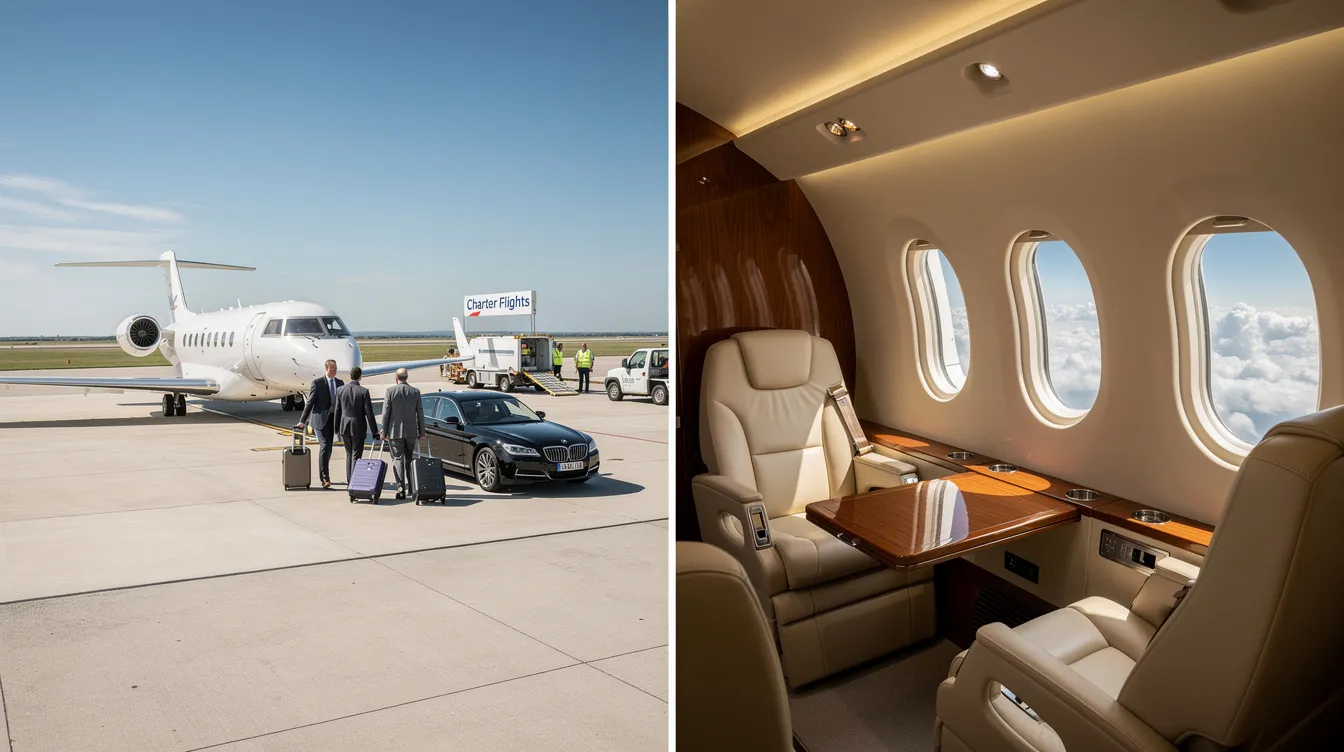
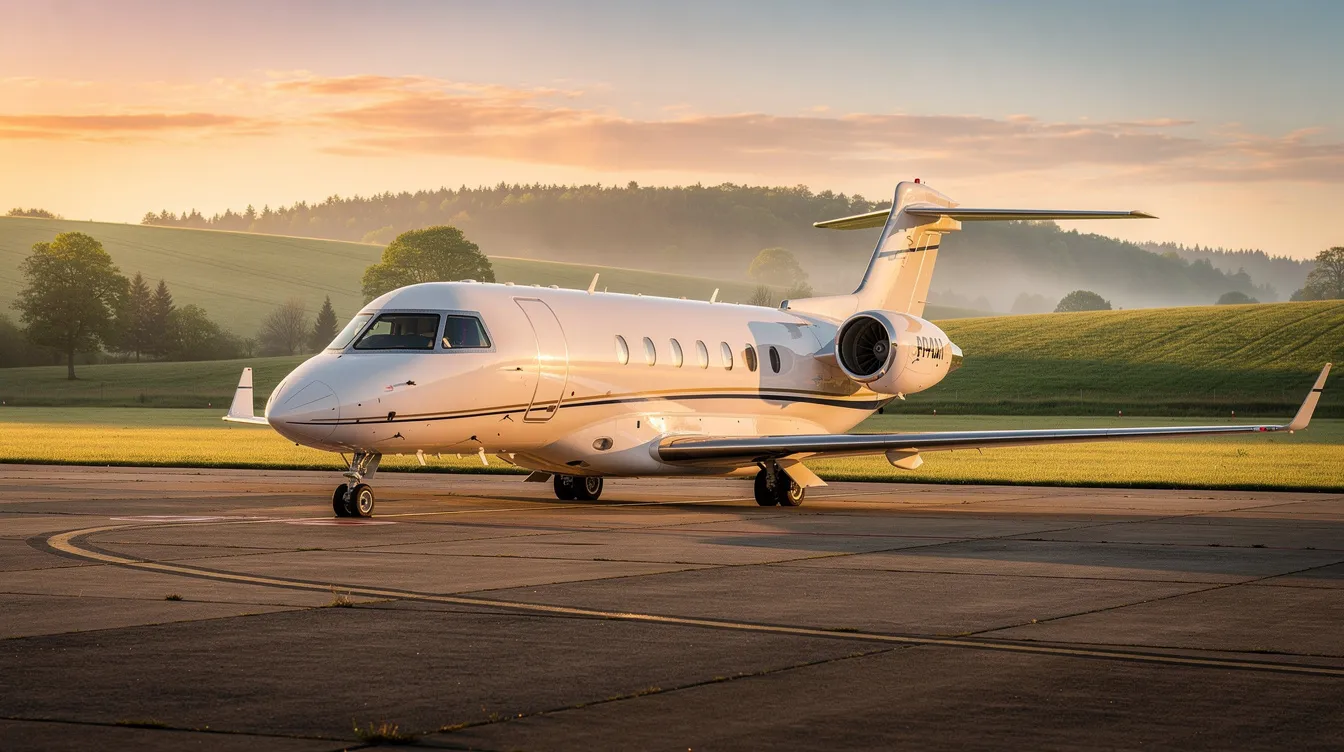
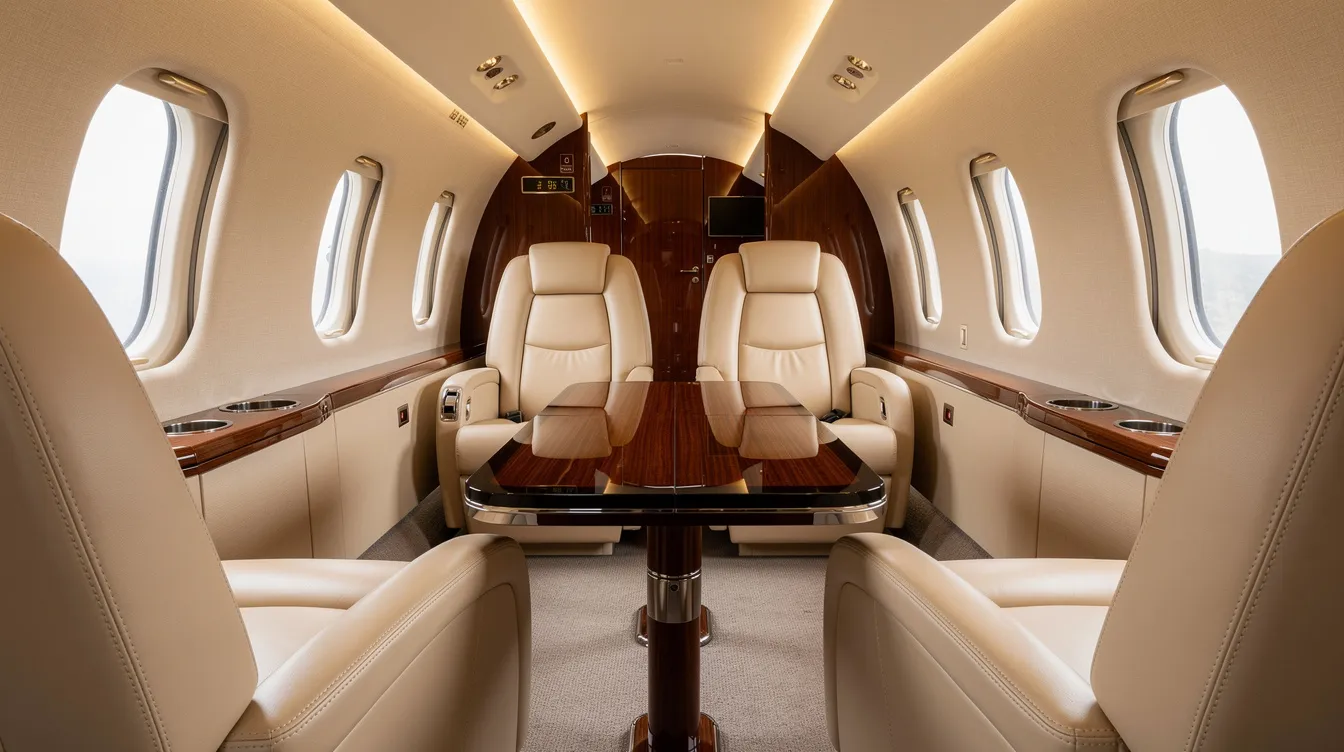
Are you an executive, frequent traveler, or family considering the advantages of private aviation? This comprehensive guide is designed to help you understand the essentials of chartering flights, from how private jet charters work to the benefits of membership-based access. Whether you’re seeking greater flexibility, efficiency, or control over your travel experience, this resource will walk you through the key considerations, pricing structures, aircraft selection, and the unique advantages of flying private with FLYT.
By understanding the ins and outs of chartering flights, you can make informed decisions that optimize your travel time, enhance convenience, and provide a tailored journey for business or leisure.
Key Takeaways
Charter flights are non-scheduled flights where clients hire the entire aircraft for a specific route, date, and time, giving travelers more control than scheduled flights.
Executives and frequent travelers use private aviation to control departure timing, use more airports, and choose the right aircraft for routes such as New York to Aspen or London to Geneva.
FLYT offers membership-based access to charter flights with fixed hourly rates, global access to private jets, and no aircraft ownership burden.
For many travelers flying 25–150 hours per year, private jet membership can be a more efficient capital decision than buying a jet or entering fractional ownership.
This guide explains charter pricing, aircraft type selection, flight time, and how FLYT simplifies global private jet charter through fleet interchange and concierge support.
What is a charter flight?
A charter flight is a non-scheduled air service where an individual, company, or group hires an aircraft for a specific route, date, and departure time. Unlike commercial air travel, which depends on published timetables, fixed routes, and a scheduled departure set by an airline, chartering flights gives clients control over the trip from the start.
In a private charter, the customer typically controls the departure airport, destination, flight details, passenger list, and, in many cases, the aircraft type. That might mean a private jet from New York to Aspen for a winter weekend, a light jet from London to Geneva for a board meeting, or a larger plane for multi-city business travel.
Charter flights can be one-off trips, recurring business routes, seasonal leisure travel services, or group movements. Private jets save significant time compared to commercial flights because travelers can skip long security lines, avoid hub connections, and often check in just 15 minutes before departure.
Private jets also provide access to over 60,000 routes worldwide, far beyond commercial airline networks. This extensive access, combined with the ability to use smaller regional airports closer to final destinations, offers travelers a strategic advantage. For example, landing closer to a factory, resort, or family home can reduce total travel time even when the flight itself is not much shorter.
Additionally, charter flights typically allow more luggage than commercial airlines, accommodating items like skis, golf bags, and pets, provided these are disclosed early.
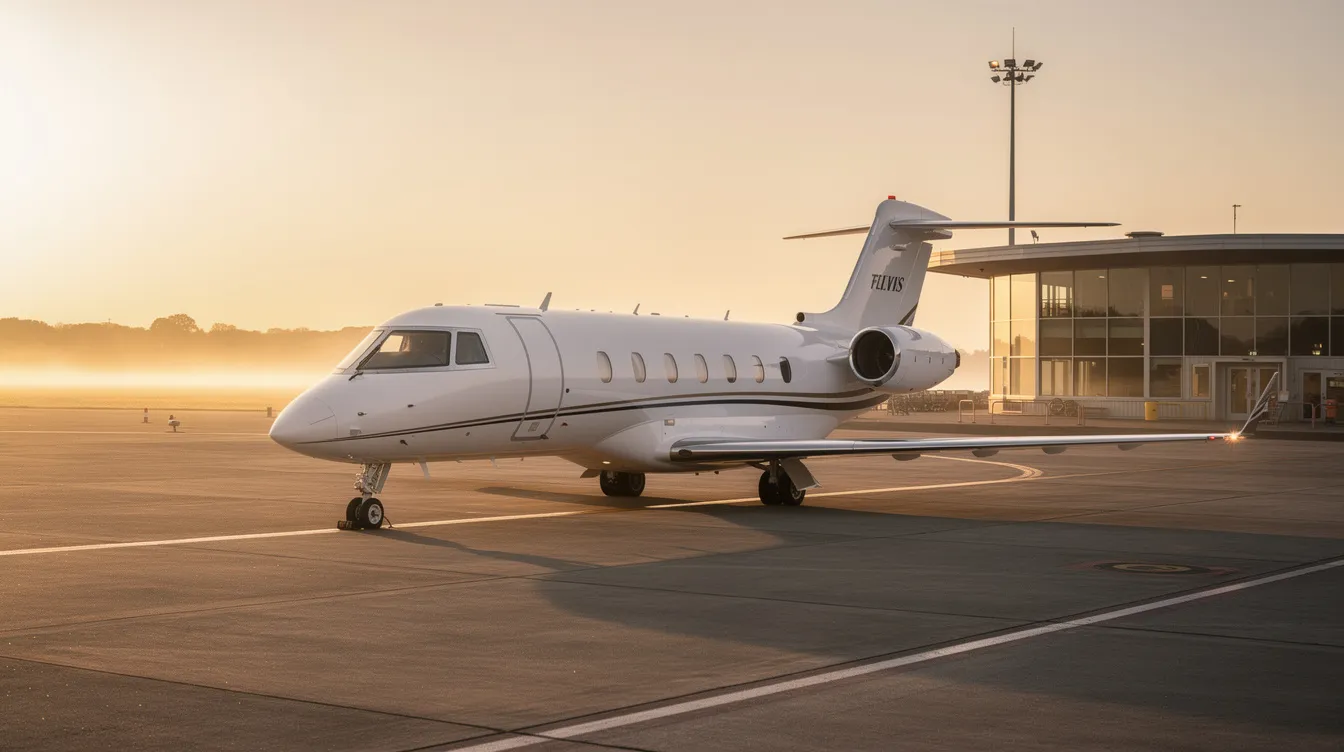
Types of charter flights
“Charter” is an umbrella term. It can refer to public charters, affinity charters, event-related flights, single-entity charters, and private jet charters for executives or families.
Public charters are usually arranged by a company or tour operator that hires an aircraft and sells tickets to the public. These services are common for seasonal destinations, resort routes, and event travel where scheduled airline capacity is limited.
Special event tours may combine flights with access to conferences, festivals, major sports events, or hospitality packages. Affinity charters are similar but limited to a club, association, or member group where passengers pay individually.
Single-entity charters are different. One organization hires the entire aircraft and does not sell individual seats. Sports teams, film productions, corporate groups, and government delegations often use this structure.
Private jet charter for executives and families usually fits the single-entity model. One client controls the private plane, itinerary, passengers, and journey. Depending on the mission, the aircraft may be a turboprop, light jet, midsize jet, heavy jet, or even VIP airliners for larger groups.
Charter flights vs flying private with ownership, jet cards, and membership
The core decision in private aviation is not simply whether to fly private. It is how to access aircraft: full ownership, fractional ownership, jet card programs, on-demand charter, or a membership model like FLYT.
Full ownership gives maximum control over a specific aircraft, but it also brings major capital exposure. A private jet can cost millions to acquire, and ownership includes crew, insurance, maintenance, hangar, fuel, compliance, and depreciation. Ownership is typically easier to justify at high annual utilization, often above roughly 150–200 flight hours per year.
Fractional ownership reduces the capital burden, but it still requires buying a share of a specific aircraft or program fleet. Contracts are often multi-year, with monthly management fees and hourly charges. Fleet interchange may exist, but it can be less flexible than a membership built around variable travel needs. Learn more about the differences between fractional ownership and membership.
Jet card programs pre-sell blocks of hours at set rates, usually by category. They can improve predictability, but clients should review peak-day rules, blackout periods, cancellation terms, fuel surcharges, and whether discounted empty leg flights or one-way pricing policies are included. Compare FLYT vs jet cards to understand the benefits of a membership approach.
Pure on-demand charter prices each flight individually. This can work well for occasional private flights, but cost can fluctuate with demand, aircraft availability, weather conditions, positioning, airport constraints, and the charter operator’s schedule. See how FLYT compares to traditional charter and brokers for a more predictable experience.
FLYT’s membership-based private charter model is designed around access without ownership burden. Members receive fixed hourly rates, flexible aircraft access, fleet interchange across categories, and support from aviation experts. Membership programs provide predictable pricing without ownership costs, and private jet memberships typically require lower upfront costs than ownership. Explore more about FLYT’s membership benefits.
For frequent flyers in the 25–150-hour range, this can be a smarter capital allocation. Membership models are becoming preferred over traditional ownership because they provide access, flexibility, and cost efficiency without tying capital to one airplane. Discover how FLYT’s asset-light floating fleet and risk pool model support this flexibility.
Choosing the right aircraft type for your charter flight
Aircraft type determines passenger capacity, range, runway requirements, luggage capacity, flight time, and hourly cost. Choosing the right aircraft is an operational decision, not a cosmetic one.
Light jets are suitable for roughly 4–7 passengers and can travel distances up to 1,500 miles before refueling. They work well for routes such as New York to Chicago, Dallas to Denver, or London to Milan, where speed, privacy, and cost discipline matter.
A midsize jet typically carries 7–9 passengers and has a range of about 2,450 miles. Midsize and super-midsize aircraft are useful for longer domestic flights, larger cabins, more luggage, and routes such as New York to Dallas or London to the Eastern Mediterranean.
Large-cabin and ultra-long-range private jets are appropriate when nonstop range, cabin comfort, and international capability matter. Heavy jets typically accommodate 12 to 18 passengers and can fly non-stop for over 8,000 miles in some configurations. The Gulfstream G650, an ultra-long-range business jet, can fly up to 7,000 nautical miles non-stop.
Turboprops are cost-efficient for distances of 600 to 1,000 miles. They are often the right aircraft for shorter regional routes where runway length, airport proximity, and operating cost are more important than cruise speed.
Before booking, confirm the aircraft's range and runway requirements, especially for mountain airports, island destinations, and short airfields. Chartering a jet offers more luggage space than commercial flights, but skis, golf bags, pets, and oversized equipment should still be disclosed early.
FLYT members can use fleet interchange to move between turboprop, light jet, midsize jet, and larger aircraft trip by trip. That flexibility helps match the specific aircraft to the mission instead of forcing every journey onto the same tail number.
Aircraft type comparison
Aircraft Type | Passenger Capacity | Typical Range (miles) | Typical Cruise Speed (mph) | Ideal Use Cases | Estimated Hourly Rate |
|---|
Turboprop | 6–9 | 600–1,000 | 220–315 | Short regional trips, cost-efficient access | Starting around $2,000 |
Light Jet | 4–7 | Up to 1,500 | 400–480 | Short to medium routes, speed, and privacy | $3,000–$5,000 |
Midsize Jet | 7–9 | Around 2,450 | 450–500 | Longer domestic, moderate luggage capacity | $5,000–$7,000 |
Large/Heavy Jet | 12–18 | 5,000–8,000+ | 500+ | International flights, large groups | $7,000–$10,000+ |
Rates vary by operator, region, and specific aircraft model.

How charter flight pricing and flight time really work
Flight time is the core driver of private aviation pricing, but it is not the only factor. Billable flight time includes air time and repositioning fees when an aircraft must move to your departure airport or return after your trip.
Many operators also apply daily minimums, often around two flight hours per day. This matters on short legs, multi-day itineraries, and one-way trips where the aircraft cannot be efficiently reused.
Major cost components include:
Aircraft hourly rate
Crew costs
Fuel
Landing and handling fees
Catering, de-icing, overnight crew expenses, and international handling where applicable
Base prices for private flights may not include catering and additional fees. Charter rates typically range from $1,200 to $10,000 per hour, depending on aircraft type and distance, although larger long-range jets can exceed that range in certain markets. Hourly rates for turboprops start around $2,000, while a 1.5-hour flight on a midsize jet can cost approximately $34,500 depending on availability, routing, and included fees.
Private jet hourly rates vary by aircraft type and distance. A 1.5-hour regional flight on a light jet will usually be priced differently from the same route on a midsize aircraft because fuel burn, crew, cabin size, and operator economics differ.
FLYT’s fixed hourly rates reduce uncertainty compared with ad hoc quotes that rise and fall with market demand. Transparent pricing by category helps clients forecast annual private aviation budgets more accurately. Learn more about FLYT pricing and how the AI fleet engine supports efficient aircraft matching.
When a private charter makes sense for business and family travel
A private charter makes sense when time, routing, privacy, and control have measurable value. Private jets save up to 75% of travel time compared to commercial flights by reducing airport dwell time and eliminating many connections.
For business, chartering a private jet allows for direct flights to multiple destinations in one day. Executives can visit two facilities, attend a board meeting, and return home without waiting on commercial schedules. Private jets enhance productivity by allowing work during flights, with cabins suited for calls, document review, and confidential discussions.
Private aviation also improves leisure travel. Families use charter flights for school holidays, ski trips, island destinations, pet travel, and multi-generational groups. Private aviation enhances flexibility for business and leisure travel because the itinerary is built around the traveler, not the carrier.
Private jets provide access to over 15,000 airports worldwide. Private flights can access smaller regional airports closer to final destinations, and private charters can access thousands of airfields that commercial airlines cannot serve. This airport access can change the economics of a day, allowing travelers to land closer to their final destination.
Inside the experience of flying private on a charter flight
The experience of flying private is intentionally simple. Travelers can check in just 15 minutes before departure on private jets, and private jets allow check-in just 15 minutes before departure at many private terminals. This shorter arrival window is one of the clearest benefits over commercial air travel.
Most departures use private terminals, also known as Fixed Base Operators (FBOs). These facilities offer quieter lounges, direct ramp access, expedited handling, and customs support where applicable. Chartering flights allows travelers to skip long security lines while still operating within required safety and identity procedures.
In the cabin, clients can request catering, Wi-Fi, seating preferences, and work-friendly layouts. The privacy of a private jet supports sensitive conversations, negotiation preparation, and rest between meetings.
There is also operational flexibility. If all passengers arrive early and air traffic permits, takeoff may be moved forward. Passenger lists can sometimes be adjusted, and travel plans can be refined as the day evolves.
Concierge support is often included in membership-based private aviation services. With FLYT, concierge teams help align ground transport, hotel arrivals, meeting schedules, flight status updates, and special requests around the charter flight. Learn more about the FLYT platform and concierge services.

How FLYT’s membership-based private jet charter works
FLYT is a membership-based private aviation platform providing access to private jet charter without requiring members to own a jet or enter a long-term fractional contract. The model is built for clients who value access, transparency, and operational efficiency. Learn more about how FLYT works.
Fixed hourly rates by aircraft category help members understand cost before confirming a trip. This reduces the uncertainty that can appear in an ad hoc charter, especially during peak demand periods.
Fleet interchange is central to the model. A member might use a turboprop for a short regional hop, a light jet for a two-hour business route, a midsize jet for a family trip with more luggage, and heavy jets for international travel.
FLYT uses a floating, asset-light fleet model supported by a risk pool of aircraft rather than tying each member to a single plane. This approach improves flexibility, supports broader availability, and reduces the inefficiencies that come with owning one specific aircraft for every mission. Learn more about FLYT’s asset-light floating fleet and risk pool models.
Private jet memberships allow access to thousands of aircraft globally, and there are approximately 15,000 business jets available for charter worldwide. FLYT combines global network reach with concierge support to help clients plan flights across North America, Europe, and other major business and leisure markets.
Safety and compliance remain foundational. In the United States, operators hold a valid FAA Air Carrier or Part 135 Certificate for safety, and direct air carriers must meet applicable operational standards under FAA Part 135. FLYT works within this regulated operating environment while simplifying access for members.
How to book a charter flight through a membership model
Booking a charter flight should feel more like managing a calendar than negotiating a one-off transaction. The booking process typically involves four simple stages: request, aircraft matching, confirmation, and fly.
A member submits the route, date, preferred departure time, passenger count, luggage needs, and any service preferences. The request may include details such as cabin layout, Wi-Fi requirements, catering, pets, or ground transportation.
FLYT then helps identify the right aircraft based on range, runway requirements, passenger count, and travel needs. Instant pricing is available for over 20,000 aircraft globally in parts of the modern private aviation market, but the real value is matching the quote to the operational details of the mission.
Once the itinerary is confirmed, the flight time cost is calculated using the member’s fixed hourly rate, along with any clearly itemized fees. The operations and concierge teams monitor aircraft positioning, weather, airport conditions, flight status, and timing before and during travel.
A dedicated account manager can also support booking. Private jet charters can be booked via dedicated account managers, which is useful for complex travel, recurring business routes, international documentation, and multi-leg flights. If a route opens in a new window of availability or an aircraft becomes better positioned, the team can review options without asking the client to restart the search.
For frequent travelers, this structure turns private aviation into a managed service rather than a series of isolated transactions. Explore how FLYT can structure annual private aviation usage around predictable pricing, global access, and flexible aircraft access.
FAQ
How far in advance should I book a private charter flight?
For routine business trips, booking 3–7 days ahead typically creates the best balance of aircraft choice, pricing clarity, and schedule flexibility. Last-minute flights can often be arranged within 24 hours, but aircraft type and departure slots may be more limited during peak demand.
For Christmas week, New Year’s, major sporting events, school holidays, and high-demand leisure destinations, book earlier. This gives the operator more time to secure the right aircraft, crew, airport slots, and handling arrangements.
Can I change my itinerary after I’ve confirmed a charter flight?
Yes, one benefit of flying private is the ability to adjust departure times, passenger lists, and sometimes routing. Changes remain subject to aircraft availability, crew duty limits, airport restrictions, weather conditions, and revised flight details.
If a change increases flight time, creates a repositioning requirement, or changes landing permissions, the cost may change. Communicate updates as early as possible to preserve flexibility.
What identification and documents do I need for a private jet charter?
For domestic flights within a country such as the United States, each passenger generally needs a government-issued photo ID. For international private flights, passengers need valid passports and any required visas, entry permits, or travel authorizations.
Requirements can vary by destination. Concierge support can help review documents, but travelers remain responsible for having the correct paperwork before departure.
Are pets allowed on private charter flights?
Many private jets can accommodate pets in the cabin, making charter practical for dogs, cats, and family travel. Requirements vary by country and route, and documentation may include vaccination records, microchip details, health certificates, or pet passports.
Inform the operator or membership concierge during booking so the aircraft, cabin preparation, and arrival requirements can be handled correctly.
How do I estimate how many private flying hours I need per year?
List your expected annual routes, estimate the average flight time for each leg, and multiply by trip frequency. For example, recurring New York–Miami, London–Zurich, or Los Angeles–Las Vegas legs can quickly reveal whether you are likely to fly 25, 50, 100, or more hours per year.
Include positioning, contingency time, and seasonal travel. This estimate helps determine whether a membership-based charter through FLYT is more efficient than an ad hoc charter, traditional jet card programs, fractional ownership, or buying a private plane.
For additional questions, visit the FLYT FAQ or contact us for personalized assistance.
Conclusion
Chartering flights through a membership-based platform like FLYT offers a strategic, efficient alternative to traditional private jet ownership or ad hoc chartering. By providing fixed hourly rates, flexible aircraft access, fleet interchange, and global reach, FLYT delivers predictable private aviation costs without the complexity and capital commitment of owning an aircraft. Executives, entrepreneurs, and frequent travelers benefit from concierge-level support and operational efficiency that align travel with business and lifestyle demands.
To explore how FLYT’s innovative membership model can transform your private aviation experience, visit www.flyt.com and discover a smarter way to fly private, without the ownership burden.