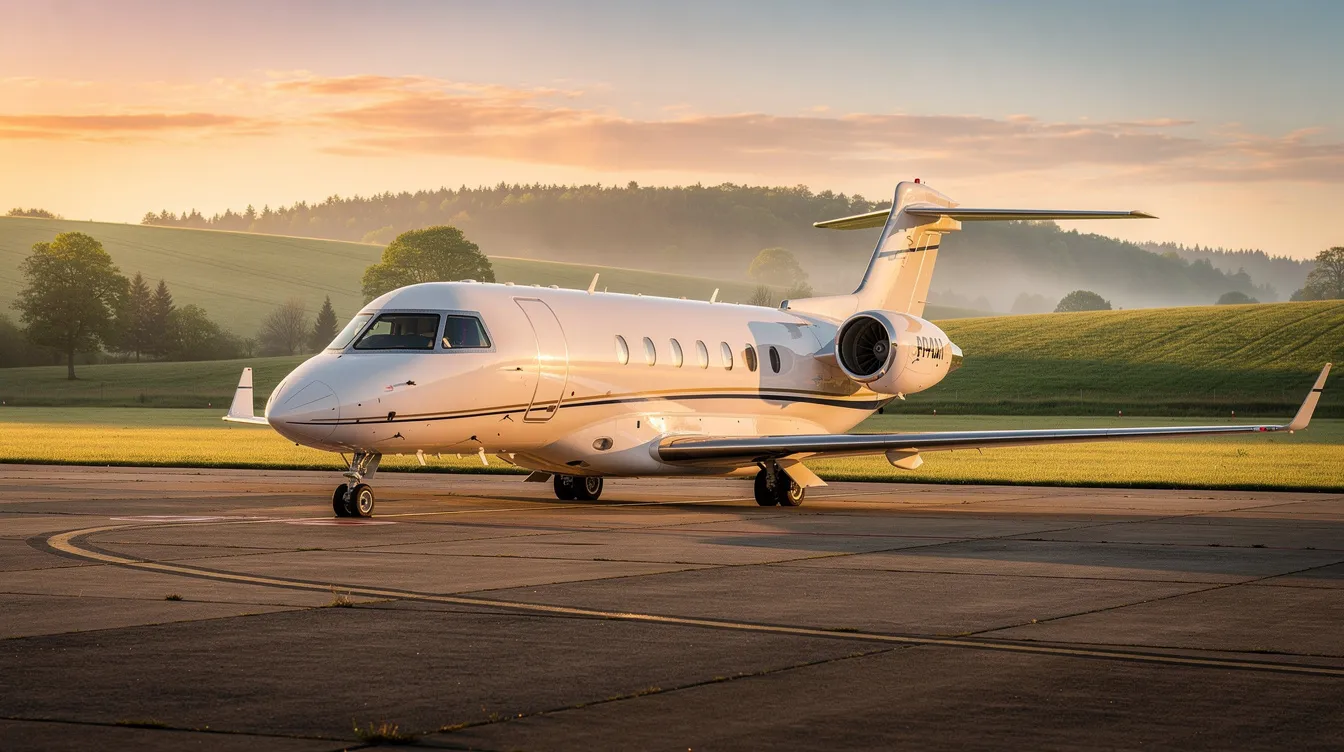
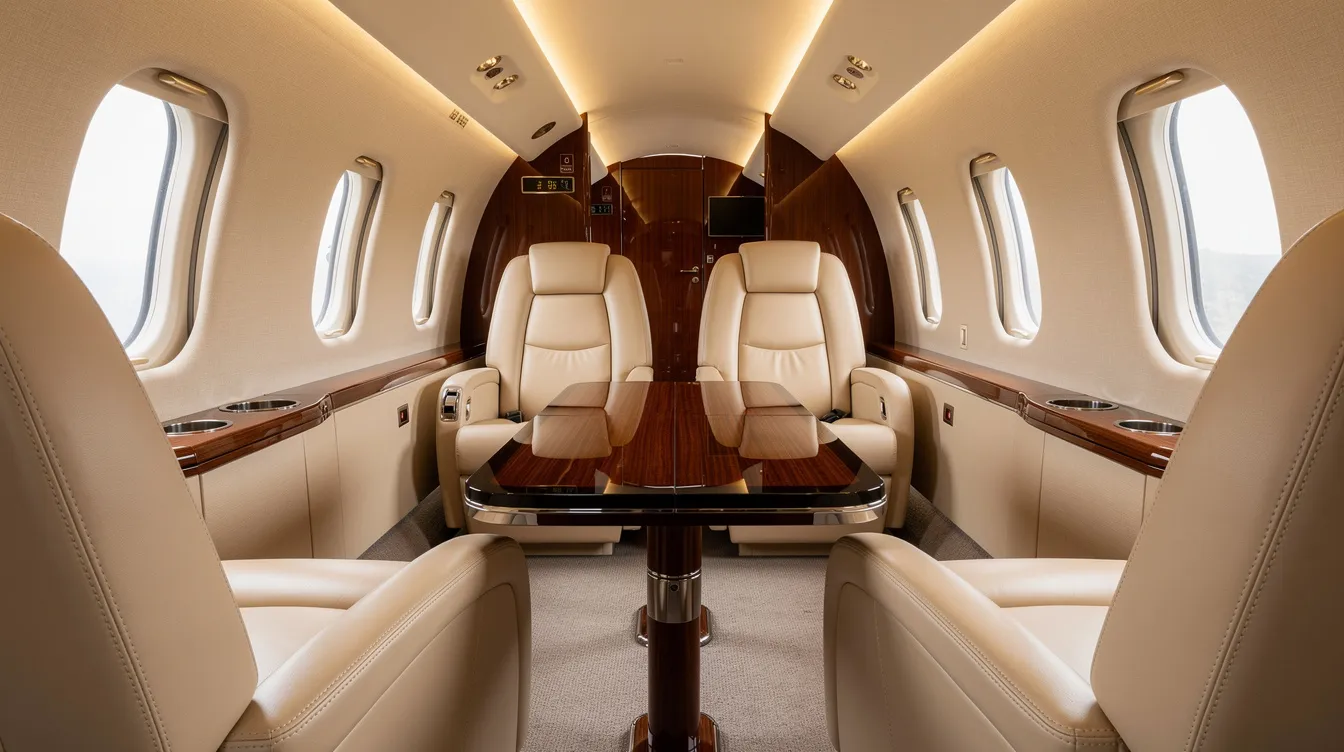
The short answer is yes. You can rent a private plane without owning one, without holding a pilot's license, and without committing to a long-term contract. The private aviation market has evolved far beyond the era when flying private meant buying a jet or signing up for a fractional ownership program. Today, chartering a private jet is accessible to anyone who meets basic screening and payment requirements, and the options for how you access that aircraft have never been more varied.
This guide breaks down what private jet rental actually looks like in 2026, what it costs, what drives those costs, and how different access models compare for travelers who value efficiency, flexibility, and transparent pricing.
Key takeaways
Yes, you can rent an entire private plane on demand. Private jet rental costs range from $2,000 to $14,000 per hour depending on aircraft category, with pricing applied per aircraft rather than per individual seat.
Hourly rates in 2026 range from roughly $2,000 for turboprops to well above $12,000 for ultra-long-range jets, before taxes and fees.
Core cost drivers include aircraft type, total billable flight time, positioning legs, federal excise tax, peak-demand surcharges, and airport-related charges.
Additional fees such as landing fees, fuel surcharges, and crew expenses can add 20–40% to the total trip cost beyond the base hourly rate.
Membership programs provide fixed hourly rates for flights, offering more predictable budgeting than variable one-off charter quotes.
FLYT's membership-based model gives travelers fixed hourly rates and flexible access across aircraft categories without owning or partially owning a jet.
Can you really rent a private plane in 2026?
Anyone who can pass basic identity verification and cover the cost can charter a private jet. No pilot's license is required. No aircraft ownership is needed. You are hiring the aircraft, the professional crew, and the operational infrastructure behind them. Private jet charters allow for flexible scheduling and direct routing, which is the fundamental reason most travelers choose this option over commercial alternatives.
It is worth clarifying what "renting a private plane" actually means in practice. When you charter a private jet, you are booking the entire plane for your group. This differs from semi-private services that sell individual seats on pre-set routes. A private charter gives you control over departure time, route, and passenger list. A per-seat model offers a discounted fare but with limited flexibility.
Most private jet rental in the U.S. operates under FAA Part 135 regulations, which govern on-demand air carrier operations. The operator holds the certificate, maintains the aircraft, and employs the crew. Your role is simply to book and fly.
To ground this in real terms: a light jet from New York to Miami (roughly 2.5 flight hours) typically costs between $14,000 and $22,000 one-way. A turboprop from Los Angeles to Las Vegas (about 1 hour) runs $8,000 to $14,000. These are not abstract figures. On-demand charter allows booking without long-term contracts, meaning you can fly once or fifty times per year without a standing obligation.
Private jets access over 5,000 airports in the U.S., many of which are smaller regional airports that commercial airlines do not serve. Booking a private jet can be done through dedicated charter specialists, brokers, or membership providers. Private jets allow for direct flights without layovers, eliminating connections and reducing total travel time significantly.
Where does FLYT fit? FLYT operates as a membership-based provider, offering fixed hourly pricing across aircraft categories instead of the variable, per-trip quotes you get from traditional charter brokers. The model is designed for travelers who fly private regularly and want predictable costs and priority access rather than shopping each flight individually. Learn more about FLYT's approach here.
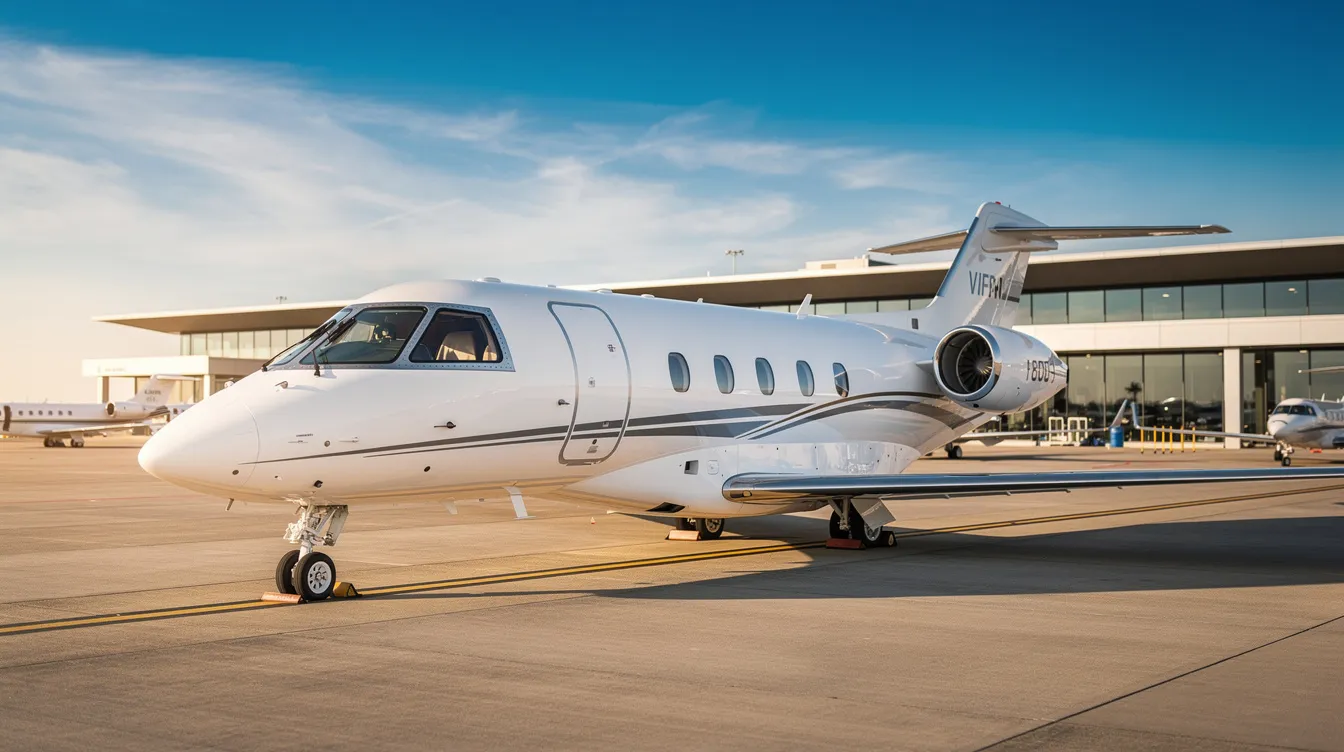
How private jet rental works
The process of chartering a private jet follows a straightforward flow: request, quote, confirm, fly.
Request
You share your departure and arrival airports, travel dates and times, passenger count, baggage requirements, and any preferences around aircraft size or cabin amenities. If you are traveling with pets or need specific ground transport, this is the time to mention it.
Quote
The operator or broker calculates the cost based on hourly rates for the relevant aircraft category, then adds applicable taxes, positioning fees, landing fees, crew expenses, and any surcharges. Charter operators bill for flight time, not total travel time, so the invoice reflects actual block hours when the aircraft is in operation. A minimum flight time charge applies on most private jet routes, typically one to two hours per leg, which means short hops can carry disproportionate cost relative to distance.
Confirm
Once the price is agreed upon, the operator files the flight plan, issues a charter contract, and arranges ground handling at both ends. Documentation such as government-issued ID is generally required for passengers. Proper government-issued IDs or passports are required for all passengers, particularly for international private charter flights.
Fly
You arrive at a private terminal (often called a fixed base operator or FBO), board, and depart on your schedule. The entire experience is operated under Part 135 or equivalent international regulations, with a professional crew and strict maintenance standards.
It is important to request a detailed price to avoid hidden costs when booking. The difference between what you expect to pay and what you actually pay often comes down to fees that were not clearly itemized up front.
Traditional on-demand charter brokers source aircraft from multiple operators, often resulting in variable pricing and inconsistent service. Membership providers like FLYT take a different approach, offering preset terms, fixed rates, and priority access that reduce the friction of arranging each trip from scratch. Explore FLYT's platform to see how this model works.
Private jet rental cost: what you should expect to pay
Most private jets cost between roughly $2,000 and $14,000 or more per flight hour in 2026, depending on aircraft category. As an overview of private jet pricing, these ranges help show how aircraft class shapes what you pay, while VIP airliners, which are converted commercial aircraft used for large groups or heads of state, can cost $16,000 to $23,000 per hour and sit in a category of their own.
Here is a breakdown of approximate hourly rates by aircraft class:
Aircraft category | Hourly rate range (USD) | Typical use cases |
|---|
Turboprops | $2,000 – $4,500 | Short regional flights, 4–8 passengers |
Light jets | $4,000 – $6,500 | Domestic trips 2–3 hours, 6–8 passengers |
Midsize jets | $5,500 – $8,500 | Longer domestic routes, 8–10 passengers |
Super midsize jets | $6,500 – $10,000+ | Transcontinental flights, stand-up cabins |
Heavy jets | $8,000 – $14,000 | Intercontinental missions, 10–16 passengers |
Ultra-long-range jets | $10,000 – $18,000+ | Nonstop oceanic flights, premium amenities |
VIP airliners | $16,000 – $23,000 | Large groups, heads of state, ultra-long haul |
Concrete trip examples:
A two-hour light jet flight from Chicago to New York might run $10,000 to $16,000 one-way before taxes and fees. A seven-hour ultra-long-range flight from New York to London could range from $70,000 to $130,000, depending on the specific aircraft and operator.
Quoted prices typically include the aircraft, crew, standard insurance, and base fuel. They generally exclude federal excise tax (7.5% on domestic flights in the U.S.), per-segment fees, landing fees, fuel surcharges, overnight crew expenses, and customs handling for international flights. You should understand all costs, including airport fees and fuel surcharges, before committing to a quote.
Additional fees can add 20–40% to the total trip cost, which is why the gap between a base hourly rate and an actual invoice can be significant. For a detailed look at trip-level pricing, published charter pricing guides provide useful benchmarks.
FLYT members see fixed hourly rates by aircraft category, which simplifies budgeting considerably for frequent flyers who do not want to negotiate or compare quotes for every specific trip. Learn more about FLYT pricing.

What actually drives private jet costs?
Hourly rates are only part of the private jet cost equation. Private flights can incur additional costs beyond the base hourly rate, and understanding these cost drivers is essential for accurate budgeting.
Billable flight time
Charter pricing is based on block hours, which is the time the aircraft is under operational control. This is not the same as your total journey time, which includes taxi, boarding, and any ground delays. Many operators impose minimum charges of one to two flight hours per leg, so a 30-minute hop still gets billed at the minimum.
Aircraft category
The aircraft type is the single largest determinant of hourly cost. A light jet burns less fuel, requires fewer crew members, and carries lower insurance than a heavy jet or a Boeing business jet. Choosing the right aircraft category for each mission is one of the most direct ways to manage cost efficiency.
Aircraft positioning
If the jet is not based near your departure airport, it must reposition, flying empty to reach you. These positioning legs, sometimes called empty leg flights, are billed to the customer and can add 20–50% to the total trip cost. Empty-leg flights offer significant discounts on one-way trips if you happen to match an aircraft's repositioning route, but availability is unpredictable.
Peak demand
Holidays, major conferences, and global events create supply constraints. Charter rates during peak periods can carry surcharges of 15–35%, and aircraft availability tightens across all categories.
International handling
Cross-border flights add complexity: overflight permits, customs clearance, immigration handling, and sometimes higher fuel costs at foreign airports. Airport charges can also include ramp and handling fees from fixed base operators, especially at busier or international airports. These are not always reflected in an initial quote.
Taxes and regulatory fees
The 7.5% U.S. federal excise tax applies to domestic charter flights. Per-segment fees, applicable taxes, and international departure charges add further cost. Hangar fees at certain airports and de-icing during winter months are additional variables.
Crew expenses
If your trip requires the crew to stay overnight away from their base, hotel costs and per diem charges are typically passed to the customer. These crew expenses are easy to overlook but meaningful on multi-leg itineraries.
Explore how FLYT's risk pool and charter volatility protection help manage cost fluctuations.
Types of private planes you can rent
Choosing the right aircraft helps balance comfort, range, and budget. Aircraft size affects suitability depending on group size and trip length, and the private aviation market offers a wide spectrum of options.
Turboprops and very light jets
These are efficient for short regional flights, typically under 500–700 nautical miles. Think Dallas to Houston, Boston to Washington, or London to Geneva. Turboprop aircraft typically cruise at 220 to 315 mph, which is slower than jet alternatives but more fuel-efficient for short distances. Seating is usually for four to eight passengers. These aircraft often access smaller regional airports that jets cannot, making them practical for destinations without long runways.
Light jets
Light jets accommodate 6 to 8 passengers with a range of 1,500 miles, making them popular for domestic trips of up to two to three hours. Routes like New York to Miami, Los Angeles to Aspen, or Atlanta to Dallas fit comfortably in this category. Models like Citation Jets offer modern avionics, reasonable baggage capacity, and cabin comfort without the cost of larger aircraft. Consider amenities like onboard Wi-Fi and specific baggage capacity when selecting within this class, as configurations vary between models.
Midsize and super midsize jets
Midsize jets can fly up to 2,450 miles nonstop, making them suitable for longer domestic and some transcontinental routes. Super midsize jets push that range further, often seating 8–10 passengers in stand-up cabins with better galley options and more room to work. These are often the sweet spot for coast-to-coast U.S. flights or routes into the Caribbean and Central America. Advanced avionics in newer models also improve ride comfort and operational efficiency.
Heavy jets
Heavy jets can travel non-stop for distances of 5,500 to over 8,000 miles, placing them firmly in the intercontinental category. They carry 10–16 passengers with full galleys, dedicated rest areas, and significant baggage capacity. Routes like New York to London or Los Angeles to Honolulu are well-suited for this class. Aircraft weight and fuel consumption are higher, which directly drive up hourly rates.
Ultra-long-range jets
At the top of the range, ultra-long-range jets like the Gulfstream G650 can fly 7,000 nautical miles nonstop. These aircraft handle long-haul missions such as New York to Tokyo or Los Angeles to Dubai without refueling. Hourly rates reflect the capability, often exceeding $12,000 per hour. For a closer look at what is available across categories, FLYT's aircraft interchange overview covers the fleet options accessible to members.
Individual seats vs renting the whole jet
Traditional private jet rental always involves chartering the entire plane for your group. You pay the same aircraft rate whether you are flying solo or filling every seat. The cost is per aircraft, per hour, regardless of passenger count.
Most private charter flights do not sell individual seats. The economics of private aviation are structured around the whole aircraft: fuel burn, crew, maintenance, and insurance do not change based on how many passengers are on board.
Semi-private carriers share flights with other passengers for cost efficiency, selling per-seat access on fixed routes. These services typically operate light jets or regional aircraft on high-demand corridors, offering a lower per-person price point in exchange for less privacy and a fixed schedule. Think of it as a middle ground between commercial airlines and full private charter.
The trade-offs are clear. Renting the entire plane gives you complete schedule control, route flexibility, and privacy. You decide when you leave, where you go, and who is on board. Travelers can customize their flight experience with private jets in ways that shared flights simply do not allow. Seat-based services reduce per-person cost but lock you into predetermined departure times and airports, which may not align with your actual travel needs.
FLYT focuses on full-aircraft access via membership, designed for travelers who value control, privacy, and predictable pricing over per-seat offers. If your travel patterns require the flexibility to choose your departure time, airport, and aircraft size, chartering the entire aircraft remains the more practical model. Learn more about FLYT vs charter and FLYT vs jet cards.
Membership vs on-demand charter: smarter ways to fly private
Frequent flyers often compare one-off charter quotes with more structured membership or jet card models. The right choice depends on how often you fly, how predictable you want your costs to be, and how much time you are willing to spend arranging each trip.
On-demand charter
Offers maximum flexibility with no standing commitment. You request a flight, receive quotes from one or more brokers or operators, and pay per trip. The downside is variable pricing: charter costs shift based on market demand, aircraft availability, positioning, and seasonality. Every flight is essentially a new negotiation. It is worth noting that you should compare offers from brokers against local charter operators for the best price, as rates can vary significantly for the same aircraft type and route.
Jet cards
Let you prepay a block of flight hours at a set rate. Jet cards and fractional ownership guarantee availability for frequent flyers, but jet cards require upfront capital and often come with peak-day surcharges or geographic restrictions. They offer more cost predictability than on-demand charter but less flexibility than a membership with fleet interchange.
Fractional ownership
Means purchasing a share of a specific aircraft. You gain guaranteed hours proportional to your ownership stake but take on depreciation, monthly management fees, and operational costs whether you fly or not. Capital is locked into a depreciating asset.
Membership-based private aviation
(where FLYT sits) provides fixed hourly rates, priority access to a floating fleet, and consistent terms across trips. Private jet membership offers access to over 20,000 aircraft through global networks, giving members range across geographies and aircraft categories without owning anything. Members enjoy guaranteed aircraft availability without ownership costs. Private jet memberships allow for flexible, on-demand travel options while also eliminating the need for long-term commitments in private aviation.
FLYT's asset-light floating fleet and risk pool model are designed to minimize ownership burden while preserving flexibility and global reach. Instead of tying up millions in fractional ownership or full aircraft acquisition, members allocate capital toward access and usage. For a deeper comparison of FLYT's model against traditional charter, the differences in cost structure and service consistency become clear. See FLYT vs fractional ownership and FLYT vs brokers vs jet cards for details.

How FLYT approaches private jet access
FLYT operates as a membership-based alternative for executives, families, and frequent flyers who fly private regularly but prefer not to own aircraft. The model is built around a few core principles: predictable cost, flexible access, and operational simplicity.
Fixed hourly rates across aircraft categories
FLYT members see published rates by category, whether they are booking a light jet for a short domestic hop or an ultra-long-range aircraft for an intercontinental flight. This transparent pricing structure removes the variability that comes with sourcing one-off charter quotes and makes annual travel budgeting straightforward.
Fleet interchange
Members are not locked into a single aircraft type. As trip profiles change, whether due to flight distance, passenger count, or mission requirements, members can shift between aircraft categories. A round trip from New York to Los Angeles might call for a super midsize jet, while a short regional flight to a nearby city might only need a turboprop. Fleet interchange gives members the flexibility to match aircraft to mission without penalty. Learn more about aircraft interchange.
Floating, asset-light model
Rather than owning and maintaining a fleet of aircraft tied to specific tail numbers, FLYT leverages a global network of vetted operators and aircraft. This keeps the same aircraft quality and safety standards in place while avoiding the capital burden, depreciation, and idle-time costs that come with fleet ownership. The risk pool model distributes cost volatility across the membership base. Discover more about the asset-light floating fleet and risk pool.
Concierge-level support
FLYT's team handles trip planning around the clock, including airport selection, ground transport coordination, catering preferences, and in-flight configurations. Member profiles store preferences so regular travelers see consistent onboard service without re-specifying details for every flight. For executives managing complex schedules, this kind of operational support is a meaningful time saver.

Is renting a private plane worth it?
The value of flying private is best measured in time, flexibility, and operational efficiency rather than pure comfort.
Time savings
Private flying saves significant time compared to commercial flights. You arrive at a private terminal 15–30 minutes before departure, skip security lines, and board directly. Private jets fly into smaller regional airports for convenience, often placing you closer to your final destination than the nearest commercial hub. Choosing smaller airports can minimize travel time on both ends of the trip. With access to thousands of airports, including many that commercial airlines do not serve, you eliminate connections and reduce total door-to-door travel time by hours on many routes.
Productivity
Private flying offers enhanced privacy for confidential discussions, making the cabin a functional extension of the office. For executives and teams, the ability to hold meetings, take calls, and work without interruption during flight time has tangible business value. This is not a marginal benefit on a five-hour transcontinental flight.
Cost per person
On certain routes, when the aircraft is reasonably full, the cost per passenger can approach or match premium cabin airline tickets on commercial flights. A light jet carrying six passengers from New York to Miami costs roughly $2,500–$3,700 per person one-way. Business class on the same route often runs $800–$1,500 per person but comes with airport time, security, and schedule inflexibility.
When it makes sense
Evaluate your annual flight hours, typical routes, and schedule demands. If you fly more than 25–50 hours per year on routes poorly served by commercial airlines, or if schedule predictability and time efficiency are high priorities, the economics of private jet travel start to favor structured access through a membership like FLYT over ad hoc charter or the overhead of ownership.
Flexible travelers who split time between domestic and international routes benefit most from models that allow fleet interchange across aircraft categories, matching the right aircraft to each leg rather than paying for more capability than they need.
How to rent a private plane safely
Safety and regulatory compliance should always come before price when you charter a private jet.
Start by confirming that any operator involved holds a valid air carrier certificate. In the U.S., this means an FAA Part 135 certificate. Internationally, the equivalent is issued by the relevant civil aviation authority. Operators should be FAA-certified and have a strong safety record, with verifiable maintenance histories and crew qualifications.
Safety verification includes checking Air Operator Certificates and safety ratings. Independent auditing organizations like ARGUS and Wyvern provide third-party safety ratings that evaluate operators on maintenance practices, pilot experience, insurance, and operational standards. Safety standards should comply with ARGUS or Wyvern ratings, and any reputable broker or membership provider should be able to confirm the ratings of operators in their network. Reputable operators ensure safety through verified records and aircraft details, and you should feel comfortable asking for this information before committing.
From a financial transparency standpoint, always request itemized quotes that clearly separate hourly rates, taxes, landing fees, crew expenses, fuel surcharges, and any other applicable charges. The gap between a headline rate and the final invoice is where most unpleasant surprises occur.
FLYT members benefit from pre-vetted operators, consistent safety criteria, and transparent pricing across every booking, reducing the need to re-evaluate operator credentials and cost breakdowns for every single trip. Visit FLYT FAQ for more details.
FAQ
Can private pilots rent a small jet just for personal flying?
Most private pilots rent light piston aircraft like a Cessna 172 from flight schools or clubs for personal flying and flight training. Renting a small jet to self-fly is a different matter entirely and is quite rare in practice.
The barriers are significant. Jet insurance requirements are stringent, type ratings for specific jet models require dedicated training and checkrides, and insurers typically demand hundreds or thousands of logged flight hours in category before they will underwrite a policy. The cost of obtaining and maintaining these qualifications makes self-fly jet rental impractical for most hobby pilots.
The vast majority of private jet rentals include professional crew and operate under commercial charter regulations. When you rent a private plane, you are hiring the crew member along with the aircraft. If you hold a private pilot certificate and want jet experience, the more common path is pursuing a type rating through a training program rather than renting a business jet to fly yourself.
How far in advance should I book a private jet?
The recommended booking timeframe is one to two weeks in advance for standard routes and dates. Giving 7–14 days' notice generally offers better aircraft choice and competitive charter rates.
Peak periods change the calculus. Major holidays, global events like the Super Bowl or Davos, and key conference weeks in cities like Las Vegas or New York can require booking 4–8 weeks ahead, especially for midsize jet and larger categories where supply is tighter. During these windows, aircraft availability across the market compresses rapidly.
FLYT members can often secure aircraft on shorter notice because of fleet flexibility and ongoing program commitments. The floating fleet model and relationships with multiple operators give the platform more options to fulfill requests even when the broader market is constrained.
Are pets allowed on rented private jets?
Many private charter operators allow pets on board, subject to documentation, vaccination records, and destination-specific regulations. Unlike commercial airlines, where pet policies vary widely and cargo holds are often the only option, private flights typically welcome pets in the cabin.
You should disclose pet details during the quote process, including species, size, crate requirements, and any destination-specific health documentation. This ensures the operator selects a suitable aircraft and accounts for any additional cleaning or handling policies.
FLYT's concierge can coordinate pet-friendly flights and handle additional cleaning or handling arrangements in advance, so members do not need to navigate these logistics independently for each trip.
Do private jet rentals include catering and special requests?
Most private flights include standard snacks and beverages as part of the base charter rate. Upgraded catering, whether that means a specific cuisine, dietary accommodation, or a full meal service, is available at additional cost and should be arranged ahead of time.
Travelers should share dietary preferences, meeting setups, or family needs before departure so the operator or membership provider can plan accordingly. The more notice you provide, the better the onboard experience matches your expectations.
FLYT integrates these preferences into member profiles, so regular flyers see consistent onboard service without re-specifying every trip. If you always want a particular type of coffee, a specific water brand, or a child-friendly snack selection, it is handled proactively.
How does FLYT differ from a traditional jet card or fractional ownership?
FLYT uses a membership model with fixed hourly rates and a floating fleet, rather than selling equity in a specific aircraft or requiring large prepaid hour blocks. This is a fundamentally different capital structure than fractional ownership, where you purchase a share of an aircraft and absorb depreciation, management fees, and maintenance costs whether you fly or not.
Compared to traditional jet cards, FLYT members avoid locking large sums into prepaid hours that may carry expiration dates, peak-day surcharges, or geographic limitations. The floating fleet model means you are not tied to the same aircraft or a single operator's fleet.
The approach aims to deliver global access, flexible aircraft selection, and transparent pricing for travelers who value cost efficiency and operational flexibility over owning a tail number. If your priority is access and predictability rather than asset accumulation, a membership model addresses a different set of needs than ownership or large prepaid commitments. Explore how FLYT memberships are structured for a more detailed comparison.
For personalized assistance or to explore membership options, visit FLYT contact.
Conclusion: Renting a private plane in 2026 is a strategic choice
Renting a private plane today offers unparalleled flexibility, efficiency, and transparency for travelers who value their time and seek predictable private aviation costs without ownership burdens. Whether you opt for on-demand charter or a membership model like FLYT’s, understanding the cost drivers and operational nuances empowers smarter decisions.
FLYT’s membership approach exemplifies a modern, asset-light private aviation solution. By offering fixed hourly rates, fleet interchange, global access, and concierge-level support, FLYT removes the complexities and capital risks associated with jet ownership or fractional shares. This model provides executives, entrepreneurs, and frequent flyers with the operational efficiency and flexibility that align with their dynamic travel needs.
For those exploring private jet rental, considering a membership with FLYT can deliver consistent service quality, transparent pricing, and access to a floating fleet tailored to your missions. Discover how FLYT redefines private aviation access by visiting www.flyt.com, and explore a smarter, more flexible way to fly private without the usual ownership complexity.