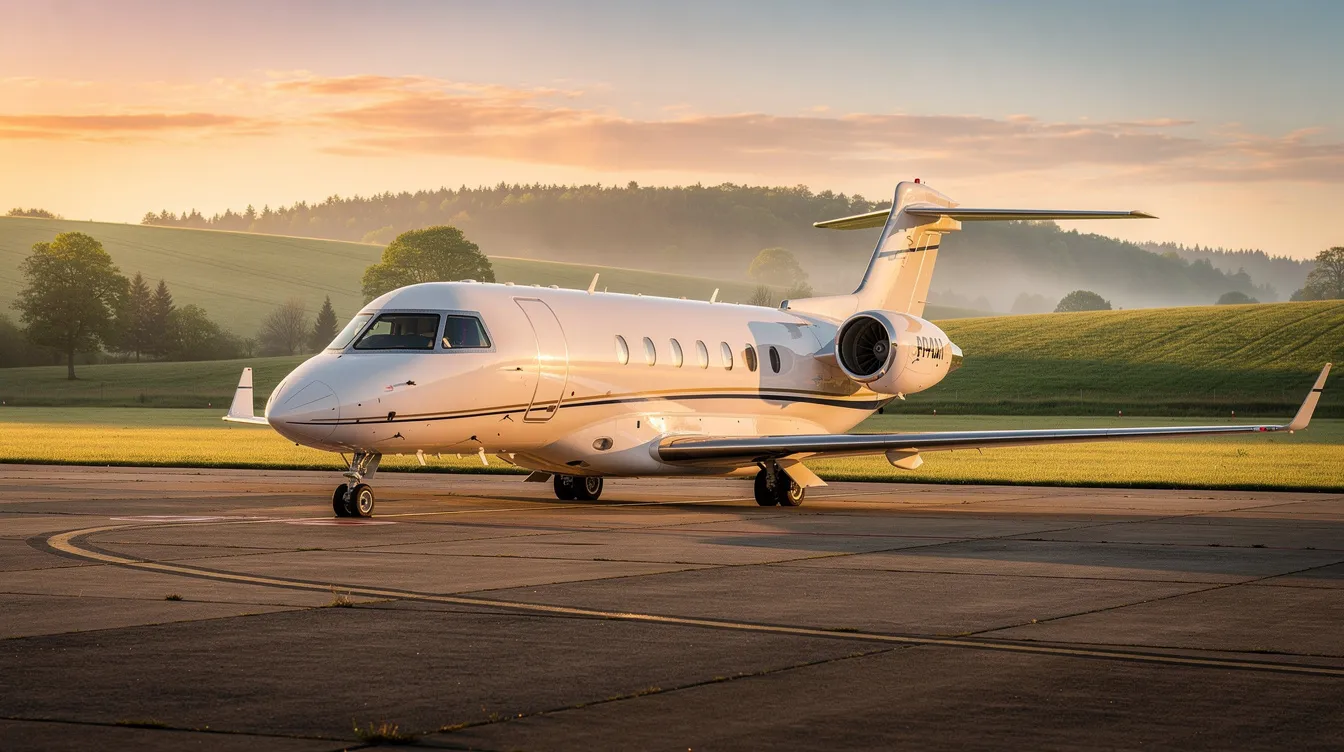
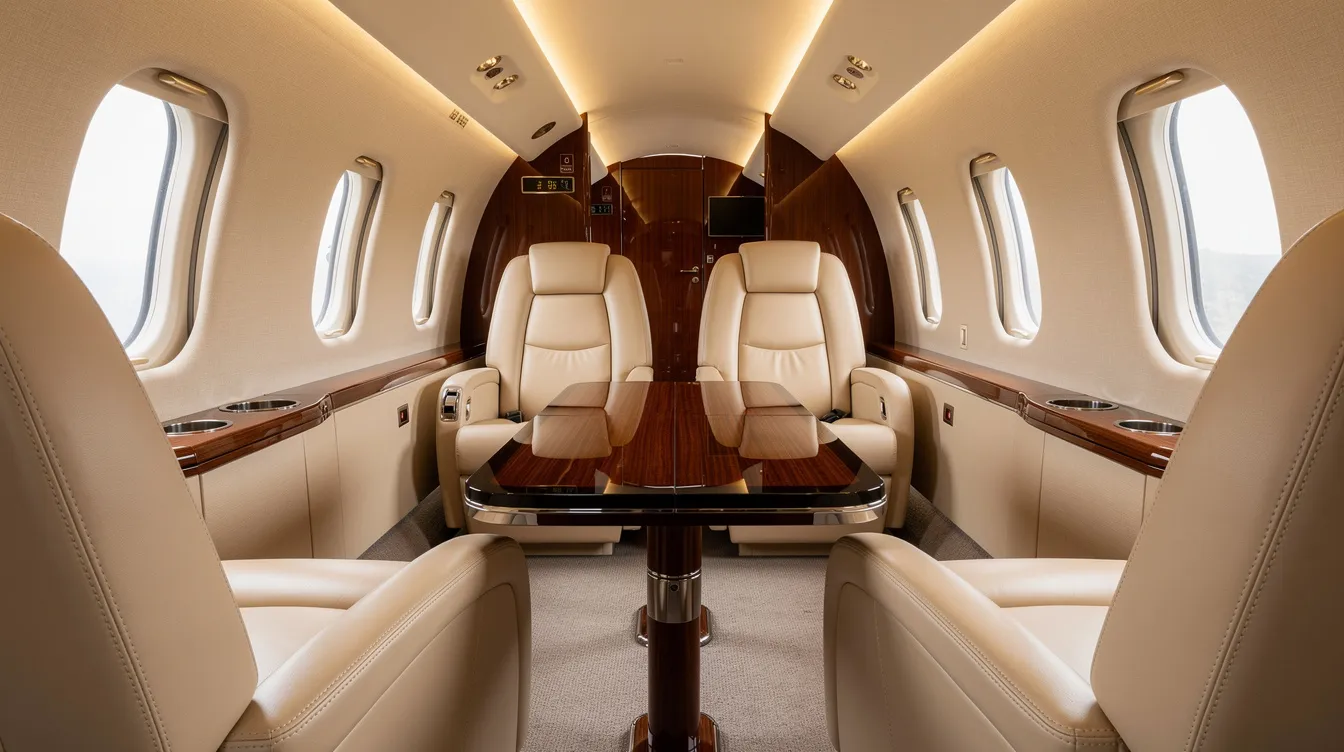
Private jet charter has evolved well beyond the simple act of renting a plane. In 2026, a growing number of executives and frequent flyers are stepping away from full aircraft ownership and rigid jet card programs in favor of flexible, membership-based access models. The reasons are practical: less capital risk, more operational control, and better alignment between how people actually fly and what they pay for.
Key takeaways
Private charter airplane gives travelers access to an entire aircraft for a specific trip without the obligations of ownership, fractional shares, or long-term contracts. FLYT's membership model builds on this by offering fixed hourly rates, transparent charter pricing, and concierge coordination across a global, asset-light floating fleet.
Private jet memberships offer flexible access to over 20,000 aircraft worldwide, and membership programs provide predictable pricing without ownership costs. FLYT members can charter a private jet with pricing locked ahead of time, often confirmed within hours for domestic flights and with reasonable lead times for international missions.
FLYT is not a one-off charter broker. Its risk pool model, fleet interchange across aircraft categories, and focus on time efficiency and operational reliability distinguish it from both ad hoc brokers and traditional jet card providers.
This article covers how charter flights compare to fractional ownership and jet cards, what drives charter pricing, how to match aircraft options to specific missions, how empty leg flights create savings opportunities, and how FLYT membership improves aircraft availability for discerning travelers, corporate shuttles, and international itineraries.
What airplane private charter really solves in 2026
Private air travel offers significant advantages over commercial flights that go far beyond cabin comfort. Private charters drastically reduce total door-to-door travel time by removing the friction of hub-and-spoke airline scheduling, TSA security queues, and crowded gate areas. Private airports allow the bypassing of long TSA security lines and gate waits entirely—travelers use private terminals, arriving minutes before departure rather than hours.
Private charters operate on your schedule, not an airline's. That distinction matters most in two common scenarios.
Consider a New York–Miami weekend family trip. On a commercial airline, you're looking at roughly five to six hours door-to-door each way once you factor in arrival buffers, security, boarding, and ground transport on each end. A private charter flight on a light jet covers that route in about 2.5 hours, departing from a private terminal at Teterboro or Westchester and landing at Opa-Locka or Fort Lauderdale Executive—closer to your actual destination, with no connecting flights and no luggage carousel.
Private jets provide enhanced privacy and comfort compared to commercial flights, making them ideal for confidential business discussions due to their exclusive use. Flights can be adjusted based on passengers' needs and schedules, with personalized catering offering premium food and drink options tailored to individual preferences.
Now consider a same-day Chicago–Dallas–Chicago board meeting run as a corporate shuttle. A commercial itinerary likely requires an overnight stay. With a private charter, a team of six departs Midway at 7 a.m., lands at Dallas Love Field by 9:30 a.m., takes the meeting, and returns home by dinner. The per-seat cost of private charters can become comparable for groups of 4 to 8 people when weighed against the cost of multiple commercial tickets, hotel rooms, and a full day of lost productivity.
Private charters provide maximum scheduling flexibility compared to commercial flights. Private jets allow for direct routing without layovers and access to over 10,000 airports worldwide, including thousands more airports than commercial airlines. Charter flights can utilize smaller airports closer to your destination, further reducing ground time and enhancing convenience.
FLYT is built for exactly this use case: a membership-based model that provides consistent access to private charter without tying up capital in an aircraft asset. The rest of this article is a practical guide to how private airplane charter works, what it costs, and how to choose the right access model.
How a private airplane charter works from the first quote to landing
Booking Process Overview
The booking process for a charter flight follows a predictable workflow, whether you're working with a broker, direct operator, or a membership provider like FLYT as your jet charter service.
It starts with a request. You provide the basics: departure and arrival airports, date and time, passenger count, and any specific preferences around aircraft type, catering, or ground transportation. Booking options for private charters include brokers or direct operators, though membership models streamline this significantly.
From there, the provider generates a quote. In the broader market, digital platforms offer instant pricing for private jet charters, and users can compare aircraft options easily through those platforms. Platforms like Jettly connect users to over 20,000 aircraft globally and allow booking without long-term commitments, enhancing flexibility in private jet travel.
Charter flights can be arranged in as little as four hours in some cases. However, for those flying regularly, the back-and-forth of comparing trip-by-trip quotes introduces friction and pricing uncertainty.
Membership Benefits
This is where FLYT layers on membership benefits. Rather than negotiating each flight from scratch, FLYT members operate under fixed hourly rates and pre-negotiated terms. The FLYT platform removes the price uncertainty of ad hoc quoting—members know what they'll pay before confirming, and the concierge team handles the rest.
Flights can be adjusted based on passengers' needs and schedules. Private charters offer personalized catering with premium food and drink options, and private jets often serve as mobile offices with onboard Wi-Fi and comfortable meeting spaces. These flight details—FBO selection, catering preferences, ground transport, last-minute manifest changes—are all handled by FLYT's concierge, so members focus on the mission rather than logistics.
A few operational realities worth understanding:
Crew duty-day limits apply. FAA and EASA rules govern how long pilots can fly in a given period, which affects multi-leg itineraries and same-day turnarounds.
Most operators impose minimum billable flight times—typically 1.5 to 2 hours, depending on aircraft type—even if wheels-up time is shorter.
Domestic US and intra-Europe flights can generally be arranged within 24 to 72 hours. International missions requiring overflight permits, customs coordination, or complex handling need 5 to 14 days of lead time.
For a same-day turnaround like Chicago–Dallas–Chicago, crew duty limits are manageable. For a multi-stop international itinerary—say, New York to London to Paris and back—the concierge team coordinates permits, handling agents, customs, and crew rest across jurisdictions so the member doesn't have to.
Aircraft options and aircraft types: matching the jet to the mission
Aircraft Category Breakdown
Choosing the right aircraft for a given trip affects cost, range, cabin experience, and which airports you can access. Private jets are categorized by size and range to accommodate varying passenger needs, and matching the best aircraft to the mission is one of the most impactful decisions in private charter. Over 20,000 unique aircraft are available for private charters globally, spanning several distinct categories.
Turboprops
Examples: Pilatus PC-12, Beechcraft King Air 350
Capacity: Up to 9 passengers
Range: Efficient on routes under 500 miles
Features: Lower fuel burn, cost-effective, access to short runways and remote airports
Use cases: Wine country, island destinations, mountain towns like Aspen
Charter rates: Start at $2,500 per hour
Light jets and very light jets
Examples: Citation CJ3+, Embraer Phenom 300E, HondaJet
Capacity: 2-8 passengers
Range: 1,500 to 2,000 nautical miles
Features: Comfortable cabins, access to smaller airports, ideal for domestic flights
Use cases: New York to Miami, Dallas to Denver
Charter rates: Around $6,000 per hour
Midsize and super-midsize jets
Examples: Praetor 500, Bombardier Challenger 3500, Citation Latitude
Capacity: Stand-up cabins, more luggage capacity
Range: Up to 2,700 nautical miles (Citation Latitude)
Features: Transcontinental range, comfort, productivity
Use cases: Los Angeles to New York, intra-European legs
Charter rates: $7,000 per hour for midsize, $6,000 to $9,000 for super-midsize
Large cabin and ultra-long-range aircraft
Examples: Gulfstream G550, Global 6500, Gulfstream G650ER
Capacity: Spacious cabins, special accommodations for oversized luggage
Range: Up to 8,000+ nautical miles (G550: 6,750 nm)
Features: Non-stop intercontinental flights, minimal luggage restrictions, pet-friendly
Use cases: New York to London, Dubai to Singapore, Los Angeles to Tokyo
Charter rates: $12,000+ per hour, some heavy cabin configurations exceeding $15,000
FLYT's fleet interchange capability is what ties this together. Through its aircraft types program, members move between aircraft categories trip by trip—selecting a cost-effective turboprop for a 300-mile hop and scaling up to ultra-long-range aircraft for an 8- to 10-hour transatlantic sector—while keeping predictable pricing across the floating fleet.
Charter pricing in practice: what actually drives the cost
Hourly Rate Bands
Charter pricing is primarily driven by five variables: aircraft category, flight time, repositioning needs, airport choices, and whether you're flying during peak or off-peak demand periods. Charter costs vary based on aircraft type and route distance, and understanding these drivers is essential before comparing charter options.
Here are indicative 2026 market ranges (not FLYT-specific promotional rates):
Aircraft Category | Hourly Rate Range |
|---|
Turboprops | $2,500 – $3,500 |
Light Jets | $3,000 – $5,500 |
Midsize Jets | $4,000 – $7,500 |
Super-Midsize Jets | $6,000 – $9,000 |
Ultra-Long-Range Jets | $12,000+ (up to $15,000+) |
For context, a New York–Miami charter flight on a midsize jet runs approximately $10,000 to $22,000 one way. A New York–Los Angeles super-midsize charter is in the $28,000 to $40,000 range. A New York–London leg on an ultra-long-range jet typically falls between $70,000 and $95,000.
Additional Cost Elements
Several additional cost elements affect the final price:
Repositioning legs: If the aircraft needs to fly empty to reach your departure airport, that repositioning cost is typically passed to the client—often adding 20 to 40 percent.
Overnight crew fees: When itineraries require crews to stay at a destination.
Seasonal surcharges: During peak demand periods like holidays, ski season, or major events.
Airport handling, landing fees, and de-icing charges: Especially in the winter months.
Fuel surcharges: These fluctuate with market pricing.
Empty Leg Flights
Empty leg flights can save travelers 25 to 75 percent on costs when travel plans are flexible enough to match an aircraft's repositioning route. Empty leg flights occur when jets reposition without passengers and are ideal for flexible travelers with matching routes. Over 3,000 empty leg flights are available at any time. Chartering a private jet can save up to 75% on empty leg flights, making it one of the most cost-effective options in private aviation when timing aligns.
How FLYT's model changes the pricing equation
Traditional ad hoc charter quotes are variable, trip-by-trip, and often opaque. Hidden fees around fuel, handling, and repositioning can inflate the final invoice well beyond the initial quote.
FLYT's membership model addresses this directly. Members fly under fixed hourly rates with transparent terms—no surprise charges or opaque surcharges layered in after confirmation. The risk pool model smooths pricing volatility by spreading fixed costs across many members and maintaining contracted operator capacity, rather than exposing each member to spot-market swings. For a deeper look at how this compares to traditional charter, see FLYT vs Charter.
Charter a private jet vs fractional ownership and jet cards
Most private jet travelers weighing their options are comparing three models: on-demand charter flights, fractional ownership, and membership or jet card programs. Each serves a different flying profile, and the differences in cost structure, flexibility, and capital risk are significant.
Fractional ownership
Fractional ownership means buying a share of a specific aircraft—typically 1/16 or 1/8—under a contract lasting 3 to 5 years. A 1/16 share in a light jet runs approximately $500,000 to $850,000 in acquisition cost alone. On top of that, owners pay monthly management fees of $12,000 to $15,000 for a light jet share, plus occupied hourly fees of $8,000 to $10,000 per flight hour.
Ownership costs extend further: depreciation risk on the aircraft share, exposure to used-aircraft market conditions at resale, and limited flexibility around aircraft substitution or peak-day availability. Fractional ownership tends to become cost-competitive only for travelers flying above 100 to 200 hours annually on predictable routes.
Jet cards
A traditional jet card involves pre-purchasing a block of flight hours—often 25 hours—at a fixed or capped hourly rate. Entry-level jet card programs for light jets start around $150,000 to $250,000 for a 25-hour block. There's no acquisition cost or residual risk, which is a meaningful advantage over fractional ownership.
However, many jet card programs still carry potential surcharges during peak periods, minimum flight time requirements, and restrictions on aircraft substitution. The ideal usage band for jet cards is roughly 25 to 75 hours per year. For a detailed breakdown, see FLYT vs Jet Cards.
How FLYT membership compares
FLYT's membership avoids the capital outlay of buying an aircraft share entirely. There's no asset depreciation, no multi-year aircraft commitment, and no monthly management fees tied to a specific airframe. Private jet memberships allow access to thousands of additional aircraft worldwide, and memberships can include fixed hourly rates for flights, removing the per-trip negotiation that plagues ad hoc charter.
Private charter services allow access to over 5,000 public airports in the U.S., and charter flights access over 10,000 airports worldwide. FLYT's fleet interchange lets members scale between aircraft types as missions change. Private jet memberships enhance travel convenience with no long-term commitments, making FLYT particularly attractive to executives flying roughly 25 to 150 hours per year who want predictability without capital lock-up.
For a side-by-side view, explore FLYT vs Fractional Ownership.
Aircraft availability, empty legs, and global access
In private aviation, aircraft availability is often a bigger constraint than price—particularly on peak days like Thanksgiving, Christmas, the Super Bowl, or major global conferences. During these windows, even large fleet operators struggle to fulfill demand, and pricing spikes reflect scarcity more than operating costs.
Empty leg flights explained
An empty leg flight occurs when a jet repositions without passengers—for example, after dropping travelers in Boston, the aircraft may need to fly empty from Teterboro to West Palm Beach for its next mission. These flights are often available on short notice and at significant discounts. Empty leg flights are a cost-effective option for travelers whose itineraries are flexible on timing and route. Flexibility is key to booking empty leg flights, since the departure window and airports are dictated by the operator's positioning needs.
How a floating fleet improves availability
A floating, asset-light fleet model improves availability by allowing FLYT to source aircraft across multiple regions, rather than being tied to a single home base or ownership structure. It is designed to improve availability and give members more dependable, near-guaranteed access to suitable aircraft during busy periods, subject to market conditions and mission requirements. When one aircraft type isn't available in a given market, the fleet interchange model lets the concierge team find alternatives from vetted partner operators—providing access to larger aircraft or different categories without members needing to manage multiple relationships.
This approach handles growing demand more effectively than ownership models, where a single aircraft being down for maintenance means the owner is grounded. Learn more about FLYT's asset-light floating fleet and risk pool approach.
Global itineraries under one membership
FLYT supports international flights and complex multi-stop itineraries—such as New York to London, London to Dubai, or intra-Europe multi-city investor roadshows—by combining different aircraft types and operators under one membership and one concierge team. Permits, customs, handling agents, and ground transport are coordinated centrally, removing the operational burden that makes international private travel particularly complex.

Which private charter airplane is best for
Private airplane charter is most valuable when time, flexibility, and confidentiality matter more than minimizing per-seat cost. Private jets are ideal for confidential business discussions due to their exclusive use. Private aviation provides enhanced privacy and comfort compared to commercial flights. Private jet travel offers a more personalized travel experience than commercial airlines.
Here are the profiles where private charter delivers the clearest return:
Founders and executives running multi-city investor roadshows or board meetings, where schedule reliability and confidentiality are non-negotiable
Operations leaders managing plant or site visits across multiple locations, using corporate shuttles to move teams efficiently between key facilities
Families coordinating complex school-calendar travel, leveraging larger aircraft for long-range holiday trips and smaller jets for quick weekend getaways
Organizations needing medical transport or urgent logistics where commercial schedules simply don't work
Most travelers who need to move between destinations that are not well served by commercial airline routes
Private charters have minimal luggage restrictions and often allow pets in the cabin, which matters for family travel and extended trips. Business executives flying more than 20 to 25 hours of private travel per year consistently benefit from a structured access model like FLYT membership instead of purely ad hoc chartering, where each flight requires a fresh round of quoting and negotiation.
For travelers flying fewer than a dozen hours annually, on-demand charter may be sufficient. But as flying patterns stabilize—regular routes, predictable seasons, recurring team travel—FLYT membership becomes increasingly compelling because predictability of costs replaces the volatility of spot-market pricing.
For business-specific applications, see how FLYT works for business travel.
Safety, compliance, and operational oversight
In private aviation, safety and operator oversight are the non-negotiable foundation beneath any discussion of pricing, aircraft types, or membership terms. No amount of convenience or cost savings matters if the operation isn't sound.
How operators are vetted
Reputable providers vet operators through multiple layers of review:
FAR Part 135 governs commercial charter operations for safety in the United States, establishing baseline standards for crew qualifications, maintenance procedures, and operational controls
Operators must meet FAA maintenance standards for safety compliance, including scheduled inspections, airworthiness directives, and record-keeping requirements
Independent audit programs add further scrutiny. ARGUS Platinum designation indicates high safety standards for operators, while ARGUS Gold standards ensure operators meet rigorous safety requirements across additional metrics
IS-BAO Stage 3 certification reflects advanced safety management systems, demonstrating that an operator has implemented and continuously improved a structured safety management framework
Companies like Stratos Jets conduct thorough safety checks on air carriers as part of the vetting process before any aircraft is offered to clients
FLYT's approach
FLYT works with vetted operators and uses a risk pool model to prioritize safety, operational reliability, and consistency of service across its floating fleet. Rather than chasing the absolute lowest ad hoc rate, FLYT maintains contracted relationships with operators who meet defined safety, insurance, and performance thresholds. For more details, see Safety & Security.
The operations and concierge teams actively monitor weather patterns, airport slot availability, crew duty limits, and runway constraints. This proactive approach means itineraries can be adjusted before problems cascade—rerouting around weather, substituting aircraft when mechanical issues arise, or adjusting departure times to stay within crew duty windows. The unwavering commitment to operational oversight across the floating fleet is what makes providing access at this level sustainable.
Why discerning travelers choose membership-based charter with FLYT
FLYT is designed for travelers who value efficient, predictable access to private aviation rather than aircraft ownership or status signaling. The membership exists to solve a specific problem: how to fly privately with the flexibility of charter, the cost predictability of ownership, and without the capital burden.
Key membership elements that drive this:
Fixed hourly rates across aircraft categories, locked at the membership level rather than fluctuating trip by trip
Transparent pricing without opaque surcharges—members see what they're paying for before confirming
Aircraft fleet interchange that lets members scale between a turboprop for a short hop and an ultra-long-range jet for an intercontinental sector, without managing multiple contracts
Global reach through vetted partner operators, coordinated by a single concierge team
FLYT's asset-light, floating fleet approach minimizes capital tied up in aircraft while still providing access to a premier choice of aircraft options and consistent service standards. Members aren't paying for a hangar or a hull—they're paying for access, coordination, and reliability.
Private flyers comparing charter flights, jet cards, and fractional ownership can explore how FLYT membership aligns with their flying profile and capital strategy on the how it works page.
Frequently asked questions
How far in advance should I book a private charter through FLYT?
Many domestic US and intra-Europe private flights can be arranged within 24 to 72 hours, with truly urgent missions sometimes confirmed the same day, depending on aircraft availability and regulatory requirements. For complex itineraries—multi-leg corporate shuttles, international routes requiring permits, or peak holiday periods—booking 7 to 14 days in advance gives the concierge team more room to optimize aircraft options and pricing. FLYT members benefit from priority access to the floating fleet and can work with their concierge proactively to reserve commonly used routes and dates ahead of peak demand, especially for last-minute flights during the business aviation calendar's busiest windows.
Can I use one FLYT membership for both business and family charter flights?
A single FLYT membership can typically support both business-related travel—such as executive roadshows, site visits, or corporate shuttles—and personal trips like family holidays and school breaks, subject to the member's internal accounting and tax treatment. Executives should coordinate with their finance and tax advisors to decide how to allocate flight costs between corporate and personal use, while FLYT provides clear, itemized charter pricing and flight records for each trip. The ability to interchange aircraft types trip by trip makes it easy to use smaller, efficient jets for short business hops and larger cabins for longer family journeys, supporting both your next trip and your broader travel plans.
What level of customization can I expect on a FLYT charter flight?
FLYT's concierge team can arrange tailored elements such as preferred FBOs, specific departure times, in-flight catering aligned with dietary requirements, and onboard amenities. While configuration options depend on the selected aircraft type and operator, FLYT focuses on aligning the cabin environment with the mission—quiet workspace for business executives, relaxed configuration for family trips, or discrete setups for investor or board travel. Personalized service extends to ground transport arrangements, pet accommodations, and connecting your air and ground logistics. Providing detailed preferences at the time of booking allows the concierge team to match you with appropriate aircraft options and operators for a seamless experience.
How does FLYT handle disruptions such as weather or mechanical issues?
FLYT and its partner operators monitor flights in real time, tracking weather patterns, airport constraints, and crew duty limits to anticipate potential delays. If an issue arises—a mechanical delay, a weather-related diversion, or an airport closure—the operations and concierge teams work to secure alternative aircraft or reroute via suitable airports, keeping members informed throughout. The risk pool and floating fleet approach gives FLYT more flexibility to find replacement lift than single-aircraft ownership models, improving resilience when plans change unexpectedly. This plays a significant role in maintaining schedule reliability across the membership.
Is a private charter with FLYT suitable for first-time private flyers?
FLYT serves both experienced private aviation users and first-time private flyers who are transitioning from premium commercial airline cabins. New members receive guidance on everything from arrival procedures at private terminals to baggage expectations, documentation for international flights, and what to expect onboard. First-time users often start with a simple, familiar route—such as a frequently flown commercial leg—to experience the time and convenience gains of private charter before expanding into more complex itineraries. The concierge team ensures the entire experience, from your first call to landing, is straightforward and well-supported, regardless of your prior experience with the aviation industry.
Conclusion
Airplane private charter with FLYT represents a strategic evolution in private aviation, offering executives and frequent travelers a smarter, more flexible alternative to ownership. By combining fixed hourly rates, transparent pricing, and a global floating fleet with concierge-level support, FLYT delivers predictable access to a wide range of aircraft tailored to diverse mission needs—from short regional hops to intercontinental journeys. This membership-based model minimizes capital risk while maximizing operational efficiency and convenience, enabling members to focus on their priorities rather than logistics. For those seeking a premium private aviation experience grounded in flexibility, efficiency, and reliability, FLYT offers a compelling solution that redefines how private jet travel works in 2026 and beyond. Discover a more flexible approach to global private jet travel with FLYT membership.