Understanding the true cost of private jet travel in 2026 is essential for executives, frequent flyers, and anyone considering charter, membership, or ownership. This guide breaks down the real expenses, key cost drivers, and access models to help you make informed decisions about private aviation. Private jet cost in 2026 depends less on the aircraft alone and more on how you access it: on-demand charter, private jet membership, fractional ownership, or full private jet ownership. Knowing these details is crucial for budgeting, decision-making, and comparing the value of different private aviation options.
Key takeaways
Typical 2026 private jet charter rates range from about $3,000–$6,000/hr for light jets, $5,000–$8,000/hr for a midsize jet, $6,500–$10,000/hr for super midsize jets, and $11,000–$20,000/hr for ultra long range aircraft, plus taxes such as the 7.5% U.S. federal excise tax.
Ownership usually becomes economically rational only beyond roughly 200–250 flight hours per year, and often closer to 300–400 hours once depreciation, fixed costs, ongoing costs, pilot and crew salaries, and aircraft flexibility are considered.
Headline private jet charter cost rarely tells the full story. Hidden fees such as short leg fees, aircraft positioning, deicing, landing permits, Wi-Fi, in-flight catering, and fuel surcharges can materially change the total cost.
For many executives and frequent flyers, a membership model like FLYT, with fixed hourly rates, fleet interchange, and no asset risk, can deliver more predictable private jet travel costs than ad hoc charter or owning a jet.
FLYT’s membership-based, asset-light model is designed to reduce uncertainty through transparent pricing, global access, concierge support, and a floating fleet that helps minimize repositioning and extra charges.
How much does it cost to rent a private jet in 2026?
When you rent a private jet, the quoted rate is usually for the entire aircraft per flight hour, not per seat. That means the economics change depending on passenger capacity, flight duration, aircraft availability, and the specific route. The ranges below reflect typical U.S. and transatlantic market conditions in 2026, though actual private jet rental prices vary by charter company, airport, aircraft age, and season.
Core hourly charter rates generally look like this:
Aircraft category | Hourly charter rate (USD) | Typical use case |
|---|
Turboprops | $2,000–$4,000/hr | Efficient for short trips |
Very light jets | $2,000–$3,000/hr | Short regional flights, limited passengers |
Light jets | $2,500–$6,000/hr | Flexible for short to mid-range trips |
Midsize jets | $4,000–$8,000/hr | Comfortable mid-range travel |
Super midsize jets | $6,500–$10,000/hr | Increased cabin space and range |
Heavy and large jets | $8,000–$14,000/hr | Long-range domestic flights |
Ultra-long-range jets | $11,000–$20,000/hr | Nonstop intercontinental missions |
VIP airliners | $16,000–$23,000/hr | Large group, long-distance travel |
As a broad rule, chartering a jet costs $2,000 to $14,000 per hour for most conventional private jet categories, excluding ultra-long-range jets and VIP airliners.
For example, a New York–Miami round-trip on a light jet may cost $18,000–$28,000 all-in, depending on aircraft positioning, airport fees, and taxes. A Los Angeles–New York one-way on a super midsize jet may range from $35,000 to $50,000, especially during peak demand or limited availability.
These estimates typically include aircraft, crew, basic insurance, and standard jet fuel but may exclude premium catering, winter deicing, international handling, certain landing fees, ground transportation, or special airport charges.
Travelers flying more than 25–50 hours per year often transition from ad-hoc charter to membership, jet card, or structured private jet services offering fixed hourly rates. Jet cards provide fixed hourly access but vary widely in terms, especially regarding peak days, aircraft upgrades, and pass-through charges.
Key drivers of private jet cost
Key factors influencing private jet pricing include aircraft size, age, and operational costs. Private jet cost is shaped by aircraft category, flight distance, routing, airport choice, seasonality, aircraft availability, and operational constraints such as crew duty limits. These factors apply across on-demand charters, jet cards, fractional ownership, and membership programs like FLYT.
The main cost drivers include:
Aircraft size and flight range: Larger aircraft consume more fuel and incur higher maintenance and crew costs.
Flight time: Pricing is usually based on billable flight hours, including taxi, climb, cruise, descent, and sometimes positioning.
Airports and routing: Premium airports and indirect routings increase fees.
Peak demand: Holidays and major events can drive up costs.
Positioning requirements: Empty repositioning legs can add thousands to the total.
Business travelers should evaluate the cost per productive hour saved, as commercial flights may appear cheaper but entail delays, connections, overnight stays, and lost productivity.
Aircraft size, range, and category
Aircraft size, age, and operational expenses influence pricing. Larger jets entail higher chartering and ownership costs due to fuel consumption and maintenance fees. Larger jets carry higher charter and ownership costs due to fuel consumption and maintenance, while smaller aircraft are more efficient for short trips.
Typical 2026 hourly cost bands:
Very Light Jets: $2,000–$3,000/hr (e.g., Embraer Phenom 100).
Light Jets: $2,500–$4,000/hr (e.g., Cessna Citation CJ3+).
Midsize Jets: $4,000–$8,000/hr depending on route and model.
Super midsize jets: $6,500–$10,000/hr (e.g., Challenger 350, Praetor 600).
Heavy Jets: $8,000–$14,000/hr.
Ultra long range jets: $11,000–$20,000/hr (e.g., Gulfstream G650ER, Bombardier Global 7500).
While ultra-long-range jets cost more per hour, they can be efficient for nonstop long-haul missions by eliminating fuel stops and overnight breaks.
Fleet interchange, as offered by FLYT through aircraft fleet interchange, allows members to right-size aircraft per mission—using light jets for short trips and upgrading only when necessary—optimizing annual travel spend versus a one-size-fits-all approach.
Flight distance, time, and routing
Private jet pricing is primarily time-based. Billable hours include all phases of flight and sometimes positioning legs.
For example, a 1.5-hour Boston–Toronto light jet charter costs less than a 5.5-hour Los Angeles–New York midsize jet charter due to longer flight time, fuel, and crew expenses. Longer nonstop flights generally reduce cost per mile compared to multiple short legs or indirect commercial schedules.
Short regional flights can be disproportionately costly due to minimum daily billable times and fixed operational charges, requiring careful planning.
Airports, peak demand, and positioning
Airport choice can impact costs by thousands. High-density airports like New York’s Teterboro, Los Angeles’ Van Nuys, London Luton, New York–JFK, and Miami have higher landing and handling fees than smaller regional airports.
Landing fees range from $150 to $500 or more, depending on aircraft size and airport. Ramp and handling fees typically add $100–$500 per visit. Hangar fees vary from $500 to $3,000 monthly for owners or appear as overnight charges in charters.
Aircraft positioning—empty flights to pick up or return—adds cost. Empty leg flights, or 'deadhead' flights, offer discounts up to 75% but have fixed schedules and limited destinations, suiting flexible travelers.
Peak periods such as U.S. Thanksgiving, Christmas–New Year’s, Art Basel Miami Beach, and the World Economic Forum in Davos increase demand and pricing. Membership programs with floating fleets, like FLYT’s asset-light floating fleet, help mitigate seasonal spikes by spreading demand.
Taxes, fees, and the real cost beyond the hourly rate
Understanding private jet cost requires looking beyond base hourly rates. Government taxes, airport charges, fixed base operator fees, crew expenses, and trip-specific surcharges can add 10–30% or more, especially in winter or on international flights.
Use this checklist when reviewing quotes or agreements:
Government taxes
In the U.S., domestic charters are subject to a 7.5% federal excise tax on the base fare. A per-passenger segment fee, around $4.50 per leg, may also apply. International flights incur head taxes of around $20 per passenger, with Alaska and Hawai’i flights around $10.
Membership programs like FLYT itemize these charges transparently. Outside the U.S., VAT, passenger duties, overflight fees, and environmental levies may apply.
Airport and operational fees
Landing fees vary by airport and aircraft size, ranging from $100–$1,000+. Ramp and handling fees typically run $100–$500. Hangar fees for weather protection or overnight parking can add $500–$1,500 per night.
Winter deicing is mandatory and costly—light jets may incur $1,500, heavy or ultra-long-range jets up to $15,000 or more.
FLYT’s route planning balances convenience, fees, aircraft performance, and ground logistics to optimize costs.
Hidden and trip-specific fees
Quotes may exclude surcharges such as:
Short leg fees for flights under minimum billable time (60–120 minutes), offsetting disproportionate fuel burn and maintenance.
Crew overnight expenses: $200–$600 per crew member per night.
Custom in-flight catering: $250–$2,000 per leg.
Wi-Fi charges: $2–$9 per megabyte on older systems.
Intensive cleaning: $250+ when required.
Fuel surcharges: $300+ per hour during fuel price spikes.
International travel may add landing permits, overflight rights, customs, and local fees ranging from $ 500 to $5,000+.
FLYT minimizes surprises by including core costs in fixed hourly rates and clearly itemizing third-party pass-through expenses.
Private jet ownership versus charter and membership
“How much does it cost?” depends on usage patterns and the access model. Each offers different control, capital intensity, complexity, and flexibility.
Typical thresholds:
Under 25–50 hours/year: Charter is usually sufficient.
25–250 hours/year: Membership offers predictability and support.
Over 300–400 hours/year: Ownership or fractional shares may be viable, though not always preferable.
Ownership involves acquisition, depreciation, fixed annual costs, ongoing expenses (crew, hangar, insurance), variable hourly costs, and utilization.
The real cost of ownership
Private jets depreciate over time, impacting their ownership costs. Buying a jet is a capital-intensive decision. Acquisition prices in 2026:
Older turboprops: under $2 million.
Pre-owned light jets: $2–$4 million.
Late-model light jets: $4–$10 million.
Midsize and super midsize jets: $8–$25 million.
New large/heavy jets: $25–$70+ million.
Ultra-long-range flagships (Global 7500, Gulfstream G700): $60+ million.
Fixed annual costs for private jet ownership include crew salaries and hangar fees. Annual maintenance ranges from $500,000 to $4 million depending on size, age, and utilization. Insurance premiums vary from $20,000 to over $200,000. Crew salaries can total $200,000–$500,000 annually for two pilots and an attendant.
Fuel is the largest variable cost of owning a private jet: $1,500–$2,500/hr for light jets, $2,500–$4,000/hr for midsize, $4,500–$8,000+ for ultra-long range.
Older jets may have lower purchase prices but higher maintenance costs. Depreciation impacts ownership costs and residual value risk.
An owner flying 200 hours/year may face all-in costs exceeding charter rates before capital opportunity cost or fleet inflexibility.
On-demand charter advantages and drawbacks
Charter offers:
Drawbacks:
Variable costs with the market.
Repositioning and minimums add expenses.
Service quality varies.
Peak surcharges with limited protection.
Many first-time flyers start with charter, then evaluate membership after tracking usage.
Membership-based access: a smarter middle ground
Memberships like FLYT provide fixed hourly rates without ownership burdens. Designed for travelers valuing flexibility without depreciation, staffing, or asset risk.
Typical features:
Fixed hourly rates by aircraft category.
Fleet interchange across multiple jet classes.
Global access via floating, asset-light fleet and vetted operators.
Concierge support for scheduling, routing, and ground logistics.
Financially, memberships offer predictability, reducing hidden fees, peak spikes, and residual value risk. Operationally, they provide consistent service even if aircraft tail numbers change.
FLYT suits travelers flying 25–250 hours/year seeking ownership feel without complexity or capital outlay.
How FLYT approaches private jet cost and pricing
FLYT focuses on access, flexibility, and reliability over ownership. Its membership-first, asset-light model features transparent pricing, fixed hourly rates, fleet interchange, and global support.
Fixed hourly rates cover aircraft, crew, standard fuel, insurance, and typical handling. Government taxes and third-party fees are itemized, reducing surprises and aiding budgeting.
Members receive trip-specific breakdowns showing international permits, deicing, unique charges, and routing impacts.
Fleet interchange lets members select aircraft by mission, right-sizing to avoid overspending. For example, light jets for short trips and ultra-long-range jets for nonstop international flights.
FLYT’s advisory team optimizes aircraft choice, balancing rates, passengers, baggage, schedule, and airport performance.
The asset-light floating fleet minimizes empty positioning and matches aircraft with regional demand, supporting global travel across major corridors.
While empty leg flights offer discounts, membership ensures dependable access without schedule or destination constraints.
Learn more about how FLYT works and explore pricing and membership benefits.
Comparing private jet travel to commercial flight
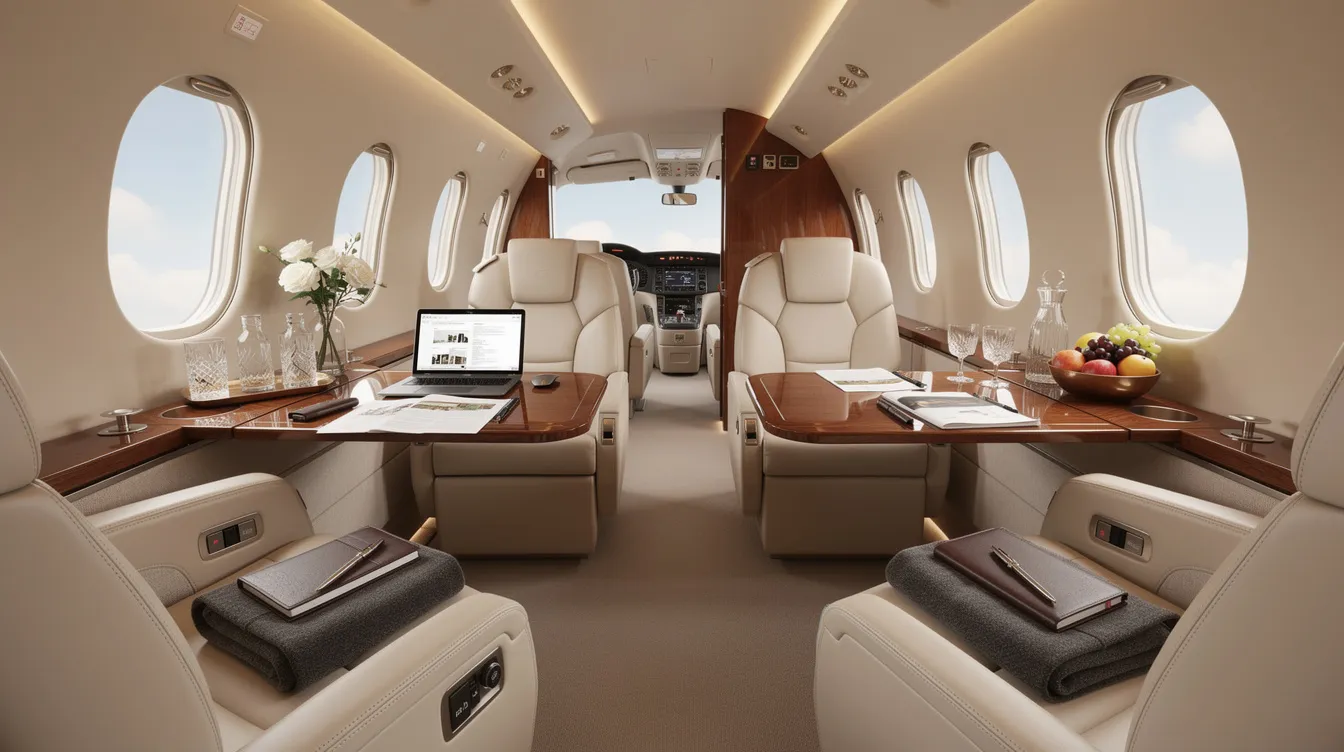
Private jet travel usually costs more than commercial flights, even first class. However, executives value time, privacy, schedule control, and productivity.
A leadership team may spend two days on a multi-city commercial trip with connections, hotels, and delays. A private jet itinerary can enable visiting multiple cities in one day and returning home the same evening.
Including hotels, lost productivity, sensitive discussions, and fatigue narrows the cost gap. For groups, the per-person difference between premium commercial and optimized private jet travel can be smaller than expected.
The key question is whether private aviation’s time value and efficiency justify the incremental cost.
Planning your private jet budget intelligently
Treat private aviation like a strategic procurement decision. Consider usage, capital tolerance, schedule complexity, and price volatility tolerance.
A practical approach:
Estimate annual flight hours.
Map routes: domestic, transcontinental, international.
Identify aircraft categories needed.
Note passenger and baggage requirements.
Assess acceptable price volatility.
Compare charter, jet card, membership, fractional, and ownership options.
For under 25 hours/year, charter may suffice. For 25–250 hours/year, memberships like FLYT offer transparency and predictability. Over 300–400 hours/year, ownership analysis including depreciation and crew costs is warranted.
Build a 12-month flight plan with trips, dates, passengers, and aircraft preferences. Request scenario-based pricing from providers, including FLYT, to compare real usage costs.
Explore how FLYT’s memberships and planning support deliver predictable costs and efficient global travel without ownership complexity.
Frequently asked questions about private jet cost
At what point does buying a private jet become cheaper than charter or membership?
Ownership becomes viable around 300–400+ flight hours per year, depending on aircraft, financing, taxes, and operating structure. Even then, capital allocation, residual value risk, aircraft age, and fleet inflexibility often make asset-light solutions like FLYT more attractive.
What are the most common hidden fees first-time private jet travelers miss?
Common hidden fees include aircraft positioning, short leg fees, deicing and winter hangar protection, higher-than-expected Wi-Fi and catering, international handling, and landing permits. Always clarify which charges are included and which are pass-through.
How does FLYT handle federal excise tax and other government charges?
FLYT applies U.S. federal excise tax and applicable segment or head taxes per current regulations, itemizing them separately. Similar transparency applies to VAT, duties, and government fees outside the U.S.
Can a membership like FLYT really save money versus traditional jet cards?
Savings stem from fixed hourly rates with fewer surcharges, fleet interchange enabling right-sizing, and an asset-light floating fleet reducing deadhead positioning. Benefits depend on routes, annual hours, aircraft preferences, and peak travel frequency.
How far in advance should I plan to get the best value on private jet travel?
FLYT and quality charter providers can arrange flights within hours, but booking 7–14 days ahead for non-urgent trips allows better aircraft selection, lower positioning costs, and improved schedules. Advance planning is crucial around holidays, major events, and winter weather periods.
For more details, visit FLYT’s FAQ or contact their team via the Contact us page.
Conclusion: A Smarter Approach to Private Jet Cost in 2026
Navigating private jet costs in 2026 requires understanding the full spectrum of expenses—from hourly charter rates and hidden fees to ownership complexities and operational nuances. For executives and frequent flyers seeking flexibility, predictability, and efficiency, traditional ownership or ad hoc charter often falls short. Membership models like FLYT offer a modern, asset-light alternative that combines fixed hourly rates, fleet interchange, and concierge-level support. This approach reduces capital risk, minimizes unexpected charges, and provides seamless global access to private aviation.
By prioritizing operational intelligence over pure luxury, FLYT delivers a premium experience tailored to the needs of sophisticated travelers. Whether your travel demands involve short domestic flight legs or international missions, embracing a membership can optimize your private flight budget while enhancing convenience and control.
Explore how FLYT’s transparent pricing and flexible membership model can redefine your private aviation experience—offering smarter, more strategic access without the burdens of ownership.