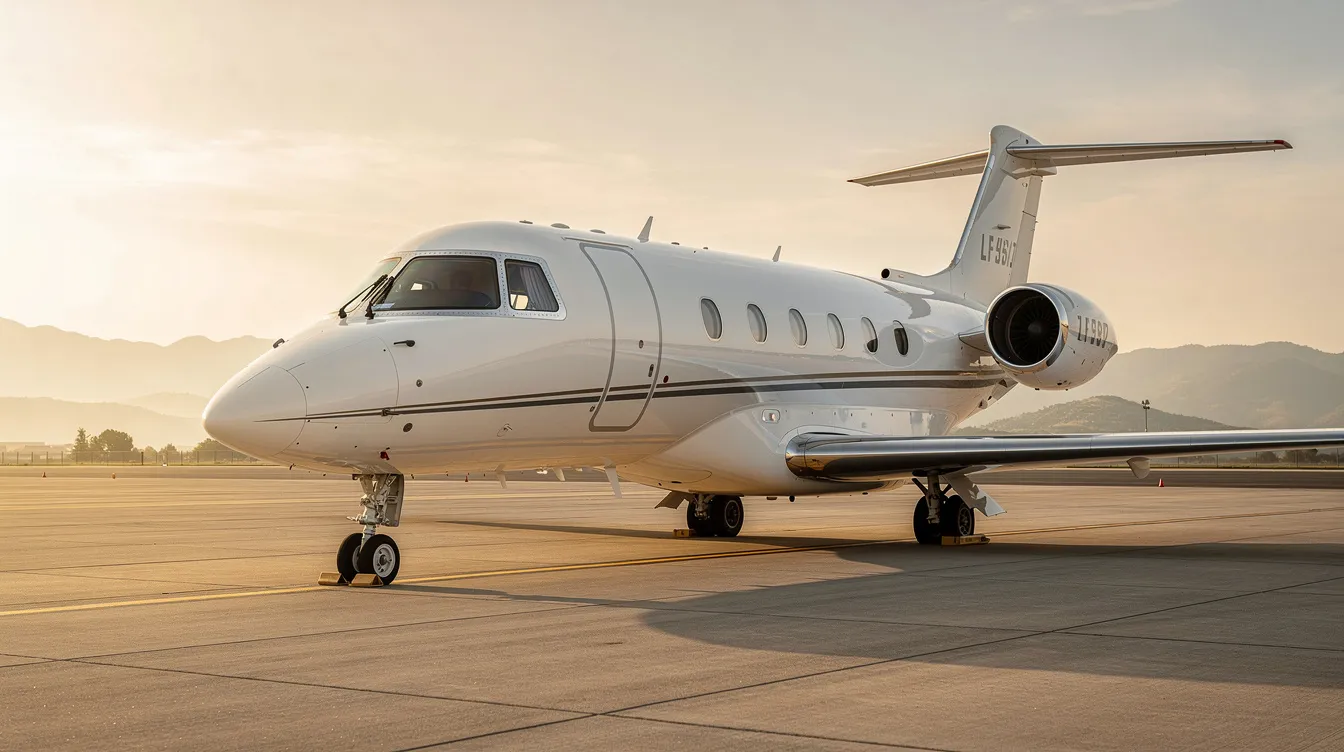
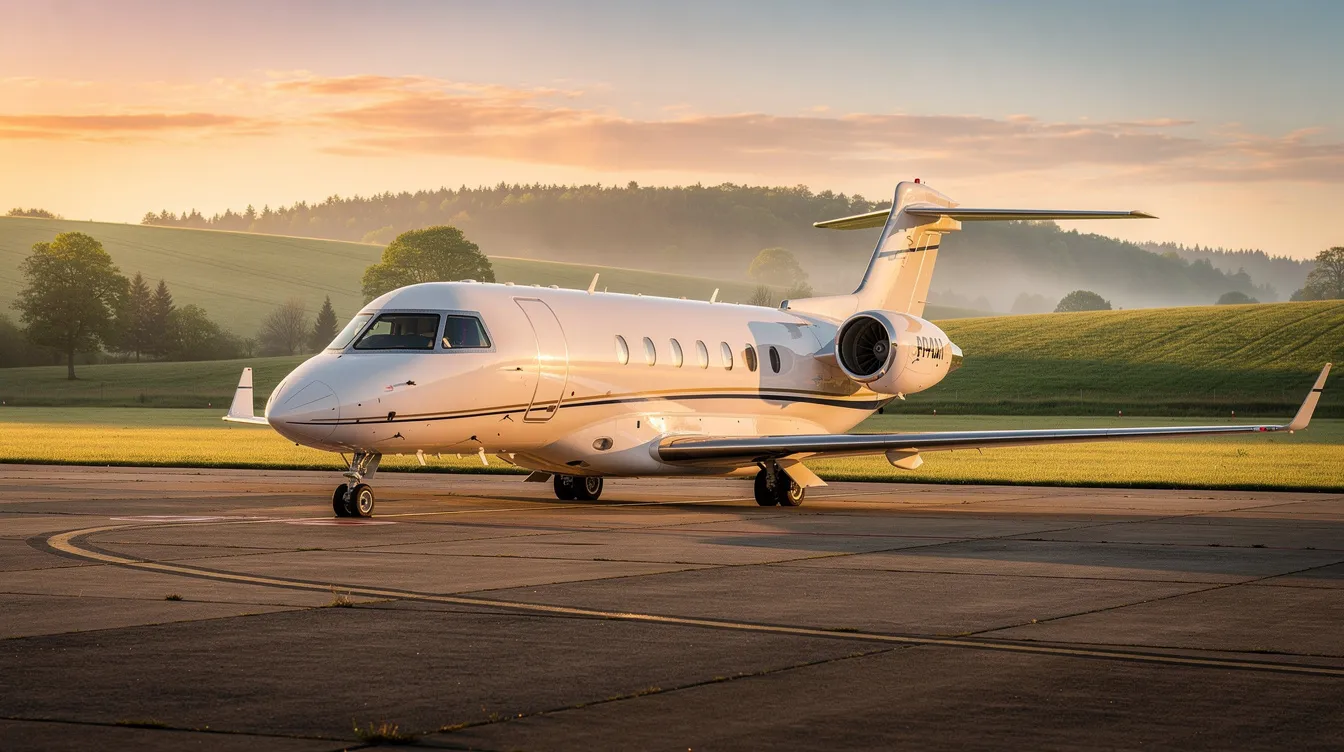
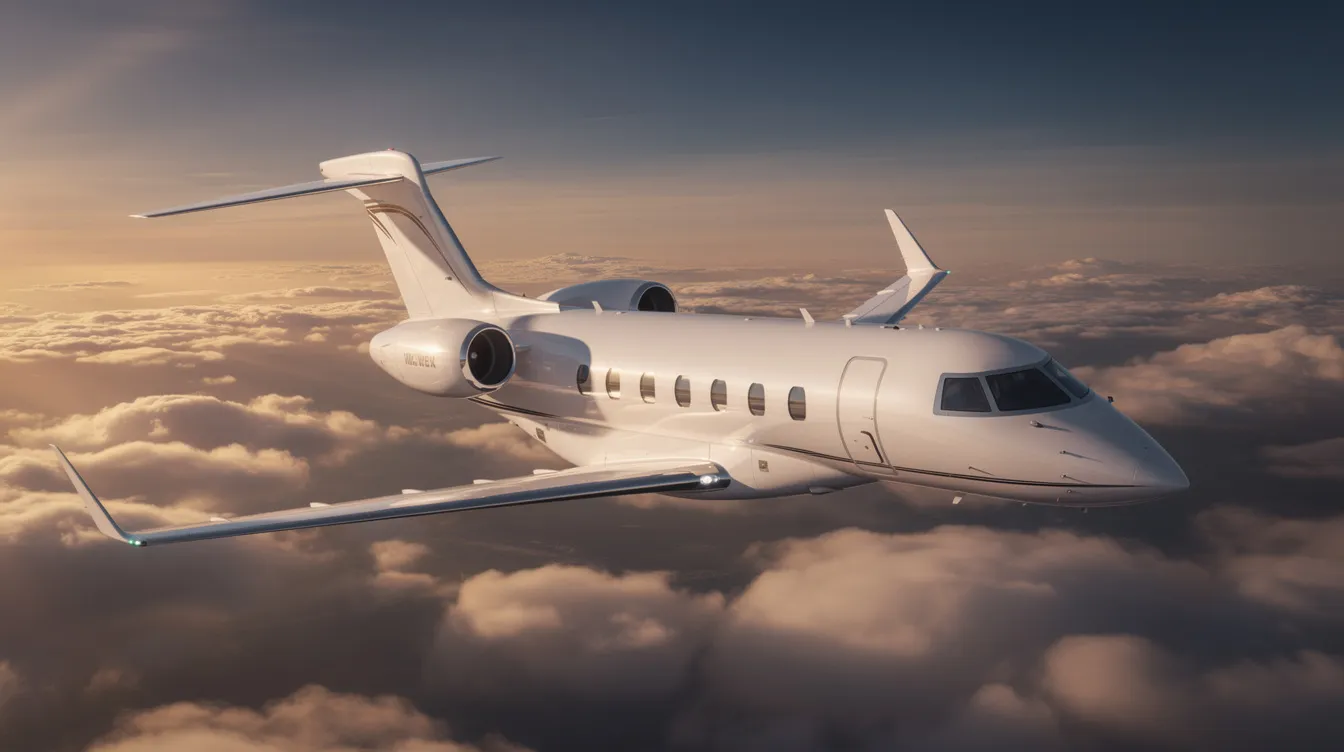
When a group of six to ten people needs to move between cities on a shared schedule, the 10-seater jet occupies a practical sweet spot in private aviation. It is large enough for a full executive team or extended family, yet small enough to operate from secondary airports that commercial airlines cannot reach. This article breaks down the aircraft that fit this category, who actually use them, and how modern membership models compare to outright ownership.
Key takeaways
A 10-seater jet is typically a midsize or super-midsize private jet configured for 8–10 passengers, with cruise speeds of 430–540 mph and ranges between 1,800–3,400 nautical miles depending on model and load.
The cabin is well suited for executive teams, family travel, investor roadshows, and multi-city business itineraries where keeping a group together saves time and improves productivity.
Concrete aircraft examples include:
Super-midsize jets provide the optimal balance of cabin comfort and range, capable of flying 3,000 to 4,000 nautical miles without refueling.
FLYT offers access to 10-seater private jets via membership with fixed hourly rates and fleet interchange, removing the complexity and capital requirements of ownership.
What is a 10-seater private jet?
A 10-seater jet is a private jet certified to carry 8–10 passengers, usually falling into the light, midsize, or super-midsize category. These aircraft are often categorized as mid-cabin or super-midsize jets in the market.
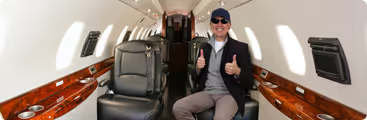
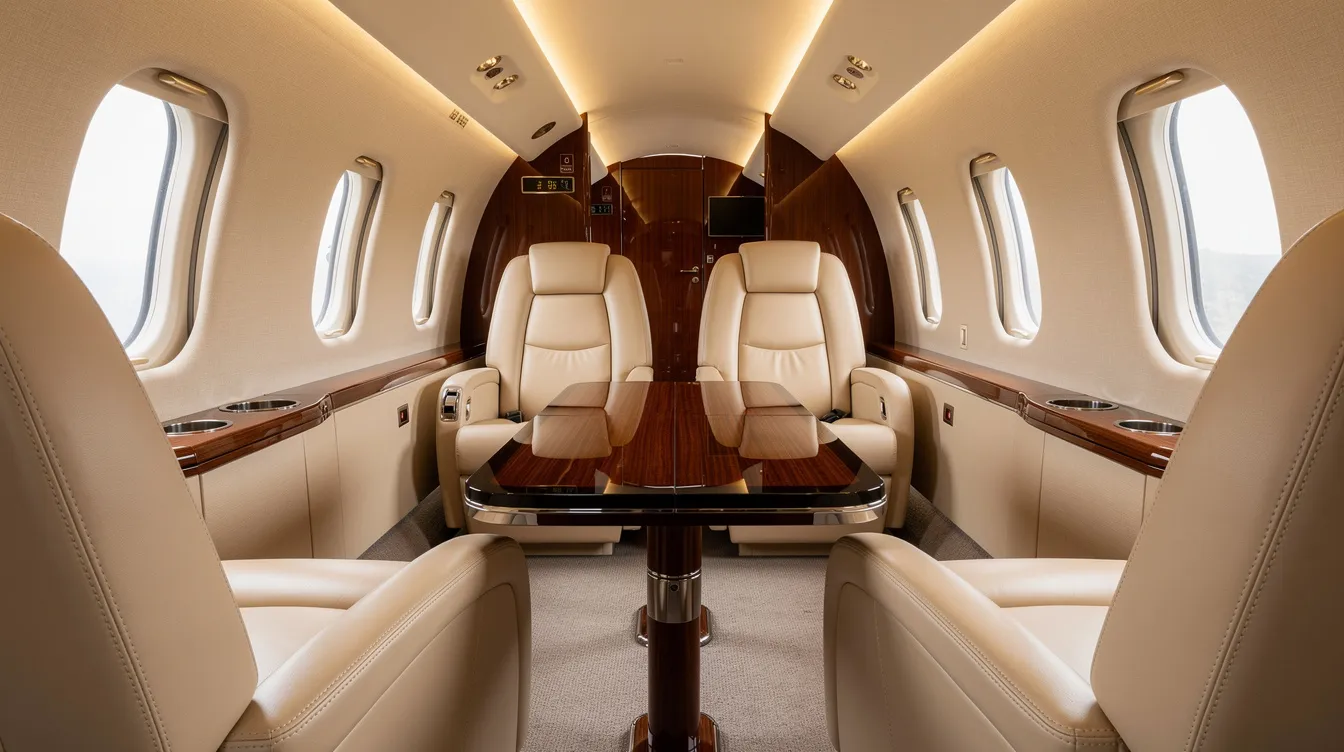
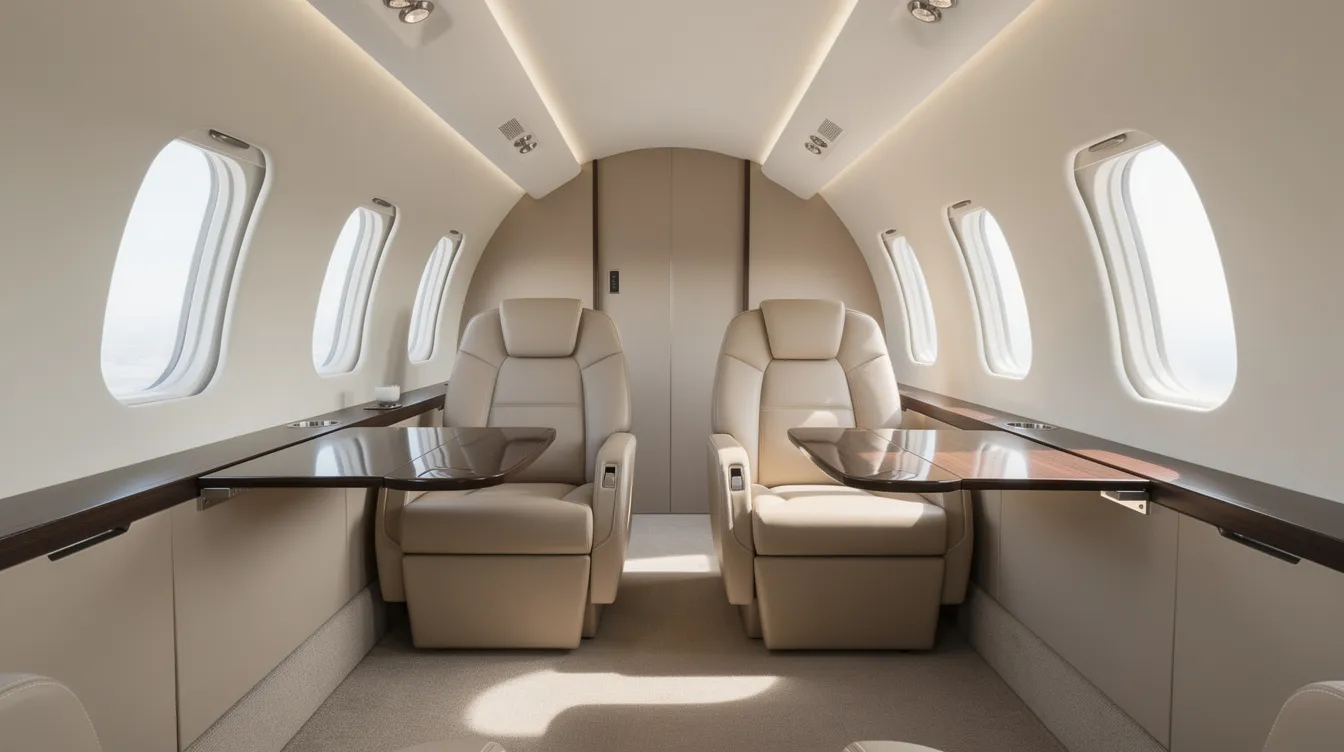
Cabin layouts typically combine club-four seating forward, a side-facing divan amidships, and additional club seats or a three-seat divan aft. Some configurations include a belted lavatory seat for maximum capacity. The cabin layout of these jets allows for productive meetings in flight, with enough space to spread documents, use laptops, and communicate face to face at altitude.
In terms of actual performance, expect cruise speed figures around 430–540 mph (375–470 knots) and range between 1,800–3,400 nm depending on the specific airframe and passenger load. Seat certification for 10 does not always mean 10 adults travel in full comfort on longer legs. The realistic sweet spot for most operators is 7–9 passengers with luggage.
These jets can access 10 times more airports than airlines, including regional fields with shorter runways where they can take off and land, as well as larger airports. That airport flexibility, combined with the ability to bypass commercial crowds and long security lines, reduces total door-to-door travel time significantly.
Typical specifications of 10-seater private jets
Rather than relying on marketing brochures, here are the spec bands that matter for informed decision-making across this class of aircraft.
Cabin height ranges from roughly 1.47 m to 1.88 m (4 ft 10 in to 6 ft 2 in). Cabin width spans approximately 1.55 m to 2.34 m (5 ft 1 in to 7 ft 8 in). Spacious interiors of larger 10-seater jets feature stand-up cabins and club seating, while light jets in this seat count are more compact. Mid-cabin jets typically have a range of roughly 2,000 to 3,000 nautical miles, with a maximum range of 4,000 miles nonstop in the super-midsize segment. Baggage volume varies from about 70 cu ft in light jets to over 130 cu ft in wide-body super-midsize designs.
Light jets configured up to 9–10 seats, such as the Phenom 300E, deliver different cabin experiences from true midsize or super-midsize designs like the Citation XLS Gen2 or Challenger 300, which routinely offer 9–10 seats with more cabin volume. Comfort features commonly found in this class include an enclosed lavatory, refreshment center, Wi-Fi, power outlets at each seat, low cabin altitude, and sound insulation that supports focused work onboard. These jets also provide a high level of luxury and comfort, with options like lie-flat beds available in larger configurations and space to rest on longer flights.
Comparison of selected 10-seater jets
Aircraft Model | Category | Typical Seating | Range (nm) | Cruise Speed (mph) | Cabin Height (ft) | Baggage Volume (cu ft) |
|---|
Embraer Phenom 300E | Light jet | 6–10 | 2,010 | 534 | 4 ft 11 in | 84 |
Cessna Citation XLS Gen2 | Midsize jet | 8–9 | 2,100 | 507 | 5 ft 7 in | 70+ |
Bombardier Challenger 300 | Super-midsize jet | 8–9 | 3,100 | 540 | 6 ft | 130+ |
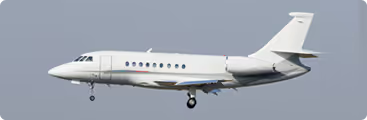
Dassault Falcon 2000 | Super-midsize jet | 8–10 | 3,350 | 520 | 6 ft | 120+ |
Hawker 800XP | Super-midsize jet | Up to 13 | 3,280 | 540 | 5 ft 11 in | 90+ |
Light jets that can seat up to 9–10 passengers
Some advanced light jets stretch beyond the typical 6–7 seat count, allowing 9–10 passengers on shorter to medium routes. The trade-off is straightforward: more seats mean less range and less baggage capacity per person.
The Embraer Phenom 300E is a leading example. It cruises at approximately 464 knots (about Mach 0.80), offers a typical range of around 2,010 nm with four passengers, and can be configured for 6–10 passengers. External baggage volume is about 84 cu ft. The cabin dimensions are modest: roughly 4 ft 11 in height and 5 ft 1 in width. The Cessna Citation CJ4 Gen2 is another high-end light jet, equipped with modern Garmin avionics, configurable for up to 9 passengers with club seating and a side-facing seat, and a typical range of around 2,165 nm. It is optimized for 5–7 passengers in comfort.
With 8–10 passengers plus bags, light jets may need fuel stops on longer legs. For regional business travel of 1–3 hours, shorter European hops, or U.S. domestic missions where speed from smaller airports matters more than stand-up cabin height, these aircraft deliver efficient operation.
Mid-size jets and super-midsize 10-seater jets
Most true 10-seater jets fall into midsize or super-midsize categories. These aircraft bring the ideal balance of range, speed, and cabin comfort that mid-size jets in the lighter segment cannot match.
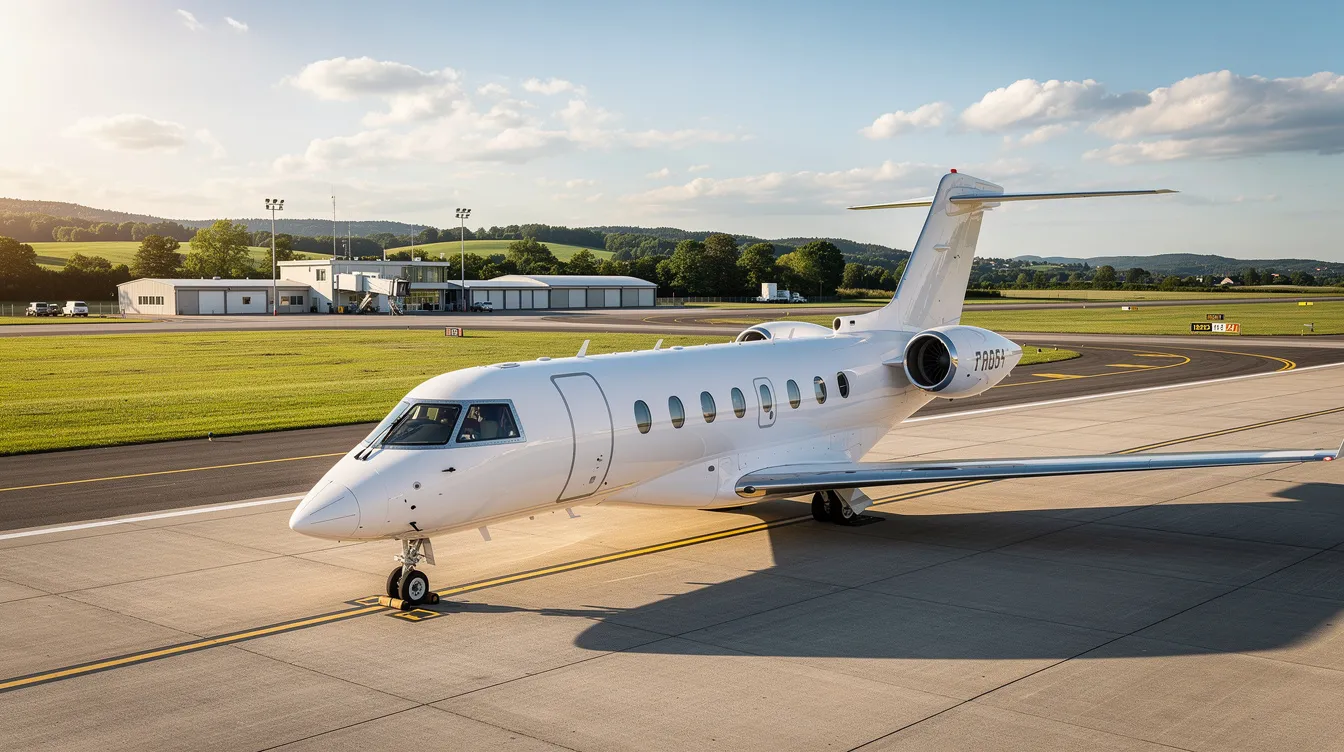
The Cessna Citation XLS Gen2 is a solid midsize benchmark: 8 passengers standard with an optional 9th seat, range of approximately 2,100 nm, cruise speed near 441 knots, cabin height about 5.7 ft, and runway performance allowing use of regional airports. Super mid-size jets typically hold up to 9 travelers in standard layouts but can fly at speeds of 555 mph, making them capable of U.S. coast-to-coast and many Europe–Middle East missions.
The Bombardier Challenger 300 seats 8–9 passengers, offers a range just over 3,100 nm, and features a cabin height of approximately 6 ft and a width of 7.2 ft. These jets can fly 3,000 to 4,000 nautical miles without refueling, enabling direct flights on routes that would otherwise require a stop. The Hawker 800XP has a range of 3,280 NM and can carry up to 13 passengers in high-density layouts, while the Gulfstream IVSP can accommodate 13 passengers. In this class, the cabin experience improves markedly: partial or full stand-up headroom, more aisle space, and better separation between work, dining, and relaxation zones compared with light jets.
Large-cabin options close to the 10-seat mark
Many large private jets are certified for 12–18 passengers, but owners often configure them with 10–12 seats to maximize comfort and workspace.
The Dassault Falcon 900 series is a strong example: typically registered for 12–14 seats, intercontinental range around 4,000–4,750 nm, tri-jet design, and cabins that can be arranged into three lounge zones. The Gulfstream G650 can accommodate up to 15 passengers and covers ultra-long-range missions with ease. The Bombardier Challenger family, particularly the Challenger 350 and Challenger 605, remains popular. The Challenger 605 can fly 4,000 miles nonstop, making it suitable for routes like New York to London.
For frequent flyers who usually travel with 6–10 passengers but need regular long-haul segments, large-cabin jets may be operationally sensible despite higher hourly costs. Ultra-long-range models like the Bombardier Global 6000/8000 or Dassault Falcon 7X/8X can easily carry 10 passengers but are often over-specified for travelers whose typical legs are 2–4 hours.
10-seater jet use cases: who actually needs 10 seats?
The decision to fly a 10-seater jet is driven by real travel patterns, not hypothetical scenarios. These aircraft are widely used for corporate travel and family trips.
For business, common scenarios include regional leadership meetings, investor or client roadshows with 6–10 people, board travel to portfolio company sites, and multi-city itineraries that would be logistically difficult on any airline. A 10-seater jet provides a private environment for business meetings mid-flight and allows flexible scheduling and multiple stops during flights, keeping an entire team on the same timeline.
For family and lifestyle needs, multi-generational holidays, major events, and home-to-university rotations with parents, children, and support staff are frequent patterns. The productivity benefits are tangible: working sessions in the sky, reduced ground time through secondary airport access, and departure points closer to offices, plants, or destinations across the world.
Practical guidance: if your typical group is consistently 6–9 passengers with luggage, a 10-seater midsize or super-midsize jet is a rational default. If most trips involve 2–4 people, flying a 10-seater every time is inefficient.
Ownership vs membership for 10-seater private jets
This is an economic and operational decision, not purely a lifestyle question.
Full ownership of a 10-seater aircraft means acquisition costs are often between USD 8–25M for a late-model midsize or super-midsize jet. New 10-seater jets range from $5 million to $80 million depending on type. At the high end, a 2024 Gulfstream G700 costs $80 million, while at the entry level, a 2023 Cirrus SF50 costs $3.5 million. Used jets can depreciate to below $1 million, and older jets can sell for less than $2 million. Beyond purchase price, an owner faces annual fixed costs: pilot salaries, hangar, insurance, management, maintenance reserves, and capital tied up on the balance sheet regardless of how many hours the airframe is flown.
Fractional ownership and jet cards offer share-based access with upfront capital outlay and a fixed block of hours that may not match actual annual flying. Private jet membership, such as FLYT's model, eliminates the aircraft purchase entirely. Members get access to a network of jets, including 10-seaters, pay fixed hourly rates, and can choose different cabin sizes per trip. There is no asset depreciation risk, reduced admin overhead, and easier adaptation to changing travel patterns or team sizes. Learn more about FLYT's asset-light floating fleet, risk pool model, and charter volatility protection for operational efficiency.
How FLYT approaches 10-seater jet access
FLYT is a membership-based, asset-light private aviation platform built for frequent flyers who prioritize efficiency and capital discipline.
Members can access a curated network of private jets, including 10-seater light, midsize, and super-midsize aircraft comparable to a Phenom 300E, Citation XLS, Challenger 300, or Falcon 2000-class jet, without an airframe enrolled under their name. Fixed hourly rates are a core feature, enabling leadership teams and family offices to know their cost per hour in advance, simplifying budgeting and board reporting. Members can also review route coverage on a map when comparing aircraft options for a trip.
Fleet interchange means a member can select a smaller light jet for a 2-person regional day trip, a 10-seater midsize or super-midsize jet for team travel, or a large cabin for long-haul missions, all under the same membership. The floating, asset-light model and risk pool concept mean FLYT manages fleet availability and operational risk across multiple aircraft and operators, rather than tying members to a single tail number. Concierge-level support covers trip planning, airport selection, including smaller airports accessible to 10-seater jets, ground transport coordination, and any special requirements through a single point of contact. Explore more about FLYT's platform, how it works, and concierge services.
Choosing the right 10-seater jet for your mission profile
Start from mission requirements, not from aircraft branding.
Key decision variables include average passenger count, longest regular route distance, typical departure and arrival airports, need for stand-up cabin height, baggage profile (golf bags, skis, equipment), and frequency of international segments. A high-performance light jet configured for 8–9 seats, like the Phenom 300E, makes sense for domestic hops of 1–3 hours. Stepping up to a midsize or super-midsize 10-seater like a Citation XLS or Bombardier Challenger 300/350 is warranted when routes regularly exceed 2,000 nm or when cabin comfort and baggage capacity are priorities.
Brand perceptions matter less than operational reality. The Dassault Falcon, Challenger, Cessna Citation, and Gulfstream families all have strong reputations, but maintenance support network, aircraft availability, reliability, damage history records, and cabin layout often matter more than the logo for frequent flyers. Testing multiple aircraft types through a membership model like FLYT's before committing to any long-term ownership structure allows executives to discover how different cabins perform on their actual routes, which is the best deal for making an informed decision.
Cost considerations for flying in a 10-seater jet
Cost is driven by more than the hourly rate alone. Total trip economics include hourly operating rate, positioning or empty leg costs, airport fees, de-icing in winter, and overnight crew expenses on multi-day trips.
Light jets generally run lower per hour than midsize or super-midsize, but may require more hours or fuel stops on longer routes. A Phenom 300E has an estimated direct operating cost of around $1,758 per flight hour, while midsize and super-midsize jets typically range from $4,000 to $8,000+ per hour, depending on variant and mission. Fixed hourly-rate membership through FLYT converts variable, opaque pricing into predictable figures for budgeting. From a capital allocation perspective, writing off per-trip membership expenses is often more efficient than tying up eight-figure capital in an owned 10-seater jet that incurs fixed annual costs even when parked. See more on FLYT's transparent pricing and premium service.
Long-range developments: from Dassault Falcon 10X to next-gen cabins
While the Dassault Falcon 10X is not a 10-seat jet per se-it can seat up to 19-it illustrates where high-end private aviation technology is heading. The Falcon 10X has a range of 7,500 nm, operates at a maximum speed of Mach .925, and features a massive widebody cabin roughly 6 ft 8 in tall and 9 ft 1 in wide, equipped with advanced safety systems including a Digital Flight Control System and FalconEye combined vision.
Innovations from ultra-long-range jets consistently filter down into smaller cabins across decades of development: improved avionics, lower cabin altitude, better noise insulation, and more efficient engines that eventually benefit 10-seater categories. Increasing focus on sustainability means SAF compatibility and more efficient flight profiles are becoming standard expectations across the market, including midsize and super-midsize types. FLYT monitors such developments when curating aircraft access for members, prioritizing cabins and operators that combine safety, modern technology, and efficiency rather than purely cosmetic luxury.
FAQs about 10-seater jets
How far can a 10-seater jet typically fly nonstop?
The range depends on the category. Light jets configured for up to 9–10 passengers, like the Phenom 300E, comfortably cover 1,500–2,000 nm. Midsize and super-midsize 10-seater jets such as the Citation XLS and Challenger 300 usually fly 2,000–3,400 nm nonstop under typical conditions. Real-world range is affected by passenger count, baggage weight, routing, and weather, so a professional operator or membership concierge should model specific routes before each flight.
Can all 10 seats be used on every flight?
While an aircraft may be certified for 9–10 passengers, performance limitations sometimes mean not all seats can be filled on very long legs or from short runways. Many operators plan for 7–9 adults plus bags on a 10-seat jet to maintain range and comfort. This is something FLYT helps plan for in advance during trip coordination.
Do 10-seater jets have flight attendants?
Many light jets and mid-size jets in the 10-seat class operate with two pilots and no dedicated flight attendant. Larger super-midsize and large-cabin jets more often include one as standard or optional. Whether a flight attendant is ready and on board depends on regulatory requirements, operator policy, and client preference, and it can be specified during trip booking with a membership provider like FLYT.
Are 10-seater jets suitable for international travel?
Midsize and super-midsize 10-seater jets are well suited to many international routes, especially within regions like Europe, the Middle East, or North America, and between nearby regions. For very long intercontinental sectors, large-cabin jets such as the Falcon 900 series, Bombardier Challenger 605, or Global 6000 may be more appropriate, but 10-seaters remain part of efficient multi-leg itineraries to bring teams across borders.
How does FLYT decide which 10-seater jets members can access?
FLYT prioritizes aircraft and operators with strong safety records, modern avionics, and reliable maintenance programs, with relevant aircraft records such as TT also reviewed during operator and aircraft selection, rather than simply chasing the newest models on sale. Aircraft selection considers mission fit: matching members to efficient light jets for shorter trips or to midsize and super-midsize 10-seaters in the Challenger, Citation, or Falcon class for longer or higher-capacity missions, all under a transparent fixed hourly-rate structure displayed clearly to members before each booking. For more details, visit FLYT’s FAQ or contact us.
Conclusion: a smarter way to access 10-seater jets
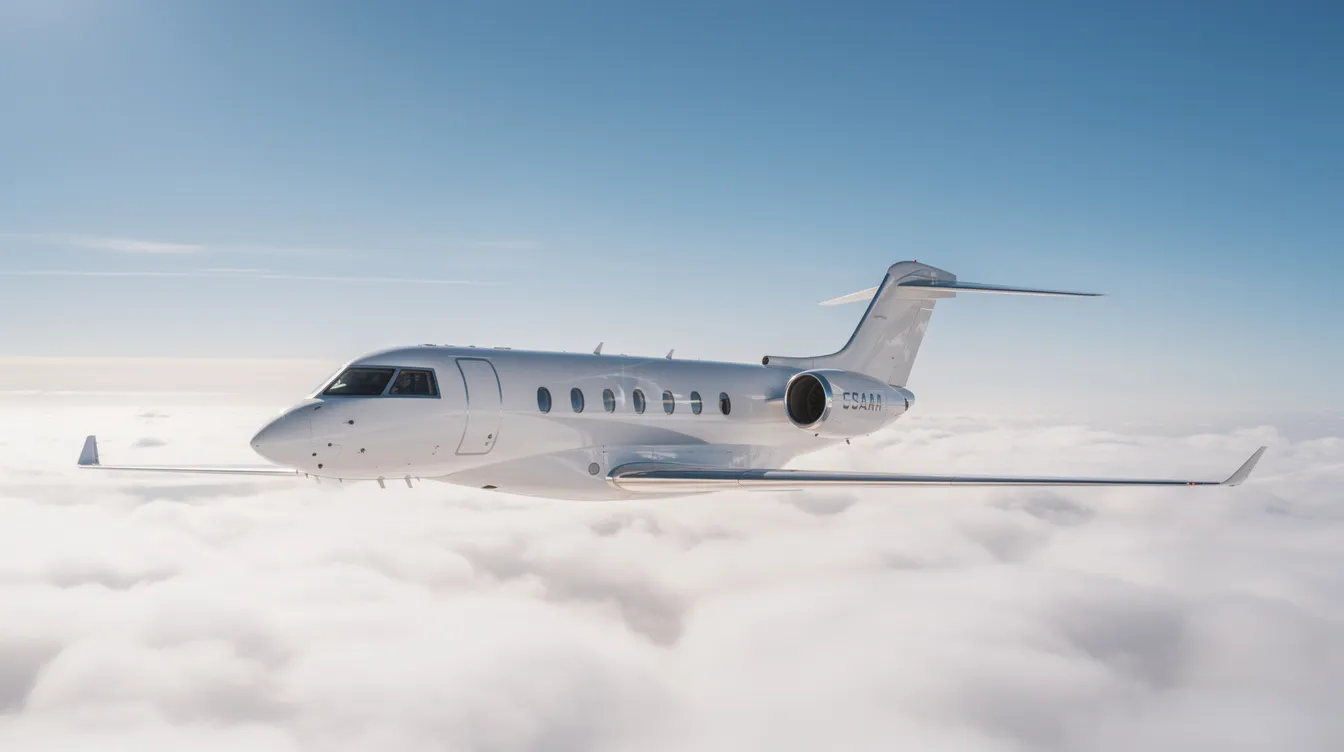
A 10-seater private jet is a practical solution for executives and families traveling in groups of 6–10, providing the right mix of speed, access to secondary airports, and cabin comfort. Light jets configured for high seat counts serve shorter regional missions. Midsize and super-midsize 10-seaters handle 3–5-hour routes with room to enhance the travel experience. Large-cabin options cover long-haul segments when the mission demands it.
Ownership is no longer the only credible path. Membership-based access with fixed hourly rates and fleet interchange often delivers better financial and operational outcomes, allowing travelers to meet their needs without compromise on security or service quality. Explore how FLYT’s flexible, membership-first approach can provide reliable access to 10-seater jets without the complexity and capital burden of owning one.